
Home Blog

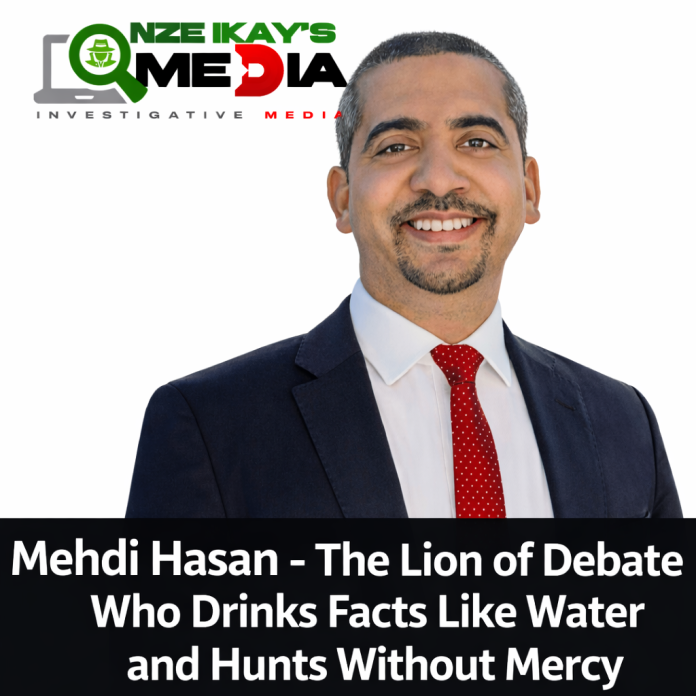
Mehdi Hasan – The Lion of Debate Who Drinks Facts Like Water and Hunts Without Mercy

0
Mehdi Hasan - The Lion of Debate Who Drinks Facts Like Water and Hunts Without Mercy

In the vast savannah of global journalism, where many jackals scavenge for scraps of ratings and others merely graze on the grass of press releases, there emerges occasionally a lion, a figure whose roar commands attention and whose hunt is a thing of beauty to behold. Mehdi Hasan is precisely such a lion. For those who have followed his tracks from the banks of the Thames to the Potomac River, his rise from the tall grasses of British political journalism to becoming one of the most formidable interviewers of our time reads like a classic African folktale, the story of the tortoise who, through sheer cunning and preparation, outruns the hare time and time again. Until two days ago, when he mesmerised Daniel Bwala on his show Head to Head, many Nigerians and Africans had no idea the kind of gold they were leaving by the riverside. As the Yoruba saying goes, “The one who does not know where the rain began to beat cannot know where it dried.” To understand why Hasan’s encounter with Bwala was like watching a master drummer teach apprentices, one must understand the journey that forged this extraordinary craftsman.

Every great iroko tree begins as a tiny seed buried in the soil. Mehdi Raza Hasan, born in Swindon, England, in July 1979 to Shia Muslim parents who had migrated from Hyderabad, India, was that seed planted in fertile ground. Like the son of a village chief sent to learn the ways of the white man, Hasan was privately educated at Merchant Taylors’ School before proceeding to Christ Church, Oxford, where he studied Philosophy, Politics, and Economics, the famous PPE that has produced more than its fair share of lions and, occasionally, hyenas. There is an African proverb that says, “The child who is not embraced by the village will burn it down to feel its warmth.” Oxford embraced Hasan, but more importantly, it gave him the tools to question, to dissect, and to rebuild. When he graduated in 2000, his classmates scattered into management consulting and investment banking, the well-trodden paths to wealth. But Hasan, to the great disappointment of his immigrant parents who had crossed oceans dreaming of doctor sons and lawyer sons, chose the path of thorns: journalism.

He began as a researcher and producer on ITV’s Jonathan Dimbleby programme, learning the craft like an apprentice goldsmith learning to handle fire without getting burned. He worked on the BBC’s The Politics Show, became deputy executive producer on Sky’s breakfast show Sunrise, and eventually moved to Channel 4 as editor of news and current affairs. Each role was like a new forge, tempering the blade that would later cut through the toughest political armour. In 2012, Hasan joined Al Jazeera English as a presenter. For those who understand the media landscape, this was like a master fisherman being given a larger canoe and stronger nets. Al Jazeera, with its global reach and willingness to ask the questions others feared to utter, provided Hasan with the platform his talents deserved. It was at the Oxford Union in 2013 that the world first truly saw the lion’s teeth. Debating whether Islam is a peaceful religion, Hasan stood before a hall full of sceptics and, like David facing Goliath, armed himself not with stones but with facts, logic, and the kind of rhetorical precision that leaves opponents wondering what hit them. The motion passed with 286 votes in favour, 168 against. Hasan had won, and the journalism world took notice.

“A hunter does not boast of his skill until the game is caught and tied,” goes the saying. Hasan was catching the game, and he was tying it well. His show, Head to Head on Al Jazeera, became required viewing for anyone who believed that an interview should be more than a glorified press release. He treated his guests the way a village elder treats a wayward youth, with respect, but with the expectation that they would account for their actions. In 2015, Hasan moved to Washington, D.C., to work full-time for Al Jazeera on UpFront. When he arrived, people told him he would end up at CNN or MSNBC. He laughed. “No one’s ever going to hire me,” he thought. “I’m a brown, Muslim, lefty immigrant. I’m happy at Al Jazeera”. This humility, this understanding of his place in the American media landscape, is reminiscent of the African proverb: “However tall the iroko tree grows, it never forgets that its roots are in the earth.” Hasan never forgot his roots, even as he began to grow taller than the trees around him.

In 2018, he launched the Deconstructed podcast for The Intercept, featuring guests like Noam Chomsky, Ilhan Omar, and Bernie Sanders. The podcast was like the village drum, gathering people around to hear the news interpreted with wisdom and courage. Then came 2020. NBC’s new streaming service, Peacock, offered him his own show, The Mehdi Hasan Show, which began airing in October of that year. By February 2021, MSNBC added the show to its Sunday lineup. The immigrant boy from Swindon, the son of Hyderabadi parents, was now a fixture on American cable news. There is a saying among the Akan people: “Only when you have crossed the river can you say the crocodile has a lump on its snout.” Hasan had crossed the Atlantic, and now he could see the American media landscape for what it was: a place where crocodiles swam freely, and where most journalists were content to float peacefully downstream rather than swim against the current.

What sets Hasan apart from the multitude of talking heads that populate our screens? The answer lies in a Fula proverb: “However long the log lies in the river, it will never become a crocodile.” Many journalists spend decades in the profession without ever developing teeth. Hasan arrived with teeth fully formed. His preparation is legendary. When he interviews someone, he does not come with a list of softballs designed to extract pre-rehearsed talking points. He comes with the kind of forensic detail that would make a coroner proud. He drinks facts like water, not sip by sip, but in great, quenching gulps that satisfy the thirst for truth. When John Bolton, the former National Security Adviser under Trump, sat across from Hasan, it was not an interview; it was an encounter. Bolton, a man who had advised the most powerful nation on earth, found himself having to defend his positions against a journalist who had done his homework better than most graduate students. Jen Psaki, President Biden’s press secretary, later admitted that of all her White House interviews, Hasan’s was the most difficult. This is the mark of a true master: when your opponents respect you not because they like you, but because they know you will come prepared. As the Igbo say, “A man who does not know where the rain began to beat him cannot say where he dried his body.” Hasan’s opponents always know exactly where the rain began to beat them.

In journalism, as in life, the path of courage is rarely the path of comfort. When the Israel-Hamas war erupted in 2023, Hasan did what he has always done: he asked hard questions, he sought truth, and he refused to be silenced by the comfortable consensus. MSNBC cancelled his show, along with those of two other Muslim commentators, Ayman Mohyeldin and Ali Velshi. The network claimed the shifts were coincidental, but the journalism community and the public were not fooled. “When you see a bearded man in your dream, and you wake up and see a goat,” goes the Ethiopian proverb, “don’t say it was just a dream.” The symbolism was clear, and the message was received. Hasan announced his departure from MSNBC on January 7, 2024, in his final broadcast. But as the Yoruba say, “The elephant that steps on a trap does not die, it breaks the trap and moves on.” Hasan was not dying; he was being liberated.

Zeteo: The Hunter Becomes His Own Master – After leaving MSNBC, Hasan did what only the bravest and most respected journalists dare to do: he started his own media company. Zeteo, from the ancient Greek word meaning “to seek out, to inquire, to get to the truth”, launched in February 2024. The name itself is a mission statement. Hasan was not content to be a voice within someone else’s choir; he wanted to build his own cathedral. Within a year, Zeteo had 400,000 subscribers, 40,000 paying members, and 715,000 YouTube followers. The platform turned a small profit in its first year, something most startups cannot claim. “The lizard that jumps from the high iroko tree to the ground,” says the proverb, “does so with its eyes open, knowing it will land on its feet.” Hasan landed on his feet. His contributors now include Taylor Lorenz, Naomi Klein, Bassem Youssef, Owen Jones, and even Greta Thunberg. The village he built attracts people from far and wide.

Hasan’s philosophy of journalism is simple and uncompromising. He rejects the false dichotomy between activism and journalism. “You don’t have to define activism as changing things and journalism as not changing things,” he says. “The biggest changes in our society have come from journalism. Investigative journalism, at its very best, changes things. It holds people accountable. It forces people to change structures, reform institutions”. This is the kind of talk that makes establishment media uncomfortable. They prefer journalists who keep their heads down, who play the game, who understand that access is more important than truth. Hasan keeps his head up. He always has. “When the mouse laughs at the cat,” goes the Swahili proverb, “there is a hole nearby.” Hasan has always had his hole, his preparation, his facts, his unwavering commitment to truth. From that position of strength, he can laugh at the cats who would prefer he stay silent.

In 2023, Hasan published Win Every Argument: The Art of Debating, Persuading, and Public Speaking. The book is not just a manual; it is a manifesto. It distils decades of experience into principles that any truth-seeker can apply. But Hasan is also wise enough to know when not to debate. In 2023, he warned that “there are certain people who there is no point arguing with,” specifically those who operate in bad faith. This wisdom, knowing when to engage and when to walk away, is the mark of a true elder. As the Akan say, “The fool speaks, the wise man listens.” Hasan listens to his instincts, and they rarely lead him astray. Yet even Hasan sometimes finds himself in situations that test his principles. In 2025, he appeared on Jubilee Media’s Surrounded series, debating 20 far-right conservatives. The experience disturbed him. “The people here today were way beyond conservative,” he said. “This is open authoritarianism, and this is what is being normalised and mainstreamed in our country”. The episode went viral, with over 3.5 million views, proving that even when Hasan is uncomfortable, he is compelling. “Even a goat that is about to be slaughtered,” says the proverb, “does not lose the will to bleat.” Hasan will bleat his truth until his last breath.

The African and Nigerian Connection. This brings us back to the moment that inspired this reflection: Hasan’s encounter with Daniel Bwala on Head to Head. For many Nigerians and Africans, this was their introduction to a man who has been dominating global journalism for over a decade. As the Hausa say, “The one who arrives early at the pond drinks clean water; the one who comes late drinks muddy water.” Africans have been drinking muddy water, missing Hasan’s shows because they simply did not know where to look. But now the word is out. Hasan’s style, direct, confrontational, deeply researched, resonates with an African audience that has long been fed a diet of soft journalism and political propaganda. In a continent where leaders often go unchallenged and where the media frequently serves as a government megaphone, Hasan represents something refreshing: the journalist as equal, as interrogator, as the people’s advocate. His interview with Bwala was not just an interview; it was a masterclass. Watching him work is like watching a master weaver at the loom, every thread placed with intention, every question building on the last, until the final pattern emerges in all its complexity. “A cow that has no tail,” goes the Igbo proverb, “should not chase flies.” Hasan has a tail, and he uses it with devastating effect. His guests cannot chase away the flies of their own inconsistencies because Hasan pins them down with facts.

Who is Mehdi Hasan when the cameras stop rolling? He is a father, a husband, a man who worried about starting a business during Ramadan while fasting. He is cautious by nature, lacking the entrepreneurial bravado of media moguls who treat journalism as just another business. He is, by his own admission, surprised by his success. “I didn’t think I’d last longer than six months” at MSNBC, he says. He lasted 3½ years. He is also a man who has evolved. In his youth, he held views on abortion and homosexuality that he now regrets. He has publicly disavowed those positions, demonstrating a capacity for growth that is rare in public figures. “The river that forgets its source,” says the proverb, “will eventually dry up.” Hasan has not forgotten his source, but he has allowed the river of his thought to flow into new channels.

In today’s America, being Mehdi Hasan is not without risk. Prominent figures in the MAGA movement have called for his deportation, for his denaturalisation. In a country where journalists are increasingly intimidated, threatened, and harassed, Hasan continues to speak. But he is also a man of perspective. When asked about the risks he faces, he points to Gaza, where over 200 journalists have been killed in the current conflict. “The Civil War, WWI, WWII, none of it comes close,” he says. “Yes, it’s a risky time for journalists in America, but in context, we’re still 10,000 times in a better place than journalists in Gaza”. This humility, this ability to see his own struggles in the context of greater suffering, is what elevates Hasan from mere journalist to something approaching a public intellectual. “The drum does not beat itself,” says the proverb, “and the dancer does not dance alone.” Hasan understands that he is part of a larger struggle, a global fight for truth and accountability.

The Lion’s Roar Continues. Mehdi Hasan’s journey from Swindon to Washington, from researcher to founder, is a testament to what journalism can be when it is practised with courage, preparation, and an unwavering commitment to truth. He has grown from obscurity to become a trailblazer not by following the herd, but by leading it. For young journalists in Nigeria, in Africa, and around the world, Hasan offers a model. Not the model of the journalist as celebrity, dining with the powerful and trading access for soft treatment. But the journalist as truth-seeker, as advocate for the voiceless, as the one who drinks facts like water and hunts falsehood without mercy. “A man who uses feathers to climb a tree,” says the proverb, “cannot complain when he falls.” Hasan has built his career on rock, not feathers. His foundation is preparation, his structure is integrity, and his roof is the courage to speak truth to power.

When he sat across from Daniel Bwala few days ago, he was not just conducting an interview. He was demonstrating, for all who had eyes to see, what journalism looks like when it is done right. For Nigerians and Africans who had never watched him before, the revelation was like the rising of the sun after a long night. As for Hasan himself, he continues to climb. Zeteo grows. His audience expands. His voice carries further with each passing year. The lion of debate, who drinks facts like water and hunts without mercy, is still roaring. And the wise will continue to listen. “However long the night,” concludes the Ghanaian proverb, “the dawn will break.” For Mehdi Hasan, the dawn has broken, and the light reveals a journalist for the ages, a man who reminds us that in a world of spin, propaganda, and comfortable lies, the truth still has a champion.

NzeIkayMedia ✍️

Disclaimer: 

The sketches, images, pictures and videos are obtained from the public domain.
My thoughts: A Tale Of Two Hyenas – When the Pot Mocks the Kettle for Being Black

0
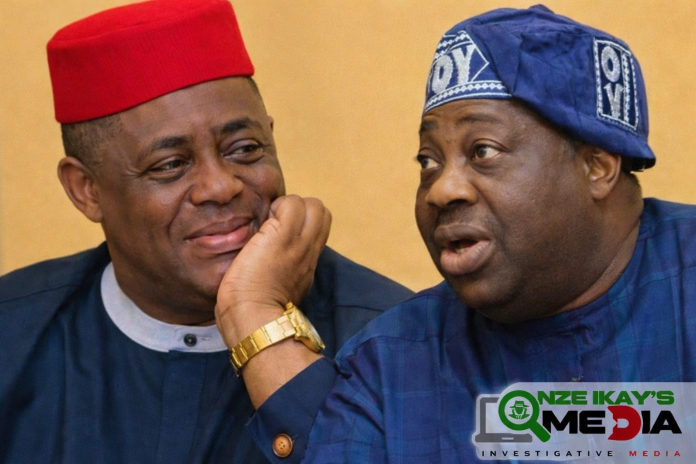
A Cottage photo of Chief Femi Fani-Kayode and Chief Dele Momodu conversation

The following is a very long read and was written by FFK about Bobby Dee. After thoroughly reviewing the article, I wrote my thoughts thereunder, and I humbly implore you to read till the end.

DELE MOMODU: FROM BREAD-HAWKER TO POLITICAL PROSTITUTE AND GLUTTON OF THE AGES

Apologies to my dear aburo Kayode Ajulo SAN and others who have said I should leave Dele Momodu alone. When Dele was at university, he was a fraudulent rainmaker who claimed to be able to “tie the rain” for people on the day they were having special outdoor events. He duped the owner of a beauty pageant in this way in 1982, collected his money, yet the rain still fell.

After leaving university, he couldn’t get a job, so he started off as a bread hawker on the street after getting a 3rd class degree in Yoruba at OAU. He was spotted on the street by MKO Abiola, who bought him shoes and put him in charge of his Wonder Bakery. He eventually brushed up on his English and spelling and became a journalist and later an Editor in MKO’s Concorde Newspaper. He followed MKO around and later betrayed him.

After MKO was locked up, he attached himself to Asiwaju Bola Ahmed Tinubu and collected handouts from him for years. After that, he started taking pictures of people for his Ovation magazine. He failed in all these endeavours, and everything he attempted to do always crashed. So he went into politics, ran for President and got one vote. His ambition crashed. He became a spokesman for Atiku and was the only person who did not want power to come to the South in 2023.

We are approaching 2027, and he wants power to go back to the North, already calling PBAT, who once fed him a dictator. Is this guy OK at all? Everything about him eventually crashes, and just as he crashed Atiku’s campaign and ambition in 2023, so he will crash it again in 2027.

Let me go a little further. Dele’s pattern of betrayal cannot be denied. It is unmistakable. He called Asiwaju his “friend” and “brother” after collecting money from him in 1996 to feed. When the money stopped flowing from Asiwaju to him, he started to smother and bother his brother from another mother. He said he fled Nigeria because of Abacha, only to flee England to Kano to eat from the same Abachas when Tinubu’s money stopped flowing to him.

Ile-Ife, where he grew up, is abuzz over how Dele Momodu, who once called Governor Ademola Adeleke his “friend” and “brother” and was dancing different salve moves with Adeleke, is now supporting Adeleke’s opponent in the Osun gubernatorial election. Who would have believed the dance parents would now be at loggerheads? All because of Dele’s uncontrollable appetite for food. No wonder Gen Z calls him DFFO, Dele For Food Only. Google it! He is indeed a shameless GLUTTON. No wonder he claimed his restaurant business in Ghana collapsed. He must have eaten all the food meant for his patrons!

From Adekeke, he moved to Nyesom Wike and was always around the dining table at the Rivers State Government House, overeating, according to Wike’s testimony. Then all of a sudden, he posted to Atiku, after Wike’s money dried up, and started insulting the Wike he was once consulting for and consorting with.

Atiku would be well-advised to be very afraid of Dele, especially as Peter Obi and Amaechi are eager to spend as well. Who knows? Tomorrow, Dele may not delay in relaying insults on Atiku once he sees a bigger payload from either of those guys. What else can one expect from a bread hawker, political prostitute and GLUTTON of the ages?

By Femi Fani-Kayode

My thoughts:

A Tale Of Two Hyenas – When the Pot Mocks the Kettle for Being Black

It is often said in my mother’s village that when two elephants fight, it is the grass that suffers. But in the sad, comedic spectacle unfolding between Chief Femi Fani-Kayode (FFK) and Chief Dele Momodu, we are not witnessing a fight between elephants. No. We are witnessing a quarrel between two hungry hyenas fighting over the same bone, each accusing the other of having bad breath. I am sharing my thoughts on the above missive written by FFK against Bobby Dee, not by defending Momodu, but by exposing the case of a pot calling the kettle black, when both are not only black, but are cracked, leaky, and have been thoroughly blackened by the same firewood of political opportunism.

“The Leopard Does Not Change Its Spots; It Only Changes Its Hunting Ground”. Unquote: Femi Fani-Kayode writes as though he is a saint delivering a sermon from a pure white pulpit. But we who have followed the twists and turns of Nigerian politics know that FFK is not a messenger; he is a message, a warning to all about the dangers of absolute principle-lessness. He speaks of Dele Momodu’s “betrayal” of MKO Abiola as if FFK himself did not abandon the progressive platform faster than a rat abandons a sinking ship. Let us take a short walk down memory lane. This is the same Femi Fani-Kayode who was once a fiery member of the Peoples Democratic Party (PDP), serving under President Olusegun Obasanjo as a Minister. When the political winds shifted, did he stay and fight? No. He fluttered away like a dry leaf in a Harmattan wind to the Congress for Progressive Change (CPC). When that leaf dried up, he fluttered back to the PDP. And when the breeze from Aso Rock became too perfumed with the scent of Tinubu’s victory in 2023, FFK did not walk; he flew on the wings of a vulture to the All Progressives Congress (APC).

He calls Dele Momodu a “political prostitute.” But in the market square of Nigerian politics, FFK is not a prostitute; he is the Madame of the brothel, the one who has sampled every political bed from Abuja to Lagos and back again, leaving behind nothing but the stench of hypocrisy.

“The Chickens Have Come Home to Roost” Unquote: FFK accuses Dele of being a “glutton,” a man who follows the dining table. But is this not the same Femi Fani-Kayode who was arrested by the Economic and Financial Crimes Commission (EFCC) for allegedly collecting money illegally? Is this not the man who has faced trials for money laundering? A man who has lived a lifestyle so opulent that it would make a Roman Emperor blush? When FFK mocks Dele for taking money from Tinubu and then turning on him, we must laugh. It is like the axe telling the tree, “I am not the one who cut you down,” forgetting that its handle came from the same forest. FFK himself has had more political godfathers than a chameleon has colours. He has sat at the feet of Obasanjo, Atiku Abubakar, and now Bola Tinubu. The only difference between him and Dele is that while Dele is currently hungry and waiting for Atiku’s table to be set, FFK is currently full, licking his fingers after dining at the presidential villa.

“He who eats with a long spoon should not accuse his neighbour of having a long neck”. Unquote: FFK is enjoying the crumbs from Tinubu’s table today, and so he sings the master’s tune. But we remember when he was singing a different song, calling the same administration names that would burn the ears of a deaf man.

“A Mountain Calling a Hill Valley”. Unquote: FFK speaks of Dele’s failed business ventures. But what of the political bridges FFK has burned? He moves from party to party, leaving behind a trail of bitterness. He calls Dele a “bread hawker” as an insult, forgetting that in the eyes of the suffering masses, the bread hawker who is honest is worth more than the political merchant who sells the future of an entire nation for a ministerial/ambassadorial slot.

Honestly, the two are both cooked on the same firewood. They are two sides of the same tainted coin. While FFK accuses Dele of crashing Atiku’s campaign, we must ask: what has FFK ever built that did not crash? He has been a pilot of propaganda for every regime, and his plane always crashes, leaving the passengers (the Nigerian people) to pick up the pieces.

“Two Masquerades Dancing for the Same King”. Unquote: In the end, this fight is not for the benefit of the common man. The common man is looking for bread, while Dele Momodu and Femi Fani-Kayode are fighting over who gets to lick the butter.

· Dele Momodu wants us to believe he is a statesman, but he is merely a freelancer waiting for a contract or appointment.

· Femi Fani-Kayode wants us to believe he is a crusader, but he is merely a mercenary who fights for the highest bidder.

When the axe is deep in the wood, it remembers that the handle came from the tree. Both of these men came from the people, but they have forgotten the people. They are like two goats fighting on a bridge; eventually, both will fall into the water, and the owner of the bridge (the Nigerian masses) will be left to clean up the mess. Let them fight. But as they throw stones, let them remember that the one who lives in a glass house should not throw stones at all, especially when his own house was built by the same rain that flooded his neighbour’s. They are both gluttons, both political prostitutes, and both unworthy of the trust of the Nigerian people. The only difference is the colour of the party flag they are waving today.

NzeIkayMedia ✍️

Disclaimer: 

The sketches, images, pictures and videos are obtained from the public domain.
The Last Ayatollah: A Life That Shaped the Middle East

0
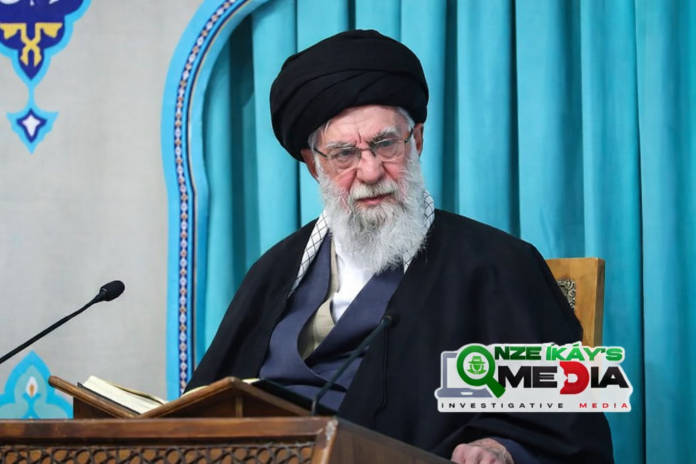
Late Iranian Supreme LeaderA yatollah Khamenei behind lecter

In the dimly lit halls of power, where faith intertwines with authority and history bends to the whims of a few, few figures have loomed as large as Ayatollah Sayyid Ali Hosseini Khamenei. “The mountain remains unmoved by the fury of the storm,” as a Persian poet once said, and for nearly forty years, Khamenei embodied that mountain. With his death confirmed following the US-Israeli strikes on February 28, 2026, Iran now finds itself at a crossroads more delicate than any since the chaotic days of 1979.

Born in 1939 in the northeastern city of Mashhad, Ali was the son of a religious scholar, seemingly destined for a life of quiet contemplation. He began his religious education at just four years old, and by thirteen, he was already diving into the revolutionary ideas of clerics like Navab Safavid, who advocated for political violence against the Shah’s regime. The seminaries of Najaf and Qom played a significant role in shaping his thoughts, but it was his meeting with Ayatollah Ruhollah Khomeini in 1958 that truly set his path. Khomeini’s philosophy of velayat-e faqih, or the guardianship of the jurist, became Khamenei’s guiding star. This belief held that a just Islamic society couldn’t rely solely on human laws but needed to draw its legitimacy from God, with a single scholar wielding the authority once held by prophets and infallible Imams. Khamenei paid a heavy price for this conviction; the Shah’s secret police, SAVAK, arrested and tortured him in 1971. Yet, he emerged unbroken, his revolutionary spirit forged like steel in the fire.

The 1979 Islamic Revolution brought Khomeini to power, and Khamenei rose alongside him. He played a key role in organising the Revolutionary Guard, served on the Revolutionary Council, and took on the role of deputy defence minister. Then, in June 1981, a bomb planted by the Mujahedin-e-Khalq exploded near him at a mosque in Tehran. The attack left his right arm permanently paralysed, but throughout his life, he showed an incredible ability to withstand blows that would have knocked others down. As the saying goes, “That which does not kill him makes him stronger.” Just two months later, after the same group took out President Mohammad-Ali Rajai, Khamenei was elected to take his place.

When Khomeini passed away in June 1989, Iran found itself in a succession crisis. The chosen successor, Grand Ayatollah Hossein-Ali Montazeri, had lost favour, and other senior clerics didn’t quite measure up. In this uncertain time, Khamenei stepped in, even though he didn’t fit the traditional mould. The constitution called for a “source of emulation,” a grand ayatollah, but Khamenei only held the title of Hojjat al-Islam. He reportedly said, “My nomination should make us all cry tears of blood. I am just a minor seminarian with many faults and shortcomings.” However, at Khomeini’s urging, the Assembly of Experts changed the constitution to require only “Islamic scholarship.” Just like that, Khamenei was elevated to the rank of ayatollah. The once-quiet seminarian from Mashhad had now become the second most powerful figure in the Islamic Republic.

The Architect of Regional Influence Over the next 36 years, Khamenei would gather power that even Khomeini never had. The constitutional changes of 1989 granted him the authority to set general policies, appoint and dismiss members of the Council of Guardians, and call for referendums. But his real strength came from the relationships he built, especially with the Revolutionary Guard, whose loyalty he earned by visiting the front lines during the gruelling Iran-Iraq War. When American forces toppled Saddam Hussein in 2003, Khamenei seized a chance that his predecessor could only have dreamed of. With Iran’s longtime enemy out of the way, Tehran’s influence surged into Iraq. And when the Arab Spring hit in 2010, he threw his support behind Syria’s Bashar al-Assad, expanding Iran’s reach through what he referred to as the “Axis of Resistance.” Detect AI-generated content and transform it into something that feels more human with our AI Content Detector. Just paste your text, and you’ll get accurate, relatable results in no time!

Here’s the text to analyse: – a network that stretches from Hezbollah in Lebanon to the Houthis in Yemen, from Iraq’s Shiite militias to Hamas in Gaza. “An emboldened and expansionist Iran seems to be the only winner,” concluded a U.S. Army history of the 2003 Iraq invasion. It was Khamenei’s strategic masterpiece.

The Iron Grip at Home

Despite his successes abroad, Khamenei’s reign at home was a constant battle. He often supported conservative presidents but found himself at odds with them regularly. When reformist Mohammad Khatami aimed for a thaw in relations with the West, Khamenei’s allies thwarted his efforts. Later, when Mahmoud Ahmadinejad sought to expand his own authority, the Supreme Leader put him in his place. The 2009 Green Movement represented the most significant challenge yet. Millions flooded the streets, insisting that Ahmadinejad’s reelection was fraudulent. Khamenei stood by the results and ordered a brutal crackdown that resulted in dozens of deaths and thousands of arrests. “The policies adopted by our enemy,” he proclaimed, “are designed to sow division and unrest.” The death of Mahsa Amini in police custody in 2022 sparked another wave of outrage. Nationwide protests under the banner “Woman, Life, Freedom” called for the regime’s downfall. Once more, Khamenei responded with force. But the most violent suppression occurred in his final months. When the rial crashed in December 2025, protests erupted in Tehran’s traditional bazaar, where seasoned, devout traders—the revolution’s longtime supporters—gathered. The unrest spread rapidly. Security forces killed thousands, with activists documenting over 7,000 fatalities. Khamenei demanded that “domestic criminals” face swift justice, accusing “seditionists” of committing acts of “pure savagery.” “They say they will come and kill us,” protesters shouted. “Let them try to take on this crowd!”

The Survivor Khamenei faced numerous assassination attempts throughout his life, including the 1981 bombing and countless plots from foreign intelligence agencies. He managed to survive them all. But no leader can last forever. The final act kicked off after October 7, 2023, when Israel began systematically targeting Iranian officials, taking out Hamas’s Ismail Haniyeh in Tehran and Hezbollah’s Hassan Nasrallah in Beirut. By June 2025, Israel and the U.S. launched a direct strike on Iran, significantly crippling its nuclear program and military strength. Then, just before more nuclear negotiations were set to begin, came the strike that sealed his fate. Protesters had mockingly dubbed him “Rat Ali” in his last months, a jab at his reported retreat to an underground bunker during the 2025 war. Yet, in the end, he didn’t escape. He exited the Islamic Republic in the manner he always claimed he would, horizontally.

The Scales of Legacy

How does history measure a figure like him? On one side of the scale, he established the “Axis of Resistance,” propelling Iran to a position of regional power. He navigated the nuclear program through a minefield of sanctions and sabotage, surviving both internal revolutions and external wars. To hardliners, he was the steadfast protector of Khomeini’s vision, the one who kept the flame alive while the West tried to snuff it out. On the flip side, he leaves behind an economy ravaged by sanctions, mismanagement, and corruption. In his final days, the populace openly called for his demise. He departs a regime so weakened that when the U.S. and Israel struck, its military chaos was laid bare for all to witness. “Most Iranians won’t remember him as a strong leader,” observers point out. “He won’t be revered. Instead, his legacy will be the deep vulnerability his regime inflicted on the Islamic Republic across the board.” When Khomeini passed away in 1989, millions flocked to his funeral, desperately pulling at his coffin for sacred keepsakes. For Khamenei, such sorrow seems unlikely. The mountain has crumbled, but the storm it endured may turn out to be kinder than the peace that follows.

After the Fall

Iran now steps into uncharted waters. The constitution outlines a succession plan via the Assembly of Experts, but Khamenei personally selected most of its members. His son Mojtaba, a 56-year-old cleric who’s been sanctioned by the U.S. for his ties to the Quds Force, is seen as a potential successor. However, the Revolutionary Guard has become Iran’s most formidable institution; its commanders might openly seize power, which could lead to violent conflict. “They’ll probably try to replace Ali Khamenei with someone else to keep the system intact,” noted one Iranian refugee. “Khamenei might have been the head of the snake, but this system is unique; even if one head is cut off, another quickly takes its place.” Still, a headless snake could thrash unpredictably. Protests are ongoing, even with an internet blackout in place. The economy is in shambles. Regional proxies, weakened by Israeli and U.S. strikes, can no longer project power like they used to. Some people dream of a democratic future; Crown Prince Reza Pahlavi, the exiled son of the last Shah, has stepped up as a symbol for the opposition. “A free Iran will be the greatest peace and economic dividend the world has ever seen,” says Iranian-American entrepreneur Shervin Pishevar. But that future feels far away, uncertain, and clouded by the dust of a fallen mountain.

The Final Reckoning

“Khamenei once said of Trump, ‘The body of this man will turn to ashes and become the food of the worms and ants, while the Islamic Republic continues to stand.'” The irony is harsh. Trump outlived him. The Islamic Republic remains, but for how long, and in what shape? The Persian poet Saadi wrote: “The end of the candle is to be extinguished, but its light remains in the eyes of those who witnessed its burning.” For millions of Iranians, Khamenei’s light didn’t bring warmth; it brought searing heat. For his supporters, it lit the way for resistance. History will argue over which vision will prevail. At this pivotal moment in leadership, one thing is clear: History will debate which vision proves true. The man who held Iran in a tight grip for thirty-six years, shaping the Middle East more than any other leader of his time, who faced assassination attempts, revolutions, and wars, that man is no longer with us. Now, Iran, weary and wounded, must navigate its future without him. The mountain has crumbled. The storm rages on.

The passing of Ayatollah Khamenei signifies a crucial turning point for Iran, as the country reflects on the legacy of his authoritarian rule and the uncertainty that lies ahead. With the weight of its influence now lifted, Iran finds itself at a crossroads, confronting both internal unrest and external challenges, as it strives to redefine its identity and path in an ever-evolving geopolitical landscape.

@Nze Ikay’s Media

Disclaimer: 

The sketches, images, pictures and videos are obtained from the public domain.

Who is Ambassador Sola Iji? The New Diplomat Bridging Nigeria and Russia

0
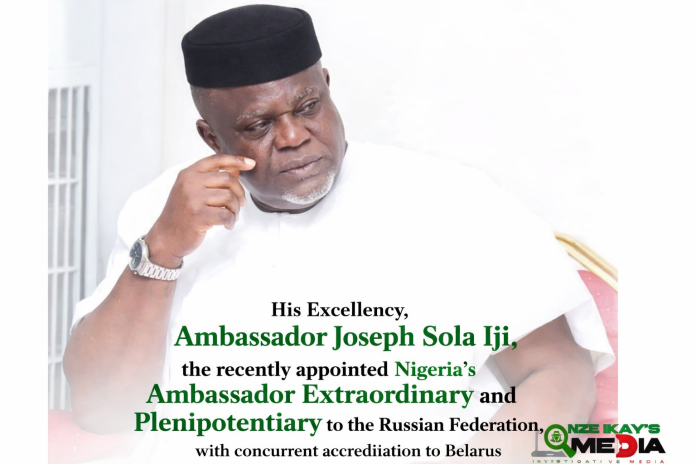
The Newly Appointed Nigerian Ambassador Extraordinary and Plenipotentiary To Russia With Concurrent Accreditation To Belarus, His Excellency, Ambassador Joseph Sola Iji

In the quiet but consequential corridors of international diplomacy, nations appoint not merely representatives but custodians of their interests and interpreters of their aspirations. One such figure is Joseph Sola Iji, recently appointed as Nigeria’s Ambassador Extraordinary and Plenipotentiary to the Russian Federation, with concurrent accreditation to Belarus. His nomination in March 2026 by Bola Ahmed Tinubu marks the return of a seasoned political organiser, lawyer, and experienced diplomat to the global stage.

Early Life and Roots

Ambassador Joseph Olusola Iji was born on November 7, 1956, in Igbobini, located in the riverine Ese-Odo Local Government Area of Ondo State, Nigeria. Growing up in the Ilaje region, an area shaped by fishing, commerce, and communal solidarity, young Sola Iji learned early the virtues of discipline, resilience, and service. In many African communities, elders say, “the child who listens carefully today will one day sit among those who decide tomorrow.” Those who knew him during his formative years often recall a young man with a sharp mind and an instinct for leadership.

Education and Intellectual Formation

Ambassador Iji’s academic journey reflects both depth and versatility. He attended Stella Maris College, Okitipupa, where he obtained his West African School Certificate. His quest for higher learning later took him to CMS Grammar School, Lagos, where he completed his Higher School Certificate. He proceeded to the prestigious University of Lagos, earning a Bachelor’s degree in English in 1979. But his intellectual journey did not stop there. Over the years, he accumulated an impressive array of qualifications:

a. Master of Business and Public Administration from Southeastern University, Washington, D.C.

b. Master of Science in Industrial Relations and Personnel Management from the University of Lagos

c. Bachelor of Laws (LL.B) from the University of Lagos

d. Barrister-at-Law qualification from the Nigerian Law School

e. Professional certification in arbitration from the Chartered Institute of Arbitrators in the United Kingdom.

This multidisciplinary academic background equipped him with a rare blend of legal expertise, administrative knowledge, and diplomatic insight.

Legal and Professional Career

Before venturing deeply into politics and diplomacy, Ambassador Iji established himself as a respected legal practitioner and consultant. He founded Solidarity Chambers, a law firm known for its work in labour law, arbitration, and industrial relations. He also served as Managing Consultant of Resource Development Forum Limited, a consultancy that provided training and advisory services to corporations, trade unions, and government institutions. His professional work placed him at the intersection of law, governance, and economic policy, an experience that would later prove valuable in public service.

Political Journey

Ambassador Iji’s political story is deeply intertwined with the evolution of Nigeria’s progressive political movement. He was a prominent figure in building the Alliance for Democracy in Ondo State during the early years of Nigeria’s Fourth Republic. As the political landscape evolved, he also became instrumental in shaping the Action Congress of Nigeria, which eventually merged into the All Progressives Congress. Throughout his political career, he held several leadership roles, including:

a. Chairman of the Alliance for Democracy in Ondo State

b. Chairman of the Action Congress / Action Congress of Nigeria in Ondo State

c. National ex officio member of the party’s leadership structure.

Within progressive political circles, he became known as a disciplined organiser and grassroots mobilizer, one who believed politics should serve as a vehicle for democratic participation and social development.

Diplomatic Experience

Ambassador Iji’s diplomatic journey began before his current appointment. He previously served as Nigeria’s Ambassador to the Republic of Togo, where he helped strengthen bilateral cooperation between the two West African neighbours. His tenure in Lomé focused on cross-border security cooperation, regional trade facilitation, and strengthening the framework of economic relations within the West African subregion. That experience laid the foundation for his current assignment on a far larger geopolitical stage.

Ambassador to Russia

In March 2026, President Bola Ahmed Tinubu announced the deployment of several ambassadors to Nigerian missions around the world. Among them was Ambassador Sola Iji, who was assigned to the Russian Federation. Russia represents one of Nigeria’s most strategically significant diplomatic partnerships. Cooperation between Nigeria and Russia spans several critical sectors, including:

a. Energy and oil exploration

b. Military and defence collaboration

c. Nuclear energy and technology transfer

d. Educational exchange and scientific research.

e. With concurrent accreditation to Belarus, Ambassador Iji’s responsibilities extend across a broader Eastern European diplomatic landscape.

The Strategic Moment

His appointment comes at a time when Nigeria is seeking to diversify its global alliances and strengthen partnerships beyond traditional Western blocs. Russia’s role in global energy markets, defence technology, and infrastructure development makes the relationship particularly important. Ambassador Iji’s experience in law, governance, and diplomacy positions him to deepen these bilateral engagements. As an African proverb wisely reminds us: “When two rivers meet, they do not lose their identities, they become stronger together.” In many ways, the diplomatic mission in Moscow represents such a meeting of rivers.

A Bridge Between Continents

Ambassador Joseph Sola Iji’s journey, from a riverine community in Ondo State to the halls of international diplomacy, reflects a life shaped by education, political engagement, and public service. His new role is more than ceremonial. It places him at the crossroads of diplomacy, economics, and global strategy. And as Nigeria continues to navigate a changing world order, envoys like Ambassador Sola Iji will play a crucial role in ensuring that the nation’s voice is heard, its interests protected, and its opportunities expanded. In diplomacy, as African elders say, “the messenger carries the weight of the kingdom’s words.” Ambassador Sola Iji now carries that weight on behalf of Nigeria to Russia and Belarus

NzeIkayMedia ✍️

Disclaimer: 

The sketches, images, pictures and videos are obtained from the public domain.
An Analysis of Leadership Under Buhari and Tinubu By Bar. Dele Farotimi

0
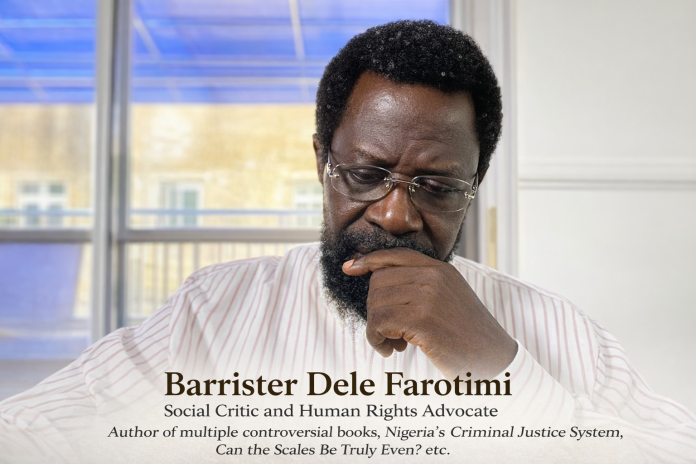
Barister Dele Farotimi, Social Critic and Human Rights Advocate. Author of multiple controversial books, Nigeria's Criminal Justice System, Can the Scales Be Truly Even? etc.

As we reflect on Nigeria’s state, it becomes increasingly difficult to overlook the controversial leadership of former President Muhammadu Buhari and the emerging narrative around Bola Tinubu. Comments such as “Buhari is a shameless irredentist” serve not only as a critique but also as a harsh indictment of his tenure, which many believe has set Nigeria on a troubling trajectory. Buhari’s time in office, spanning from 2015 to 2023, is widely perceived as a period marked by ineffectiveness; the sense of failure in governance became palpable as Nigeria struggled with a myriad of issues, from security challenges to economic decline. This extended heartbreak was not merely a downfall—it was a tragedy that unravelled the already fragile threads of national unity.

A notable example of this detrimental leadership style is encapsulated in the former president’s dismissive characterisation of certain regions, notably Ndigbo, as “a dot in the circle.” This kind of rhetoric betrays a mindset that, rather than fostering inclusivity, seems to prioritise narrow interests that are detrimental to our diverse, multiethnic society. Particularly galling was his decision to impose a Muslim-Muslim ticket in a country that thrives on a mosaic of beliefs and identities, showing a troubling lack of awareness of the nuances of Nigerian society.

As we stand at the crossroads of leadership evaluation in Nigeria, my sincere hope is that we never again witness a leader like Buhari, whose impact has left an indelible mark on the nation’s psyche. However, it’s hard not to draw comparisons with his successor, whose approach to governance also raises questions about effectiveness. Ridicule has often served as a tongue-in-cheek method to highlight the glaring shortcomings of our leaders, a necessary tool in our collective frustration. Then, we have the enigmatic figure often referred to as “Balablu,” whose perplexing language and phrases evoke a mix of bewilderment and laughter amidst the chaos of governance. It’s almost comical how absurdity can weave itself into the fabric of our political discourse, especially when we are in dire need of clarity and direction.

When we delve into the essence of what leadership should embody, it’s glaringly apparent that both Buhari and Tinubu have proven to be burdens not just to governance, but to the very fabric of the Nigerian people. While thoughts of stepping into leadership roles may dance in the minds of the populace, it’s important to recognise the daunting challenges that come with navigating our political landscape. As the sentiment goes, “Buhari is a shameless irredentist,” it captures a broader discontent that resonates deeply within many Nigerians. It is a call to reflect, to demand more from our leaders, and to envision a future where effective, inclusive governance is not just a pursuit, but a reality.

Me:

This is a compelling and emotionally charged piece of political commentary. It effectively uses strong language and specific examples to build its argument. Here is my analysis of the commentary, breaking down its key themes, rhetorical strategies, strengths, and potential weaknesses.

The commentary is a critical analysis of the leadership of former President Muhammadu Buhari and his successor, President Bola Tinubu, as authored by Bar Dele Farotimi. It argues that Buhari’s tenure (2015-2023) was a period of failure and division, and it expresses deep concern that Tinubu’s approach to governance offers no improvement, instead introducing its own form of absurdity. The central thesis is that both leaders have been a burden on Nigeria, and the piece serves as a call for the populace to demand better, more inclusive leadership.

The core of the argument is that Buhari’s leadership was a “tragedy.” The author supports this with two main points:

· Ineffectiveness: A general failure across key areas like security and the economy. And:

· Divisive Rhetoric and Actions: The text highlights specific examples of what it sees as exclusionary behaviour.

· “A dot in a circle”: This quote is used to illustrate Buhari’s dismissive attitude towards the Igbo ethnic group, framing it as a betrayal of Nigeria’s multi-ethnic identity.

· Muslim-Muslim Ticket: This decision is presented not as a political strategy but as a profound insensitivity to Nigeria’s religious diversity.

The author extends the critique to Buhari’s successor, suggesting a continuity of poor governance, albeit with different characteristics.

· Questionable Effectiveness: The text states that Tinubu’s approach “raises questions about effectiveness,” creating a parallel with Buhari’s tenure.

· The “Absurdity” of Communication: The reference to Tinubu as “Balablu” and his “perplexing language” points to a perceived lack of coherence and clarity from the presidency. The author frames this not just as a personal quirk but as a symptom of a deeper issue: absurdity filling a void where serious discourse and direction are needed.

The author explicitly links the two leaders, stating they “have proven to be burdens not just to governance, but to the very fabric of the Nigerian people.” This frames the problem as a systemic failure of leadership that transcends the individuals, though it is acutely embodied by them.

The piece is not merely a lament; it is a call to action. The concluding sentences urge Nigerians to “reflect, to demand more from our leaders, and to envision a future where effective, inclusive governance is not just a pursuit, but a reality.”

Rhetorical Strategies and Literary Devices

· The author uses highly charged words to create an emotional impact and convey the depth of frustration. Examples include “shameless irredentist,” “harsh indictment,” “troubling trajectory,” “heartbreak,” “tragedy,” “detrimental,” “gallingly,” “perplexing,” and “burdens.”

· The inclusion of direct quotes (e.g., “Buhari is a shameless irredentist,” “a dot in the circle”) grounds the abstract critique in specific, concrete statements. This makes the argument more powerful by holding the leaders accountable for their own words.

· Metaphor and Imagery:
· “a dot in the circle”: This powerful metaphor is used to symbolize marginalization and the reduction of a significant group to an insignificant footnote.

· “unravelled the already fragile threads of national unity”: This paints a vivid picture of a nation literally coming apart at the seams.

· “absurdity can weave itself into the fabric of our political discourse”: This suggests that nonsense has become a normal, integrated part of how politics is conducted.

· Comparison and Contrast: The piece is structured around a comparison between Buhari’s failed past and the worrying signs of Tinubu’s present. This creates a narrative of continuity that amplifies the sense of despair and urgency.

· Tone of Sardonic Humour: Phrases like “It’s almost comical how absurdity can weave itself” and the use of the nickname “Balablu” introduce a layer of dark, sardonic humour. This serves as a coping mechanism in the face of frustration and makes the critique more accessible and memorable.

Strengths of the Analysis

· Passionate and Authentic Voice: The author’s frustration and disappointment feel genuine, which lends the piece credibility and emotional weight.

· Specific and Grounded: By citing specific examples (the quote, the Muslim-Muslim ticket, the “Balablu” persona), the author avoids vague generalities and makes a concrete case.

· Connects the Dots: It successfully links the failures of the past administration to the anxieties about the current one, creating a coherent narrative about Nigeria’s leadership crisis.

· Ends on a Constructive Note: Despite the harsh critique, it concludes with a forward-looking call for a better future, which prevents it from being purely nihilistic.

Potential Weaknesses or Points for Further Consideration

· Lack of Counterargument/Nuance: The analysis is unapologetically one-sided. It does not engage with any potential justifications or perspectives that might support the leaders’ decisions. For example, proponents of the Muslim-Muslim ticket might argue it was a strategic move to consolidate a political base, not an attack on diversity.

· Focus on Rhetoric over Policy: While the divisive language is important, the critique of “ineffectiveness” is asserted rather than demonstrated with specific policy failures. The argument would be strengthened by pointing to a particular economic policy or security strategy that failed.

· Subjectivity of Interpretation: Terms like “shameless irredentist” and the interpretation of “a dot in a circle” are presented as facts, but they are deeply subjective interpretations of the leaders’ characters and intentions. A reader with a different perspective might see Buhari’s comment as a statement of political reality rather than ethnic animosity.

· Tinubu Critique is Less Developed: The section on Tinubu is shorter and relies more on the symbolism of his communication style (“absurdity,” “Balablu”) than on concrete actions or policies. It captures a mood but doesn’t dissect his governance with the same level of specific evidence applied to Buhari.

Conclusively, Bar. Dele Farotimi’s analysis is a powerful piece of opinion writing that effectively channels the deep-seated frustration of many Nigerians. Its strength lies in its passionate voice, its use of damning quotes, and its ability to weave a narrative of leadership failure from Buhari to Tinubu. While it sacrifices nuance for impact and focuses more on rhetoric and symbolism than on detailed policy analysis, it succeeds brilliantly as a polemic, a call to conscience and a demand for a different kind of leadership. It serves as a mirror held up to the nation’s political class, reflecting the public’s perception of their inadequacies.

NzeIkayMedia ✍️

Disclaimer: 

The designations employed in this publication and the presentation of materials herein do not imply the expression of any opinion whatsoever of the Publisher (Nze Ikay’s Blog) or its employees concerning the legal status of any country, its authority, area or territory or concerning the delimitation of its frontiers. Equally, the sketches, images, pictures and videos are gotten from the public domain.

Olusegun Obasanjo ruined my billionaire’s life, but I thank God he did By Arc. Jerome Okoro

0
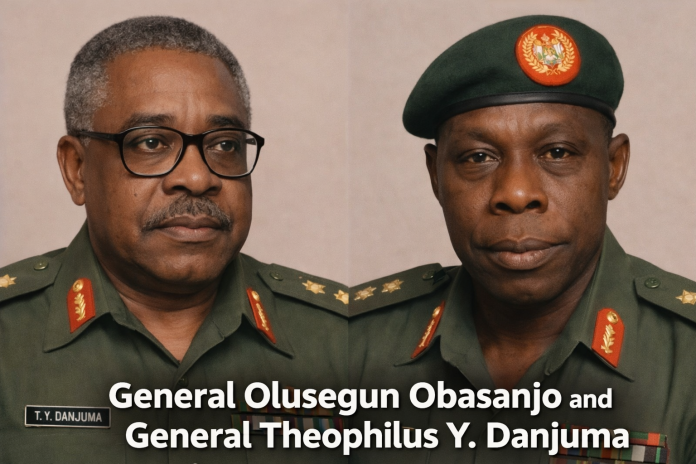
General Olusegun Obasanjo and General Theophilus Y. Danjuma

Olusegun Obasanjo ruined my billionaire’s life, but I thank God he did. Twenty-five years ago, the idea occurred to my friends and I, who were trading fertilizers out of the former Soviet Union that a dormant fertilizer factory, built by KBR (created in 1998 when M.W. Kellogg merged with Halliburton’s construction subsidiary, Brown & Root, to form Kellogg Brown & Root) in Rivers State, Nigeria for $1 billion could be minting cash for everyone.

The idea was simple: We wouldn’t steal (privatise) it, but would pay the FGN to lease it for at least $75m every year, in perpetuity. I took the proposals and financial guarantees to President Obasanjo and he loved it immediately. He convened the Federal Executive Council and they approved. He spoke to Funsho Kupolokun and he took us the the NNPC Board and they loved it. Then the President called the third shareholder, the Governor of Rivers State (on behalf of the amazing people of Rivers State), and Dr Peter Odili not only loved the plans, but held a reception for us in Government House and then sent us off the next day with palm wine from his driver’s village. More on that later.

This episode was typical of Obasanjo’s leadership. Decisive, visionary and absolutely devoid of tribal onanism, which not a few people on Nigerian banknotes were completely and utterly guilty of over indulging in. Few figures command the level of respect and recognition that Olusegun Obasanjo has earned from me through his extraordinary stewardship of Nigeria, especially from 1999 to 2003. This golden period marked a pivotal era that fundamentally transformed Nigeria’s trajectory and solidified his position as one of the most consequential leaders in modern African history.

Obasanjo’s greatest achievement lies in his unwavering commitment to democratic governance and institutional reform. After decades of military rule that had left Nigeria’s democratic institutions weakened, he successfully shepherded the country through a critical transition period. He built institutions and hired the best he could find. He had no qualms about a person’s ethnic background, possibly informed by the fact that he had had sexual conquests in every state of Nigeria if not country of Africa. I have come to describe his achievements, not to praise or castigate him.

The economic transformation under Obasanjo’s leadership was nothing short of remarkable. He inherited a nation burdened by crushing foreign debt, with over $30 billion owed to international creditors, but through masterful diplomacy and fiscal discipline, he successfully negotiated debt forgiveness deals that eliminated nearly 60% of Nigeria’s external debt. His administration’s prudent economic management, coupled with rising oil prices, generated unprecedented revenues that were channeled into infrastructure development and poverty reduction programs, lifting millions of Nigerians out of extreme poverty.

Perhaps most significantly, Obasanjo revolutionized our international standing and transformed Nigeria into a respected voice on the global stage. His diplomatic acumen was instrumental in resolving conflicts across West Africa, mediating disputes in Liberia, Sierra Leone, and Côte d’Ivoire, while his leadership within the African Union helped establish the New Partnership for Africa’s Development (NEPAD), a continent-wide initiative for economic regeneration. Under his guidance, Nigeria emerged as the undisputed leader of black Africa, wielding influence that extended far beyond its borders.

His anti-corruption crusade which defined OBJ’s presidency demonstrated his commitment to transparency and accountability in governance, although critics say he also chopped in Indonesian fashion – performing while helping yourself and friends just enough not to completely scatter the economy and system. He established the Economic and Financial Crimes Commission (EFCC) and the Independent Corrupt Practices Commission (ICPC), institutions that have become models for anti-corruption efforts across Africa. These bodies successfully prosecuted numerous high-profile cases, especially opponents, recovering billions of dollars in stolen public funds and sending a clear message that opposing the Government and trying to chop would not be tolerated. Speaking while eating has always been bad manners.

Obasanjo’s vision for Nigeria extended beyond immediate governance challenges to encompass long-term strategic thinking about the country’s role in the 21st century. His administration launched ambitious infrastructure projects, including the expansion of telecommunications networks that connected rural communities to the global economy, and educational reforms that increased literacy rates and university enrollment. The National Economic Empowerment and Development Strategy (NEEDS) implemented during his tenure created a comprehensive framework for sustainable development that prioritized human capital development and economic diversification.

The legacy of Olusegun Obasanjo as the greatest president of the most populous black nation on earth, rests not merely on his policy achievements but on his fundamental transformation of what it means to be Nigerian in the modern world. He restored dignity to Nigerian citizenship, elevated the country’s profile on the international stage, and demonstrated that African leadership could be both visionary and pragmatic. His presidency proved that with the right leadership, Nigeria could fulfill its promise as the giant of Africa, setting standards for governance, economic management, and regional leadership that continue to influence African politics today.

In the pantheon of great African leaders, Obasanjo stands apart not just for what he accomplished during his presidency, but for how he fundamentally altered the trajectory of the most important nation in black Africa. His legacy endures as a testament to transformative leadership and continues to inspire a new generation of African leaders committed to democratic governance, economic progress, and continental unity.

Aha, returning to my billionaire plan. Everything was going very well until two of my supporters on this project decided that they wanted to enter the same trouser. My Oga Audu Ogbeh, who was both the leader of the ruling party and my Oga at the top, General Chief Olusegun Matthew Okikiola Ogunboye Aremu Obasanjo GCFR, the Balogun of Owo, started seeing 6 and 9 as the same and different numbers at the same time. The President’s private secretary was the first to reach out to share the troubling news. Then, she called again two weeks later to say that the “two fighting” had resulted in “one victorious” and all projects supported by the vanquished were to be “denied further life”.

These decisive and vindictive actions stopped me from becoming a rich person, flying private jets, growing a big tummy, wearing Gucci loafers and sleeping in silk pyjamas. I think I would have hated my life as a billionaire. Instead, I ended up having a normal life of struggling to pay bills and being moved to jump for joy, when friends gifted me a bottle of whiskey. But they also demonstrated why Olusegun Obasanjo was a success. He not only knew how to build, but also how to pull down.

He has been a great leader for our country, warts and all, and I will continue to say he was the greatest.

Disclaimer: 

The opinions and views expressed in this write-up are entirely that of the Writer(s). They do not reflect the opinions and views of the Publisher (Nze Ikay’s Blog) or any of its employees. The designations employed in this publication and the presentation of materials herein do not imply the expression of any opinion whatsoever of the Publisher (Nze Ikay’s Blog) or its employees concerning the legal status of any country, its authority, area or territory or concerning the delimitation of its frontiers. Equally, the sketches, images, pictures and videos are gotten from the public domain.

I Made Obasanjo Head Of State Against His Wish. ~ T.Y. Danjuna

0
General Olusegun Obasanjo and General Theophilus Y. Danjuma

“Then, Murtala was killed. I think it is public knowledge that Obasanjo fled on the day Murtala Muhammed was killed. He remained in hiding until the coup was aborted and he reached out, first, to M.D Yusuf (Inspector-General of Police), who then called him, and he came out of hiding, and joined us in Dodan Barracks. We discussed the funeral of Muhammad and made arrangements as to who would accompany his remains to Kano, so on and so forth.

At the end of the meeting, Obasanjo asked M.D Yusuf and me to stay with him in the chambers (Dodan Barracks). After everybody had left, Obasanjo told M.D Yusuf and me that what had happened had destroyed his faith in the loyalty of the Nigerian Army. That he had decided that after the funeral, he would retire, leave the Army, and go home. But before that, he would name me as the successor to Murtala. I told him that that amounted to desertion and that he could not run away. He was number 2; number 1 had been killed in battle; he, as number 2, would take over.

He said no, no, no; that he didn’t think he should stay; that he wanted to go. We argued that. In the end, Yusuf said, “Look, let’s all sleep over this matter; tomorrow we will decide.” I said, “Look, there’s no question of sleeping over it; the point now is we should be looking for who is going to take Obasanjo’s seat as number 2 because there is no way we are going to allow him to chicken out and leave at this time; we must all stay and face the future together.” So, we left, and I went home. By this time, we had called all the members of the Supreme Military Council to Lagos.

The following day, he (Obasanjo) started to talk in the same vein, and I cut in. I said that Obasanjo could not leave; he had to stay and be the Head of State, and we should be looking for the number 2 man. I had, overnight, considered the consequences of what had happened and came to the conclusion that if we were not careful, we would end up with a religious conflict on our hands. Already, that evening – the evening that it became public knowledge that Murtala had been killed – Dimka had made a broadcast in which he said, “good tidings” among other things. He had imposed a curfew – from dawn to dusk (laugh) and said all sorts of things using the expression, “good tidings.”

Abubakar Gumi, in the North, said that the coup that killed Murtala was Christian because of the utterances of the coup leader, who said, “good tidings,” because it is an expression of Christians. Already, there was tension in the North. The governor of Kaduna State, an air force officer, Usman, had to contain him: that it had nothing to do with Christians, that it was a purely military affair.

I knew that if we were not careful, as time went on, we should be consumed by religious strife in the country. I decided that the new Chief of Staff must come from the North, preferably a Hausa/Fulani man. From my knowledge, I had two candidates – (Muhammadu) Buhari, who was really my number one candidate for that post, and the late Shehu Yar’Adua. Shehu was not in the country; he was abroad as Minister of Transport. You would remember we had inherited a cement armada in the Lagos and Port Harcourt (ports), and his (Shehu’s) first assignment was to decongest the Lagos port and get rid of all the vessels that were clogging Nigerian waters, and attracting huge demurrages from our government. He (Shehu) was abroad attending to that problem when Dimka struck.

So, they were the two candidates. Buhari, at that time, and even today, is one of the most upright Army officers that the Nigerian Army has produced – very clean, a very strict officer. Unfortunately for him, he served under me for a short time in Port Harcourt, and I observed that he was a very inflexible person. I reasoned that Buhari, any day, could be a first-class Chief of Army Staff. Why waste him in a political post? Why shorten his career, because if he became Chief of Staff, he would have to leave at the end of the tenure. Why waste him there?

Besides, I observed that he was too rigid; he was too inflexible to hold a political post. If you are in politics, you must be flexible; you must compromise from time to time. In politics, they call it pragmatism. But in the military, if you are pragmatic, it is regarded as a weakness. I said no, not Buhari. Shehu, I didn’t know him well except that I knew that, of all the officers of his rank, he was the most politicised. So, sending a politicised Army Officer to a political post, I thought, was a good thing. That was how I named Shehu the next Chief of Staff.

When we came to the Supreme Military Council, and Obasanjo started singing the same tune that he had sung to me and M.D Yusuf the previous night, I said no, that was not the issue; he was the most senior person, and he had to stay there. He had to stay in office. He made some feeble resistance, but I think he had slept over our discussion and concluded that if we insisted, he would stay.

There were a few voices of dissent. The first came from the Chief of Air Staff, Isa Doko, who said that the problem we were facing was an Army problem and that the Army boys had confidence in me. That we had just crushed an attempted coup, and we should not put somebody there that the Army didn’t have confidence in. A few other officers supported him, but I overruled them. And so, I imposed Obasanjo on my colleagues in the Supreme Military Council.”

– General TY Danjuma in an interview with THE GUARDIAN, February 17, 2008.

Disclaimer: 

The designations employed in this publication and the presentation of materials herein do not imply the expression of any opinion whatsoever of the Publisher (Nze Ikay’s Blog) or its employees concerning the legal status of any country, its authority, area, or territory or concerning the delimitation of its frontiers. Equally, the sketches, images, pictures, and videos are obtained from the public domain.
A Line in the Sand: When a Giant Refuses to Bow – The USA vs Nigeria!

1
When a Giant Refuses to Bow - The USA vs Nigeria showdown

What happens when a nation, once expected to kneel, digs in its heels and stares down a goliath? We are not merely spectators to a diplomatic spat; we are witnessing a seismic shift in the world order, playing out in real time. Nigeria, Africa’s demographic and economic titan, is standing its ground against a thunderous threat from the United States, a threat of military force from the Trump administration that has sent shockwaves across the globe. But to dismiss this as another Twitter tempest is to miss the forest for the trees.

This is the unmistakable crack in the foundation of American primacy. For decades, the script was written in Washington, and middle powers followed their cues. Today, that script is being torn up. While the world covets Nigeria’s treasure trove of oil, gas, and rare earth minerals, a far more valuable commodity is on display: sovereign will. Nigeria’s defiance is not a solo act but a chorus rising across Africa, a collective refusal to be strong-armed into the old patterns of coercion.

The era when a gunboat on the horizon could dictate terms is fading into history. We are now in the age of calculated defiance, where nations are doing the math and concluding that the cost of submission far outweighs the peril of standing firm. The pivotal question is no longer whether the threat will be acted upon, but what this high-stakes chess game reveals about the crumbling architecture of global power. Are we lurching toward the bargaining table or the brink of disaster?

To understand how we reached this precipice, one must trace the footsteps of history. Nigeria’s resolute posture didn’t spring from a single presidential tweet; it is the bitter fruit of decades of grievances and broken covenants. Speaking with leaders in Lagos and Abuja, one detects not the heat of anti-Americanism, but the deep freeze of disappointment. The promised land of partnership and prosperity never materialised. Instead, Nigeria was handed a devil’s bargain: structural adjustment programs that hollowed out its social fabric, trade deals that favoured foreign interests, and security cooperation that often seemed more concerned with American priorities than with Nigeria’s own fight against terror.

President Trump’s bellicose warnings did not appear out of thin air; they were the predictable backlash to a series of moves by Washington that have backfired spectacularly. A key flashpoint is Nigeria’s burgeoning alliance with China. This is no mere fling; it is a strategic marriage built on concrete and steel, railways, ports, and telecom networks that Western partners had long promised but never delivered on acceptable terms. When the West offered loans with strings that would have strangled Nigeria’s economic sovereignty, China presented an alternative: tangible development without the surrender of autonomy. While Beijing’s model has its own pitfalls, the contrast is stark: on one hand, gleaming new infrastructure; on the other, a mountain of World Bank reports that never paved a single mile of road.

Then came Nigeria’s masterstroke in the global energy game. In the wake of the Ukraine crisis, as Europe scrambled for gas, Nigeria found itself holding a royal flush, vast natural gas reserves that granted it unprecedented leverage. But instead of simply feeding the West’s hunger, Nigeria played its hand with brilliance. It demanded technology transfers, majority ownership for its companies, and climate support for a sustainable transition. In short, it leveraged its resources not as a supplicant, but as a sovereign architect of its own destiny. This assertive pragmatism caught Washington flat-footed.

On the diplomatic stage, Nigeria has also carved a path of principled independence. Its abstention on UN votes condemning Russia was a thunderous silence, speaking volumes. It was a rejection of what many see as selective outrage, a refusal to grant the moral high ground to nations that had themselves rewritten the rules of sovereignty in Iraq and Libya. Nigeria will no longer be a puppet on a string, choosing instead to weigh each issue through the lens of its own national interest and a consistent ethical compass.

This philosophy of “strategic autonomy” is resonating across Africa. In concert with nations like South Africa and Kenya, Nigeria is championing a vision where countries are not forced to pick a side in a new Cold War, but can instead partner selectively to serve their own development. This represents a direct challenge to a world order built on vassal-like allegiances.

The immediate trigger for Washington’s ire, however, was the shot heard around the financial world: Nigeria’s announcement that it would accept payment for its oil in currencies other than the U.S. dollar. To understand the gravity of this, one must appreciate the dollar’s role as the lifeblood of American economic power, a privilege that allows the U.S. to wield the financial equivalent of a nuclear weapon. When a nation of Nigeria’s stature begins to chip away at this pillar, it threatens the very foundation of American hegemony. Trump’s response was not just a warning; it was a vow of vengeance, explicitly tying military action to an economic decision.

Nigeria’s counter has been a masterclass in calm, strategic resolve. President Bola Tinubu, rather than answering fire with fire, has delivered a message of steely determination, affirming that the nation’s economic sovereignty is non-negotiable. Behind the scenes, Abuja is weaving a diplomatic safety net, rallying the African Union, courting BRICS nations, and appealing to European allies who are uneasy with American heavy-handedness. The goal is to make the cost of military intervention so prohibitively high that even the most hawkish administration would blanch. This is asymmetric warfare waged not in the trenches, but in the halls of global power.

Of course, Nigeria is no monolith. It is a tapestry of complex, sometimes conflicting, identities, a nation grappling with deep internal divisions that a foreign power might seek to exploit. Yet, within this crucible, a powerful narrative is taking root among academics and activists, who frame this struggle in explicitly post-colonial terms, invoking the ghosts of Lumumba and Sankara. They recognise the grave risks of defiance but argue that perpetual acquiescence is a slower, more insidious form of national suicide.

At its heart, this crisis is a symptom of a world in painful transition. American unipolarity is waning, not because the U.S. has grown weak, but because other nations have found their strength. Trump’s threat is less a calculated strategy and more the thrashing of a hegemon struggling to accept that it can no longer command automatic compliance.

The stakes are astronomical. Nigeria is an economic powerhouse and a demographic behemoth, a nation whose choices ripple across continents. A confrontation would shatter supply chains, devastate investments, and set a perilous precedent. If Nigeria can successfully defy the dollar, what is to stop Indonesia, Vietnam, or Brazil from following suit?

The USA now stand at a fork in the road, a defining moment for the international community. This is a choice between two visions of the world: one governed by the iron law of coercion, and another built on the respect for sovereignty and the resolution of disputes through dialogue. The gap between America’s rhetoric of democracy and its practice of intervention has eroded its credibility, and Nigeria has become the ultimate test case.

Americans can no longer stand and watch from the bleachers. These actions are taken in their name. If they believe that threatening Armageddon over a currency decision is a catastrophic folly, they as citizens have a duty to raise their voices. True security is not born from fear, but from respect, a currency that must be earned through partnership, fairness, and a genuine commitment to shared prosperity.

Nigeria’s people are not enemies to the people of the United States; they are partners in the shared human endeavour for a better life. Their success does not diminish Americans; rather, it enriches the world. This is a global reckoning. The path of wisdom, prudence, and principle is clear. We must choose it, for the stakes could not be higher.

NzeIkayMedia ✍️

Disclaimer: 

The designations employed in this publication and the presentation of materials herein do not imply the expression of any opinion whatsoever of the Publisher (Nze Ikay’s Blog) or its employees concerning the legal status of any country, its authority, area, or territory or concerning the delimitation of its frontiers. Equally, the sketches, images, pictures, and videos are obtained from the public domain.
Envision Nigeria Under A Theoretical Igbo-led Administration

0
Imagine an Igbo man as Nigerian President

Consider this situation: an Igbo individual ascends to the highest office in Nigeria. Picture a government that embodies the leadership approaches of Muhammadu Buhari or Bola Ahmed Tinubu, where every significant role is occupied by members of the same ethnic group:

– President of Nigeria – Igbo
– Chief Justice of Nigeria – Igbo
– EFCC Chairman – Igbo
– DSS Director-General – Igbo
– IGP of Police – Igbo
– Attorney General – Igbo
– Finance Minister – Igbo
– Accountant General of the Federation – Igbo
– Auditor General of the Federation – Igbo
– NNPC GMD – Igbo
– NAFDAC DG – Igbo
– Chief of Army Staff – Igbo
– CBN Governor – Igbo
– FIRS Chairman – Igbo
– INEC Chairman – Igbo
– Comptroller-General of Immigration – Igbo
– NPA Managing Director – Igbo

Let us be candid with ourselves. Nigeria would descend into chaos. The environment would be rife with resentment, prime-time news would be saturated with debates, urgent town hall gatherings would emerge, and sermons would resonate with cries of “marginalisation.” Hashtags would spark movements. Analysts would forecast national fragmentation. Political figures would threaten constitutional crises. And keep in mind: even if every appointee were the most qualified, the most competent, and the most incorruptible Nigerian available, the backlash would still be intense.

However, the same individuals who supported Buhari’s biased appointments, along with those who now endorse Tinubu’s favouritism under the guise of “merit,” would abruptly begin to advocate for the federal character principle. The very people who once proclaimed “competence over tribe” would start to whisper about “balance for stability.” The fervent advocates of centralised power would unexpectedly emerge as champions of inclusion. The stark truth is that many of us, including my own community, the Ndigbo, would lose our composure. This would not be due to a sudden unfairness in the system, but rather because, for the first time, the goat would not be grazing in our own yard.

This exemplifies the hypocrisy of Nigeria, laid bare for all to witness, much like a yam resting in the market square. We conveniently ignore oppression when it serves our interests. We justify exclusion when it benefits us financially. We even sanctify injustice when it aligns with our desires. Yet, the moment the situation shifts along ethnic lines, we brandish the Constitution and recite it as if it were a holy scripture.

This issue transcends any single individual or tribe. It pertains to our collective dishonesty, the type that permits one to exclaim “thief!” upon witnessing another’s hand in the cookie jar, while their own arm is buried deep within. If we are quick to voice our grievances under a hypothetical Igbo-led administration, we must contemplate our silence, our awareness, or even our applause under any other biased arrangement.

Justice is not genuine justice if it solely safeguards our interests. Equity cannot be considered authentic equity if we are the only beneficiaries. Federal character is not merely an attractive term in our Constitution; it represents the essence of our federation. Nigeria cannot prosper through selective indignation. If balance is essential, it must be upheld consistently. If merit is significant, it ought to apply to all. If national unity holds value, it cannot merely be a transient visitor that appears when it is advantageous.

The pertinent question is not, “What if an Igbo president acted in this manner?” The crucial inquiry is: Are we truly dedicated to fairness, or merely to the advantages of authority? When the circumstances shift, will we continue to respond in the same manner? Or will we ultimately recognise that our belief was never in the rhythm, but solely in who was directing the ensemble?

When we consider a hypothetical government led by an Igbo president in Nigeria, we are faced with the disquieting reality of our selective outrage and hypocrisy concerning equity and justice. This situation urges us to scrutinise our dedication to fairness and inclusivity, prompting us to ponder whether our values remain steadfast regardless of who holds power, or if they simply function as convenient rhetoric when circumstances change.

NzeIkayMedia ✍️

Disclaimer:
All sketches, images, pictures, and videos featured are sourced from the public domain.

Of Fallacies, Forgery And Fakery IV. Akpabio’s Senate And The Incorrigible Descent To Shamelessness.

0
A collage Image of Nigeria's Senate President Godswill Akpabio and Prof. Chris Mustapha Nwaokobia Jnr. - Convener COUNTRYFIRST MOVEMENT - A Good Governance Advocacy Group.

As The 10th Senate Undermines Democracy, Akpabio And His Fellow Travellers On The Path Of Infamy Must Be Held Responsible For Whatever Follows.

There Is No Going Back On Premium Time Transmission Of Election Results… We Shall NOT Allow The RIGGING Of The 2027 General Elections.

I have been compelled to continue with this series on a Rogue Government urged and nudged in Roguery by a Rogue Senate that enjoys the imprimatur of a Rogue Executive. Never have we had such a Rogue Legislature and a Spineless Senate in our History. Akpabio is a Shame, and His Senate is Shambolic, Irresponsible and Shameless.

We are not done with the shame of two versions of a Tax Law in our public space, and we do not yet know whether the Tax Law in operation is the National Assembly Version or the Version Edited by the Executive, now we are forced to grapple with another fraud, forgery and fakery, this time the fallacies go to the root of our democracy and the credibility of the electoral process.

Yes, Nigerians, Political Parties, Civil Society Groups, the Media and Genuine CHANGE AGENTS alike have called for, and stridently pursued the process of ELECTORAL REFORMS, and interestingly the House of Representatives agreed with the call of Nigerians for a New Republic in Election management that allows for Premium Time Electronic Transmission Of Election Results to enhance the credibility of the Electoral Process and drastically reduce election larceny. I gathered that the House of Representatives passed the Bill allowing for the Electronic Transmission of Election Results sometime in November 2025, but the Rogue Senate under Akpabio thinks otherwise, and seeks to legislatively allow and support the intended rigging of the 2027 by the All Progressive Congress, APC. We thought that with 31 Governors presently in bed with the APC that they would confidently allow Nigeria to have an ELECTORAL ACT that meets present global realities. Why are Akpabio and his goons scared, and what are they scared of?

When I warned in the last part of this series that the APC is preparing for a War against the Nigerian People, that the APC shall become its own greatest enemy, and that the next election shall square up the PEOPLE against this Rogue Party and the Rogue Government of the APC not a few of those standing on a Blood-Soaked and Failure-Ladened Mandate of President Bola Ahmed Tinubu spared me some slacks, but so quickly I am vindicated.

Clearly the APC, the Bola Ahmed Tinubu Presidency, the Rogue Senate of Akpabio and the Sycophants supporting the City Boy have admitted that they cannot WIN a Free and a Fair Election, so they MUST pass a Law that allows and enables election larceny and rigging like they did in 2023 BUT we shall not allow them this time, we shall resist this fraud, and we MUST defend democracy against the shenanigans of the Rogues that presently dominate our political amphitheatre.

Thank God that the House of Representatives has clearly admitted that the Version of the Electoral Bill passed by them includes the provision of Premium Time Electronic Transmission Of Election Results. Thank God that the Minority Caucus of the Senate has disclaimed the version released by Akpabio as fraudulent, stating without equivocation that the Harmonised Bill has the provision for the premium time electronic transmission of election results. And thank goodness that Nigerians are rising in Unison and saying NO to the present FALLACY, FORGERY AND FAKERY from the stable of Citizen Godswill Obot Akpabio, the Rogue President of a Rogue Senate.

Folks, eternal vigilance is the price of freedom. We MUST NOT and SHALL NOT allow the unbridled descent to utter shamelessness superintended by APC, Bola Ahmed Tinubu, Akpabio and their goons and cronies; we MUST fight for the Soul of our nation, we MUST defend our hard-earned democracy, and we MUST FIGHT to bequeath to posterity a nation of values and scruples. The STRUGGLE for a decent ELECTORAL ACT is on FULL-THROTTLE, FULL-FLEDGED and UNWAVERING, and we SHALL NOT cower or back down. To the Bridge, Dear Friends.

Chris Mustapha Nwaokobia Jnr.
Convener COUNTRYFIRST MOVEMENT. A Good Governance Advocacy Group.

Disclaimer:
The designations and materials presented in this publication do not necessarily reflect the opinions of the Publisher (Nze Ikay Media) or its employees regarding the legal status, sovereignty, or boundaries of any country, territory, or region. Furthermore, all sketches, images, pictures, and videos featured are sourced from the public domain.

AJAOKUTA FREE TRADE ZONE: A New Dawn for Nigeria’s Industrial Heartbeat!

0
Proposed Ajaokuta Free Trade Zone

As President Tinubu approves the Ajaokuta Free Trade Zone, and Governor Ododo woos investors, the question now on the mind of Nigerians is what does this mean to the citizens of Kogi state and Nigeria in general?

Join me as we jointly journey along. The elephant has finally begun to move! After decades of the Ajaokuta Steel Complex sleeping like a giant with eyes half-open, President Bola Tinubu has given the green light that could finally wake this industrial slumberer! On Thursday, Governor Usman Ododo of Kogi State received the official licence for the Ajaokuta Economic City Free Trade Zone from NEPZA’s MD, Dr Olufemi Ogunyemi. This follows President Tinubu’s November 2025 approval to establish a 4,000-hectare industrial city in Ajaokuta.

Governor Ododo couldn’t hide his excitement: “Before I respond, I want to see that product I am speaking about. Give me my certificate because it is a special product. Today is historic for our people”. WHY KOGI? God’s Special Geography! As our people say, “When God wants to bless a child, He places him at the centre of the market!” Governor Ododo put it beautifully: “If you look at Kogi State, it is specially created by God. It is the only state in Nigeria that borders about 10 commercial centres, including the Federal Capital Territory”. But that’s not all! Kogi sits on a goldmine, literally! The state is blessed with over 30 solid minerals in commercial quantities:
1). Coal (for energy).
2). Iron ore (the blood of steel).
3). Lithium (the new gold for batteries)
4). Gold and beryllium

Ododo lamented, “These have never worked for us”, until now! For the people of Kogi State, this means:

1. JOBS! JOBS!! JOBS!!!
Remember when Ajaokuta was once the largest employer in Nigeria, providing more than 10,000 direct jobs between 1982 and 2002? One former resident recalled when the company’s Thermal Power Plant generated power at full capacity, and the community experienced no outages between 1987 and 1989! Can you imagine? Kogi people were enjoying light while the rest of us were buying generators! The free trade zone promises to bring those glorious days back, and even better!

2. BUSINESS OPPORTUNITIES!
With the zone expected to begin operations in 2026 and groundbreaking in the second quarter, local businesses will feed the industrial machine. From food vendors to transport services, from accommodation providers to raw material suppliers, the economic ripple effect will touch every corner of Kogi!

3. INFRASTRUCTURE DEVELOPMENT!
Governor Ododo dropped another bombshell: plans for an international airport! “This airport will not be just for local operations. It will be international. We want to take advantage of our closeness to Abuja so that the overflow will be accommodated in Kogi State”.

The North Central Development Commission has also pledged to pursue the dredging of Rivers Niger and Benue and facilitate railway connectivity across the region. Imagine: goods manufactured in Ajaokuta moving by rail and water to ports for export!

For all Nigerians, this means:

A. AJAOKUTA STEEL!
The Sleeping Giant Awakens! Governor Ododo assures us: “Before the end of this year, Ajaokuta will be up and running. With the coming of this free trade zone, the project will advertise itself and add to the economic sustainability of our nation”. The Federal Government has been working tirelessly behind the scenes. The Minister of Steel Development, Prince Shuaibu Audu, has led delegations to China, engaging with steel giants like Sino Steel (subsidiary of Baowu Group), Fangda Steel Group, and Jingye Steel Group.

Why does this matter? Ajaokuta has an installed capacity of 1.9 million tonnes, with the potential to scale up to 5 million tonnes annually. That means:
1. Less importation of steel (saving foreign exchange)
2. Cheaper building materials for construction.
3. Support for automotive and heavy machinery industries.

B. JOBS FOR NIGERIAN YOUTHS!
The Ministry of Steel Development has already employed over 200 steel-sector experts and trained more than 700 youths nationwide. With the free trade zone operational, thousands more will find employment, from steel fabrication to mining, manufacturing to logistics.

3. DIVERSIFICATION FROM OIL!
Nigeria has relied on oil as a baby relies on milk. But every child must grow up and eat solid food! The steel sector and free trade zones represent the solid food, sustainable, diversified economic growth that doesn’t crash when oil prices fall.

4. NIGERIA JOINS THE FREE TRADE ZONE MAP
With the addition of Ajaokuta Economic City, Nigeria now has about 46 Free Trade Zones licensed by NEPZA. We’re joining the League of Nations using special economic zones to attract investment, boost exports, and drive industrialisation. As Nairametrics notes, successful zones like Lekki, Onne, and Eko Atlantic City have demonstrated how strategic location, infrastructure, and investor-friendly policies can attract businesses, create jobs, and boost exports. Ajaokuta can replicate this success!

THE FINE PRINT!
Challenges Remain. Let’s not sugarcoat it, the road to hell is paved with good intentions. Ajaokuta has seen many promises fade like shadows at sunset.

i). Budget Concerns: The 2026 budget allocated N6.69 billion to Ajaokuta Steel Company, with N6.04 billion (90.4%) going to personnel costs and only N410.8 million for capital projects. Some stakeholders worry this is too little for meaningful revival.

ii). Scepticism Remains: Mr Philip Jakpor of Renevyln Development Initiative alleged that past administrations had repeatedly used Ajaokuta as “a cash cow for some individuals… They pump billions of Naira into its rehabilitation and yet the mill does not work a single day”.

Dr Emmanuel Shuiabu, a former ASCL resident, emphasised that beyond political will, Nigeria needs engagement with the original builders of the plant and involvement of professionals who have worked there.

THE WAY FORWARD!
Hope on the Horizon! The North Central Development Commission’s MD, Cyril Tsenyil, described the Ajaokuta Economic City as a “strategic initiative” that offers an opportunity to identify developmental gaps and contribute to prosperity. Alhaji Isyaku Rabiu, Chairman of BUA Group, has commended the project, pledging support. The Chinese consortium leader, Li Zhensheng, says the project will be funded in collaboration with global partners.

Finally, Governor Ododo threw a challenge to doubters: “I was not elected to join noisemakers on social media. I signed up to serve my people. If you want to know what we are doing, come to Kogi State. We will provide security and logistics for you to see things for yourselves”. He sees this certificate as a legacy. This certificate is an asset and part of my achievements in office. We are working hard to deliver on our campaign promises. By the time I leave office, this will be part of the legacy for future generations”. NEPZA’s MD, Dr Ogunyemi, reminds us: “The road does not end here. This is the beginning of a long journey. This is a multi-sectoral economic city that can become one of the most successful free trade zones in Nigeria”.

The Ajaokuta Free Trade Zone is more than just another government announcement. It represents a genuine chance to transform Nigeria’s industrial landscape, create jobs, and finally put our steel resources to work. Will it succeed? Only time will tell. But as our people say, “However long the night, dawn always breaks.” Let’s watch this space and hold our leaders accountable to deliver!

What are your thoughts on the Ajaokuta Free Trade Zone? Do you think this time will be different? Drop your comments below! Your favourite economic storyteller, signing out! ✌️

@NzeIkayMedia

Disclaimer:
The designations and materials presented in this publication do not necessarily reflect the opinions of the Publisher (Nze Ikay Media) or its employees regarding the legal status, sovereignty, or boundaries of any country, territory, or region. Furthermore, all sketches, images, pictures, and videos featured are sourced from the public domain.

From the Villages of Enugu to the United Nations – The Unstoppable Rise of Prof. Rita Orji, Nigeria’s Global Gene in AI Governance

0
Prof. Rita Orji, PhD, a woman whose journey began in the humble, electricity-deprived village of Owelli-court in Enugu State, has just been appointed to the United Nations Independent International Scientific Panel on Artificial Intelligence.

In the rarefied heights of global artificial intelligence policy, where the future of technology is being written, a new voice of authority has emerged, and it carries a Nigerian accent. Prof. Rita Orji, PhD, a woman whose journey began in the humble, electricity-deprived village of Owelli-court in Enugu State, has just been appointed to the United Nations Independent International Scientific Panel on Artificial Intelligence. Selected from a staggering pool of over 2,600 candidates worldwide, she is the only Nigerian among 40 global experts tasked with guiding the world’s thinking on AI governance. This appointment is more than a personal accolade; it is a seminal moment that places Nigeria at the epicentre of conversations shaping the future of every human on this planet. It proves that the brightest light often shines from the most unexpected places, and that in the global race for technological ethics, Nigeria has produced a thoroughbred champion.

To understand the weight of her new UN role, one must first grasp the sheer magnitude of the woman herself. Prof. Orji is not just a professor; she is a force of nature. As a Professor of Computer Science and a Canada Research Chair in Persuasive Technology at Dalhousie University, she directs the Persuasive Computing Lab, where she designs interactive technologies that nudge human behaviour toward better health, wellness, and sustainability. Her excellence is not a matter of opinion but of cold, hard data. Stanford University has consistently ranked her among the world’s top 2% of scientists, a feat that places her in the stratosphere of global intellect. Her mantle is heavy with honours: she is an NSERC Arthur B. McDonald Fellow, which is Canada’s highest early-career researcher prize in Science and Engineering, a distinction that marks her as a trailblazer in the truest sense. Her peers have elected her to the Royal Society of Canada, the highest academic honour in the country, affirming her as part of the nation’s intellectual aristocracy. Yet, Prof. Orji’s influence transcends the laboratory. She has been named among the Top 150 Canadian Women in STEM and, perhaps most tellingly, one of Canada’s Top 100 Most Powerful Women. This “power” is not derived from corporate wealth or political office, but from the quiet, seismic force of her ideas and her unwavering advocacy for those who come after her.

The UN panel she now joins is not merely ceremonial. Created by the UN General Assembly, it is designed to be the world’s foremost scientific advisory body on AI, providing independent insight into a technology that is racing ahead of the laws and ethical frameworks meant to contain it. As UN Secretary-General António Guterres noted, this panel ensures that even nations without massive tech sectors can engage with AI on an “equal footing”. In this forum, Prof. Orji brings her unique expertise in human-centred, equitable, and responsible AI. While much of the world’s AI conversation is dominated by giants in Silicon Valley or Beijing, her work ensures that the voice of the Global South, the concerns of underserved populations, and the nuances of culture are not forgotten in the code. She is the conscience in the machine room, ensuring that as we build the future, we build it for everyone.

Perhaps the most inspiring chapter of her story is its beginning. To say Prof. Orji emerged from a “disadvantaged background” is an understatement. Born to parents who never attended school, she grew up in a town without electricity or running water. As a child, she participated in hawking goods to meet the basic needs of life. In her village of 50,000 people, she would become the first woman to ever obtain a doctorate. At 13, she was good enough to integrate the Nigerian team for the International Mathematical Olympiad. She pursued Computer Science at Nnamdi Azikiwe University without ever having touched a computer, a daunting leap of faith that saw her graduate with First-Class Honours, topping her class. Her journey took her to Turkey for a master’s, where she was the only Black student, and then to Canada for her PhD. Each step was a barrier broken. Dr Nur Zincir-Heywood, Associate Dean at Dalhousie, put it best: “Rita is a powerhouse.”

There is a saying that diamonds are only lumps of coal that handled stress exceptionally well. Prof. Rita Orji is Nigeria’s diamond—polished by adversity, hardened by determination, and now reflecting light onto the global stage. With over 350 peer-reviewed papers, millions in research funding, and a heart dedicated to her NGO, Education for Women and the Less Privileged, she proves that you can take the girl out of the village, but you can never take the village’s values out of the girl. As she takes her seat at the UN, she carries with her the hopes of a continent and the dreams of every young girl in Enugu, Lagos, or anywhere else where the lights are dim, but the dreams are bright. In the global dialogue on AI, Nigeria is not just a participant; thanks to Prof. Rita Orji, it is a guide. She is the living proof that the sky is not the limit, it is only the beginning.

NzeIkayMedia ✍️

Disclaimer:
The designations and materials presented in this publication do not necessarily reflect the opinions of the Publisher (Nze Ikay Media) or its employees regarding the legal status, sovereignty, or boundaries of any country, territory, or region. Furthermore, all sketches, images, pictures, and videos featured are sourced from the public domain.

THE FIFTEEN SENATORS WHO STOOD FOR TRANSPARENCY BY VOTING FOR MANDATORY REAL-TIME ELECTION RESULTS TRANSMISSION

0
A Cottage picture of the Nigerian 15 Senators and house members who voted for real-time mandatory electronic tranamission of elction results by INEC

Let it be written in the book of remembrance, let it be carved on the tablets of history, these are the lions who refused to dance to the tune of darkness:

1. Natasha Akpoti-Uduaghan (PDP, Kogi Central) – The iron lady who fears neither the heat of the day nor the chill of the night

2. Enyinnaya Abaribe (ADC, Abia South) – A voice that has refused to be silenced by the roar of lions

3. Abdul Ningi (PDP, Bauchi Central) – Who knows that a lie may travel far, but truth will catch up with it

4. Aminu Tambuwal (PDP, Sokoto South) – Once the Speaker, now the conscience

5. Ireti Kingibe (ADC, FCT) – She who carries the burden of the nation’s heart

6. Seriake Dickson (PDP, Bayelsa West) – The serpent that refuses to shed its skin of integrity

7. Onawo Ogwoshi (ADC, Nasarawa South) – Standing when others sit

8. Tony Nwoye (ADC, Anambra North) – Not the same Tony the marketplace once knew

9. Victor Umeh (ADC, Anambra Central) – The warrior who knows that he who fights and runs away lives to fight another day

10. Ibrahim Dankwambo (PDP, Gombe Central) – The accountant who knows the cost of a stolen mandate

11. Austin Akobundu (PDP, Abia Central) – He who remembers that the sun that shines today will set

12. Khalid Mustapha (PDP, Kaduna North) – A voice from the North that refuses to be bought

13. Sikayo Yaro (PDP, Gombe South) – Small in name, mighty in principle

14. Emmanuel Nwachukwu (APGA, Anambra South) – The sole APGA warrior in the lion’s den

15. Peter Jiya (PDP, Niger South) – He who knows that when one finger touches oil, it stains the others

Fifteen voices. Fifteen consciences. But where were the others? When the hyenas gathered to vote against the sunlight, where were the shepherds?

THE QUESTION THAT REFUSES TO DIE!

Who is afraid of free and fair elections in Nigeria? When a man repeatedly refuses to light his lamp, ask yourself: Does he fear the darkness, or does he plan to move about unseen? When a woman insists on cooking with her eyes closed, ask yourself: Does she truly believe she can season the soup, or does she not want you to see what she is putting in the pot? The ruling APC party has shown its hand. They have danced naked at the village square and now point at others, shouting, “See the madman!” They have, it seems, resolved to disenfranchise Nigerians—not by keeping them from the polling booths, but by ensuring that when they cast their votes, those votes become as water poured into the sand.

THE VOICE OF PETER AKAH: A PROPHET IN THE WILDERNESS! At this point, it is up to Nigerians to either unite and end the APC reign of terror over Nigeria, or the APC will be the end of a democratic Nigeria as we know it.” When Peter Akah, known to many as “Peter for Nigeria,” sat before the cameras on Channels Television, his voice carried the weight of a people who have been betrayed too many times. His words were not merely spoken; they were hewn from the rock of frustration. “Nigeria has become an open crime scene, and what we call government in Nigeria is literally organised criminality. Every institution that is supposed to serve the welfare of the Nigerian people has become weaponised against them.” When the hunter becomes the leopard, who will protect the goats? When the shepherd becomes the wolf, who will safeguard the flock? This is the tragedy of our nation: the very institutions built to protect democracy have become the instruments of its destruction.

“Most unfortunately, the National Assembly, which should be the hallmark of democracy, has become an extension of the presidency, a captured assembly. So today, if President Tinubu asks the Senate and the House leadership to jump up, the question will be, ‘How high?” The elders say, “When the masquerade dances well, everyone praises it. But when it dances only to the drummer hired by one man, the village knows it has lost its masquerade.” Our National Assembly has become a masquerade dancing only to the tune of Aso Rock. “A ruling party that claims to own more than thirty State Governors, have every institution, the judiciary, the police, township boys, city girls, and everybody, is afraid of one simple clause: mandatory real-time electronic transmission of results.” If the chameleon boasts that it fears no colour, why does it tremble when placed on the royal stool? If the ruling party truly believes in its mandate, why does it shake at the thought of transparent results? “INEC itself has proven from their feasibility studies that they have the capacity to do it. So let us not be ambiguous or unambiguous about this. This is a script being played out by the Senate President, Akpabio, written from the presidential villa.”

THE TEAR GAS AND THE TRUTH!

“We were at the gate demanding the implementation of electronic transmission of results, and before you know it, tear gas canisters were released on peaceful protesters. The canisters were shot directly at peaceful protesters. More than twenty or thirty canisters were picked up. This was shot at protesters who ran up to Eagle Square, as far as the Federal Secretariat, even at passersby who were just passing through the road, who were not part of the protest.” When did peaceful protest become a crime worthy of chemical warfare? When did the right to demand transparency become an offence punishable by tear gas? The government that fears its own people is a government that knows its own guilt. As the Yoruba say, “Afraid of the night, afraid of the day, the thief is afraid of everything.” “Who is afraid of free and fair elections in Nigeria? What exactly is the ruling party afraid of?”

THE BILLION NAIRA QUESTION!

“INEC has received two hundred billion naira, claiming it wants to use electronic technology. What kind of technology is INEC trying to adopt and procure with two hundred billion? What happened to the technology that was procured by Mahmood Yakubu with over three hundred billion in 2023? Are BIVAS machines like diapers or Pampers that are used and then disposed of?” The Ibibio say, “The goat that eats yams in someone’s farm does not know that one day it will meet the owner on a narrow bridge.” INEC has eaten the yams of our treasury—over eight hundred and seventy billion naira over the years—and now, on the narrow bridge of electoral transparency, we meet them face to face. “There is something and a lot that the ruling party is not telling us. The budget that was approved by INEC, if not clearly explained to Nigerians, will only aid and sustain electoral malpractices. And that is why, as it is today, it must become a national mobilisation against this legitimising of an electoral act that will guarantee rigging.”

THE SHAME OF THE CHAMBER!

“Why is the Senate President making excuses for INEC? In today’s Nigeria, lawmakers are giving reasons why electronic technology will not work against INEC’s own position. The level of mischief, what a shame! And you could see it play out in the chambers. Lawmakers coming out to chant, ‘APC only, APC only’ because, in the face of all Nigerians and the world, the leadership of the National Assembly is trying to brazenly ensure that they get a law that is going to legitimise electoral malpractice and election rigging.” When the elders gathered to discuss the fate of the village, and some began to chant the name of only one family, the children knew that justice had fled the room. In the hallowed chambers of our National Assembly, lawmakers chanted “APC only” as if they were at a party rally, not a legislative session. What manner of representation is this? “It is a shame, it is a travesty, and Nigerians who mean well for our lives must resist it, because for our lives to count, our votes must count.”

THE PROVISO THAT POISONS THE SOUP

“With that proviso, it is clear that there will be insufficient network, and the basic thing that will happen is that we will then go back to using the form EC8A as the primary source of evidence when election cases finally get to the court.” The lizard that fell from the iroko tree said if it had known, it would have held on tighter. But we know now. We know that the proviso for network insufficiency is the back door through which rigging will enter. As former INEC Commissioner Mike Igini explained to Nigerians, the proviso only serves the interest of persons in government who know that their only hope and guarantee is through election rigging. “INEC has made it clear that as far back as 2019 and 2020, from a technical committee set up between INEC and the NCC, they have implemented electronic transmission of results to as far as ninety-six percent across the country.” Ninety-six percent! The tortoise has shown that it can run, yet it insists on crawling. If INEC has achieved ninety-six percent coverage, why is the four percent being used as an excuse to abandon the entire project? When a man has ninety-six measures of yam flour and one measure of cassava flour, does he throw away the yam flour because the cassava might spoil the soup? “If INEC has received more than eight hundred and seventy billion naira and says it needs two hundred billion for electronic technology, why can INEC not even enter a partnership with Starlink? What will it cost to have technology across the one hundred and seventy-seven thousand polling units?”

THE SHRINE OF RIGGING!

“Instead of lawmakers saying, ‘You have been able to achieve ninety-six percent, what is the other four percent? How can we strengthen it?’ A mischievous parliament will now go back to say, ‘Let us go back to the form EC8A.’ And guess what you will see as the result? Take a look at Obiakpo Local Government. You can see the kind of result and mutilation, because the ground and the shrine of INEC election rigging are in the collation centres.” The Igbo say, “The masquerade that dances in the market square removes its mask in the backyard.” The collation centres are the backyard where our votes are unmasked and murdered. The form EC8A is the knife with which they are slaughtered. And now, they want to return to that form as the primary source of evidence. “INEC, in its own wisdom, said to reduce human interference, let what comes from the polling unit be transmitted in real time, at that point, to a central server where everybody has access to. So that between there and whatever later transpires, the results that everybody has counter-signed, the presiding officer has also stamped on, becomes the evidence that will be admissible.” This was INEC’s own position. This was Mahmood Yakubu’s own paper. And now, they seek to abandon it. When the crocodile changes its mind about crossing the river, ask yourself: Did it see a hunter on the other bank? “Because Nigeria, as it is today, there are strong men who have the power to envisage and to usurp whatever happens within the system. People can go as governors with personal security to the collation centres and twist the entire process.”

THE INSANITY OF REPETITION!

“If you have done a certain thing for a long time, and it has ended in more and more unfortunate incidents, repeating the same thing and expecting a different result, would that not be insanity?” Albert Einstein asked this question. Nigeria lives this question. We have used the form EC8A for decades. We have seen results mutilated, figures inflated, and mandates stolen. And now, they want to return to that same form as the primary evidence. “We must understand the peculiarities of our elections, and that is why the Senate and the National Assembly must be insisting that to bring transparency and accountability, so that this process is seen to be more transparent. What do we do to ensure that it is verified by Nigerians and seen to know that there is transparency? Anything other than that is a bad and surreptitious attempt to steal the mandate of the people.”

THE WAY FORWARD: A NATIONAL MOBILIZATION

Peter Akah’s final words ring in our ears like the town crier’s gong at dawn: “It must become a national mobilisation against this legitimising of an electoral act that will guarantee rigging. Nigerians who mean well for our lives must resist it, because for our lives to count, our votes must count.” The Hausa say, “Dadi ban dadi, gishiri ne”, “Whether it is sweet or not, it is salt.” The truth may not be sweet, but it is the salt that preserves the nation. And the truth is this: we are at a crossroads. One path leads to transparent elections and a democracy that works. The other leads to the legitimisation of rigging and the death of our republic. The fifteen senators who voted for mandatory real-time electronic transmission have shown us the way. They have lit their lamps in the darkness. Now, it is up to us, the Nigerian people, to ensure that their light is not extinguished. For when the people rise, even the leopard changes its spots. When the village unites, even the strongest masquerade must dance to the tune of truth. May we not be like the chicken that sees the hawk circling but continues to scratch the ground for worms. May we look up. May we unite. May our votes count, so that our lives may count.

For posterity’s sake, let this be recorded!

This piece is dedicated to the fifteen senators mentioned above who stood for transparency, to Peter Akah for speaking truth to power, and to every Nigerian who refuses to surrender their birthright of free and fair elections on the altar of political banditry.

NzeIkayMedia ✍️

Disclaimer: 

The designations employed in this publication and the presentation of materials herein do not imply the expression of any opinion whatsoever of the Publisher (Nze Ikay Media) or its employees concerning the legal status of any country, its authority, area, or territory or concerning the delimitation of its frontiers. Equally, the sketches, images, pictures, and videos are obtained from the public domain.
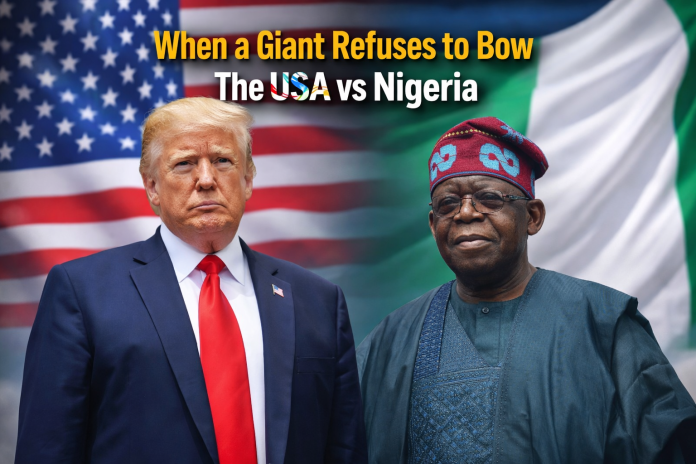
Facing the Truth: Mayor Mike Arnold’s Official Report From The Fact-Finding Mission in Nigeria,

4
Mayor Mike Arnold addressing the press on his Fact-Finding Mission in Nigeria at Abuja Hilton Hotels on October 14th. 2025. He flanked on his left by by Reno Omokri

A Full Statement Of Fact!

…I am just thankful that we were able to get this done; it is profoundly important. One other point: when I was first invited on this mission, I asked, “What is expected of me?” The message I received in response was simple: “Just tell the truth.” And so, that is what I am here to do. It has not been an easy task. I told my host that I would probably lose some friends today. I know this is a very contentious and divisive issue, with strong feelings on all sides. I appreciate the freedom of the assignment, but it carries a heavy weight.

Truth, what is truth? It is an accurate assertion of reality. It is an accurate picture of what is real. That is what truth is. And truth is the only thing, ultimately, that is sustainable. It is the only foundation that can truly bring us together. If any side has built an argument or advanced a narrative not firmly grounded in truth, it simply cannot last. Therefore, I have been exceedingly careful and precise ever since I received the invitation. I have dedicated myself to this almost full-time, researching late into the night, speaking with experts, and investing considerable time. My sources include a retired US Ambassador friend, a longtime international human rights attorney, journalists, and others.

The truth is paramount. I cannot claim that anyone, including myself, can present a perfect, 100% unassailable truth. But what I will share is the very best I could assemble, well-validated, backed by documentation, and thoroughly supported. I can also guarantee this: it will probably make everyone on every side a little uncomfortable. I would ask you to bear with me to the conclusion, because that is what is most important.

I believe there have been misunderstandings, misconceptions, miscommunications, and agendas on all sides of this issue. I have attempted to cast those aside and focus solely on the facts. So if anyone feels uncomfortable, please stay with me. The process is equally uncomfortable for me, as truth often is. But it should be a good discomfort, the kind that guides us all toward a more grounded understanding of reality.

I have typed up my formal remarks and have copies for the journalists. It is a formal statement on the widespread violence and displacement in Nigeria. One of the contributors listed is U.S. Ambassador Lewis Luck, with whom I spent considerable time. He has done a great deal of work in this field. He was an Ambassador to Eswatini (formerly Swaziland), the lead official in charge of rebuilding Iraq after the war, the principal in charge of rebuilding Haiti after the earthquake, and a former board member of the World Food Program. This is a man of stature who has put his name on this report.

Other experts value their privacy in this age of social media, but if any journalist wishes to dig deeper, I would be happy to make personal connections with my sources. If you do not take me at my word, I encourage you to do your own digging. Do not ever take anyone’s word for anything as final.

Specifically, and with no offence intended, if you read it in the Nigerian newspapers, be aware that there are oftentimes twists and turns that do not line up with reality. Do your own homework. Conduct your own research. Search your own soul. Always seek the truth, for that is what is sustainable, and that is what always wins. The truth always wins.

I am going to begin by reading my statement directly, as it is important to be precise. As I mentioned, the text is verbatim from the document that will be distributed and which will also be posted online for everyone to read. I am choosing to read it because I do not want to make any mistakes or deviate from the prepared remarks.

Purpose and Credentials.

My name is Mike Arnold. I recently served as the elected Mayor of the City of Blanco, Texas. I first visited Nigeria in 2010 as a board member of Unity for Africa. Since then, I have made 15 trips to this nation, including six extended investigative missions since 2019. I co-founded Africa Arise International and Africa Arise USA in 2019 alongside my covenant brother, Pastor Jedde Grace. My work has been frequently quoted in top newspapers and television news broadcasts here in Nigeria, and a couple of our videos have gone viral.

I have never extracted anything from Nigeria; I have never taken anything home but souvenirs and small gifts. My closest and most trusted friends are native Nigerians. I come only to give, to serve, and to stand with the people and the nation I dearly love as my second home.

I was personally invited here today by Reno Omokri. I received an unexpected call from him last Sunday morning, while he was on the line with the National Security Advisor, inviting me on this fact-finding trip and to deliver this report. The sole written charge given to me was simply to meet certain key people and then declare the truth. I know what is at stake, and I take this responsibility with the utmost seriousness.

While my plane ticket and accommodations have been paid for, I have not asked for, been offered, or received any other compensation or promise of compensation for this work. I am under no duress. I have been given complete freedom. I am not connected to or compensated by the U.S. government in any way; I am not reporting for them, speaking for them, or advocating any specific policy. That is not my role here. I am here independently, and this statement is made without coercion or inducement of any kind.

I will also note that numerous top U.S. officials have been briefed and are personally aware of my presence here, the purpose of my trip, and my specific itinerary and expected return date. At their request, I am providing them with updates on my status. These officials include, but are not limited to, a Senator from my home state of Texas, Ted Cruz, and Congressman Chip Roy, as well as contacts within the White House, the U.S. State Department, the acting ambassador, and a Pulitzer Prize-winning journalist from The New York Times and their international editor. A great many people are awaiting this report.

Please also note that as I present this statement, it is being simultaneously distributed to these awaiting parties and posted online for public access. This statement is my formal account and analysis of facts, findings, and firsthand documentation regarding the widespread claims of violence, displacement, and atrocity crimes in Nigeria, claims that these acts are primarily directed against Christian populations in the North and Middle Belt, and claims regarding whether this violence rises to the level of genocide.

Let me just pause there. This is heavy. This is serious. It is not something for word games. This report is addressed to journalists, international observers, human rights bodies, and policymakers in the United States and abroad. We have travelled to cities, villages, and remote encampments from Bokkos, Jos, and Gwoza to Abuja, Lagos, Port Harcourt, Akwa Ibom, and Makoko. I have been all over this nation in the last six years. I have interviewed governors, cabinet ministers, traditional rulers, two former presidents of Hausa extraction, and many others.

I have met orphans whose parents were hacked to death before their eyes. I have helped build schools in Internally Displaced Persons (IDP) camps. I have documented over 80 hours of filmed testimony and evidence at great personal risk, which will soon be released in our documentary film, Me and Ms Hatutu. My findings carry the weight of direct personal experience.

Nigeria in 2010: A Nation at Peace.

In 2010, Nigeria was a beacon of rising prosperity and religious tolerance. It was often cited as the only country where radical Islam was being effectively pushed back. Terrorist attacks were rare and sparked national outrage. The number of recognised IDPs was effectively zero, with only minimal displacement from localised communal conflicts. This stands in stark contrast to the crisis that followed, a crisis marked by a staggering 1200% surge in Internally Displaced Persons (IDPs) the very next year, in 2011, following Boko Haram’s violent escalation. The prior absence of such a displacement crisis is both verifiable and damning.

Today, an accurate count is impossible because I have personally stood in schools within camps that governments around the world, including the Nigerian government, officially deny exist. Therefore, the commonly quoted figures of three to four million IDPs are clearly underestimates. I have heard numbers as high as nine million. What has changed since then?

By 2014, Nigeria’s stability was shattered. Foreign meddling, including direct U.S. involvement, played a pivotal role in the 2015 election, enabling a regime change that ultimately emboldened actors who ignored or enabled extremist violence. I have received high-placed eyewitness testimony confirming this interference, with firms like Cambridge Analytica further skewing the political landscape. Simultaneously, radical jihadist elements, fueled by an influx of foreign fighters from Libya and the Sahel in the aftermath of the 2011 Arab Spring, flooded into Nigeria. Many of these actors have stated they were “invited, not invaded” at that stage. Their arrival amplified the threat of Boko Haram and ISWAP.

Today, over four million Nigerians are displaced, a deliberately conservative estimate based in part on my own work in hidden camps and on officials who labour to officially re-label these IDPs as “criminals” or “vagrants.” I must pause here to make a crucial point, one that is very clear to Nigerians. Two years ago, we broke ground for a school in an IDP camp, and several journalists covered the event. My remarks, and the entire purpose of our organisation, is to build schools in IDP camps. Yet, the news reports stated we built schools in “rural communities,” surgically removing the entire concept of IDPs from the story.

If truth is the only path to unity, and if truth is the only sustainable foundation, then the Nigerian media, at least in my experience, has failed profoundly. I do not know what justifies changing my words to sterilise reality, but if you work for a paper and are guilty of this, you are not a journalist; you are a propagandist. For shame. Your job is to speak the truth. Nigeria cannot heal, advance, or succeed if its people rely on your words for understanding and you are lying to them. I apologise for the detour, but this is reality. This is too important. Do not change my words.

The vast majority of these IDPs are Christians driven from their homes by deliberate political engineering and radical conquest. While mostly Muslim IDP camps do exist, one of our schools serves an entirely Muslim population of several hundred children; the pattern of displacement is unmistakable. Since 2019, our team has conducted relentless frontline research at great personal risk. We have interviewed survivors across multiple states, operated schools in two IDP camps for both Christians and Muslims, with a third under construction, serving a present total of 550 students. We provide free, high-quality education, and in doing so, we hear their stories and their parents’ stories firsthand, as eyewitnesses.

We have filmed camps that the UN and the Nigerian government deny exist. I can take you to them. We have recorded numerous IDP testimonials on our YouTube channel, My Voice Matters. In late 2024, my team visited and filmed in Goshe, in Gwoza LGA, Borno State. A once-thriving Christian farming community is now a post-apocalyptic wasteland. Recent attacks in 2025 confirm the ongoing devastation, with surviving Christians now confined to military zones to avoid abduction or execution.

An aside: I was able to visit, and our team connected with a small church congregation within that protected zone. Not long afterwards, we were sent a Boko Haram video showing members of that very church being decapitated with dull axes. Those were our friends. Our syndicated story exposes a reality ignored by officials. Many people from Gwoza have been refugees in Cameroon for over a decade, abandoned by Nigeria, while those who returned languish in the FCT, their homelands occupied by Boko Haram as the seat of its caliphate for years.

Across regions and years, we have documented a chilling and consistent pattern: churches destroyed, Christian homes torched, and jihadists resettled on captured lands, while authorities deny or excuse the attacks. While some Muslims who resist extremism are also targeted, absolutely, peaceful Muslims are targeted; the overwhelming evidence is undeniable. With thousands of churches razed and the violence so clearly selective, the evidence leads to only one conclusion: this is a faith-based genocide against Christians and those who reject radicalism.

This is what some claim. But what truly drives this violence? From the highest-level testimony and the deepest research, three primary, calculated drivers emerge; this is not chaos, but a coordinated campaign.

A. First, Radical Islamic Conquest.

Armed groups, bolstered by foreign fighters from Libya and the Sahel in the wake of the Arab Spring, seek to impose an extremist ideology. They operate with local enablers and political protection, in a strategy described by eyewitnesses as nothing less than jihad by occupation.

B. Second, Blood Mineral Extraction.

I was guided toward this truth by a former President of Nigeria. According to official government estimates, which in my humble opinion are profoundly conservative, Nigeria loses $9 billion annually to the illicit mining of gold, tin, and lithium. Time and again, communities are wiped out, and if you return shortly after, you find the land scarred by mounds of dirt from strip-mining. Of that $9 billion, a significant portion, estimated at least 10%, is funding the very violence and corruption that enables this destruction. That is $900 million a year fueling this terror. This demands immediate and thorough investigation. We have documented heavy machinery and foreign buyers appearing mere days after displacements, exploiting the lands of the violently displaced.

C. Third, Political Realignment.

In some cases, this is more war than politics. Local Government Areas have been overrun, electoral districts redrawn by force, and militants resettled on conquered lands. Documented cases exist where fighters are each given four abducted wives to deliberately skew demographics and dismantle communities deemed politically inconvenient. This is not speculation; it is fully documented and should be beyond debate.

I must address a critical euphemism: the term “farmer-herder clashes.” While such conflicts have occurred for generations, this phrase is now, in many instances, a cynical doublespeak. It weaponises historical land disputes to mask a modern reality of jihadist conquest. For centuries, herders and farmers coexisted, with disputes rarely turning lethal. Today, villages are systematically razed, churches levelled, and tens of thousands are dead. This is systematic terror, not a grazing conflict. To call it otherwise is a lie akin to labelling the ethnic cleansing in Bosnia a “neighbourhood spat.”

These targeted, deadly attacks are the same, whether the perpetrators are labelled as herders, bandits, or insurgents. The puppets may change, but the same malevolent forces pull the strings. A jihadi by any other name is just as deadly. Mincing words over labels is an intentional obfuscation.

While global attention focuses on Boko Haram and ISWAP, the majority of killings and displacements across the Middle Belt are, in fact, carried out by radical Islamist Fulani ethnic militias. Numerous field reports, satellite imagery, and survivor testimonies confirm that these militant groups, often operating under political protection and mislabeled as herders, are responsible for the most widespread, systematic, and sustained attacks on Christian farming communities. Their campaigns of organised massacre, forced displacement, and strategic land occupation extend far beyond traditional disputes. Today, these militias represent the single most lethal terrorist threat to Nigeria’s stability, surpassing Boko Haram and ISWAP combined in their reach, frequency, and civilian death toll.

This brings me to the crime of obfuscation. I have personally seen ongoing efforts by officials and their loyal media to bury the truth, sanitising massacres as “conflict,” labelling displaced survivors as “vagrants” and “criminals,” and refusing to name the perpetrators. This is not confusion; it is complicity. To play semantic games while people die is obscene. There can be no solution while leaders use word games to hide the truth.

So, let us come to the conclusion, for this is where it matters most. The question before us is whether this meets the legal definition of genocide. It is not a vague concept, and we must not treat it as such. I did not start with this conclusion; I arrived at it through the evidence. Per Article 2 of the UN Convention on the Prevention and Punishment of the Crime of Genocide (1948), genocide includes acts committed with the intent to destroy, in whole or in part, a national, ethnic, racial, or religious group. This includes:

* Killing members of the group.

* Causing serious bodily or mental harm.

* Deliberately inflicting conditions of life calculated to bring about its physical destruction.

* Imposing measures intended to prevent births.

* Forcibly transferring children of the group to another group.

The evidence before us is undeniable: targeted killings, mass displacement, the destruction of homes and churches, and the systematic annihilation of Christian identity.

Therefore, it is my conclusion and my formal finding, as an objective expert eyewitness, a longtime friend and traveller throughout Nigeria with access at the highest levels, based on more than five years of investigation, field interviews, firsthand documentation, and deep consultation with top scholars, statesmen, and legal experts, that I declare without any shadow of a doubt:

The campaign of violence and displacement in the Northern and Middle Belt of Nigeria constitutes a calculated, current, and long-running genocide against Christian communities and other religious minorities. To continue to deny this is to be complicit in these atrocities. I say this not in anger, but in truth and grief. My stated assignment was to speak the truth, and I have done so to the best of my ability. I believe Nigeria has a bright future. I believe in Christian love and solemn harmony. I believe the good people of every tribe, faith, and party must stand against this evil. But first, we must name it. Here I stand; I can do no other. So help me, God!

By Mayor Mike Arnold, Oct 14, 2025, FCT, Abuja, Nigeria.

Disclaimer: 

The opinions and views expressed in this write-up are entirely those of the Writer(s). They do not reflect the opinions and views of the Publisher (Nze Ikay Media) or any of its employees. The designations employed in this publication and the presentation of materials herein do not imply the expression of any opinion whatsoever of the Publisher (Nze Ikay Media) or its employees concerning the legal status of any country, its authority, area, or territory or concerning the delimitation of its frontiers. Equally, the sketches, images, pictures, and videos are obtained from the public domain.
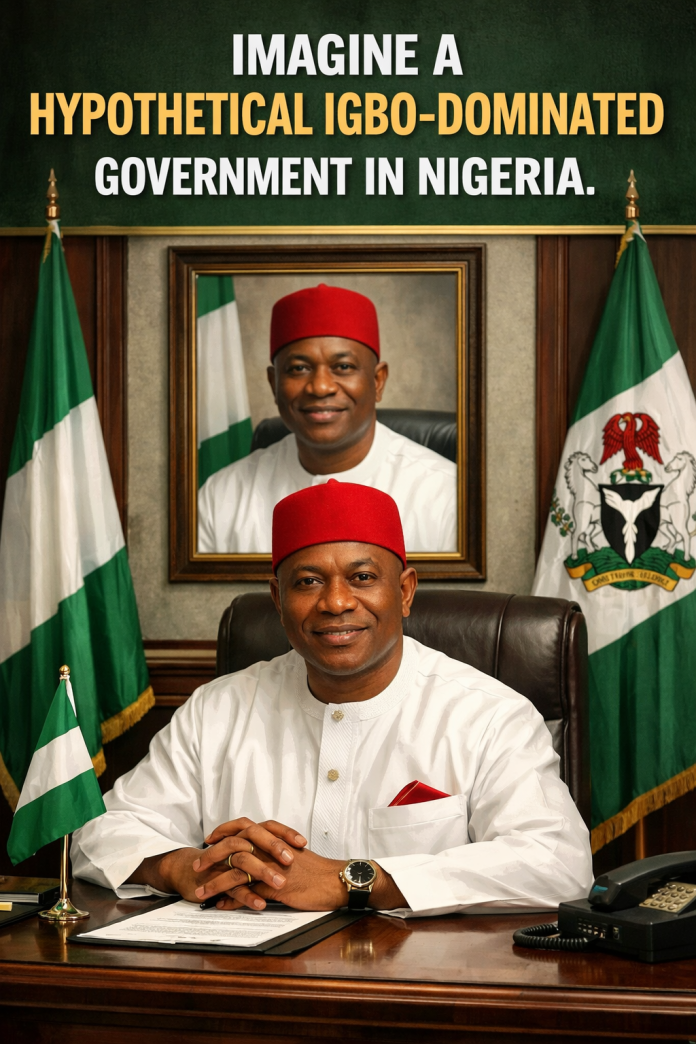
A New Dawn in the Niger Delta: The BUA Refinery and its Promise to Nigeria

0
BUA Refinery and Petrochemical Complex in Akwa Ibom State, Nigeria

Rising from the lush, oil-rich landscapes of Akwa Ibom State, a new titan of industry is taking shape. This is the BUA Refinery, a monumental 200,000 barrels per day testament to Nigerian ambition and a pivotal chapter in the nation’s economic story. More than just steel and concrete, it is a beacon of progress, strategically nestled in a state whose name, Akwa Ibom, aptly means “Praise” or “Greatness.” It is here, in this nurturing cradle of immense potential, that Nigeria’s journey towards energy independence and industrial transformation is being powerfully accelerated.

Akwa Ibom State is not merely a location for this project; it is an active and nurturing partner. Blessed with a deep-sea port and a forward-thinking government, the state provides the ideal ecosystem for an endeavor of this magnitude. The refinery harmonizes with the state’s vision for economic diversification, transforming its natural resource wealth into tangible, lasting prosperity for its people. By choosing Akwa Ibom, BUA has rooted its legacy in a land poised for growth, ensuring that the benefits of this industrial giant will ripple outwards, creating jobs, fostering local businesses, and igniting a wave of ancillary industries. This symbiotic relationship between the refinery and its host state is a blueprint for a successful public-private partnership in Nigeria.

The importance of the BUA Refinery cannot be overstated. For decades, Nigeria, a nation floating on a sea of crude oil, has paradoxically relied on imported refined petroleum products. This costly dependence has been a heavy anchor on our economy, draining billions in foreign exchange and subjecting our nation to the volatile tides of the global market. The BUA Refinery, built in partnership with France’s renowned Axens, represents a decisive break from this paradox. It is a bold declaration that Nigeria is ready to refine what it produces, to master its own resources, and to feed its own energy needs.

The economic impact of this venture is both immediate and generational. In the present, the construction and eventual operation of the refinery are a massive stimulus, creating thousands of direct and indirect jobs, empowering local communities, and catalyzing infrastructure development across the region. It signifies a massive vote of confidence in the Nigerian economy, attracting further foreign investment and showcasing our capacity to execute world-class projects.

But the true magic unfolds when we gaze into the future. The BUA Refinery is engineered to produce Euro-V standard fuels—the cleanest and highest quality available. This means Nigerians will breathe cleaner air while enjoying more efficient gasoline, diesel, and jet fuel. Furthermore, its production of polypropylene, a key raw material for plastics, textiles, and packaging, is a masterstroke. It lays the foundation for a whole new manufacturing ecosystem, moving Nigeria up the value chain from a raw material exporter to a producer of intermediate and finished goods. This is the very essence of industrialisation.

The refinery’s output is destined for both domestic and regional markets, positioning Nigeria not only as a self-sufficient nation but as a regional energy hub. The savings in foreign exchange from ending fuel imports will be monumental, strengthening the Naira and freeing up crucial resources for investment in other critical sectors like healthcare, education, and agriculture.

In essence, the BUA Refinery is more than a facility; it is a symbol of national potential realized. It is a story of turning the key to our own treasure chest. From the nurturing soils of Akwa Ibom State, it stands as a powerful engine destined to drive Nigeria towards a future of energy sovereignty, industrial diversification, and sustained economic prosperity for all its people. This is not just a steel investment; it is an investment in the Nigerian dream.

NzeIkayMedia ✍️

Disclaimer: 

The designations employed in this publication and the presentation of materials herein do not imply the expression of any opinion whatsoever of the Publisher (Nze Ikay’s Blog) or its employees concerning the legal status of any country, its authority, area, or territory or concerning the delimitation of its frontiers. Equally, the sketches, images, pictures, and videos are obtained from the public domain.
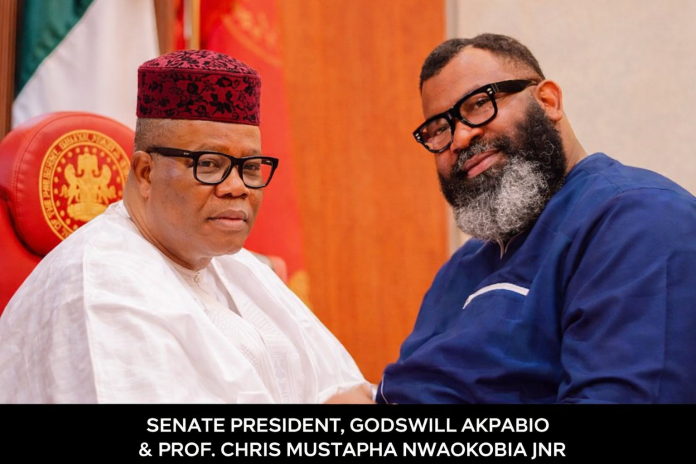
BUA Refinery and Petrochemical Complex in Akwa Ibom State, Nigeria

A Life Alight: The Enduring Legacy of Rev. Dr Uma Ukpai

0
Rev. Dr. Uma Ukpai
Rev. Dr. Uma Ukpai

The news of the passing to glory of Rev. Dr Uma Ukpai ripples across the globe not as a tremor of despair, but as a profound, echoing chord of a life magnificently lived. He was more than a man; he was a force of divine nature, a vessel through which the winds of the Holy Spirit swept across nations, igniting hearts and transforming destinies. To speak of him is to speak of a life wholly surrendered, a beacon whose light originated from a singular, unwavering source: his love for God and humanity.

From the Clay of Humble Beginnings: The Making of a Vessel

Every great oak begins as a sapling, and so the story of this apostolic giant finds its roots in the humble soil of Afaha Obong, in Nigeria’s Akwa Ibom State. His early life was a tapestry woven with the threads of ordinary existence, yet even then, a unique purpose simmered beneath the surface. The path to his Damascus Road was not paved with lightning but with a deep, personal encounter with the living Christ. It was a transformation so radical, so all-consuming, that it reoriented the very axis of his life. The young Uma Ukpai stepped out of the shadows of a former self and into the brilliant, demanding light of a divine calling.

The Voice in the Wilderness: An Unparalleled Evangelical Fire

Armed with nothing but a thunderous voice, an unshakeable faith, and a Bible that was both his sword and shield, Rev. Ukpai stepped onto the evangelical stage. He was not merely a preacher; he was a spiritual architect, building altars of faith in open fields, crowded stadiums, and town squares. His crusades were not simple gatherings; they were celestial convocations where the atmosphere crackled with expectation. With a passionate commitment that was both captivating and convicting, he presented the Gospel not as a distant theory, but as a present-tense reality for healing, deliverance, and radical transformation. His messages were a unique blend of deep theological insight and practical wisdom, delivered with a prophetic urgency that could unsettle the complacent and comfort the broken. He spoke, and strongholds crumbled. He prayed, and lives were reassembled. Through the Uma Ukpai Evangelistic Association, his voice transcended borders, reaching across Africa and the world, turning countless souls towards the saving grace of Jesus Christ.

A Global Imprint: Mentoring Generations and Serving Humanity

Rev. Dr Uma Ukpai’s influence was not confined to the pulpit. He was a master builder of people, a mentor who saw the potential in a generation hungry for spiritual authenticity. He founded the Bible College, a citadel of learning that has equipped thousands of pastors and evangelists with sound doctrine and a fiery evangelistic zeal. His disciples now span the globe, each one a flickering flame from the great torch he carried, continuing the work of ministry in every sphere of society. His service to humanity was the natural overflow of his love for God. He understood that faith without works is hollow. His ministry was a channel for compassion, providing for the needy, educating the less privileged, and offering a hand of hope to the downtrodden. He was a father to the fatherless, a counsellor to the confused, and a steadfast pillar in the community, proving that true godliness is expressed in tangible acts of love.

The Echo of a Well-Lived Life: A Legacy That Never Fades

While the earthly vessel will soon be laid to rest, the voice of Rev. Dr Uma Ukpai is far from silent. It echoes in the prayers of the millions he led to Christ. It resonates in the sermons of the ministers he trained. It whispers in the quiet confidence of the lives he restored. He will be fondly missed, the gravitas of his presence, the power of his intercession, the wisdom of his counsel. There is a bittersweet ache in his absence, a sacred space he once filled. But who can question God or His will? Yet, as he often taught, God knows best. We surrender to the divine timing, trusting the Master’s plan. The curtain has fallen on a life that was, by every measure, a resounding success. He fought the fight, finished his race, and kept the faith. So, we do not say goodbye in sorrow, but we declare with hearts full of gratitude: It is well. The beacon may have been called home, but the land is now illuminated by countless lights he helped to kindle. The life of Rev. Dr Uma Ukpai was a beautiful, compelling sermon, and its closing “Amen” is not an end, but an eternal beginning in the hearts of all who were touched by his extraordinary journey.

The Sacred Pause: Sorrow Infused with a Glorious Hope

And now, there is a silence where his voice once thundered. We feel the weight of his absence, the missing gravitas of his presence, the quieted power of his prayers. Indeed, he will be fondly, deeply missed. Yet, this is where our sorrow is transformed. For we are not, as the Apostle Paul reminds us in 1 Thessalonians 4:13-18, “to not grieve like the rest of mankind, who have no hope.” and I quote: “But I do not want you to be ignorant, brethren, concerning those who have fallen asleep, lest you sorrow as others who have no hope. For if we believe that Jesus died and rose again, even so God will bring with Him those who sleep in Jesus. For this, we say to you by the word of the Lord, that we who are alive and remain until the coming of the Lord will by no means precede those who are asleep. For the Lord Himself will descend from heaven with a shout, with the voice of an archangel, and with the trumpet of God. And the dead in Christ will rise first. Then we who are alive and remain shall be caught up together with them in the clouds to meet the Lord in the air. And thus we shall always be with the Lord. Therefore, comfort one another with these words”.

Unquote: We cling to this glorious promise: “For the Lord himself will come down from heaven, with a loud command, with the voice of the archangel and with the trumpet call of God, and the dead in Christ will rise first. After that, we who are still alive and are left will be caught up together with them in the clouds to meet the Lord in the air. And so we will be with the Lord forever.” This is not the end of Rev. Dr Uma Ukpai’s story; it is merely the moment he has risen first. He has answered the ultimate call in physical life. His earthly race, run with impeccable faith and endurance, is complete. He has received the “Well done, good and faithful servant.” Therefore, as Christians, we do not say a final goodbye in the language of despair. We whisper a “see you later, Daddy” in the language of heaven. We comfort one another with these words. His symphony on earth has reached its crescendo, but the melody of his life continues in the eternal chorus of the saints and in the countless lives forever changed by his journey. He has met the Lord in the air. And thus, he is, and forever shall be, with the Lord. It is well.

NzeIkayMedia ✍️

Disclaimer: 

The designations employed in this publication and the presentation of materials herein do not imply the expression of any opinion whatsoever of the Publisher (Nze Ikay’s Blog) or its employees concerning the legal status of any country, its authority, area, or territory or concerning the delimitation of its frontiers. Equally, the sketches, images, pictures, and videos are obtained from the public domain.
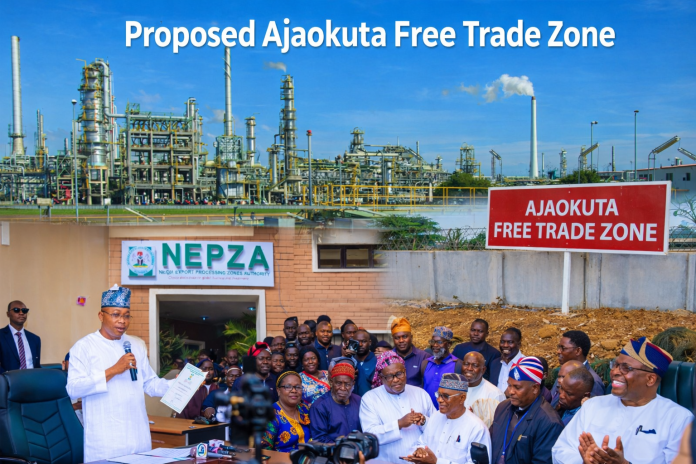
What Would Peter Obi Have Said If An Elevator Malfunctioned In Nigeria While President Tinubu Was Using It?

0
A collage picture of President Trump and his wife, Melanie Trump and his Security stock on the elevator at the UN General Assembly Building and Mr. Peter Obi and done by Mr Reno Omokri

In a WhatsApp group I belong to, I saw the following purportedly written by Reno Omokri. It is a long read, and I implore you to kindly read till the end:

What Would Peter Obi Have Said If An Elevator Malfunctioned In Nigeria While President Tinubu Was Using It?

This was President Trump and First Lady Melania as they were stuck on a malfunctioning elevator yesterday at the United Nations building in New York. Yet, have you seen a single American saying, ‘America is finished’ because of the snafu? If this had been President Tinubu and First Lady Senator Oluremi Tinubu, what do you think Peter Obi and his horde of Rudapests would have done? Of course, they would have de-marketed Nigeria with their usual tirade of ‘Nigeria is finished’.

A string of good things has recently occurred in Nigeria. Please fact-check me: Our economy grew by 4.23% last quarter. To put this in context, the United Kingdom’s economy grew by only 0.2% within the same period. Also, oil theft has been reduced to less than 10,000 Barrels Per Day, a sixteen-year low. The result is that Nigeria has overshot its OPEC quota for three consecutive months for the first time in over a decade and is set to do the same for the fourth month, producing an average of 1.71 million Barrels Per Day.

Additionally, Nigeria’s total income has increased by 411%, even as the nation generated revenues of ₦3.65 trillion in September 2025, compared to the ₦711 billion recorded in May 2023, the last month of the Buhari era. Also, after a record trade surplus last year, Nigeria appears set to beat its 2024 figure. Our trade surplus rose 44.3% in Q2 to ₦7.46 trillion, up from ₦5.17 trillion in Q1. Food prices have significantly reduced, resulting in a drop in inflation to 20.12% in August 2025, a 1.76% drop from July’s 21.88%. And finally, Foreign Reserves are above $42 billion.

However, none of these positive events has attracted Peter Obi’s attention. But let one negative event happen outside Igboland, and Peter Obi will immediately exaggerate it. This is in line with Obi’s tribalistic character. That is Peter Obi’s regular trademark. If it happens in Igboland, Obi will suddenly become deaf, dumb, and blind. But Peter Obi will dance naked in public if it occurs in the North or Southwest. Or am I lying? – By Reno Omokri

Me:

The Dance on the Rooftop While the House Burns: A Response to Reno’s Sweetened Narrative ⬆️

When a man is paid to sweep the palace square, he will never tell the king that the outer walls are crumbling. He will present a perfectly clean corner and declare the entire kingdom in order. This is the tragic comedy we witness today with the hired voices of this administration, who, like the proverbial “frog that boasts from the safety of its swamp,” sing praises of a prosperity that exists only in press releases and fabricated spreadsheets.

This recent sermon by Reno Omokri, a man whose political convictions shift with the direction of the financial wind, is a masterclass in this deception. He asks us to ignore the groaning stomachs of millions and instead marvel at the economic figures dancing on a screen. But we must ask: What is the value of a towering iroko tree if its shade provides no coolness and its roots drink all the water, leaving the surrounding soil barren?

The Feast of Numbers and the Famine of Reality:

They trumpet a 4.23% economic growth, comparing it to the United Kingdom’s 0.2%. This is like comparing the growth of a malnourished child to that of a fully grown adult. The UK’s 0.2% is an addition to a massive, industrialised economy. Our 4.23%, however, is a calculation on a base weakened by decades of neglect and recent, punishing policies. When the price of garri triples, the economy “grows” on paper, but the pot in the common man’s kitchen grows emptier. This is not growth; it is the “inflation of suffering,” a statistical illusion that masks the real hunger in the land.

They celebrate a trade surplus of ₦7.46 trillion. But where is this surplus felt? Has it repaired the collapsed Lagos-Ibadan expressway? Has it stocked our hospitals with medicines? Has it reduced the tuition fees of our universities? A national surplus that does not translate to the well-being of the citizens is like a man who counts his wealth in a currency that cannot buy food in his own market. It is a meaningless number, a “beautiful cloth that cannot cover nakedness.”

The claim that food prices have “significantly reduced” is an insult to every Nigerian who has faced the market square. To say inflation has dropped to 20.12% is to celebrate a slight decrease in the speed of a falling knife. It is still falling, and it is still cutting deep. When a man’s headache changes from a pounding sledgehammer to a constant, debilitating drill, he is not healed. He is still in pain.

The Paid Drummer and the Silent Village:

Reno Omokri’s sudden, fervent support for an administration he once opposed is a story as old as politics itself. It is the story of “the hunter who, after failing to kill the leopard, is hired to beat the drum for its coronation.” He speaks of “Rudapests” and tribal bias, but this is a classic tactic: when you cannot defend the message, attack the messenger with noise. It is an attempt to divert attention from the empty pot by pointing at the flies buzzing around it.

The real issue is not Peter Obi’s hypothetical reaction to a malfunctioning elevator. The real issue is that in Nigeria, the entire national elevator is stuck. It is stuck between floors—with the elite on the top, enjoying the view, and the masses trapped in the dark, stifling basement. And the paid drummers outside are telling those in the basement to be patient, that the elevator’s machinery is showing “impressive growth metrics.”

They boast of foreign reserves while the Naira continues its disgraceful slide against the dollar. They celebrate oil production quotas while the fumes of their fuel subsidy removal have suffocated small businesses and extinguished the hopes of millions. They talk of increased revenue while our debt servicing consumes a lion’s share of that very income, leaving crumbs for development. This is not success; it is a “mathematical juju,” a clever arrangement of numbers designed to confuse the hungry.

A Nation’s Strength is in its People, Not its Press Releases:

A nation is not finished because its leader faces a minor mechanical fault. A nation is finished when its leaders become so isolated from the people that they need paid agents to translate their suffering into a song of progress. A nation is finished when the truth is hunted and lies are celebrated as patriotism.

The strength of a chain is not in its shiniest link, but in its weakest. The true measure of our economy is not the figure in a central bank report, but the ability of a primary school teacher in Makurdi to buy a bowl of rice and a piece of fish for his family after a day’s work. By that measure, we are not growing; we are groaning.

Let us not be fooled by the dance on the rooftop. The house is still on fire. The real patriots are not those who sweeten the bitter pill with fictitious figures, but those who dare to name the disease so we can collectively find the cure. For as our elders say, of which I am proudly one, “a man who is being swallowed by a snake and says he is in the shade will soon find himself in darkness.” The time to cry out is now, before the swallowing is complete. I come with peace!

NzeIkayMedia ✍️

Disclaimer: 

The designations employed in this publication and the presentation of materials herein do not imply the expression of any opinion whatsoever of the Publisher (Nze Ikay’s Blog) or its employees concerning the legal status of any country, its authority, area, or territory or concerning the delimitation of its frontiers. Equally, the sketches, images, pictures, and videos are obtained from the public domain.
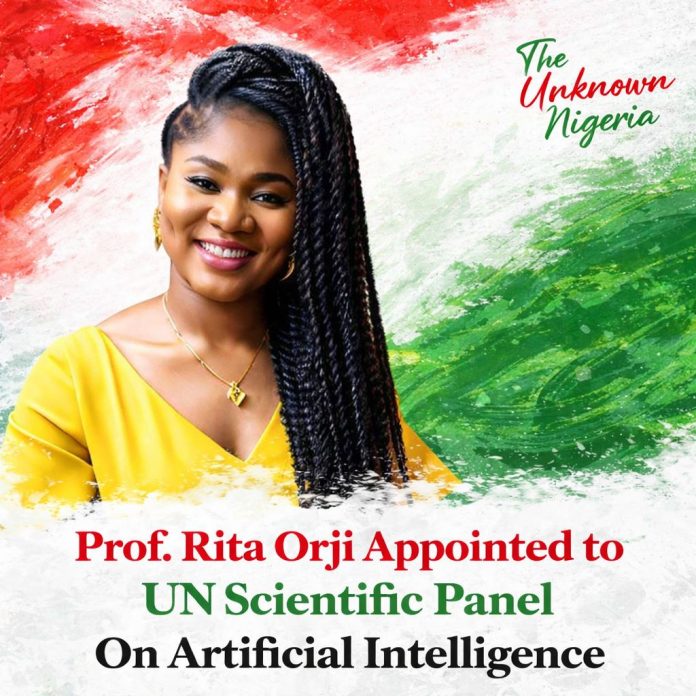
‘The Worst is Over’: Full text of President Tinubu’s independence anniversary speech

1
President Bola Ahmed Tinubu of Nigeria

This is the full text of the 65th Independence Anniversary speech delivered by President Bola Tinubu on 1st. October 2025

Fellow Nigerians,

Today marks the 65th anniversary of our great nation’s Independence. As we reflect on the significance of this day and our journey of nationhood since October 1, 1960, when our founding fathers accepted the instruments of self-government from colonial rule, let us remember their sacrifice, devotion, and grand dream of a strong, prosperous, and united Nigeria that will lead Africa and be the beacon of light to the rest of the world.

Our founding heroes and heroines—Herbert Macaulay, Dr Nnamdi Azikiwe, Sir Abubakar Tafawa Balewa, Chief Obafemi Awolowo, Sir Ahmadu Bello, Margaret Ekpo, Anthony Enahoro, Ladoke Akintola, Michael Okpara, Aminu Kano, Funmilayo Ransome-Kuti, and other nationalists—believed it was Nigeria’s manifest destiny to lead the entire black race as the largest black nation on earth.

For decades, the promise of our Independence has been tested by profound social, economic, and political challenges, and we have survived. While we may not have achieved all the lofty dreams of our forebearers, we have not strayed too far from them. In 65 years since our Independence, we have made tremendous progress in economic growth, social cohesion, and physical development. Our economy has experienced significant growth since 1960.

Although it is much easier for those whose vocation is to focus solely on what ought to be, we must recognise and celebrate our significant progress. Nigerians today have access to better education and healthcare than they did in 1960. At Independence, Nigeria had 120 secondary schools with a student population of about 130,000. Available data indicate that, as of 2024, there were more than 23,000 secondary schools in our country. At Independence, we had only the University of Ibadan and Yaba College of Technology as the two tertiary institutions in Nigeria. By the end of last year, there were 274 universities, 183 Polytechnics, and 236 Colleges of Education in Nigeria, comprising Federal, State, and private institutions. We have experienced a significant surge in growth across every sector of our national life since Independence – in healthcare, infrastructure, financial services, manufacturing, telecommunications, information technology, aviation and defence, among others.

Our country has experienced both the good and the bad times in its 65 years of nationhood, as is normal for every nation and its people. We fought a bitter and avoidable civil war, experienced military dictatorships, and lived through major political crises. In all these, we weathered every storm and overcame every challenge with courage, grit, and uncommon determination. While our system and ties that bind us are sometimes stretched by insidious forces opposed to our values and ways of life, we continue to strive to build a more perfect union where every Nigerian can find better accommodation and find purpose and fulfilment.

Fellow Compatriots, this is the third time I will address you on our independence anniversary since I assumed office as your President on May 29, 2023. In the last 28 months of my administration, like our founding fathers and leaders who came before me, I have committed myself irrevocably to the unfinished nation-building business.

Upon assuming office, our administration inherited a near-collapsed economy caused by decades of fiscal policy distortions and misalignment that had impaired real growth. As a new administration, we faced a simple choice: continue business as usual and watch our nation drift, or embark on a courageous, fundamental reform path. We chose the path of reform. We chose the path of tomorrow over the comfort of today. Less than three years later, the seeds of those difficult but necessary decisions are bearing fruit.

In resetting our country for sustainable growth, we ended the corrupt fuel subsidies and multiple foreign exchange rates that created massive incentives for a rentier economy, benefiting only a tiny minority. At the same time, the masses received little or nothing from our Commonwealth. Our administration has redirected the economy towards a more inclusive path, channelling money to fund education, healthcare, national security, agriculture, and critical economic infrastructure, such as roads, power, broadband, and social investment programmes. These initiatives will generally improve Nigerians’ quality of life. As a result of the tough decisions we made, the Federal and State governments, including Local Governments, now have more resources to take care of the people at the lower level of the ladder, to address our development challenges.

Fellow Nigerians, we are racing against time. We must build the roads we need, repair the ones that have become decrepit, and construct the schools our children will attend and the hospitals that will care for our people. We have to plan for the generations that will come after us. We do not have enough electricity to power our industries and homes today, or the resources to repair our deteriorating roads, build seaports, railroads, and international airports comparable to the best in the world, because we failed to make the necessary investments decades ago. Our administration is setting things right.

I am pleased to report that we have finally turned the corner. The worst is over, I say. Yesterday’s pains are giving way to relief. I salute your endurance, support, and understanding. I will continue to work for you and justify the confidence you reposed in me to steer the ship of our nation to a safe harbour.

Under our leadership, our economy is recovering fast, and the reforms we started over two years ago are delivering tangible results. The second quarter 2025 Gross Domestic Product grew by 4.23 per cent — Nigeria’s fastest pace in four years — and outpaced the 3.4 per cent projected by the International Monetary Fund. Inflation declined to 20.12 per cent in August 2025, the lowest level in three years. The administration is working diligently to boost agricultural production and ensure food security, reducing food costs.

In the last two years of our administration, we have achieved 12 remarkable economic milestones as a result of the implementation of our sound fiscal and monetary policies:

i. We have attained a record-breaking increase in non-oil revenue, achieving the 2025 target by August with over N20 trillion. In September 2025 alone, we raised N3.65 trillion, 411 per cent higher than the amount raised in May 2023.

ii. We have restored Fiscal Health: Our debt service-to-revenue ratio has been significantly reduced from 97% to below 50%. We have paid down the infamous “Ways and Means” advances that threatened our economic stability and triggered inflation. Following the removal of the corrupt petroleum subsidy, we have freed up trillions of Naira for targeted investment in the real economy and social programmes for the most vulnerable, as well as all tiers of government.

iii. We have a stronger foreign Reserve position than three years ago. Our external reserves increased to $42.03 billion this September—the highest since 2019.

iv. Our tax-to-GDP ratio has risen to 13.5 per cent from less than 10 per cent. The ratio is expected to increase further when the new tax law takes effect in January. The tax law is not about increasing the burden on existing taxpayers but about expanding the base to build the Nigeria we deserve and providing tax relief to low-income earners.

v. We are now a Net Exporter: Nigeria has recorded a trade surplus for five consecutive quarters. We are now selling more to the world than we are buying, a fundamental shift that strengthens our currency and creates jobs at home. Nigeria’s trade surplus increased by 44.3% in Q2 2025 to ¦ 7.46 trillion ($4.74 billion), the largest in about three years. Goods manufactured in Nigeria and exported jumped by 173%. Non-oil exports, as a component of our export trade, now represent 48 per cent, compared to oil exports, which account for 52 per cent. This signals that we are diversifying our economy and foreign exchange sources outside oil and gas.

vi. Oil production rebounded to 1.68 million barrels per day from barely one million in May 2023. The increase occurred due to improved security, new investments, and better stakeholder management in the Niger Delta. Furthermore, the country has made notable advancements by refining PMS domestically for the first time in four decades. It has also established itself as the continent’s leading exporter of aviation fuel.

vii. The Naira has stabilised from the turbulence and volatility witnessed in 2023 and 2024. The gap between the official rate and the unofficial market has reduced substantially, following FX reforms and fresh capital and remittance inflows. The multiple exchange rates, which fostered corruption and arbitrage, are now part of history. Additionally, our currency rate against the dollar is no longer determined by fluctuations in crude oil prices.

viii. Under the social investment programme to support poor households and vulnerable Nigerians, N330 billion has been disbursed to eight million households, many of whom have received either one or two out of the three tranches of the N25,000 each.

ix. Coal mining recovered dramatically from a 22% decline in Q1 to 57.5% growth in Q2, becoming one of Nigeria’s fastest-growing sectors. The solid mineral sector is now pivotal in our economy, encouraging value-added production of minerals extracted from our soil.

x. The administration is expanding transport infrastructure across the country, covering rail, roads, airports, and seaports. Rail and water transport grew by over 40% and 27%, respectively. The 284-kilometre Kano-Kastina-Maradi Standard Gauge rail project and the Kaduna-Kano rail line are nearing completion. Work is progressing well on the legacy Lagos-Calabar Coastal Highway and Sokoto-Badagry Highway. The Federal Executive Council recently approved $3 billion to complete the Eastern Rail Project.

xi. The world is taking notice of our efforts. Sovereign credit rating agencies have upgraded their outlook for Nigeria, recognising our improved economic fundamentals. Our stock market is experiencing an unprecedented boom, rising from an all-share index of 55,000 points in May 2003 to 142,000 points as of September 26, 2025.

xii. At its last MPC meeting, the Central Bank slashed interest rates for the first time in five years, expressing confidence in our country’s macroeconomic stability.

SECURITY:

We are working diligently to enhance national security, ensuring our economy experiences improved growth and performance. The officers and men of our armed forces and other security agencies are working tirelessly and making significant sacrifices to keep us safe. They are winning the war against terrorism, banditry and other violent crimes. We see their victories in their blood and sweat to stamp out Boko Haram Terror in North-East, IPOB/ESN terror in South East and banditry and kidnapping. We must continue to celebrate their gallantry and salute their courage on behalf of a grateful nation. Peace has returned to hundreds of our liberated communities in North-West and North-East, and thousands of our people have returned safely to their homes.

YOUTH:

I have a message for our young people. You are the future and the greatest assets of this blessed country. You must continue to dream big, innovate, and conquer more territories in your various fields of science, technology, sports, and the art and creative sector. Our administration, through policies and funding, will continue to give you wings to fly sky-high. We created NELFUND to support students with loans for their educational pursuits. Approximately 510,000 students across 36 states and the FCT have benefited from this initiative, covering 228 higher institutions. As of September 10, the total loan disbursed was N99.5 billion, while the upkeep allowance stood at N44.7 billion.

Credicorp, another initiative of our administration, has granted 153,000 Nigerians N30 billion affordable loans for vehicles, solar energy, home upgrades, digital devices, and more. 16. YouthCred, which I promised last June, is a reality, with tens of thousands of NYSC members now active beneficiaries of consumer credit for resettlement.

Under our Renewed Hope Agenda, we promised to build a Nigeria where every young person, regardless of background, has an equitable opportunity to access a better future—thus, the Investment in Digital and Creative Enterprises (iDICE) programme. The Bank of Industry is driving the programme, in collaboration with the African Development Bank, the French Development Agency, and the Islamic Development Bank. This initiative is at the cusp of implementation. Over the last two years, we have collaborated with our partners to launch the programme, supporting our young builders and dreamers in the technology and creative sectors.

A MESSAGE OF HOPE

Fellow Nigerians, I have always candidly acknowledged that these reforms have come with some temporary pains. The biting effects of inflation and the rising cost of living remain a significant concern to our government. However, the alternative of allowing our country to descend into economic chaos or bankruptcy was not an option. Our macro-economic progress has proven that our sacrifices have not been in vain. Together, we are laying a new foundation cast in concrete, not on quicksand.

The accurate measure of our success will not be limited to economic statistics alone, but rather in the food on our families’ tables, the quality of education our children receive, the electricity in our homes, and the security in our communities. Let me assure you of our administration’s determination to ensure that the resources we have saved and the stability we have built are channelled into these critical areas. Today, the governors at the state level and the local government autonomy are yielding more developments.

Therefore, on this 65th Anniversary of Our Independence, my message is hope and a call to action. The federal government will continue to do its part to fix the plumbing in our economy. Now, we must all turn on the taps of productivity, innovation, and enterprise, just like the Ministry of Interior has done with our travel passports, by quickening the processing.

In this regard, I urge the sub-national entities to join us in nation-building. Let us be a nation of producers, not just consumers. Let us farm our land and build factories to process our produce. Let us patronise ‘Made-in-Nigeria’ goods. I say Nigeria first. Let us pay our taxes.

Finally, let all hands be on deck. Let us believe, once more, in the boundless potential of our great nation.

With Almighty God on our side, I can assure you that the dawn of a new, prosperous, self-reliant Nigeria is here.

Happy 65th Independence Anniversary, and may God continue to bless the Federal Republic of Nigeria.

NzeIkayMedia ✍️

Disclaimer: 

The designations employed in this publication and the presentation of materials herein do not imply the expression of any opinion whatsoever of the Publisher (Nze Ikay’s Blog) or its employees concerning the legal status of any country, its authority, area, or territory or concerning the delimitation of its frontiers. Equally, the sketches, images, pictures, and videos are obtained from the public domain.
A Birthday In The Shadows Of A Special Military Operation As President Putin Clocks 73.

13
His Excellency, President Vladimir Vladimirovich Putin of Russia

Happy Birthday, Mr President! On this day, marking his 73rd birthday, President Vladimir Putin’s schedule, as confirmed by his spokesman, is a testament to a life dedicated to statecraft: a working meeting with the Security Council and conversations with world leaders. It is a powerful symbol of a leader who embodies the Russian ethos that “a bad peace is better than a good quarrel”. As you celebrate this personal milestone, Your Excellency, the world watches, hoping that the wisdom accrued over these years will be the catalyst that transforms a turbulent chapter in history into one of lasting harmony.

🎂 A Birthday in the Service of the State

While President Putin, like all grandfathers, receives warm and loving congratulations from his grandchildren, his birthday is not solely a private affair. True to form, October 7th is a “duty-related” day. The Kremlin has confirmed that the President will hold a meeting with the permanent members of Russia’s Security Council. This high-level gathering includes figures such as Prime Minister Mikhail Mishustin, Defense Minister Andrei Belousov, and Foreign Minister Sergei Lavrov, focusing on matters of critical national and international security.

Alongside this weighty agenda, the day will also be punctuated by numerous telephone conversations with counterparts from across the globe, who will call to extend their congratulations. This blend of familial warmth and weighty responsibility paints a portrait of a leader for whom personal and national duty are inextricably linked.

In a policy of stance and sovereignty, Russia’s voice on the world stage remains firm, consistently advocating for a diplomatic path while defending its perception of national interests. The Kremlin has stated that Russia would prefer to achieve its goals “through peaceful political and diplomatic means” and has actively engaged in diplomatic efforts, such as welcoming the extension of the New START nuclear treaty to avert a new arms race. This commitment to strategic stability, even in a tense climate, underscores a stated desire to avoid further escalation.

Furthermore, Russia’s foreign policy continues to build bridges beyond the West. The nation’s commitment to strengthening ties with Africa was recently highlighted by its presidency of the UN Security Council, where it emphasized “particular importance” on engagement with the African Union. This outward focus demonstrates a vision of a multipolar world where Russia cultivates diverse and historically close friendships.

Your Excellency, as you stand at this pinnacle of your life and power, and in an impassioned plea for the future, I humbly join many Africans across the globe to implore you to channel this immense influence into a final, lasting legacy of peace. The special military operation in Ukraine has cast a long shadow, and the world now holds its breath, hoping for a leader with the courage to say, “Enough.” We beg you to extend the language of nuclear diplomacy to the fields of eastern Ukraine, to find a common language with your neighbour and junior brother nation, Ukraine.

To President Zelenskyy of Ukraine, we equally urge restraint and wisdom. You must not allow your nation to be perpetually cast as a stage for a wider conflict instigated by the West and NATO against Russia for no just cause. Just people suffering from a disease diagnosed as “Russophobia.” The path of relentless confrontation only leads to deeper suffering for the Ukrainian people. It is a time for statesmanship, not for playing to the gallery.

The profound African wisdom reminds us that “he who loves the tree loves the branch.” Russia and Ukraine are deeply connected, branches from the same ancient tree of history and culture. To wound one is to bleed the other. Let this new year of your life be marked by the strength to build bridges, to silence the guns, and to prove that the greatest power lies not in military might, but in the moral courage to make peace. Let the “peace and harmony” that Russian proverbs call a “great treasure” finally descend upon the region.

Once again, Happy Birthday, Mr. President. May your 73rd year be remembered as the moment you chose to become the foremost architect of peace for future generations.

NzeIkayMedia ✍️

Disclaimer: 

The designations employed in this publication and the presentation of materials herein do not imply the expression of any opinion whatsoever of the Publisher (Nze Ikay’s Blog) or its employees concerning the legal status of any country, its authority, area, or territory or concerning the delimitation of its frontiers. Equally, the sketches, images, pictures, and videos are obtained from the public domain.
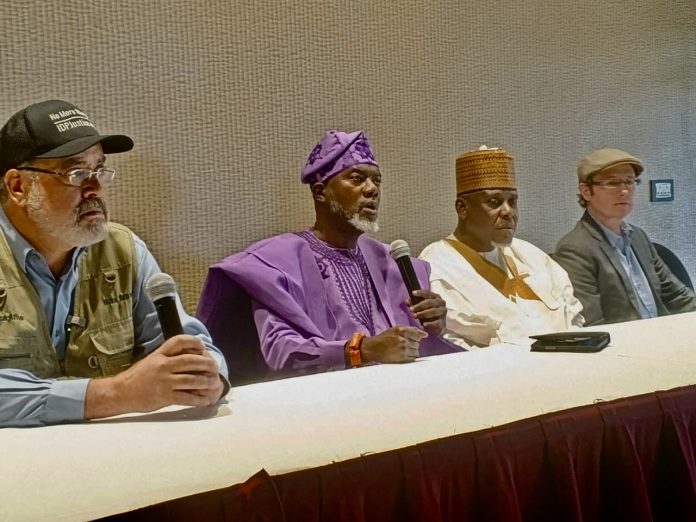
The Crown Jewel of Boxing: How Terence Crawford Conquered Canelo Álvarez to Make History – The Pinnacle of Pugilistic Achievement: Three-Weight Undisputed Glory

0
The 3-Time and Ring Magazine Undisputed Super Middleweight Champion of the world, Terence Bud Crawford displaying his Belts and Ring.

In an astounding display of boxing mastery that will be remembered for generations, Terence “Bud” Crawford (43-0, 31 KOs) etched his name indelibly in the annals of boxing history on September 13, 2025, at Las Vegas’s Allegiant Stadium. Against all odds and expectations, Crawford ascended three weight classes to dethrone the seemingly invincible Mexican superstar Saúl “Canelo” Álvarez (62-3-2, 39 KOs) via unanimous decision, becoming the first male boxer to achieve undisputed championship status in three different weight divisions. This extraordinary feat transcended mere victory—it represented the culmination of a journey that began in the gritty streets of Omaha, Nebraska, and reached its glorious apex in boxing’s brightest spotlight.

The Combatants – Contrasting Paths to Greatness

1.1 Terence “Bud” Crawford: The Omnivorous Technician
Humble Beginnings: Born September 28, 1987, in Omaha, Nebraska, Crawford emerged from impoverished circumstances in a neighbourhood known for violence and limited opportunities. His early life was marked by frequent fights that got him expelled from five different schools, until he found salvation in the C.W. Boxing Club under the guidance of mentor Midge Minor.

Amateur Pedigree: Crawford compiled an impressive amateur record of 58-12, defeating future world champions Mikey Garcia and Danny Garcia during his developmental years. Despite being the highest-ranked lightweight in the U.S. ahead of the 2008 Olympics, his Olympic dreams were dashed by a loss to Sadam Ali.

Professional Ascension: In 2008, Crawford turned professional, gradually building an undefeated record against increasingly formidable opposition. His breakthrough came in 2014 when he travelled to Scotland to defeat Ricky Burns for the WBO lightweight title, announcing his arrival on the world stage.

Historical Accomplishments: Before the Canelo bout, Crawford had already achieved undisputed status in two weight classes, light welterweight (August 2017) and welterweight (July 2023). His victory over Errol Spence Jr. in 2023 particularly showcased his exceptional skills and established him as one of the premier pound-for-pound fighters of his era.

1.2 Saúl “Canelo” Álvarez: The Mexican Powerhouse
Phenom to Superstar: Canelo’s journey began in Juanacatlán, Jalisco, Mexico, with his professional debut at just 15 years old in 2005. His distinctive red hair (earning him the nickname “Canelo,” meaning cinnamon) and exceptional skills quickly made him a fan favourite.

Weight-Climbing Dominance: Álvarez achieved world championships in four weight classes, from junior middleweight to light heavyweight. His November 2021 victory over Caleb Plant unified all four super middleweight titles (WBA, WBC, IBF, and WBO), making him the first undisputed champion at 168 pounds in the four-belt era.

Legendary Resume: With victories over future Hall of Famers like Gennadiy Golovkin (twice), Miguel Cotto, and Sergey Kovalev, Canelo has established himself as the face of boxing and one of the most accomplished fighters of his generation. His only professional defeats came against all-time greats Floyd Mayweather and Dmitry Bivol.

Reign at Super Middleweight: Before facing Crawford, Canelo had successfully defended his undisputed super middleweight championship multiple times, including victories over Jermell Charlo (September 2023), Jaime Munguía (May 2024), and Edgar Berlanga (September 2024).

Table: Crawford vs. Álvarez – Pre-Fight Statistical Comparison

CategoryTerence CrawfordCanelo Álvarez
Record42-0, 31 KOs62-2-2, 39 KOs
Age3735
Height5’8″ (173 cm)5’8″ (173 cm)
Reach74″ (188 cm)70.5″ (179 cm)
StanceSouthpawOrthodox
Undisputed TitlesLight Welterweight, WelterweightSuper Middleweight (twice)
Years Professional1720


The Road to Battle – Negotiating the Impossible

2.1 The Concept of a Super Fight
For years, the boxing world had speculated feverishly about the possibility of a Crawford-Canelo showdown. Most experts dismissed the matchup as fanciful thinking, citing the significant size difference between the welterweight Crawford and the natural super middleweight Canelo. Conventional boxing wisdom held that size advantages of this magnitude were simply insurmountable, even for a technician of Crawford’s calibre. Despite the scepticism, Crawford consistently expressed confidence in his ability to overcome the weight disparity. Following his domination of the welterweight division, he began campaigning for what he called “legacy fights” that would cement his status as an all-time great. After moving up to light middleweight and defeating Israil Madrimov in 2024 to become a quadruple champion, Crawford set his sights squarely on Canelo and the super middleweight throne.

2.2 The Saudi Intervention
The seemingly impossible matchup became reality through the intervention of His Excellency Turki Alalshikh, Chairman of Saudi Arabia’s General Entertainment Authority. With the boundless resources and diplomatic influence of the Saudi Arabian government behind him, Alalshikh has fundamentally transformed the boxing landscape since his emergence in 2017. Alalshikh’s approach to boxing promotion has been characterised by unprecedented financial offers that overcome the traditional obstacles of boxing politics and promotional rivalries. As one boxing commentator noted, Saudis “have underwritten and lit a fire under the sport, I can’t remember a time when this level of investment was brought into the sport… his modus operandi is to get things done as soon as possible”. The Saudi official’s cultural significance in the combat sports world cannot be overstated. Despite dividing opinion in the Arab world for his lavish spending on entertainment spectacles, Alalshikh has earned admiration from boxing fans for delivering the matches they genuinely want to see. His understanding of boxing history and appreciation for technical mastery made him particularly enthusiastic about facilitating the Crawford-Canelo superfight.

2.3 Financial Architecture
While the exact purse details remain confidential, sources indicate that the total guaranteed money for the event exceeded $100 million, with Canelo guaranteed approximately $60 million and Crawford receiving around $35 million—the highest purses of their respective careers. Additionally, both fighters participated in revenue sharing from pay-per-view profits and international broadcasting rights, potentially adding tens of millions to their final compensation. This financial structure was made possible by Saudi Arabia’s strategic vision to establish itself as a global hub for premier sporting events. The kingdom’s investment in boxing represents just one component of its broader “Vision 2030” initiative aimed at economic diversification and cultural development.

The Battle for Immortality – Tactical Breakdown

3.1 Pre-Fight Expectations
The boxing world was sharply divided in its predictions for the historic encounter. Most analysts believed Crawford’s technical brilliance would make the fight competitive early, but questioned whether his power would carry effectively to 168 pounds or if he could withstand Canelo’s devastating body attack over twelve rounds. The prevailing theory was that natural size advantages would ultimately prevail, as they typically do in boxing. Canelo entered the fight as a substantial favourite, with oddsmakers installing him as approximately a 3-1 favourite. His proven track record at super middleweight, where he had compiled a perfect record with dominant performances against elite competition, suggested that Crawford would be simply too small to compete effectively.

3.2 The Fight: A Round-by-Round Narrative
From the opening bell, Crawford established a tactical masterpiece that will be studied by boxing enthusiasts for decades. Employing impeccable footwork, angles, and distance management, Crawford neutralised Canelo’s offensive weapons while consistently landing sharp, precise counters.

Rounds 1-3: Crawford started cautiously, using lateral movement to avoid Canelo’s power shots while establishing his jab. Canelo applied steady pressure, cutting off the ring and targeting Crawford’s body with thumping hooks. The Mexican champion appeared to edge these early rounds based on effective aggression and ring generalship.

Rounds 4-6: Crawford began finding his rhythm in the fourth round, timing Canelo’s advances with sharp counter right hands. His hand speed advantage became increasingly evident as he landed multiple punch combinations before pivoting out of danger. By the sixth round, Crawford had established a consistent pattern of hitting without being hit in return, the purest expression of the “sweet science.”

Rounds 7-9: The middle rounds revealed Crawford’s strategic genius as he adapted to Canelo’s adjustments. When Canelo increased his pressure, Crawford brilliantly employed clinching techniques to neutralise inside fighting. When Canelo tried to fight from a distance, Crawford’s superior hand speed and jab control dominated the exchanges. A sharp right hand in the eighth round snapped Canelo’s head back visibly, the first clear sign that Crawford’s power was effective at the higher weight.

Rounds 10-12: Entering the championship rounds, Crawford continued to outland and outmanoeuvre the increasingly frustrated Mexican champion. Canelo’s face showed signs of wear, with swelling around both eyes, while Crawford appeared remarkably fresh despite moving up three weight classes. The final round saw Canelo launch a desperate assault, throwing powerful haymakers in search of a knockout, but Crawford defended brilliantly before firing back with precise combinations that punctuated his historic performance.

3.3 The Decision
When the final bell sounded, most observers recognised that Crawford had delivered a boxing clinic. The official scorecards confirmed this assessment, with all three judges awarding Crawford the victory by scores of 116-112, 115-113, and 117-111. The crowd at Allegiant Stadium, heavily partisan toward Canelo, initially reacted with stunned silence before offering respectful applause for Crawford’s masterful performance.

Historical Context and Legacy Implications
4.1 Redefining Possible: The Three-Weight Undisputed Champion
Crawford’s accomplishment represents arguably the most significant achievement in modern boxing history. By becoming the first male fighter to achieve undisputed status in three weight classes, he has established a new benchmark for boxing excellence.

Table: Male Undisputed Champions in the Four-Belt Era

FighterDivisionsDate Achieved
Terence CrawfordLight Welterweight, Welterweight, Super MiddleweightAug 2017, Jul 2023, Sep 2025
Oleksandr UsykCruiserweight, HeavyweightJul 2018, May 2024
Naoya InoueBantamweight,Super BantamweightDec 2022, Dec 2023
Canelo ÁlvarezSuper MiddleweightNov 2021, May 2025
Bernard HopkinsMiddleweightSep 2004
Jermain Taylor,MiddleweightJul 2005
Josh TaylorLight WelterweightMay 2021
Jermell CharloLight MiddleweightMay 2022
Devin HaneyLightweightJun 2022
Artur BeterbievLight HeavyweightOct 2024
Dmitry BivolLight Heavyweight

Feb 2025

What makes Crawford’s accomplishment particularly remarkable is that he achieved it against established champions in each division rather than for vacant titles. His victories over Julius Indongo (light welterweight), Errol Spence Jr. (welterweight), and now Canelo Álvarez (super middleweight) represent a who’s who of boxing excellence across multiple weight classes.

4.2 Pound-for-Pound Reformation
Before the fight, Canelo had consistently been ranked among the top pound-for-pound fighters in the world, while Crawford held the top position in many rankings. Crawford’s decisive victory settles any debate about current pound-for-pound supremacy and launches him into conversations about all-time greatness.

The victory particularly recalls historical examples of smaller fighters moving up to defeat larger champions—such as Roberto Durán winning a middleweight title against Iran Barkley or Roy Jones Jr. capturing a heavyweight title against John Ruiz. However, no fighter in history has moved up three weight classes to defeat an undisputed champion in their prime the way Crawford accomplished against Canelo.

Gratitude and Acknowledgements

5.1 Recognising Saudi Vision
The boxing world owes a debt of gratitude to His Excellency Turki Alalshikh and the Kingdom of Saudi Arabia for their visionary investment in boxing. Without Saudi intervention, the Crawford-Canelo matchup would likely have remained nothing more than a fantasy matchup debated by fans on social media. Alalshikh’s unique approach to boxing promotion, prioritising fan-friendly matchups over promotional politics, has fundamentally transformed the sport’s landscape. By bringing together rival promoters and overcoming longstanding disputes, Saudi Arabia has enabled fights that previously seemed impossible. As Crawford himself acknowledged in the post-fight press conference: “This fight wouldn’t have happened without His Excellency’s vision and commitment to boxing. He’s giving fans the fights they want to see and giving fighters opportunities to create a legacy that would otherwise be impossible due to the business side of the sport”.

5.2 Celebrating Boxing’s Global Community
Beyond Saudi Arabia’s contribution, this historic event showcased boxing’s unique ability to captivate a global audience. The broadcast reached millions of viewers across every continent, transcending language and cultural barriers through the universal appeal of athletic excellence. The event also demonstrated boxing’s continuing relevance in the crowded modern sports landscape. In an era dominated by shortened attention spans and fragmented media, boxing’s ability to generate worldwide excitement for a premier event remains undiminished.

A New Standard of Excellence
Terence Crawford’s victory over Canelo Álvarez represents more than just another championship win; it establishes a new paradigm for what is possible in boxing. By defeating an established undisputed champion three weight classes above his natural division, Crawford has redefined the boundaries of boxing excellence. The fight also serves as a powerful reminder of boxing’s timeless appeal when matching the best against the best, regardless of promotional affiliations or network alliances. The Saudi-backed model of facilitating superfights based on fan demand rather than business convenience offers a promising template for boxing’s future.

As Terence Crawford stands atop the boxing world as its first three-weight undisputed champion, he has accomplished what many considered impossible. His technical mastery, combined with unparalleled boxing IQ and strategic adaptability, has cemented his legacy as not just the finest fighter of his generation, but potentially one of the greatest boxers in the sport’s entire history. In the final analysis, September 13, 2025, will be remembered as the night when boxing artistry triumphed over physical advantages, when dedication conquered doubt, and when Terence “Bud” Crawford secured his immortal place among the pantheon of boxing’s all-time greats.

By NzeIkayMedia

Disclaimer: 

The designations employed in this publication and the presentation of materials herein do not imply the expression of any opinion whatsoever of the Publisher (Nze Ikay’s Blog) or its employees concerning the legal status of any country, its authority, area or territory or concerning the delimitation of its frontiers. Equally, the sketches, images, pictures and videos are obtained from the public domain.
The Mercenary Politician: How Transactional Politics and Ideological Betrayal Are Strangling Nigerian Democracy

1
Just two years ago, Bwala stood before cameras as Atiku Abubakar's spokesperson, declaring with absolute certainty that "even if you give Tinubu 30 years, nothing will work".

1. The Bwala Paradox and Nigeria’s Political Culture

Daniel Bwala’s remarkable ideological transformation from a fierce critic of President Tinubu to a presidential apologist embodies a disturbing trend in Nigerian politics that transcends party lines and ideological affiliations. Just two years ago, Bwala stood before cameras as Atiku Abubakar’s spokesperson, declaring with absolute certainty that “even if you give Tinubu 30 years, nothing will work”. Today, he serves as Special Adviser to President Tinubu on Policy Communication, praising the same administration he previously lambasted. This startling reversal is not an isolated incident, but rather symptomatic of a broader political sickness that has infected Nigeria’s democratic institutions, a politics devoid of principle, driven by personal gain, and sustained by the monetisation of public office. The “stomach politics” (as critics often call it) practised by Bwala and his counterparts like Reno Omokri and Femi Fani-Kayode represents a fundamental betrayal of public trust. These political actors exemplify what Nigerians derisively call “Anywhere Belle Face politicians”, a phrase describing those who change allegiances based on which side offers the next meal ticket. Their rapid ideological somersaults reveal a troubling reality: Nigerian politics has become a marketplace where political loyalty, public service, and governance are traded for personal or group gains rather than being rooted in genuine ideology or commitment to public welfare.

2. Defining Transactional Politics: The Nigerian Context

2.1. The Mechanics of Political Transactions

Transactional politics in Nigeria operates as a sophisticated system of quid pro quo arrangements where votes are bought, conscience is mortgaged, and public interest is systematically shelved for personal gain. Unlike ideological politics, where competing visions for society drive political engagement, transactional politics reduces governance to a simple question: “What is in it for me?” This mindset has permeated all levels of Nigerian governance and citizen engagement, from the ward level to the presidency, and from voters to the highest officials. The electoral process has become the primary marketplace for these transactions. During the 2023 general elections and the just-concluded 2025 Bye-elections in Anambra and many other states across the Federation, reports from across Nigeria showed party agents standing barely meters away from polling units with wads of cash protected by the security agents most the police who are supposed to stop them, buying votes for as low as ₦10,000 and as high as ₦30,000 per voter. This brazen vote-buying occurs despite feeble and nonchalant attempts by the Independent National Electoral Commission (INEC) and other anti-graft agencies to arrest culprits, a futile effort when the same politicians funding the vote-buying appoint the heads of these institutions.

2.2. Historical Roots and Evolution

Transactional politics is not new to Nigeria, but has evolved into a more sophisticated system since the return to civilian rule in 1999. The political godfatherism of the early 2000s, exemplified by figures like Olusola Saraki in Kwara and Lamidi Adedibu in Oyo, represented an early form of this transactional politics. These “kingmakers” handed political power to protégés with the understanding that the latter would serve their interests once in office. The oil economy has further exacerbated this tendency, creating what researcher Matthew Page describes as a “perfect storm” for corruption. Nigeria’s petroleum reserves mean enormous money flows into public coffers, while years of military rule hollowed out public institutions. With over 360 different ethnic groups, national identity often takes a backseat to local affiliations, creating a perception among officials that “national government is there to divide up the booty of oil wealth”.

3. Historical Context: Corruption in Nigerian Politics

Table: Major Corruption Scandals in Nigerian Political History
—————————————————————–
| Period/Administration | Major Corruption Cases | Impact on Governance |
—————————————————————–
| Second Republic (1979-1983) | Rice import license scandals, Johnson Matthey Bank affair | Economic crisis, erosion of public trust |
—————————————————————–
| Babangida Administration (1985-1993) | Babangida Administration (1985-1993) | Legalisation of corruption, rise of nouveau riche |
—————————————————————–
| Abacha Administration (1993-1998) | Looting of national treasury, gas plant bribery scandals | International isolation, frozen foreign assets |
—————————————————————–
| Fourth Republic (1999-present) | NDDC scandal, Humanitarian Ministry fraud, vote-buying epidemics | Institutionalisation of transactional politics |
—————————————————————–

Nigeria’s struggle with political corruption dates back to the First Republic, though it was kept at manageable levels during early self-governance. The discovery of oil and natural gas and the subsequent rise of public administration are two major events believed to have led to the sustained increase in corrupt practices. By 2012, Nigeria was estimated to have lost over $400 billion to corruption since its independence. The regime of General Ibrahim Babangida (1985-1993) marked a turning point, legalising corruption as state policy. Babangida routinely disbursed vehicles and cash gifts to earn loyalty, eroding military discipline and giving rise to the term “IBB Boys”, fronts for the head of state in business realms, transacting everything from drug deals to money laundering. His administration’s refusal to account for the Gulf War windfall (estimated at $12.4 billion) and the rigging of the historic June 12, 1993, election cemented corruption as a fundamental feature of Nigerian politics.

4. The Apostles of Transactional Politics

4.1. Daniel Bwala: The Legalistic Turncoat

Bwala’s political journey exemplifies the ideological flexibility plaguing Nigerian politics. A trained lawyer and adjunct lecturer at the Nigerian Law School, Bwala began his political odyssey as an ally of Tinubu, then defected to the PDP based on principle, specifically opposing the Muslim-Muslim ticket as exclusionary. As Atiku’s spokesperson, he described Tinubu as a “president-select” rather than president-elect and claimed that even 30 years of Tinubu’s leadership would achieve “absolutely nothing”. His subsequent transformation into Tinubu’s adviser represents what critics call “the psychological complexities faced by many Nigerian politicians” when proximity to power becomes possible. Since his appointment, Bwala has become unsparing in his criticism of Tinubu’s opponents, describing significant defections like that of Nasir el-Rufai as “insignificant” and predicting Peter Obi’s imminent move to the APC.

4.2. Reno Omokri: The Evangelical Mercenary

Reno Omokri’s transformation from Tinubu’s fiercest critic to his defender represents perhaps the most brazen ideological reversal. As a former media aide to President Goodluck Jonathan, Omokri repeatedly accused Tinubu of being a “drug baron”, referencing the 1993 U.S. court forfeiture case. He led protests against Tinubu in the US, declaring him a “KNOWN DRUG LORD” who should be harassed out of London. In a viral video shortly after Tinubu’s election, Omokri declared with apparent certainty: “I can’t do it. It cannot happen. It’s just against my principles,” when asked if he would work with Tinubu. Yet two years later, Omokri flew from California to Lagos to defend the Lagos-Calabar Coastal Highway, one of Tinubu’s flagship projects, praising Tinubu’s international diplomacy and labelling critics as “tribalists” and “dividers”.

4.3. Femi Fani-Kayode: The Dramatic Defector

Femi Fani-Kayode (FFK) completes the trio of political turncoats with what has been described as “the most theatrical transformation”. Formerly a PDP chieftain known for his volcanic criticism, FFK called Tinubu “a traitor to the Yoruba race” and “a dictator in Lagos, worse than Abacha”. He accused Tinubu of being “a coward who fled Nigeria under Abacha while others stood to fight” and warned that Tinubu’s presidency would plunge Nigeria into darkness. By the 2023 campaign season, FFK had become one of Tinubu’s most aggressive defenders, attacking opposition voices with the same rhetorical venom he once reserved for Tinubu. He now refers to Tinubu as “the most prepared president Nigeria has had since 1999”. His reward reportedly includes an ambassadorial nomination, with many Nigerians sarcastically suggesting he be posted to Palestine or Israel, given his vocal comments on the Gaza conflict.

5. Dangers to Democracy: The Five-Point Threat Matrix

5.1. Erosion of Public Trust

The most immediate damage caused by transactional politics is the complete erosion of public trust in democratic institutions. When politicians openly switch allegiances without ideological justification, citizens understandably become cynical about the entire political process. As researcher Jared Miller notes, Nigeria’s 2023 elections took place against a backdrop of profound public scepticism, with only 23% of Nigerians trusting INEC to conduct free and fair elections. This trust deficit makes governance increasingly difficult, as citizens assume all government action is motivated by corrupt intent rather than public interest.

5.2. Policy Instability and Inconsistency

Frequent political defections and ideological somersaults create tremendous policy instability, as programs initiated by one administration are abandoned by the next, not based on merit but on political expediency. The “monorail to nowhere” in Port Harcourt exemplifies this problem. A state governor poured $400 million into building it, only for his successor to halt construction shortly before completion. The project never ran a single train, representing a catastrophic waste of public resources that could have been deployed to genuine development needs.

5.3. Weakening of Opposition and Accountability

Transaction politics neutralise effective opposition by co-opting critics into the ruling party’s patronage network. As Tinubu has masterfully demonstrated with Bwala, Omokri, and Fani-Kayode, converting former adversaries into assets weakens opposition voices and creates an echo chamber rather than a robust democracy. A democracy without principled opposition is not a democracy at all; it becomes a single-party state in all but name, with no effective mechanisms for holding leadership accountable.

5.4. Perpetuation of Elite Capture

The systematic capture of state institutions by political and business elites is both facilitated and concealed by transactional politics. As noted in the Wikipedia article on Nigerian corruption, business arrangements and family loyalties dominate governmental appointments, ensuring that politicians, officials, and their associates all become wealthy through behind-the-scenes agreements and the awarding of profitable contracts to favoured supporters. This elite capture means that despite Nigeria’s immense oil wealth, accounting for over 90% of export revenues, the benefits are not evenly distributed, with Lagos State benefiting disproportionately.

5.5. Normalisation of Corruption

Perhaps the most insidious danger is the normalisation and systematisation of corruption throughout Nigerian society. Matthew Page’s research, identifying 500 distinct types of corruption in Nigeria, reveals how pervasive the problem has become. From “brown envelope” journalism, where journalists are paid to run favourable stories or suppress unfavourable ones, to civil society groups that take money to organise protests serving political interests, corruption has infected nearly every aspect of public life. This normalisation creates a self-perpetuating system where each generation of politicians learns from its predecessors that corruption is simply how the system works.

6. The Human Cost of Political Mercenarism

Table: The Real Cost of Transactional Politics on Nigerian Development
—————————————————————–
| Area of Impact | Consequences of Transactional Politics Human Cost |
—————————————————————–
| Economic Development | Diversion of public funds, inflated contracts, abandoned projects | Persistent poverty (63% multidimensionally poor), unemployment |
—————————————————————–
| Public Services | Underfunded health care, education, and infrastructure | High maternal mortality, poor educational outcomes, inadequate roads |
—————————————————————–
| Security | Resources diverted from security forces, proliferation of small arms | Widespread insecurity, kidnapping epidemics, community violence |
—————————————————————–
| Social Cohesion | Ethno-regional favouritism, religious discrimination | Rising ethnic tensions, intercommunal violence, threat of separation |
—————————————————————–

The human cost of Nigeria’s transactional politics is measured in broken lives and stunted potential. While politicians become billionaires overnight through corrupt enrichment, approximately 63% of Nigerians (133 million people) are multidimensionally poor, lacking access to basic education, health care, and infrastructure. This stark contrast between the opulence of the political class and the desperation of ordinary citizens creates social resentment that threatens national stability. The ministry scandals that have rocked Nigeria in recent years illustrate how transactional politics directly harm the most vulnerable. The Niger Delta Development Commission (NDDC) scandal revealed how billions of Naira were spent on non-existent projects, including ₦1.5 billion allegedly spent on “COVID-19 relief” for staff. Similarly, the Ministry of Humanitarian Affairs saw both former Minister Sadiya Umar Farouq and her successor Betta Edu caught in financial irregularities running into billions, turning palliatives meant for the poorest Nigerians into political tools and personal enrichment pipelines. As researcher Matthew Page noted, Nigeria has “some of the worst socioeconomic indicators in the world” despite its enormous oil wealth, including shockingly high maternal mortality rates. This divergence between resource wealth and human development outcomes can be directly traced to the systemic corruption enabled by transactional politics.

7. Reclaiming Nigeria’s Democratic Future

7.1 Electoral Reforms and Enforcement

Comprehensive electoral reform must be the starting point for addressing transactional politics. This includes not only technical improvements to voting systems but also serious enforcement of laws against vote-buying and political bribery. The 2023 election cycle introduced reforms like the Bimodal Voter Accreditation System and the Election Results Viewing Portal, but these faced manipulation, logistical failures, and opposition that decreased confidence in the election results. Future reforms must be designed with anti-circumvention measures and accompanied by impartial enforcement, “no matter whose ox is gored”.

7.2 Civic Reawakening and Voter Education

A fundamental shift in citizen consciousness is essential to break the cycle of transactional politics. As Isaac Asabor argues, voter education must go beyond slogans and jingles to help Nigerians, especially youth, understand the power of their vote and the need to resist immediate gratification for long-term gains. Civil society organisations, the media, and religious institutions must lead this reawakening, emphasising that the ₦5,000 offered during elections will cost five years of darkness, poor healthcare, hunger, and insecurity.

7.3 Strengthening Institutions and Meritocracy

Rebuilding institutional integrity is crucial to combating the culture of impunity. This includes ensuring that appointments and promotions are based on track record rather than political loyalty. Nigeria’s consistent low rankings on the Corruption Perception Index and the Human Development Index reflect the consequences of prioritising connections over competence. Strengthening independent institutions like the EFCC, ICPC, and judiciary, with guaranteed funding and operational independence, would help create accountability mechanisms that transcend political affiliations.

7.4. Supporting Investigative Journalism and Whistleblowers

A vibrant investigative journalism culture is essential to exposing corruption and holding power accountable. Unfortunately, as Matthew Page’s research revealed, “brown envelope” journalism, where officials pay journalists for favourable coverage or to suppress unfavourable stories, represents a significant challenge. Supporting independent media through subscriptions, protecting whistleblowers, and creating safe channels for leaking information can help overcome this problem and bring corrupt practices to light.

8. The Crossroads of Nigerian Democracy

Nigeria stands at a critical juncture in its democratic journey. continue on its current path toward further chaos or reclaim the soul of its democracy through electoral integrity, civic enlightenment, and leadership by merit. The phenomenon of transactional politics, exemplified by the ideological somersaults of figures like Daniel Bwala, Reno Omokri, and Femi Fani-Kayode, represents nothing less than an existential threat to Nigerian democracy. As Professor O. B. Nwolise famously observed, politics in Nigeria has become primarily about “amala and gbegiri”, the immediate material benefits of power rather than service to the nation. This reduction of governance to mere stomach infrastructure must be challenged through a collective commitment to principle-centred leadership. The words of eminent jurist Hon. Justice Chukwudifu Oputa bear remembering: Nigerian politicians are not afraid of the people or the law; they are only afraid of their fellow politicians. The 2023 elections revealed glimmers of hope despite the challenges, particularly in the emergence of a competitive third-party candidate who drew nationwide support by harnessing long-standing grievances about poor governance and kleptocratic politics. More importantly, the election saw many Nigerians “wake up” and engage in politics for the first time, suggesting the potential for a broad-based civic movement demanding change.

Ultimately, overcoming transactional politics requires recognising that true democracy is about representation, service, and accountability, not the grotesque theatre of greed that has dominated Nigerian politics for too long. As the African proverb reminds us: “The river that forgets its source will run dry.” Nigerian politicians would do well to remember that their legitimacy derives from the people they serve, not the pockets they fill. Until that fundamental truth guides political conduct, Nigeria’s democratic promise will remain unfulfilled.

NzeIkayMedia ✍️

Disclaimer: 

The designations employed in this publication and the presentation of materials herein do not imply the expression of any opinion whatsoever of the Publisher (Nze Ikay’s Blog) or its employees concerning the legal status of any country, its authority, area or territory or concerning the delimitation of its frontiers. Equally, the sketches, images, pictures, and videos are obtained from the public domain.
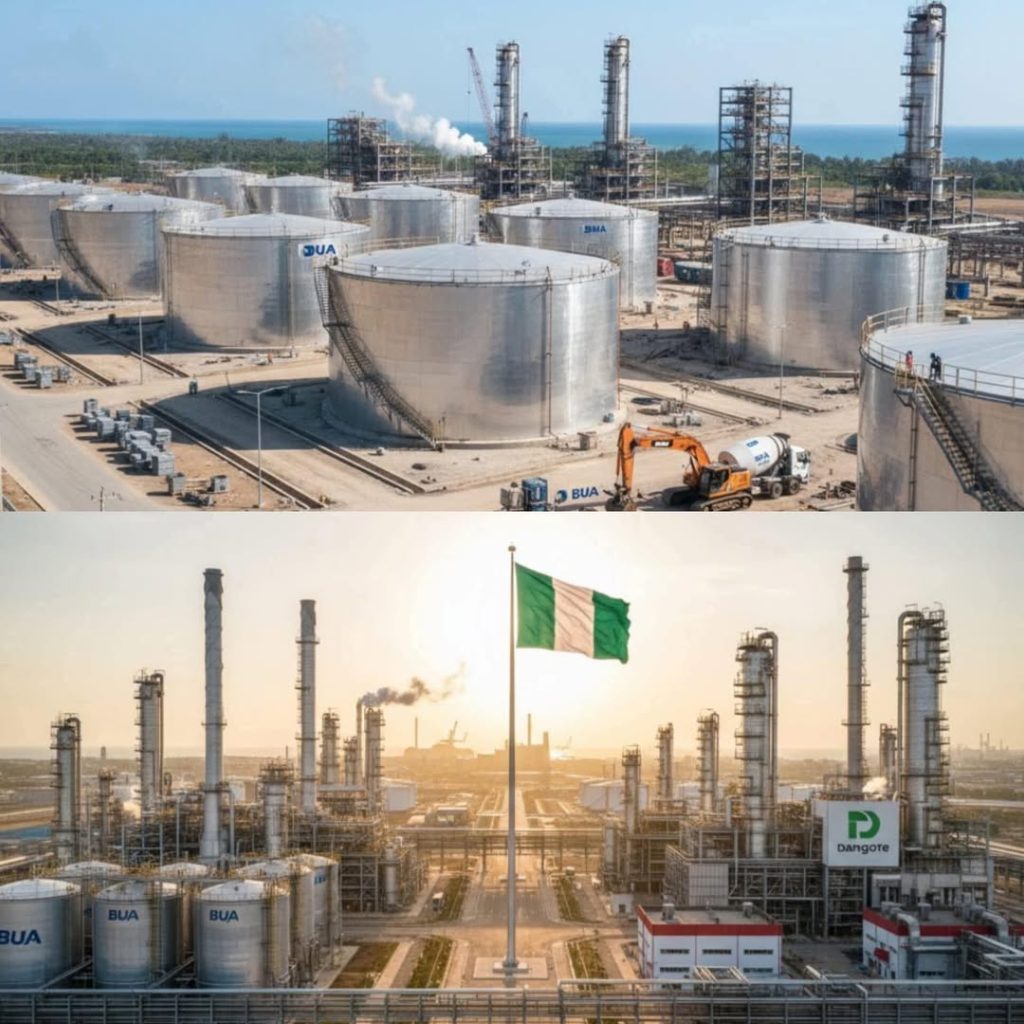
A Night of Fire and Redemption: Nigeria’s Heroic Comeback Seals WAFCON Glory in Rabat

0
The Super Falcons of Nigeria, winner of the 2025 WAFCON Cup.

Under the dazzling lights of Rabat’s Olympic Stadium, where history and passion collided, the 2025 WAFCON final unfolded as a tale of two halves, a Moroccan dream that dissolved into a Nigerian masterpiece.

First Half: The Atlas Lionesses Roar

From the first whistle, Morocco, draped in their fiery red kits, played with the hunger of a nation yearning for glory. The Super Falcons, though seasoned champions, looked uncharacteristically rattled as waves of Moroccan attacks backed by the home crowd support crashed upon them. Ghizlane Chebbak, the Moroccan captain and tournament talisman, orchestrated play with regal authority, her vision slicing through Nigeria’s defense like a dagger. The breakthrough came when Alaye Jreidi, a whirlwind of agility, carved open space before slipping the ball to Chebbak. Unmarked at the edge of the box, the Moroccan skipper unleashed a thunderbolt, her fifth goal of the tournament, leaving Chiamaka Nnadozie rooted to the spot. The stadium erupted, a sea of red surging with belief.

Morocco’s dominance grew, and soon, Sana Masudi doubled the lead, punishing Nigeria’s defensive disarray. The Super Falcons, usually unshakable, were on the ropes. A scuffed clearance from Michelle Alozie nearly gifted Morocco a third, and whispers of an upset grew louder.

Second Half: The Falcons Rise From the Ashes.

But champions are forged in adversity. A contentious handball call against Nesryne Benzina handed Nigeria a lifeline, a penalty. Esther Okoronkwo, ice in her veins, sent Moroccan keeper Khadiija Ricci the wrong way, igniting a spark in the Nigerian side. The momentum had shifted. Then came the equalizer, a moment of sheer brilliance. Okoronkwo, now a woman possessed, danced past two defenders before squaring to Ifeoma Iheanacho, who hammered home with the fury of a team reborn. The Nigerian bench erupted; the Moroccan crowd fell silent.

The Decisive Blow: A Super Sub’s Magic

With tension crackling in the air, Morocco was awarded a penalty, only for VAR to cruelly snatch it away after a lengthy review. The pendulum had swung. Then, in the dying moments, Okoronkwo delivered a free-kick so precise it seemed scripted. Rising like a phoenix, substitute Esheshini on the pitch for mere minutes, met the ball with a striker’s instinct, sweeping it home to complete Nigeria’s stunning comeback. The Moroccan faithful stood in stunned silence as the Super Falcons celebrated a victory for the ages.

A Night of Legends

When the dust settled, individual brilliance shone just as brightly as the collective triumph:

– Chiamaka Nnadozie claimed the Best Goalkeeper award, her heroics proving vital.

– Ghizlane Chebbak, Morocco’s fearless leader, took home the Golden Boot and left with her head held high.

– Rasheedat Ajibade, Nigeria’s inspirational captain, was crowned Player of the Tournament, her leadership undeniable.

Ghana’s Black Queens secured bronze after a hard-fought win over South Africa, but the night belonged to Nigeria, the 10-time African champions, who once again proved why they remain the continent’s gold standard. As the Super Falcons lifted the WAFCON trophy under a shower of confetti, one truth became undeniable: **this was more than a final. It was a spectacle of resilience, drama, and the unyielding spirit of African football. Rabat witnessed history. The world bore witness to greatness.

NzeIkayMedia 

Disclaimer: 

The designations employed in this publication and the presentation of materials herein do not imply the expression of any opinion whatsoever of the Publisher (Nze Ikay’s Blog) or its employees concerning the legal status of any country, its authority, area or territory or concerning the delimitation of its frontiers. Equally, the sketches, images, pictures and videos are gotten from the public domain.

Kenneth Okonkwo, You Don’t Know Much About Mr. Peter Obi… So Stop Guessing.

0
The Presidential Candidate of the Labour Party in the 2023 Presidential Elections In Nigeria and The most popular Nigerian Politician today, Mr Peter Obi

I am someone who finds it difficult to turn against anybody I have endorsed. Before I endorse anyone, something must have convinced me – and it’s rarely for the reasons most people imagine. Kenneth Okonkwo, popularly known in Nollywood circles as Andy, is an exceptional actor. There are not up to ten actors and actresses in my A-list. Ken is one of them. In that revered list are Pete Edochie, Olu Jacobs, Justus Esiri, Kanayo O. Kanayo, Bob-Manuel Udokwu, Ngozi Ezonu, Genevieve Nnaji, Omotola Ekeinde, my dear sister Chioma Chukwuka, and a few more.

I don’t care what directors, producers, or viewers think about you. As a screenwriter, I rate actors based on how they deliver my scripts. On that scale, Ken is among my most loved. He delivered my painstakingly crafted dialogues to perfection, pausing at commas and stopping at full stops exactly as I intended. We were friends…still are. I didn’t know how he became Labour Party’s Presidential Spokesperson during the 2023 campaigns. But I was elated when the announcement came because I knew he would deliver. And he did, brilliantly. If you knew how intelligent Ken is, you wouldn’t call him unpalatable names. That’s why I thought the Akwa Ibom governor was making a fool of himself trying to reduce such a Nollywood veteran to a nonentity. If there was any nonentity in that unfortunate exchange, Governor Emo Uno certainly was.

But here’s the crux. Ken suddenly appeared on screens saying he had parted ways with Mr. Peter Obi. I thought he was joking, tried calling him several times without success. Next thing, he claimed PO lacked the courage to defend the votes Nigerians gave him in 2023. Next appearance, Ken called for Tinubu, Atiku, and PO to step aside in 2027. Then he argued that only a coalition could defeat an incumbent as devilishly strategic as Tinubu. Finally, my good friend declared that only a Northerner can defeat Tinubu in 2027. After sharing his meeting videos with Atiku Abubakar, “Andy” told Nigerians only Atiku could defeat Tinubu.

I will not join the bandwagon claiming Atiku dollarised my good friend. I would rather believe Ken remains the Ken I know: a man who acts on conviction. As a lawyer and PhD holder, he deserves that respect from me. Besides, I do not speak ill of my friends. But Ken… do you truly believe power should return to the North after just four years in the South? Even though your Living in Bondage breakthrough was all about correcting societal ills, what has been the core objective of elite Nollywood practitioners? Isn’t it to use motion pictures to correct ills, injustices, and marginalisation in our dear country – charting a course for a truly united Nigeria?

What should I tell my wife and children, who adore you, when they ask why you want the North’s marginalisation of the South to continue – cutting short an unwritten zoning agreement in the clear shortchanging of your own South? Perhaps you should revisit the Bible you often quote: “The Son of man goeth as it is written of him: but woe unto that man by whom the Son of man is betrayed! It had been good for that man if he had not been born.” (Matthew 26:24)

Betrayal is as old as leadership itself. Even Julius Caesar, like Christ, faced his own moment of disbelief when the dagger came from the least expected hand: “Et tu, Brute?” So, PO wouldn’t get to the presidency without several drawbacks of betrayals, hate-induced attacks, real and friendly enemy bullets…still…

Of course, you’re trending everyday, Ken. Media houses besiege you with calls for interviews…have you asked yourself why? Take it from me, my brother…it’s not truly because you have superior knowledge to sell, it’s rather because they found you a very uncharitable tool to advertise against your own brother. Don’t get me wrong – it’s a free world and you’re entitled to your opinions but opinions from someone like you should always make sense. Ask from people who tell you the truth about how you sound recently. This is not about PO. This is about the legacy you are accumulating.

I will pretend I did not listen to Dr. Katch Ononuju’s interview explaining your recent positions, and instead ask: what legacy will you leave behind – your children will be proud of? PO is not an ordinary politician who would truncate democracy by imposing his will on the Labour Party. He is not the kind of leader who would bribe the courts for favourable judgment. He would rather present his case and abide by whatever the court rules – that is respect for the judiciary.

And he is not the kind of man who would permit bloodshed to further his cause. There is no way PO would have allowed OBIdients to go rioting, risking lives, in order to reclaim his mandate. PO would not live with himself if innocent blood was shed just to make him president. Even you, in your prodigal reasoning, still believe PO with LP, a party they said had “no structure”, won the 2023 presidential election. What intellectual somersault made you now believe that the same man, whose electoral value has more than quadrupled in just two years, would not win again in 2027, especially in the face of Tinubu’s complete failure?

Does being a lawyer and a PhD holder make it easier to lie before TV cameras without considering the impeccable reputation you built over the years? Or do you imagine you were delivering lines from a movie script? I thought you knew PO after eight months of working closely with him but evidently you didn’t. An intelligent man like you should have learned at least 70% of what the former Anambra State governor was made of after watching the scene between him and Father Ejike Mbaka in early 2019, when PO refused to bow to political blackmail in the church. That episode alone should have told you the man you were dealing with came far ahead of his generation.

I worry deeply because this is not the Kenneth Okonkwo I knew and respected. Your deviation from the ideals of patriotic Nollywood filmmakers will forever cast a shadow over the industry. Atiku may have his strengths, but it is the turn of Southern Nigeria to complete its eight years. Even if you have reasons to part ways with PO, parting ways with your zone is a capital sin. Nonetheless, let me remind you: nobody is more qualified than PO to lead a Nigeria that is sinking before our eyes. Your conscience will trouble you to the grave if you had the chance to contribute to steering Nigeria right, but chose to throw that chance overboard.

I have been in the business of following and promoting PO since 2009. The reward has always been the contentment that comes from walking the right path. Monetary reward is rarely, if ever, part of it. Enough said!

By Tai Emeka Obasi (New York)

Disclaimer: 

The opinions and views expressed in this write-up are entirely that of the Writer(s). They do not reflect the opinions and views of the Publisher (Nze Ikay’s Blog) or any of its employees. The designations employed in this publication and the presentation of materials herein do not imply the expression of any opinion whatsoever of the Publisher (Nze Ikay’s Blog) or its employees concerning the legal status of any country, its authority, area or territory or concerning the delimitation of its frontiers. Equally, the sketches, images, pictures and videos are gotten from the public domain.

Nigeria is Radicalizing the Igbo, One Injustice at a Time by Abolaji Rasaq

2
Ndigbo of South Eastern Nigeria Extraction

There’s something about persecution that does two things to a people: it either breaks them or makes them beasts of survival. For centuries, they were hunted, hated, and humiliated by empires. But they didn’t vanish. They evolved. They adapted. Today, the Jews are arguably the most powerful tribe in the world economically, intellectually, and politically. Ruthless when necessary. They are unapologetic about their survival. Now, look at the Igbo. A tribe known for industry, resilience, and brilliance. A people who just want to live, do business and thrive. But Nigeria doesn’t want that.

Nigeria wants to control. Nigeria wants submission. And the one thing the Igbo have never known how to do is bow. And that’s the real issue. So what does Nigeria do? It sidelines them. Isolates them. Provokes them. Bombs their villages under the guise of security. Locks up their agitators. Shuts down their businesses. Mocks their pain. Ignores their history. Prevent them from voting. Playing politics with their education. Sponsored bigotry on them. And then Nigeria pretends to be surprised that there’s growing radicalization in the East?

Let me be clear: The Igbo didn’t start this fire. Nigeria did. And history, the very same history we keep refusing to learn from, has shown us that when you keep pushing a tribe that knows how to survive, they evolve into something stronger, something unstoppable. It’s happened before. With the Jews. Europe tried to exterminate them. Instead, they became the backbone of global finance, media, tech, and diplomacy. You don’t touch a Jew today without consequences. You don’t push them to the wall and expect them to stay quiet. Now Nigeria is doing the same to the Igbo, pushing, prodding, provoking.

But here’s the warning: when you push an animal to the wall, it doesn’t stay calm. It fights back. It bites. And this time, when it bites, don’t act shocked. But this isn’t just about the Igbo solely. Nigeria has perfected the art of creating monsters, and then acting surprised when they bite. The Niger Delta? Radicalized. The region was exploited for oil, polluted beyond repair, and ignored until their youths picked up arms.

Now read: Ohanaeze Ndigbo Demands 300 Marks for South-East UTME Candidates Affected by JAMB Glitches. The Fulani terrorists? Radicalized. Left behind by the same government that claimed to represent them, now manipulated by religion and resentment. The Almajiri? Radicalized. Abandoned by an elite that used their poverty as a vote bank and then left them to rot. The Agbero? Radicalized. Uneducated, weaponized, and unleashed as tools of political chaos. Even the middle class is slowly being radicalized, not with guns, but with hopelessness. That, too, is a ticking time bomb.

A nation cannot continue to marginalize its most brilliant tribe and expect peace. The Igbo are not docile. They are not quiet. They are not forgetful. They are survivors, and survivors don’t beg for space forever. At some point, they take it. The Igbo didn’t set out to be radicals. They were made into one by a country that won’t stop seeing their confidence as a threat. You can’t keep pretending unity means silence. You can’t keep preaching peace while planting injustice.

The Igbo are not asking for too much, they just want to live, build, and grow. But if you insist on turning their dignity into defiance, their enterprise into enmity, and their survival into sedition, then you are creating a monster. And if history has taught us anything, it’s this: when persecuted people decide that survival is no longer enough when they decide to stop running and start resisting, they don’t just fight back. They win.

Nigeria must understand this: you cannot keep pushing people into a corner and expect submission. When you back a lion into a wall, don’t expect it to purr. It will roar. It will claw. It will tear through anything standing between it and freedom. So here’s the final warning, for those who still care to listen: Nigeria is radicalizing the Igbo. But worse, Nigeria is radicalizing everyone. And it won’t end well.

When the fire spreads, when the rebellion multiplies, when the beast we created begins to fight back, don’t act shocked; no tribe will be left untouched. Don’t pretend it wasn’t preventable. We all made it happen. You don’t corner a lion and expect peace. Nigeria is Radicalizing the Igbo, One Injustice at a Time.

By Abolaji.

Disclaimer: 

The opinions and views expressed in this write-up are entirely those of the Writer(s). They do not reflect the opinions and views of the Publisher (Nze Ikay Media) or any of its employees. The designations employed in this publication and the presentation of materials herein do not imply the expression of any opinion whatsoever of the Publisher (Nze Ikay Media) or its employees concerning the legal status of any country, its authority, area, or territory or concerning the delimitation of its frontiers. Equally, the sketches, images, pictures, and videos are obtained from the public domain.
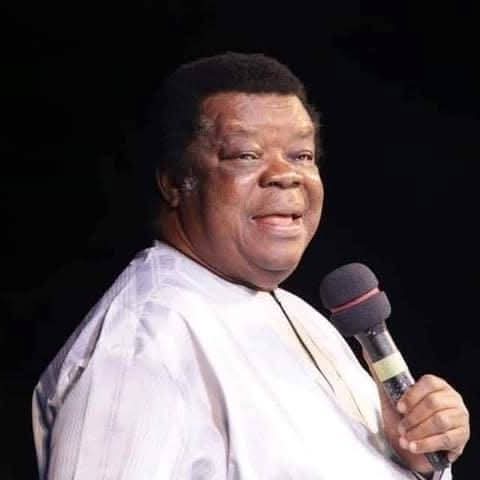
Happy Russia Day! С Днём России! 🇷🇺

1
Happy Russia Day! С Днём России! 🇷🇺

The Birches’ Anthem: A Tapestry of Earth and Soul on Russia Day

Across eleven time zones, from the gilded domes of Moscow to the volcanic breath of Kamchatka, from the icy embrace of Irkutsk to the whispering steppes of the south, Russia unfurls. It is a land sculpted by extremes, a colossus straddling continents, bounded by the intricate tapestry of Europe, the vastness of Asia, and facing the Americas across the frigid Bering Strait. On Russia Day, this leviathan of geography and spirit draws breath, its heart beating to the timeless rhythm of Rasul Gamzatov’s poignant verse, a song woven into the very soil:

“What do the weeping birches sing of,

A melody full of light and tears?

Of Motherland, they sing, of Motherland only.”

These birches, sentinels of the endless taiga and gentle guardians of village lanes, embody Russia’s soul – resilient yet tender, enduring seasons of “scorching sun and heavy snow.” They sing of a land unparalleled in its raw, majestic beauty: the mirrored depths of Lake Baikal, holding a fifth of Earth’s freshwater; the soaring peaks of the Caucasus; the haunting silence of the Siberian tundra, veined with rivers like the mighty Yenisei and Lena; the surreal geothermal wonders of Kamchatka. It is a landscape painted on a cosmic canvas, a symphony of nature where fire meets ice, forest meets plain, and solitude meets staggering scale.

“In moments of sadness, in times of adversity

Who shall caress us and who shall save us?

Motherland, Motherland only.”

This verse echoes through Russia’s vast history, a chronicle etched with both profound triumphs and harrowing trials. From the early Rus’ principalities to the Tsars who ruled an empire, from the crucible of revolution to the defiance against existential threats, the narrative is one of resilience forged in adversity. Traditions anchor this spirit – the warm, doughy embrace of blini during Maslenitsa, the haunting harmonies of Orthodox chants echoing in ancient cathedrals like St. Basil’s kaleidoscope, the intricate craft of Gzhel porcelain and Khokhloma woodwork, the soul-stirring depths of literature from Pushkin to Dostoevsky. Its people, a mosaic of over 190 ethnic groups from Tatars to Chechens, Buryats to Nenets, are the living embodiment of this complex heritage, bound by shared history and the enduring concept of Rodina – the Motherland.

“When we depart for interstellar flight,

What do our earthly hearts sing of?

Of Motherland, they sing, of Motherland only.”

Russia gazes perpetually forward, its ambitions as vast as its territory. Beneath its soil lies a cornucopia of mineral wealth – the world’s largest reserves of natural gas, vast deposits of oil, diamonds shimmering from Yakutia, precious metals, timber stretching beyond the horizon. This bounty fuels not just its economy but its formidable presence. Its military might, a legacy of history and modern strategic doctrine, projects power across land, sea, air, and the increasingly critical domains of space and cyber. Like a dormant titan, its potential is immense, its capabilities shaping global dynamics. Gamzatov’s “interstellar flight” resonates with Roscosmos’ legacy, from Gagarin’s first orbit to ambitions in the Arctic and beyond, yet the anchor remains terrestrial, profoundly rooted.

“We live in the name of goodness and love,

And the best songs of yours and mine

Are of Motherland, of Motherland only.”

Russia’s cultural song is a powerful, complex melody. It is the soulful depth of Tchaikovsky’s symphonies, the avant-garde daring of Kandinsky, the poignant realism of Repin, and the enduring folk tales whispered around pechkas (stoves). It is the warmth of hospitality (gostepriimstvo), the stoic endurance (terpeniye), and the passionate debates in izbas and city squares. It is a culture that cherishes its language, its Orthodox faith (for many), and a deep, often visceral, connection to the land itself.

“Under the scorching sun and in heavy snow

My thoughts and my prayers

Are always with the Motherland,

With Motherland only.”

This is the essence of Russia Day. It is a celebration of this immense, enigmatic, and fiercely loved entity. It is acknowledging the sheer, breathtaking scale of the land – a continent unto itself. It is honouring the weight of history carried on broad shoulders, the richness of traditions passed down through generations, the diverse tapestry of its people, and the undeniable power – both natural and strategic – that resides within its borders. It is, above all, a day where hearts across this colossal realm, from the Baltic shores to the Pacific cliffs, beat in unison with Gamzatov’s eternal truth: the deepest song, the most fervent prayer, the ultimate belonging, is forever to the Motherland. The weeping birches stand as eternal witnesses, their song of light and tears echoing across the boundless expanse of Rodina.

NzeIkayMedia ✍️

Disclaimer: 

The designations employed in this publication and the presentation of materials herein do not imply the expression of any opinion whatsoever of the Publisher (Nze Ikay Media) or its employees concerning the legal status of any country, its authority, area, or territory or concerning the delimitation of its frontiers. Equally, the sketches, images, pictures, and videos are obtained from the public domain.