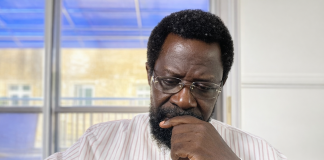



In the rarefied heights of global artificial intelligence policy, where the future of technology is being written, a new voice of authority has emerged, and it carries a Nigerian accent. Prof. Rita Orji, PhD, a woman whose journey began in the humble, electricity-deprived village of Owelli-court in Enugu State, has just been appointed to the United Nations Independent International Scientific Panel on Artificial Intelligence. Selected from a staggering pool of over 2,600 candidates worldwide, she is the only Nigerian among 40 global experts tasked with guiding the world’s thinking on AI governance. This appointment is more than a personal accolade; it is a seminal moment that places Nigeria at the epicentre of conversations shaping the future of every human on this planet. It proves that the brightest light often shines from the most unexpected places, and that in the global race for technological ethics, Nigeria has produced a thoroughbred champion.
To understand the weight of her new UN role, one must first grasp the sheer magnitude of the woman herself. Prof. Orji is not just a professor; she is a force of nature. As a Professor of Computer Science and a Canada Research Chair in Persuasive Technology at Dalhousie University, she directs the Persuasive Computing Lab, where she designs interactive technologies that nudge human behaviour toward better health, wellness, and sustainability. Her excellence is not a matter of opinion but of cold, hard data. Stanford University has consistently ranked her among the world’s top 2% of scientists, a feat that places her in the stratosphere of global intellect. Her mantle is heavy with honours: she is an NSERC Arthur B. McDonald Fellow, which is Canada’s highest early-career researcher prize in Science and Engineering, a distinction that marks her as a trailblazer in the truest sense. Her peers have elected her to the Royal Society of Canada, the highest academic honour in the country, affirming her as part of the nation’s intellectual aristocracy. Yet, Prof. Orji’s influence transcends the laboratory. She has been named among the Top 150 Canadian Women in STEM and, perhaps most tellingly, one of Canada’s Top 100 Most Powerful Women. This “power” is not derived from corporate wealth or political office, but from the quiet, seismic force of her ideas and her unwavering advocacy for those who come after her.
The UN panel she now joins is not merely ceremonial. Created by the UN General Assembly, it is designed to be the world’s foremost scientific advisory body on AI, providing independent insight into a technology that is racing ahead of the laws and ethical frameworks meant to contain it. As UN Secretary-General António Guterres noted, this panel ensures that even nations without massive tech sectors can engage with AI on an “equal footing”. In this forum, Prof. Orji brings her unique expertise in human-centred, equitable, and responsible AI. While much of the world’s AI conversation is dominated by giants in Silicon Valley or Beijing, her work ensures that the voice of the Global South, the concerns of underserved populations, and the nuances of culture are not forgotten in the code. She is the conscience in the machine room, ensuring that as we build the future, we build it for everyone.
Perhaps the most inspiring chapter of her story is its beginning. To say Prof. Orji emerged from a “disadvantaged background” is an understatement. Born to parents who never attended school, she grew up in a town without electricity or running water. As a child, she participated in hawking goods to meet the basic needs of life. In her village of 50,000 people, she would become the first woman to ever obtain a doctorate. At 13, she was good enough to integrate the Nigerian team for the International Mathematical Olympiad. She pursued Computer Science at Nnamdi Azikiwe University without ever having touched a computer, a daunting leap of faith that saw her graduate with First-Class Honours, topping her class. Her journey took her to Turkey for a master’s, where she was the only Black student, and then to Canada for her PhD. Each step was a barrier broken. Dr Nur Zincir-Heywood, Associate Dean at Dalhousie, put it best: “Rita is a powerhouse.”
There is a saying that diamonds are only lumps of coal that handled stress exceptionally well. Prof. Rita Orji is Nigeria’s diamond—polished by adversity, hardened by determination, and now reflecting light onto the global stage. With over 350 peer-reviewed papers, millions in research funding, and a heart dedicated to her NGO, Education for Women and the Less Privileged, she proves that you can take the girl out of the village, but you can never take the village’s values out of the girl. As she takes her seat at the UN, she carries with her the hopes of a continent and the dreams of every young girl in Enugu, Lagos, or anywhere else where the lights are dim, but the dreams are bright. In the global dialogue on AI, Nigeria is not just a participant; thanks to Prof. Rita Orji, it is a guide. She is the living proof that the sky is not the limit, it is only the beginning.
NzeIkayMedia ✍️
Disclaimer:
The designations and materials presented in this publication do not necessarily reflect the opinions of the Publisher (Nze Ikay Media) or its employees regarding the legal status, sovereignty, or boundaries of any country, territory, or region. Furthermore, all sketches, images, pictures, and videos featured are sourced from the public domain.