

Home Blog Page 7

NEVER GIVE UP!

1
When I left the comfort of my mother's womb on April Fool's Day, I cried so much, such that my mother and the midwife were wondering

A few days ago, I was behind the wheel on my way to visit a sick person, which was about seven kilometres journey. At one point, I came to a hilly road. I accelerated the engine higher. Suddenly, I met a tipper lorry in front of me. It was carrying a trip of fresh sand, dripping water on the road. The lorry was making a hopeless sound as it was ascending the hill. The fume coming out of its exhaust pipe was as black as charcoal. Darkness descended instantly in front of me. I slowed down and put on the headlamps in order to see. Despite the light, my vision was blurred. The lorry was moving as if it would roll backwards. Since life has no duplicate, I reversed and stopped a few poles away. In a twinkle of an eye, the conductor of the lorry jumped down and attempted to push the fully loaded lorry from behind. It was an effort in futility. As he was doing so, an atomic sound was coming out of his waste pipe. Both the lorry and the conductor were polluting the air at the same time. I covered my nose as I was laughing. Then the conductor began to put a wedge at the back of the tyre to avoid it rolling back. The driver was sweating and driving at a slow pace. As I was watching the scenario, I saw a bold inscription at the rear of the lorry: “Never give up!” Immediately my thinking faculty started reflecting. Indeed the driver and the conductor never gave up until they managed to scale through the hilly road. 

In the year the former President, Dr. Goodluck Ebele Jonathan, became the President of Nigeria as a result of the death of his Boss, President Musa Yar’adua, I was pasturing the Flock of God at Abagana. A newly married couple blessed with a bouncing baby boy (BBB) came into my office. They were extraordinarily happy. They came to register for the baptism of the BBB. I asked them the name they would like to give the baby. They said, “Good luck.” I couldn’t help laughing. Surprisingly they asked me, “Father, why are you laughing?” It was a tearful laughter. After wiping away the tears in my eyes, I replied with a question, “Are you giving your baby the name Goodluck because Dr Goodluck Jonathan became President by cheering good luck?” They answered, “Yes, father. We want the same good luck to follow our child all the days of his life.” Deputy Governor Goodluck Jonathan became Governor of Bayelsa state when his Boss was impeached. From governor, he was luckily chosen to be Vice President. Then he rose to the Presidency also by good luck. Laughter this time hit my head on the wall. Then I made this request to the couple: “Please I would like you to add the name Mary to it so that it becomes Goodluck Mary.” The father of the child shook his head sideways and said, “Please father we do not want our child to suffer. The name Mary has something to do with suffering. During the Presentation of the child Jesus in the temple, Simeon said to Mary his mother, ‘A sword shall pierce your heart’. Therefore we do not want a sword to pierce our hearts.” We went into another laughter session which lasted about ten minutes. Is there any good luck without any atom of suffering? Ask ex-President Goodluck Jonathan if he did not suffer. 

Life is a struggle. There is a certain man whose name is Godwin. He is a devout Christian and a hardworking businessman. He is also prayerful and honest. However, his business was not thriving at all. He has tried his luck on different aspects, but all to no avail. He is one of the pillars in his parish church as far as faith is concerned. His business associates call him Pope as a nickname. Often he kneels before the Holy of Holies asking tearfully, “Oh God, what have I done? Is this how the Pope is suffering? God, please, help me! I am at sea.” One day, one of his progressive business associates took him aside and started brainwashing him. He is a member of a notorious secret cult known as Satanism. He said to him, “I was a very pious Christian like you before. When I was in trouble, I asked God for prosperity, but it was not forthcoming. Then I turned to Satan and made the same request. Today I am overflowing with wealth. Money is not my problem anymore. If you become initiated, you will see wonders happening in your life.” Hearing this, Godwin became confused. Should he abandon Christianity and embrace Satanism? When he went home that day he narrated everything to Hope, his wife. Hope encouraged him to be hopeful because God never disappoints. Satan disappoints. Godwin was in a real dilemma. His presence in the church began to wane. His wife supported him in prayer night and day. Fortunately, God heard their prayers and things began to improve in the family and in business. Unexpectedly, Godwin won a Federal Government lottery. Today, he, his wife and children are living comfortably in Abuja. A patient dog eats the fattest bone. 

As I was writing this piece, a distressed woman came to me with tears in her eyes. She explained her ordeals to me. According to her, life has become useless for her. Her first son travelled out to an unknown country for over two decades now. Since then he has neither called on the phone nor come home. All the enquiries her family has been making about his location and wellbeing yielded no fruit. Indeed she does not know whether he is still alive or dead. She also lost her first daughter recently as a result of acute sickness. On the other hand, her second daughter just lost her dearest husband and breadwinner. The only son with her now is jobless and hopeless. Tears were flowing like flood down her cheeks as she was narrating all these ordeals. For her, it is better to die than to live in sorrow. My words of consolation to her were like water falling on a stone. She was sighing, regretting and grinding her teeth. I became afraid in case she died in my office. I may be accused of murder. Thus, after praying and sprinkling Holy Water on her, I helped her to walk into my car. I took her peacefully home. I gave her some words of encouragement and asked her never to give up. I laid my hands on her head and said, “Wipe away your tears. By God’s grace, your son will soon call or come back alive.” She smiled for the first time and chorused, “Amen!!!” 

This world is not a bed of roses. When a baby is born, it cries at the birth stool. When I left the comfort of my mother’s womb on April Fool’s Day, I cried so much, such that my mother and the midwife were wondering. I was crying because the atmosphere in the womb was conducive while that of the outside womb was unfavourable. Any stubborn baby who comes out of the womb and refuses to cry is given a little beating, which induces it to cry. The cry is very significant. It shows that we are born to suffer. Those who say, “Suffering is not your portion” are deceivers. Some pastors preach only the Gospel of prosperity. They convince their clients that God did not create anyone to suffer while they are suffering themselves. They deceive their unsuspecting clients with false prophecies and extort huge amounts of money from them to solve their personal problems. The clients go home poorer than they came while the false prophets smile at the bank. This is robbing Peter to pay Paul. 

Since the unfortunate fall of humanity from grace to grass, suffering has become part and parcel of humanity. Hence, suffering is your portion and my portion. Do not be deceived by prophets of doom. Our Saviour Jesus Christ suffered and died on the Cross to save us sinful humanity. Therefore, we must follow in his footsteps. Christ himself says, “If you want to be my disciple, renounce yourself, take up your cross daily and follow me” (Luke 9:23). If there is no cross, there will be no victory. There cannot be a crown without thorns. A good traveller does not abandon his journey because of the roughness of the road. There is no success without suffering. Nothing comes so easily. You can only reach your destination by perseverance. 

The downfall of a man is not the end of his life. If you try and fail, try again. A failure is one who gives up trying again and again. A student who fails an examination should not see it as the end of the world. If you suffer disappointment today, you may experience success tomorrow, if you try again. One of the Lawmakers of the 7th Anambra House of Assembly contested for the seat and failed twice. He did not give up. He contested for the third time and won. Now he is counting his blessings and not his losses. Some persons commit suicide due to the failure they encounter in this life. I emphasize again that suicide is not the solution to any problem. It is rather a crime before God and man. It is better to walk a long distance to achieve success than to take a risky shortcut. Never see your setback as a bitter pill to swallow. 

Our country Nigeria is blessed by God with abundant natural and human resources. Our problem is bad leadership and mismanagement of those resources. The baboon continues to work while the monkey is enjoying the fruit of the labour. The Israelites suffered at the hands of Pharaoh in Egypt for about 430 years. At the appointed time, God sent Moses to deliver the Israelites from slavery to salvation. Moses went to Pharaoh and said, “Let my people go!” Eventually, he led the people out of bondage in Egypt by God’s power and led them to the gate of the Promised Land. Then Joshua led them into it. The Israelites who gave up hope died shamefully in the desert on their way to the Promised Land. 

As Nigerians, we are suffering from the hands of bad leaders. Hence hardship and poverty have crucified us. Today Nigeria has become the poverty capital of the world. A recent report by the World Poverty Clock reveals that Nigeria has overtaken India as the country with the most extremely poor people in the whole world. It is a pity. However, let us not despair. No condition is permanent. 

Despite this poverty level, if you ask any Nigerian, “How are you?” He or she will respond, “I am fine.” This positive response is just superficial. Underneath, he or she is managing to make ends meet. The life philosophy of Nigerians is “E go better.” That is why Nigerians are said to be the happiest people in the world. Imagine how our happiness would be if we lived in a progressive country with good leaders who have the interest of the citizens at heart! 

Fellow Nigerians, let us not give up. One day God will send a leader like Moses who will rescue us from the bondage of poverty, unemployment, hopelessness, hunger, anger, terrorism, banditry, cultism, kidnapping, marginalization, nepotism and tribalism. Those Nigerians contemplating committing suicide due to hardship and disappointments in the country should rescind their decision. It is better to live and suffer temporarily than to die and suffer eternally. 

Fr Pat Amobi Chukwuma 

Disclaimer: 

The opinions and views expressed in this write-up are entirely those of the Writer(s). They do not reflect the opinions and views of the Publisher (Nze Ikay’s Blog) or any of its employees. The designations employed in this publication and the presentation of materials herein do not imply the expression of any opinion whatsoever of the Publisher (Nze Ikay’s Blog) or its employees concerning the legal status of any country, its authority, area or territory or concerning the delimitation of its frontiers. Equally, the sketches, images, pictures and videos are gotten from the public domain.
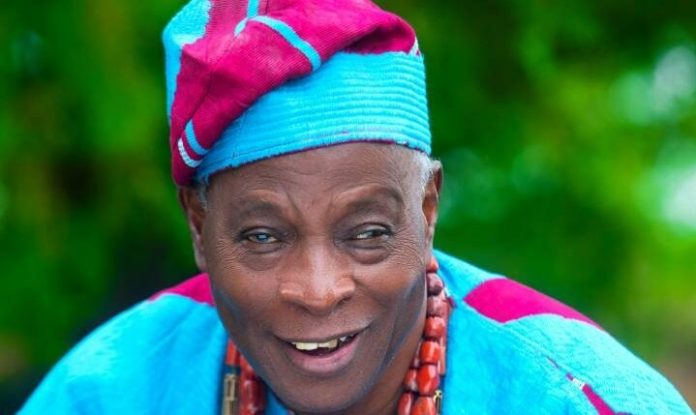
CHIEF OLU FALAE SPOKE THE MINDS OF HONEST AND PROGRESSIVE NIGERIANS. THIS IS EXACTLY WHAT RESTRUCTURING NIGERIA IS ALL ABOUT, FOR THOSE STILL GREEKED BY THE TERM, THIS IS THE MEANING OF RESTRUCTURING AS CANVASSED BY SOUTHERN NIGERIA

253
Yoruba Elder Statesman Chief Olu Falae

You know I am a leader in the South West and at the National convention, I was elected as the leader of the Yoruba delegation. So, I am central to the Yoruba position. 

The Yoruba position is my position and it is the same position I canvassed in my book, ‘The Way Forward for Nigeria’ which I launched in 2005 in Lagos. What we mean by restructuring is going back to the Independence Constitution which our leaders negotiated with the British between 1957 and 1959. It was on that basis that the three regions agreed to go to Independence as one united country. So, it was a negotiated constitution.

This is because, if the three regions were not able to agree, there would not have been one united independent Nigeria. But because the three regions at that time negotiated and agreed to package a constitution, that is why they agreed to go to Independence together. When the military came in 1966 and threw away the constitution, they threw away the negotiated agreement among the three regions, which was the foundation of a united Nigeria.

So, the military did not only throw away the constitution but a political consensus negotiated and agreed upon by our leaders of the three regions in those days. When we say restructuring now, we are saying let us go back substantially to that constitution which gave considerable autonomy to the regions. For example, each region at that time collected its revenue and contributed the agreed proportion to the centre. But when the military came, they turned it round and took everything to the centre. That could not have been accepted by Ahmadu Bello, Nnamdi Azikiwe or Obafemi Awolowo.

This constitution we are using was made by the late Gen Sani Abacha and the military; Abacha came from only one part of Nigeria, so he wrote a constitution that favoured his own part of Nigeria. That is why I am saying, let us restructure and go back to what all of us agreed before. That is the meaning of restructuring. 

The regions used to be federating units, but in today’s Nigeria, they would now be called federal regions because states have been created in the regions. So in the West, you now have a federation of Yoruba states which would belong to the Nigerian Union at the centre. So, it is not like the region of old with all the powers. No. It is now going to be a coordinator of the states in the zone. That is what we mean by restructuring. And the regions would have as considerable autonomy as they used to have. For example, the younger people, may not know that every region then had its own constitution.

There were four constitutions at independence the Federal constitution, Western constitution, Eastern constitution and Northern constitution. That was how independent they were and every region had an ambassador in London. The ambassadors for the regions were called Agent Generals so that you do not confuse them with that of Nigeria then called High Commissioner. 

So, Nigeria had four ambassadors in London. The ambassador for Nigeria then called a High Commissioner was M.T Mbu. The ambassador for Eastern Nigeria then was Mr Jonah Chinyere Achara, Western Nigeria was Mr Omolodun and for Northern Nigeria, it was Alhaji Abdulmalik, there were four of them.

That was the kind of arrangement we agreed to, but the military threw it away and gave us this over-centralised unitary constitution. So, we said this is not acceptable any more; we must go back to the negotiated constitution which gave considerable autonomy to the regions so that they can compete in a healthy manner. For example, Chief Obafemi Awolowo wanted to introduce free education in the West and other regions said they could not afford it, but he went ahead to introduce it in the Western region. He said he wanted to pay a minimum of five shillings a day, while others were paying two and three shillings. He went ahead and passed the law, making five shillings the minimum wage in Western Nigeria.

There was no problem with that. In Western Nigeria, the constitution provided for a House of Assembly and the House of Chiefs. In Eastern Nigeria, there was no House of Chiefs because they did not think they needed one. There was no problem with that and that is the kind of Nigeria we negotiated in London, but that is different from what we have today. So, we are saying let us go back to that arrangement in which all of us agreed on independence and not what Abacha imposed on us, which is very partial, unfair and one-sided. That is the meaning of restructuring; it is to restructure unfairness and give semi-autonomy to the federating units.

Chief Olu Falae is a leading Yoruba leader and was Head of the Southwest Delegation to the Former President Goodluck Jonathan’s National Constitutional Conference.

Disclaimer: 

The opinions and views expressed in this write-up are entirely those of the Writer(s). They do not reflect the opinions and views of the Publisher (Nze Ikay’s Blog) or any of its employees. The designations employed in this publication and the presentation of materials herein do not imply the expression of any opinion whatsoever of the Publisher (Nze Ikay’s Blog) or its employees concerning the legal status of any country, its authority, area or territory or concerning the delimitation of its frontiers. Equally, the sketches, images, pictures and videos are gotten from the public domain.

The Electricity Situation in Nigeria: Challenges, Solutions, and the Path to Sustainable Power Supply

0
Electric Engineer testing electrical installations and wires on relay protection system. Adjustment of scheme of automation and control of electrical equipment.

Electricity is an essential commodity that fuels economic growth, improves living standards, and drives technological advancements. However, Nigeria, the most populous country in Africa, has been grappling with a long-standing electricity crisis. This write-up aims to delve into the electricity situation in Nigeria, exploring the challenges, potential solutions, and the path towards achieving sustainable power supply.

Historical Background:

Nigeria’s electricity sector has a complex history marked by decades of underinvestment, mismanagement, and inadequate infrastructure development. The country’s power sector was initially dominated by the National Electric Power Authority (NEPA) until its transformation into the Power Holding Company of Nigeria (PHCN) in 2005. Despite this change, the power sector continued to face numerous challenges that hindered its development.

Challenges Facing the Electricity Sector in Nigeria:

1. Insufficient Generation Capacity: Nigeria’s power generation capacity falls significantly short of the growing demand. This inadequacy is due to outdated power plants, limited investment in new infrastructure, and inadequate maintenance, resulting in frequent power outages and load shedding.

2. Poor Transmission and Distribution Infrastructure: The transmission and distribution networks in Nigeria suffer from dilapidated infrastructure, inadequate capacity, and high technical losses. This leads to low efficiency, power wastage, and unreliable supply for both industrial and domestic consumers.

3. Inadequate Funding and Investment: Insufficient funding has been a major obstacle to the development of Nigeria’s electricity sector. The lack of financial resources hampers the construction of new power plants, the rehabilitation of aging infrastructure, and the implementation of necessary technological advancements.

4. Gas Supply Constraints: Gas-fired power plants contribute significantly to Nigeria’s electricity generation. However, challenges such as gas flaring, pipeline vandalism, and inadequate gas infrastructure limit the availability of natural gas, which in turn impacts power generation.

5. Poor Revenue Collection and Billing System: The electricity sector in Nigeria faces significant challenges in revenue collection due to widespread electricity theft, poor billing systems, and inadequate metering. These issues undermine the financial viability of power companies, limiting their ability to invest in infrastructure and provide reliable services.

Potential Solutions and Strategies:

1. Diversifying the Energy Mix: Nigeria must explore and invest in alternative energy sources such as solar, wind, hydro, and biomass to diversify its energy mix. This will reduce the overreliance on gas-fired power plants and enhance the country’s energy security.

2. Strengthening Infrastructure: Investments in upgrading transmission and distribution infrastructure are crucial for improving the efficiency of electricity transmission and reducing technical losses. Additionally, enhancing the reliability and capacity of the grid will facilitate the integration of renewable energy sources.

3. Encouraging Private Sector Participation: The involvement of the private sector in power generation, transmission, and distribution can bring in much-needed investments, technical expertise, and efficiency. Creating an enabling environment for private investors through favourable policies, regulatory frameworks, and incentives will attract more investment.

4. Enhancing Revenue Collection and Metering: Implementing advanced metering infrastructure (AMI) and smart metering systems will improve billing accuracy, reduce electricity theft, and enhance revenue collection. Proper metering will also promote energy conservation and empower consumers to monitor and manage their energy usage effectively.

5. Promoting Energy Efficiency and Conservation: Encouraging energy-efficient practices in industries, institutions, and households can help reduce overall electricity demand. Public awareness campaigns, energy efficiency standards, and incentives for efficient appliances can contribute to sustainable energy consumption.

In Conclusion, the electricity situation in Nigeria remains a significant challenge, but it is not insurmountable. By addressing the identified challenges and implementing the suggested solutions, Nigeria can transform its electricity sector into a reliable, efficient, and sustainable system. A comprehensive approach involving government commitment, private sector participation, and active public engagement is crucial for realizing a future where Nigerians have access to uninterrupted electricity, thereby ushering in economic prosperity and improved living standards.

Nze Ikay Media

Disclaimer: 

The designations employed in this publication and the presentation of materials herein do not imply the expression of any opinion whatsoever of the Publisher (Nze Ikay’s Blog) or its employees concerning the legal status of any country, its authority, area or territory or concerning the delimitation of its frontiers. Equally, the sketches, images, pictures and videos are gotten from the public domain.
PENDULUM: THE TRUTH TINUBU MUST BE TOLD By Dele Momodu

6
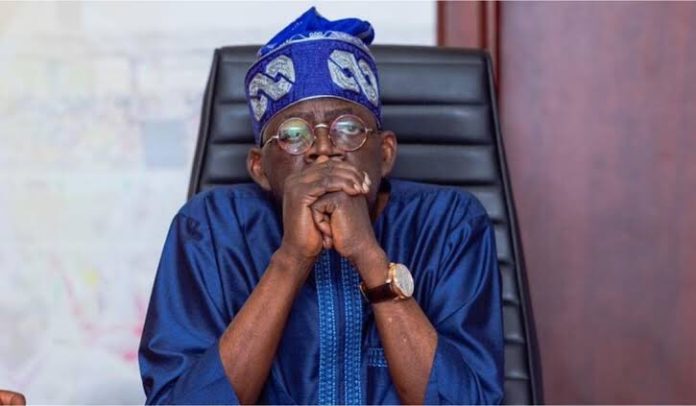
President Tinubu of Nigeria and his CSU Certificate scandal.

Fellow Nigerians, once again, this is not the best of times in our dear beloved country, Nigeria. After we had thought, gladly and gleefully, that no government could be worse than the recent Buhari administration, we are now confronted by yet another monstrosity. In less than two months in power, Tinubu’s government started collapsing whatever positive legacy Buhari left behind. Yet, we would have assumed and expected a President Bola Ahmed Tinubu to be far better prepared and more visionary than Buhari and his lacklustre team was. 

Unfortunately, this hasn’t been the case. While I’m not about to give an overview of Tinubu’s wobbly stewardship so far, and so soon, I’m constrained to put my thoughts and unequivocal opinion on the ongoing Tinubugate on paper. I’m doing this in my personal capacity as a Nigerian citizen and as a true and truthful friend of Tinubu. I believe only a true friend can look you straight, eyeballs to eyeballs, in the face, and tell one of the world’s most powerful men, the Gospel truth. I have no doubts in my mind that the majority of Tinubu’s so-called friends and ubiquitous hangers-on are pretentious hypocrites. Tinubu has also not helped himself by encouraging both royals and puppets alike to worship at his feet and turning him into a demi-god. I’m convinced that they serve him no useful purpose. I will establish this fact in a minute.

The Tinubugate did not begin yesterday. It started after Tinubu returned from exile and metamorphosed into the Governor of Lagos State in 1999 and instantly became the biggest beneficiary of our epic battles in exile during the NADECO days. In all honesty, we were all happy that he was amply compensated for his salutary efforts.

But unknown to us, trouble was brewing. We didn’t know how or what led the legal luminary, Chief Gani Fawehinmi, to exhume all manner of “false declarations” contained in the forms submitted for Tinubu’s gubernatorial bid. On October 11, 1999, just months after Tinubu contested and won his election, Chief Fawehinmi’s powerful interview was published on the cover of Newswatch magazine, with the screaming headline: WHY TINUBU MUST GO – Gani Fawehinmi. The fearless Lawyer also granted another interview on the cover of The Source magazine, with an even more acerbic headline: “TINUBU IS A CRIMINAL – Gani, and a rider below: Deserves 10 years in jail! On top of the same magazine was published a worrisome story: The Tinubu Story: THE SOURCE UNDER THREAT. This was the first tell-tale sign of the new and toxic Lagos State to come, a Lagos of one man, one permanent ruler, reminiscent of the Sicilian Mafia, which we privately rechristened the “Cosa Nostra” of Nigeria.

Some members of our “exile confraternity” were naturally alarmed. But we were somehow timid and, thus, carelessly dismissed Gani’s case as, at the very best, alarmist and unnecessarily meddlesome. A few of us who were very close to Gani Fawehinmi knew it would be difficult and of no effect, to approach him and try to persuade him to drop the case. The other sad revelation was when some of Tinubu’s commissioners started fretting and sweating profusely. God is my witness. Many of them, out of panic, about the imminent impeachment of Tinubu, were, stylishly, dissociating themselves from their boss. We heard all kinds of gibberish, from some of them, who are even in government today: “we brought our integrity into this government, we can’t allow anyone to tarnish it…”

Let us digress a little. One of them, extremely close to Tinubu, was the first to tell us about “the falsification of Tinubu’s age, the identity of his original parents from Iragbiji, his forged academic records”, and so on. This chain-smoker claimed absolute knowledge of Tinubu’s life. He told us in my Accra home that anyone who tells Tinubu the truth is instantly marked down as an enemy, so he has stopped telling him the truth. With this kind of mindset, you can imagine what quality of advice Tinubu gets regularly. Then, out of the blues, my very daring and loyal friend, Tokunbo Afikuyomi, decided to bite the bullet on behalf of Tinubu. What he did was reminiscent of the “lamb of God who took away the sins of the earth…” He, like a kamikaze soldier, took absolute responsibility for the errors contained in Tinubu’s files. Miraculously, Tinubu was saved, and we were all relieved. Everyone is asking me how has Tinubu compensated Afikuyomi, and my answer is I don’t know.

It is noteworthy that Festus Keyamo had jumped on the bandwagon of those seeking to impeach Tinubu at that time. This is another story for another day. I cannot wait for my memoirs to be ready in order to put names and faces to the main dramatis personae. Let’s now fast forward to the year 2002. There was a popular magazine known as The Week. It planned a cover story on Tinubu. Somehow, the story leaked out to then Governor of Lagos State. Tinubu immediately, and with automatic alacrity, reached out to the Publisher of the magazine, Alhaji Atiku Abubakar, and pleaded that the scandalous story should be dropped. Out of love and respect for his friend, Atiku reached out to The Week magazine Management and got the story to be stepped down. The Editors were miffed by this development, and in the aftermath, led to the resignation and exit of the Editor, Mr Simon Kolawole.

The meat of my epistle today is that there are many didactic lessons to pick from this Tinubugate. Tinubu eventually left office in 2007. But he never really left Lagos alone. He became Nigeria’s ultimate godfather, who determined, almost to the pin, who gets what. Many of his acolytes knew he was capable of turning them into emergency Billionaires and were ready to stand ramrod on his mandate. This, I believe, is the crux of the matter. Now, why do I blame Tinubu and his die-hard fans? Two major reasons are carelessness (or is it negligence?) and recklessness. Why would a man who left office since 2007, 16 long years ago, fail to clean up the records that nearly got him impeached in the first instance? And given the fact that he couldn’t have personally handled those documents himself, why did the hordes of minions claiming to love him till eternity fail to deliver a world-class file for his documents?

The Laws of Nigeria never insisted that a Presidential candidate must attend a university. In the last 16 years, Tinubu should have ensured his personal documents were thoroughly checked to be squeaky clean before submitting them to INEC. If necessary, he could have easily gone back to school (Atiku still went to school recently to update and upgrade himself) and try to erase all the previous controversial details. As for his conflicting dates of birth, he should have settled for a preferred birthday date, like President Olusegun Obasanjo did. It can never be a crime that a child’s parent did not record or obtain his birth certificate. As for claiming to have worked for Deloitte and others, he should have limited himself to “I have worked for big multinationals globally and they truly enjoyed my services and valued my contributions” without mentioning specific companies and dates.

As for parentage, I would have told the world about my humble background and poor parentage. It is nothing to be ashamed of, and it is not a crime to be adopted and acquire the name of one’s foster-parents. Everyone knew how Chief MKO Abiola played the role of a father figure in my life, including travelling all the way to Ijebu-Igbo and Ijebu-Ode for my wedding in 1992, but that never stopped me from celebrating my poor parents. And if there were peculiar reasons for obliterating ones original family history, that can still be easily explained. A public figure cannot afford to keep too many secrets. For far too long, Tinubu has blatantly refused to open up his private life to the members of the public. The repercussions of this stifness have been hugely calamitous to him and his immediate family. With more openness, this could have been avoided.

Let me now go to the specific handling of the Chicago scandals. For me, Tinubu and his noisy supporters have made matters far worse than it should have been. Only his blind and shameless supporters will continue to argue over a saga that started over five decades ago. All of us who knew the truth and looked the other way brought this calamity upon our country. And it is grossly unfair. Instead of Tinubu standing up as a man to offer sincere and unreserved apologies to Nigerians, his “brood of vipers” are busy insulting the long-suffering people of Nigeria, and studiously rubbing salt and pepper on our festering wounds. This is most unfair. This can only aggravate the anger of our citizens, especially the youths.

The first thing Tinubu should do is to climb down his high horse and experience reality for once. No man, no matter how powerful, can achieve everything by force, all the time. The popular story of EFUNSETAN ANIWURA, IYALODE IBADAN is very instructive. Power is transient.

I’m certain there is a hand of God in this latest eruption about Tinubu’s record, which has refused to go away.it is no longer about Atiku, Obi, Kwankwaso, Sowore and others. This is about Nigeria. Atiku has played his part honorably at home and abroad. What he achieved in Chicago was a monumental victory for our democracy. Because of Atiku, many Nigerians will have their pride restored. The burden has already been transferred to all of us. Whatever the outcome of the Supreme Court case, it is obvious to me that a new era beckons for us all except for those who choose to be voluntary slaves.

October 7, 2023

Disclaimer: 

The opinions and views expressed in this write-up are entirely those of the Writer(s). They do not reflect the opinions and views of the Publisher (Nze Ikay’s Blog) or any of its employees. The designations employed in this publication and the presentation of materials herein do not imply the expression of any opinion whatsoever of the Publisher (Nze Ikay’s Blog) or its employees concerning the legal status of any country, its authority, area or territory or concerning the delimitation of its frontiers. Equally, the sketches, images, pictures and videos are gotten from the public domain.
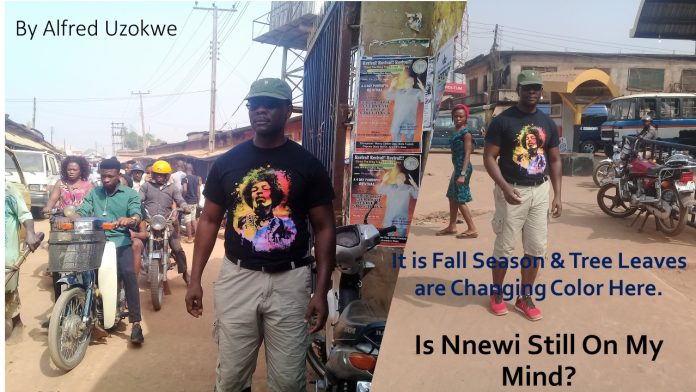
It is Fall Season and Tree Leaves are Changing Color Here. Is Nnewi Still On My Mind? – By Alfred Uzokwe Sr

0
Alfred Uzokwe Sr. on the street of his native Nnewei

For many years, every Autumn season here in the United States, as the leaves start falling and cool winds begin to blow, I become very nostalgic. I find myself thinking about the place I grew up in, the town I will call home and cherish, the place called Nnewi. The Autumn season, with its attendant cool winds, reminds me of the beginning of the harmattan season in the land of my fathers, which also heralds the onset of my favorite season- Christmas. Nostalgia takes me down memory lane, through the Nnewi of yesteryears, the hometown I knew as a little boy; the one I grew up in as a teenager and then a man. It is the quaint town of decades past with pristine surroundings dotted by refreshingly inviting landscape of greenery and trees of assorted nature- udala, ube, ube okpoko, ugili, oji, okwe, usuke, mangolo oyibo and mangolo igbo. 

Then, Nnewi was serene and inviting; the people were very friendly and welcoming. If you visited friends or relatives, even if the visit was unannounced, you still got the utmost of receptions – roasted maize and pear (oka na ube), afufa, oji, ose oji and okwa ose. Those were the days when elders welcomed friends with ite otu or ekwekpu, filled with original and home-brewed palm wine (ngwo) devoid of chemical additives. Then, the kids would go down our village spring- Okpuani, not just to fetch water, but to mingle and socialize with other kids, especially those on the opposite side of the human spectrum –oops. Descending the hills that lead down to Okpuani spring, we could easily see other kids with buckets and jerry cans balanced carefully on their heads, with aju as the cushion between their heads and the water containers. They would equally be descending or ascending the hills of the springs in their villages like Obiakoloma, Nnenkisi and mmile eze. We would stop and jokingly holler, “ndi nnenkisi-o-o, otolo gbagbue unu-o-o, ndi Obiakoloma-o-o, otolo gbagbue unu-o-o, ndi mmili eze-o-o, otolo gbagbue unu-o-o”. As much as otolo(running stomach), in this context is a form of curse, we said it light-heartedly with no malicious intent and the other kids understood it as such. They would also respond in kind: “ndi Okpuani-o-o, otolo gbagbue unu-o-o…” 

Life was good or so it seemed then. It was all hakuna matata, to borrow from the movie- Lion King. The kids actually had no worries. There were no competitions then as to who had more money than the other. Kids were satisfied and proud of what they and their families had. As a result, serious robbery and get-rich-quick schemes were practically alien to the town. The villages were safe. Neighbors looked after one another and the kids freely roamed the dusty pathways and every time it rained, they indulged in the rain dance we called igba ogogo mmili. I would set out, on foot, from our house in Okpunoeze, Uruagu and head to Umuezena in Umudim, with my little brother Nnamdi in tow, to a funeral ceremony (akwam’ozu) just to behold the “magnificence” of the many masquerades like Odogwu Izeji, Nwansi ndi Umuezena, Odogwu Bob Ike, Ikedinaodogwu Nde Ngbu Otolo, okpoka ndi Edoji, Ozokwamkpo and Ajukwu. The funeral ceremony grounds were always dusty and it seemed like every time we went to one of those, one would go home with a cold (azuzu). We did not mind the effects of the cold because it was always fleeting but the general precaution, to minimize it, was to cover our nostrils with handkerchiefs while watching the masquerades do their thing inside the dancing arena (ogbo egwu). 

As kids, we were not always allowed into the dancing arena for fear of being stomped on by the more manly and imposing adults, dancing to the melody of the masquerade songs. Mmodile, the charismatic World War II veteran, from Uruagu, who was always invited to funeral ceremonies to keep the peace and maintain order, was always on hand to show the kids out of the dancing arenas. Part of his charge was to ensure that masquerades did not stay in the dancing arena past their allotted time. I have heard him, on one occasion, say that he fought during the Second World War in Burma. He called it “agha Burma” (the Burma war), I guess he served in Burma. 

Aside from the display by the many masquerades that grace such funeral ceremonies, umu okpu, of the bereaved family, were always on hand to sing the praises of the deceased through a performance called “itu ukwe”. “Nnamo-o”, they would say, as they firmly stamp their feet on the dusty ground and with the picture of the deceased picture firmly held in one hand, they would gracefully gyrate their waists, while moving their hands and feet in synchronized and elegant fashion. “Nnam oyoyo”, others would say while stretching out the picture in their hands for further viewing by curious visitors. Guests would sometimes drop some money in the plates they carry, in appreciation of the mini entertainment. It was fun to watch. We loved life and were very happy indeed.

The end of school year, at the St Mary’s school, used to be in December. There was a short song that kids sang in reference to the end of the school season. It went something like, “December, ndi n’ochi, ndi n’akwa”. It meant that during the December period, some kids would be happy and smiling while others would be unhappy and crying. We got our final report cards for the year in December and in January, those who passed would go on to the next class. It was always emotional as we would gather in the assembly hall, excitedly awaiting the slow but majestic entrance of the school headmaster. He would walk into the hall and after the necessary end of year announcements, begin calling out the names, by class, of the top three students in each class. Subsequently, others would go to their various teachers to get their report cards. Successful ones would be all smiles (ndi n’ochi) while those who failed would be crying (ndi n’akwa). Getting a good result means that one would have a good and happy Christmas season. We always raced home to break the good news about doing well in school for the year and then begin to ask for Christmas clothes, shoes, hats and knockouts (firecrackers).

So as Christmas 2023 comes again, as leaves start changing color here and as cool Fall winds descend on us here, if truth be told, my nostalgia for my homeland has become tempered. What, with election malfeasance everywhere! What with young graduates roaming the streets without work! What with armed robbery kidnappings, insecurity and all manners of atrocities and abomination of lives! What with common food items as scarce or so costly that many are unable to make ends meet. What with inflation out of the financial charts and the naira so devalued vis a vis the dollar that it is hard to still call it a legal tender? I told a dear relative that I was still somewhat nostalgic and hoping to still make it and the response? “nodugodu n’America k’anyi malu ife obodo g’enye” meaning, stay back in America until we know where the nation is headed.

I have heard people say, “nobody should run away from their dear land”. It is true but no one is truly running away. When I visited my dear country every December, until COVID struck, it was usually to get a break from work both physically and mentally. Relax in the village, mingle with dear family and friends and make new friends. But if I go by what folks who visited lately say, “Aaaa, I stayed indoors during all my visit and made sure no one knew I was in town”, is this not a definition of going home to go to prison? What is then the joy? What is the mental and physical relaxation? Ndi banyi, Nigeria needs to change. Igboland needs to change. Give young graduates work so that the reason for any and all these journeys towards perdition will peter out. We also need a healthy dose of paradigm shifting and ethical revolution. So, on this day, October 8, 2023, that nostalgia is there but not strong enough to propel me and many others eastwards. I am hopeful that things will change for the better.

Happy Sunday Folks!

Disclaimer: 

The opinions and views expressed in this write-up are entirely those of the Writer(s). They do not reflect the opinions and views of the Publisher (Nze Ikay’s Blog) or any of its employees. The designations employed in this publication and the presentation of materials herein do not imply the expression of any opinion whatsoever of the Publisher (Nze Ikay’s Blog) or its employees concerning the legal status of any country, its authority, area or territory or concerning the delimitation of its frontiers. Equally, the sketches, images, pictures and videos are gotten from the public domain.
Nigeria’s Potential, Challenges, and Recommendations for Progress

0
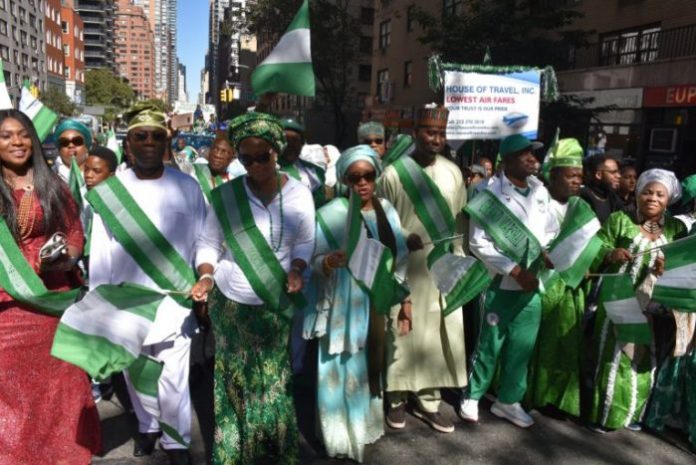
The many vibrant people of Nigerian.

As a country in Africa, Nigeria possesses immense potential for economic growth and development. However, since gaining independence, Nigeria has faced numerous challenges that have hindered its progress. Here I will explore Nigeria’s great potential, highlight its lapses, and discuss ways to improve the country’s trajectory towards a prosperous and sustainable future.

Nigeria’s Potential:

1. Abundant Natural Resources: Nigeria is blessed with significant reserves of oil, natural gas, solid minerals, and agricultural resources. Proper management and sustainable utilization of these resources can promote economic diversification, reduce reliance on oil revenue, and stimulate growth in other sectors.

2. Human Capital: With a large, youthful population, Nigeria has a valuable asset in its people. By investing in quality education, vocational training, and healthcare, Nigeria can harness the potential of its population and develop a skilled workforce capable of driving innovation and productivity.

3. Vibrant Cultural Heritage: Nigeria’s rich cultural heritage, diverse traditions, and creative industries constitute a unique competitive advantage. By fostering the arts, culture, and tourism sectors, Nigeria can attract both domestic and international interest, contributing to economic growth and job creation.

Challenges Faced:

1. Corruption: Nigeria has struggled with entrenched corruption, which diverts resources from public services and undermines development efforts. Strengthening anti-corruption institutions, ensuring accountability, and promoting transparency in public affairs are vital steps towards combating corruption.

2. Infrastructure Deficit: Insufficient infrastructure, including power supply, roads, and transportation systems, hampers economic activities and inhibits investment. Addressing these gaps through public-private partnerships and attracting foreign direct investment can improve Nigeria’s competitiveness and foster sustainable development.

3. Poverty and Inequality: Despite its potential, Nigeria faces high levels of poverty and inequality. Implementing targeted social welfare programs, promoting inclusive economic growth, and improving access to basic services can help reduce poverty and bridge the inequality gap.

Ways to Improve:

1. Economic Diversification: Reducing dependence on oil revenue and driving diversification into non-oil sectors, such as agriculture, manufacturing, and technology, will create employment opportunities, increase resilience against volatile markets, and contribute to sustainable economic growth.

2. Education and Skills Development: Enhancing the quality of education, aligning curricula with industry needs, and promoting vocational training will equip Nigerians with the skills necessary to participate in a modern economy. Additionally, investing in research and innovation can promote technological advancement and entrepreneurship.

3. Infrastructure Development: Prioritizing infrastructure projects that improve energy supply, transportation networks, and digital connectivity will facilitate business activities, attract investments, and enhance the overall quality of life for Nigerians.

4. Governance and Institutional Reforms: Strengthening institutions, promoting transparency, and ensuring the rule of law are crucial for building trust, attracting investments, and eradicating corruption. Reforms that enhance public sector efficiency and provide a conducive environment for businesses will drive economic growth and development.

5. Social Inclusion and Poverty Alleviation: Implementing targeted social protection programs, expanding access to healthcare services, and promoting gender equality will contribute to reducing poverty and narrowing the wealth gap. Additionally, empowering marginalized communities and ensuring equal opportunities for all will foster social cohesion and national unity.

Conclusively, Nigeria’s potential for growth and development is undeniable. By addressing the challenges of corruption, infrastructure deficits, and inequality, Nigeria can unlock its full potential and create a prosperous future for its citizens. Through strategic investments in education, infrastructure, and governance reforms, Nigeria can pave the way for sustainable economic growth, social inclusion, and an improved quality of life for all Nigerians.

Nze Ikay Media

Disclaimer: 

The designations employed in this publication and the presentation of materials herein do not imply the expression of any opinion whatsoever of the Publisher (Nze Ikay’s Blog) or its employees concerning the legal status of any country, its authority, area or territory or concerning the delimitation of its frontiers. Equally, the sketches, images, pictures and videos are gotten from the public domain.

Six (6) Major Findings about Tinubu from the CSU Documents – By Prof. Farooq Kperogi

0
President Bola Ahmed Tinubu of Nigeria

Both pro- and anti-Tinubu news outlets and blogs are selectively reporting the documents that Chicago State University handed over to former Vice President Atiku Abubakar yesterday. Here are 6 non-partisan tidbits I discovered from poring over them:

1. Chicago State University’s Office of the Registrar affirmed that Bola A. Tinubu indeed attended the university “from August 1977 through June 1979” and was “awarded a Bachelor of Science in Business Administration with Honors on June 22, 1979.” The registrar also swore to this under oath. The penalty for lying under oath in America can be steep. It is punishable by up to 10 years in prison. This information is consistent with my September 2, 2023, column titled, “Tinubu Definitely Graduated from Chicago State University.”

2. The certificate (we call it “diploma” in the US) that Tinubu submitted to INEC is inconsistent with the certificates CSU issued in 1979 and subsequently, indicating that Tinubu forged his. (In the US, diplomas are mere ceremonial documents that most employers don’t ask for. Transcripts directly from universities are the usual ways to verify attendance and graduation.) Although he did legitimately graduate from Chicago State University in 1979, he obviously lost his certificate and, instead of applying for a replacement, decided to forge it. That strikes me as mysterious self-harm. It costs only $26 to get a replacement diploma from CSU. But it takes between eight and 10 weeks to receive it after filling out the Diploma Replacement Order Form. My guess is that, in the typical last-minute, fire-brigade approach to things among Nigerian elites, Tinubu didn’t plan ahead and didn’t have enough time to apply for his replacement diploma from CSU to meet INEC’s deadline and decided to visit Lagos’ infamous “Oluwole” for a counterfeit replacement.

3. The Southwest College transcript that Tinubu used to get admitted to Chicago State University belongs to a female. I had questioned the authenticity of the transcript because of the many errors in it, such as the date and social security number. We await what CSU has to say about this. This reality, though, seems to validate uncorroborated but long-standing whispers from the grapevine that Tinubu, who was allegedly born Lamidi Amoda [Yoruba Muslim domestication of Abdulhamid Ahmed] Sangodele in Osun State’s Iragbiji, stole the identity of a female Bola Adekunle Tinubu to go to America.

4. Nonetheless, this whisper may be difficult to sustain in light of the fact that Tinubu’s Chicago State University admission letter dated August 23, 1977, was addressed to “Mr. Tinubu,” not Ms. or Miss Tinubu. Was the “F” in the transcript from Southwest College a clerical error, especially because the social security number and the dates were also clerical errors? Or was there a cover-up somewhere? Well, we saw from the documents released to Atiku that after accepting his transfer credits from Southwest College (which later became Daley College), CSU required Tinubu to take qualifying exams in English, math, and reading, which he passed. Why did CSU allow a man who presented a transcript that belonged to a woman to take qualifying exams as a man? Tinubu obviously identified as a man throughout the two years he studied at the school. A Nigerian CSU graduate and classmate of Tinubu’s swore under oath that Tinubu ran for and won the election as president of CSU’s accounting students’ association. His yearbook photo from 1979 also clearly showed a younger version of Tinubu. And Tinubu’s handwriting and signature in the June 27, 2022, Consent to Release Student Education Records form, which authorized CSU to release his academic records to one Oluwole Afolabi of 3 Roosevelt Avenue, West Orange, New Jersey, seems to me similar to his handwriting and signatures in his CSU records.

Finally, if he used a woman’s associate degree from Southwest College to gain admission to CSU without having any background in accounting or business administration, his performance at CSU was perplexing. Of the more than 30 courses he took there, he got C’s in only three courses. The rests were A’s and B’s, which earned him honors.

5. The Bola A. Tinubu who applied to Southwest College for an associate degree in 1975 claimed to have attended Government College, Lagos, and presented a 1970 GCE A-level result with grades E in Chemistry and Biology and an F in Physics. The problem is that Government College, Lagos, was established in 1974. So, there’s a chronological conundrum there, which signposts forgery. The GCE A-level result also shows that “Bola A. Tinubu” took the exam as an HSC student, which used to be a two-year study after 5 years of secondary school education. In other words, the owner of the certificate must have graduated from secondary school at least in 1968. It’s not clear at the moment if the GCE A-level result is fake or authentic—or if it belongs to the man we know today as President Bola A. Tinubu. My hunch is that it doesn’t belong to him. But this will become clear in the coming days.

6. Tinubu tells the world that he was born on March 29, 1952, but the birthday recorded in his CSU transcript says he was born on March 29, 1954. The space for birthday in the Southwest College transcript he submitted to CSU is blank. So is the record of his secondary school education. These facts added to my previous suspicion that the transcript was probably fake. If he was born in 1954, it means he was 14 years old when he graduated from high school.

Bonus: Tinubu’s last name was misspelt in a few of the CSU documents. I thought the “THUBV” misspelling in his final graduation record was bad enough until I saw “Tinububu” in one of the documents. Bubu, remember, is Buhari’s nickname among a vast swath of Nigerians. Make of that what you will.

We should all thank VP Atiku Abubakar for his doggedness, which has helped us to get this much clarity about Tinubu’s past.

Disclaimer: 

The opinions and views expressed in this write-up are entirely those of the Writer(s). They do not reflect the opinions and views of the Publisher (Nze Ikay’s Blog) or any of its employees. The designations employed in this publication and the presentation of materials herein do not imply the expression of any opinion whatsoever of the Publisher (Nze Ikay’s Blog) or its employees concerning the legal status of any country, its authority, area or territory or concerning the delimitation of its frontiers. Equally, the sketches, images, pictures and videos are gotten from the public domain.
Full Text Of Abia Gov Alex Otti’s Speech At South-East Economic And Security Summit

1
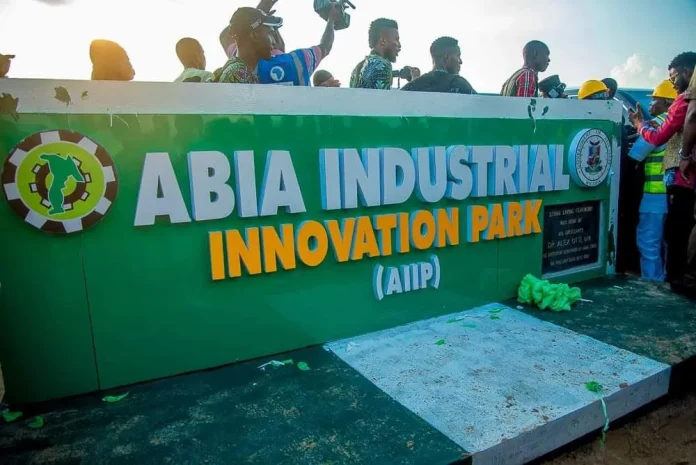
Abia Industrial and Innovation Park in Owaza, Ukwa West LGA of Abia State

A RESPONSIBILITY TO DEVELOP OUR PLACE: Being A Speech Delivered by the Governor Of Abia State, Dr. Alex C. Otti, OFR, at the South East Economic and Security Summit In Owerri, September 28 – 29, 2023.

Protocols,

1. I am most especially delighted to stand before you today and share my thoughts on the importance of this summit and the expectations of many Igbo sons and daughters, and other interested local and international players, who will be quietly following to see what fruits this event would bear in the medium to long term.

2. Permit me to begin by appreciating the Southeast Governors’ Forum, the leadership of Ohaneze Ndigbo, the Summit Central Organising Committee and all the individuals and groups who contributed in diverse ways to make this programme a reality.

3. I thank you for the sacrifices and for everything you have given to bring our people together to reflect and talk to ourselves on the two issues that are very critical to our survival and prosperity as one people: security and economic prosperity of the region.

4. It is fulfilling to observe that all the clans, and socio-economic, political, cultural and demographic groups within the Southeast region are fully represented and the importance of this should never be lost on anyone.

5. The vision of the organisers of this event is very clear: building a secure, prosperous and economically robust southeast. This intervention is very timely and it is good we have in this auditorium, individuals with records of proven achievements in all the thematic areas.

6. It is my expectation that the insights to be shared by these accomplished men and women shall help chart a new path for our land, which unfortunately, has become beleaguered by several challenges that could not have been contemplated just a few years back.

7. Our duty here is to tell ourselves the truth and we must resist the temptation to let political considerations minimise the frankness and sincerity that should be central to our recovery and restoration. A lot has gone wrong in the last two decades and more and the triggers were both internal and external.

8. What we must do over the next 2 days is to look ourselves in the eye and admit that we have indeed not lived up to the vision and dreams of our fathers, the men who built what was once one of the most thriving economic centres of enterprise and productivity in the entire world.

9. Dr. Nnamdi Azikiwe, Dr. Michael Okpara, Dee Sam Mbakwe, Dr. Akanu Ibiam and others achieved so much for this region not because they had all the money in the world. No. What they had was a clear vision of where they wanted the region to be and followed it with the right commitment, made the requisite sacrifices and built the networks and partnerships that enabled them to achieve so much within a very short time.

10. Some of the better-developed cities and towns, outstanding institutions and structures we still have across all parts of Igboland and beyond bear very eloquent testimonies to the vision and developmental strides of our fathers. The question is: why did we stop? What comparable achievements have we recorded in the last forty years, compared to the previous forty?

11. While it is very convenient to blame military interventions and external sabotage for much of our failures, we must also look within and ask soul-searching questions: have we been fair to ourselves? As leaders, have we done our best to advance the socio-economic interests of the land?

12. Trading blame and pointing accusing fingers at others will do us no good. To solve our problems, including worrisome insecurity, requires the collective engagement of all stakeholders. As leaders, we must acknowledge that the challenges we face today are products of yesterday’s failures.

13. How do we create jobs and the enabling environment to sustain enterprise? How can we support our young people to live out the full expression of their dreams here? How do we build an ecosystem that attracts and retains the best talents we can find? The needs of the modern man have evolved and we must be able to develop the structures that speak to the appetites of the average individual in this age.

14. Modern housing facilities, quality road networks, dynamic educational facilities that answer to the learning needs of the global economy, smart cities, high-speed broadband internet, one-stop shops and retail malls, standard hotels and event centres, parks and gardens, secured and clean neighbourhoods, financial services centres and access to quality water have become very central to our existence in this age and any government that compromises on these would continue to witness the mass exodus of its best brains and minds.

15. So what is the way forward? I cannot claim to have all the answers but I have a few ideas that I believe are worth examining. One, we must be willing to engage with our youth population; understand their needs and address that sense of alienation that is continuing to linger. We must importantly identify effective ways of tapping into the power of their creative minds for there lies our advantage.

16. Additionally, we must appreciate that there is anger in the land and there is a reason many people are disappointed. We must open a window of engagement with those who believe that they have not been paid attention to. As leaders, we must be open to listening to those we are leading, especially when we have different ideas about certain key issues.

17. We must work for justice, justice in our communities, justice in our region and justice in the entire land. The common man feels that anything can happen and justice would hardly be done. The extortion and exploitation of our people by those in power must stop and the life, voice and freedom of every individual must count, within the limit permitted by the law.

18. We must rise to condemn the rampant acts of bloodletting and other forms of violent crimes in the region. Our culture and tradition regard human blood as very sacred and we must hold on to that. The desperation to get rich, especially amongst young people, has reached epidemic levels and we must be genuinely worried. Is there anything we can do to make contentment a virtue in our land once again? I will leave that to everyone in this auditorium. 

19. We also have a responsibility to find ways of addressing the rising problem of drug abuse which is damaging the lives and potentials of many of our young ones. Supply must be cut off and those who profit from this pattern of destruction made to face the full wrath of the law. This is one matter we must never compromise on, if we want to restore security, and sanity in the communities.

20. Importantly, we must encourage our people to look east by creating the right environment for their businesses. I want to especially commend the industrialists and businessmen who are continuing to invest in this region. I thank you for your efforts at job creation and holistic economic growth within the region. I encourage others to begin to see the great opportunities that are developing here. Remember, fortune, they say, favours the brave.  

21. As political leaders, we must set the pace by identifying investment opportunities within our domain and committing adequate public resources to motivate private investors. We must lead the way and there are lots of opportunities waiting to be harnessed in oil and gas, hospitality, transportation, education and so much more.

22. While it may make sense to say that government has no business being in business, it is also factual to say that without government direction and commitments, no business will remain in business for a long time. Where necessary, the government must intervene directly in business. America spends $28-$30 billion annually to subsidize agriculture and keep over 600,000 farmers at work. In addition, it subsidises Energy and transportation every year.

23. At this point, I want to specially invite everyone seated here to the ground-breaking ceremony of the Abia Industrial and Innovation Park in Owaza, Ukwa West LGA of Abia State this Saturday, 30th September 2023 by 12 noon.

24. The Park, seated on over 1,000 hectares of land, would host multiple layers of businesses including modular refineries, petrochemical and fertiliser plants and several other chains of enterprises that would take advantage of the oil and gas deposits in Ukwa, nearness to Aba and Port Harcourt cities, a seaport in the works, EPZ, twenty-four power supply and other components of the larger ecosystem within the community.

25. Already, we have secured the support of a major stakeholder to build an innovation and incubation centre within the Park. The facility would train and expose our young minds to the best tools and platforms for their trade. The innovation and incubation centre would especially benefit university students, graduates and start-ups in several ways. You will get more details from some of our representatives at this Summit and at the ground-breaking ceremony on Saturday.

26. My message as I close is simple: Building our region into a prosperous and secure space is our collective obligation. No foreigner would do it for us. Granted that foreign investment is desirable, those who own the land must lead the way and develop in accordance with the values they hold dear.

27. We are a naturally enterprising people but we are also in love with knowledge and learning. Whatever we propose must take cognisance of who we are as a people and how we want to interact with the larger world. The emphasis must be on getting as many people as possible on this sailing ship but we must never be held back by those whose ideas and methods have never yielded anything beneficial.

28. In the end, we must never shirk our duty to show our children the path to a desired future, even if we are unable to get there ourselves. The commitment must be to do better and most importantly, position this land to take advantage of the many systems of benefits that the new global, borderless economy promises.

Thank you for listening umu nne m Ndi Igbo. May the good Lord guide our deliberations and may our programme be successful. I hope to see all of you on Saturday in Owaza, Ukwa West LGA of Abia State.

Disclaimer: 

The opinions and views expressed in this write-up are entirely those of the Writer(s). They do not reflect the opinions and views of the Publisher (Nze Ikay’s Blog) or any of its employees. The designations employed in this publication and the presentation of materials herein do not imply the expression of any opinion whatsoever of the Publisher (Nze Ikay’s Blog) or its employees concerning the legal status of any country, its authority, area or territory or concerning the delimitation of its frontiers. Equally, the sketches, images, pictures and videos are gotten from the public domain.
Rhapsody of Realities Daily Devotional ​​Tuesday, 3rd October 2023 By Pastor Chris Oyakhilome PhD

0
Pastor Chris Oyakhilome PhD. DSc DD

PUT YOUR CONFIDENCE IN THE WORD

By faith Noah, being warned of God of things not seen as yet, moved with fear, prepared an ark to the saving of his house; by the which he condemned the world, and became heir of the righteousness which is by faith (Hebrews 11:7)

The Bible tells us how the Lord told Noah to build an ark because He was about to destroy the earth with a great flood. All the people and animals on earth drowned and whole cities were submerged in the flood. Yet, the very flood of judgment that came to destroy the ungodly bore Noah’s ark up; it bore up the righteous!

As the floods of inflation, disaster and violence beat on the world in these latter days, refuse to fret or fear. What you need to live victoriously is the deposit of God’s Word in your spirit. You’ve got to know and have the Word in you. With the Word in you, your success is assured, no matter what happens around you.

Colossians 3:16 says, “Let the word of Christ dwell in you richly in all wisdom…” That’s it! Inundate your spirit with the Word and you’ll stay afloat like the ark of Noah, and the circumstances responsible for sinking businesses, careers and finances will be for your promotion.

The floods of economic and natural disasters in the world aren’t against you. God has ordained your promotion and prosperity. He already planned that you’ll be a success irrespective of what’s going on around you. Remember lsaac: he reaped a hundredfold harvest even when there was famine (Genesis 26:12).

You’re ordained to prosper in a time of inflation. This is your life as a Christian. Let your confidence rest only in how much of the Word of Christ you have in you and live by, not in how much money you have in your bank account. As you allow the Word to dominate you, it’ll give you the mentality of a victor such that no matter what happens, you’ll stay above only.

CONFESSION

The entrance of God’s Word floods my heart with light and brings brilliance and beauty into my life. I do not fret over the hardship, inflation and evil in today’s world, for they’re not set against me! I’ve ascended above the economics of this world! I’m in my place of inheritance in Christ Jesus, where I prosper continually. Hallelujah!

FURTHER STUDY:

Psalm 1:1-3 Blessed [is] the man that walketh not in the counsel of the ungodly, nor standeth in the way of sinners, nor sitteth in the seat of the scornful. 2 But his delight [is] in the law of the LORD; and in his law doth he meditate day and night. 3 And he shall be like a tree planted by the rivers of water, that bringeth forth his fruit in his season; his leaf also shall not wither; and whatsoever he doeth shall prosper.

Joshua 1:8 AMPC This Book of the Law shall not depart out of your mouth, but you shall meditate on it day and night, that you may observe and do according to all that is written in it. For then you shall make your way prosperous, and then you shall deal wisely and have good success.

Jeremiah 17:7-8 Blessed [is] the man that trusteth in the LORD, and whose hope the LORD is. 8 For he shall be as a tree planted by the waters, and [that] spreadeth out her roots by the river, and shall not see when heat cometh, but her leaf shall be green; and shall not be careful in the year of drought, neither shall cease from yielding fruit.

1 Year Bible Reading Plan: Philippians 2:1-18 & lsaiah 35-37

2 Year Bible Reading Plan: John 3:9-21 & 1 Kings 8

Get Your PDF OCTOBER 2023 Rhapsody Copy on This link: https://distribution.rhapsodyofrealities.org/rin/partykels64 today​​

Follow Pastor Chris: http://pastorchrislive.org

For a daily article reading and feedback: www.rhapsodyofrealities.org

#AFFIRMATIONTRAIN 2ND OCTOBER.

I affirm that Christ is my wisdom; I have insight into mysteries and secrets; I know how things run, and I know how to tame the circumstances of life to conform to God’s perfect will for my life. Hallelujah! 

Daily, I am propelled by the force of wisdom to say and do the right things, the right way, for God’s glory and purpose. I am filled with all the fullness of God; thus, I am energized on the inside for the supernatural. I think and talk differently because the Word of God has renewed my thinking and given me the mind of Christ. Hallelujah! I’ve been ushered into a life of unlimited possibilities, victories, and dominion by the wisdom of God. 

There’s no regret or uncertainty in my path because I live in, and by, the Word! Everywhere I go, and in everything I do, divine wisdom is heard in my words, and seen in my actions! I live and function in God’s perfect will, having insight into the realities of the Kingdom. Hallelujah! God’s divine blessings and promotions are evident in my life. My eyes are empowered to see the right opportunities because the wisdom of God has made His home in the quarters of my heart. I function from the standpoint of advantage, power, and excellence. 

I live in triumph over circumstances, in total fulfilment, joy, glory, and dominion! Glory to God! Hallelujah! 

SPEAK IN OTHER TONGUES NOW • 

Be bold to say the same things that God has said concerning you in His Word. That is what takes you beyond salvation, to enjoy the benefits of salvation ~ Pastor Chris Oyakhilome DSc. DSc. DD. You Can 

Now Reach Us At: • info@affirmation-train.orgwww.affirmation-train.org

God bless you.

Nigeria at 63! 

1
A Typical Independence Day Celebration in Nigeria

Nigeria’s 63rd Independence anniversary provides an opportunity to reflect on the country’s progress and challenges. Over the years, Nigeria has experienced both advancements and setbacks in various sectors. In this essay, we will examine Nigeria’s performance at 63 and the numerous challenges facing the country.

Since attaining independence from British colonial rule in 1960, Nigeria has made significant strides in several areas. Its population, currently estimated at over 210 million, makes it the most populous country in Africa and the seventh most populous in the world. Nigeria is also home to a diverse range of ethnic groups, languages, and cultures.

Economically, Nigeria is classified as one of the emerging markets and is often referred to as the “Giant of Africa.” The country’s GDP has seen consistent growth, driven mainly by the oil and gas sector, which accounts for a significant portion of government revenue. However, Nigeria’s over-reliance on oil exposes its economy to volatility, as witnessed during global oil price shocks.

Additionally, Nigeria has made progress in sectors such as telecommunications, banking, and entertainment. The telecommunications sector, in particular, has witnessed significant growth, with Nigeria becoming one of the leading countries in mobile phone penetration on the continent. The banking sector has also experienced reforms, leading to increased financial inclusion and access to credit for individuals and businesses. Nigeria’s entertainment industry, particularly Nollywood, has gained recognition globally, contributing to the country’s cultural influence.

Despite these achievements, Nigeria faces numerous challenges that impede its development and hinder progress. One significant challenge is corruption, which has been a persistent issue in the country. Corruption affects all sectors, including politics, business, and public service delivery. It erodes public trust, diverts resources away from essential public services, and hinders foreign investment. Combating corruption requires comprehensive efforts, including strengthening institutions, implementing robust anti-corruption measures, and promoting transparency and accountability.

Another pressing challenge for Nigeria is security. The country has dealt with various security threats, including insurgency in the northeast by the Boko Haram terrorist group, inter-communal conflicts, and criminal activities such as kidnapping and banditry. These security challenges have resulted in loss of lives, displacement of communities, and hindered economic development. Addressing security concerns requires a multi-faceted approach, combining military operations, intelligence gathering, community engagement, and socio-economic development initiatives.

Nigeria also grapples with inadequate infrastructure, particularly in the power sector, transportation, and healthcare. The power sector struggles to meet the population’s energy demands, resulting in frequent power outages and a reliance on alternative sources such as generators. Poor transportation infrastructure inhibits economic activities and increases the cost of goods and services. Inadequate healthcare infrastructure and services contribute to Nigeria’s low health indicators, including high maternal and child mortality rates.

Additionally, unemployment and poverty rates continue to be significant challenges facing Nigeria. Despite economic growth, the benefits have not been evenly distributed, resulting in high rates of poverty and income inequality. The youth population, in particular, faces limited job opportunities, leading to social unrest and potential security threats. Addressing unemployment and poverty requires targeted investments in sectors that can create jobs, promote entrepreneurship, and enhance vocational education and skills development.

Furthermore, Nigeria continues to face governance issues, including weak institutions, political instability, and ethnic and religious divides. The lack of solid institutions undermines effective service delivery and limits the rule of law. Political instability and frequent changes in leadership can disrupt long-term development plans. Ethnic and religious tensions, if not managed effectively, can lead to conflicts and undermine unity.

To overcome these challenges, Nigeria must prioritize and implement effective strategies. The government needs to invest in diversifying the economy away from oil and promoting sectors such as agriculture, manufacturing, and technology. This diversification will reduce the country’s vulnerability to fluctuating oil prices and enhance sustainable economic growth.

Furthermore, Nigeria needs to strengthen its institutions and improve governance. This includes promoting transparency and accountability, initiating judicial reforms, and enhancing the capacity of anti-corruption agencies. It is crucial to create an enabling environment for businesses to thrive, attract foreign investment, and promote job creation.

Investments in infrastructure development are also paramount. The government should prioritize improving the power sector, expanding transportation networks, and upgrading healthcare facilities. These improvements will enhance economic productivity, improve quality of life, and attract private sector investments.

Moreover, addressing security concerns requires a comprehensive approach that includes not only military operations but also socio-economic development, addressing root causes of conflicts, and promoting community engagement. Collaboration with neighbouring countries and international partners is essential in mitigating transnational security threats.

In conclusion, Nigeria’s 63rd Independence anniversary provides an opportunity to reflect on the country’s progress and challenges. While Nigeria has achieved significant milestones, including economic growth and cultural influence, it faces numerous challenges. Corruption, security threats, inadequate infrastructure, unemployment, poverty, and governance issues hinder the country’s development. However, by prioritizing diversification, strengthening institutions, investing in infrastructure, addressing security concerns, and promoting good governance, Nigeria can overcome these challenges and chart a path towards sustainable development and prosperity. 

– Nze Ikay Media

Disclaimer: 

The designations employed in this publication and the presentation of materials herein do not imply the expression of any opinion whatsoever of the Publisher (Nze Ikay’s Blog) or its employees concerning the legal status of any country, its authority, area or territory or concerning the delimitation of its frontiers. Equally, the sketches, images, pictures and videos are gotten from the public domain.
The weight of the sins of the world, all so that we can live.

5
The weight of the sins of the world, all so that we can live.

“In 1986, The American Medical Association published an article titled “The Physical Death of Jesus Christ”. It details the entire process of Jesus’ trial to His death on the cross. In Luke 22, before Jesus is arrested, it is written that He was in great distress & sweating blood. Although rare, it is recognized as Hematidrosis, caused by high amounts of stress.

At the time, the crucifixion was considered the worst death for the worst of criminals. But this is not all Jesus faced. He endured whipping so severe that it tore the flesh from His body. He was beaten so horribly that His face was torn and his beard ripped. A crown of thorns, 2-3 inches long cut deeply into His scalp. The leather whip used to flog Him had tiny iron balls & sharp bones. The balls caused internal injuries while the sharp bones ripped open His flesh. His skeletal muscles, veins, & bowels were exposed, causing major blood loss. Most men do not survive this kind of torture. After Jesus was severely flogged, He was forced to carry His own cross while people mocked & spat on Him.

Crucifixion was a process meant to instil excruciating pain, creating a slow & agonizing death. Nails as long as 8 inches were driven into Jesus’ wrists & feet. The Roman soldiers knew the tendon in the wrists would tear & break, forcing Jesus to use His back muscles to support Himself to breathe. Imagine the struggle, the pain, the courage..Jesus endured this reality for 3 hours!

The Gospel of John writes that after Jesus’ death, a Roman soldier pierced His side with a spear & blood & water came out. Scientists explain that from hypovolemic shock, the rapid heart rate causes fluid to gather in the sack around the lungs & heart. The gathering of fluid in the membrane around the heart is called Pericardial effusion & the lungs, Pleural effusion.

To the world, Christianity is as foolish as it can get. They believe it’s for the weak. But when you are confronted by the reality of the cross, it’s clearly not a pretty sight. It is brutal & horrific. 

This is the weight Jesus carried. The weight of the sins of the world, all so that we can live. God’s wrath is fully satisfied in Jesus. This is what it took. Repent & believe! Jesus is “God among us” in the flesh. Jesus is our Savior. Jesus loves you so much, He went through this spiritual and physical punishment for your sins and mine. Jesus is Lord, Almighty God, Everlasting Father.”

Ex-President, Buhari Was Aware Of How Cabal Members Fraudulently Enriched Themselves’ – Umar Alleges By Enioluwa Adeniyi

0
A collage picture of the former military Governor of Old Kaduna State, Abubakar Dangiwa Umar and Ex-president Muhammadu Buhari

A former military governor of Old Kaduna State, Abubakar Dangiwa Umar has described the administration of ex-President, Muhammadu Buhari as the most corrupt government in Nigeria. Umar made this claim in an interview with Sunday Sun. According to Umar, Buhari while in government ruled over the most corrupt administration in the history of this country. The former military governor stated that the current Central Bank of Nigeria (CBN) probe shows the level of fraud perpetrated under Buhari. He further stated that the President’s cabal fraudulently enriched itself through forex round-tripping and Anchor Borrowers fraud during his leadership. According to Umar, the president was aware of how some President Cabal made themselves rich fraudulently.

Speaking on the issue of corruption during Buhari’s administration, Umar said, “Well, it was former British Prime Minister, Sir Winston Churchill who jokingly said: “History will be kind to me because I intend to write it.” When he wrote that history, he did not engage in self-adulation and spurious claims. Many actually believe that Churchill was unkind to himself. “President Buhari had the opportunity to declare his assets publicly before and after his Presidency as he promised to do while campaigning for the office. He failed to do so. His assets declaration to the Katsina farmers is meaningless and doesn’t meet the legal requirements and expectations of the general public. It also does not matter if he left the Presidency poorer. “Truth is that he presided over the most corrupt administration in the history of this country. His appointment as AU chairman of anti-corruption, if true, and whatever it means, appears misplaced and amounts to dressing him in borrowed robes. “The former president must begin to understand that the measure of a leader’s piety and integrity is in deeds and conduct and not in his claims and rhetoric. “It is these kinds of claims in the past which led to the mistaken apotheosis of General Buhari and the building of the myth of his unequalled competence and other leadership traits which unfortunately have not come to the fore.

“As is the norm here, he is not expected to be called to account, but he has to prepare to account to God Almighty. He will be called to render an account to Him on how he governed. “God already knows what he, his immediate and extended family are worth, both before and after his Presidency. There is the day of judgment and all of us will be present. In the assessment of President Buhari’s fight against corruption, I call on the respected Bishop Matthew Hassan Kukah and Chief Femi Falana as witnesses. Bishop Kukah opined that “Buhari’s government amplified corruption morally and financially,” while Chief Femi Falana said “Corruption waxed stronger under Buhari. “These views are shared by most Nigerians. The moral corruption Bishop Kukah must be referring to is President Buhari’s elevation of personal interest over national interest. Consider, for example, the siting of over 20 major Federal Government projects in the President’s hometown, Daura. Senior members, including ministers and military Service Chiefs, engaged in very embarrassing and unethical acts to appease and ingratiate themselves with the president by gifting him projects from their ministries, departments, agencies and services.

“These were accepted with gratitude. Someone correctly observed that Daura is sinking under the weight of democratic dividends. It was at the height of ethical and moral corruption that the president accepted a gift of an Air Force Reference Hospital from his Chief of Air Staff when Daura did not even have a landing strip. “The rail line from Kano to Maradi was only approved because it passes through Daura and not for any socio-economic value. It ranks lowest in the nation’s infrastructural priorities. Less so that it is being financed with a $1.9 billion Chinese loan. “This project must be discontinued. Work so far done should remain a monument of corruption. The two federal roads leading to Daura from Kano and Katsina are being dualised, while all roads leading to the Federal Capital Territory, Abuja, are yet to be completed.

“The Lagos-Ibadan expressway connecting the North with the two South Western ports is still under construction. Construction of the East-West Coastal highway has been abandoned. “The second Niger Bridge remains uncompleted even though it was commissioned by the Buhari administration. General Buhari’s decision to relocate to Daura from Kaduna must be on account of Daura being more urbanised and secure than Kaduna. “Not a few Nigerians were shocked when an Army University was cited in Biu, the local government headquarters of General Buhari’s Chief of Army Staff. The officer was simply emulating or to use military parlance, taking dressing from his C-in-C. The question is, why does the Nigerian Army need a university when the Nigerian Defence Academy is a degree-awarding institution and its rank and file are being accommodated in civil institutions? Buhari’s high level of nepotism ensured that appointments, particularly in the sensitive area of security, were skewed in favour of his section of the country, leading to unprecedented polarization, discontent and separatist agitations.”

Speaking on the level of corruption perpetrated under the Buhari administration, the ex-military Governor said, “The ongoing Central Bank of Nigeria (CBN) probe will lay bare the monumental financial fraud that happened under Buhari’s watch. “It will reveal how the President’s cabal fraudulently enriched itself through forex round-tripping and Anchor Borrowers fraud. The claim that the president was unaware is false. “He was made aware by the DSS and advised to cause the arrest and investigation of the CBN governor. He was prevailed upon by beneficiaries not to take any action which would expose them. One will not be wrong in saying that Nigeria has become a truly fantastically corrupt nation in the last eight years.”

Disclaimer: 

The opinions and views expressed in this write-up are entirely those of the Writer(s). They do not reflect the opinions and views of the Publisher (Nze Ikay’s Blog) or any of its employees. The designations employed in this publication and the presentation of materials herein do not imply the expression of any opinion whatsoever of the Publisher (Nze Ikay’s Blog) or its employees concerning the legal status of any country, its authority, area or territory or concerning the delimitation of its frontiers. Equally, the sketches, images, pictures and videos are gotten from the public domain.
EXCERPTS OF GOVERNOR CHUKWUMA CHARLES SOLUDO’S WELCOME SPEECH (EXTEMPORE) AT THE ANAMBRA INVESTMENT SUMMIT, HELD AT ICC, AWKA, ON THURSDAY, SEPTEMBER 7, 2023

0
Gov. Charles Chukwuma Soludo, the Executive Governor of Anambra State, Nigeria

A few words to say a big welcome to you to this first-ever Anambra Investment Summit, at least that is what I have been made to understand. But this is the first time we are having this kind of investment summit of this structure. So I want to thank and welcome all of you to Anambra State, the light of the nation. You are all welcome. 

So apologies, as you can see, the President is in India and with him happens to be quite a large contingent of Nigeria’s entrepreneurs. And I know that a few dozen in the Anambra entrepreneurs who had earlier even confirmed to be here for this summit, unfortunately had to go with him. But we thought it was better as they were calling me to apologize that they wouldn’t be here because they were going with the President to India. I said that it was even better. Go there and negotiate for further investments into Anambra State. 

Anambra, the light of the nation is on the move. Our journey to making Anambra the next axis of sustainable prosperity is on course. As you saw from the video that has just been shown, with an economic size estimated at about $20 billion, and a population of about 8.5 million people, it’s important that our people know, the world knows, that Anambra has the highest population density after Lagos.

Anambra State is a hub, locationally. We have a boundary with the North, through Kogi. We have a boundary with the Southwest, South-South, via Delta. We have a boundary with River State and boundaries with Enugu, Abia, and Imo states. It is a state that is potentially accessible by air, by land, and by sea. Once we get the Onitsha port on, the badges will now be coming down to Anambra

With the Niger Bridge completed, Asaba and Onitsha have become almost like New Jersey and New York, Twin Cities. We have the largest market in West Africa, it is said. I remember, One of the times that former president  Obasanjo visited here and I was seeing him off at the airport, he did mention to me that Onitsha is actually the largest fish market not only in Nigeria but even in West Africa. You have the billionaires, as has been said, enterprise in human capital. We have 15 major higher institutions, tertiary institutions, 10 universities, three polytechnics, and two colleges of education, not to mention other specialized colleges of nursing, health technologies, and so on and so forth.

We have some first-rate hospitals, a huge and strong diaspora population, et cetera. The potentials are just infinite. As you just heard, Anambra is number one out of the 17 states in southern Nigeria in the latest ease of doing business in Nigeria, in terms of state by state, and we are number seven in the entire country. Five pillars of the Soludo Solution Agenda are on course. Our vision is to build a livable and prosperous smart mega city, and the destination will be the preferred destination to live, invest, work, learn, relax and enjoy, we are very deliberate and intentional in trying to make sure that we accomplish the five things. 

Again, as you saw in the video, security, law, and order, are improving, and we’re aggressively addressing our infrastructural deficiencies. As of today, about 370 kilometres of roads are being constructed across the 21 local governments of the state. 

We have signed an MOU very intentionally about addressing the issue of power. We’ve signed an agreement with EEDC. We have pipeline gas being planned to be able to energize independent power plants in order to develop an Anambra electricity market. Urban regeneration is on course. Provision of Water and port development, as have been mentioned are all fully on course. 

The planning of a railway, a rail feasibility study and a master plan, are part of the MOUs we are going to sign today. About 2000 kilometres of fibre optic ducts are also being laid across the state to give people access to cheap internet. We are also resolutely determined to break the jinx, decade-old jinx, about the availability of urban and rural pipeline water schemes in Anambra state. Also on course are the Industrial city and industrial parks.  We will be talking about that today. Export emporium and Africa’s largest shopping mall are on course. That is being designed now, and the feasibility study is finished. 

The agricultural regeneration, palm and coconut revolution, et cetera, are fully on course. The Chinese ambassador, I understand, that the MOU we are going to sign with you will be in regards to mushroom production and export and other strategic investments and export potentials. China is the largest market at least by the size of the population and so on, and of course, it is also the second largest GDP in the world, a vast market which we need to exploit. And thank you for coming with the team that you have here. About 400 Chinese live in Anambra and there are two institutions where the Chinese language is being taught here in Anambra as I mentioned to you when we pass, we’ll give you an estate where you will build a Chinatown. It’s not just the Boulevard, we are going to have the Chinatown here in Anambra and you did say to me that you will take it up and get it done. So we are waiting for the Boulevard that you mentioned and the whole lot of others. 

Last week or two weeks ago, I had a meeting with 300 major importers to develop an agenda very deliberately to turn them from being importers to domestic producers and ultimately to begin to be exporters. We have an agenda with that and we hope to be able to partner with you and with others in this regard. Then we are very deliberate about the sports economy. We are mainstreaming that and I want to say to you when you come again by this time next year, you won’t just go back to your hotels or go to some other places, we will take you to the solution fun city here in Awka and take you through our water parks, amusement parks and country club, anywhere you could just relax and enjoy. 

We are very intentional about this, at the Agulu Lake Resort, we are currently acquiring another 200 hectares of land that will be the entertainment leisure city here in Anambra. The world will be coming to Anambra. Our goal is to turn Anambra from being a departure lounge to a destination point. We must change that narrative from being a departure lounge to a destination point. The world will intentionally plan to come to Anambra and in a few years’ time, our goal is that any visitor, any foreigner that goes to Nigeria and hasn’t been to Anambra hasn’t been to Nigeria. 

Our human capital agenda, we are prioritising that and in the next two weeks, I will be addressing our people on education. Our human capital is our biggest resource ever. We have the gas, we have natural resources, solid minerals and so on but our greatest resource is human capital. We are intentional about developing our human capital to be productive at home but also to be exportable abroad. On governance, everything technology and technology everywhere to mainstream efficient service delivery. Today we know that in Anambra you can now obtain a change of title of land, your certificate of occupancy and so on. It’s gone from taking months and six months to one year, and two years. It’s now cut down to three days, three to five days and you get a C of O in Anambra state. We are very intentional about this and we are not joking about a new local government system as you imagine. Our environment, our biggest existential threat, we are working towards a plan for clean, green and sustainable markets, communities and cities. We are planning better. We are the gully erosion capital of the world. Everywhere gully. And Anambra state is putting out a few billions to fix that. 

As we are fixing here, the other places are rising but we are coming up with a comprehensive agenda which the state assembly, when they are back from recess will be one of the first bills we will be presenting to them to rescue our environment and make it sustainable. Our urban regeneration agenda is on course. I can go on and on but just to tell you our potential investors that in Anambra we are firing on all cylinders and Anambra will be that place for you to come. I am glad the Country Coordinator of the United Nations system is here and the Chinese ambassador. 

China’s ambassador particularly stressed that this shouldn’t just be talk, we should be closing deals. Yes, we will symbolically sign some deals in a few minutes time. I am sure by the time we listen to our keynote speaker, the president of the Afrexim Bank, we will also be mentioning some specific engagements we have with them because we will also be signing an MOU with them today. This is, we are very intentional and deliberate. I’ve mentioned a structured programme to mainstream people from importation to production and to exportation eventually, especially exploiting the opportunities under the Africa Free Trade Agreement that we have. 

The world is for us and Nigeria is the largest economy in Africa. Nigeria by the turn of this century should be in the top three, top four largest economies in the world if we focus our mind. But whatever Nigeria goes, Anambra is determined to get to a point where we will be exporting deliberately in some months to come. And that’s why we have acquired 106 hectares of land at Ukpo Ukwulu where we’re establishing the Export Emporium with the warehouses and aggregation centre that will become a free trade zone and export free trade zone soon. Our innovation district is of course designed to midwife the emergence of the digital tribe. 

In our Youth two skills programme, we’re trying to mainstream deliberately and empower the emergence of MSMEs in the state, organizing funding, thinking it through and trying to do the mentoring process from gestation, project development to execution, execution, execution! We’re investing, deliberately investing in project development, and feasibility studies to take the project to bankability. We’re not just telling you, to come and invest. We want to hand-hold and work with you. As I say everywhere, if you have a major investment to make in Anambra, I will become your personal assistant and will be the marketer and officer for you. 

When you see me wearing many Ogbunike shoes or wearing the akwete made by the women of akwete in Abia or driving Innoson vehicles as my personal vehicles, it is deliberate, it’s intentional and it is designed to send a message that if we don’t say here we are, nobody is going to say there you are! I am the chief marketing officer for anything, and everything produced here in Anambra. And soon we’re going to have an expo, a Maiden Anambra expo, and we will be doing that expo shortly in a few months at the Export Emporium. We will invite you again to come to the Export Emporium. 

We will be marketing them. And today we will be signing the MOU on a number of projects that will be put together and raising the funding. And there we also be helping them to put together several of the funding with the international consulting firm Mahindra, global consulting, to help us to develop the feasibility study and the master plan for industrial cities and parks.

We are acquiring about 5,000 to 7,000 hectares of land that will be a complete industrial city with everything that you need to be there, will be there. This is being planned and a master plan of that is being developed as we speak. The World Bank Director is here. I am sure he is one of the keynote speakers, who will also be speaking in one of the panel sessions. They were all here last year the international community. IMF and everybody was here, UNDP, UN system, UNIDO and everybody was here. We are very deliberate about these partnerships and we will continue to cement them and put Anambra on the map. 

Following from here, tomorrow we will be having a groundbreaking ceremony for the second automobile manufacturing company here in Anambra after Innoson. The OMA Cojo Groups at Umunya will be having the groundbreaking ceremony too. For some months to come, even days to come, we will be commissioning projects before the end of this year. Anambra is the place. While some are still waiting to see when the situation will be perfect, those who are taking the first move will have some advantages by moving in and expanding. As I said, if you produce it here in Anambra, appoint me as your Chief Marketing Officer, and I will be there to do the commissioning. 

Today, we have out of maybe three dozen or so MOUs that are ready to be signed, we are symbolically choosing quite a few for symbolism of it because they cover different sectors. There is a financing bit of it, which we will have to do with Afrexim Bank. There is the consulting development of bankable feasibility studies that will be done by Mahindra, as I mentioned, to generate a master plan for an industrial city. Then we have the Anambra Intra City Rail. These people have talked about it for decades, but there has been no feasibility study. There has been no master plan. We now want to walk the talk.

We are hiring the CPCS of Canada, an international consulting firm that has helped to meet the needs of several of the train services around Africa, and even the ones that we have had here in Nigeria. They will be producing a bankable feasibility study for us between now and probably the next six months. We’re signing that agreement today, not tomorrow. They will produce that master plan, and then we will begin to get the money to get it done. We have the automotive industrial park co-promoter, OMA Cojo Motors joining us with that. We have the pharmaceutical industrial park, and the Awka shopping mall, We’ve chosen sectors, different sectors, different segments and representatives of different ones. 

Whether it is in the area of commerce, the shopping mall, or in the industrial automotive we are promoting as a government, a public, community, private partnership. And as a state, we are very deliberate. We’re setting up an investment fund that will also go with you if we need to, besides providing you with land and infrastructure. I have come, I applied for this job to help build a state where I will not only live but also retire and die. This is my home. God didn’t make a mistake in choosing to make me an Anambra. So I’m putting everything into this. Finally, we are going to do everything to encourage you in any way that you want to make your business prosper and to help de-risk your investment here in Anambra. 

The coordinator, UN coordinator, made a very fundamental point that we must drive investments not necessarily in terms of profit and loss account, but also the social impact. I want to appreciate my predecessor in office, Chief Willie Obiano, who conceptualised and built this edifice. We will never acknowledge that enough and we thank him, even the airport he also started it and got it where it is, we are still building it and we are hoping we are going to get it completed. 

Probably today you have come to Anambra International Convention Centre, hopefully, I haven’t even discussed this with him but if he agrees, if he accepts, the next time you come here it will now become the Willie Obiano International Convention Centre. Yes, we accept that’s what we do. We play a different kind of politics in Anambra, a politics of statesmanship. And all my previous predecessors in office, beginning with him, Chief Willie Obiano, he did a great job. 

From him, you have the others. Even the earliest ones, Dr. Chukwuemeka Ezeife, the first civilian governor, you get down to Dr. Chinwoke Mbadinuju, who many people will forget that he was the one who established the Anambra State University in his own time. And of course, Dr Chris Ngige and Mr Peter Obi, these are our governors, we are going to deliberately find institutions, boulevards, major streets, major roads to name after them. Several of our people deserve this, former governors, even Dame Virgy Etiaba and some others, Francis Cardinal Arinze or Archbishop Anikwenwa and so on. We have to be deliberate about celebrating our best. 

But very importantly, for the event today, for these people who are putting down the amount here, I’ve seen my brother, Pokobros, Igwe Oranu and others, not to talk about Dozzy and others, the Ibetos, the Innoson, the Coschariz and so on and so forth. All those who have their investments, creating jobs, creating wealth, we will keep on to honour them. And as we honour them, the young ones will now say that in Anambra, hard work is what we celebrate. Integrity is what we celebrate. We don’t celebrate criminality in Anambra. We don’t celebrate money that we don’t know the source. In Anambra, we celebrate hard work. We celebrate enterprise. We celebrate those who make contributions to society. And this is what Anambra is all about. And if you are about that, I will be yours sincerely, I will be your chief servant and your chief marketer. 

Once more, welcome to Anambra and enjoy the rest of it. Thank you very much and God bless.

Disclaimer: 

The opinions and views expressed in this write-up are entirely those of the Writer(s). They do not reflect the opinions and views of the Publisher (Nze Ikay’s Blog) or any of its employees. The designations employed in this publication and the presentation of materials herein do not imply the expression of any opinion whatsoever of the Publisher (Nze Ikay’s Blog) or its employees concerning the legal status of any country, its authority, area or territory or concerning the delimitation of its frontiers. Equally, the sketches, images, pictures and videos are gotten from the public domain.
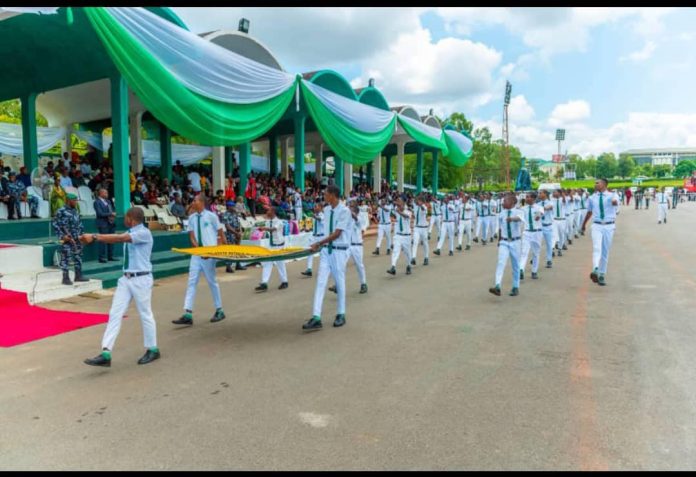
BRICS De-Dollarization: Prospects And Critical Challenges – OpEd Professor Maurice Okoli August 24, 2023

0
Professor Maurice Okoli is a fellow at the Institute for African Studies and the Institute of World Economy and International Relations, Russian Academy of Sciences. He is also a fellow at the North-Eastern Federal University of Russia. He is an expert at the Roscongress Foundation and the Valdai Discussion Club. As an academic researcher and economist with a keen interest in current geopolitical changes and the emerging world order, Professor Maurice Okoli frequently contributes articles for publication in reputable media portals on different aspects of the interconnection between developing and developed countries, particularly in Asia, Africa and Europe.

For the five BRICS (Brazil, Russia, India, China and South Africa) members, de-dollarization has become the latest common buzzword in the English vocabulary. Long before the highly-praised Johannesburg’s 15th BRICS summit, considered as very important step forward on the way to deepening interaction in the sphere of trade and investment with the nations of Global South, all the five BRICS leaders have made it their priority task to find their own common currency so as not to depend on the United States dollar in the emerging new world.

Understandably, the primary reason is to delineate farther away from United States hegemony and global dominance. In fact, the BRICS desire to facilitate global de-escalation, provide assistance to each other in solving issues concerning mutual interests and, in future transact businesses in what they now popularly referred to as BRICS common currency. This question is already enshrined in the final comprehensive document that sets forth the general guidelines and principles of the association after the historic August 22-24 meeting held in South Africa.

South Africa was the summit host. Chinese and Brazilian presidents, the Indian Prime Minister, the Russian Foreign Minister as well as leaders and representatives from some 50 other countries are in attendance. On August 22, Russian President Vladimir Putin addressed the BRICS business forum, among several significant issues highlighted the accelerating momentum of de-dollarization.

In a virtual address, Putin also criticized the sanctions policy of Western states, saying such practice is seriously affecting the international economic situation. He said the unlawful freezing of assets of sovereign states constitutes a violation of free trade and economic cooperation rules.

Putin said that efforts were in progress to create an international reserve currency based on a basket of currencies of the association’s member countries. Some experts believe that such a currency may protect the BRICS countries from sanction risks associated with settlements in dollars and euros. 

The objective and irreversible process of the de-dollarization of the economic ties is gaining pace. Russia has been working hard to fine-tune effective mechanisms for mutual settlements and monetary and financial control. As a result, the share of the US dollar in export and import operations within BRICS is declining: last year it stood at only 28.7 percent, according to the Russian leader.

Russia has always advocated for switching trade between member countries away from the U.S. dollar and into national currencies, a process in which the BRICS New Development Bank would play a big role. “The objective, irreversible process of de-dollarization of our economic ties is gaining momentum,” he said.

He also urged BRICS to increase its role in the international monetary system and expand the use of national currencies. Noticeably Russia, being one of the founding patrons of BRICS, acts as a unifying force behind and in the organization, and largely determines that its role is strengthened for the future. 

President of the People’s Republic of China, Xi Jinping attended the BRICS Summit, for the third time, held in South Africa. The distinctive difference is that at this 2023 summit, the world has entered a new period of turbulence and rapid transformation. 

“We gather at a crucial time to build on our past achievements and open up a new future for BRICS cooperation. We should deepen business and financial cooperation to boost economic growth.,” he emphasized. “We need to fully leverage the role of the New Development Bank, push forward reform of the international financial and monetary systems, and increase the representation and voice of developing countries.”

In an English version of the article by Chinese President Xi Jinping titled “Sailing the Giant Ship of China-South Africa Friendship and Cooperation Toward Greater Success” widely published ahead of the 15th BRICS Summit in South African media including The Star, Cape Times, The Mercury as well as Independent Online, also underlined the practical concept of multilateralism and push for the building of a more just and equitable international order.

South African companies are also racing to invest in the Chinese market to seize the abundant business opportunities, and they have made important contributions to China’s economic growth. The China-South Africa relationship is standing at a new historical starting point. It has gone beyond the bilateral scope and carries increasingly important global influence. 

China and South Africa should be fellow companions sharing the same ideals. As an ancient Chinese saying goes, “A partnership forged with the right approach defies distance; it is thicker than glue and stronger than metal and rock.” Therefore, there is the need to increase experience sharing on governance, and firmly support each other in exploring a path to modernization that suits both respective national conditions. 

“We should fear no hegemony, and work with each other as real partners to push forward relations amid the changing international landscape. In the face of the profound changes unseen in a century, a strong China-Africa relationship will provide more fresh impetus to global development and ensure greater stability of the world. Looking ahead into the next 25 years,” he wrote in the article.

Indian Prime Minister Narendra Modi also underlined the current significance of BRICS in dealing with tensions and disputes the world is facing, but most importantly de-dollarization amid economic challenges. “In 2009, when the first BRICS summit was held, the world was just coming out of a massive financial crisis. At that time BRICS emerged as a ray of hope for the global economy. In the present times, to shape strategies for economic cooperation, in particular ways of increasing trade settlements in local currencies and BRICS expansion.”

Brazilian President Luiz Inacio Lula da Silva believes the world will see massive changes in the coming years. “When we talk about Brazil and BRICS, we are showing that it is possible to create a new world. We don’t want to argue with anyone. We want integration between continents and equal conditions for all,” Lula da Silva said.

According to him, establishing partnerships between private sectors is a very relevant dimension of BRICS that gives life and continuity to the relations between the countries, participation in the global economy has been expanding since the first Summit of Heads of State and Government. “We have already surpassed the G7, and we now account for 32% of the world GDP in purchasing power parity. Projections indicate that emerging and developing markets will present the highest growth rates in the coming years,” he explained in his speech.

According to the IMF, while growth in industrialized countries is expected to drop from 2.7% in 2022 to 1.4% in 2024, the expected growth for developing countries is 4% this year and the next. This shows that the economy’s dynamism is in the Global South – and BRICS is its driving force. Brazil’s total trade with BRICS increased from US$48 billion in 2009 to US$178 billion in 2022 – a 370% growth since the group was created.

BRICS Direct Foreign Investment stock in Brazil increased 167% between 2012 and 2021, reaching 34.2 billion dollars. Today, almost 400 companies from the bloc operate in Brazil. The decision to establish the New Development Bank was a milestone in effective collaboration among emerging economies. The joint bank must be a global leader in financing projects that address the most pressing challenges.

In arguing, the president pointed to the BRICS New Development Bank (NDB) as a way to offer its own financing alternatives, suited to the needs of developing countries. “The creation of a currency for trade and investment transactions between BRICS members increases our payment options and reduces our vulnerabilities”, he said, reinforcing that developing countries need an international financial system that helps implement structural changes, instead of feeding inequalities.

By diversifying sources of payment in local currencies and expanding its network of partners and members, the NDB is a strategic platform to promote cooperation among developing countries. In this strategy, engagement with the African Development Bank will be central. At the multilateral level, BRICS stands out as a force working in favour of a fairer, more predictable, and equitable global trade. As of December, Brazil will occupy the presidency of the G20. The presence of three BRICS members in the G20 Troika will be a great opportunity for us to advance issues that are of interest to the Global South.

Reading through various reports, Peter Koenig, a geopolitical analyst and also a non-resident Senior Fellow of the Chongyang Institute of Renmin University in Beijing, and a former Senior Economist at the World Bank, convincingly argues that many see the BRICS as the salvation from the West, from sanctions, from the dollar impositions, from debt enslavement – from trading restrictions… from outright theft of their currency reserves in foreign countries.

As a byline to the all too frequent western theft of reserve funds and gold…! But is this the purpose of the BRICS – providing shelter from the last onslaught of the West, led by the United States and her vassals – the Europeans? And is it right – that some of the BRICS leaders are constantly vacillating between the US and the BRICS solid core – China and Russia. Modi, for example, seems to be leaning towards whatever camp – West or East – he feels gives him more advantages.

Koenig further explained that many BRICS countries still depend on the US dollar as the bulk of their reserve currency, the main trade currency. De-dollarization for many is not happening overnight. Therefore, a common strategy is needed. To begin with and to avoid the dollar – trading among BRICS members (and even outside BRICS) with local currencies, instead of dollars. This is relatively easy, for example, China and Argentina have done it for a long time. In the short-to-medium term – what might help and may become a necessity, is having a common BRICS Trading Currency.

There has been a gradual shift away from trading in US dollars, and instead, countries adopted trading in their local currencies, or in a currency of common use by the trading partners, for example, the Chinese Yuan. Latin America – especially Argentina, Brazil, Mexico, and Venezuela – are consistently using local currencies or the Chinese Yuan to avoid the dollar. Avoiding the dollar is foremost for its own protection from US sanctions. Increasingly more countries will use this new mode of trading – equitable and peaceful.

The Turkish edition Dunya notes that since the United States imposed financial sanctions on Russia last year, de-dollarization has gained momentum. The BRICS countries forced transactions using non-dollar currencies. After the start of the Ukrainian conflict, Russia, Iran, Brazil, Argentina and Bangladesh went for broke against the United States, using the Chinese yuan instead of the dollar in trade.

Four Reasons for De-dollarization:

— Over-reliance on a single currency, changes in US monetary policy, and possible US sanctions or restrictions carry risks. In addition, the US government has run a large budget deficit for many years. And this raises concerns about inflation and the value of the dollar.

— The United States has been involved in many geopolitical conflicts in recent years, primarily the wars in Iraq and Afghanistan. These conflicts have resulted in heightened tensions between the US and other countries, making some states less willing to use the dollar.

— China, the world’s second-largest economy and an increasingly influential player in world trade, is encouraging the use of its currency as an alternative to the dollar.

— Cryptocurrencies such as bitcoin, which are not subject to government control, have become attractive to those who are looking for an alternative to the dollar.

There are so many arguments and discussions about the question of global currency. But one more interesting analytical conclusion is here. Michael G. Plummer, Director at SAIS Europe and Eni Professor of International Economics at Johns Hopkins University, believes that the global system gains from having an internationally accepted currency like the US dollar as a medium of exchange, unit of account and store of value. But its role will diminish at the margin at a rate that will be the function of exogenous factors, such as changes in the international marketplace, and endogenous factors, such as how the United States faces its financial and trade challenges.

As widely seen across the world, the BRICS bloc is rapidly gathering stronger momentum for a more democratic and multipolar world order that respects the sovereignty, equality, and diversity of all nations. The United States and Western allies often deeply underestimate its future growth and role on the global stage but have heightened interests, in shaping its instruments, such as the BRICS Bank which is likened to IMF and the World Bank, becoming the alternative organization, especially for the Global South. 

Notwithstanding all the arguments, views and observations Russia, isolated by the United States and Europe over its invasion of Ukraine, is keen to show Western powers it still has friends. Brazil and India, in contrast, have both forged closer ties with the West.  There are still justifiable arguments though, that the group’s members have long been thwarted by some internal divisions and, to some extent, a lack of coherent vision. 

In Johannesburg, BRICS under the 2023 chairship of South Africa, Cyril Ramaphosa, has achieved an appreciable milestone. As stipulated in the 10-point joint declaration, BRICS leaders called for a more active use of national currencies in financial transactions. “We stress the importance of encouraging the use of local currencies in international trade and financial transactions between BRICS as well as their trading partners,” the declaration said.

BRICS (Brazil, Russia, India, China and South Africa) will continue, through its collective efforts, working steadily towards shaping an alternative new system across the ASEAN, Africa and Trans-Atlantic. BRICS, with an additional six members, is now home to more than 40% of the world’s population and more than a quarter of global GDP, the bloc’s ambitions of becoming a global political and economic player. As the new Chair, Russia will hold the next BRICS summit in Kazan in October 2024.

Professor Maurice Okoli is a fellow at the Institute for African Studies and the Institute of World Economy and International Relations, Russian Academy of Sciences. He is also a fellow at the North-Eastern Federal University of Russia. He is an expert at the Roscongress Foundation and the Valdai Discussion Club. As an academic researcher and economist with a keen interest in current geopolitical changes and the emerging world order, Professor Maurice Okoli frequently contributes articles for publication in reputable media portals on different aspects of the interconnection between developing and developed countries, particularly in Asia, Africa and Europe.

With comments and suggestions, he can be reached via email: markolconsult@gmail.com

Disclaimer: 

The opinions and views expressed in this write-up are entirely those of the Writer(s). They do not reflect the opinions and views of the Publisher (Nze Ikay’s Blog) or any of its employees. The designations employed in this publication and the presentation of materials herein do not imply the expression of any opinion whatsoever of the Publisher (Nze Ikay’s Blog) or its employees concerning the legal status of any country, its authority, area or territory or concerning the delimitation of its frontiers. Equally, the sketches, images, pictures and videos are gotten from the public domain.

Russia is ready to restore the grain deal if the West does its part by Lyudmila Vorobieva – the Russian Ambassador to Indonesia.

0
Lyudmila Vorobieva - the Russian Ambassador to Indonesia.

Key points: 

1. In signing these agreements in July 2022, Russia was guided primarily by humanitarian goals, namely, to ensure global food security, to reduce the threat of famine, and to aid Asian, African, and Latin American countries in need.

2. Unlike Westerners, we do not aim to extract geopolitical dividends from economic cooperation with the Global South, instead, we contribute to securing their socioeconomic stability through consistent increases in grain exports.

3. Our position on the resumption of maritime grain traffic from Ukraine remains unchanged: Russia will be ready to consider the restoration of the grain deal in accordance with its stated humanitarian objectives, only if Western countries entirely fulfil our requirements under the Russia-UN memorandum. 

I hope that the comments I outline above and below will help readers gain a more adequate understanding of the substance of the issue. Please read on:

We noticed that the article “Why Russia must not weaponize hunger” by French Minister for Europe and Foreign Affairs Catherine Colonna (The Jakarta Post, Aug. 21, 2023) contains an incorrect interpretation of Russia’s suspended participation in the Istanbul package agreements: the Black Sea Initiative on Ukrainian food and Russian ammonia exports and the memorandum of understanding between the Russian Federation and the United Nations Secretariat on promoting Russian food products and fertilizers to world markets.

In signing these agreements in July 2022, Russia was guided primarily by humanitarian goals, namely to ensure global food security, to reduce the threat of famine, and to provide assistance to Asian, African and Latin American countries in need. With the tacit consent of the UN, the Ukrainian part of the deal immediately transformed from humanitarian to commercial. During the year of the initiative’s functioning, 32.8 million tonnes of food were exported, of which more than 70 percent (26.3 million tonnes) went directly to high- and upper-middle-income countries, including the member states of the European Union, whereas less than 3 percent (922,000 tonnes) of the total volume was exported to the poorest countries through the humanitarian sea corridor.

Besides, the Kyiv regime used this route to carry out terrorist attacks against Sevastopol, the Crimean Bridge and Russian ships. On June 5, the Togliatti-Odessa ammonia pipeline was blown up, through which the supply of raw materials was the core element of both agreements. Despite the assurances of the French foreign minister, it is a fact that our conditions in the Russia-UN memorandum have not been fulfilled. Foreign ports were closed for Russian ships and cargo. The imports to our country of spare parts and equipment for agricultural production were also banned. Foreign accounts of Russian agricultural companies have been frozen amid the Western statements that food and fertilizers were not the targets of their sanctions.

Finally, Rosselkhozbank has not been reconnected to the SWIFT system. Given the fact that our food supplies significantly contribute to global food security (the Russian share of the world wheat market is 20 percent, while the Ukrainian share is less than 5 percent), it is obvious that the West is guided not by the needs of countries striving for food and fertilizers, but by the desire to punish Russia. Madame Colonna’s attempts to blame Russia for the alleged surge in world food prices due to the suspension of this grain initiative look ridiculous. During the first month after the termination of the agreement, no price jumps for grain products were recorded in the world, and since the end of July, there has even been a decrease in quotations for wheat and corn (by 3.8 percent and 5 percent, respectively).

Moreover, wheat prices fell by 35 percent compared with the previous season, prices for corn by 26 percent and barley by 41 percent. According to the International Grains Council, there are currently no global crisis phenomena in the production of grain crops and their trade. Unlike Westerners, we do not aim to extract geopolitical dividends from economic cooperation with the Global South, instead, we contribute to securing their socioeconomic stability through consistent increases in grain exports: In 2022, 30 percent of Russian wheat was sent to Africa, and in the first seven months of this year, this figure has already reached almost 40 percent (around 10 million tonnes). At the same time, the rest of this export goes mainly to Asian countries.

A separate area of our efforts is the gratuitous supply of domestic agricultural products to those in need. In the next few months, we will send 300,000 tonnes of grain free of charge to several African states. In addition, together with partners, we are working on a mechanism for compensating the entire volume of agricultural products sent under the Black Sea Initiative to low-income countries (up to 1 million tonnes). With the assistance of the UN, we will continue to transfer 262,000 tonnes of Russian fertilizers to the poorest countries. Our position on the resumption of maritime grain traffic from Ukraine remains unchanged: Russia will be ready to consider the restoration of the grain deal in accordance with its stated humanitarian objectives, only if Western countries entirely fulfill our requirements under the Russia-UN memorandum.

Disclaimer: 

The opinions and views expressed in this write-up are entirely those of the Writer(s). They do not reflect the opinions and views of the Publisher (Nze Ikay’s Blog) or any of its employees. The designations employed in this publication and the presentation of materials herein do not imply the expression of any opinion whatsoever of the Publisher (Nze Ikay’s Blog) or its employees concerning the legal status of any country, its authority, area or territory or concerning the delimitation of its frontiers. Equally, the sketches, images, pictures and videos are gotten from the public domain.

THE FULL TEXT OF THE NATIONAL BROADCAST BY PRESIDENT BOLA TINUBU TO NIGERIANS ON CURRENT ECONOMIC CHALLENGES. AFTER DARKNESS COMES THE GLORIOUS DAWN.

7
President Bola Ahmed Tinubu of Nigeria

I want to talk to you about our economy. It is important that you understand the reasons for the policy measures I have taken to combat the serious economic challenges this nation has long faced.

2. I am not going to talk in difficult terms by dwelling on economic jargon and concepts. I will speak in plain, clear language so that you know where I stand. More importantly, so that you see and hopefully will share my vision regarding the journey to a better, more productive economy for our beloved country.

3. For several years, I have consistently maintained the position that the fuel subsidy had to go. This once beneficial measure had outlived its usefulness. The subsidy cost us trillions of Naira yearly. Such a vast sum of money would have been better spent on public transportation, healthcare, schools, housing and even national security. Instead, it was being funnelled into the deep pockets and lavish bank accounts of a select group of individuals.

4. This group had amassed so much wealth and power that they became a serious threat to the fairness of our economy and the integrity of our democratic governance. To be blunt, Nigeria could never become the society it was intended to be as long as such small, powerful yet unelected groups hold enormous influence over our political economy and the institutions that govern it.

5. The whims of the few should never hold dominant sway over the hopes and aspirations of the many. If we are to be a democracy, the people and not the power of money must be sovereign.

6. The preceding administration saw this looming danger as well. Indeed, it made no provision in the 2023 Appropriations for subsidy after June this year.  Removal of this once helpful device that had transformed into a millstone around the country’s neck had become inevitable.

7. Also, the multiple exchange rate system that had been established became nothing but a highway of currency speculation. It diverted money that should have been used to create jobs, build factories and businesses for millions of people. Our national wealth was doled on favourable terms to a handful of people who have been made filthy rich simply by moving money from one hand to another. This too was extremely unfair.

8. It also compounded the threat that the illicit and mass accumulation of money posed to the future of our democratic system and its economy.

9. I had promised to reform the economy for the long-term good by fighting the major imbalances that had plagued our economy.  Ending the subsidy and the preferential exchange rate system was key to this fight. This fight is to define the fate and future of our nation. Much is in the balance.

10. Thus, the defects in our economy immensely profited a tiny elite, the elite of the elite you might call them. As we moved to fight the flaws in the economy, the people who grow rich from them, predictably, will fight back through every means necessary.

11. Our economy is going through a tough patch and you are being hurt by it. The cost of fuel has gone up. Food and other prices have followed it. Households and businesses struggle. Things seem anxious and uncertain. I understand the hardship you face. I wish there were other ways. But there is not. If there were, I would have taken that route as I came here to help not hurt the people and nation that I love.

12. What I can offer in the immediate is to reduce the burden our current economic situation has imposed on all of us, most especially on businesses, the working class and the most vulnerable among us.

13. Already, the Federal Government is working closely with states and local governments to implement interventions that will cushion the pains of our people across socio-economic brackets.

14. Earlier this month, I signed four (4) Executive Orders in keeping with my electoral promise to address unfriendly fiscal policies and multiple taxes that are stifling the business environment. These Executive Orders on suspension and deferred commencement of some taxes will provide the necessary buffers and headroom for businesses in the manufacturing sector to continue to thrive and expand.

15. To strengthen the manufacturing sector, and increase its capacity to expand and create good-paying jobs, we are going to spend N75 billion between July 2023 and March 2024. Our objective is to fund 75 enterprises with great potential to kick-start sustainable economic growth, accelerate structural transformation and improve productivity. Each of the 75 manufacturing enterprises will be able to access N1 Billion credit at 9% per annum with a maximum of 60 months of repayment for long-term loans and 12 months for working capital.

16. Our administration recognises the importance of micro, small and medium-sized enterprises and the informal sector as drivers of growth. We are going to energise this very important sector with N125 billion.

17. Out of the sum, we will spend N50 billion on a Conditional Grant to 1 million nano businesses between now and March 2024. Our target is to give N50,000 each to 1,300 nano business owners in each of the 774 local governments across the country.

18. Ultimately, this programme will further drive financial inclusion by onboarding beneficiaries into the formal banking system. In like manner, we will fund 100,000 MSMEs and start-ups with N75 billion. Under this scheme, each enterprise promoter can get between N500,000 to N1 million at 9% interest per annum and a repayment period of 36 months.

19. To further ensure that prices of food items remain affordable, we have had a multi-stakeholder engagement with various farmers’ associations and operators within the agricultural value chain.

20. In the short and immediate terms, we will ensure staple foods are available and affordable. To this end, I have ordered the release of 200,000 Metric Tonnes of grains from strategic reserves to households across the 36 states and FCT to moderate prices. We are also providing 225,000 metric tonnes of fertilizer, seedlings and other inputs to farmers who are committed to our food security agenda.

21. Our plan to support the cultivation of 500,000 hectares of farmland and all-year-round farming practice remains on course. To be specific, N200 billion out of the N500 billion approved by the National Assembly will be disbursed as follows: 

-Our administration will invest N50 billion each to cultivate 150,000 hectares of rice and maize.

-N50 billion each will also be earmarked to cultivate 100,000 hectares of wheat and cassava.

22. This expansive agricultural programme will be implemented by targeting small-holder farmers and leveraging large-scale private sector players in the agric business with a strong performance record.

23. In this regard, the expertise of Development Finance Institutions, commercial banks and microfinance banks will be tapped into to develop a viable and appropriate transaction structure for all stakeholders.

24. Fellow Nigerians, I made a solemn pledge to work for you. Improving your welfare and living condition is paramount to me and it’s the only thing that keeps me up day and night.

25. It is in light of this that I approved the Infrastructure Support Fund for the States. This new Infrastructure Fund will enable States to intervene and invest in critical areas and bring relief to many of the pain points as well as revamp our decaying healthcare and educational Infrastructure.

26. The fund will also bring improvements to rural access roads to ease the evacuation of farm produce to markets. With the fund, our states will become more competitive and on a stronger financial footing to deliver economic prosperity to Nigerians.

27. Part of our programme is to roll out buses across the states and local governments for mass transit at a much more affordable rate. We have made provision to invest N100 billion between now and March 2024 to acquire 3000 units of 20-seater CNG-fuelled buses.

28. These buses will be shared with major transportation companies in the states, using the intensity of travel per capita. Participating transport companies will be able to access credit under this facility at 9% per annum with 60 months repayment period.

29. In the same vein, we are also working in collaboration with the Labour unions to introduce a new national minimum wage for workers. I want to tell our workers this: your salary review is coming.

30. Once we agree on the new minimum wage and general upward review, we will make budget provisions for it for immediate implementation.

31. I want to use this opportunity to salute many private employers in the Organised Private Sector who have already implemented general salary reviews for employees.

32. Fellow Nigerians, this period may be hard on us and there is no doubt about it that it is tough on us. But I urge you all to look beyond the present temporary pains and aim at the larger picture. All of our excellent and helpful plans are in the works. More importantly, I know that they will work.

33. Sadly, there was an unavoidable lag between subsidy removal and these plans coming fully online. However, we are swiftly closing the time gap. I plead with you to please have faith in our ability to deliver and in our concern for your well-being.

34. We will get out of this turbulence. And, due to the measures we have taken, Nigeria will be better equipped and able to take advantage of the future that awaits her.

35. In a little over two months, we have saved over a trillion Naira that would have been squandered on the unproductive fuel subsidy which only benefitted smugglers and fraudsters. That money will now be used more directly and more beneficially for you and your families.

Disclaimer: 

The opinions and views expressed in this write-up are entirely that of the Writer(s). They do not reflect the opinions and views of the Publisher (Nze Ikay’s Blog) or any of its employees. The designations employed in this publication and the presentation of materials herein do not imply the expression of any opinion whatsoever of the Publisher (Nze Ikay’s Blog) or its employees concerning the legal status of any country, its authority, area or territory or concerning the delimitation of its frontiers. Equally, the sketches, images, pictures and videos are gotten from the public domain.
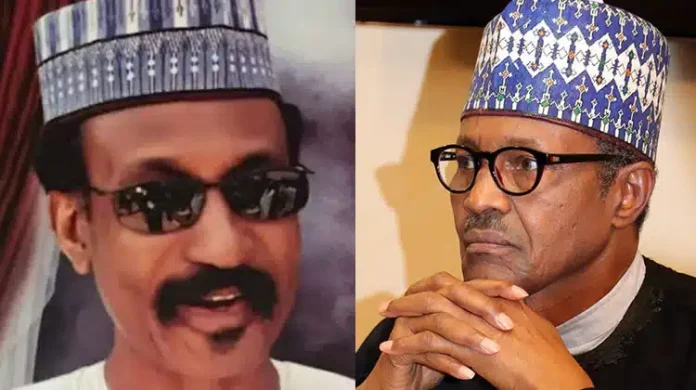
WHEN A LOVER OF THE BEAUTIFUL GAME TURNS 50. THE METAPHORIC JAY JAY @50

11
Super Eagles Legen Jay-Jay-Okocha

He is literally the symbol of entertainment football! He didn’t play particularly for fame or money, he truly enjoyed the beautiful game and used it as his route to fame and fortune inadvertently. He played football in his heydays with admirable passion. You could see he was not struggling to play, he enjoyed his game. He caressed football with all parts of his body. He played for Nigeria and some clubs in Europe and left indelible marks on his trail. His trademark smile on the pitch whether he missed a penalty or a free kick spoke of his genuine spirit of sportsmanship! He loved the game too much not to enjoy any moment, win or lose!

From Enugu to Turkey, Germany to England and to global mundial like the Olympics and World Cup tournaments, his art impressed a world that appreciates artistry and good-naturedness. He is loved globally for the beauty of his art. He had and still has a profoundly admirable stage presence on or off the pitch. He is a great patriot whose love of country has inspired many young ones. He continues to be relevant as an ambassador of the game in global terms. It takes beyond pitch performance and football laurels from the game to be so phenomenally loved. Today, Jay Jay continues to be relevant even as one who has retired from the game. He neither won the African Footballer of The Year (surprisingly) nor the Ballon d’Or but no prize outshines his global presence, acceptance and admiration!

I still remember how my 3-year-old daughter used to be enamoured with him every time he was on the pitch each time he was fouled she started crying while shouting ‘Akacha Akacha’ inconsolably. That was how impactful he was as a player even to toddlers! Football commentators were literally obsessed with his artistry and created a powerful persona the world admires through the media. His appeal goes beyond the game, he is one global superstar that never wears his stardom on his sleeve. He comes off as very grounded and regular with mass appeal. These sterling qualities have made him a global brand not just on the pitch but with product branding and personality endorsements. 

As he turns 50, the cymbals are out from FIFA, CAF, NFF (when will he head that body?) and continental leagues across the world! The superlatives are rolling in and Nigeria must be proud of this great gift to the world! Football has no tribe or creed! We are proud of the pizzazz he brought to the beautiful game of football! 

Happy 50th birthday Jay Jay! You were truly too good they named you TWICE! 

©Nnedinso

Disclaimer: 

The opinions and views expressed in this write-up are entirely that of the Writer(s). They do not reflect the opinions and views of the Publisher (Nze Ikay’s Blog) or any of its employees. The designations employed in this publication and the presentation of materials herein do not imply the expression of any opinion whatsoever of the Publisher (Nze Ikay’s Blog) or its employees concerning the legal status of any country, its authority, area or territory or concerning the delimitation of its frontiers. Equally, the sketches, images, pictures and videos are gotten from the public domain.
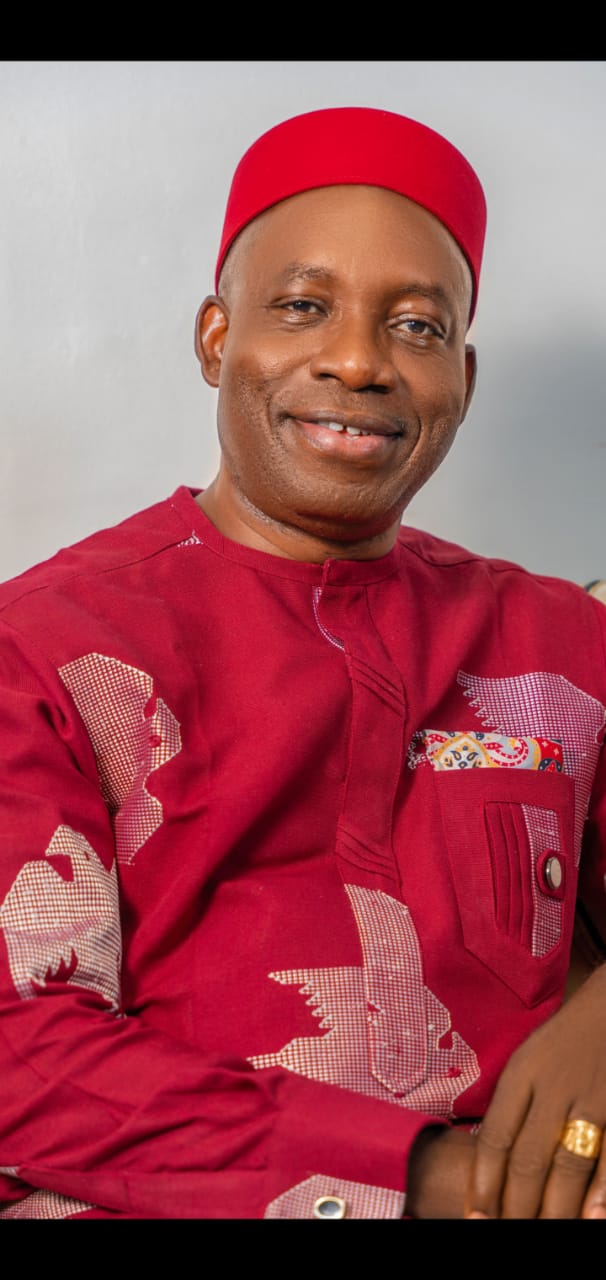
Regina Daniel Ned, Judy Austin Edochie and Mercy Aigbe 

0
A collage picture of Mercy Aigbe with Hubby Adekaz, and Judy Austin with Hubby Yul Edochie

These are all Nigerian Celebrities. The three of them committed the same crime. Their sins are the same. One is much older than the others, one is Judy, a second wife to someone’s husband, while on the other hand is Mercy a second wife to someone’s husband too, and the youngest one Regina is married to literally people’s husband. Judy is a second wife, while Regina is the 6th wife or is 7th, Please correct me if I’m wrong or mistaken there. Sometimes some people will say 7th some will say 6th, Since it’s not really my problem, I ain’t taking cognisant of what position of wife she is. The other one is older than both of them and literally is married to someone’s husband as well. These three ladies are all guilty is the same act, and there are many other celebrities, asides from these celebrities, many other women out there who are also guilty of this act.

But where and what I have a problem is, literally all the Nigerians, the ladies precisely celebrating the other two, Mercy Aigbe and young Regina. Especially the youngest one, Regina, but it puzzles me as they are hating on the other one Judy. Calling her all sorts of unprintable names, throwing tantrums and raining curses on her. Yul Edochie is a celebrity and a millionaire and a politician, Ned Nwoke is a billionaire and a politician, and there goes Mercy Aigbe’s husband, also a millionaire, literally a politician and a businessman. Ned is a politician while Yul is a celebrity and a politician, veteran actor, which makes the three of them public figures. But just as Regina his youngest wife, he’s been celebrated all over and especially by Nigerians. Whereas Judy’s husband is been thrown shades at, a backlash which put him in a bad light.

They are praising Ned for being a billionaire, they are praising the young girl in her early 20s for being a wife of a billionaire. Not minding the fact that she’s not married to her age mate and even got married earlier than a normal young girl age that’s ripe for marriage, and marrying his grandfather, according to the world’s language that year. I see how most ladies are wishing to be like her, they are praising Mercy Aigbe too and the husband, whom technically she snatched from her best friend. Now Judy is the worst of them all and Yul is the worst of them all. Where I’m I driving? Hypocrisy, hypocrisy is the reason why many people can’t face the truth and the reality, they see the other as the worse sinner and see the other as a saint. The same people that were abusing the younger one in 2019 precisely, are the same people singing her praises and wishing and hoping to be like her, married to a grandfather too according to them and be a 6th wife. The same people are still the ones praising Mercy Aigbe, for the same crime that Judy committed and Regina. They married all of them properly, paid their bride prices and perform their marital rites. Judy is legally married to Yul, Regina is legally married to Ned, and Mercy is legally married to her husband. These three people have the same rights in their husband’s houses.

Apparently, Judy and Mercy snatched people’s husbands, technically Mercy’s own is the worst crime cause she took her best friend’s husband. But she’s literally being celebrated, she poses around and flies to any country. Regina is married to people’s husbands technically, as aforementioned. But she’s at liberty to do whatever she likes, apparently, she’s what both old ladies and young ladies are looking up to, they voted for her and can vouch for her. A role model to both young and old ladies, and I’m bewildered as to why the world is like this. Judy can’t even move an inch, anywhere her name is mentioned is a problem, she almost throws stones at her, as well as her husband. They want both the husband and wife to die, they are even praying for their downfall. Mind you, am not against anyone of them and I can’t vouch for any of them. They are adults and can do whatever they all want with their lives, Judy, Regina and Mercy, as well as their husbands.

And I asked, what is really their offence, the world is becoming something else every day. We now live in a world where people are judging people differently for committing the same crime and the same sin. We live around people full of hatred for no reason and resentment. Let’s get our facts right, apparently myself, let me be straight here, these three celebrities and set of people don’t know so many and millions of Nigerians that are hating on some, and celebrating some. They don’t know if they exist, but if millions of Nigerians have the opportunity to see these three celebrities, they will worship them. Even for the fact that they are chasing clouts online with Judy in the name of hate, throwing shades at Judy and hating on her. They also worship their three husbands, especially Yul, if they happen to have the opportunity to meet him, but here online they are chasing clouts with him. Even the bloggers, why are we living a hypocritical life.

We now judge the three differently for involving literally in the same act, whereas behind closed doors we do worst than that. Why hate on one and celebrate the other two, how does it correlate, how does it connect because these people are legally married? The other one is legally married too, they all are married to people’s husbands. How they got these men to fall for them and marry them isn’t your problem, and different ways and reasons their husbands married then shouldn’t be anybody’s life, business or affairs. Jesus said, he who is without sin should cast the first stone, we are doing the same in our closet but we become saints in one person issue. It’s strange how these ones become role models to many and the other is the devil’s daughter and incarnate. The moment we learn to live our own lives and stop snooping around and sniffing on things that aren’t our problems, that doesn’t add anything to our lives positively. Rather it reduces us negatively and will be the best for us. Even the woman that sinned in the bible, Jesus draw her close and protected her.

I am Mirach Amba the best of me and the best of my kind.

Disclaimer: 

The opinions and views expressed in this write-up are entirely that of the Writer(s). They do not reflect the opinions and views of the Publisher (Nze Ikay’s Blog) or any of its employees. The designations employed in this publication and the presentation of materials herein do not imply the expression of any opinion whatsoever of the Publisher (Nze Ikay’s Blog) or its employees concerning the legal status of any country, its authority, area or territory or concerning the delimitation of its frontiers. Equally, the sketches, images, pictures and videos are gotten from the public domain.
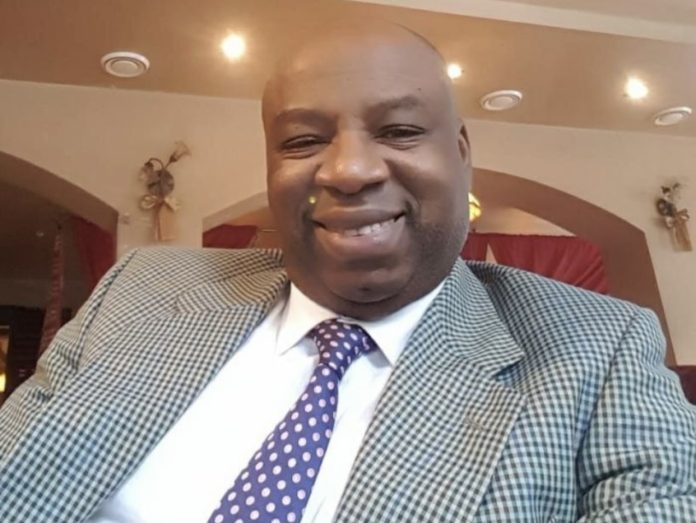
HOW TINUBU STABBED ME IN THE BACK -EL-RUFAI.

6
Mallam Nafiu El-Rufai, Former Governor of Kaduna State of Nigeria.

Contrary to insinuations in some quarters, President Bola Tinubu actually promised the immediate past governor of Kaduna State, Nasir el-Rufai, not just a ministerial slot but the portfolio of the new Federal Ministry of Energy. Following the cast iron assurance by Tinubu, el-Rufai thereafter mobilized his team and produced a blueprint that got Tinubu excited ahead of his nomination. “Specifically, the president-elect promised el-Rufai, in no uncertain terms, the new ministry of energy. “Thereafter, el-Rufai mobilised his team and produced a blueprint that wowed Tinubu, about three weeks before his ministerial nomination,’’ according to the former governor’s media aide, Ibraheem Shehu Musa in an opinion piece. A disappointed El-Rufai accused Tinubu of duplicity in the comedy of errors which trailed his nomination and screening both at the Senate and the security agencies.

He stated: “Afterwards, the comedy of errors began, first by a security chief who, in a hurry to nail el-Rufai, breached official communications protocol. First, he wrongly sent a letter to the senior special assistant to the president on national assembly matters, instead of the senate president. “Second, the letter was signed by a director of State Security Service and not the president. Third, the issues raised were rehashed political altercations and selective interpretations. “Besides, the ban on el-Rufai from holding public office, a recommendation of a house committee, has been quashed by the court. The senate, on mere allegations, refused to confirm El-Rufai as minister. On the president’s alleged duplicity on the matter, the media aide said: “However, when el-Rufai met with Tinubu, the usually forthright and straight-talking president, according to reports, pleaded for time to deal with the matter.

“Tinubu, at that point, started being evasive like the politician that Tony Wilson sang about. el-Rufai, on his part, has turned his back on the ministerial nomination, gone back to school, to learn, unlearn and relearn, to someday serve the public in another realm.

Accusing politicians of reneging on their promises as their stock in trade, Ibraheem stressed: “In the 70s, Tony Wilson sang about politicians and in that ballad, he highlighted their antics in ‘I Like Your Style’. Politicians, according to him, are men of many words and in other words, they say much but deliver little. “At worst, they renege on their promises with reckless abandon. However, not all politicians are the same and clearly, Malam Nasir el-Rufai is of a different cut. Largely, he walks his talk and oftentimes, he shoots from the hips, firing from all cylinders, taking no prisoners as he does. “In Nigeria, this exception is a double-edged sword and for El-Rufai, it has been cutting both ways, either as a minister or governor of Kaduna state. Indeed, the political class, entrenched interest groups and the upper crust of society see him as a defiant outlier. “Conversely, ordinary people, development partners and civil society applaud his consistency, achievements and derring-do. 

Significantly, his solid achievements, belling the cat at critical times and taking on difficult assignments, are well documented in his public service career.’’ Recalling El-Rufai’s antecedents as Minister of Federal Capital Territory under ex-President Olusegun Obasanjo, Ibraheem said:“For example, remodelling the Federal Capital Territory, reengineering governance and the Kaduna Urban Renewal Project stand out in recent times. In fact, in the run-up to the presidential primaries, the 2023 election and the emergence of President Bola Tinubu, his altruism came out in bolder relief. “Indeed, El-Rufai’s principled position, insisting on the right thing and patriotic intervention, dates back earlier, when the polls were three years away. At this point, let me share a privileged insight. “In 2020, the Kaduna state government, in early January, organised a retreat for political appointees, where special advisers, senior special assistants and special assistants converged at Kaduna Business School. 

The team, for two days, listened to experts and bureaucrats, who walked us through the nuances of public service, its code of conduct and defined boundaries. “Besides, the appointees bonded and exchanged banter amidst lectures, tea breaks and group tasks. El-Rufai, on the last day, graced the event and shared his diverse experiences, fielded questions from the team ranging from family life, professional career and governance.’’ On the 2023 presidential race, the media aide recalled: “Specifically, Malam Nasir El-Rufai was asked, amongst other questions, whether or not he would contest for the presidency in 2023. Point blank, the governor answered in the negative and his argument, without equivocation, hinged on justice, equity and fairness. “The north, by the year 2023, would have held power for eight years at a stretch and its leaders, in the interest of national unity, should ensure power shift to the south. He argued further that the north is known for keeping its word and power rotation is one of APC’s building blocks. “Indeed, follow-up questions were asked but El-Rufai stuck to his guns, rooting for national cohesion, peaceful coexistence and the paramountcy of respecting covenants in politics. 

The retreat, in the manner of Chatham House, was a platform for frank and honest discourse, so El-Rufai wasn’t playing to the gallery. “However, in spite of his position, individuals and groups started mounting pressure on El-Rufai to run for the presidency. Predictably, he kept a deafening silence and continued serving the people of Kaduna state that voted for him. Undeterred, one Nassiriya Organisation, a northern-based group, instituted a suit in October 2020, to compel him to contest the 2023 presidential election. “In fact, its national leader, one Garkuwa Babuga, said that Nassiriya has members in 21 states and overwhelmingly, they had endorsed El-Rufai based on “his track records of achievements”. “Unyielding, El-Rufai kept a stiff upper lip over the call, insisting on a power shift to the south. Regardless, a lot of permutation started making the rounds, from the probable to the ridiculous, aimed at muddying up the waters. 

At once, the idea of an El-Rufai and Amaechi ticket, El-Rufai and Yemi Osinbajo running together, and El-Rufai and Kayode Fayemi, the former Ekiti state governor gunning for presidency, were all on the cards. “In fact, the Aso Rock cabal and its allies, in desperation, reached out to Goodluck Jonathan, the former president and a PDP stalwart to boot, to recontest on the APC ticket. Besides, they pencilled down CBN Governor, Godwin Emefiele, for the presidential ticket but the whim didn’t fly. “In June, on the eve of the convention, the cabal conscripted Ahmed Lawan, the senate president at the time, for the presidential primaries in 2022. In fact, Abdullahi Adamu, the then APC national chairman, was the enforcer-in-chief of the project. Hurriedly, he convened a National Working Committee meeting and unveiled Lawan as the anointed candidate. “Earlier, the Northern Governors’ Forum, at El-Rufai’s prompting, had met and insisted on a power shift to the south. Indeed, foisting Lawan on them, as Adamu attempted, presented a fait accompli and they were at a crossroads. “More so, the APC helmsman claimed that President Buhari, in a one-on-one meeting, had endorsed Lawan’s choice.

Again, El-Rufai came to the rescue, by leading the calvary charge against the cabal. In particular, the northern governors met Buhari, notified him of their resolution on the power shift and asked for his position on Ahmed Lawan’s anointed candidacy. “Categorically, the then-president washed his hands off the phantom anointment and by so doing, cleared the doubt of APC faithful. Thereafter, El-Rufai rallied support for Tinubu, ditching friendship and other political alliances as a result. Afterwards, Tinubu won the primaries on the first ballot and by a wide margin.’’ “Significantly, El-Rufai campaigned vigorously for Asiwaju, and engaged focal groups and the media, to sell Tinubu to the electorate. In the end, the APC presidential candidate won the election and thereafter, Tinubu sent emissaries to El-Rufai, to firm up his commitment to work with him,’’ Ibraheem added.

Disclaimer: 

The opinions and views expressed in this write-up are entirely that of the Writer(s). They do not reflect the opinions and views of the Publisher (Nze Ikay’s Blog) or any of its employees. The designations employed in this publication and the presentation of materials herein do not imply the expression of any opinion whatsoever of the Publisher (Nze Ikay’s Blog) or its employees concerning the legal status of any country, its authority, area or territory or concerning the delimitation of its frontiers. Equally, the sketches, images, pictures and videos are gotten from the public domain.
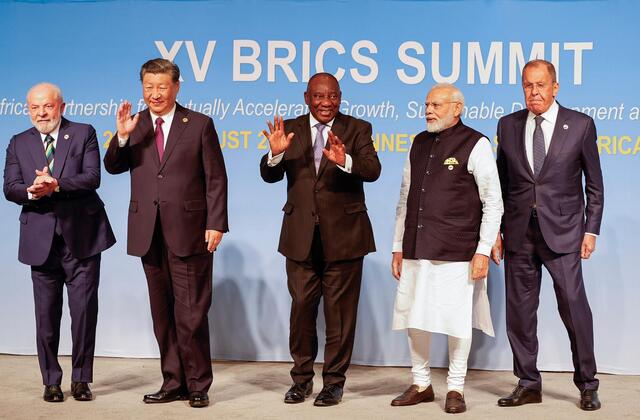
BREAKING NEWS!!! ECOMOG MOVING INTO NIGER!!! 

0

The Economic Community of West African States has ordered its standby force to restore constitutional order in the Niger Republic. The President of ECOWAS, Omar Alieu Touray, made the declaration while reading the resolution of ECOWAS on the Niger coup at the ECOWAS Extraordinary meeting in Abuja on Thursday. It also called on the African Union, AU, partner countries, and institutions to support the resolution taken by the sub-regional body. ECOWAS said all efforts made to dialogue with Niger Republic military junta have been defiantly rejected by coup leaders as they condemn the continuous detention of President Mohamed Bazoum and his family members. 

The resolution by ECOWAS leaders was reached at the Extra-ordinary Summit on the Political situation in the Niger Republic attended by eight leaders of member countries and Foreign Ministers of Liberia and the Gambia ends in Abuja. President of Mauritania, Mohamed Ould Ghazouani, and his Burundian counterpart, Everiste Ndayishimiye attended the second ECOWAS extraordinary summit in the Niger Republic at the invitation of their colleagues. #highlights @Everyone 

#NigeriaDeservesBetter #AfricaDeservesBetter #LetsTakeBackOurCountry #AllEyesOnTheJudiciary

AVOIDING THE NIGER QUAGMIRE By Oseloka H. Obaze

1
Oseloka Henry Obaze is MD/CEO, Selonnes Consult – a policy, governance and management consulting firm in Awka.

Realpolitik and commonsense have long validated the nexus between domestic strength and foreign policy actions. Yet, presumable statesmen frequently fall prey and segue into quagmires by assuming that forays into intractable foreign policy realms will validate their bona fides or redress and strengthen their domestic weaknesses. Some leaders also assume that immersion into foreign conflicts will result in their nationals rallying behind them and around the national flag. History and experience have proven such considerations to be mostly pretentious and fallacious. Indeed, such thinking is more often than not delusional. The unfolding crisis in Niger Republic presents a test case as well as a case study. Inescapably, Nigeria is fully in the mix and thick of it all.

Contemporary times are replete with evidence of nations invading and upending other countries in a bid to rid them of presumed illegitimate and rogue leaders. Afghanistan, Somalia, Iraq, Syria, Iraq and Libya, are a few examples. Crises in these countries continue to fester unabated; and the hornets’ nest created in those countries have become the bastion for non-state actors, terrorists and a continual source of global insecurity. We should not unwittingly add Niger to that bucket list. The crisis in Niger falls well within the remit of ECOWAS to tackle. But the varied options open to ECOWAS must be considered carefully and applied. Military intervention should be a matter of last resort; well after every diplomatic effort has been exploited. And there are cogent reasons for this. First, the ECOWAS region, Nigeria included has a rich history of military anti-politics. So Niger is not a novelty.

Coups happen for various reasons. Successful ones end up being legitimized. The unsuccessful ones have dire consequences. Addressing the legitimacy of coups thus cannot be a matter of precepts as opposed to practices. Each putsch must be addressed within the context of the realpolitik of the country where it took place. We have had military coups in Nigeria and in countries around us. As we look for solutions to the Niger imbroglio, we must use our history to create history. We must draw from past lessons. If you break a country; you own it! When war-torn Chad was in crisis in the late 70s and early 1980s, the Organization of African Unity (O.A.U.) had to intervene in its first-ever African peacekeeping mission. Nigeria was the arrowhead of the mediation efforts that led to the Kano I Accord and the subsequent peacekeeping campaign, with Gen. Godfrey Ejiga in command of 3,300 Nigerian, Senegalese and Zairian contingents after the inconclusive Kano II and Lagos I and Lagos II meetings. The campaign had a clear O.A.U. mandate and an ambivalent U.N. Security Council resolution calling for establishing a voluntary contribution fund to assist the mission. Indeed, the residual cost of that mission (US$82 million) owed to Nigeria, was only written off in 1984 by the Buhari military Administration.

Most recently when Gen. Mahamat Idris Deby took over power in Chad in 2021, President Muhammadu Buhari’s administration supported the “institutional coup” and takeover, “because we did not want a power vacuum” next door. Presumably, we acted in our national interest. France also presumably acting in her national and geostrategic interest supported the coup; declaiming as it was, that “There are exceptional circumstances.” Some concrete facts are germane to grasping the realities at play in Niger. As Nigerians, we should be wary of the crisis in the Niger Republic and its vast domestic and external implications for us. What happened in Niger is of interest to France, the U.K., the U.S. and Russia. It is therefore folly for Nigeria to enter into this fray of geostrategic politics without a think through the implications. We certainly don’t want to make West Africa the “Grand Chessboard” for global powers fixated on controlling the uranium-rich territory.

Our country and Niger are historically, culturally, economically and contiguously linked. The only degree of separation is that Niger is Francophone while Nigeria is Anglophone. Hamani Diori Niger’s first president was very supportive of Nigeria during the civil war. We supply subsidized electricity to Niger so that they don’t dam River Niger upstream, adversely affecting our irrigation and hydropower capacity downstream. Both countries belong to ECOWAS and are as such bound by its protocols. Still, it needs to be recalled that when in the early 90s ECOWAS sought a U.N. Security Council mandate to embark on a peacekeeping mission in Liberia, the request was denied. Those of us on active diplomatic or military duty then, when Nigeria and other ECOWAS countries eventually made a foray into Liberia on a rescue mission, hardly contemplated the financial, material and human costs. In hindsight, we know the costs were enormous on all accounts. Lessons learned from Chad and Liberia remain instructive while dealing with Niger. The upshot is that engaging in an unscripted conflict is sheer folly.

For now, it seems that reason, circumspection and wise counsel may have prevailed over bluster in Niger, resulting in the resort to diplomacy instead of direct post-ultimatum intervention. That is gratifying as the latter would have presented us with a Vietnamsque quagmire, with its whirlwinds rippling from the Port of Sidra corridor to the halcyon coast of Badagry. Nonetheless, we must avoid being sucked in and immersed in the Niger quagmire, even if diplomacy and all else fails. Accordingly, the National Assembly must rigorously debate the request to deploy the Nigerian military into the Niger Republic, either unilaterally or multilaterally. The war powers provisions demand such a robust debate. If the legislators are unconvinced of the deployment parameters, they must not grant consent. Nigeria’s overall national interest must be the overarching consideration in any decision. We must remain cognizant that any military intervention based on political expediency is at best futile and at worst dangerous.

Oseloka Henry Obaze is MD/CEO of Selonnes Consult – a policy, governance and management consulting firm in Awka.

Disclaimer: 

The opinions and views expressed in this write-up are entirely that of the Writer(s). They do not reflect the opinions and views of the Publisher (Nze Ikay’s Blog) or any of its employees. The designations employed in this publication and the presentation of materials herein do not imply the expression of any opinion whatsoever of the Publisher (Nze Ikay’s Blog) or its employees concerning the legal status of any country, its authority, area or territory or concerning the delimitation of its frontiers. Equally, the sketches, images, pictures and videos are gotten from the public domain.
The Demystification of Jagaban Borgu By Ikechukwu Amaechi.

0
President Bola Ahmed Tinubu of Nigeria

Events in the last two months have proved that the fabled Tinubu phenomenon is nothing but a farce and this ride which Nigerians have been forced to hitch with the rickety “Emi lo kan” wagon will be bumpy. One hopes he does not crash Nigeria.-

It took less than 60 days for the fabled political wizardry and leadership ingenuity of President Bola Tinubu, the Jagaban Borgu, to unravel. In fact, the jury is still out as to who, between him and his predecessor, former President Muhammadu Buhari, unravelled faster. Some say Tinubu did. At this stage in Buhari’s presidency, his so-called ‘body language’ still enthralled many. Not so for Tinubu – there is nobody, not to talk of language. At the end of the day, the biggest tragedy of the unfolding saga is the likelihood of comparing Tinubu to Buhari and the former president, warts and all, besting him. That will be the day! So far, there is practically nothing Tinubu has done better than Buhari in Aso Rock, yet, we were told he would hit the ground running. He hit the ground and fell flat on his face and those who were busy insulting anyone who dared to ask candidate Tinubu questions before the election are today pleading for understanding and time. But time is a luxury that we can ill afford in the prevailing circumstance.

Before his inauguration on May 29, Tinubu’s spin doctors promoted him as the best thing that happened to Nigeria’s democracy. He is a quintessential democrat, an astute politician, they ululated; a technocrat par excellence with the axiomatic Midas touch in public office. He is the father of Modern Lagos, they crowed, and a rule of law aficionado. Nigeria is lucky to have Tinubu as president, they chorused. All he has to do in Abuja to pull the country back from the precipice is to recreate the ‘Lagos magic.’ Tinubu amplified that chorus line in his inaugural speech: “Our administration shall govern on your behalf but never rule over you. We shall consult and dialogue but never dictate. We shall reach out to all but never put down a single person for holding views contrary to our own. We are here to further mend and heal this nation, not tear and injure it.” He further listed five principles, which he said will guide his administration. And first is a solemn vow: “Nigeria will be impartially governed according to the constitution and the rule of law.”

But it is no surprise that the Tinubu administration failed in the very first rule of law test – the Godwin Emefiele travails in the hands of the presidency-supervised Department of State Services (DSS) – because, to borrow local parlance, all the hype is nothing other than ‘packaging.’ Tinubu is the exact opposite of the picture painted of him by his minions. The president is not a Democrat and has no respect for the rule of law. He has the reflexes of a dictator – a maximum ruler who brooks no contrary views. For him, politics is a zero-sum game where the winner takes all. Many Nigerians seem to have forgotten that Tinubu holds the dubious record of being the only governor in this Fourth Republic that had three deputies. He took the oath of office on May 29, 1999, as Governor of Lagos with Senator Kofoworola Akerele-Bucknor as deputy. But by 2002, the Afenifere chieftain had fallen out of favour and was humiliated out of office. Even Femi Pedro, the investment banker with whom Tinubu started his second term in 2003 as deputy governor, equally fell out of favour, was demeaned and forced to resign. He completed his second term with Prince Abiodun Ogunleye, a chartered accountant, who today has the unflattering record of Nigeria’s shortest-serving deputy governor – 13 days only.

Elections are the hallmark of democracy and for elections to express the will of the electorate, they must be free and fair. Tinubu does not believe in the tenets of free and fair polls. He is a disciple of the Machiavellian school of thought that believes, in the end, justifying the means, a philosophy he expounded so eloquently in London in December 2022. In a video that went viral shortly after his Chatham House outing late last year, Tinubu was seen admonishing top APC operatives in London to grab power by all means – fair and foul – in the 2023 elections. “Political power is not going to be served in a restaurant. They don’t serve it a la carte. At all costs, fight for it, grab it and run with it,” he told them. And that was exactly what he did on February 25 that has thrown the country into a paroxysm. He has lived by that philosophy all his political life, deploying ruthless methods, including using maximum violence to scuttle voting in opposition strongholds, particularly in Lagos. As president, he has no qualms about replicating the same formula nationwide going forward. In Lagos, Musiliu Akinsanya, alias MC Oluomo, is the enforcer. Could that be the role Asari Dokubo is being primed to play at the national level? Time will tell.

Is Tinubu the architect of modern Lagos? I doubt if anyone will, in good conscience, answer in the affirmative. That honour, many believe, should be bestowed on Alhaji Lateef Jakande, who was governor in the Second Republic. In the 50 months that Jakande governed Lagos, the poor breathed. His administration introduced housing and educational programmes that targeted the poor, built new neighbourhood primary and secondary schools and provided free primary and secondary education. He established the Lagos State University and the Nigerian Institute of Journalism, constructed over 30,000 housing units, including low-cost estates; completed the General Hospital in Gbagada and Ikorodu and built over 20 health centres. The metro line project he started to facilitate mass transit was stymied by the Buhari junta that sacked the Second Republic. So, what exactly did Tinubu achieve in Lagos State that advertised him for the job of President of Nigeria? Okay! He was an efficient tax collector who increased the internally generated revenue (IGR) of Lagos from about N600 million monthly in 1999 to about N6 billion monthly by the end of his tenure in 2007.

But good governance is not all about taxing the people, exactly what he has found out with the splurge of taxes, which is what the sudden removal of fuel subsidy, the proposed increase in electricity tariff, hike in school fees, import duties, etc., is all about. Governance must have a human face and a leader must have the milk of human kindness and empathy. In just two months, President Tinubu now has the dubious record of throwing more Nigerians into the poverty loop than any other administration – military or civilian – in Nigeria’s chequered 63-year history. What is even more galling is his unpreparedness. To imagine that two months after Tinubu thundered at his inauguration that “subsidy is gone,” the president has no clue whatsoever what to do to reduce the suffering of Nigerians because there is no actionable plan, hence the resort to Buharinomics. Borrowing the Buhari template of cash transfer to ghosts, literally, is the greatest disembowelling of the so-called genius. To imagine that it has taken a man who said Nigeria’s presidency was his life-long ambition, a man who knew from the time he picked the presidential ticket of the All Progressives Congress (APC) that he would be declared winner of the February 25 poll willy-nilly and five months after he was declared winner, regardless, to accomplish the simple task of compiling his ministerial list.

Perhaps as you are reading this, the Senate President, Godswill Akpabio, will finally be reading out the names of the would-be ministers. But that will only be because the law now says the president must present a ministerial list to the National Assembly not later than 60 days after the inauguration. If not, we may well have faced the embarrassing situation, once again, where it took the president six months to draw up a list of cabinet members.

It is a double whammy for a president who professes the rule of law to sit down in his office and watch the DSS, an agency of state directly under his purview, flagrantly disobey court order as it did on Tuesday at the Federal High Court in Lagos where the suspended Central Bank Governor, Godwin Emefiele, was arraigned without a whimper. The only reason why the DSS would act so recklessly was because their action had presidential imprimatur. Welcome to the Jagaban country – a country where thousands of citizens are thrown into abject poverty every day; where poor implementation of policies has worsened an already precarious situation; a country where gangsters and thugs are treated like royalty even as they flaunt their private army and brandish sophisticated weapons. Could all these be what it means to be an astute politician? Maybe! But this astuteness pushes Nigeria dangerously to the edge.

As Tinubu wilfully abdicates presidential responsibilities, handing same to unelected aides, some of them boasting that they have become Nigeria’s de facto Prime Minister, the only reason why Nigeria has not erupted in mass protests is because the propagandists are in Aso Rock. The vuvuzelas who know how to psyche up the people and wheedle the unwary with lies and whoopla are in power. But one thing is clear. Events in the last two months have proved that the fabled Tinubu phenomenon is nothing but a farce and this ride which Nigerians have been forced to hitch with the rickety mi lo kan wagon will be bumpy. One hopes he does not crash Nigeria.

Disclaimer: 

The opinions and views expressed in this write-up are entirely that of the Writer(s). They do not reflect the opinions and views of the Publisher (Nze Ikay’s Blog) or any of its employees. The designations employed in this publication and the presentation of materials herein do not imply the expression of any opinion whatsoever of the Publisher (Nze Ikay’s Blog) or its employees concerning the legal status of any country, its authority, area or territory or concerning the delimitation of its frontiers. Equally, the sketches, images, pictures and videos are gotten from the public domain.
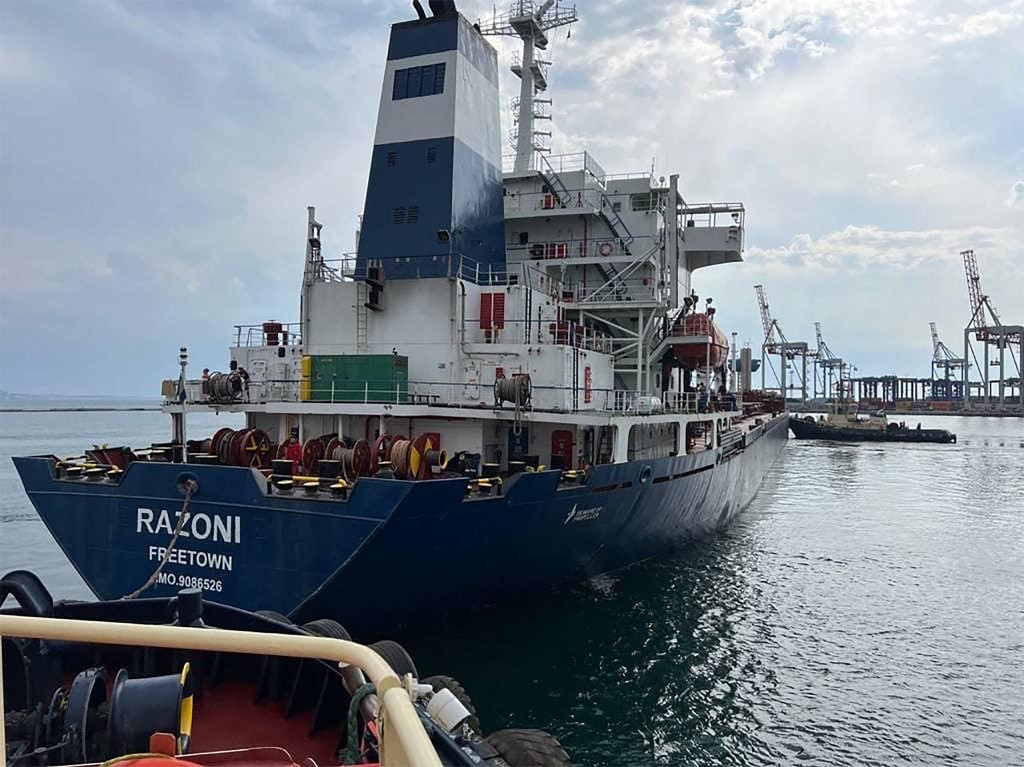
BRIEF HISTORY OF THE OWU KINGDOM

4
The Owus are mainly concentrated at Ago-Owu in Abeokuta, but a larger number of Owu towns may be found elsewhere across the Yoruba empire.

Owu, formerly known as Orile-Owu, an old forest kingdom, is thought to have been the earliest town outside of Ile-Ife, the Yoruba people’s traditional homeland. The idea that this ancient kingdom served as the foundation for all other Owu communities has given rise to many controversies. The Owu people are particularly well known among the many Yoruba sub-ethnic groups, especially when one considers the years of war that involved the larger Oyo Kingdom. Thus, other Yoruba sub-ethnic groups, such as Oyo, Egba, Ife, Ijebu, Ijesha, Awori, Remo, Igbomina, Ondo, and Ekiti, are inferior to the Owu kingdom. Owu was popular as a prominent ancestral domain of the Yoruba people. It also ruled the waves in the aforementioned area of old Oyo. The Owus are mainly concentrated at Ago-Owu in Abeokuta, but a larger number of Owu towns may be found elsewhere across the Yoruba empire. The Yoruba kingdom stretches into the Republic of Benin from Nigeria’s borders.

HISTORY 

Following their initial settlement in Ago-Owu in 1820, where the history of the Owus was first written down. According to oral history traditions, the Owus lived in the present-day nation of Nigeria in a region that was directly along and below the Niger River. Tribal and ethnic disputes directly contributed to the Owus’ southerly migration. According to history, the rulers of Ibadan dispatched diplomatic emissaries to the Owus after receiving information about the Owus’ allegedly impending attack on their town. So, unlike earlier settlements, the Owus did not attempt to fight against the army of Ibadan but instead moved in peacefully. From Ita Lisa to Owu Ipole near Ikire, the monarchs of Ibadan provided the Owus territory to settle there. Up until the reign of Sango, Owu had been the ruler of old Oyo, collecting tribute from the Bariba and the Borgu. All of this occurred because the Owu also made their home in that area. History has it that they undoubtedly had a strong presence in the area. In the Makun and other conflicts against Ado Odo and Dahomey in 1842–1845, Owu fought alongside Egba. At Itori, Yobo, Ifo, Atan, and Ota, Owu contingents engaged in battle, routed the Awori, and are still occupying those locations.

However, their mainstream had settled among the Egbas in Abeokuta. The Owu people had waged wars, won battles, and settled in several locations between the Niger River and the sea; that is, there are Owus in Lagos State; Epe, etc. Nevertheless, they are not Ijebus or Egbas. But their relationship was because the Owu colonies in Ijebu and Abeokuta usually developed on friendly terms rather than as a consequence of direct combat or victories over them. As a result of their liberty to spread across all regions within the Yoruba kingdom, Orile-Owu was formulated. The word “Owu” is derived from a cotton plant of the genus Gossypium, whereas “Orile” refers to an ancestral residence or hamlet. The Yoruba people call this plant owu. “Orile-Owu” denotes the Owu people’s first home or hamlet. Early inhabitants of this kingdom grew cotton and traded in it. As a result, it was given the name “Igbo Owu,” or Cotton Forest.

OWU WARS

The forces of Ijebu and the Ife assaulted and destroyed Owu Ipole between 1821 and 1826. Around 1826, the Owus fled their heavily guarded city and headed in small groups southwestward toward Ibadan. From these peripheries, they marched on and over the Ogun River until they reached Oke Ata, which is close to Abeokuta, when Sodeke, the Egba supreme leader, convinced the valiant Owus to dwell there in approximately 1834.

It is important to note that the current Orile Owu is in the same location as Owu Ipole, where Owus from Iwo and other areas relocated in the early 20th century. Also, the residents of Erunmu, which was established by a previous Olowu from the Amororo Ruling House, were consistently devoted to the cause of the Owu Kingdom. However, the Olowu was transported from Orile Owu, that is, Owu Ipole to Orile Erunmu during the Owu War on his back, which, according to history, was to conceal his escape, protected by a united squad of his royal guards and Oba Erunmu’s royal guards. Thus, the remnant Owu army withdrew after Orile Owu was completely destroyed in order to defend Orile Erunmu from the united armies of Ijebu and Ife.

Owu Festival

Giving thanks to Olodumare, that is, the Almighty God for providing for all needs is the original intent of the Omo Olowu holiday. Since its inception in 1999, the annual Owu Day festival has drawn both Owu natives and visitors from around the globe. The second weekend in October will be Owu’s public celebration of the benevolence of the Almighty God, according to a declaration made public by the Olowu of Owu Abeokuta, Oba Dosunmu, on October 9, 2010. This announcement was made to officially launch the new Omo Olowu Festival, which will take the place of the previous Owu Day Festival going forward. Ironically, the Owu Day Festival held its tenth and final performance in 2009 on the tenth day of the tenth month.

Disclaimer: 

The designations employed in this publication and the presentation of materials herein do not imply the expression of any opinion whatsoever of the Publisher (Nze Ikay’s Blog) or its employees concerning the legal status of any country, its authority, area or territory or concerning the delimitation of its frontiers. Equally, the sketches, images, pictures and videos are gotten from the public domain.

Article by Vladimir Putin “Russia and Africa: Joining Efforts for Peace, Progress and a Successful Future“

0

Article by Vladimir Putin “Russia and Africa: Joining Efforts for Peace, Progress and a Successful Future“

On July 27–28, St Petersburg will host the second Russia-Africa Summit and Russia-Africa Economic and Humanitarian Forum. On the eve of these large-scale representative events which will bring together heads of state and government, entrepreneurs, academia and public figures, I would like to share my vision of the development of Russia-Africa relations with the readers of the leading media on the African continent, outlining priority cooperation areas for the coming decades of the 21st century.

The partnership relations between our country and Africa have strong, deep roots and have always been distinguished by stability, trust and goodwill. We have consistently supported African peoples in their struggle for liberation from colonial oppression. We have provided assistance in developing statehood, strengthening their sovereignty and defence capability. Much has been done to create sustainable foundations for national economies. By the mid-1980s, with the participation of our specialists, over 330 large infrastructure and industrial facilities have been built in Africa, such as power plants, irrigation systems, and industrial and agricultural enterprises, which are successfully operating to this day, and continue to make a significant contribution to the continent’s economic development. Tens of thousands of African doctors, technical specialists, engineers, officers and teachers have received education in Russia.

I would like to specifically mention the traditionally close cooperation on the world stage, the firm and consistent advocacy rendered by the USSR and then Russia to African countries at international fora. We have always strictly adhered to the “African solutions to African problems” principle, standing in solidarity with Africans in their struggle for self-determination, justice and their legitimate rights. We have never tried to impose on partners our own ideas about the internal structure, forms and methods of management, development goals and ways to achieve them. Unchanged remains our respect for the sovereignty of African states, their traditions and values, and their desire to independently determine their own destiny and freely build relationships with partners.

We highly value the honestly-gained capital of friendship and cooperation, traditions of trust and mutual support that Russia and African countries share. We are brought together by a common desire to shape a system of relations based on the priority of international law, respect for national interests, indivisibility of security, and recognition of the central coordinating role of the United Nations.

Today, the constructive, trustful, forward-looking partnership between Russia and Africa is especially significant and important. Major centres of economic and political power and influence are emerging in the world, which are asserting themselves more and more insistently, demanding that they be reckoned with. We are sure that a new multipolar world order, the contours of which are already seen, will be more just and democratic. And there is no doubt that Africa, along with Asia, the Middle East and Latin America, will take its worthy place in it and finally free itself from the bitter legacy of colonialism and neo-colonialism, rejecting its modern practices. 

Russia welcomes the rising international authority of individual states as well as Africa as a whole, their desire to make their voices strongly heard and to take the continent’s problems into their own hands. We have always supported the constructive initiatives of our partners. We stand for granting African countries their rightful place in the structures that determine the world’s fate, including the UN Security Council and the G20, as well as for reforming the global financial and trade institutions in a way that meets their interests.

Regrettably, we see that the situation in the world today is far from stable. The long-standing conflicts that exist in nearly every region are deepening, and new threats and challenges are emerging. And Africa feels the burden of global challenges like no other part of the world. In such a challenging environment, we look forward to working with our African partners to shape a non-discriminatory agenda for cooperation. The strategic areas of our interaction are set by the decisions of the first Russia-Africa Summit held in Sochi in late October 2019. The Russia-Africa Partnership Forum was established for its effective implementation. We have set up bilateral intergovernmental commissions for trade, economic, scientific and technological cooperation with many countries of the continent, and the network of Russian embassies and trade missions in Africa will be expanded. Further instruments are being actively developed to better structure economic relations and make them more dynamic. 

I would like to note with satisfaction that Russia’s trade turnover with African countries increased in 2022 and reached almost 18 billion US dollars. However, we are all well aware that the potential of our trade and economic partnership is much higher. Russian companies are interested in working more actively on the continent in the sphere of high technologies and geological exploration, in the fuel and energy complex, including nuclear power, in the chemical industry, mining and transport engineering, agriculture and fishery. The changes taking place in the world require the search for solutions related to the establishment of new transport and logistical chains, the formation of a monetary and financial system, and mechanisms of mutual settlements that are safe and free from unfavourable external impacts.

We understand the importance of uninterrupted food supplies for the socio-economic development and political stability of the African states. On this basis, we have always paid great attention to issues related to the supply of wheat, barley, maize and other crops to African countries. We have done so both on a contractual basis and free of charge as humanitarian aid, including through the United Nations Food Programme. Thus, in 2022, Russia exported 11.5 million tonnes of grain to Africa, and almost 10 million tonnes more were delivered in the first half of 2023 – despite the sanctions imposed on our exports, which severely hamper the supply of Russian food products to developing countries, complicating transport logistics, insurance arrangements and bank payments.

Many have probably heard of the so-called “grain deal,” whose initial purpose was to ensure global food security, reduce the threat of hunger and help the poorest countries of Africa, Asia and Latin America – the reason why Russia undertook the obligation to facilitate its implementation in the first place. This “deal,” however, while it was publicly advertised by the West as a gesture of goodwill that benefited Africa, has in fact been shamelessly used solely for the enrichment of large US and European businesses that exported and resold grain from Ukraine.

Judge for yourselves: in almost a year, a total of 32.8 million tonnes of supplies were exported from Ukraine under the “deal,” with over 70 percent of the exports ending up in high- and upper-middle-income countries, including in the European Union, whereas such countries as Ethiopia, Sudan and Somalia, as well as Yemen and Afghanistan, received less than 3 percent of the supplies, i.e. less than one million tonnes.

In the meantime, none of the “deal” provisions relating to the exemption from sanctions of Russian grain and fertiliser exports to world markets, were fulfilled. Moreover, barriers have been mounted even to our attempts to supply free-of-charge mineral fertilisers to the poorest countries in need. Of 262,000 tonnes of goods blocked in European ports, only two shipments were delivered – one of 20,000 tonnes to Malawi and one of 34,000 tonnes to Kenya. The rest is still unscrupulously held by the Europeans. And this is a purely humanitarian initiative we are talking about, which should be exempt from any sanctions as such. 

Considering all these facts, there is no longer any use in continuing the “grain deal” as it has failed to serve its original humanitarian purpose. We argued against further extending the “deal,” which terminated on July 18.

I want to give assurances that our country is capable of replacing the Ukrainian grain both on a commercial and free-of-charge basis, especially as we expect another record harvest this year.

Notwithstanding the sanctions, Russia will continue its energetic efforts to provide supplies of grain, food products, fertilisers and other goods to Africa. We highly value and will further develop the full spectrum of economic ties with Africa – with individual states as well as regional integration associations and, naturally, with the African Union. We welcome this organisation’s strategic course towards further economic integration and the formation of the African Continental Free Trade Area. We are ready to build pragmatic, mutually beneficial relations, including within the framework of the Eurasian Economic Union. We are also willing to step up cooperation with other regional integration organisations on the continent.

In keeping with the existing tradition, we intend to continue providing assistance to African states in building their national human resource capacity. There are currently about 35 thousand students from the continent in Russia, and more than 6,000 of them receive Russian government scholarships. Each year we increase the number of scholarships, promote paid higher education options and facilitate inter-university ties, which have gained significant momentum in recent times. 

Bringing humanitarian, cultural, sports and mass media cooperation to a whole new level would serve our common interests. I would like to seize this opportunity to invite our young African friends to the World Youth Festival, which will take place in Sochi, Russia, in March 2024. This large-scale international forum will bring together more than 20,000 participants from more than 180 countries for an informal, friendly and open dialogue that is free from ideological and political barriers, racial and religious prejudice and would consolidate the young generation around the ideals of lasting and durable peace, prosperity and creative spirit. 

In conclusion, I would like to reiterate that we attach great importance to the upcoming second Russia–Africa Summit. We expect that the Summit would adopt a comprehensive Declaration, and a number of joint statements and approve Russia – Africa Partnership Forum Action Plan to 2026. We are working to prepare an impressive package of intergovernmental and inter‑agency agreements and memoranda with individual states as well as regional associations of the continent.

I am looking forward to welcoming the African leaders in St. Petersburg and stand committed to a fruitful constructive dialogue. I firmly believe that the decisions adopted at the Summit and Forum, coupled with continuous diversified joint work will contribute to further development of Russian‑African strategic partnership for the benefit of our countries and peoples.

Disclaimer: 

The opinions and views expressed in this write-up are entirely that of the Writer(s). They do not reflect the opinions and views of the Publisher (Nze Ikay’s Blog) or any of its employees. The designations employed in this publication and the presentation of materials herein do not imply the expression of any opinion whatsoever of the Publisher (Nze Ikay’s Blog) or its employees concerning the legal status of any country, its authority, area or territory or concerning the delimitation of its frontiers. Equally, the sketches, images, pictures and videos are gotten from the public domain.
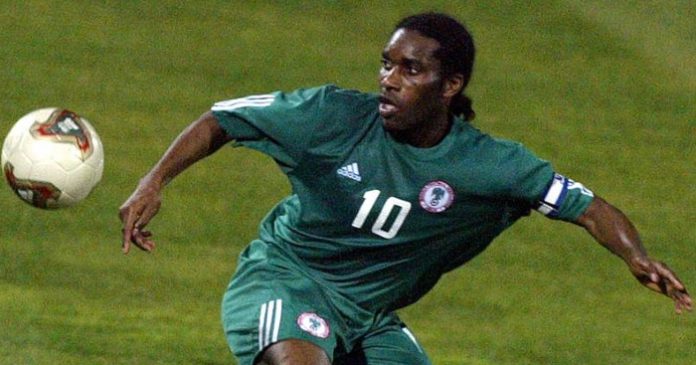
OBITUARY! Rest In Peace, Reverend Father Dermot Doran, The Priest Who Rallied Aid for Biafran Airlift, Dies at 88 By Clay Risen

2
Reverend Father Dermot Doran, the Priest who rallied Aid for Biafra Airlift

In 1968, Father Doran, who had been in Nigeria as an educator, became the linchpin of one of the largest civilian humanitarian efforts in history. The cargo plane flew in low over southeastern Nigeria, its lights out, its radio off, its pilot navigating by the glow of refinery flares along the coast. The runway, somewhere below, was dark. The pilot dropped his wheels and nosed the plane downward, seemingly into the void. On the ground, a team of boys suddenly ran out of the bush to light rows of kerosene lamps to guide the craft toward the tiny airstrip, just 75 feet wide and 1,200 feet long. Aboard were 26 tons of antibiotics, flour and salted fish, and a 34-year-old Irish priest named Dermot Doran.

It was December 1968, and Nigeria was in the midst of a civil war. After nearly a decade of pogroms against them, the Igbo people of the country’s southeastern states had seceded to form the independent republic of Biafra. The Nigerian Army almost immediately attacked, and it soon had a blockade around the region, leaving 14 million residents to starve.

Father Doran was one of 1,000 priests and nuns, mostly from Ireland, who had been working in the area when the fighting broke out. Overnight, they pivoted from their peacetime roles as educators — Father Doran had been a high school principal — to aid workers during one of the 20th century’s worst humanitarian crises. Overall, the Biafran airlift brought 60,000 tons of aid to the region, at the time the largest mobilization of aid by civilians in history. Between 500,000 and two million noncombatants died because of the blockade — but an estimated one million more survived because of the airlift.

Father Doran was its linchpin. Sneaking in and out of Biafra, he located the first planes and hired the first pilots. He went to New York City to arrange the first aid shipments. He mapped out the logistics of moving thousands of tons of supplies from Europe and North America to airfields in Gabon and Sao Tome, an island south of Nigeria that was then under Portuguese rule. He accompanied many of the flights from there into Biafra, coordinated supply distribution, caught up with locals and other priests, and then left to tell the world what he had learned. He had a way with the news media, befriending, among others, Harry Reasoner of CBS and the BBC correspondent Frederick Forsyth, whose experience in Biafra helped inspire his conversion to write political thrillers. Father Doran testified before the United States Senate, leaving a lasting impression on Senator Edward M. Kennedy, who became a leading advocate for Biafra in Congress. “He never did anything halfway,” Frank Carlin, a retired overseas director for Catholic Relief Services, said in a phone interview. “He was always programming and planning, then he went back and told the story.”

Father Doran died on May 19 in Dublin. He was 88. His niece Cathy Doran said the cause was myelodysplastic syndromes, a rare form of blood cancer. His death, in a hospital, was not widely reported at the time. Father Doran arrived in Nigeria in 1961, not long after being ordained as a member of the Holy Ghost Fathers, a Roman Catholic congregation also known as the Spiritans. The congregation had long had a strong presence in Nigeria, especially in the southeast, where the Igbo population is mostly Christian. He had worked in developing countries before — he spent several years as a teacher in Trinidad — but he fell in love with Nigeria, and especially the Igbo culture, which, with its rich storytelling traditions and its history of intense suffering under English rule, seemed of a piece with the Irish experience.

“I was sent there, and they became my people,” he said in an interview for “Biafra: Forgotten Mission,” a 2018 documentary directed by Brendan Culleton and Irina Maldea. The effects of the blockade were immediate and devastating, especially after Nigeria captured Biafra’s oil-rich coast in early 1968. Residents of Biafra got most of their protein from dried fish; without it, children quickly developed kwashiorkor, a protein deficiency that caused their bellies to swell. At the worst part of the crisis, in late 1968, some 10,000 people a day were dying, according to Red Cross estimates. “It’s something you don’t expect to meet in your life,” Father Doran said in the documentary. Nigeria was supported in the war by Britain, which had once ruled it as a colony, and the two countries tried to maintain a news blackout. But by the end of 1967 Father Doran had made several trips to Lisbon and New York, and he and others managed to smuggle journalists into the region to report on the unfolding crisis.

Biafra became an international rallying cry. Thousands took part in protest marches in London and Paris. In June 1969, a Columbia University student named Bruce Mayrock set himself on fire in front of the United Nations; he died the next day. In Britain, John Lennon returned his M.B.E. medal to Queen Elizabeth II, partly in protest over his country’s role in the blockade. More aid organizations arrived. Roman Catholic, Protestant and Jewish groups, including Catholic Relief Services, gathered under an umbrella effort called Joint Church Aid, which collected supplies for transit through the airlift. Father Doran was its relief organizer. The pilots nicknamed it Jesus Christ Airlines. “It’s a fantastic example of ecumenism,” Father Doran told United Press International in 1969. “We mightn’t be agreed on theology — but we are agreed on bread.”

The Biafran airlift is widely considered a watershed moment in international humanitarianism. It was the first time nonprofits and private citizens led the response to a crisis. Several countries, including the United States and Israel, quietly supported the airlift, but it received no official government approval. In New York, Ireland’s ambassador to the United Nations told Father Doran to stay out of Nigeria’s business. And the world stood by while the Nigerian air force attacked the airlift, bombing the airfield and destroying several planes, killing 25 crew members. In a debate with Father Dermot on the CBS program “The World of Religion,” the Nigerian ambassador to the United Nations, Edwin Ogebe Ogbu, claimed that the airlift was supporting the rebels and, by prolonging the war, driving up the death toll. Father Doran said in response, “If you call innocent children and babies a few days old, and babies a week old or a month old who are dying of starvation — they have no milk, no food — if they are rebels, I don’t know what.”

Michael Dermot Doran was born on Sept. 22, 1934, in Athboy, 35 miles northwest of Dublin. His parents, Thomas and Mary Anne (Guinan) Doran, ran a pub; years later one of Dermot’s brothers, Eamonn, founded one of New York City’s most popular Irish bars. He died in 1997. Along with his niece Cathy Doran, Father Doran is survived by his sister, Mary Mosely; three other nieces, Annemarie Wylie, Jenn Mosely and Rosalynd Mosely; and five nephews, Hans, Dermot, Eddie, Alan and Paul Doran. Father Doran entered the Spiritan novitiate in 1952 and graduated with a degree in philosophy from University College Dublin in 1955. He spent three years as a prefect at St. Mary’s College in Port of Spain, Trinidad, before returning to Ireland to complete his religious studies. He was ordained in 1961.

The Biafran war ended in 1970 when Nigeria reconquered the breakaway region and expelled most of the European missionaries. Father Doran was then assigned to work as a communications officer with Catholic Relief Services in New York, from which he was dispatched to disaster zones worldwide. In the early 1970s, when he was sent to Bangladesh and India, he became close with Mother Teresa, who invited him to deliver mass to her sisters in Calcutta (now Kolkata). In 1975 he moved to Toronto, where he became director of Volunteer International Christian Service, another aid organization. He also served as the director of Brottier Refugee Services, a resettlement agency, before retiring in Ireland in 2008. “Dermot was everywhere,” Mr Carlin of Catholic Relief Services said. “He got more out of a day than anyone I knew.”

Clay Risen is an obituaries reporter for The Times. Previously, he was a senior editor on the Politics desk and a deputy op-ed editor on the Opinion desk. He is the author, most recently, of “American Rye: A Guide to the Nation’s Original Spirit.”

Disclaimer: 

The opinions and views expressed in this write-up are entirely that of the Writer(s). They do not reflect the opinions and views of the Publisher (Nze Ikay’s Blog) or any of its employees. The designations employed in this publication and the presentation of materials herein do not imply the expression of any opinion whatsoever of the Publisher (Nze Ikay’s Blog) or its employees concerning the legal status of any country, its authority, area or territory or concerning the delimitation of its frontiers. Equally, the sketches, images, pictures and videos are gotten from the public domain.