
Home Blog Page 6

KISSINGER, ME, AND THE LIES OF THE MASTER BY SEYMOUR HERSH

6
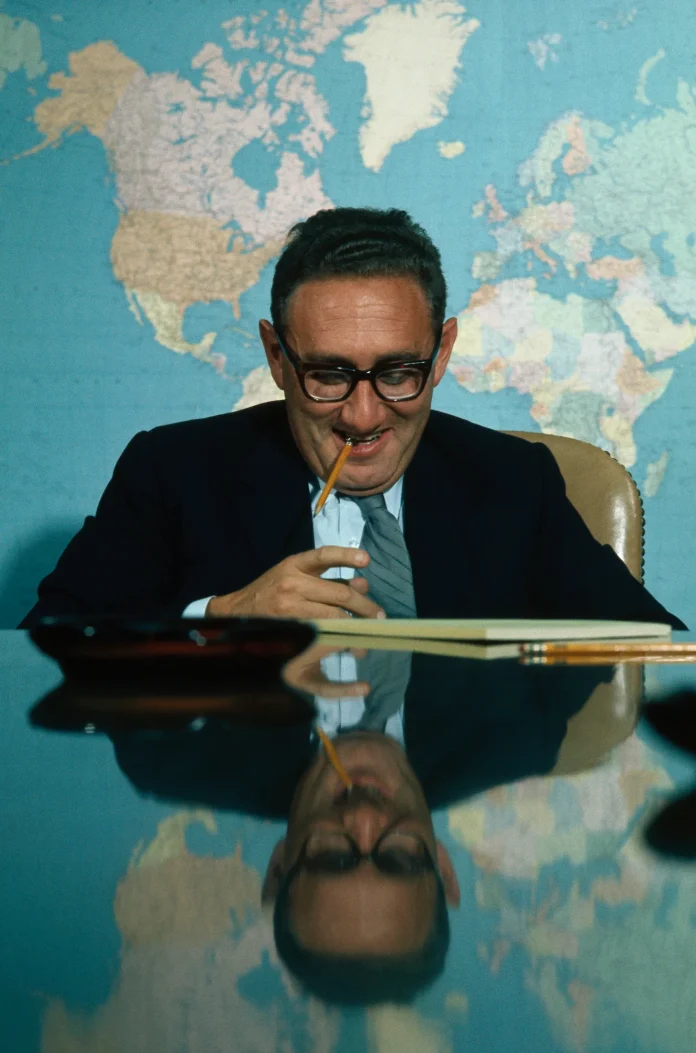
Henry Kissinger, then national security adviser, in the Situation Room in the basement of the West Wing of the White House in 1969. / Photo by Wally McNamee/Corbis via Getty Images.

I left the New York Times in 1979, after many good stories and some not-so-good times, to write a book, The Price of Power, about Henry Kissinger and his years as a manipulating and dissembling national security adviser and secretary of state. I interviewed no less than one thousand officials, including scores who had worked for Henry, as he was known to all, and the 698-page book was published in 1983. It was a success in terms of sales, and publicity and led to a year’s worth of speeches at colleges and universities throughout America. But the book did little to diminish the mainstream press’s intense love affair with all things Henry. 

The obituaries that followed his death last week were as fawning as the coverage when he lied and manipulated his way to fame while in office. The reality is that his role in weaning Russia and China from their support of North Vietnam at the height of that horrific war has often been overstated. He was a facilitator of diplomatic realities initially promulgated by President Richard Nixon, whose public awkwardness masked a shrewd insight into the willingness of great powers to betray even the closest of allies. (Forget about my tome if you want the deepest insights into the most deadly of Nixon and Kissinger’s scheming: in 2013, Gary Bass, a professor at Princeton and former reporter for the Economist, published The Blood Telegram, a focused account of the mass murder that Nixon and Kissinger made inevitable in 1971 in what was then known as East Pakistan, with only the slightest of acknowledgement by the international media).

My dance with Kissinger did not begin until early 1972 when I was asked by Abe Rosenthal, the executive editor of the Times, to join the newspaper’s staff in Washington and write what I wanted as an investigative reporter about the Vietnam War—with the proviso that I had better be damn sure I was right. By then, I had won lots of prizes, including the Pulitzer, for my reporting on the My Lai massacre in Vietnam and published two books, enough to land me a job at the best place in the world for a writer: as a reporter for the New Yorker. But Rosenthal’s offer and my hatred for the war led me to leave the magazine for the daily rush of a newspaper. 

When I arrived at the Washington bureau in the spring of 1972, my desk was directly across from the paper’s main foreign policy reporter, a skilled journalist who was a master at writing coherent stories for the front page on deadline. I learned that around 5 pm on days when there were stories to be written about the war or disarmament—Kissinger’s wheelhouse—the bureau chief’s secretary would tell my colleague that “Henry” was on the phone with the bureau chief and would soon call him. Sure enough, the call would come and my colleague would frantically take notes and then produce a coherent piece reflecting what he had been told would invariably be the lead story in the next morning’s paper. After a week or two of observing this, I asked the reporter if he ever checked what Kissinger had told him—the stories he turned out never cited Kissinger by name but quoted senior Nixon administration officials—by calling and conferring on background with William Rogers, the secretary of state, or Melvin Laird, the secretary of defence. 

“Of course not,” my colleague told me. “If I did that, Henry would no longer deal with us.” Please understand—I am not making this up.

Kissinger, who had made no public remarks about my writings on the My Lai massacre and its cover-up, suddenly invited me to the White House for a private chat. I had just returned from a reporting trip to North Vietnam for the Times—I was the second mainstream American reporter in six years to be given a visa by Hanoi—and we were to discuss it. I had written about North Vietnam’s view of the secret peace talks Kissinger conducted with the Vietnamese in Paris, but that was not the issue. He wanted, so I concluded, to stroke me. There was no question that, as a total loose cannon suddenly installed at the Times, I was of special interest.

He asked me about my impressions of the North Vietnamese, as seen in a closely watched three-week visit to Hanoi and elsewhere in the North. I had been taken to areas that were under heavy American bombing attacks and witnessed the North’s amazing ability to repair bombed-out rail lines within a few hours after an attack. Extra rails and the equipment needed to make repairs were hidden every few hundred yards along the tracks from Hanoi to the main harbour in Haiphong. He asked about the morale of the residents in Hanoi. I told him I had seen no signs of panic, fear, or desperation in my many unguarded (so I believed) walks throughout the city. Every morning, in fact, a group of schoolboys en route to class who had seen me when I first arrived would walk by my hotel in central Hanoi at the same hour—I made a point of being outside then—and cheerfully say ‘Good morning, sir!” in English to me. But I was always aware that I was in enemy territory. 

The schoolboys and other anecdotes prompted Kissinger to summon a prominent former ambassador who was his senior aide for matters related to the war and say to him, in front of me, in obvious mock anger: “This fellow is giving me more information about the morale in the North than I get from the CIA.” I remember thinking “Is this it? Is this all he’s got? Does the guy really think this kind of obvious flattery is going to win me over?” Over the next few years, Kissinger continued to take my calls, with the proviso that all of our conversations must be, as he once said, “off off the record.” I was not allowed to quote him by name and learned years later that I was the only one on our phone calls who played by the rules. An academic doing research on Kissinger told me that my allegedly private chats with the man were transcribed within hours—he had obtained copies through the Freedom of Information Act—and made available to Kissinger or his longtime aide, Army General Alexander Haig.

I was pulled off the Vietnam beat by Rosenthal in late 1972, despite my heated objections, when the Watergate scandal broke and the Times was being pummeled by the reporting of the Washington Post’s Bob Woodward and Carl Bernstein. Once again I found myself reporting on Kissinger, whose willingness to do anything to stay in Nixon’s good graces knew no limit. In the spring of 1973, a soon-to-retire high-level FBI official, who clearly shared my obvious distaste for Kissinger, invited me to lunch at a joint near the FBI headquarters that was a haunt for senior bureau honchos. It was a truly astonishing invitation but those were days of nothing but such moments as the Nixon administration unraveled, and so off I went. We had a pleasant talk about the vagaries of Washington and as lunch ended, he asked me to pause for a moment or two before leaving the restaurant: I would find a packet on his chair.

It contained sixteen highly classified FBI wiretap authorizations, all but two signed by Kissinger. Those taps included a few reporters, ten or so members of Kissinger’s own national security staff, and the senior aides to the secretary of state and the secretary of defence. The documents specified that the wiretaps were to be installed on the targets’ home telephones, and they included the names of the FBI technicians who would install the taps. It took me a day or two to track down a few of the installers and corroborate that the documents were real. I knew I had to do so before telling the senior editors at the Times what I had. With Nixon on the ropes, Kissinger was the go-to guy on all foreign policy issues, including a crisis then emerging in the Middle East. First came a call to Kissinger. The immediate response was total denial and anger at being accused of such police-state tactics. Then came a not-unexpected second call saying that he had had it with constantly being maligned by the press and was going to resign. A half-hour later James Reston, known to all as Scotty, the wonderful Times columnist who was close to Kissinger, although aware of his shortcomings, padded up to my desk in the slipper-like shoes he sometimes wore in the office and asked if I realized that Henry was serious about resigning. 

It was impossible not to like Scotty, but he clearly was not sure that my kind of reporting belonged in the Times. Being Jewish, I had volunteered the winter before to work a double shift in the Washington bureaus on Christmas Eve, which usually meant I only had to write a weather story or something equally trivial. Just me, a good book, and a teletypist from morning to late at night. At one point Scotty, dressed in black tie, with his wife and a prominent Washington diplomat and his wife in tow, swooped into the bureau. My guess was the liquor stores in the city were closed and Scotty, who was clearly a bit tipsy, was there to retrieve a bottle or two from his office. Reston gave me a very cool look and said—I still laugh recalling it—“Hey Hersh, aren’t you going to get that exclusive interview with Jesus for the second edition?”Maybe you had to be there to appreciate the story, but Scotty was the real thing. He was where he was—as the most respected columnist for the Times—because presidents and their minions knew he could be counted on to relay their point of view in a crisis. And I was writing stories, especially about Kissinger’s possible link to Nixon’s wrongdoing, that Scotty did not think the paper needed to publish.

I mumbled something to Scotty—about how whether or not Kissinger quit was none of my business—and continued filing the story to New York. The deadline for the front page was around 7 pm and close to that time Al Haig telephoned me. “Seymour,” he said, which got my attention—those who knew me, including Al, called me Sy—and said the following words, which I will never forget: “Do you believe that Henry Kissinger, a Jewish refugee from Germany who lost thirteen members of his family to the Nazis, could engage in police state tactics such as wiretapping his own aides? If there is any doubt, you owe it to yourself and your beliefs and your nation to give us one day to prove your story is wrong.” Of course, I understood that Kissinger had begged Haig to make the foolish call, but he had done it. The story ran on the front page the next morning, and Kissinger survived, as I was sure he would. He’d have to be caught with a knife in his hand, blood dripping from it, and the body still twitching to ever suffer consequences for his actions.

But he did hurt the careers of some of those who did dirty work for him inside the bureaucracy, as I learned a few months after joining the Times. There was a scandal involving a four-star Air Force general named John Lavelle who had been publicly sacked and demoted after acknowledging that he had secretly authorized his Air Force crews in Thailand to conduct bombing missions on unauthorized targets in North Vietnam. Lavelle’s disgrace had become public, which was unusual, and he was nowhere to be found. At an early point in the ongoing Lavelle mystery, I was called by Otis Pike, a New York Democrat on the House Armed Services Committee. Pike had been a Marine Corps bomber pilot in the Pacific during World War II, and he urged me to get into the story. He told me he could not say all that he knew but that I had to find Lavelle and get him to talk. I had learned during years covering the Pentagon for the Associated Press in the mid-1960s of the value of the Pentagon telephone directories. I also knew that Lavelle, who had been assigned to the Pentagon years earlier as a two- or three-star general, undoubtedly had a very bright Air Force captain or two assigned as his personal aides. Odds were that one of his hotshot aides was back in the Pentagon as a major or lieutenant colonel. 

Sure enough, I found one who was living in a suburb. I called him at home that night and made sure to tell him who I was and what I wanted: to find out where Lavelle was living and just what in hell was going on. He gave me the information I needed. I tracked down Lavelle the next day playing golf with his two sons at a course in rural Maryland. I always loved golf, and I hit a few irons with him and the boys—reporters will do anything to get someone to talk. Lavelle, who knew nothing about me other than the fact that I could hit a five-iron, told his boys to wait in the car and walked me to a bar in the clubhouse. It was very warm, I remember, and we both had cold bottles of Miller High Life. I took a swig, and I asked Lavelle to tell me what the hell happened. He was cool like fighter pilots are, and he told me that for six months or so he had indeed authorized bombing raids inside the North that were off-limits. He protected his deputies, he said, by not telling them that he did not have specific authorization from Washington to do so.

I remember the next exchange well. I said: “C’mon general, if you did what you said you and I both know you would have been court-martialed.” Lavelle gave me a cool look and said: “Tell me when was the last time a four-star Air Force general or admiral has ever been court-martialed?” I didn’t know the answer. At that point, I really began to like the guy. I sensed—just knew it—that he had been given backchannel orders to do the illegal bombing and that those orders had to have come from Kissinger and Nixon. I told him so, and he said nothing. I told the general I was going to report his explanation but would suggest that he had taken the fall for the White House because the president and his national security adviser wanted to expand the war against the North without officially doing so.

And so I did. I kept on writing about the Lavelle mess in the Times for weeks. Eventually, there were hearings organized by Senator John Stennis, the conservative Democrat from Mississippi who was chairman of the Senate Armed Services Committee. Stennis was a hawk on the Vietnam War and a bigot when it came to African Americans, but he suspected that Kissinger was behind the Lavelle disgrace and was all for me doing what I could. He and I continued to talk—I could reach him anytime I wished via a private phone line in his office—until Nixon was out of office. We were another odd couple.

I wrote a series of stories about Lavelle that were full of insinuations that the general did what he did for Kissinger and Nixon, but the general chose to honour his commitment to the men in the White House. A decade later, when Nixon and Kissinger’s White House tapes became public—Lavelle died in 1979—there were a few chats between Nixon and Kissinger about Lavelle’s plight as my first stories on him were being published in the Times. To his credit, Nixon felt guilty about the railroading of the general, as I noted in a memoir I wrote a few years ago. “I don’t want him to be made a goat,” he told Kissinger. A few days later, when there were newspaper reports about possible Senate hearings into Lavelle’s dismissal, Nixon again told Kissinger: “I just do not feel right about pushing him into this thing and then he takes a bad rap.” Kissinger urged him to stay out of it. Nixon agreed to do so, but again said, almost plaintively: “I do not want to hurt an innocent man.” It was as if the president believed, or chose to believe, that he had no power to intervene. He was, in that moment of duplicity, in Kissinger’s hands.

Disclaimer: 

The opinions and views expressed in this write-up are entirely those of the Writer(s). They do not reflect the opinions and views of the Publisher (Nze Ikay’s Blog) or any of its employees. The designations employed in this publication and the presentation of materials herein do not imply the expression of any opinion whatsoever of the Publisher (Nze Ikay’s Blog) or its employees concerning the legal status of any country, its authority, area or territory or concerning the delimitation of its frontiers. Equally, the sketches, images, pictures and videos are gotten from the public domain.
The Delborough Hotel Lagos, the first of a Kind in Africa!

1
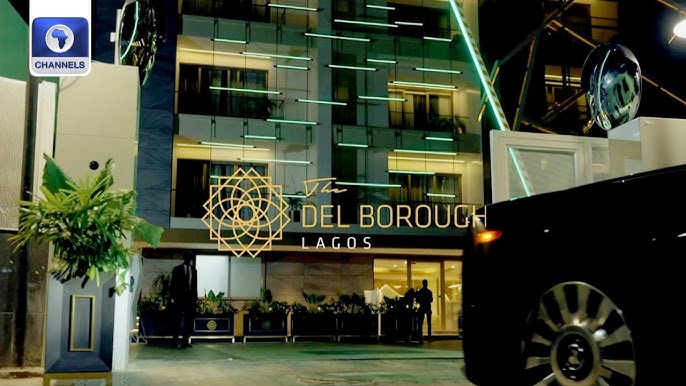
The Delborough Hotel, Lagos, Nigeria

The Delborough Hotel Lagos, the first of a Kind in Africa!

The Delborough Hotel Lagos, newly built by Stanley Uzochukwu, is an exquisite addition to the hospitality industry in Nigeria. This magnificent hotel is a testament to the visionary leadership and impeccable taste of its owner and his commitment to providing exceptional experiences to its guests. Located in the heart of Lagos, Nigeria’s bustling commercial hub, the Delborough Hotel stands tall as a symbol of luxury, comfort, and sophistication. The architecture of the hotel seamlessly blends contemporary design with hints of Nigerian heritage, creating a unique and captivating ambience.

With its state-of-the-art facilities and thoughtful amenities, the Delborough Hotel offers a haven of tranquillity amidst the vibrant cityscape. The plush rooms and suites are meticulously designed, providing a perfect blend of comfort and elegance. Each room is adorned with stylish furniture, soft lighting, and modern amenities to make guests feel pampered and relaxed. The hotel boasts a wide range of dining options that cater to every palate. From fine dining restaurants offering international cuisine prepared by world-class chefs to cosy cafes serving artisanal pastries and coffee, the Delborough Hotel ensures that culinary delights are never far away.

For those seeking relaxation and rejuvenation, the hotel’s spa and wellness centre provides an array of services designed to soothe the mind, body, and soul. Guests can indulge in a range of therapeutic treatments, unwind in the steam room, or take a refreshing dip in the pool. In addition to its luxurious accommodations and exceptional facilities, the Delborough Hotel also offers versatile event spaces that can be tailored to meet the needs of any occasion. From corporate conferences and business meetings to lavish weddings and social gatherings, the hotel’s dedicated events team ensures that every event is flawlessly executed.

Beyond the walls of the hotel, guests can explore the vibrant city of Lagos, with its rich cultural heritage, bustling markets, and lively entertainment scene. The experienced concierge team at the Delborough Hotel is always ready to assist guests in discovering the best of what the city has to offer. Stanley Uzochukwu’s vision for the Delborough Hotel reflects a commitment to excellence and providing unmatched hospitality. With its world-class facilities, luxurious accommodations, and impeccable service, the Delborough Hotel is set to become a landmark destination for discerning travellers in Lagos and beyond.

Meanwhile, who is Stanley Uzochukwu, the CEO, Delborough Hotel, Lagos and the Stanley Group?

Stanley Uzochukwu is a Nigerian entrepreneur and business magnate known as the CEO of Delborough Hotel, Lagos. Born and raised in Nigeria, Uzochukwu has emerged as a prominent figure in the Nigerian business world through his successful ventures and leadership skills. Uzochukwu’s journey in entrepreneurship began at a young age when he displayed a keen interest in business and innovation. Armed with determination and an entrepreneurial spirit, he embarked on various business ventures, driven by his vision to make a significant impact in different industries.

His impressive business understanding and ability to identify untapped opportunities led him to establish Deloitte Consulting West Africa, a management consulting firm that offered strategic advisory services to public and private sector organizations. Under Uzochukwu’s leadership, the company flourished, serving as a catalyst for growth and success for numerous clients. Building on his success in the consulting industry, Uzochukwu sought to expand his entrepreneurial endeavours and ventured into the hospitality sector. Recognizing the growing demand for luxurious accommodations and exceptional service, he conceived the idea of the Delborough Hotel, a haven of elegance and comfort in the heart of Lagos.

As the CEO of Delborough Hotel, Uzochukwu has spearheaded the development and establishment of this prestigious property, ensuring that every aspect, from the architecture to the amenities, exudes excellence. His attention to detail and commitment to providing top-notch experiences have set Delborough Hotel apart as a premier destination for discerning travellers. Uzochukwu’s business success extends beyond the hospitality industry. He is also the founder and CEO of Stanel Group, a conglomerate that operates in various sectors, including oil and gas, real estate, and automobile sales and services. His ventures under Stanel Group have become renowned for their commitment to quality, innovation, and customer satisfaction.

Apart from his business pursuits, Uzochukwu is known for his philanthropic activities. He believes in giving back to society and has initiated various projects that aim to uplift and empower communities in Nigeria. His philanthropic efforts include educational initiatives, empowerment programs, and support for healthcare infrastructure. Stanley Uzochukwu’s visionary leadership, entrepreneurial spirit, and dedication to excellence have solidified his position as a prominent figure in the Nigerian business landscape. As the CEO of Delborough Hotel, he continues to shape the hospitality industry in Nigeria, providing unforgettable experiences for guests and setting new standards of luxury and service.
@NzeIkayMedia

The Commissioning ceremony of the Delborough Hotel, Lagos, Nigeria

Adieu Mr Henry Alfred Kissinger

0
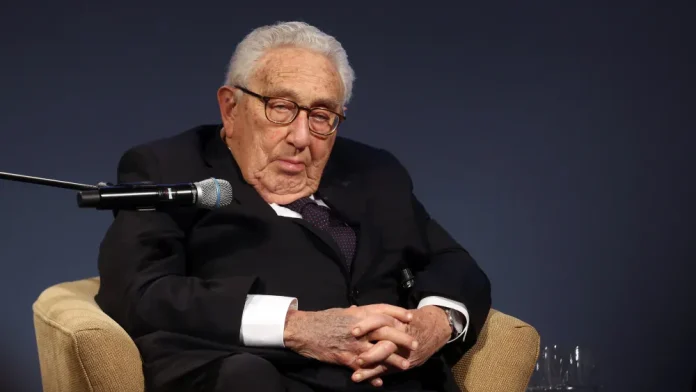
Former US Secretary of State to Nixon, Mr Henry Alfred Kissinger.

Henry Kissinger, born on May 27, 1923, in Fürth, Germany, is a renowned political scientist, diplomat, and Nobel laureate. He is best known for his influential role as United States Secretary of State from 1973 to 1977 during the Richard Nixon and Gerald Ford administrations. Kissinger played a pivotal role in shaping U.S. foreign policy, particularly with regard to the East/West tensions of the Cold War and the ongoing Russian and American tensions today.

Kissinger’s early life was shaped by his experiences as a Jewish refugee fleeing Nazi Germany. In 1938, at the age of 15, he and his family escaped to the United States, where he would later become a naturalized citizen. Kissinger attended Harvard University, earning a Bachelor’s degree in Political Science and a Ph.D. in Government, later becoming a renowned professor at the same institution.

In 1969, President Richard Nixon appointed Kissinger as his National Security Advisor, and he quickly emerged as a key figure in shaping Nixon’s foreign policy. During this time, Kissinger engaged in secret diplomacy, most notably with China. His efforts led to the historic visit of President Nixon to China in 1972, which marked a turning point in U.S.-Chinese relations and eventually paved the way for normalizing diplomatic ties.

After Kissinger’s appointment as Secretary of State in 1973, he continued his diplomatic initiatives, focusing on détente with the Soviet Union. He negotiated strategic arms limitation treaties with the USSR, including the SALT I Treaty, which aimed to limit the development of nuclear weapons and reduce the risk of nuclear war. Kissinger was also involved in negotiation efforts to end the Vietnam War, playing a significant role in the Paris Peace Accords of 1973.

As Secretary of State, Kissinger brought a realpolitik approach to U.S. foreign policy, advocating for the pursuit of national interests and balance of power. His initiatives sought to ease tensions between the East and West, calibrating the use of military force while emphasizing diplomatic engagement.

Role in reducing East/West tension to present-day Russian and American tension over Ukraine:

Regarding the current tensions between Russia and the United States over Ukraine, it’s important to note that Kissinger has been involved in numerous track-two diplomacy efforts to encourage dialogue and find peaceful resolutions. However, given the complexity of the situation and the evolving geopolitical landscape, it is difficult to attribute a direct role to Kissinger in these specific tensions.

Nevertheless, Kissinger’s overall diplomatic approach promotes the idea of engagement and negotiation, recognizing the value of dialogue in resolving conflicts. He has consistently emphasized the importance of establishing stable relationships among major powers to avoid the risk of unnecessary confrontation and escalation.

Kissinger’s efforts in reducing East/West tension during the Cold War were aimed at preventing direct military conflict, promoting stability, and facilitating dialogue between the United States and the Soviet Union. Through his tireless diplomacy and negotiations, he helped forge channels of communication that maintained a delicate balance between both superpowers.

Fast forward to the present-day tension between Russia and the United States, particularly regarding the situation in Ukraine. It is important to note that the dynamics and context have significantly changed since Kissinger’s time in office. However, his unique insights and experiences in managing superpower relationships can still offer valuable lessons.

Kissinger has advocated for a cautious approach, emphasizing the need for dialogue and negotiation to ease tensions. He recognizes that the situation requires a comprehensive understanding of Russia’s historical and strategic concerns, as well as America’s commitment to democratic values. Kissinger believes that a durable solution can only be found through diplomatic efforts, including multilateral cooperation, economic incentives, and compromises that address all parties’ core interests.

Henry Kissinger’s biography showcases a man whose enduring impact on international relations stemmed from academic expertise, diplomatic skills, and a willingness to engage with adversaries. While his role in reducing East/West tension during the Cold War remains significant, the current Russian and American tension over Ukraine presents unique challenges that require contemporary analysis and solutions.

While his career in public service ended several decades ago, Kissinger’s influence as a renowned diplomat, strategist, and scholar continues to shape perspectives on global politics and foreign policy to this day.

Mr Henry Alfred Kissinger died today, the 30th day of November, 2023 at his home in Connecticut, according to a statement from his geopolitical consulting firm, Kissinger Associates Inc. No mention was made of the circumstances. It said he would be interred at a private family service, to be followed at a later date by a public memorial service in New York City. He was aged 100 years old.

@NzeIkayMedia

Disclaimer: 

The designations employed in this publication and the presentation of materials herein do not imply the expression of any opinion whatsoever of the Publisher (Nze Ikay’s Blog) or its employees concerning the legal status of any country, its authority, area or territory or concerning the delimitation of its frontiers. Equally, the sketches, images, pictures and videos are gotten from the public domain.
NIGERIA & THE BUSINESS OF CRIMINALS By Chukwudi Iwuchukwu

0
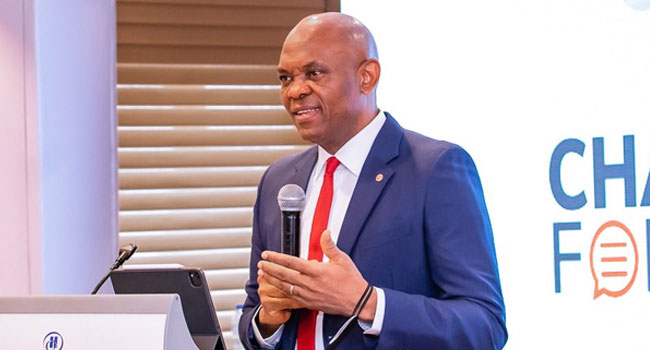
Anthony Onyemaechi Elumelu CFR (born 22 March 1963) is a Nigerian economist, and philanthropist. He chairs Heirs Holdings, Transcorp, United Bank for Africa (UBA) and is the founder of The Tony Elumelu Foundation.

Last year, Nigeria’s most successful businessman and richest person alive in the country, Aliko Dangote, had a meeting with his selected strategists. The purpose of the meeting was simple. To decide among the three presidential candidates, Aliko Danogte would support

The three candidates were; 1). Peter Obi, 2). Atiku Abubakar, 3). Bola Ahmed Tinubu

The candidate’s profile, merit, and demerit were analysed by the gentlemen seated in that room. At the end of the meeting, the consensus was that Atiku Abubakar was a better option to back, and the reasons were not far-fetched. Aside from the special chummy relationship between the businessman and Atiku, Atiku, who ironically clocked 77 today, is pro-business, is the right person for corporate business, and has the right skill set to reposition and revive the dead economy. Also, the fact that the cabal around Tinubu was openly supporting Atiku made Dangote’s decision very easy. The calculation was that Atiku would win, and based on that, Dangote chose to pitch his tent with Atiku Abubakar by supporting his aspiration to become our president, which did not materialise on February 25.

It was said that Dangote donated money as well to Tinubu’s camapign, which was his normal traditional custom to do, but his body language showed he preferred Atiku, whom he believed would have been a better president for businesses and the economy in Nigeria than Tinubu. His arch rival and brother, Abdul Samad Rabiu of BUA Cement, chose to pitch his tent with Bola Ahmed Tinubu and did not donate money to Atiku Abubakar. His first choice was Bola Ahmed Tinubu. His second choice was Bola Ahmed Tinubu.

Rabiu’s support was so personal that he donated his private jets for temporary use by TInubu’s people during the campaign. Tinubu’s wife, Remi, and his aides were flying Rabiu’s private jets during the campaign. The same is true of Tony Elumelu. It was said that Tony’s UBA provided the much-needed cash for Tinubu’s camp during the ill-fated cash crunch and scarcity before the election. No wonder Tony was the first person Tinubu visited in Lagos as a president-elect.Since Lagos is a very small place, news started flying around in a twinkle of an eye. News got into the ears of Asiwaju that Nigeria’s gift to the world, Dangote, is not supporting his aspiration; rather, he has pitched his tent with Atiku.

He was disappointed with the betrayal by Dangote. Dangote built his wealth in Lagos, the Lagos he owns, and he has been supportive of Dangote’s aspirations before now. Dangote fully backing him would have been a way of paying back his generosity to him; not doing so is a big stab in the back. That Dangote did not support him, but rather Atiku, was one of the reasons why Asiwaju stayed away when Dangote refinery was later commissioned by Buhari in the Lagos he owns.

The election is over. Asiwaju is the president, and the chicken has come home to roost. For the first time since the return of democracy in 1999, Dangote is not the favourite of a sitting government. Abdul Samad Rabiu and Tony Elumelu have taken his position because they fully backed Asiwaju during the campaign. “This is the first time the elected government is not particularly aligned with Aliko,” said one senior banker who spoke on condition of anonymity to the Financial Times. “So it has opened a window of opportunity for people to peddle their own influence.” “Dangote is not as influential as he used to be,” said Ricardo Soares de Oliveira, an Oxford professor of the politics of Africa, who described the billionaire as a Nigerian oligarch. At a time when he had bet his fortune on the success of the refinery, that was not a comfortable position to be in, several close observers of Nigeria said.

Matthew Page, a former CIA expert on Nigeria, told the Financial Times that Rabiu donated heavily to the Tinubu election campaign and had been emboldened by his close relationship with the new president. The cement market was smaller after eight years of economic stagnation, he said. “The tide pool has shrunk, and the two biggest lobsters in the tank are snapping at each other.” The biggest casualty from the politics of Dangote is his 650,000 per day Dangote refinery, which has been starved of crude oil by NNPC. Before Asiwaju came in, Dangote had a binding agreement with NNPC.

The agreement was this: That NNPC would invest $2 billion in Dangote refinery, or if they cannot invest in cash,they will provide crude oil worth that amount for Dangote refinery to process. This investment will give NNPC a 20% stake in the Dangote refinery, while Dangote will keep the remaining 80%. NNPC is too broke to drop $2 billion, so they choose to provide $2 billion worth of crude oil in lieu of the cash they were expected to drop so as to own a 20% stake in Dangote refinery.

But there is a problem. Buhari, who was the president when the deal was sealed, is no longer in power. The new Whiz kid is not a fan of Dangote any more, so the guys at NNPC saw the body language, which is the fact that Aliko has not visited Aso Rock since Tinubu relocated to Aso Rock, and they were influenced by that to start playing politics by fuffiling their own side of the bargain. NNPC, which was at the mercy of Dangote when Buhari was in charge, turned to hard nuts to crack under Tinubu.

As of today, the reason why Dangote refinery has yet to refine any drop of crude oil is because NNPC has not supplied the facility with crude oil as they promised to do under the last government. Frustrated by what NNPC is doing and the politics they are playing, Dangote’s Indian manager was forced to say that the refinery would start importing crude oil from trading oil companies abroad since NNPC is not forthcoming. The outburst was forced to move the hands of NNPC, and it worked as NNPC invited Dangote’s guys to the negotiating table.

In a recent interview, Dangote admitted that the issue with NNPC has been solved and refined crude oil will flow soon from his refinery. He also remidned the sharks, circling and baying for his blood, saying that Dangote Refinry is bigger than him, in case they had forgotten. Rabiu of BUA Cement has visited Aso Rock more than four times since Tinubu relocated to Aso Rock Villa. The same is true of Tony Elemelu.

Dangote, the poster boy and darling of the previous Nigerian government, has not been invited once to come, and this speaks to how low he has fallen on the ladder. He only went to inform Mr. President that Bill Gates was coming to town the next day for polio eradication. Stories allegedly floated by BUA Group have accused Dangote of profiting from illegal foreign exchange trades worth billions of dollars. This government is investigating forex allocations made to Aliko Dangote when Godwin Emefiele, the former central bank governor, was in charge of distributing dollars at the official rate to chosen industries at far below market prices, the Financial Times reported. Dangote bet on the wrong horse during the last national election, and now the sharks are circling and are baying for his blood and his multibillion-dollar business empire as well.

Disclaimer: 

The opinions and views expressed in this write-up are entirely those of the Writer(s). They do not reflect the opinions and views of the Publisher (Nze Ikay’s Blog) or any of its employees. The designations employed in this publication and the presentation of materials herein do not imply the expression of any opinion whatsoever of the Publisher (Nze Ikay’s Blog) or its employees concerning the legal status of any country, its authority, area or territory or concerning the delimitation of its frontiers. Equally, the sketches, images, pictures and videos are gotten from the public domain.
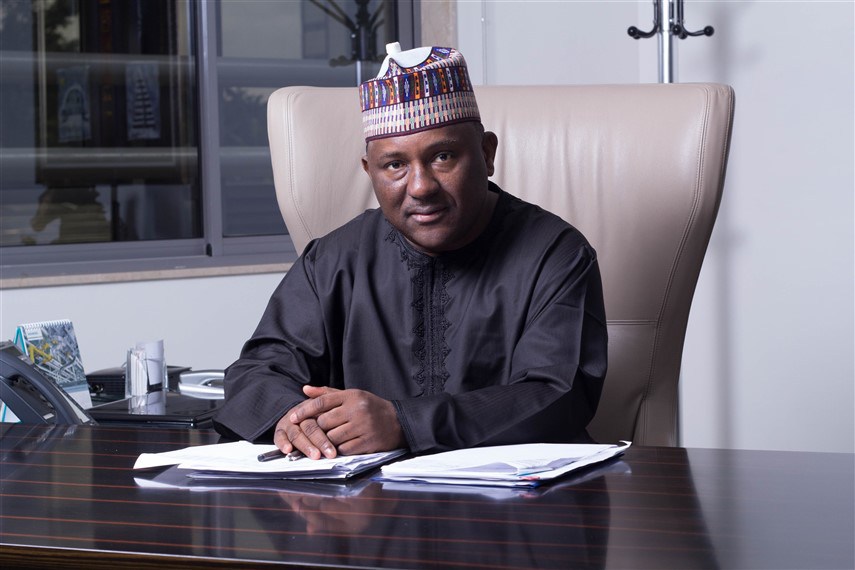
Alhaji Abdulsamad Rabiu is a prominent Nigerian businessman from Kano. He founded BUA Group in 1988 and serves as its Chairman of the Board and Chief Executive Officer.
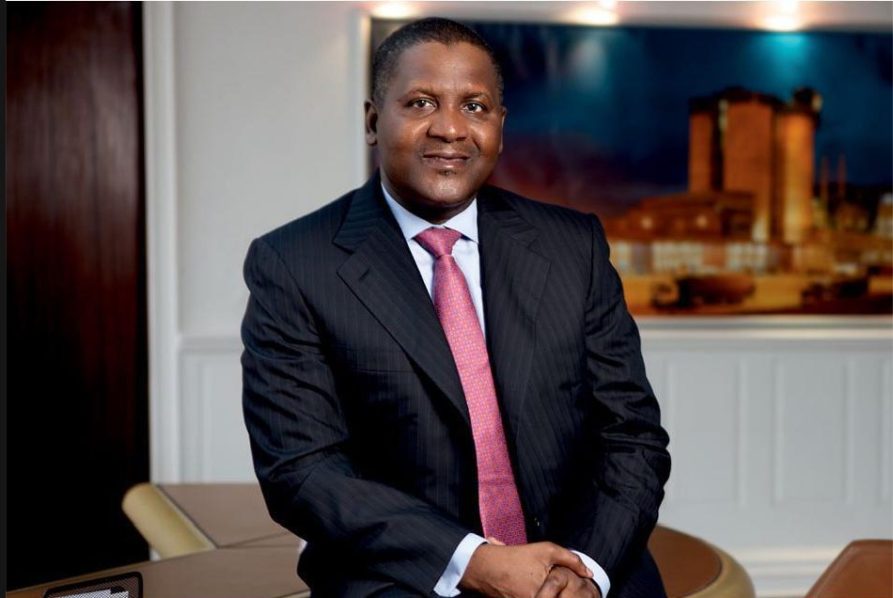
Aliko Dangote is the Chairman of the Board of Directors, Dangote Cement Plc. He is the founder and President/ Chief Executive of Dangote Industries Limited, primary holding company of the largest conglomerate in West Africa.

Syria: The case against Assad By Timothy Bancroft-Hinchey

0
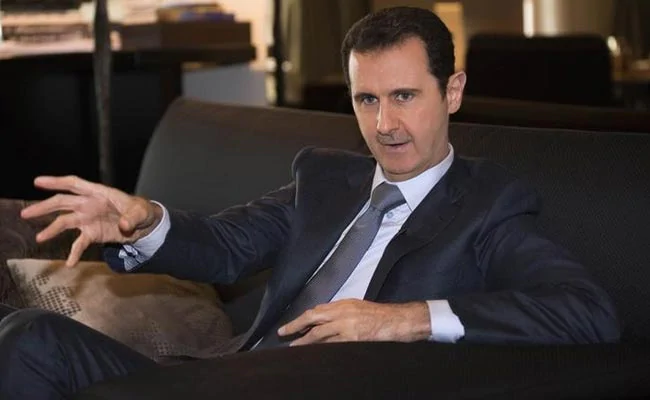
President Bashar al-Assad of Syria

The apparent desperation of those who support the Syrian “opposition”, insinuating that the Syrian Government used chemical weaponry without a shred of evidence, using photographs to prove the case, taken in Iraq in 2003, using dodgy proof from the King of Spin, the BBC, spells out a sorry story similar to those of Libya and Iraq.

Do you remember Colin Powell’s “magnificent” foreign intelligence work providing a smoking gun to justify an attack against Iraq? Photographs of milk factories, complete with a dodgy dossier copied and pasted from the Net from a decade earlier. And this time around, a telling déjà vu from none other than John Kerry, underlining his speech calling for action against Syria with a BBC photo showing a kid leaping over hundreds of bodies lined up in rows wearing shrouds. In fact it was taken in Iraq, in 2003. A decade earlier. Wrong country, wrong decade…but what the heck, eh? Is Congress going to vote for this? Perhaps the members should listen to the people they represent.

Moral of the story: do not use British information as “proof” and do not trust a word US Secretaries of State have to say.Remember the source of the latest “case” against President Assad’s supposed use of chemical weaponry in Ghouta on August 21? The source was Doctors without Frontiers, an instrument financed by corporate elitists, who claimed there were 355 people killed. The corporate media concentrated on the children, they purposefully ignored the Syrian soldiers lying in bed caught in the same attack. So where is the figure of nearly one thousand five hundred dead peddled by Kerry?

Remember the declarations by the United Nations’ Carla del Ponte, a member of the UN Independent International Commission of Inquiry on Syria, that there are “strong, concrete suspicions” that the Syrian opposition forces had used chemical weaponry? Why does John Kerry not bomb them, then?

Remember the declarations made by the United States of America that the Syrian government was “stalling” and not allowing the UN inspection team to carry out its work? While Secretary Kerry was making these declarations, the US government was informing the Syrians that the team did not have the conditions to enter the area under investigation. Then Kerry himself said the investigation came too late to be credible. To note: as soon as it received a request for the inspection team to visit the site, the Syrian government implemented an immediate ceasefire and granted unimpeded access. This, in the words of the US State Department, amounts to “destruction of evidence”.

Moral of the story: do not believe a word John Kerry says; imagine a barefaced liar in charge of a country’s diplomacy. Why, in 2011, Kerry was calling Bashar al-Assad “a very generous man” no doubt remembering the dinner he and his wife shared with the Assads two years previously, smiling politely at each other around the table.

Has the Obama administration informed its citizens of its funding and arming of the Syrian opposition, which includes terrorists with links to al-Qaeda? Has it explained its plans for military action? Does anyone really believe that it will amount to a few cruise missiles or more obviously, will it not be a campaign to topple the Syrian Government and turn the country into a haven for al-Qaeda?

Are the American Catholics aware of the official position of the Vatican, blasting the western powers, claiming there was no evidence against President Assad in the Ghouta attack and taking a firm stand against military intervention? Now for the evidence. The first video in this piece shows clearly the Syrian “rebels” firstly attacking a bus then planning to attack a village using Sarin gas (Please turn on your speakers).

Secondly, Syrian TV showed a photograph of wrapping found in former rebel-held areas, labeled by a Saudi chemical agent factory. Thirdly, rebel arsenals captured by Government troops revealed more chemical agents made in Saudi Arabia and gas masks supplied by the same. Fourthly, a phone call that was intercepted by the authorities reveals a conversation between a terrorist and his handler, a Saudi, incriminating the terrorists in a chemical weapons attack.

Fifthly, communications intercepted by Mossad in the hours after the chemical weapons attack on August 21 from Syrian Defence Ministry personnel reveal messages of panic demanding to know what was going on, in the aftermath of the strike. Why would the Syrian Defence Ministry issue communications of panic demanding to know what happened if the Syrian Defence Ministry ordered the attack? US Intelligence admitted that it did not know why the attack happened, and everything indicates that the highest level of the Syrian authorities did not know why it happened.

So, how does that incriminate President Assad? The United States of America, as we have seen before, claims it has evidence against the Syrian Government, in which case why does it wait so long to reveal what it has, unless it has been buying time to cook the results? Remember Saddam Hussein’s WMD? Sixthly, intercepted communications between two FSA operatives earlier in the year revealed plans by the Syrian opposition to carry out a chemical weapons attack in an area around one square mile.

Seventh, any act of war must necessarily and always be subjected to a separate resolution from the UN Security Council. This is a basic and underlying principle of international law consecrated in the UN Charter, signed by the USA. If Washington does not wish to follow the documents it signed then it should leave the UNO – US out of UN, UN out of US.

Point 8, the threats, armed intervention and interference by France, the UK and the US (the FUKUS Axis) in the internal affairs of a sovereign state are in contravention of international law. Point 9, the FUKUS Axis has responsibility for the acts of butchery, murder, rape and torture perpetrated by the western-backed terrorists in Syria, including the slitting of throats of 120 Kurdish children, the decapitation of others, the massacre of entire villages; the chaining of toddlers to fences to witness the murder of their parents, as their mothers were disemboweled and their bodies raped by these demons financed and equipped, directly or indirectly, by Obama and his friends.

“How is it possible that any country would use chemical weapons, or any weapons of mass destruction, in an area where its own forces are located?” President Bashar al-Assad. Yes, it is undeniable that international law was breached in Syria but this does not mean that Syria breached international law.

In conclusion, there is no case against President Assad, who has a 70% approval rating among the Syrian population. Source: NATO. There is a huge and growing case against Presidents Obama and Hollande and Prime Minister Cameron. As they sit smugly calling President Assad a barbarian, do they remember the acts of those they support, such as slicing breasts off women, gang rape, slitting of throats, decapitations, the sex trade in Syrian women and children by Jihadi Islamist fanatics, harvesting human organs, taken from the bodies of refugees while they are still alive, mostly carried out in Turkey and the starvation of hundreds of thousands of civilians in Aleppo by their terrorist forces?

No, they do not because Messrs. Obama, Hollande and Cameron are the pawns of the banking lobby which has its eyes on Syria’s sovereign fund and the energy lobby which has its eyes on shale gas drilling and oil reserves. And the concrete “evidence” the USA claims to have is hearsay, rumour and rhetoric, in plain English, piss and wind, with nothing concrete about it. Is this what Congress is going to vote for?

September 03, 2013

Disclaimer: 

The opinions and views expressed in this write-up are entirely those of the Writer(s). They do not reflect the opinions and views of the Publisher (Nze Ikay’s Blog) or any of its employees. The designations employed in this publication and the presentation of materials herein do not imply the expression of any opinion whatsoever of the Publisher (Nze Ikay’s Blog) or its employees concerning the legal status of any country, its authority, area or territory or concerning the delimitation of its frontiers. Equally, the sketches, images, pictures and videos are gotten from the public domain.
Are we any different from the male lions, if not for today’s DNA! 

2
An Alpha male Lion in his Liondom

A Lion in all his majesty, awe and power, lacks the requisite intelligence to decipher when another lion’s cub is passed on to him. He will diligently be a father to the cub as long as it is delivered in his pride. Yet nobody dares play such a game with the Zebra. Plain Zebras maintain a very strict sexual relationship such that a Mare cannot engage in a sexual relationship outside the family led by the dominant Stallion. If she ventures out and gets pregnant, no one will know, but at birth, during the naming ceremony when the Foal is presented to the entire family, the Head honcho will carry out a DNA test to ascertain the paternity of the Foal. This is done by smell. Every family member has a distinct smell easily recognisable by other family members. So if the newborn Foal is a product of wild oats sowing, the Alpha male will brutally kill it in a way that other female Zebras would be watching for deterrence purposes.

But Lions run an unofficial promiscuous mating system, where females mate with more than one lion within a coalition of brothers or friends. However, where there’s a single Alpha Lion, the females all submit to it. Female lionesses have been observed to play the promiscuity game especially when they encounter stranger Lions that are well chiselled with a very dark mane. In Liondom, the darker the mane, the higher the testosterone, and the higher quality DNA they’d love to pass on to their offspring. So lionesses rush such lions. Interestingly, sexually experienced lionesses have devised ways of playing the lead Lions. A Lion’s roar is like a DNA result circulating through the wave. 

A roar can be heard within more than a kilometre radius. It is both a warning and a message. A warning that if you can hear the roar, you are either intruding or trespassing through private property. And it is a message to let you know that the roarer is challenging all existing protocols. Another lion’s roar is processed differently by another lion and another lioness. While another lion can calculate the age, muscle mass, strength and size of the roarer, a lioness will process all these and more. From that roar, she can calculate the quality of testosterone, the size, age, and above all, the sexual prowess of the owner of the roar. Armed with such information, she starts working on the possibility of an attack and how she would protect her cubs from infanticide. That is if the invading lion has all the qualities she would desire in a mate.

To this end, she might be sneaking out for a sex romp with the stranger without the knowledge of the Alpha male in the pride. Often, it takes months from the time a bandit lion announces his presence within a territory, to the time he makes a move. This gives the Lioness an opportunity to the scheme. She knows that Lions do not kill their cubs, so this helps the female strategies of reducing infanticide through confused paternities and enhancing genetic variability amongst litters. When the Lion with the eardrum-blasting roar shows up, the resident male would decide whether to fight or flee. His choices are determined by the information he gets from processing the roar of the intruder. No two lions have the same roar, the same way no two Zebras have the same stripes.

A Lion hardly surrenders his pride without a fight and these fights mostly lead to deaths or serious injuries. Intriguingly there are occasions the pride lionesses can join to defend their Alpha male. But in all, head or tail, a Lion is always the loser and that’s why they die much earlier than the females. A typical female can outlive four to five different Alpha males.

Disclaimer: 

The designations employed in this publication and the presentation of materials herein do not imply the expression of any opinion whatsoever of the Publisher (Nze Ikay’s Blog) or its employees concerning the legal status of any country, its authority, area or territory or concerning the delimitation of its frontiers. Equally, the sketches, images, pictures and videos are gotten from the public domain.
Rihanna Devasted and broken down as ASAP Rocky Threatened to End Their Relationship Over Disregard

4
Rihanna, left, and ASAP Rocky appear at the Off-White Ready To Wear Fall/Winter 2022-2023 fashion collection, in Paris on Feb. 28, 2022.

Rihanna, the renowned singer, reportedly experienced a breakdown in tears after her partner, Asap Rocky, expressed his intentions to end their relationship due to alleged disrespect. The incident has left Rihanna emotionally distressed and contemplating the state of their relationship. According to sources, tensions arose between the couple after Rihanna did something that offended Asap Rocky, whose real name is Rakim Mayers. The rapper was deeply hurt by her actions and felt disrespected, prompting him to consider ending their relationship. Asap Rocky, known for his strong-willed personality, made it clear to Rihanna that he would not tolerate such behavior.

Upon hearing Asap Rocky’s intentions, Rihanna was devastated and broke down in tears. The emotional toll it took on her was clearly evident, highlighting the importance of their relationship to her. She deeply regretted her actions and understood the implications they had on their love life. Rihanna now finds herself at a crossroads, unsure of how to salvage their partnership and make amends with her partner. The media has extensively covered Rihanna and Asap Rocky’s relationship, enamored by their star power and combined influence. The news of their potential breakup has only heightened public interest in their personal lives. Fans of both artists have expressed concern and hope that they can resolve their issues and continue their relationship.

Asap Rocky and Rihanna, known for their individual successes in the music industry, officially confirmed their romantic relationship in July 2021. Prior to that, they had been friends for years, collaborating on music projects and even sparking dating rumors in the past. Hence, their relationship held great significance not only for personal reasons but also due to their musical connection. The impact of the reported disrespect Rihanna demonstrated towards Asap Rocky has had profound repercussions on their relationship. Trust and respect are fundamental pillars of any partnership, and this incident has caused a rupture in their bond. Both artists will need to reflect on their actions and decide if they can overcome this hurdle or if it is better to part ways.

As fans and the public eagerly await updates on the status of their relationship, the situation serves as a reminder that even celebrities face relationship challenges. The emotional breakdown Rihanna experienced and the possible breakup illustrate that fame does not exempt individuals from difficulties in love. Ultimately, the outcome will reveal whether Rihanna and Asap Rocky can mend their relationship or if they will go their separate ways.

Disclaimer: 

The opinions and views expressed in this write-up are entirely those of the Writer(s). They do not reflect the opinions and views of the Publisher (Nze Ikay’s Blog) or any of its employees. The designations employed in this publication and the presentation of materials herein do not imply the expression of any opinion whatsoever of the Publisher (Nze Ikay’s Blog) or its employees concerning the legal status of any country, its authority, area or territory or concerning the delimitation of its frontiers. Equally, the sketches, images, pictures and videos are gotten from the public domain.

Legend in all ramifications by Kelechi Deca

5
Craig, the largest living African male elephant.Photograph by Suresh Shetty

Craig is the largest living Elephant in the world. Born in 1972, he is 51 years old. This African savanna elephant weighed about 10,886 kilograms and was 13 feet (3.96 meters) tall at the shoulder! Most elephants don’t get that large, but African elephants do grow larger than Asian elephants.

With a phallus that is about 40 inches and a diameter of about 86 inches at the base. It is S-shaped when fully erect and has a Y-shaped orifice which has enabled this legend to dutifully fulfill its ministry in the last 40 years sowing seeds of greatness across the savanna and blessing us with great genes of giant African Savanna Elephants. African elephants become sexually mature at age 10–12, whereas Asian elephants become sexually mature about age 14. It is during that period that males leave their natal herd (herd of origin) to live either singly or in small herds with other males.

According to the photographer, Suresh Shetty Craig already has age-related wear and tear on his teeth which may make it difficult for him to eat. If he’s unable to consume enough food to sustain himself, he may become an ancestor.Unfortunately male Elephants lack the bonding and other biological advantages that females have which makes them live far longer.

In Elephantdom, a 50 year old male is old, but a 50 year old female is a middle aged Elephant in her prime being prepared for the role of Matriarchal leadership because she has about 20 to 30 more years to go. Some live up to 100. Interestingly, it is not only in Elephants land but in virtually all living things from bacteria to Iroko trees. Females outlive males.

Researchers have looked at the lifespans of 101 different species, from sheep to elephants, and found that females lived an average of 18% longer than males for more than 60% of the species studies. In humans, females tend to live around 7.8% longer. A giant in all respect!

Disclaimer: 

The opinions and views expressed in this write-up are entirely those of the Writer(s). They do not reflect the opinions and views of the Publisher (Nze Ikay’s Blog) or any of its employees. The designations employed in this publication and the presentation of materials herein do not imply the expression of any opinion whatsoever of the Publisher (Nze Ikay’s Blog) or its employees concerning the legal status of any country, its authority, area or territory or concerning the delimitation of its frontiers. Equally, the sketches, images, pictures and videos are gotten from the public domain.

AN OPEN LETTER TO GOV SIM FUBARA By Dr. Ugo Egbujo 

3
Governor Fubara of Rivers State and his predecessor and godfather, the Ex-Governor of Rivers State and the current Minister of FCT, Nyesom Wike

William Shakespeare said, “Uneasy lies the head that wears the crown.” Had Shakespeare encountered your political godfather, he might have advised you not to take a crown from him. Not because your head is too small for the crown but Shakespeare had warned in The Tempest, “What is past is prologue.” In other words, history will always come to haunt the present. Edmund Burke said it differently, “Those who don’t know history are destined to repeat it.”

The man crowned Ali Sherrif. Once Sheriff became tired of being his zombie, he went for Sheriff’s jugular. Then he crowned Chief Secondus and put him in his pocket. Once Secondus crept out of his pocket to get fresh air, he discovered that Secondus was a chameleon. After discarding Secondus, he crowned Professor Ayu. When Ayu refused to be used like an aju — a head cushion for carrying loads, he discovered that Ayu was corrupt. Had Shakespeare encountered that your godfather, he might have said to you, “Beware of a borrowed crown from the green-eyed political merchant of Obio Akpor.”

Governor Fubara, many believe your chickens have come home to roost. Shakespeare would have said, “ You have set your life upon a cast, so you must stand the hazard of the die.” But don’t despair. The priority now is to dismantle the megalomania. I listened to you at the House of Assembly, and I heard the voice of a tormented man. That day, after the police baptized you with water and fire, you broke your shackles and made a promise to the people.

The youths gathered but not to worship you. They gathered because when you shouted wolf! wolf! wolf! They came to dare the wolf. In daring the wolf they reasserted their proprietary rights over state power. Yes, power belongs to the people. But if you now say you belong to the wolf family, then you are on your own. Remember, Shakespeare said, “Cowards die many times before their death.”

In May 2023, the Wagner boss had Putin in a chokehold. His men had besieged Moscow. Putin was his godfather. But he thought Putin’s iron-fisted rule and recklessness in Ukraine had left too much anguish and misery in Russian homes. Then the President of Belarus intervened and preached peace. The Wagner boss, who had drawn his sword, sheathed it. He listened to peacemakers and went to Belarus. Now, he is in the grave.

Some say he who fights and runs away lives to fight another day. But if a Man marries a woman for his friend and buys him a mat, is the groom supposed to share his bride and bedroom with the benefactor in the name of loyalty? The godfather has said that you want to steal his structure. And he is singing “Agreement is agreement.” You know the agreement you reached with him. But how can he marry for you and seek to help you consummate the marriage?

Shouldn’t he go to his house to receive the accolades from there? Your critics say that a man who has collected a wasp with his head must endure the stings. Because you can’t like the anus in that Igbo proverb claim ignorance. The anus said that had it been informed of the waywardness of its neighbour it would have chosen to live elsewhere. I will resist the urge to join them in being judgmental until you make up your mind.

Now, the peacemakers are circling and peddling platitudes. Some are regurgitating liturgies written for them by your megalomanic godfather. They have called you a rascal ingrate. They are insinuating that you have bitten the fingers that fed you. They have told the world that you have set fire to the bridge that ferried you from obscurity to the limelight. But you know the truth. Some of these clowns are labouring under the same bondage. Mahatma Gandhi said, “When a slave starts to take pride in his fetters and hugs them like precious ornaments, the triumph of the slaveowner is complete.”

You gave the man your all. The EFCC declared you wanted. You stayed loyal and took the shame. You didn’t ask to be chosen. You were promised a free hand to run the state. You didn’t lobby to be his heir. He promised not to make you his puppet and let the people mock you. This feud didn’t start today. You have been humiliated. You have been treated worse than a houseboy. You have swallowed indignity without salt. For five months, you were a mere decoration in the government house. Permit me to say that you were a dummy governor. The man sat on your scrotum and you took it smiling. Now he has poked his fingers in your eyes. If the gods wanted you to remain as government furniture, they wouldn’t have allowed him to start an impeachment process against an innocent man whom he had used like a rag. But the choice is yours. If you go with the peacemakers like a simpleton, it would mean a quiet return to your Egypt.

But, “Golden lads and girls, all must, as chimney sweepers, come to dust.” That was what Shakespeare said about life. You echoed it at the House of Assembly, “If I die, I die.” The boys in the street in Port Harcourt who came to fight for you would say, “All die na die.” You might not have come to equity with washed hands. But the man dies in the fellow who stays silent like a sheep in the face of naked tyranny and oppression. If You go with the peacemakers, they will return you to your beautiful cage. You might get more milk for some time. But before long, you will be sold for peanuts in the market.

Life is a tale told by an idiot full of sound and fury signifying nothing. That was what Shakespeare said. And Shakespeare didn’t even come across you and your political father. The House of Assembly has been razed. Some of the youths that showed up for you have been arrested. Your godfather called it a small internal wrangling. You said it was a father-son misunderstanding. Those who stood by you have now become meddlesome interlopers in a family feud. Idle busybodies. Our ancestors in Igbo land warned us not to discard even worn baskets because we would need them to offer sacrifices to the gods. I know how you feel. You are now running with the hare and hunting with the hounds. But don’t listen to reprobates when they talk about betrayal. The government is not the Sicilian mafia. Whatever you owe him can be paid to the people through selfless service.

In conclusion, Mr governor, you must fight or resign. The vultures are circling. Only your fall will appease the jilted god with a blinding ego. Now, you have drawn your sword. You will sheathe at your peril. You must charge through and dismantle the contraption. Otherwise, you must tuck in your tail and run away. You can’t leave your carcass for the wild dogs. To sit and fiddle with the idea of reconciliation is to submit your scrotum to a jilted lover to cure your elephantiasis. 

If you do that, neither kinsmen nor in-laws can save you from castration. The fight has come to you. The people are with you. They are hungry and deprived. You can’t serve them from that gilded cage. Don’t let them down. But once you chicken out, you must flee. Every creature must meet death. But a grasshopper that dies in the hands of an Okpoko dies prematurely, and dies because of deafness. A good name is better than riches and power. I have emptied my mouth

My greetings to your godfather.

Disclaimer: 

The opinions and views expressed in this write-up are entirely those of the Writer(s). They do not reflect the opinions and views of the Publisher (Nze Ikay’s Blog) or any of its employees. The designations employed in this publication and the presentation of materials herein do not imply the expression of any opinion whatsoever of the Publisher (Nze Ikay’s Blog) or its employees concerning the legal status of any country, its authority, area or territory or concerning the delimitation of its frontiers. Equally, the sketches, images, pictures and videos are gotten from the public domain.

Murtala Mohammed backed the coup against Gowon for appointing Igbo man NNPC GM — Elder Edwin Clark By Henry Umoru

0
Murtala Mohammed's Involvement In A COUP Against Gowon For Appointing IGBO Man - Elder Edwin Clark

Edwin Clark reveals intrigues before the 1975 Coup! How, and why he told Murtala Mohammed he was corrupt!

Former Federal Commissioner for Information and South South leader, Chief Edwin Clark has said that one of the reasons the Government of former Head of State, General Yakubu Gowon was overthrown was the appointment of of Engr. Odoh, a Kalabari man from Rivers State was the General Manager of Nigerian National Oil Corporation (NNOC), which became Nigerian National Petroleum Company (NNPC). Clark who noted this in his 688-page Brutally Frank, his autobiography, said that the late former Head of State and Federal Commissioner for Communications in Gowon’s government and some others were not happy with the appointment of Odoh, whom they saw as an Igbo man and therefore a security risk to the country. He said that when Gowon announced Engr. Odoh as the new General Manager which was accepted by a majority of Council members, the then Brig. Gen. Muhammed immediately took his case and swagger stick and walked out without saying a word.

THE OVERTHROW OF GENERAL YAKUBU GOWON’S GOVERNMENT

Clark wrote: “I have read several views on why General Yakubu Gowon’s government was overthrown on July 29, 1975. Dan Agbese in his book, Ibrahim Babangida: The Military, Politics and Power in Nigeria, gave some background when he rightly asserted that General Yakubu Gowon’s government was doing extremely fine economically and had lots of money for the development of infrastructure across Nigeria. The Head of State also used the available resources at his disposal to earn the respect and admiration of the working-class people in the country when he appointed the Chief Udoji Commission to review the salaries and allowances of government workers. That therefore made General Gowon a “Man of the Moment”.

“However, while the civil and public servants were basking in the euphoria of the salary review, some military officers – including those in Gowon’s cabinet – had their reservations about his administration. On page 109 of the book, Agbese narrated a discussion Col. Ibrahim Babangida and Col. Shehu Yar’Adua had in January 1975 on their disenchantment with Gowon’s administration. Further in that discussion, Col. Yar’Adua was said to have announced to his colleague that he was planning to stage a coup against Gen. Yakubu Gowon. Several reasons were given for the proposed coup which included the belief that Gowon’s 3R policy of Reconciliation, Reconstruction and Rehabilitation was quite unnecessary and that Gowon’s shift in the earlier proposed 1973 date of handing over power to a democratically elected civilian government was a plot for him to continue holding on to power, amongst several others. “It was those two officers who brought in others to plan and execute the July 1975 coup. According to the author, the inner core of the coup plotters included Col. Yar’Adua, Col. Babangida, Col. Joe Garba, Col. Anthony Ochefu, Col. Ibrahim Taiwo and Col. Abdullahi Mohammed. While it was stated in the book that some senior officers like Brigadier Theophilus Danjuma, Brigadier Olusegun Obasanjo, Brigadier Martin Adamu, Brigadier Murtala Mohammed, Brigadier Olufemi Olutoye and some others were contacted and informed of the plot of the inner core. Murtala Mohammed was reported to have told them to go ahead with the plan and that he would try to protect them if it failed; however, he would not be a part of it. A similar posture was taken by Danjuma when he was said to have informed the coup plotters not to join them nor stop them, but he warned them to avoid bloodshed.

“It seems the coup plot was already on when General Gowon, for reasons best known to him, decided to reshuffle his cabinet in late 1974 and I was pleasantly surprised that he brought me into his government in 1975. From my family background and experience in Col. Ogbemudia’s government in the Mid-West State as a two-time Commissioner and as Chairman of various boards and companies, loyalty to the government and country was paramount, but this was not so at my new duty post. In the Federal Government Cabinet where I became a member, I soon discovered that some members were very recalcitrant and rather disloyal to the government and the nation. “It may be necessary to now give a personal view of why I think the 1975 coup was staged against a very humble, respectful and dignified Head of State, particularly by those close to him (military officers). As Federal Commissioner for Information, I worked very closely with Mr. M.D. Yusuf was a fine polished gentleman who was the Commissioner of Police Special Duties which is today known as the Director-General of the Department of State Services (DSS). M.D. Yusuf later became the Inspector General of Police. We used to exchange notes once or twice a week at my residence. “It may be necessary to mention a few of the incidents that happened that exposed the resentment and disloyalty of some of the senior officers, particularly those occupying the rank of Colonel.

These aggrieved officers were headed by a fine military officer, the late Col. Shehu YarAdua whose father was the Minister of Lagos Affairs in the First Republic when Alhaji Tafawa Balewa was the Prime Minister and Dr. Nnamdi Azikiwe was the Governor-General. “Other officers associated with this group included Col. Wushishi, who later rose to the rank of Major General before he retired, and Col. Joe Garba who has an affinity with General Yakubu Gowon and was Commander Brigade of Guards, Dodan Barracks. Gowon housed him and depended on him. One thought the reason for putting him there was the relative loyalty and outward affection of a younger brother whose appointment as Brigade Commander at Dodan Barracks was to ensure the safety and security of the Head of State. “I noticed that between 1973 and 1974 when I was the Commissioner for Finance in the Mid-West under Ogbemudia, Col. Joe Garba once visited Benin City and he was quartered in our No. 2 VIP Guest House along Golf Road. I visited him one evening at the guest house and we had a very cordial discussion as to his responsibility as Brigade Commander in Dodan Barracks. It was then he told me how close he was to General Gowon. He and Joe Garba are Angas from Benue/Plateau State and were married to Victoria Zakari a trained nurse in 1969.

“During our discussion, the telephone rang and he took it, gave a salute and responded, “Yes sir.” The person at the other end conversed with Col. Garba in their native language and after the phone conversation, he sat down and informed me he was speaking to his big brother, Gen. Yakubu Gowon, the Head of State. It therefore came as a surprise when the announcement of the coup overthrowing Gen. Gowon’s government was made by Col. Garba (from Kanke Local Government of Plateau State), I almost melted. I was fully aware of grumbling among some Nigerians and a few open critics of Gen. Gowon, both military men and some politicians. I remember that after having a discussion with Gen. Yakubu Gowon on his misgivings concerning certain aspects of politics, he set up a committee to work out the details of how and when civilian administration should be reintroduced.

“The committee was made up of technocrats, including some university lecturers and professors. Incidentally, I was invited to be part of that committee and also remember that our late radical lecturer in ABU, Professor Tahir from Bauchi State was also a member. Unfortunately, the committee had not submitted its report before the government was overthrown by soldiers. The growing tension being created by these dissatisfied young military officers made Gen. Yakubu Gowon reshuffle his cabinet in January 1975 to enable him to bring into his cabinet some of these young officers. That was how Col. Wushishi, Capt. Dan Suleiman, Capt. Olumide was brought into the cabinet. “Another embarrassing incident which showed the disloyalty of some military officers was when General Gowon was to attend the Commonwealth Conference in the West Indies in 1975. At that time, there was a general strike action by the Nigeria Airways pilots.

The issue at the time was how the Head of State would travel to the West Indies. Some suggested that an Air Force Captain should fly him to the West Indies. When we were sure that all was ready for him to fly to the West Indies to attend the conference, and in my position as Federal Commissioner for Information and Culture, I organised dancers to go to the airport to bid the Head of State farewell. I was approached by some military officers, including one Military Governor that it was not necessary to arrange such a reception for Gen.Gowon because he did not deserve it. I disregarded the suggestion. “One of the immediate causes for overthrowing Gen. Gowon’s government was the appointment of Engr. Odoh, a Kalabari man from Rivers State is the General Manager of Nigerian National Oil Corporation (NNOC), now Nigerian National Petroleum Company (NNPC). The government set up machinery to appoint a Nigerian to take over the management of the establishment. The Minister of Mines and Power was Alh. Shettima Ali Monguno is a polished and well-educated northerner from Maiduguri. His candidate for the position was Engr. Abba Gana. Chief Philip Asiodu was the Permanent Secretary of that Ministry. I discovered at the meeting that both of them had separate candidates.

While the Minister suggested Engr. Abba Gana who hailed from Maiduguri, Engr. Odoh was sponsored by Chief Philip Asiodu. Another name being mentioned was Engr. Gbadebo from Western Nigeria. Some of us in a memo suggested the retention of an expatriate General Manager and that a Nigerian should be appointed to understudy him. The Head of State however insisted that a Nigerian should be appointed. We now had three contestants for the position. “In discussing these names, a section of the members led by Brigadier Murtala Muhammed, Federal Commissioner for Communications strongly objected to Odoh’s nomination because he was an Igbo man and a security risk. “A member of the Council then asked why Odoh was regarded as a security risk to which Murtala Muhammed responded that he was an Igbo man who identified himself as Biafran during the civil war and was responsible for the destruction of the refinery in Port Harcourt. Some of us felt that statement was irresponsible and unpatriotic, considering the fact that Gen. Yakubu Gowon had made an effort to bring the country together after the civil war. It was now five years post-civil war.

“In my contribution, I wanted to know from His Excellency, the Head of State, how it was not dangerous and discriminatory for an Igbo man to be called a security risk, five years after the war. There would have been no need to fight a war where we lost so many lives and property to bring Nigeria together. I noticed that Gen. Gowon was upset from his countenance. He thereafter announced Engr. Odoh as the new General Manager of NNOC, which was accepted by a majority of Council members. Brig. Gen. Muhammed immediately took his case and swagger stick and walked out without saying another word. “Three days later, M.D. Yusuf, Commissioner of Special Duties, visited me in the evening at my residence, 23 Temple Road Ikoyi. During the discussion, he informed me that Brig. Gen. Muhammed went to Enugu to meet the Army Area Commander and did not bother to pay a courtesy call to the Administrator of East Central State, Dr. Ukpabi Asika who was at the time away on an official visit to Oji River Power Station. He went further to say that he paid similar visits to other military headquarters, including Calabar, Port Harcourt and Benin City and that he suspected he was planning something.

“We were later informed that Her Majesty, the Queen of England may visit Nigeria in the month of September 1975. During that period, our Four-Year Development Plan had been prepared and approved by the Council. I was therefore directed by the Head of State to proceed to London to discuss the visit with the British press and to also take along with me several copies of the Four-Year Development Plan, which should be delivered to the Nigerian High Commissioner, His Excellency, Alhaji Sule Kolo. “Coincidentally, Brigadier General Murtala Muhammed and Colonel Dan Suleiman were also travelling the same day with me on a Nigeria Airways flight. Our flight could not land in Kano due to some technical faults, so we had to return to Lagos. During this period on our return, we sat together at the VIP lounge at the airport in Ikeja. There were many that sat together, including M.K.O. Abiola of IT’T fame and Alhaji Isiaku Rabiu, a wealthy man from Kano, also travelling with Gen. Murtala Muhammed. I understand his son, Alhaji Abdul Samad Isiaku Rabiu, the Chairman of BUA Group, continued with the family business. Other prominent passengers were Senator Victor Akan from Cross River and Mr. Silas Daniya, MD of NIDB. My Permanent Secretary, Alhaji Tatari Ali was also at the airport to see me off.

“My disagreement with Gen. Murtala Muhammed continued when he asked me why I was defending Gen. Gowon and his government every time and whether I did not know that they made him the Head of State and could also remove him if they wanted. My answer was short: “I am a practising lawyer, ready to go back to my practice anytime it pleases you and your colleagues to remove Gen. Gowon from office, but I would like to know what you think Gen. Gowon and his government are not doing well.” “He declared that Gen. Gowon was inefficient and corrupt. I answered that he was not corrupt and added that if corruption is defined as spending more money than what you are officially entitled to, then he (Murtala) was also corrupt. He angrily asked in what way he was corrupt and I said, “I know your salary as Brigadier General but you have done things your salary cannot afford.” He retorted that I should state them. “I said, “Your wife’s baby was dedicated at your residence on 2nd Avenue Ikoyi. You killed 2 cows and held a lavish party where Ebenezer Obey from Abeokuta played. Col. Shehu Yar’Adua was the MC and I also attended. You gave me part of the meat. Secondly, when you were a Colonel in the Nigerian Army in charge of the signals, you used to visit London on several occasions and lodged in a hotel close to Buckingham Palace.

I was the Commissioner for Education in the Mid-West State and I used to visit London and stay in the same hotel without seeing or meeting each other. You used to drive a Jaguar car whenever you were in London and to crown it all, you have just asked Abiola to ask his Manager to send money to your mother in Kano since we could not land in Kano and I asked if you are a shareholder in ITT” Everyone at the VIP Lounge laughed at my statement. “The military attaché in London was Col. Baba Usman and he was to meet Murtala at Heathrow Airport, while Lawrence Emuoakpor who was the info attaché in London was to meet me at the same airport. Fortunately for me, my Permanent Secretary, Alhaji Tatari Ali from Bauchi who later became the elected Governor of Bauchi State was able to inform the info attaché to go to Gatwick Airport that we had changed our flight from Nigeria Airways to BOAC, which had its base at Gatwick Airport and I believed such a message was not sent to the military attaché who must have gone to Heathrow Airport.

“I think we were in London for 2 days before the coup took place. While I was in London, I had an audience with the Nigeria High Commissioner, Alhaji Sule Kolo, and delivered the Four-Years Development Plan as directed. He then invited me to lodge at a very big hotel at the strand very close to BBC Bush House. On arrival, I met my former boss, the Governor of Mid-Nest State, Col. 5.0. Oebemudia, the First Lady, Mrs. Victoria Gown and her children and Mr. Moses Ihonde, a close friend of General Gowon and a dedicated Christian From Sabon Gida Ora in Mid-West State, now Edo State. Where it was expected that he would hand over the chairmanship of OAU to Gen. Idi Amin Dada. I added that they suggested that he should send a representative who would then hand over the chairmanship to Idi Amin Dada. “They think you are too decent to hand over the Chairmanship yourself, I told him. He retorted by asking “Who are they to interfere with the affairs of Africa?”

Then I asked. “Sir, must you really go?” and he said, yes. “Sir, Your Excellency, are you sure of the state of security in the country? Because we have unconfirmed information that all may not be well if you travel” I added. He said everything was okay. The call ended and I returned to my seat. “Gen. Gowon’s wife then asked whether they were planning a coup and I replied in the negative We left for our separate places in London after lunch. The next day, I got a telephone call from one very tall gentleman, Alhaji Galadima from Borno who informed me of the coup against Gen. Gowon the previous night and that General Muhammed who had been holding meetings at his hotel with officers in London and Europe at the time and had been flown-in in a KLM flight to Nigeria via Amsterdam to take over the leadership of the government. “He advised me not to return home as soldiers were posted to surround my house from the moment the coup happened. He also said that the ADC to Gen. Gowon, Col. Wilbert who was sent by Gen. Gowon to bring a certain briefcase to Kampala was detained in Nigeria and he was shocked and surprised that Col. Joe Garba, a relation of Gen. Gowon and close confidant and Head of the Brigade of Guards was the one who made the announcement that Gowon’s government had been overthrown for corruption, inefficiency and refusal to hand over to civilians.

“Professor J. P. Clark, my younger brother, phoned to inform me that he took a lorry to pack my things from the government quarters but there were soldiers who prevented him from doing so. I then asked my children and my maid. He said he did not see them and I became worried. However, minutes later, I got a call from Mrs. Evie Ejiwumi who was an Occupational Physiotherapist at LUTH when the coup was announced, she rushed to my house and collected my children and some papers in my bedroom because she did not want to leave them behind. Recently, when I was discussing with Gen. Alani Akinrinade (Rid), he said he was in London at the time of the coup and had been invited to Murtala Muhammed’s meeting but did not attend. He however confirmed that some senior officers met with Muhammed at his hotel about the coup, and that he was first invited to take over. “It is therefore not true that Murtala Muhammed did not know about the coup, and that he was first invited to take over. Perhaps at this juncture, it is necessary to comment on the role of Brigadier General Murtala Muhammed during the Nigerian Civil War.

“It is important to note that when Murtala Mohammed was in charge of the Federal troops trying to cross over into Onitsha from Asaba to capture the city from rebel forces during the civil war, he encountered great difficulties and was advised against frontal tactics by Lt. Col. Larry Konyan and Lt. Col. Alani Akinrinade. Murtala Mohammed, however, he disregarded the advice and had many of his troops killed and drowned in the River Niger. It was indeed a great disaster and he could have been sent away from the army for that, but Gen. Gowon retained him for reasons best known to him and posted him to Signals. He later appointed Murtala as one of the Federal Commissioners. It is however sad that Murtala turned ungrateful to his benefactor. I have included this account here to show that Murtala Mohammed like any other person was not a perfect man, neither was he infallible.

Even though he did not participate in the coup in Lagos, he was actively involved in the planning in London.”

Disclaimer: 

The opinions and views expressed in this write-up are entirely those of the Writer(s). They do not reflect the opinions and views of the Publisher (Nze Ikay’s Blog) or any of its employees. The designations employed in this publication and the presentation of materials herein do not imply the expression of any opinion whatsoever of the Publisher (Nze Ikay’s Blog) or its employees concerning the legal status of any country, its authority, area or territory or concerning the delimitation of its frontiers. Equally, the sketches, images, pictures and videos are gotten from the public domain.
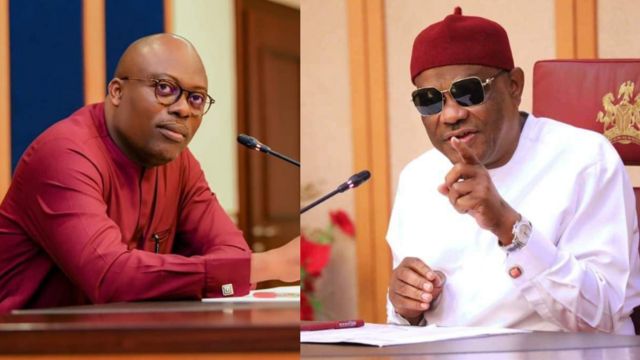
The Igbo People Of Nigeria – JEWS OF AFRICA By Dr. Leonard Madu

0
The Igbo People Of Nigeria

In a White House memo dated Tuesday, January 28, 1969 to President Nixon, former Secretary of State, Henry Kissinger describes the Igbos as “the wandering Jews of West Africa-gifted, aggressive, westernized, at best envied and resented, but mostly despised by their neighbors in the federation”(foreign relations document, volume E-5, documents on Africa 1969-1972).

Kissinger’s description aptly portrays the Christian Igbos and their experience in Nigeria. Over the years, the Igbos have been the victims of numerous massacres, that they have lost count. Most of the violence directed against the Igbos have been state sponsored. One can say that the Igbos knew how to spell “state sponsored terrorism” before the rest of the world did. The state sponsored terrorism directed against the Igbos in 1966, led to the declaration of the Republic of Biafra by the Igbos and subsequent civil war. Over two million Igbos died in the civil war, primarily by starvation. One will not be wrong, if they call the Igbos the “Tutsis” of Nigeria. Today, an Islamic terrorist Conglomerate led by the dreaded Boko Haram are still slaughtering Igbos and other Christians in Northen Nigeria. Igbos have always seen themselves as a bulwark against the spread of Islam to Southern Nigeria, and as a result, a perennial target of Islamic zealots.

However, the Igbos are one of the largest and most distinctive of all African ethnic groups. Predominantly found in Southeastern Nigeria, they number about 40 million worldwide, with about 30 million in Nigeria. They constitute about 18% of Nigeria’s population, with significant Igbo populations in Cameroon, Equatorial Guinea, Gabon and the Ivory Coast. Igbos predominate in five states in Nigeria-Imo, Anambra, Ebonyi, Enugu and Abia. In three other states- Rivers, Lagos and Delta, they constitute almost 25% of the population.

During the slave trade, Igbo slaves were known to be the most rebellious. Most of the slave rebellions in the United States, Haiti, Jamaica, Belize, Trinidad and Tobago, Barbados and Guyana were led by Igbo slaves. In South Carolina, Igbo slaves were reported to have drowned themselves, rather than be kept as slaves. Today that place is called Ebo Island in commemoration of the slaves who died there. The Gullahs are Igbo. Igbos were one of the 13 African ethnic groups that provided the bulk of the slaves who were brought to the Americas. Majority of the slaves who ended up in Virginia, Alabama, Tennessee, Maryland, Arkansas, Mississippi, South and North Carolina and Georgia were Igbo. An Igbo museum has been built in Virginia to honor the contribution of Igbo slaves to the state. One of the Igbo slaves who was sent to Liberia by the American Colonization Society-Edward Roye- became the fourth president of Liberia. Another Igbo slave, Olaiduah Equiano wrote the famous slave chronicles.

During the colonial period, the British disliked the Igbos, because of their supposedly uppitiness and argumentativeness. During military service in Burma and India, the pride of Igbo soldiers amongst other African soldiers was proverbial. In the company offices and orderly rooms, the first few words from the White officer speaking to an Igbo soldier was followed by “don’t argue, you! Or “you want to be too clever”, and similar expressions. Their expressive and aggressive mentality which they enjoy in their culture at home, does not always allow them to accept false charges or accusations without responding. The late famous writer, Langston Hughes, observed “the Igbo looks proud because he is bred in a free atmosphere where everyone is equal. He hates to depend on anyone for his life’s need. He does not mind if others look proud. He has much to be proud of in his land. Nature has provided for him. He is strong and able to work or fight. He is well formed. He is generally happy in his society where no ruler overrides his conscience. He likes to advance and he is quick to learn. He likes to give rather than take”.

Culturally, the Igbos are a very diverse group with different clans, families, subcultures, and subgroups. However, the customs are similar with local varieties. Although there are disagreements about the origins of the Igbos, there is a consensus that they originated from Nri in Anambra State of Nigeria. The language of the Igbos is Igbo or Ibo. It is one of the largest spoken languages in Africa, with Hausa and Yoruba. Igbo speaking people are divided into five geographically based subcultures-Northern Igbo, Western Igbo, Southern Igbo, Eastern Igbo and Northeastern Igbo. Not as urbanized as the Yoruba, they live in multitudinous villages, fragmented into small family groups. They do not have hereditary chiefs like the the Yoruba or Hausa/Fulani. Every Igbo more or less is his or her own master. The Igbos operate the “Umunna System”, which emphasizes the patrilineal heritage, rather than the matrilineal. Some of the important Igbo cities include, Onitsha, Enugu, Umuahia, Aba, Asaba, Abakaliki, Owerri, Nsukka.

In commerce, the Igbos are a mobile, vividly industrious people who have spread all over Nigeria and Africa as traders and small merchants. In countries like Gabon, Ivory Coast, Equatorial Guinea, Sierra Leone, Togo, and Gambia, Igbo traders predominate in retail trade. Most Igbos are clannish, despite their individualism and hold closely together in non Igbo communities. They are often very unpopular in the communities they live in, because they push very hard to make money and often dominate the retail business in alien communities. In his book, the Brutality of Nations, Dan Jacobs describes the Igbos “as ambitious, dynamic and progressive people whose education and abilities did not endear them to those among whom they lived. Even during British rule, there were massacres of Igbos in Northern Nigeria-in Jos in 1945 and in Kano in 1953. The Igbos have acquired the sobriquet, Jews of Africa”.

Education is highly emphasized and given priority in Igboland. Converted to Christianity by Catholic, Anglican and Presbyterian missionaries, they took up self improvement with such enthusiasm, that by the 1960’s, the Igbos had the highest percentage of doctors, lawyers, engineers, physicists, and teachers than any other ethnic group in Africa. Because of the abundant educational talent in Igboland many newly independent African nations recruited them to fill vacancies in their civil service. The first American style university built in Africa was in Igboland-the University of Nigeria at Nsukka. Its founder, Dr. Nnamdi Azikiwe was a graduate of Lincoln University in Pennsylvania. The Igbos and the Yorubas are the most educated ethnic group in Africa.

Politically, the Igbos are very effervescent and volatile. According to author Dan Jacobs “for Britain and for the British civil servants who continued to work in the Northern Region, the Igbos have always been a troublesome element in the federation, a people with a democratic tradition who are not easily controlled. Many British were glad to see them out of a central position in the federation, as were those who had driven them back to their homeland and those who now held the civil service and other jobs they had left”. The Igbos had been the most ardent advocates of a united Nigeria. Upon independence in 1960, an Igbo, Dr Nnamdi Azikiwe-American educated- became the first President and Governor General, while another Igbo, Aguiyi Ironsi became the first indigenous military chief. Leadership of most of the elite universities in Nigeria were also occupied by the Igbos.

Following the military coup of January 1966, which the Igbos were accused of initiating, Aguiyi Ironsi, an Igbo, became President and Supreme Commander of the armed forces. Tensions rose very high in the country resulting in the massacre of Igbos in May 1966. In July 1966, a Hausa/Fulani/Tiv inspired military coup overthrew Ironsi’s regime and a terrible massacre of the Igbos began in earnest. This led to the secession of the former Eastern Nigeria and the declaration of the Republic of Biafra. This eventually led to the civil war. According to George Orick, an American businessman and consultant to UNICEF who was in Nigeria at the time, one million Igbos were to be killed in order to avenge the death of a man called Ahmadu Bello, who was the Sardauna of Sokoto-Prince of the Islamic Sokoto Caliphate. He reported that “one could hear on Northern Nigerian radio the reading of long lists of Igbos who were targeted for extinction”.-see Goddell team report, congressional Record of February 15, 1969, pp51976-7. The Igbos believe, and rightfully so, that had they not fought back, their fate would have been worse than that of the Tutsis in Rwanda. The same way Northern Nigerian radio was exhorting the Hausa/Fulanis to kill the Igbos, was the same way Radio Milles Collines was exhorting the Hutus to slaughter the Tutsis in Rwanda.

Similarly, Heinrich Jiggs, a Swiss businessman in Nigeria who later became the chief Red Cross delegate in Biafra, reports seeing one of the circular letters in Northern Nigeria which stated that every Igbo down to the age of six would be killed. A Canadian Journalist, Alan Grossman, who had been West African Bureau Chief of Time Life News Service in Lagos from May 1966 to June 1968, testified before the External Affairs Committee of the Canadian House of Commons on what he saw. He told the committee “many thousands of Igbos were slaughtered in towns and villages across the north, and hundreds of thousands of others were blinded, crippled or maimed or in majority of cases, simply left destitute as they attempted to flee to the Igbo homeland in Eastern Nigeria. Some of the fleeing refugees did not make it home. On one train that arrived in the East, there was the corpse of a male passenger whose head had been chopped off somewhere along the line. Another group of Igbo refugees men, women and children whom I happened to see-I would say 100 or more of them-were waiting in the railway station in the city of Kano, the largest city in Northern Nigeria, for about three days, with no security guards, for the arrival of a refugee train, and a land rover full of government soldiers came and mowed them down with automatic weapons. Igbo shops and Igbo hotels were ransacked and looted, while blocks of non Igbo businesses were carefully left untouched”. (see minutes of Canadian House of Commons proceeding, external Affairs Ref. 7 pp. 239-40).

In the final analysis, Dan Jacobs, in the Brutality of Nations, summarizes the plight of the Igbos in the following way, “to the other Nigerians, the Igbos were not only leaving Nigeria, they were departing with the oil under the lands with which they are seceding. Here lay the explanation of the paradox that the Nigerians had driven the Biafrans out, yet seemed to be fighting to keep them in the federation. What they actually wanted was the land the Igbos were on and what lay under it-without the Igbos”.

Some internationally recognized Igbo personalities include former president Nnamdi Azikiwe, former military ruler Aguiyi Ironsi, writer Chinua Achebe, former Biafran leader Odumegwu Ojukwu, former justice at the World Court Daddy Onyeama, former commonwealth secretary general Emeka Anyoku, former middleweight and lightheavyweight champion of the world Dick Tiger and Cardinal Francis Arinze-Pope in waiting.. Some African Americans of Igbo ancestry include evangelist T.D. Jakes, actor, scholar and athlete Paul Robeson, actors Forrest Whitaker and Blair Underwood.

Dr. Leonard Madu is President of the African Caribbean Institute and African Chamber of Commerce in Nashville, Tennessee.

Disclaimer: 

The opinions and views expressed in this write-up are entirely those of the Writer(s). They do not reflect the opinions and views of the Publisher (Nze Ikay’s Blog) or any of its employees. The designations employed in this publication and the presentation of materials herein do not imply the expression of any opinion whatsoever of the Publisher (Nze Ikay’s Blog) or its employees concerning the legal status of any country, its authority, area or territory or concerning the delimitation of its frontiers. Equally, the sketches, images, pictures and videos are gotten from the public domain.
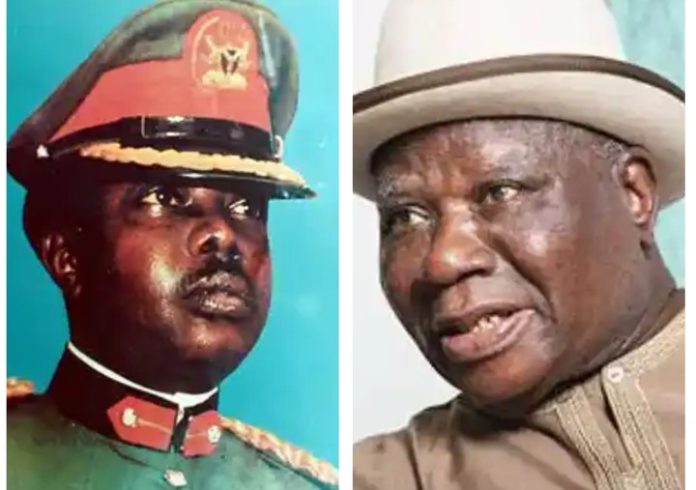
Full Text of Peter Obi’s speech on the Supreme Court verdict. From Courtrooms to National Conscience: Our Democracy is the Victim.

0

Being remarks at a Press Conference by Mr Peter Gregory Obi, CON Presidential Candidate of the Labour Party on The Supreme Court Judgment of 26th October 2023 On the 2023 Nigeria Presidential Election Held in Abuja, FCT, on Monday 6th November 2023.

Protocols, 

1. Fellow countrymen and women. Gentlemen of the Media, Good day and welcome to this press conference. Kindly permit me to make some brief remarks on the recent ruling of the Supreme Court, the highest court in Nigeria. 

2. About a fortnight ago, I was travelling abroad on a prior scheduled engagement when I received the notice that the Supreme Court would give judgment on Thursday 26th October 2023 on our challenge of the ruling of the Presidential Election Petitions Court (PEPC). That judgment has since been delivered as scheduled. The leadership of the Labour Party has already pronounced its position on the judgment. 

3. As someone who has previously benefited from the rulings of the Supreme Court on electoral matters, I have, after a period of deep and sober reflection, decided to personally and formally react to the recent judgment as most Nigerians have. Because we are confronted with very weighty issues of national interest, I will speak forthrightly. As students young lads at CKC, Onitsha, we were taught values and admonished to always; “choose the harder right, instead of the easier wrong.” 

4. Setting legal issues aside, the Supreme Court exhibited a disturbing aversion to public opinion just as it abandoned its responsibility as a court of law and policy. It is, therefore, with great dismay that I observe that the Court’s decision contradicts the overwhelming evidence of election rigging, false claim of a technical glitch, substantial non-compliance with rules set by INEC itself as well as matters of perjury, identity theft, and forgery that have been brought to light in the course of this election matter. These were hefty allegations that should not be treated with levity. More appalling, the Supreme Court judgment willfully condoned breaches of the Constitution relative to established qualifications and parameters for candidates in presidential elections. With this counter-intuitive judgment, the Supreme Court has transferred a heavy moral burden from the courtrooms to our national conscience. Our young democracy is ultimately the main victim and casualty of the courtroom drama. 

5. Without equivocation, this judgment amounts to a total breach of the confidence the Nigerian people have in our judiciary. To that extent, it is a show of unreasonable force against the very Nigerian people from whom the power of the Constitution derives. This Supreme Court ruling may represent the state of the law in 2023 but not the present demand for substantive justice. The judgment mixed principles and precepts. Indeed, the rationale and premise of the Supreme Court judgment, have become clearer in the light of the deep revealing and troubling valedictory remarks by Hon. Justice Musa Dattijo Muhammad, (JSC) on Friday 27th October 2023. 

6. In disagreeing very strongly with the ruling of both the Presidential Petitions Court (PEPC) and the Supreme Court on the outcome of the 25th February 2023 Presidential election as declared by Independent National Electoral Commission (INEC), as democrats who believe in the rule of law, we recognize that the Supreme Court is the end stage of the quest for legal closure to the matter. As a party and as candidates, Datti and I have now exhausted all legal and constitutional remedies available to us. However, this end is only another beginning in our quest for the vindication of the hope of the common man for a better country. After all, sovereignty belongs to the people! If only for historical purposes, it behoves us to place our disagreement with and deep reservations about this judgment on public record. 

7. We have long been aware of how weak national institutions have negatively affected our democracy. This year 2023 has been quite remarkable and revealing. INEC has displayed incompetence in the conduct of its statutory duty. The judiciary has largely acted in defiance of constitutional tenets, precedents, and established ground rules. Political expediency has preceded judicial responsibility. A mechanical application of technicalities has superseded the pursuit of justice and fairness. Both INEC and the Supreme Court as the referees, respectively shifted the goalposts in the middle of the game. 

8. Where the value and import of the recent Supreme Court ruling ends is where our commitment to a New Nigeria begins. Our mission and mandate remain unchanged. From the very onset, our mission has been more about enthroning a new Nigeria. It is a new nation where things work, where the country is led from its present waste and consumption orientation to a production-driven economy. Our commitment is to a nation anchored on the principles of prudent management of resources to quickly pull millions out of multidimensional poverty, ensuring transparency and accountability in the equitable distribution of opportunities, resources, and privileges. In the new Nigeria, we aim to address all unmet needs by showing compassion for all those left behind by the present system. 

9. Going forward, we in the Labour Party and the Obidient Movement are now effectively in opposition. We are glad that the nation has heard us loud and clear. We shall now expand the confines of our message of hope to the rest of the country. We shall meet the people in the places where they feel pain and answer their needs for hope. At marketplaces, motor parks, town halls, board rooms, and university and college campuses, we all carry and deliver the message of a new Nigeria. As stakeholders and elected Labour Party officials, we shall remain loyal to our manifesto. We will continue to canvas for good governance and focus on issues that promote national interest, unity, and cohesion. We will continue to give primacy to our Constitution, the rule of law, and the protection of ordered liberties. We will offer the checks and balances required in a functional democracy and vie robustly in forthcoming elections to elect those who share our vision of a new Nigeria. 

10. Given our present national circumstances, there is a compelling need for a strong political opposition. We shall, therefore, remain in opposition, especially because of the policies and the governance modalities that we in the Labour Party campaigned for, especially reducing the cost of governance, moving the nation from consumption to production, reducing inflation, ending insecurity, promoting the rule of law, guaranteeing the responsibility to protect, and stabilizing the Nigerian currency; are clearly not the priorities of the present administration nor is it interested in achieving Sustainable Development Goals (SDGs).  

11. If there is one thing that has immensely gladdened my heart in the course of the struggle of the past 18 months, it is the passionate desire of our people, especially our young people from across ethnic and religious divides, to construct a new and restructured Nigeria that will work for all Nigerians. That goal remains my guiding light and abiding inspiration.

12. Finally, I thank all Nigerians who believed in what is now only a revolution postponed. We deeply appreciate the unalloyed non-partisan moral support millions of youth and ordinary Nigerians across ethnic, religious, and geopolitical divides have continued to give to Dr. Datti Baba-Ahmed and me. 

13. We extend our heartfelt gratitude to the Nigerians who have supported this mission from the onset. We salute the leadership and members of the Labour Party, the Obidient Movement, the Obi-Datti Presidential Campaign Council, Nigerians in the Diaspora, Support Groups, and all people of goodwill who worked diligently and hoped for the realization of the beginnings of a New Nigeria in this election cycle. 

14. Nigerians who supported our cause have done so out of patriotism and their sincere conviction that our nation requires and deserves dedicated and visionary leaders who will lead Nigeria toward a brighter future. The energy and dedication of Nigerian Youths and the Obedient Movement have been simply amazing. I appreciate and salute them! I want to assure them that this is not the end of our journey; but in fact, the beginning. Nigeria heard you. The world has taken note and will not forget so easily. We shall endure, and persist until we get to our destination because a new Nigeria is our destination. A destination, not an event. 

15. We thank, in a special way, our legal team. We also thank our elder States-Men, whose wise counsel were immeasurable To them, we wish to state unequivocally that this judicial outcome – an obvious misrepresentation of substantial justice – has by no means foreclosed the realization of a new Nigeria that is Possible. 

16. On a personal note, I take personal pride and express gratitude to those who share our vision; and who have also exhibited rare courage to challenge the nefarious system, the genuineness of individuals’ identities and their defining and qualifying particulars up to the highest extent allowed by law. Nigeria holds out hope of infinite possibilities leading to our desirable greatness. I remain consistent in my belief in the possibility of a new Nigeria built on character competence, capacity, compassion, integrity, and respect for the rule of law based on justice and fairness. 

17. God bless us all. God bless the Federal Republic of Nigeria. Mr. Peter Gregory Obi, CON Presidential Candidate of the Labour Party. Obi–Datti Campaign Organization Office Abuja, FCT. 

Disclaimer: 

The opinions and views expressed in this write-up are entirely those of the Writer(s). They do not reflect the opinions and views of the Publisher (Nze Ikay’s Blog) or any of its employees. The designations employed in this publication and the presentation of materials herein do not imply the expression of any opinion whatsoever of the Publisher (Nze Ikay’s Blog) or its employees concerning the legal status of any country, its authority, area or territory or concerning the delimitation of its frontiers. Equally, the sketches, images, pictures and videos are gotten from the public domain.
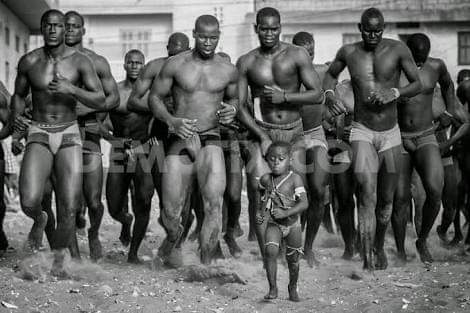
THE NIGERIAN SUPREME COURT JUDGMENT ON THE 2023 PRESIDENTIAL ELECTION, THE APC GOVERNMENT AND THE POLITICS OF CHASING ABOUT MOSQUITOES By Hon. Emma Chidi Ofoegbu

0
The Seven Supreme Court Justices who decided Atiku and Obi's appeal against the fraudulent election of president Tinubu

The Supreme Court judgment on the 2023 presidential election in Nigeria has elicited many reactions and responses from individuals and groups. Some people are asking where God is when all these atrocities are being promoted and advertised by the INEC and finally, by the Supreme Court. Well, there are so many questions which people – local and foreign are asking, in the context of the compromised Nigerian judicial system, and the corrupt and additionally compromised INEC. 

Other questions are also being asked, because of the insensitivity, lack of insight, lopsided and tribal appointments, and lack of direction by the Bola Tinubu APC-led Federal Government; including ASO ROCK being downgraded to the status of a personal parlour of the APC  president, to the extent that his son, can decide to use presidential plane to attend parties or football match or other casual events. Some people also said, there is nothing more left of this concept designated as  Nigeria because of the corrupt judiciary and their compromised judgements, particularly as it affects the 2023 presidential election clearly won by Labour. Party, as represented by results from the different polling units, and the parties’ situation rooms.

I am sure someone is asking me what I think of the Supreme Court’s judgment. Most Labour Party supporters have continued to ask me this question, to know what I will say. I only laugh. And each time I do, they will look at my face again to make sure I am laughing, and not lamenting and weeping for everything that has gone wrong in the 2023 election, in which I actively participated. As they watch me smile, they don’t know there are things I know nature can do, if human errors and mischief want to destroy a peaceful process and enthrone, corrupt and evil systems through violence and brutality, through the use and abuse of state’s authority and apparatuses. They don’t know that I am aware that if a woman gets married, and is being maltreated by her husband, she has a choice and the right to abandon the place that is hostile to her and go back to her father’s house to save her life and have peace of mind.

They don’t know that I understand Amalgamation to be part of a colonial policy, and the some 250 ethnic nationalities, were not consulted before Lord Lugard and his mistress, invented the name ‘Nigeria’. They don’t know I understand that with the way INEC Chairman, Prof. Yakubu Mahmoud rigged the 2023 election, particularly the presidential one, the next election will be won by Armed robbers and kidnappers, who will use the period, from now to 2027 to organize themselves and form a political party. On the day of the election, all of them will come out with guns and knives, the way APC did during the 2023 governorship election in Lagos state, and kill anyone who wants to stop them from snatching and escaping with ballot boxes. Because they know the Judiciary will endorse whatever pronouncements INEC will make.Good or bad.

I also know that the verdicts of a compromised judiciary can only have effect to a point where its jurisdiction is recognized and respected, to the extent that, the indigenous people can resuscitate their identity, and be ready to defend their right to self-preservation and determination, as being demonstrated around the world; and as also duly recognized by the United Nations. There are options available to people and groups when public institutions like the judiciary and INEC have been hijacked by antidemocratic forces and directly lost their essence of working for public good and order. So it means that the judiciary and INEC  have been hijacked by power merchants, and dictators through corrupt electoral and judicial systems and processes, and have only succeeded, in creating more exit options for the indigenous people, who are still contending with a concept like Nigeria, under serious contests. If these are options, can it be true that the verdict of a corrupt Supreme Court is final?

Hon. Emma Chidi Ofoegbu is the Secretary, of Azubuike Emmanuel Umeadi Campaign Council, Labour Party House of Representative, Alimosho Federal Constituency, Lagos State. November 5, 2023

Disclaimer: 

The opinions and views expressed in this write-up are entirely those of the Writer(s). They do not reflect the opinions and views of the Publisher (Nze Ikay’s Blog) or any of its employees. The designations employed in this publication and the presentation of materials herein do not imply the expression of any opinion whatsoever of the Publisher (Nze Ikay’s Blog) or its employees concerning the legal status of any country, its authority, area or territory or concerning the delimitation of its frontiers. Equally, the sketches, images, pictures and videos are gotten from the public domain.
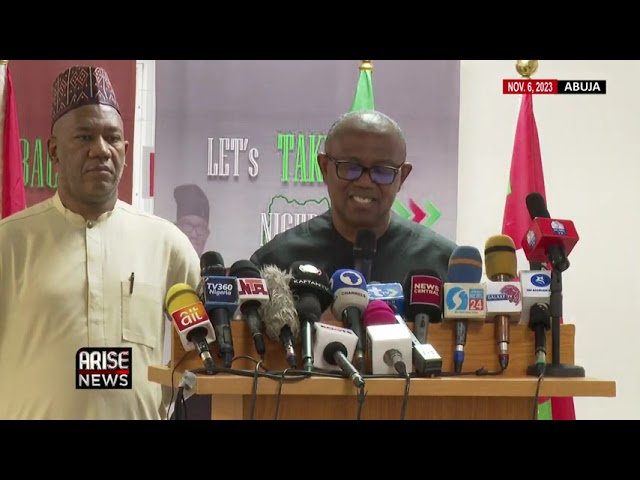
RUFAI OSENI OF ARISE TV MORNING SHOW REVEALED By Prof Obiaraeri, N.O.

2
RUFAI OSENI OF ARISE TV MORNING SHOW

Rufai Oseni, who is he? This post is not about his age, place of birth or ethnic group, academic qualifications, marital status, or net worth. It is about his emerging brand in the media, particularly in the television space.

Rufai Oseni, one of the anchors of MORNING SHOW on ARISE TV is an adversarial journalist. He is in a class and doing very well at it. For those who may care to know, adversarial journalism “refers to a kind of journalism or a journalistic role where the journalist adopts an oppositional and combative style of reporting and interviewing. The goal of adversarial journalism is to reveal supposed wrongdoings of actors under investigation.”

By dint of hard work and consistent consistency, Rufai is fast becoming a household name in Nigeria, media-wise. When in his element, he is brutally frank and does not need to be compared with anyone else. He is carving a niche for himself. Everyone has his or her own style.

Many in the conservative school would lampoon and pillory Rufai as combative and controversial but that is good for advocacy journalism. Before Rufai is either unjustly vilified or misunderstood, let’s not forget that adversarial journalism is said to refer to “a form of reporting in which the media adopt a skeptical or even hostile posture toward the government and public officials.” 

Journalism is dynamic just like life is too. Many roads lead to the bush. Journalism is a wide canvas. Combative journalism is one of the many ways to investigate, inform, enlighten, and entertain. Rufai does not have to use anyone else’s manual as long as he is within the law and armed with facts- the twin impeccable golden rules of journalism.

Whether Rufai is not classified as a journalist and summarily dismissed as an entertainer or bitter interrogator by his critics, the fear of Rufai on set by any guest is the beginning of wisdom. He is vigorous and passionate about what he does without caring to be politically correct.

Alas, Rufai is bringing something new to the media table as an adversarial journalist. He would not let unprepared guests run away with preconceived mouth-watering lies, fibs, or deliberate deceits and or concoctions.

Rufai would not allow hired publicists to come as guests on TV to deceive the listening or viewing public. His line of rejoinder before throwing punchy questions would always make any ill-prepared guest to stutter in fright. Rufai would not be intimidated either. He is respectful but can receive as much as he can give. He knows that adversarial journalism is “investigative journalism done in an antagonistic way”. In doing his work, Rufai can antagonize but within lawful and respectful boundaries.

Some guests do not realize that a journalist, an anchor, or a presenter is not bereft of rights. Media men and women deserve to be respected. That an anchor or interviewer is asking questions from guests does not mean that he or she is unknowing or civilly dead. 

At all material times, a guest or interviewee should be accorded the highest form of respect and dignity by the anchor person. However, a condescending, indecorous cantankerous, halting, untruthful, prevaricating guest must never be treated with undeserving candor or respect by the anchor or presenter. Respect begets respect. Period!

In adversarial journalism, Rufai is it. You may not like him but his incisive questioning style on TV has won him many fans, admirers, and followers who now see him as the People’s Advocate on Television. Rufai Oseni is a work in progress. He is yet to be revealed. A new normal is possible!

Disclaimer: 

The opinions and views expressed in this write-up are entirely those of the Writer(s). They do not reflect the opinions and views of the Publisher (Nze Ikay’s Blog) or any of its employees. The designations employed in this publication and the presentation of materials herein do not imply the expression of any opinion whatsoever of the Publisher (Nze Ikay’s Blog) or its employees concerning the legal status of any country, its authority, area or territory or concerning the delimitation of its frontiers. Equally, the sketches, images, pictures and videos are gotten from the public domain.
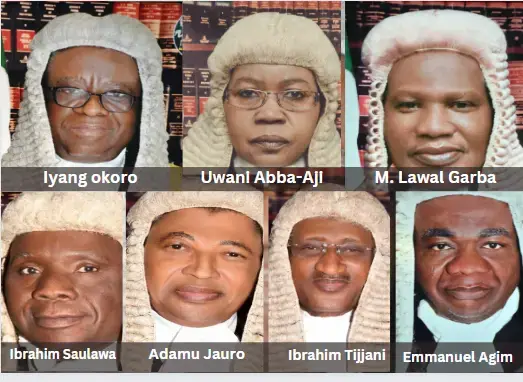
HOW OPPOSITION, INEC, BAD LAWS AND DEBALLED JUDICIARY HANDED TINUBU THE PRESIDENCY By Law Mefor

2
INEC Chairman Prof. Mamood Abubakar present the Certificate of Returns to President-Elect of Nigeria, Bola Ahmed Tinubu

The Peoples Democratic Party, PDP, the principal opposition party, should have had the simplest time winning the Nigerian presidential election in 2023. Muhammadu Buhari’s unprecedentedly bad and divisive leadership served as a powerful campaign against the All Progressives Congress, APC. To effortlessly retake control of the centre, the PDP only needed to present a unified front and a singleness of purpose. Yet, since Uche Secondus’s tenure as national chairman, PDP has lacked direction and influence and has swayed like a ship without a rudder.

Secondus’ successor, Dr. Iyorchia Ayu, turned out to be an even worse disaster. Ayu’s incompetent handling of internal party strife and crises contributed to the party’s loss in the presidential election. Under Ayu’s watch, the party quickly became divided and lacked cohesiveness as factions within its tanks plotted for the party’s presidential ticket rather than win the presidential election.

PDP continued as though division would go against the universal precept that “divided we fall.” As expected, the party split into three groups, each of which included some of the party’s core supporters and leaders. The G5 governors, led by Nyesom Wike, a former governor of Rivers state and now minister of the Federal Capital Territory, produced the second wave fissure after Mr Peter Obi left the PDP in protest, taking with him the South East and possibly up to half of the Middle Belt and even beyond.

Wike and his associates correctly demanded that Ayu resign from office, as it was a requirement Ayu had set for himself if a Northerner emerged as the PDP flagbearer, but he chose to break the agreement instead. Resigning from the job would have been the honourable thing for him to do to give his party a chance. Citing the party’s constitution, which stated that the deputy national chairman from the north would still serve as interim chairman, Ayu remained in place despite his clinging to the position of national chairman tearing the party to pieces.

This pathetic justification offered by Ayu is now irrelevant because he was removed from office by a court shortly after the presidential election, after leading the PDP to an avoidable defeat. To restore the Wike G5 governors, the party’s NEC could have chosen an acting National Chairman from the South and ratified it later. Bamanga Tukur from the North replaced Dr. Okwesilieze Nwodo as PDP national chairman in somewhat similar circumstances.

Three groups within the PDP fought against each other during the presidential race, causing the party to stumble and fall. The party even disregarded its constitution to choose Atiku Abubakar as its presidential candidate. Going by Peter Obi’s unexpected performance in the polls and his displacement of the PDP in numerous traditional states that the party had previously taken for granted, the PDP suffered the greatest loss due to its outright unwillingness to zone its presidential ticket to the South.

The ace political strategist Tinubu took advantage of the PDP’s problems, helped in keeping the party split, and profited politically.

Furthermore, Nigeria’s presidential election laws have shown to be woefully insufficient, leaving a great deal of discretion to the judgement of courts and INEC. Giving the courts the final say in determining election winners is the first big roadblock to justice and free and fair elections. This is a serious inconsistency and ridiculousness in the election laws. Courts shouldn’t have more authority than what is necessary to qualify candidates. Votes and votes alone should determine the outcome of an election, not the opinions of judges or technicalities.

Since votes are numbers, they cannot be interpreted subjectively. If there are disagreements about votes, the courts ought to mandate a recount and nothing more to ascertain who won the most valid ballots. However, the Supreme Court and the Presidential Election Petition Court (PEPC) did not act in this manner. Nigerians were denied the opportunity to learn who the true winner of the presidential election was, as both courts focused solely on procedural matters, leaving out substantive justice.

Another legal loophole revealed by the courts’ safe play is that all candidates, from councillors to the president, are sworn in before the outcome of their cases. A sworn-in president or governor is nearly impossible to remove from office. He will use all reasonable steps, both legal and illegal, to maintain his position. Perhaps no other nation in the world has sworn in a candidate whose viability as a winner is still up for determination than Nigeria.

Another significant issue with the law is the Presumption of Regularity enjoyed by the INEC, in addition to the state’s power and resources at the behest of the person already sworn in to exploit and abuse to remain there. The petitioners have the burden of providing proof because the tribunals assume that INEC has carried out its duties by the law. For instance, INEC is not compelled by law to provide the tribunal with evidence supporting its pronouncement of victory.

Being a party to the lawsuit on the side of the winner, INEC tries everything in its power to thwart the petitioners and establish its position. Especially in the presidential election, which has up to 176,606 polling units, it usually takes petitioners a long time to even receive the documents, in particular, Form EC8A (results issued at the polling units by INEC). This leaves the petitioners with little time to conduct a thorough examination and file winnable cases within the little time allowed by the Electoral Act.

If you want to prove anything in front of the tribunal, Form EC8A is essential. It’s also possible that this is how you tie judges’ hands if they tend to side with the sworn-in candidates. Because they are underpaid, many judges now view election lawsuits as a way to increase their income. When Justice Musa Dattijo Muhammad who just retired from the Supreme Court, disclosed that a Supreme Court judge earns only roughly N700,000, the country was shocked. It is easy to imagine how they would pay for their children’s education, most of whom are studying abroad and maintain a quality of living appropriate for their ranks.

One thing said by a judge of the Presidential Petition Court (PEPC) resonated with me: “We work as the laws are, not as the laws ought to be.” There is a great deal of discretion and capriciousness in Nigeria’s election laws. Laws must be precise, and it is precisely this precision that restrains bad and cunning judges who prioritise technicalities above substantive justice.

With its discretionary powers, INEC chooses whether or not to upload polling unit results. This cannot be the correct route to a fair election. Strictly and mandatorily adhering to this express provision of the electoral act as stated in section 64 subsection 4 of the Electoral Act could have been just enough: “A collation officer or returning officer at an election shall collate and announce the result of an election, subject to his or her verification and confirmation that the – (a) number of accredited voters stated on the collated result are correct and consistent with the number of accredited voters recorded and transmitted directly from polling units under section 47 (2) of this Act; and (b) the votes stated on the collated result are correct and consistent with the votes or results recorded and transmitted directly from polling units under section 60 (4) of this Act”. This section simply makes uploading election results from the polling units a condition precedent to collation and declaration of results. Simply make this provision mandatory.

Furthermore, there are no restrictions on what the tribunal defines as INEC’s “Substantial compliance to the electoral act.” This represents an additional glaring legal loophole. Currently, there are no clear legal stipulations of the actions that INEC needs to conduct to fulfil the “Substantial compliance” standards. It is what each tribunal says it is.

Nigeria cannot claim to practice democracy without holding free and fair elections. What continues to exist is an elite power-sharing plot, which prevents the people from choosing their leaders or representatives. Therefore, Nigeria is not a democracy and is, at most, merely a civil rule.

Going forward, the opposition must band together and spearhead a reform that will result in a new electoral act that eliminates INEC’s discretionary powers, guarantees that election litigations conclude before swearing in, sets thresholds for “Substantial compliance,” compel INEC to account to Tribunal how it arrived at declared results, most importantly, mandates the transmission of results as a prerequisite to the declaration of results at all levels.

Otherwise, as politicians hone their act and lubricate their election-rigging apparatuses, the worst election is yet to come from 2027 and beyond.

Dr Law Mefor, an Abuja-based forensic and social psychologist, is a fellow of The Abuja School of Social and Political Thoughts; drlawmefor@gmail.com; Twitter: @Drlawsonmefor.

Disclaimer: 

The opinions and views expressed in this write-up are entirely those of the Writer(s). They do not reflect the opinions and views of the Publisher (Nze Ikay’s Blog) or any of its employees. The designations employed in this publication and the presentation of materials herein do not imply the expression of any opinion whatsoever of the Publisher (Nze Ikay’s Blog) or its employees concerning the legal status of any country, its authority, area or territory or concerning the delimitation of its frontiers. Equally, the sketches, images, pictures and videos are gotten from the public domain.
STATE HOUSE PRESS RELEASE! TIME FOR ATIKU ABUBAKAR TO FINALLY GO AWAY AND END HIS AMBITION TO BE PRESIDENT By Bayo Onanuga, Special Adviser to the President on Information & Strategy

0
Mr Bayo Onanuga, Special Adviser to the President on Information & Strategy

Former Vice President and Peoples Democratic Party Presidential candidate in the last election, Alhaji Atiku Abubakar, unraveled on Monday at a press conference in Abuja where he finally found his voice after more than 96 hours to respond to his trouncing at the Supreme Court in a landmark judgment on his grossly incompetent election petition appeal.

We were wrong to expect that Atiku at 77 would play the statesman and sportsman and accept, with equanimity, the verdict of the highest court and the people of Nigeria.

Instead, he unashamedly constituted himself into a demagogue and anarchist in the way and manner he sought to pull down and delegitimize all the institutions of the State, all in a futile bid to achieve what he could not get via the ballot box.

At his press conference where he laboured, in vain, to once again manipulate public opinion and blame the judiciary for his self-inflicted defeat in the 25 February Presidential election, Alhaji Atiku launched a diatribe against the Independent National Electoral Commission (INEC) and judiciary, particularly our apex court, for not bending the law and the constitution to satisfy his whims and caprices.

Atiku tried very hard to perfect his act of misinformation by seeking to lay claim to faux morality and higher ideals when in actual fact his entire life is antithetical to any higher ideals.

For instance, Atiku claimed he worked along with others to end military rule in Nigeria when he was known to be in bed with the same junta that held democracy hostage and incarcerated his mentor, Major-General Shehu Musa Yar’Adua (rtd), till death. He distanced himself from him while in detention to keep alive his governorship ambition on the platform of one of those inglorious Abacha political parties.

Atiku’s brand of politics is such that once an electoral process or election does not go his way or pave the way for his victory, democracy becomes dysfunctional and must therefore be imperilled. For him, democracy should either go his way or the highway.

The PDP candidate was uncharitable and pugnacious in his choice of words and his view about Nigeria. We can only imagine the level of frustration that could make a former Vice President of Nigeria hold such a pessimistic view of a country where he once occupied the second-highest position. The PDP candidate said Nigeria is doomed just because he failed to achieve his personal ambition.

We want to tell Alhaji Atiku this: Nigeria is not doomed. It is only Atiku’s inordinate ambition to be President that is doomed. Nigeria is moving forward and set to achieve its manifest destiny as one of the most respected and successful nations of the world under the leadership of President Bola Ahmed Tinubu.

Contrary to Atiku’s gloomy submission on our democracy, we are excited to tell the world that our democracy is thriving and blossoming. It is the reason, for the first time, since 1999 the character of our National Assembly and its outlook reflect the diversity and plurality of the choices and preferences of voters as a rainbow coalition of different parties as opposed to the practice in the past where just two parties dominated the national parliament.

In today’s Nigeria, votes count. No amount of deliberate distortions of facts about our recent election by Alhaji Atiku and his partner, Peter Obi can vitiate the continuous improvement of our electoral process which local and international observers have hailed. As declared by the Supreme Court, IReV was not designed as an online collation centre. It was simply a public viewing centre for results.

PDP and Atiku, including Peter Obi’s faction of the Labour Party cannot continue to insist on their own reality against commonsense, logic and the law. Atiku and his army of hirelings knew why they lost the election. The PDP candidate lost because Nigerians preferred Bola Ahmed Tinubu and voted for him to be president. Tinubu, along with his APC, won because he offered a better vision for our country’s future. The All Progressives Congress as a united and formidable party which ran a well-coordinated campaign with his rank and file intact.

Atiku lost because he went into a major election with a fragmented and tattered umbrella that could not hold together. There was no way Atiku and PDP could have won the election with the party platform under which he contested broken into four parts. If Atiku was not harbouring a delusion of grandeur, we wonder how he could have envisaged any possible pathway to victory with Mr Peter Obi’s Labour Party, Dr Rabiu Musa Kwankwaso’s NNPP and PDP G-5 Governors who took away possible PDP votes, while the APC went into the election as a strong, viable and unified entity.

Alhaji Atiku Abubakar claims he loves Nigeria and embraces “integrity” so much. We found such a claim to be sheer hypocrisy as Atiku remains one of the worst examples of kleptocracy in Africa. The US Congress lists Atiku’s money laundering as one of the sporadic cases of corruption at the highest level of governance in the world. His avarice sent Congressman William Jefferson to jail after the FBI busted a bribery scandal in which Atiku was involved from head to toe and for which he was marked down by the U.S. agency.

Now as we get to the proper business of governance after Atiku’s unwarranted distraction, we have picked some clear lessons going forward. One is that our institutions must be strengthened on diligent and sturdy wings, enough to withstand and identify from afar rabble-rousers who masquerade as statesmen.

Second, our institutions must also ensure that corrupt, desperate, self-serving serial losers should not have a space in our democracy. Because if they don’t win the battle, they might burn the nation.

We want to advise Atiku that after over three decades of elusive bids for the Presidency of Nigeria, he must now end his unprofitable bid and go away from any venture that will further pollute the political atmosphere and national harmony.

October 30, 2023

Disclaimer: 

The opinions and views expressed in this write-up are entirely those of the Writer(s). They do not reflect the opinions and views of the Publisher (Nze Ikay’s Blog) or any of its employees. The designations employed in this publication and the presentation of materials herein do not imply the expression of any opinion whatsoever of the Publisher (Nze Ikay’s Blog) or its employees concerning the legal status of any country, its authority, area or territory or concerning the delimitation of its frontiers. Equally, the sketches, images, pictures and videos are gotten from the public domain.
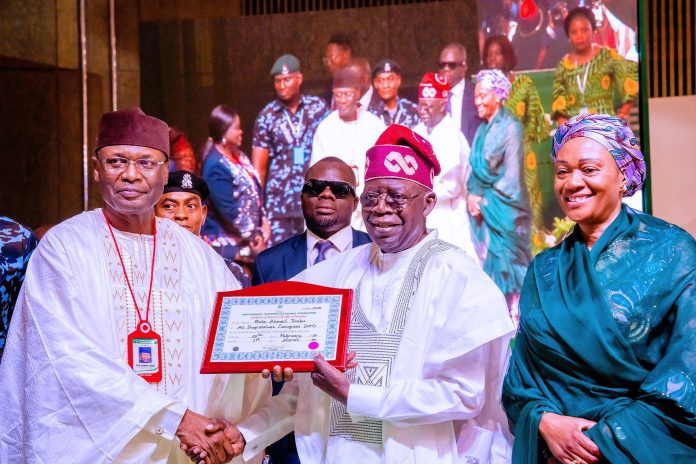
PALESTINE & ISRAEL – IGBO & YORUBA By Adedamola Adetayo

1
Adedamola Adetayo
Adedamola Adetayo

THIS IS VERY LONG BUT PLEASE TAKE YOUR TIME TO READ. BELIEVE ME, YOU NEED TO.

HAMAS reportedly threw rockets from somewhere in Palestine into Israeli ki||ing several hundreds of Israeli citizens, injuring thousands and kidnapping many. It didn’t start suddenly, there is a HISTORY behind it. It is the reason you MUST UNDERSTAND the history behind the moves by the IGBOS IN YORUBA LAND. Many of you don’t understand it and that is why you treat it with levity and careless complacency just like the Arabs did in the early part of the 20th century and the Yoruba people have to do for about 40 years now. You need to understand what is happening right now in the ISRAELI-PALESTINIAN conflict to appreciate the position of HAMAS and the ISRAELI GOVERNMENT. What is called the ISRAELI-PALESTINIAN crisis actually started sometime in 1897/1898, very subtly and harmlessly.

1. Before 1898, at the beginning of creation and by the accounts written in the Old Testament by the Jews themselves, the lands now known as ISRAEL, which was known as PALESTINE up until 1948, NEVER BELONGED TO THE JEWS. The bible written by the Jews said it belongs to some other people “the Canaanites, Hittites, Jebusites, Amorites etc…..”But they wrote in that Bible that JEHOVAH GOD HAD GIVEN IT TO THEM AS AN INHERITANCE. They committed whole-scale genocide under the watchful eyes of GOD to take over the land from the original owners. Mercifully, for the so-called Arabs, the Roman emperors drove the Jews away about 2,000 years ago and were never able to come back but scattered across the world as refugees.

2. This current conflict started the very day a certain man, a Journalist, an Austro-Hungarian Jew by the name HERZL THEODOR faced the WORLD JEWRY somewhere in the United States. On that day, he declared to them that a HOMELAND had to be established for the JEWS OF THE WORLD so they may get a reprieve from the 20 CENTURIES OF PERSECUTION they had endured around the world since their eviction by the Romans. When he made that declaration he was thought to be a MAD MAN. Even men like Rockefeller, one of the richest men in the world at the time, and many others, told him off! They told him to get lost! At THAT TIME there were only a few hundred or possibly thousands of Jews, Orthodox Jews, living in Palestine as it was then known and they were living quietly as ARAB JEWS just as there were American, Polish, Russian, English, and French Jews at the time. Herzl Theodor POINTEDLY told them that the “Establishment of a Jewish Homeland in Palestine, as it was then known, was the only hope of salvation for the Jews”. Eventually, the WORLD JEWRY bought into his weird dreams and so began the story of MODERN JEWISH ZIONISM.

Nnamdi Azikiwe and many other ANAMBRA people were in that same United States in the 1930s and were fascinated by the idea and progress of the JEWISH ZIONISTS as it was building up. When they returned to Nigeria in the 1940s, Azikiwe POINTEDLY DECLARED that “Nigeria was an inheritance of the IGBOS”. Jaja Wachukwu narrowed it on LAGOS and declared that “Lagos was a No Man’s Land” and they began to relive the stories of the Jewish Zionist Manuals verbatim, word for word, letter for letter.

3. What the Jews simply did was to start encouraging their population to move in bits into Palestine. They started moving in 2s, 3s, 10s and later 100s and eventually in 1000s consistently over a period of about 20 years. The Arabs of Palestine were mostly Bedouins who were predominantly Herders/Pastoralists. They were largely contented people living simply by the day, taking things very easy and not accustomed to CAPITALISM just like the majority of Yoruba people. Their Islam had taught them to take things easy, never be in a rush, and always accept Allah’s wishes on things of life and they were generally complacent. They lived the way our YORUBA PEOPLE are living today, simply and jejely. They practiced some forms of Feudalism and their people were generally organized in the format of today’s FULANI North. When the Jews came, they were coming with tonnes of money and started buying LANDS.

The Bedouins often gave them worthless swamp and desert lands and stayed back to laugh at them just like the Àwórìs were giving swamp lands to Igbos in Lagos e.g in Amuwo-Odofin, Ajegunle and Ojo areas. They never knew that the Jews harboured the spirit of AGGRESSIVE HUSTLING just as today’s ANAMBRA TRADERS. The Jews had unlimited backup FUNDS coming from outside Palestine, mostly proceeds of nefarious activities all over the world just like today’s ANAMBRA TRADERS are doing. The temptations of the FREE MONEY was too much for the Arabs and they continued selling and the Jews continued buying. They laid back idly and lived off the money coming from the Jews just like the Àwórì people of Lagos.

They stopped all the things they were doing and relied completely on the constantly flowing money of the Jews. As the Jews bought more lands, they organized into what was called Kibbutz essential for them to live in COLONIES to guarantee security ostensibly for farming. Once they got the new lands they quickly rushed to go and bring more of their population under the guise of farm hands and other guises, they were growing their population in Palestine. It is just the way the ANAMBRA TRADERS have been growing their population in LAGOS under the guise of trading and apprenticeship schemes. The ARABS continued SELLING, they have become used to the free money and the Jews continued BUYING as they had a regular flow of CASH from all over the world. It is the very way the IGBO ZIONIST have bought over half of LAGOS today, from proceeds of DRUG CRIMES.

4. By 1917 or 1918, a mere 20 years apart, the Jews already had such a frightening population which had been moved legally and illegally into Palestine. They stood up suddenly to demand EQUAL RIGHTS with the Arabs on that land, they argued that after all they had BOUGHT IT. It is what is happening in LAGOS today. The IGBOS are demanding it in LAGOS now.

5. The Jews started a serious EGBÉRE CRY of victimization, marginalization and undue harassment by the Arabs and they kick-started a monstrous volume of PROPAGANDA until they stampeded the BRITISH Government into creating what is now known as the BALFOUR DECLARATION in Palestine. A Partitioning of LAND had to be created between the JEWS AND THE ARABS on land which was hitherto 100% owned by the ARABS just 20 years prior. It was done by the Balfour Declaration, the British had no choice because they had been thoroughly blackmailed, harassed, harangued, bullied and intimidated by the Jews. This is EXACTLY what the IGBOS are working towards in LAGOS today. ONE DAY, they will push you to create a NEW STATE from the current Lagos State such that the IGBOS will be a majority in that new state so created. It will be the same as PARTITIONING OF LAGOS.

6. The 2nd World War was a windfall for the Jewish Zionists. They twisted the story of Hitler and the so-called Holocaust and blew it out of proportion until the world had to listen to them. It was a massive PROPAGANDA WINDFALL for the Jewish Zionists. It was EXACTLY what Ojukwu did during the ill-advised BIAFRAN war when he deliberately starved his IGBO people just to generate PROPAGANDA value. The Jewish Zionists started to use the Hitler narratives to send panic into the Jews of the world until the WORLD JEWRY emptied into Palestine. They developed many ingenious ways to smuggle their population into Palestine and scattered it all over their strongholds in the land. They practically FORCED many Jews out of Europe to relocate to Palestine to boost their population there. If you studied the attached videos the commentaries are aimed at advising IGBOS to move enmass out of Igbo land, certainly to soft targets like YORUBA SW and also the fact that BIAFRA NATION is eminent. They are trying to build their population massively in LAGOS and across SW.

7. By the 1940s it was clear that the ARABS of Palestine were in trouble. It was a mere 40 years since they started to allow the Jews SPACE, ACCOMMODATION AND HOSPITALITY. The Jews were already building an Army in the various Kibbutz. They were preparing for WAR. The ARAB WORLD, MOST COMPLACENTLY, BEING VERY CONFIDENT OF THEIR ADVANTAGE OF LAND AREAS, MILITARY STRENGTH AND POPULATION, dismissed all fears that the Jews could ever try to lift a finger against them. They were confident that they would be able to eliminate every single Jew from the face of Palestine. It was a misplaced confidence. This is TYPICAL YORUBA. The Jews had DETERMINATION AND DESPERATION, the type the Igbos have. They also had a COMMUNALITY OF PURPOSE, A CULT-LIKE SOLIDARITY AND SUICIDAL INSTINCTS just like the Igbos. They also had a most terrifying INTELLIGENCE GATHERING SYSTEM because there were Jews in every corner of the world, including amongst the Arab Nations, who would pass effortlessly as Nationals of those places. This is perfectly Igbo.

8. By 1948, a mere 50 years after Herzl Theodor made that proclamation, the STAR OF DAVID, the flag of the Nation of Israel was raised in Palestine. STATE OF ISRAEL WAS BORN! The Jews had a portion of the earth they could call their own and they were not going to be moved away from it. The war broke out immediately. The ARABS had all the advantages but the Jews had a DEADLY EFFICIENT INTELLIGENCE ARM AND THEY HAD MANAGED TO ARM TWIST THE EMERGING SUPERPOWER CALLED UNITED STATES OF AMERICA TO THEIR SIDE. They stood firm. They were terribly united on their desperate course just as the IGBOS are and will always be for BIAFRA. The ARABS were not united, every kingdom claimed rights and superior sense just as the Yoruba people are doing today where some Ijebu, Ekiti and Ondo people say they are not from Oduduwa. In the confusion of the Arabs, despite their overwhelming advantage, ISRAEL struck and today they are there and nobody will move them. It is what is building in Yoruba land now.

9. As soon as the Jews achieved SOVEREIGNTY in that land and had the opportunity of INDEPENDENCE AND AUTONOMY, being recognized as a COUNTRY, she started to build a MONSTROUS ARMY. It is that ARMY that has been crossing over even into the ARAB SIDE OF THE PARTITION TO SEIZE LANDS. The Gaza Strip became a serious problem as Israel kept expanding. It is EXACTLY what the Igbo Zionists intend to do with BIAFRA once they get it. They already have a deadly intelligence network across the country, people who can pass faultlessly as any tribe in Nigeria, especially Yoruba land. THEY KNOW YOU FAR MORE THAN YOU KNOW THEM. They have resources even amongst YOUR OWN PEOPLE. They have wives, husbands and children who are deadly loyal to them and not you. They will penetrate you. In fact, now, they have started learning your IFA and getting admitted into many of our SACRED CULTS. They are almost all Christians and they will bond with your Christian population just as the FULANIS are bonding with your Muslim population. They will cross over from Onitsha through the River Niger and begin to attack you till they reach LAGOS. That is the plan once they get BIAFRA. What they really want is the whole of Nigeria or the whole SOUTH OF NIGERIA AT LEAST. They know exactly where they are headed.

10. Believe me, if we continue exactly as we are doing now in Yoruba land where our people are selling LANDS like idiots to the Igbos, our CUSTOM is being rubbished by our OBAS. POVERTY is biting our people and selfishness will not allow our leaders and privileged few to think properly to lift people up, and most importantly The government isn’t making very frantic, deliberate and purpose-driven attempts to INSTITUTE STRICT POLICIES TO SAFEGUARD YORUBA LAND. If things continued exactly this way where the overwhelming majority of Yoruba people spend all their time jumping from prayer grounds to prayer grounds, where Òsùká-carrying Àáfàs are giving us new values. If we continued being so gullible and allowed ourselves to be manipulated to continue sacrificing our LEADERSHIP as we did in the case of Chief Obafemi Awolowo, Bashorun MKO Abiola and now for Asíwájú Bola Tinubu.

If we don’t quickly arrest our CUSTOMS from the grips of many of these charlatans sitting on our heritage as OBAS, people like the Amugbó of Ìwó. If the privileged FEW continued running abroad as relocations, dragging their children with them and encouraging Jápa in others while the overwhelming population especially the YOUTHS remaining behind are lost in ignorance and soaking themselves in fantasies. If these things continue, I tell you MOST CERTAINLY, IN ANOTHER 25YEARS [ MAXIMUM ] we will have an “Israeli-Palestinian” situation in our hands in LAGOS between YORUBAS AND IGBOS and the story will happen EXACTLY as I have written it above. It is exactly what we have going on in YORUBA LAND right now. I will always remind you.

THINK YORUBA FIRST!!!!! Wow.. as frightening as ‘eye opener’ and as true as ‘my people perish for lack of knowledge’ and as making a fool out of the ‘indulgent Yorubas calling themselves the so-called ‘obidients or obidiots’.Yoruba is gone! 

©️ Adedamola Adetayo, 09 October 2023

Disclaimer: 

The opinions and views expressed in this write-up are entirely those of the Writer(s). They do not reflect the opinions and views of the Publisher (Nze Ikay’s Blog) or any of its employees. The designations employed in this publication and the presentation of materials herein do not imply the expression of any opinion whatsoever of the Publisher (Nze Ikay’s Blog) or its employees concerning the legal status of any country, its authority, area or territory or concerning the delimitation of its frontiers. Equally, the sketches, images, pictures and videos are gotten from the public domain.
A REBUTTAL TO THE ARTICLE “PALESTINE AND ISRAEL-IGBO AND YORUBA BY ADEDAMOLA ADETAYO” WRITTEN By Dr. Law Mefor

0
Dr. Mefor, an Abuja-based forensic and social psychologist, is a fellow of The Abuja School of Social and Political Thoughts; drlawmefor@gmail.com; Twitter- @Drlawsonmefor.

On the surface, the piece “Palestine & Israel – Igbo & Yoruba” published 9th October, 2023 by one Adedamola Adetayo is one of those rants that do not deserve refutation. However, some lies, if left to fester, could mislead many people. This is especially true when you consider that Adetayo’s profanity against Ndigbo is not his first. “Repeat a lie often enough and it becomes the truth”, is a law of propaganda often attributed to the Nazi Joseph Goebbels. Among psychologists, something like this is known as the “illusion of truth” effect. One can find at least three more articles he has written that are vile and filled with hatred for Ndigbo. ‘The Worrisome Igbo Politics of Discrimination’, ‘Igbo Zionism or Conspiracy Theory’, ‘Yoruba: A Conquered People’, and ‘The Fulanis and Igbos are Two of a Kind!’ are some of the articles by the same author, Adedamola Adetayo, available online.

The continuing conflict between Hamas and Israel gave him yet another chance to haul more tirades at Ndigbo after earlier comparing the ethnic group to the Fulani. This time, he claimed there are glaring parallels between Ndigbo, especially Ndi Anambra in Lagos, and Jewish activity in Palestine. Adebayo believes that his diatribe should act as a warning to the Yoruba people to put an end to and reverse Igbo expansionism to avoid their imminent conquest of Lagos.

Some time ago, a similar anti-Igbo rant rang out when one Adeyinka Grandson, also known as Adeyinka Shoyemi, the so-called president of the Young Yorubas for Freedom (YYF) secessionist group, started calling for the extermination of Ndigbo from the face of the earth. He was sentenced to four and a half years in a British prison in April 2022 for inciting violence against the Igbo ethnic group in Nigeria, which was in breach of the anti-racial hatred laws of the United Kingdom. 

In contrast, Adedamola Adetayo is spreading his anti-Igbo hate campaign from Nigeria. He is in a haven where terrorists and bandits are welcomed as liberators and given amnesty and hero treatment. Adedamola Adetayo is protected from answering to the law; otherwise, Godson’s fate should already be his lot.

A quote from Adedamola Adetayo’s post will be helpful in case you missed the story in question: “HAMAS reportedly fired rockets into Israel from somewhere in Palestine, killing hundreds of Israeli residents, wounding thousands, and kidnapping many. It didn’t start out overnight; it has a history. It is for this reason that you need to comprehend the background of the Igbos’ actions in Yoruba land.”

Delusion and paranoia are seen as a dangerous precipitate in psychopathology. The worst is feared after delusion and paranoia are diagnosed by a clinical psychologist or psychiatrist, and that is schizophrenia, the mother of all mental diseases. Delusion is holding a false belief despite contrary facts and believing what no one else believes. Paranoia is morbid and irrational fear: the unwarranted or delusional belief that one is being persecuted, harassed, or betrayed by others, occurring as part of a mental condition. Adedamola Adetayo’s rant against Ndigbo and his profanity smack of such.

Before going back to the strange analogy that Adebayo painstakingly made between Igbo/Yoruba and Israel/Palestine, it is pertinent to draw attention to his absurd assertion that “The lands now known as Israel, which was known as Palestine up until 1948, never belonged to the Jews.” He claims to be unaware that the historical Jesus actually existed and did spend 33 years more than 2000 years in a place called Israel.

If the Jewish account is suspect to him, what of the History of Rome and that of Pontus Pilate, who served as the fifth governor of the Roman province of Judaea from 26/27 to 36/37 AD? He was appointed by Emperor Tiberius. Therefore, it is a very purposeful lie for this Adetayo to claim that Israel did not exist before 1917 or 1948 when exiled Jews returned.

Yes, Herzl Theodor and like-minded people began mobilising seriously for Jews from all over the world to return to their land after 2000 years to put an end to forced wandering. Jews eventually made their way back home in 1948, but by that point, Palestinians had taken control of their land, and that ignited the Israeli-Palestine conflict. The two-state solution would have been deployed to fit into the limited space of the two nations. But the Adetayos of this world would rather that the Jews continue to wander forever.

Let’s return to the Yoruba dominance by the Igbo that Adetayo conjured and compared to the conflict between Jews and Palestinians. Adetayo said that Nnamdi Azikiwe and numerous other Anambra people were in the same United States in the 1930s, and they were enthralled by the concept and development of Jewish Zionism at the time. He further claimed that Azikiwe clearly declared that “Nigeria was an inheritance of the Igbos” upon their return to Nigeria in the 1940s.

I have looked through the history books to find that statement – “Nigeria is the inheritance of the Igbos” – which the man credited to Zik and found nothing. Jaja Wachukwu, according to Adetayo, focused attention on Lagos by saying that “Lagos was a No Man’s Land”. Adedamola Adetayo’s claims are nothing more than a hallucination, which is another precursor to the early stages of psychosis and involves seeing or hearing things that are not actually there.

He added that similar to how the Bedouins (Arabs) treated the Jews, Igbos were frequently handed useless swamps by Lagos’ “Awóris,” such as in the Amuwo-Odofin, Ajegunle, and Ojo districts. He sarcastically praised the Ndigbo for their inventiveness in converting swamps into livable land. Still, he spurned their source of funding as “The Igbo Zionists have bought over half of Lagos today, from proceeds of drug crimes.” Without joining issues, records of Nigerians involved in the drug trade are out there and Ndigbo are certainly not leading the pack. So, Adetayo is only jealous of the Igbo’s phenomenal achievements.

According to Adetayo, the Anambra traders have been increasing their population in Lagos under the pretence of commerce and apprenticeship programmes, much in the same way, the Jews organised themselves in Kibbutz in Palestine. He concluded that as the Jews abruptly rose to demand equal rights on land with the Arabs, so are the Igbos currently demanding in Lagos.

He said that one day, Igbos will pressure Lagos to be split off and form a new one where they (Igbos) predominate. He says they almost all identify as Christians, and they will form ties with the Yoruba Christian community much like the Fulanis have with the Yoruba Muslim community. Hear him: “From Onitsha, they will cross the River Niger and start attacking you till they get to Lagos. Once they obtain Biafra, that is the plan. They aim to conquer all of Nigeria or the southern half. In another 25 years (at the most), we will be dealing with an “Israeli-Palestinian” issue involving Yorubas and Igbos in Lagos.” If this assertion is not a delusional disorder, tell me what is.

It is only in Nigeria that a major ethnic would be profiled in this manner and the profiler is walking the streets free without interrogation by security agencies. Adedamola Adetayo and his allies’ false flag against the Igbos is something that should be taken seriously. They neglected the origins of the growing Ndigbo presence in Lagos and other places. Being an itinerant commercial ethnic group, Igbos are inevitably drawn to trade routes and global access points. The majority of them head east at Christmas since they won’t ever leave their roots, which is essentially the South-East. This trend shouldn’t be if acquiring other peoples’ lands is their goal.

Ndigbo are not expansionists and do not need to annex Lagos or any other area of Nigeria that is not historically theirs. They legitimately acquire land everywhere for their business, growth, and diversification, just like other Nigerians do around the nation, including in the South-East. Ndigbo are not land grabbers.

On the 5th of March 1862, the British acquired Lagos as a colony and Lagos also became the nation’s capital in 1914 after Lord Lugard amalgamated the Northern and Southern Protectorates. Earlier, in 1906, the Western and Eastern Protectorates were merged, with Lagos serving as the capital.

The point is that, as Nigeria’s capital, Lagos acquired a unique position of importance for Ndigbo and the rest of the nation. Lagos since then has also served as the nation’s commercial hub and main maritime centre.

The ports in the former Eastern region were booming before the Nigeria-Biafra conflict, but Lagos Ports were purposefully allowed to be the only ones operating in the true sense since after the war. This forced the rest of the country, including the Igbo importers and exporters, to concentrate in Lagos.

The South-East states are part of the states that make up Nigeria’s coastline that has been abandoned by the Federal Government. Igbo businessmen thus have no alternative to Lagos ports, and the Southeast states also lack the legal authority to create ports for their zone since ports are on the Exclusive List and the Federal Government is unwilling to develop or rehabilitate the Eastern ports.

Adedamola Adetayo intentionally disregarded this history, which is in plain sight, in favour of portraying Ndigbo as aggressive invaders. The solution is not inciting hatred against the Igbo ethnic group, who are in Lagos conducting their legal business. Even though ethnic swamping is a possibility if things stay the way, resenting Ndigbo is hardly the solution.

Ndigbo have no territorial ambition whatsoever. Their governing principle is “Live and let live” (egbe bere ugo bere). Because of this guiding philosophy, Ndigbo are the foremost democratic society and peacefully live with other ethnic groups within and outside Nigeria. They have no history of empire-building or warfare that marked most of the country. The Nigeria Biafra war was perhaps the first war in human history in which Ndigbo inevitably took part. The Igbo people had no alternative but to defend themselves to avoid annihilation after the Gowon regime rejected the Aburi Accord and waged war on the Old Eastern region.

Lagos must be saved, but not at the expense of Ndigbo. Lagos is currently the third most congested and unlivable metropolis in the entire globe because it is practically the only entry and exit port in the whole country. It is necessary to repair and reopen every port in the Niger Delta as well as open new ones, especially in the South East, which is barely 20 nautical miles from the Atlantic Ocean. That is how Lagos can be saved lest the swamping Adetayo is wolfing about may even get worse.

Ndigbo on their part should continue to maintain the South East as their ancestral home. They should invest more at home as a way of mitigating the Igbo migration that has been forced upon them by government policies that are intended to deny them access to the world by land, sea, or air.

Adedamola Adetayo and those who label Ndigbo as “desperate and aggressive” ought to understand that this is their natural reaction to the starvation regime that was imposed upon them throughout the war, as well as the meagre compensation of twenty pounds that was given to barely one percent of the Igbo survivors of the genocidal Nigerian Biafra war. They ought to quit fanning the flames of hostility between Yoruba and Igbo. If things are to work out between the two ethnic groups in Nigeria, they must support one another.

Dr Mefor is an Abuja-based forensic and social psychologist, and is a fellow of The Abuja School of Social and Political Thoughts; drlawmefor@gmail.com; Twitter: @Drlawsonmefor.

Disclaimer: 

The opinions and views expressed in this write-up are entirely those of the Writer(s). They do not reflect the opinions and views of the Publisher (Nze Ikay’s Blog) or any of its employees. The designations employed in this publication and the presentation of materials herein do not imply the expression of any opinion whatsoever of the Publisher (Nze Ikay’s Blog) or its employees concerning the legal status of any country, its authority, area or territory or concerning the delimitation of its frontiers. Equally, the sketches, images, pictures and videos are gotten from the public domain.
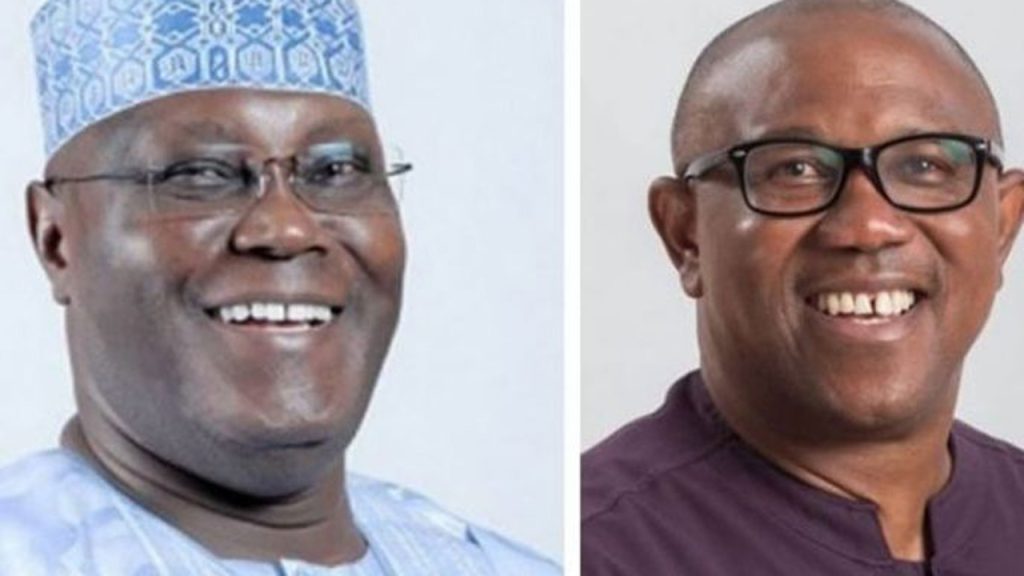
THE VOYAGE By Professor Moyo Okediji 

0
THE VOYAGE By Professor Moyo Okediji

About 30 years ago, I slept at the Murtala Muhammed Airport for four days. No, I was not a homeless vagabond. I had bought the Nigeria Airways ticket to fly to the United States for a one-year sabbatical leave. But when I arrived at the airport, I realized that my ticket was not honored, though I had bought it legitimately. Whenever a plane was about to leave Lagos for New York, the NA officials posted a manifest list, and my name was not there. They would ask me to wait for the next list. This drama of “Your name is not yet listed, wait for the next manifest list” continued for four days.

I couldn’t leave the airport and return home because I lived in Ile Ife, and had bid my people goodbye for one year. They all expected I would be in NY already. I was therefore forced to sleep by the door of the NA office at the airport, waiting for the release of the manifest list with my name on it. I was not alone. There were hundreds of stranded passengers like me there—men, women, young, old, tall, short, thin fat—all sorts of people. The Murtala Mohamed Airport was different then than what we have now. There were no security officers. People drifted in and out in their hundreds. It was rowdy. There was no order of any sort. Food hawkers milled among the crowd of the stranded passengers like me, selling hot dogs, sandwiches, puff-puff, moin-moin, gala, meat pie, hamburgers, even rice and dodo. People hawked sodas such as Cocacola, Fanta, Sprite and malt drinks. The interior of the airport was packed like the Oyingbo market. There were also pickpockets and other fraudsters pulling fast tricks on unsuspecting victims. 

I was hesitant to buy anything. I had changed all my naira to dollars at the rate of one dollar to three naira. But if I wanted to change my dollar back to naira, I could only collect one naira for my dollar at the airport, which would be a loss. I was desperate when I got hungry. But someone was willing to give me two naira for a dollar, so I changed two dollars. I bought some moin-moin and coke. The guys who helped me to change my money said I had no hope of traveling unless I was willing to bribe someone. I was adamant. I wasn’t going to bribe anybody. It was my right to fly out, after all, I had paid for my ticket. By day four, I lost hope of traveling out. I used my handbag as my pillow and reclined on the floor, to take a nap.

The young woman who slept a couple of feet away from me was also napping, snoring loudly. I asked her earlier, and she said she had been there for almost a week. She said she was ready at that point to accept the offer of a Nigeria Airways official who wanted sex in exchange for helping her to get on the manifest list.

For how long I had been asleep I couldn’t tell, when I felt a tap on my shoulder. I opened my eyes. It was Segun Odegbami, the famous international soccer star, who played for the Green Eagles. I thought I was dreaming. I had met him through a friend, Tunde Fagbenle, and we had shared drinks at Fagbenle’s house in Lagos a couple of times. I couldn’t refer to him as my friend, and I didn’t even know he would recognize me or remember my name. I was a fat nobody next to a big star like him, someone for whom Ebenezer Obey had waxed an album, with the chorus, “It is a gooooal, Odegbami,” a bestselling song throughout Nigeria. When I opened my eyes and it was him, I wanted to close my eyes back, thinking I was just dreaming.

But he spoke to me. “Moyo, what are you doing on the floor here?” I quickly sat up, wiped my eyes, and smile at him. I narrated my story. He shook his head, and said with a sigh, “That’s Nigeria Airways for you. I came to see someone off to London, and as I was leaving I happened to see you.” “Na so we see am o,” I told him. “Where is your ticket?” I dipped my hand inside the pocket of my agbada, made out of new Ankara textiles. It had double as my daywear and my pajamas for four days. I retrieved the ticket and gave it to him. He said, “Excuse me for a minute. Let me go and talk with them.”Then he went inside the Nigeria Airways office, and within minutes he was back, with two young men. “Moyo, are you ready to go now,” Odegbemi said, “because a flight is leaving in about fifteen minutes.” I didn’t need to say yes. My eyes said it all. 

The two young men picked up my luggage. Odegbami gave me a hug and wished me bon voyage. The two young men led the way with my luggage—just a suitcase and my hand luggage. They took me to the back of the airport, and there was a Peugeot 505 waiting for us. 

They loaded my luggage in the boot and drove me down the tarmac to the huge aircraft about half a mile away. From a persona non grata, I instantly transformed into a VIP, driven on the tarmac like a departing president. Nobody checked my luggage for any contraband. Everything was loaded directly on the plane and I was given the luggage tags. I walked to my seat and sank into it. I couldn’t help but notice that the plane was less than half full. There were empty seats everywhere when the plane took off. Yet, there were scores of people waiting at the airport, denied their right to fly, after paying their fares. I remembered the poor woman snoring next to me on the floor at the airport. Tears began to fall from my eyes. “If they ever see me again in that godforsaken country,” I swore silently, “they should cut off my head.”

Moyo Okediji is a professor of Art History at the University of Texas, Houston , United States of America.

Disclaimer: 

The opinions and views expressed in this write-up are entirely those of the Writer(s). They do not reflect the opinions and views of the Publisher (Nze Ikay’s Blog) or any of its employees. The designations employed in this publication and the presentation of materials herein do not imply the expression of any opinion whatsoever of the Publisher (Nze Ikay’s Blog) or its employees concerning the legal status of any country, its authority, area or territory or concerning the delimitation of its frontiers. Equally, the sketches, images, pictures and videos are gotten from the public domain.
President Vladimir Putin addresses the Plenary session of Russian Energy Week

9
President Vladimir Putin of Russia and the Prime Minister of the Republic of Iraq, Muhammed Shia Al Sudani

In attendance was President Vladimir Putin of Russia and the Prime Minister of the Republic of Iraq, Muhammed Shia Al Sudani. This 2023 forum is the sixth Russian Energy Week and the Event’s central theme is “The New Reality of Global Energy: Building the Future”. Attendees were over 4,000 delegates from more than 60 countries including representatives of governments, CEOs of major energy companies and organizations, scientists, and experts. The Event took place from October 11 to 13, 2023 in Moscow. 

President of Russia Vladimir Putin’s address:

Mr. Prime Minister of the Republic of Iraq, Ladies and gentlemen, Friends.

I would like to greet the participants and guests of Russian Energy Week. For the sixth time, here in Moscow, this forum has brought together the heads of the leading energy companies and research institutes, politicians, and experts from Russia and abroad so they can assess the trends of and prospects for global energy, exchange opinions on the challenges the global fuel and energy sector faces and discuss how to ensure the long-term stability of the planet’s energy markets.

This is especially important today when the global economy is transitioning to the multipolar model with several growth centres, and the place, role, and importance of each country is defined by how it responds to these deep, irreversible processes and how efficiently it can defend its economic, industrial, technological and energy sovereignty, readjust investment, trade and cooperation ties.

The Russian economy is also undergoing this stage of structural transformation. The geography of foreign trade, as well as employment and the situation in the sector, are changing. New market prospects for small and medium-sized businesses are emerging. The Russian fuel and energy sector is also seeing core changes. They relate to all areas of the industry, including the production and processing of energy commodities, service, and logistics, as well as interaction with our foreign partners.

Today, I would like to delve into four key elements of this transformation, which consider external factors but are, in my opinion, of a fundamental nature and are part of our country’s sovereign, long-term strategy.

First, our basic priority is to ensure supplies to the national market and to ensure sufficient supply of fuel and energy resources within the country. I would like to emphasize that this not only concerns the current needs of our businesses and citizens. We will be working consistently on the quality development of our market and on expanding its capacity. We have huge potential for this.

A positive example in this sense is our gas industry. I would like to remind you that we launched a nationwide gas supply social program in 2021. Its goal is to connect every house in the villages and cities that have gas mainlines to the gas grid.

In the first few years of the program, we have created the technical infrastructure for connecting over a million households to the gas grid and have already connected 375,000.

Last year, we agreed the program would continue indefinitely. Moreover, we have expanded it to include outpatient clinics, hospitals, and schools where the heating system can be converted to gas.

During Russian Energy Week held a year ago, I proposed giving targeted assistance to people who wanted their private houses to be connected to the gas grid. The government will subsidize spending to purchase equipment and lay pipes on their land plots for up to 100,000 roubles per household.

About 52,000 citizens entitled to benefits have taken advantage of this opportunity, including large families and low-income people, who could connect their houses to the gas grid quickly and relatively cheaply, which made their lives easier and more comfortable. 

I propose expanding the list of citizens with access to subsidies for purchasing and installing gas equipment by adding to the list of participants in the special military operation and their families, people with the most severe disabilities, and families with disabled children.

I would like to add that we have launched several strategic projects to develop the country’s gas pipeline system. They are aimed at increasing the availability of natural gas for companies, industrial facilities, cities, and towns.

There is a plan to connect the gas pipeline systems in western and eastern Russia. During the first phase of this project, we will connect the Power of Siberia and Sakhalin – Khabarovsk – Vladivostok gas pipelines, and then we will connect them to the country’s unified gas supply system. Along with building the Power of Siberia-2 pipeline, this will make it possible to supply gas to many regions in Siberia and the Russian Far East.

We regularly discuss the progress of these plans with the Government and with companies, including at meetings on developing Far Eastern cities. The so-called master plans have been drawn up for the development of cities in Yakutia, Buryatia, the Khabarovsk, Primorye, and Trans-Baikal territories, the Amur Region, and the Jewish Autonomous Region, as well as for Krasnoyarsk.

A project has been launched to install an LNG-based public gas supply system in the Kamchatka Territory. The Murmansk Region and Karelia will be connected to an offshoot of the Volkhov – Murmansk – Belokamenka gas pipeline. The pipeline will be laid for an LNG project on the Kola Peninsula. But part of its capacity, namely up to 10 billion cubic meters per year, will be used to supply gas to industrial and social facilities, and residential buildings in Karelia and the Murmansk Region, and to develop environmentally friendly power generation.

I would like to note that last year, Russia had record-high energy consumption, and there is reason to believe that it will be broken this year. One does not have to be an expert to know that, if energy consumption grows, it means the economy is growing. This conclusion has been confirmed by other data as well.

I would like to stress that this is a qualitative, integrated indicator that reflects positive trends in the Russian economy and social sphere. The number of consumers is growing; new production facilities and infrastructure facilities are opening, providing new jobs, and this propels electricity demand.

In this regard, we will consistently improve the reliability of energy supply to the regions. Power grids and power lines must operate smoothly and sustainably and allow a reserve for the further development of territories. At the same time, we will pay special attention to improving the energy efficiency of industry, utilities, and transport.

Let me remind you that we have drawn up plans to upgrade the power grids in the regions where it is most badly needed. I will not list them now, but there are about ten such regions.

I would like to remind the Government that all regional programs to this effect must be funded in full. Federal budget funds have been earmarked to support such programs.

Additionally, stability and affordable prices for electricity, raw materials, and fuel are critical conditions for ensuring the confident, long-term development of the energy market. 

As you may be aware, we have run into a surge in gasoline and diesel fuel prices in recent months. To address this issue, the Government has taken a series of measures to bring the situation back to normal.

I once again draw the attention of our leading energy companies to the importance of prioritizing fuel supplies for our domestic consumers. I urge the Government to act proactively and implement preventive measures before the situation escalates.

Maximising added value and advancing the deep processing of oil and gas is the second strategic and systemic objective of the Russian fuel and energy sector.

We have made substantial progress in this area. Ambitious oil and gas-to-chemicals projects, including projects with state participation and state support, are in the planning and implementation stages.

A petrochemical plant has been launched in Tobolsk. The Amur Gas Processing Plant is expanding its capacity. The LNG production and gas processing complex in Ust-Luga and the Amur Gas Chemical Complex are both under construction.

It is crucial to continue to support such projects and further bolster the potential of economic sectors such as large-tonnage polymers, medium- and low-tonnage chemistry, and oil refining where considerable modernization efforts are underway.

Let me stress: Russian fuel and energy complex projects are increasingly based on domestic technology, equipment, machinery, and software.

This leads us to the third dimension of the structural transformation in the fuel and energy complex. It is about achieving complete sovereignty within the industry, including technological, personnel, and financial sovereignty. We will need to drastically increase the volume and share of Russian-made equipment, especially critical equipment, to raise the level of training of qualified personnel to a new level and, of course, to form our mechanisms for financing investment projects.

Notably, we are continuously working to create and introduce domestic machinery and equipment for the oil and gas sector and power transmission.

Since 2014, we have been successfully producing over 140 types of equipment, including drilling and hydrocarbon production equipment, heat-transfer equipment, catalysts and agents, high-voltage cables and switches, and much more. 

Let me remind you that we, along with our colleagues from the Government and the oil and gas companies, agreed to form major integrated orders for Russian-made machinery and equipment. We need to consolidate the efforts and resources of the state, private business, and development institutes in every innovative area that is needed by the fuel and energy sector, first of all.

For instance, VEB, along with Skoltech and service companies, are working on investments in projects related to the manufacturing of oil and gas production equipment, including equipment for the development of difficult-to-recover deposits. 

I know that this is a complex, difficult task. It is necessary to understand the interests and needs of the sector, both current and long-term. Nevertheless, I ask the Government to expedite this work and create a long-term order package for the developers and manufacturers of equipment for the fuel and energy sector.

I also would like to ask you to expedite the transition from foreign to Russian-made standardization and certification systems for the oil and gas, and the petrochemical sectors. This will help give an additional boost to import substitution in the energy sector.

I want to mention software as well. Our fuel and energy companies are already working on introducing Russian software and solutions.

I want to point out that when deploying Russian software, it is very important to ensure operational continuity at production facilities, consider all the risks and, of course, adopt the most successful and advanced practices.

We already have examples to follow. I am talking about the nuclear sector, which has been increasing its role in Russia’s energy balance. It accounts for some 20 percent of all electric energy in the country, and a new production record was set by our nuclear power plants last year.

The Russian engineering school is not just strong in terms of construction and maintenance of nuclear power facilities, but it has very little competition at the global level. Rosatom is building 22 power units abroad simultaneously, I want to reiterate, simultaneously. This is almost 80 percent of the global market.  This includes the Akkuyu Nuclear Power Plant in Turkiye, which is the first foreign project that our experts will help to implement and maintain during the entire life cycle from design to decommissioning.

Last week, fuel was loaded into the Rooppur power plant in Bangladesh. The fourth power unit at the El Dabaa NPP in Egypt is being built ahead of schedule. This is our flagship project on the African continent, but it is not limited to the construction of the facility. We are cooperating with Egyptian specialists and our friends from Egypt to develop the nuclear energy industry in that country from scratch, which includes training personnel, providing maintenance support, and so on. In other words, we are helping Egypt embark on the path to sovereign energy development.

This integrated and systemic approach is one of Rosatom’s main competitive advantages, not to mention its traditionally high safety and reliability standards.

To reiterate, Russia is fully independent in terms of technology, both at the construction stage and during the maintenance of nuclear power plants. At the same time, we are not against the participation of companies from third countries in the construction of nuclear power plants that we have designed.

Importantly, Russia is expanding to new areas of nuclear generation such as low-capacity onshore and floating nuclear power plants. The first floating facility, the Akademik Lomonosov, began operating in Chukotka in 2020. Four more such power units will be deployed there shortly. Russia’s first low-capacity land-based nuclear power plant is under construction in Yakutia.

The hydroelectric power industry is another example of the successful development of domestic competencies. The accumulated experience, own technological solutions, as well as the unique potential of Russia’s water resources open up great opportunities for the construction of hydroelectric power plants, which will supply inexpensive and fully green energy to cities and towns, industrial and agricultural facilities, and homes.

By developing hydropower, we will be able to make progress in addressing the issue of seasonal floods. Runoff regulation and accumulation of flood water in HPP reservoirs will not only reduce losses from natural disasters but also create high-volume reserves of clean water, one of the most sought-after resources in the world.

I would like to add that Russia’s RusHydro has been involved in designing and building more than 350 facilities in 54 countries. Today, the company supplies its technological solutions to 17 countries, including countries in Africa, the Middle East, Central Asia, and Latin America, boosting technology transfer and providing engineering support for the entire service life of its plants, which is 50–70 years. That is, the company enters into long-term contracts, which help to establish strong ties not only between companies but also between countries.

I urge the relevant ministries and agencies to provide extensive support to our companies engaged in building energy projects abroad, exporting engineering and related services in this sector, and venturing into new markets.

This leads us to the fourth dimension of transforming our fuel and energy sector, which is directly tied to new export prospects and destinations.

As you may be aware, the European countries have effectively turned down our energy. Not yet entirely, but they have been trying to. For many years, these resources have played a significant role in ensuring the economic and social prosperity of the European Union. Perhaps, not entirely, but our energy accounted for much of their well-being. Recent restrictive measures have been imposed on banking services, freight, and insurance, and price caps have been established on our oil and gas.

I will leave the impact of these decisions on the European countries themselves off the table for now, although I may come back to it later. They are now paying more for oil, refined products, and natural gas. As a result, the EU’s economy is hovering near the zero-growth mark, and industrial production has been in the negative since March.

According to our experts, there is only 0.5 percent growth in the Eurozone, which can primarily be attributed to Italy and Spain. It remains to be seen why these economies are seeing some growth; it may be related to real estate sales and the post-pandemic recovery of the tourism sector. Overall, the industrial sector is experiencing a decline which impacts the entire economy. Industrial output dynamics in the EU for July showed a decline of 2.4 percent; energy output dropped by 4.7 percent and for the first half of this year there was a 5 percent drop.

These developments have impacted household incomes. Real disposable incomes in the Eurozone for the first quarter of this year (quarter to quarter, from 2023 to 2022) fell by 1.2 percent. I would like to remind you that, in the Russian Federation, there was a 4.4 percent increase during the same period, and in the second quarter, there was a 5.3 percent increase. These are the actual disposable income growth rates in Russia.

The baselines are different, but the trend is what matters. It reflects the quality of economic policies. Sometimes I look at them and wonder what they are doing there. Well, it’s their choice.

Notably, the Russian fuel and energy complex is operating steadily. Production and financial indicators are strong. Thanks to corporate and public efforts, the tanker fleet has expanded, and new payment, insurance, and reinsurance mechanisms for our cargo have been put in place.

As a result, within a short period, we have successfully redirected our oil supplies to rapidly growing and promising markets in other regions of the world, namely, the South and the East.

According to experts, the combined contribution to the global economy by the five largest Asian economies – China, India, Indonesia, Malaysia, and Vietnam – has surpassed the aggregate share of the United States and all EU countries together. This gap is expected to widen in the coming decades, there is no doubt about it. In the case of China and the United States, projections indicate that by 2028 China’s share in the global economy will increase to 19.7 percent, while that of the United States will decrease to 14.5 percent based on purchasing power parity, of course.

To expand our exports to the Asia-Pacific region, Africa, and Latin America, the Government has a plan for developing the Russian oil export infrastructure. I strongly encourage our colleagues to approach the execution of this plan with the utmost sense of responsibility.

The logistics are of critical importance for our coal industry as well. Alongside the expansion of the Eastern Operating Domain, that is, the Baikal-Amur Mainline and the Trans-Siberian Railway, a range of new transport projects is being developed. These projects will enable us to flexibly manage coal shipments through the ports of the Russian Far East and the ports in northwestern and southern Russia.

Furthermore, I would like to say that some actions by our colleagues, particularly the Western elite, have, of course, wreaked havoc on the global energy market, including the oil market. The negative consequences of such politicized moves affect the entire global economy.

Now, we have to redress the balance, and it falls upon responsible market participants to do so. To ensure stability in the oil market, major suppliers must act in concert on open and transparent terms. This is how Russia is working with its partners within OPEC Plus.

We primarily rely on the objective market-driven dynamics of oil supply and demand and the industry’s investment programs. This is why the OPEC Plus countries fully act on their commitments and are effectively addressing all challenges.

I am confident that our OPEC Plus partners will continue to coordinate their actions. This is crucial for oil market predictability and, ultimately, for the well-being of all of humanity, since economic growth and therefore, people’s prosperity is dependent on the global energy sector.

Furthermore, Russian gas and coal companies are also rerouting supplies from the Atlantic market to the Asian market. This is a natural process, rather than some opportunistic decisions. This process is also determined by long-term market trends, rather than geopolitical intrigues. I have just noted economic growth trends in various regions, and this is what we are guided by. Of course, we are forced to respond to geopolitical challenges, but we are guided by these objective trends, first and foremost. 

I would like to note once again that, according to experts, natural gas demand will soar in all regions, except North America and Europe, until 2050. The share of Europe in global demand will more than halve to five percent. Incidentally, the share of Asia will increase by 50 percent, from 21 percent to 30 percent. 

Russia continues to export more gas to the People’s Republic of China. In 2025, the Power of Siberia gas pipeline will reach its design capacity of 38 billion cubic meters of gas annually. However, it already transports substantial gas volumes exceeding contract obligations.

Last year, we signed a contract for the Far Eastern route to China. It will supply ten billion cubic meters of gas annually. We are discussing other promising projects, including gas transportation via Mongolian territory.

I would like to add that, last week, our colleagues joined us in launching Russian gas deliveries to Uzbekistan via the Central Asia–Centre gas pipeline that passes through Kazakhstan. 

This joint project of Eurasian magnitude will allow clients in Uzbekistan to obtain inexpensive and environmentally friendly fuel via a reliable route. Kazakhstan will be able to pump gas to its northern and eastern regions, and Russia will expand its presence in dynamic Central Asian markets. 

I believe that this is a good example of energy and infrastructure cooperation that benefits all participants. Consequently, our colleagues from Kazakhstan and Uzbekistan have agreed to work with us to examine further energy supply projects for these countries.

Liquefied natural gas plays an important role in the global energy market. LNG supplies are not tied to specific consumers, and the market can respond more flexibly to changes.

Next year, LNG terminals will operate in 55 countries. According to estimates, by the end of the decade, the demand for LNG in the world could grow by about 50 percent, up to 600 million tonnes per year.

On the other hand, competition in this segment will certainly increase. Projects have already been announced that will double the total LNG production capacity in the coming years.

Russia also has ambitious plans for LNG. In the next decade, LNG production should triple to 100 million tonnes per year. The investment in LNG will be over six trillion rubles.

The Russian projects need to realize their competitive advantages on the market, including efficient logistics, and this includes the potential of the Northern Sea Route, as we all know, and those new ports and transport hubs that are being developed in the Arctic.

Today, we are dealing with restrictions on the supply of technology and equipment, as well as LNG ships. However, I would like to repeat that, to mitigate these risks, we need not only to cooperate with friendly countries but also to expedite the development of our solutions and the opening of new production facilities. And this is what we are doing.

For example, the new Offshore Superfacility Construction Centre has launched in Murmansk. The first floating platform for gas liquefaction – the first line of the Arctic LNG-2 project – is already in the production area; it is in the start-up and shakedown phase now. The Murmansk plant has secured a solid portfolio of orders, which means that the company and its staff will be reliably provided with work.

Friends,

Despite the challenges and difficulties facing the Russian fuel and energy sector, our companies are growing. They are confidently ensuring national energy security, laying the foundations for our long-term plans for the development of the economy, industry, agriculture, territory, transport, and infrastructure, and improving the quality of life for the people of the Russian Federation.

As before, Russia will make a significant contribution to balancing the global energy market, developing partnerships and cooperation ties with those countries that want it and are interested in this.

I am confident that this effort will benefit all participants and guarantee the prosperity of our nations for many, many years to come, but this certainly cannot be achieved without your active and energetic participation.

Thank you for your attention.

Disclaimer: 

The opinions and views expressed in this write-up are entirely those of the Writer(s). They do not reflect the opinions and views of the Publisher (Nze Ikay’s Blog) or any of its employees. The designations employed in this publication and the presentation of materials herein do not imply the expression of any opinion whatsoever of the Publisher (Nze Ikay’s Blog) or its employees concerning the legal status of any country, its authority, area or territory or concerning the delimitation of its frontiers. Equally, the sketches, images, pictures and videos are gotten from the public domain.
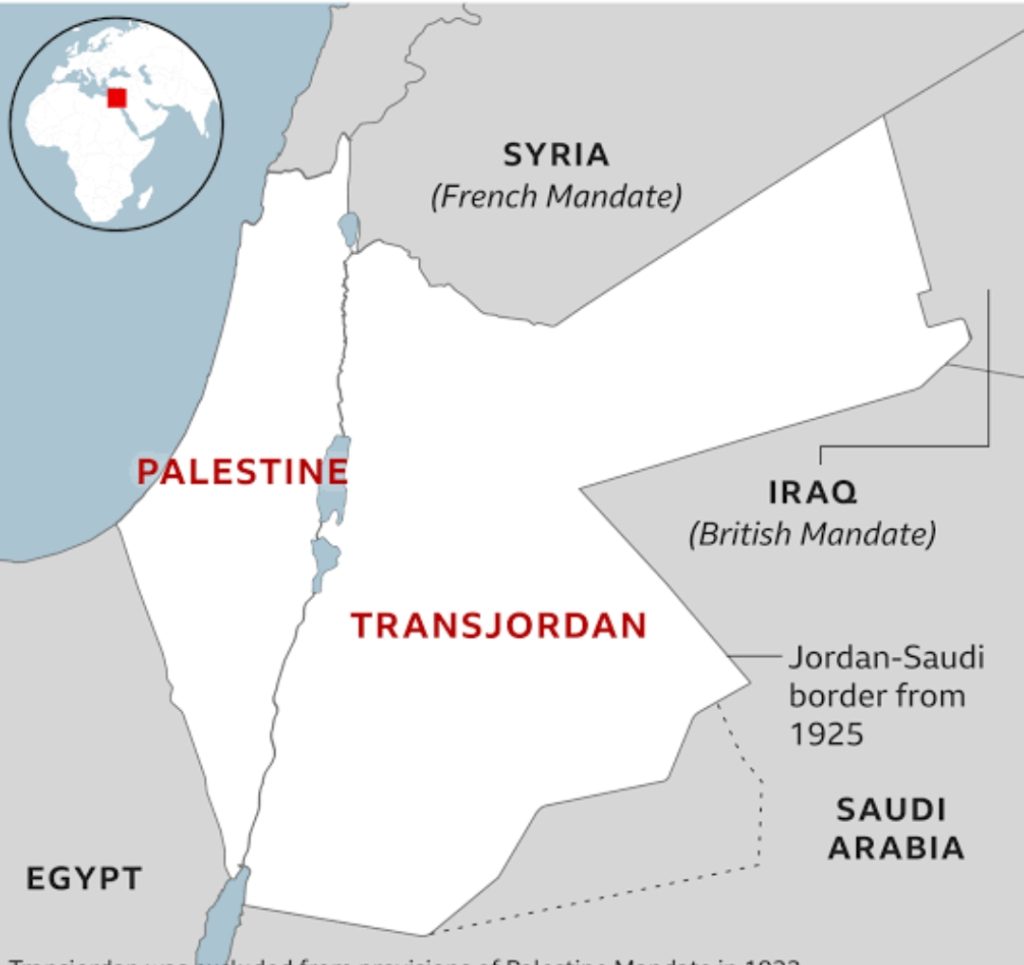
MIDDLE BELT FORUM By DR POGU BITRUS, (National President) 

1
Nyesom Wike, Minister of Federal Capital Territory, Abuja, Nigeria

Press Statement!

The attention of the Middle Belt Forum (MBF) has been drawn to a trending video clip by Sheikh Ahmed Gumi, a Kaduna-based Islamic Cleric noted for making a case for killer herdsmen across the country and negotiating payment of ransom for the release of kidnapped victims. We would have ignored Gumi’s outburst but for the following cancerous interpretations deducible from the said video clips from other clerics also rendered in Hausa: 

1. That it is wrong for a Christian infidel (Arne) to be appointed Minister of the Federal Capital Territory (FCT).

2. That the FCT belongs to the North therefore the Ministerial slot should be the exclusive preserve of the Muslim North.

3. That Muslims should not be comfortable with non-Muslims appointed to head the security agencies as they can’t be trusted to be fair to all groups.

It is noted that several other Muslim clerics have followed Sheik Gumi in spreading this vulgarity. For purposes of clarity, the Middle Belt Forum, an organisation comprising the ethnic nationalities of the Middle Belt Region that stretches across the middle section of Nigeria, wishes to categorically state that the FCT is a part of the Middle Belt. Also, the Middle Belt Forum serves the peoples of the Middle Belt who are multi-religious (Christian,  Muslim and Traditional worshipers) living peacefully together. The FCT was originally inhabited by the Gbagyi people who were dislodged from their ancestral lands by the Nigerian State to create the Federal Capital Territory that Gumi and his gang are now laying claim to. Gumi’s vulgarity is not just insulting the sensibilities of Nigerians, but a further display of the despicable arrogance associated with Gumi’s Fulani stock who have used state power to capture, manipulate and enthrone themselves over Nigeria and its resources. 

We repeat that history is unequivocal that at no time were the Fulani aborigines (original inhabitants) of the FCT. This is documented and established by all verified Historical narrations. The list of the ethnic configuration of the FCT in all known literature does not include the Fulani as indigenous to the FCT. Thus, the current noise by Gumi and his co-travellers is a failed attempt to stand history on its head.

As a Forum, we unambiguously condemn the messages contained in these trending video clips calling for the sack of Barr Nyesom Wike as the FCT Minister on account of his faith or where he hails from. That such calls are coming from Islamic preachers is unfortunate and reflective of a nebulous and subtle agenda aimed at enthroning a State Religion on Nigeria. God forbid! President Bola Ahmed Tinubu should not allow these religiously inflamed remarks by these preachers to go unprobed. Considering the roles Gumi in promoting negotiation with agents of banditry and insurgency, he should be quickly reined in to checkmate his evil and capricious activities.

As for the issue of the headship of security organisations, we all are mere survivors of the horrible results of the eight years of President Buhari when all security agencies were in the hands of Gumi’s Muslim stock. In the face of their grim failure whereby the entire North-west, North-east and North-central zones became war zones and havens for kidnappers and criminal elements, it amounts to shameless drunkenness for Gumi to state that only Muslims have the capacity to deal fairly with all groups in the country. Indeed it is clear that Gumi and his band of followers are hell-bent on igniting the monster of bigotry in a nation that is already set on edge. Of course, they are unhappy that the evil eight years of Muhamadu Buhari’s nepotism and religious discrimination are over. No country would survive the religious crisis of the magnitude Gumi and his gang are trying hard to plunge this country into. His Excellency, President Tinubu must act quickly and punish elements determined to unleash ethnic and religious war on the people.  

Our Muslim brothers, especially from the North, have always resisted the conduct of a census exercise to determine the actual number of people and their various religious/tribal inclinations in the North and in the Country at large. The National Population Commission has been frustrated by the likes of Gumi not to conduct any credible Census because of the lucrative advantage the so-called North has in the lopsided skewed figures currently deployed in the Nigerian structure that gives them undue advantage over other parts of Nigeria. Inflammatory statements like that of Gumi and his type will end if the Nation conducts a credible electronic census that will automatically RESTRUCTURE Nigeria. It is our firm belief that a viable Census will end the tribal/religious acrimony often utilised by characters like Gumi to intimidate other Nigerians when advancing sectional ideals.

In times like this when the government is engaged in rescuing the country from the claws of insurgents and bandits, religiously divisive comments by preachers like Gumi is an attempt to throw the country into a religious war. The Forum wishes to reiterate that every Nigerian, irrespective of religious and ethnic affiliations, should enjoy the right to be appointed into public office. Wike is eminently qualified to be appointed to his present position as the FCT Minister. He does not represent any religion or ethnic group; he represents and works for the Nigerian people. Those who are uncomfortable with his appointment should better wake up and smell the coffee and realise that the era when religion played the winning card is over.

Characters like Gumi and his co-travellers give oxygen to religious bigotry and endanger Nigeria’s unity. Wike is now the FCT Minister, and there is nothing anyone can do about it. Gumi should be reminded that those who call for rain must remember that they, too, shall be wet when the rain finally falls.

 Signed: 

Disclaimer: 

The opinions and views expressed in this write-up are entirely those of the Writer(s). They do not reflect the opinions and views of the Publisher (Nze Ikay’s Blog) or any of its employees. The designations employed in this publication and the presentation of materials herein do not imply the expression of any opinion whatsoever of the Publisher (Nze Ikay’s Blog) or its employees concerning the legal status of any country, its authority, area or territory or concerning the delimitation of its frontiers. Equally, the sketches, images, pictures and videos are gotten from the public domain.
Open Letter to the Minister of Justice and Attorney General of the Federation, Mr Lateef Fagbemi, SAN.

3
Minister of Justice and Attorney General of the Federation, Mr Lateef Fagbemi, SAN.

Disturbing Signals of Descent into Lawlessness

Dear HM & AGF,

I am constrained to write to you through this channel for two reasons. First, I do not have direct or personal contact with you. Secondly, the issues I am about to raise are, in my view, of significant public interest that private communication would not aid the necessary national conversation that I wish this letter would elicit. Pending the decision of the Supreme Court on the 2023 election, I plan to draw your attention to issues about the disturbing and worrying pattern of disregard and violation of the laws of the land since the inception of this administration.

The office of the Attorney-General is a creation of the Constitution and a very prominent member of the Federal Executive Council. The Constitution in S.150 (1) created the office of the Attorney-General “…who shall be the Chief Law Officer of the Federation and a Minister of the Government of the Federation.” The Constitution, in typical Nigerian culture of opaqueness, in S. 174 (1) focused the function of the Attorney-General on the power to institute criminal proceedings, to take over any criminal proceedings instituted by any authority, and to discontinue any criminal matter before judgment. The role of the AG as the adviser, legal representative, and chief law enforcement officer of the government clothed with independence appeared not to have been of interest to the framers of our Constitution, or maybe they presumed that the National Assembly would make a law that captures these details. 

A cursory review of the office of the Attorney General in Kenya, the United States of America, Brazil, and India all show a focus on independence, the role of the AG, the legal adviser to the government, the chief prosecutor, and the law enforcement officer. The Attorney-General’s functions, in many countries, are detailed in Acts of Parliament, not just the Constitution. 

There is a need for the National Assembly to enact a law codifying the role and functions of the Attorney-General and clothing the office with the necessary independence that would statutorily arm the office in the effort to curb executive lawlessness. I will pursue this line of thought further.

Honourable Minister, I do not know if the President routinely seeks your opinion in exercising his powers as the country’s chief executive. The growing lawlessness and Gestapo tactics the government is deploying to achieve its objectives would deepen the damage the immediate past administration did to the country. The arrest, detention, and purported resignation of the Central Bank Governor, Godwin Emefiele, and the EFCC Chairman, Abdulrasheed Bawa, exhibit all the trappings of the style of the Communist Party. 

Today’s crux of my letter is the gross violation of the CBN Act in appointing the new Central Bank Governor and the Deputies. First, the CBN Act provides in S. 8 (2) That the Governor and Deputy Governors shall be appointed in the first instance for a term of five years and shall each be eligible for reappointment for another term not exceeding five years. It added an important proviso, “Provided that, of the first four Deputy Governors to be so appointed, one shall in the first instance be appointed for three years and two shall in the first instance be appointed for four years.” The CBN Act prioritised experience and the need for continuity. The Senate (if they did) granting all four Deputy Governors a five-year term went beyond their powers. But the more critical issue is why the President appointed four Deputy Governors in one go. Did the previous Deputy Governors resign, too, like the Governor? 

If the four Deputy Governors resigned, and there is no evidence to that effect, did they serve the mandatory three months’ notice? If they did not resign, how were they removed from office? S. 11 (3) provides that “The Governor or any Deputy Governor may resign his office by giving at least three months’ notice in writing to the President of his intention to do so, and any Director may similarly resign by giving at least one month’s notice to the President of his intention to do so.” Honourable Minister, you need to take a second look at this egregious Act of removing from office persons who ought to enjoy independence and require Senate approval before removal from office. It is a bad precedent and an indication of the high level of disregard for rules that are becoming the hallmark of this administration.

S. 11 (4) further provides that “If the Governor, any Deputy Governor or Director of the Bank dies, resigns or otherwise vacates his office  before the expiry of the term for which he has been appointed, there shall be appointed a fit and proper person to take his place on the Board for the unexpired period of the term of appointment in the first instance if the vacancy is that of  (a) The Governor or a Deputy Governor, the appointments gallery be made in the manner prescribed by section 8 (1) and (2) of this Act; and 

The nomination by the President and the Senate clearance of the CBN Governor and Deputy Governors for five years’ tenure violates the CBN Act. The new Governor and Deputies can only complete the unexpired terms of their predecessors. This provision must have been made to protect the continuity and experience the Act provided for in S.8 (2). By this single Act of lawlessness or lack of attention to detail, this government has damaged the CBN’s structure, character, and independence. 

As a senior legal practitioner and learned silk, my dear AG, I believe you will not lend your imprimatur to this creeping lawlessness. My suggestions: You can seek out the past Deputy Governors and get them to resign quietly before they seek to enforce their rights. Also, ask the Senate to amend their clearance to reflect the provisions of S. 11 (4) so that the new CBN management would conclude the tenure of their predecessors. That way, the government would also comply with the need for the Deputy Governors to exit the bank staggered to maintain continuity and experience. 

Thank you for your kind consideration.

Osita Chidoka, 16 October 2023

Disclaimer: 

The opinions and views expressed in this write-up are entirely those of the Writer(s). They do not reflect the opinions and views of the Publisher (Nze Ikay’s Blog) or any of its employees. The designations employed in this publication and the presentation of materials herein do not imply the expression of any opinion whatsoever of the Publisher (Nze Ikay’s Blog) or its employees concerning the legal status of any country, its authority, area or territory or concerning the delimitation of its frontiers. Equally, the sketches, images, pictures and videos are gotten from the public domain.
THE ARMAGEDDON CALLED THE AWKUZU SARS UNDER CSP JAMES NWAFOR

1
Awkuzu SARS under the Leadership of CSP James Nwafor

This is going to be unusually lengthy for my piece but, it is necessary to enable a comprehensive understanding of the modus operandi of Awkuzu Sars under CSP James Nwafor. I will try as much as possible to narrow it down to the essential points. My coming in contact with the outfit started on August 1st 2013 when my Upper-class hotel was demolished. On the very date, I drove into my hotel from my residence at around 7.30 in the morning. Minutes after that, a truckload of Policemen arrived and surrounded my hotel. It did not take long before the crowd started gathering outside of the hotel as I looked through my office window. It took some time before some of the police officers walked into my office with Dr Justin Nwankwo. My other hotel staff has already been beaten to a pulp downstairs. I introduced myself and they said that they wanted to search the whole of the hotel premises and I said no problem. 

We started from the last floor of the hotel, room after room and most of the rooms were occupied by guests that are mostly traders from Cameroon. We finally got to the first floor but before then, one of the officers had demanded that we show them to room 102. When we got to room 102, the door was locked and I turned and asked Dr Nwankwo Justin whether a guest had paid for the room the day before and he said yes. I asked about the manifest of the hotel lodging and he said that he had submitted the police copy to SCIB at the Central Police Station Onitsha which every hotel is obligated to do before 7 A.M. every day. I instructed him to bring our copy which he hurriedly did and we showed it to the police. The guest gave his name as John Obi. The officers insisted on breaking the door and I pleaded with them to wait for the guest for some time. the customers of Upper-class hotels are predominantly traders from Cameron and Niger Republic and they carry a lot of cash with them. That has been the case since 1974 the hotel was built because of its nearness to the main market Onitsha. Before I could finish, they broke the door and entered the room. We saw black polythene bags (waterproof) all over the room with an open suitcase. The officers then opened the wardrobe and brought out a bag. Inside the bag were two human skulls with sand all over them and two rusted and unserviceable AK-47 guns. 

I was promptly leg chained on both legs and Dr Justin Nwankwo was handcuffed. I was taken to the outside corridor of the hotel and made to kneel while holding the exhibits and they took pictures. At that point, from the faces I saw amongst the crowd with axes and matchet, I then knew where the whole incident came from, Hazzard of land business along with motor park duel. By the time I was led downstairs, practically most of the police officers had all headed back to the station except the ones that accompanied me. The crowd were surging to mob me. Luckily for me, I came to the office with my Q56 Infinity SUV and the leg chain gave me some space to drive. As I entered my SUV started the Engine and pushed down the vehicle auxiliary, I turned around to the police officers and told them that I already knew what happened and that if the crowd rushed at me, I would fill up the MORTUARY at the general hospital Onitsha including myself. As I surged on, one of the police officers opened the vehicle door and started firing rapidly in the air. That pretty well saved me and some of those people. 

From the Area command Onitsha, we headed to Awkuzu SARS with CSP James Nwafor and his team. Dr Justin Nwankwo and the staff were packed in one vehicle while I, CSP James Nwafor and three other SARS officers were in another vehicle. When we got to the present ROAD SAFETY office along the Enugu / Onitsha before you get to Awkuzu Sars, James Nwafor turned around and said to me: 

1. You will never see that hotel again. 

2. He will kill me whether I am innocent or not and if I am innocent, may my blood be on him and his children. 

When we entered Awkuzu proper, Dr Justin Nwankwo was kept in their torture hall while I was taken behind the torture hall where James Nwafor mostly does his killing. Behind the very torture hall, I was chained to a local weight-lifting device. After some period James Nwafor came back with some officers along with one other officer I later discovered to be his deputy by name CSP Sunday Okpe. Sunday Okpe inspected the exhibits for some time and asked me the following questions: 

1. Were the exhibits recovered in my office and I said no, it was recovered in a guest room. 

2. Do we have the hotel manifest I answered yes that we submitted the police copy early in the morning but that my manager has a duplicate copy. 

He inspected the exhibits yet again and said that the skulls looked old and that the guns had not been in use for a long time, why all in one bag he asked while the rest looked on. As he turned to leave, he muttered; this looks like mago mago. His observation did not stop James Nwafor. Not long after that, one of the officers came back with an already written statement and I was asked to sign. I refused to say that I am quite capable of writing my statement. My torture commenced immediately. I was overpowered and my shirt was removed from me. They then wrapped my neck with the shirt and then followed it will a green rope and they started pulling from both ends. Gentlemen, I was gone. They then appended my thumbprint on the prepared statement that substantiated the allegations against me. Meanwhile, Dr Justin Nwankwo was seeing hell in the torture hall. 

When I eventually regained consciousness, I found myself in their death chamber called cell 5. It is the cell that is reserved for those James Nwafor will kill. Congested and extremely dirty. Food is not allowed in the very Cell unless periodic loaves of bread are shared in slices. One bucket of water every day for drinking. The shock of my life happened on the second or the third day of being in the very cell 5. There is this small boy between the ages of 19 and 22, a second-year Engineering student of FUTO. He calls me uncle. He told me that he was the only son of the mother and that his supremely rich uncle, based in Lagos wanted to annex his own father’s portion of family land and that his father was late. His resistance against the uncle landed him as a kidnapper and armed robber at SARS. Then, it was either the second or third night of my stay in the condemned cell and the door of the cell opened late one night. What I saw was a touch light. Names were being called one after the other, 17 names in all including the small boy and they were ordered out and the door closed back. It did not take more than 15 minutes, gunshots filled the air, Nne moo! Nne moo!! was all I could hear. The 17 young men were slaughtered in cold blood. I lost it that night. My system just shut down. 

It was either the 4th or 5th day that the door opened one morning and it was the same Sunday Okpe that called my name and told me to come out. No energy was left in me because I had not eaten real food except periodic slices of bread. He bought me something to eat along with a malt drink. I was subsequently transferred to cell 1. After some days, I was called into James Nwafor’s office to see my wife and my lawyer Professor Umenweke Nnama Meshach. I tried to get Dr Justin Nwankwo to join me but they refused. As time went on, I discovered that the case was hanged because there was no complainant. Even James Nwafor voiced out some frustration when he said, the hotel demolition was too fast. This is the same person who told me that I would never see the hotel again. He became unusually friendly towards me but I knew it was damage control. The latitude allowed me to study what truly obtained at the AWKUZU SARS. I witnessed some of the tortures and I became aware of some of their cases along with what happens in the place. 

1). I witnessed an incident when a young trading apprentice was arrested by SARS on behalf of the master over a missing 250,000 Naira or thereabout. He broke his spinal cord and died when he was subjected to what they call HANGING TORTURE. He was written off as an armed robber.

2). I witnessed an incident during what they call a verification exercise or something like that. All the inmates will be brought out in the open yard and all will be seated on the ground. When your name is called, you will stand up and answer some questions. There is this boy that was called up and James Nwafor asked him; Are you from Ogidi? Before the boy can finish saying no, James shoots him with a silver-coloured pistol which is always with him. The boy bled to death right there.

3). I also witnessed the practice of shifting inmates in the middle of the night to Nneni to dodge official inspections of the place. Nneni SARS annexe is another abattoir. 

Starvation of inmates and outright shooting is the rule there. If the government undertakes the excavation of the perimeter of the Nneni annexe, The Ezu River will be a joke compared to what will be discovered. I saw other killings at the very place. Every morning, the inmates of CELL 1 will be called to carry a dead body or two behind the torture hall. Any individual who has been detained by SARS for an extended period will tell you exactly that. Let me clarify an issue here. CSP James Nwafor does not release proven kidnappers or armed robbers, he kills them but, with a negotiated huge amount of money, James will at most, charge the person to court. The outright release of the person is off as far as I know. What I also know is that he can be bought to do a particular job, death inclusive, if the price is right. 

Let me stop here but there are more details. If the government of the day is desirous of appeasing the victims of SARS, the government should offer immunity to some officers who served under James Nwafor and they will lead investigators to the exact location of the corpse dump in the vicinity of Nneni. Some of the SARS victims can at least recover the body of their loved ones for burial.

I am BONAVENTURE CHOKWEBUNDU MOKWE & I’m also called THE CHIEF PRIEST.

Disclaimer: 

The opinions and views expressed in this write-up are entirely those of the Writer(s). They do not reflect the opinions and views of the Publisher (Nze Ikay’s Blog) or any of its employees. The designations employed in this publication and the presentation of materials herein do not imply the expression of any opinion whatsoever of the Publisher (Nze Ikay’s Blog) or its employees concerning the legal status of any country, its authority, area or territory or concerning the delimitation of its frontiers. Equally, the sketches, images, pictures and videos are gotten from the public domain.

SLAVERY IS NOT AN OPTION By Patrick Okedinachi Utomi

2
A Nigerian Renowned Economist, Social Critic and a Chieftain of the Labour Party, Prof. Patrick Okedinachi Utomi
Renowned Economist, Social Critic and a A Nigerian Renowned Economist, Social Critic and a Chieftain of the Labour Party, Prof. Patrick Okedinachi Utomi

This is a freedom manifesto for the captured people of Nigeria offered in autobiographical form.

Beginning from age 17 as an undergraduate at the University of Nigeria I have rallied resistance against injustice. My early cry for doing things right peaked with my calling out students at UNN to protest the police killing of University of Ibadan Student, Kunle. Given the emotions of the times when UNN students lost three years as they watched friends and family die like chickens while UI students were in class during the Civil war was a hard sell. But we joined forces with Bassey Ekpo Bassey and founded the Syudents Democratic Society because we prized human solidarity. The mobilization and sensitization crested in February 1974 such that I forgot it was my 18th birthday. A statement by one of the speakers at about 8.30 extolling the historic significance of that day for post-war emancipation startled me into realizing it was my birthday. 

As with my rallying against the June 12 election annulment from a hallowed position as an executive in Industry and my putting my life and career on the line to push back on the Abacha darkness, what was uppermost in my mind was justice and what would flavour the environment for progress and the common good and not the applause of those around. I would do it if I walked alone. I was seldom driven by the ‘popular’ appeal of the cause. In all the cases the dictates of a conscience I have struggled to form decently was the propeller. Now in the autumn of my time of being I am moved again to act to prevent a new slavery and deadly fascism I warned about in a book I first published in 2019. The subtitle of that book which rings true today is Citizenship, State Capture, Creeping Fascism and the Criminal Hijack of Politics in Nigeria. As in 1973, 1993 and now in 2023 many around me wonder why take the trouble when you can just ‘leave it’ and move on. Especially as age takes its toll. Why not leave struggle and rest peacefully until you go to rest in peace.

To retreat from truth because the flesh is weakening from the pressures of time, is to do injustice to one’s purpose and live St Paul’s fear regarding pursuing the crown of life till the very end, lose the investment of a lifetime. One more season of inconvenience can be accommodated if it will free the future. When Nigeria set course to elect new leaders in 2023 I chose to suspend my disgust with what we call a democratic process because Mahmoud Yakubu sounded like he could be trusted to organize credible elections.. I also thought it was consolidation time on years of sometimes quiet and sometimes not too quiet effort to build a Third Force that could be the only real alternative in the Nigerian political party system.

Wearing my sense of Justice toga, as I believe Chief Ayo Adebanjo, President Obasanjo and a few others did,  I thought that if a good candidate could be found from the South East, or Igbo-speaking communities it would help project inclusion and strengthen Nigeria project, as a similar view for the South West did in 1999. 

But the affirmative action inclination recognized that the aristocracy of talent defines our times. Meritocracy was key and if those communities offered the run-of-the-mill politicians who could not lead us away from the troubling road Nigeria was travelling we would be obliged to turn elsewhere to advance the Nigeria project, its cause, and course. I knew the New Fabians, a reformist social action and discussion group I helped found, were working towards my being the candidate of the Third Force that would bring the Labour movement, several Political Parties and breakaway elements in PDP and APC together under one banner.

But in a Live Radio interview in Enugu on May 5 2022 I said the best deal for Nigeria would be if PDP nominated Peter Obi, and APC, Dr Ogbonaya Onu. Those were capable people of character from a number of unworthy aspirants from that part of our national geography. 

I figured in a three-way context Nigeria would be the winner whoever of the three of us emerged from a free and fair contest. I knew the system was corrupted but not such that those who through state capture had bled government treasuries dry with the effect of many dying from poor state services could draw from the ocean of resources they had primitively accumulated to buy the nomination of their Party,  but I did not realize the extent of the narcissism that could have caused the blindness to the inclusion and social justice issues threatening the possibilities of Nigeria. Neither Obi nor Onu were in a position to win the nomination bidding wars laced with treachery and votes for cash. When the Labour Party harvested Peter Obi as an aspirant under the wings of the party I was actually given to believe the Labour Unions we had been working with would choose a Political Party other than Labour as a platform for engagement. But Femi Falana(SAN) and one of the New Fabians, insisted The NLC should retrieve the Labour Party and go with it. He procured a consent judgment to that effect and we found ourselves partners with Peter Obi, working on an issues-based campaign pushing for rational public conversation on the afflictions of Nigeria.

The vexed other side turned to emotions and parochial deepening of the cleavages Nigeria desperately needed to bridge. More disturbing for me was a disposition to totally, even, violently forcefully dominate others and bully people, violently or by all forms of blackmail and then to cow them when elections were falsified. My worst fears were brought alive when America’s NDI and IRI delegations from the US who I had accused in the past of hearing no evil and seeing no evil so long as there was peace and quiet questioned the conduct of the elections. Then the EU and CARITAS reports came. The consensus was that the elections were a farce.

Notice that all through I have not said this or that person won. I was interested in the credulity of the process. As a partisan, I supported a candidate but as a citizen, I wanted a system that worked well enough to provide the legitimacy necessary to lead and solve a myriad of problems facing Nigeria.  Had Sowore, Atiku Abubakar or anybody else come through such a process I would quickly congratulate them whether or not my goals were projected through their candidacy.

As I repeated frequently the four leading candidates were friends of mine of many decades. Still, it did not stop me from asking myself the hard question about the long-term good of Nigeria and its young people who are by far the majority but very much victims of a rent-seeking old guard quite able to stop at nothing to protect undeserved advantages in the system. In the 2023 elections, this old guard went far too far. I became convinced that if Citizenship conduct did not stop the emerging order Nigeria would become far worse than the Banana Republics of old. The culture of public life has sunk so low that the odium oozing out desperately calls for disinfecting unless our desire is to invite decay. When the ascendance of pure trash approaches its apogee in a society where citizenship is in retreat the will of that society to think and act so it can adapt to its changing environment simply tumbles into collapse. 

Wearing my Prophet Amos vestments I had repeatedly pointed to thinking Nigerians to the robust works of Jared Diamond in Guns, Getms and Steel, and even more importantly in Collapse, on how societies have failed throughout human history. Nigeria has been positioning for collapse for quite a while and the current Usurpation may just be the final straw that breaks the Camels back. Desperate acts to shock culture back to life are required. That is what we had to do during the Abacha usurpation by canvassing international sanctions, taking to the streets and occupying the media. Yet these times are more perilous for the Nigeria project than under Abacha. This is a time for an accounting of history. Sanctions against our country, sadly, must become the battle cry for all.

I want to assure you that my fears for the present state of Nigeria have come from the very sober digest of extant conduct. I have watched some people who hailed me as a unique citizen in 1973 and marched with me in 1993/94 succumb to emotional parochial pitches of a divisive nature seeking to separate us and them then turn their Back to truth. It is not their fall from Citizen wannabes to the lower levels of tribesmen and even idiots,  in the old Greek rankings that alarmed me so much but the collective failure to see how human progress proceeds, and that the path Nigeria was traveling seemed assurance that progress would elude us.

I was full of compassion and tried not to judge too harshly those who had climbed down the totem pole from citizenship in the face of emotions triggered by parochial pressures from demagogues and fascists. It was a global phenomenon at play from Trumps America to Nationalists in Europe justifying the work of the Centre for Moral Cognition at Harvard bringing together Neuroscience, Psychology and Philosophy to explain how the new moral tribes are arising. But it was clear from my own work that Institutions, Values and Meritocracy helped define modernity and progress that to allow an emerging fascist order taking form in Nigeria to fasten its grip on the country without resistance would be a collaboration in evil. The fangs of this emerging order of which the Buhari-Tinubu Usurpation is central glorify the crippling of institutions such as INEC and the Judiciary, the Collapse of culture so evident in the huge character deficit in almost all who lead the three arms of the usurped state, and the contempt of the emerging order for merit which Adrian Wooldridge nicely characterizes as the Aristocracy of talent which has shaped the modern world. Not to resist such an emerging anti-democratic order would be to be complicit in the demise of the idea of Nigeria.

It is as such that I invoke the Spirit of Mahatma Gandhi, Martin Luther King Jnr, and Nelson Mandela in calling for the Isolation of the captured State in Nigeria with sanctions as we called for under Abacha. I shall commit to a non-violence resistance to the Usurpation in Abuja even as I insist that Nigeria is more deserving of invasion to restore democracy than Niger is.

The goal of the Usurpation is truly the enslavement ‘of ‘those not us’ and there is no place for a new slave trade. We must free the black man from 1000 years of servitude that is the effect of this criminal hijack of politics I warned about four years ago. Only global action by Nigerians anywhere they may be will save us. So let this freedom manifesto be shared to all men of goodwill for slavery is not an option.

May God save our Fatherland! 

Disclaimer: 

The opinions and views expressed in this write-up are entirely those of the Writer(s). They do not reflect the opinions and views of the Publisher (Nze Ikay’s Blog) or any of its employees. The designations employed in this publication and the presentation of materials herein do not imply the expression of any opinion whatsoever of the Publisher (Nze Ikay’s Blog) or its employees concerning the legal status of any country, its authority, area or territory or concerning the delimitation of its frontiers. Equally, the sketches, images, pictures and videos are gotten from the public domain.
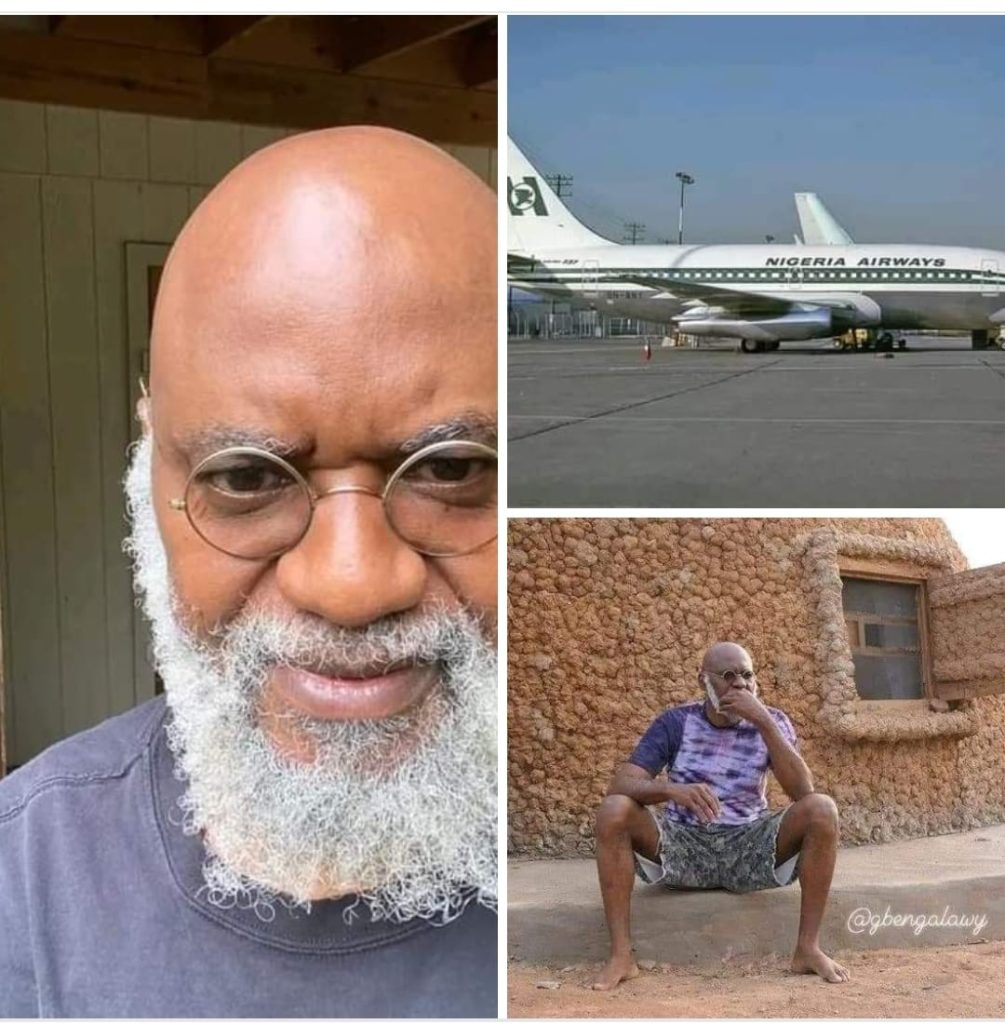
OPEN LETTER TO MR BALARABE SHEHU ILELAH, DG NATIONAL BROADCASTING CORPORATION (NBC) BY KENNETH OKONKWO ESQ.

0
BARRISTER KENNETH OKONKWO

I read the letter written by Mr Balarabe Shehu Ilelah, DG of NBC, and wish to state as follows:

1. I sympathize with him in this unfortunate journey intended to please his employers, but state that he would have been more wise and circumspect in going about it.

2. Maybe he is not aware that the Court has decided that NBC has no power to fine or sanction any media house. Intimidating or manipulating the media house is a form of sanction and is unlawful.

3. He ill-advisedly mentioned my name in his letter as making an unguarded utterance simply because I confirmed that the Chicago State University certificate, which BAT submitted to INEC, was forged, for the simple reason that the University has expressly stated that the certificate did not come from them, which is the condition necessary to prove forgery.

4. This statement is an outright infringement on my fundamental human rights as enshrined in Sections 38 and 39, which provide that “every person shall be entitled to freedom of thought…; every person shall be entitled to freedom of expression, including freedom to hold opinions and to receive and impart ideas and information, ideas and information without interference”.

5. These rights are superior to the NBC Statute which the DG incorrectly stated and his mentioning my name in his letter is an attempt to rudely interfere with my divinely and constitutionally guaranteed rights and he should desist henceforth from further mentioning my name in any letter or communication whatsoever. I remind him that, by law, any infringement on the fundamental human rights of Nigerians attracts punishment of damages.

6. The Constitution also protects the right of the media in Section 22 to be free to uphold the responsibility and accountability of the Government to the people. Again the DG does not have the right to deny Arise TV its right to hold the government accountable to the people.

7. It’s unfortunate that when all media houses condemned Mmesoma for forging her Jamb certificate, and rightly too, without being convicted by a court, simply because JAMB disowned her certificate, and rightly too, the DG didn’t write to any TV station or mention the name of any guest on TV who condemned such forgery. Now that the certificate of the President is disowned by the University that purportedly issued it, the DG has suddenly found his mouth to mention the names of the people who condemned such forgery of the certificate after the university disowned it and even wrote the media house to threaten it.

8. The only unguarded utterance here is the ill-advised letter written by the DG to Arise TV and this must stop. I did not make my name by forging my certificates, I made my name by investing the talent of acting God has deposited in me to create a new movie industry called Nollywood which started with the movie Living in Bondage, and which pleased God to make me the first Actor of the industry which is employing millions of Nigerian Youths. I have since improved to become a Lawyer and advocate for a New Nigeria, which preceded this new political dispensation.

9. If your letter is an attempt at intimidating me not to say the truth, you have failed because I have already decided to fight for a new Nigeria based on the truth, realizing that truth is the only thing that brings genuine and permanent solutions to a nation’s problem. It is letters like your own that have prompted foreign entities to wrongly ascribe forgery as a Nigerian thing. Please desist from such letters.

10. Sir, I humbly take exception to your using my name disrespectfully and demand an apology from you. I will restrict myself and be as civil as possible in this writing because this is the first time you are embarking on this misadventure. I will certainly not be this civil next time if this attitude continues. Accept my best regards and thank you for your anticipated cooperation.

Sincerely, Kenneth Okonkwo Esq.

Disclaimer: 

The opinions and views expressed in this write-up are entirely those of the Writer(s). They do not reflect the opinions and views of the Publisher (Nze Ikay’s Blog) or any of its employees. The designations employed in this publication and the presentation of materials herein do not imply the expression of any opinion whatsoever of the Publisher (Nze Ikay’s Blog) or its employees concerning the legal status of any country, its authority, area or territory or concerning the delimitation of its frontiers. Equally, the sketches, images, pictures and videos are gotten from the public domain.