Home Blog Page 3

From Viral Courage to Vindication – Kadri Alabi’s Battle Against Injustice and the Quest for Safety”

7
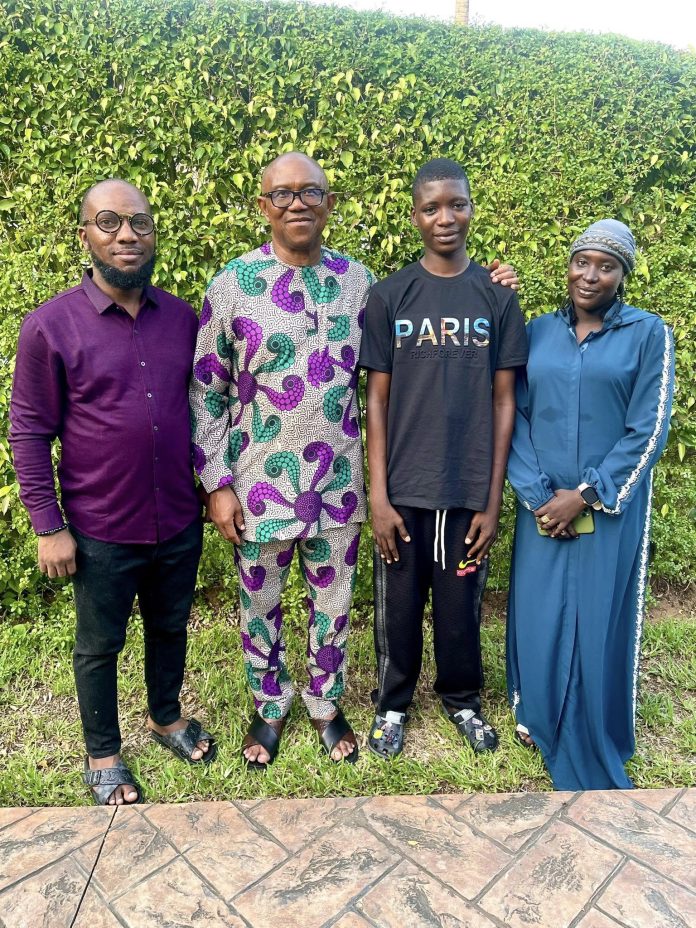
Kadiri Alabi after release from the Nigerian police Custody. From left, his lawyer Inibehe Effiong, The Labour Party Presidential Candidate for 2023 Elections, Peter Obi, the teenage victim, Kadri Alabi, and his Mother

In a tale that intertwines fleeting internet fame with a harrowing brush with systemic injustice, 17-year-old Kadri Alabi has emerged from three months of wrongful incarceration to demand accountability, compensation, and a chance to rebuild his shattered life. His story—a stark reminder of the vulnerabilities faced by Nigeria’s youth—began with a moment of courage and spiralled into a nightmare of corruption, intimidation, and institutional failure.

The Viral Moment That Changed Everything

In 2023, Kadri Alabi, then a teenager from Amukoko, Lagos, stepped into the spotlight when he stood defiantly before the convoy of Peter Obi, the Labour Party’s presidential candidate, during a campaign visit. The encounter, captured in a viral video, symbolized youthful audacity. Obi, moved by the boy’s boldness, reportedly gifted him cash—a gesture that unwittingly set off a chain of perilous events.

A Community’s Greed, A System’s Complicity

The goodwill Kadri received soon became a curse. Local “area boys,” envious of his sudden windfall, allegedly kidnapped him, demanding a share of the money. When he resisted, they colluded with officers at the Amukoko Police Station, fabricating charges of armed robbery and street fighting. What followed was a chilling orchestration of injustice: Kadri, a minor, was unlawfully remanded at Kirikiri Medium Security Custodial Centre alongside four unrelated adults. Police falsified his age as 18 to mask the absurdity of charging a child with armed robbery, while a complicit magistrate approved his detention without evidence.

For three months, Kadri languished in custody—a pawn in a corrupt scheme—until Lagos State’s Department of Public Prosecutions (DPP), led by Dr. Babajide Martins, intervened. The DPP’s legal advice exposed the sham: “No evidence substantiates these allegations.” On Thursday, Magistrate A.O. Olorunfemi discharged Kadri, vindicating him but leaving scars that no court ruling can heal.

Demanding Accountability: N100M Compensation and Police Reckoning

Kadri’s legal team, led by human rights lawyer Inibehe Effiong, has launched a fierce campaign for redress. Their demands are unambiguous:

  1. Immediate disciplinary action against Amukoko’s Divisional Police Officer (DPO), Investigating Police Officer (IPO) Inspector Odigbe Samuel, and all complicit officers.
  2. N100 million in compensation for Kadri’s trauma, funded by the Nigeria Police Force.
  3. A public apology acknowledging the wrongful arrest and detention.

“This was not a mistake—it was a sinister, oppressive plot to destroy a child’s life,” Effiong declared, vowing litigation if the state fails to act. The case has reignited debates about police brutality, ethnic profiling, and the weaponization of Nigeria’s justice system against the poor.

A Family Under Siege: Threats, Extortion, and a Plea for Sanctuary

Freedom, however, has not brought safety. Kadri’s family remains terrorized by the same actors who orchestrated his arrest. Area boys, emboldened by impunity, have threatened retribution, forcing the family into hiding. Even the community’s traditional leader (baale) reportedly pressured them to “appease” their tormentors with a ritual offering of rice and a cow—a cruel twist of cultural extortion.

Effiong, now coordinating a fundraiser, revealed the family’s dire straits: “Amukoko is a death trap. We secured a hotel for tonight, but they need permanent relocation, financial stability, and Kadri’s rehabilitation.” The campaign aims to raise funds for shelter, education, vocational training, and support for Kadri’s widowed mother, a petty trader struggling to feed her children.

A Second Chance: Education, Healing, and Hope

Kadri’s ordeal has not dimmed his aspirations. “He wants to return to school and learn a trade,” Effiong shared, emphasizing the urgency of societal support. “Rehabilitating Quadri isn’t charity—it’s an investment in a future he was nearly robbed of.”

Donors have been assured of transparency, with strict measures to prevent fraud. Yet, the fundraiser transcends one boy’s survival; it is a litmus test for Nigeria’s collective conscience. Will society rally to protect a child failed by the state, or will indifference compound the injustice?

A Mirror Held to Nigeria’s Broken Promise

Kadri Alabi’s story is more than a legal battle—it is a searing indictment of a system that criminalizes poverty, empowers corruption, and abandons its youth. His viral moment, once a symbol of hope, now underscores a chilling reality: in Nigeria, innocence is no shield against predation.

As Kadri seeks solace in anonymity and his lawyers fight for redress, the question lingers: How many more children must endure this fate before the system changes? For now, his fight is a clarion call—a demand for justice, a plea for empathy, and a testament to resilience in the face of a state that too often forgets its most vulnerable.

“When the law becomes a tool of oppression, the people must become the architects of justice.” — Kaadri’s battle is Nigeria’s reckoning.

NzeIkayMedia ✍️

Disclaimer: 

The designations employed in this publication and the presentation of materials herein do not imply the expression of any opinion whatsoever of the Publisher (Nze Ikay Media) or its employees concerning the legal status of any country, its authority, area or territory or concerning the delimitation of its frontiers. Equally, the sketches, images, pictures and videos are gotten from the public domain.


Headcount of Exclusion – Tinubu’s Lopsided Census Committee Threatens National Cohesion

0
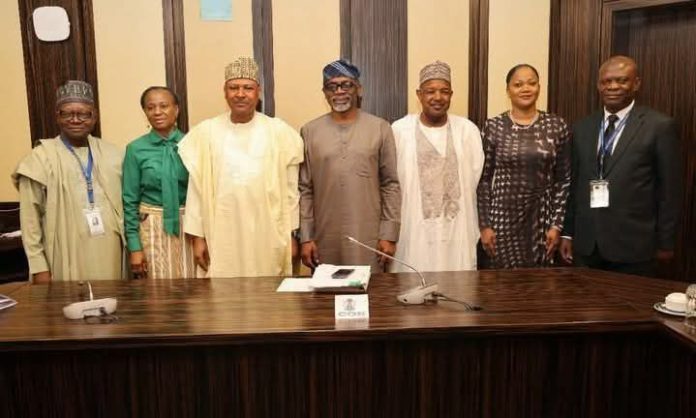
The newly inauguarated 8-man committee on the National Population Census

Recently, an 8-man committee on the National Population Census was inaugurated, and strikingly, 5 out of the 8 members are from the South West—President Tinubu’s own region.

Here’s the breakdown of the committee members:

1) Alhaji Atiku Bagudu – Chairman (North West)
2) Alhaji Idris Malagi – Member (North Central)
3) Mr. Oyinade – Member (South West)
4) Mr. Wale Edun – Member (South West)
5) Mr. Zacch Adedeji – Member (South West)
6) Engr. Abisoye Coker-Odusote – Member (South West)
7) Mr. Hakeem Muri-Okunola – Member (South West)
8) Alhaji Kwarra – Secretary (North Central)

The Geo-political representation:

a) South West – 5 members
b) North Central – 2 members
c) North West – 1 member
d) South East – 0
e) South South – 0
f) North East – 0

The composition of Nigeria’s newly inaugurated 8-man committee for the National Population Census has ignited justifiable outrage over the glaring exclusion of entire regions, particularly the Southeast (home to the Igbo people), the South-South, and the Northeast. With five members from the South-West (President Tinubu’s geopolitical zone), two from the North-Central, and one from the North-West, the committee’s regional imbalance raises urgent questions about equity, inclusion, and the administration’s commitment to national unity. This brazen marginalisation of Ndigbo and others is not merely an oversight—it is a dangerous reinforcement of historical grievances that threaten Nigeria’s fragile cohesion.

A Census Committee Without National Character

A national census is the bedrock of governance, shaping resource allocation, political representation, and development planning. For such a critical exercise to proceed without input from three of Nigeria’s six geopolitical zones—regions collectively representing over half of the population—undermines the legitimacy of the process. The Southeast, which has long decried systemic marginalisation, is once again erased from decision-making tables. The South-South, despite contributing the bulk of Nigeria’s oil wealth, is similarly silenced. Meanwhile, the Northeast, still reeling from insurgency and displacement, is denied a voice in a process vital to its recovery.

This lopsidedness mirrors patterns of exclusion under the Tinubu administration. From key security appointments to economic advisory roles, the Southeast and other regions have been conspicuously absent. Such exclusion fuels perceptions of a tribalistic agenda, alienating communities already sceptical of federal power structures. For Ndigbo, whose historical trauma of post-civil war marginalisation remains unresolved, this latest snub is a painful reminder of their second-class status in Nigeria’s political calculus.

Why This Matters: Trust, Credibility, and National Unity

A census lacking inclusive participation risks being viewed as a tool of exclusion rather than a neutral exercise. Communities omitted from the planning process may distrust the results, rejecting them as politically weaponised to skew representation and resources. For instance, population data influences revenue-sharing formulas, legislative seat allocations, and federal projects. If regions like the Southeast are excluded from shaping the census methodology, how can they trust its outcomes? This scepticism could deepen separatist agitations, emboldening groups like IPOB and undermining efforts to foster dialogue.

Moreover, Nigeria’s unity hinges on equitable representation. When entire zones are sidelined, it sends a message that their interests do not matter. The Tinubu administration’s failure to prioritise inclusivity in such a foundational exercise betrays a troubling indifference to Nigeria’s diversity. It also plays into narratives of “winner-takes-all” politics, where the ruling party’s region monopolises power while others are relegated to spectators.

Historical Echoes and the Danger of Repetition

Nigeria’s history is scarred by crises rooted in exclusion. The 1960s census controversies, which exacerbated regional tensions ahead of the civil war, serve as a grim reminder of how divisive population counts can become. Today, repeating such mistakes amid heightened ethnic polarisation and insecurity is reckless. The Igbo people, still grappling with the legacy of the war and ongoing systemic neglect, are being pushed further to the margins. When combined with economic despair and security failures in the Southeast, this marginalisation risks boiling over into unrest.

A Call for Course Correction

To salvage the census’s credibility and Nigeria’s unity, the Tinubu administration must:

1. Expand the committee to include representatives from all six geopolitical zones immediately.

2. Publicly commit to inclusivity in all national projects, ensuring no region is excluded from decision-making.

3. Address historical grievances through deliberate policies that bridge trust deficits, particularly with the Southeast.

A nation cannot thrive when sections of its citizenry are rendered invisible. The census is more than a headcount—it is a statement of who belongs. By excluding Ndigbo and others, this administration risks writing their exclusion into Nigeria’s future. The time to correct this injustice is now, before the seeds of further division take root.

Meanwhile, this committee has just three weeks to submit its report to the President on a matter as critical as the national population census—an exercise that has historically shaped Nigeria’s national planning, resource allocation, and political representation. If a vital national assignment like the census is handled with such blatant regional imbalance, one must ask: What could be more critical to inclusiveness than a national census?

This glaring exclusion of entire regions exposes the increasingly tribalistic tendencies of President Tinubu’s administration. A truly national exercise requires representation from all six geopolitical zones. With three regions entirely excluded from the decision-making process, the credibility of the census outcome is irreparably compromised.

Nigeria’s strength lies in its diversity. To neglect this truth is to court disaster.

NzeIkayMedia ✍️

Disclaimer: 

The designations employed in this publication and the presentation of materials herein do not imply the expression of any opinion whatsoever of the Publisher (Nze Ikay Media) or its employees concerning the legal status of any country, its authority, area or territory or concerning the delimitation of its frontiers. Equally, the sketches, images, pictures and videos are gotten from the public domain.
The Silenced Ingenuity: Nigeria’s Suppression of Biafran Innovation and the Cost of Tribal Politics

0
The revered University of Nigeria Nsukka which was named University of Biafra during the Civil War

Nigeria’s journey toward technological self-reliance has been a tale of paradoxes. While nations like Japan and Germany transformed postwar ingenuity into global industrial dominance, Nigeria’s trajectory tells a darker story—one where innovation was not nurtured but stifled, not because it lacked promise, but because of who pioneered it. At the heart of this narrative lies a decades-old policy of systemic marginalization: the deliberate suppression of technological and intellectual advancements originating from the Igbo people of the former Biafra, driven by political vendettas and ethnic distrust.

The UNN Paradox: A Department Silenced, A Legacy Erased

The University of Nigeria, Nsukka (UNN), conceived as a beacon of postcolonial intellectual pride, once housed a thriving Chemical Engineering department. Before the civil war (1967–1970), it was a hub of groundbreaking research, attracting Nigeria’s brightest minds. But by 1970, the department vanished—not due to budgetary constraints or academic irrelevance, but because it symbolized what the victorious Nigerian state feared most: Igbo ingenuity.

During the war, Biafran scientists and engineers, blockaded and outgunned, turned scarcity into opportunity. Professor Gordian Ezekwe and the Biafran Research and Production Unit (RAP) became legends, crafting rockets, refining fuel in backyard modular refineries, and even powering vehicles with palm oil—an eco-friendly innovation decades ahead of its time. These feats, born of necessity, showcased a brilliance that defied Nigeria’s siege. Yet, postwar policy treated this ingenuity not as a national asset but as a threat. The UNN’s Chemical Engineering department, viewed as a potential incubator for future Biafran resistance, was shuttered. The message was clear: Igbo intellectualism must be contained.

A Pattern of Erasure: From PRODA to Palm Oil Pioneers

The closure of UNN’s department was no isolated act. It echoed a broader strategy to dismantle Igbo-led technological institutions. The Project Development Institute (PRODA) in Enugu, established in the 1960s, once manufactured trucks, ceramics, and renewable energy systems. Postwar, it was starved of funding and politicized into obscurity. Similarly, the Biafran innovation of palm oil-powered engines—a solution to fossil fuel shortages—was left to rot in the archives. These technologies, had they been adopted nationally, could have positioned Nigeria as a pioneer in green energy and industrialization. Instead, they were sacrificed to ethnic politics.

Even Nigeria’s persistent inability to maintain functional refineries acquires a bitter irony when contrasted with Biafra’s wartime success in building modular ones. The same federal government that spent billions importing fuel ignored homegrown refinery models because their origins were “tainted” by Biafra.

The Fear of a Thinking People: Policy as Punishment

Why would a nation cripple its own progress? The answer lies in the psychology of postwar Nigeria. The government, dominated by a Northern-led elite, viewed Igbo innovation as a double threat: it risked revitalizing Biafran separatism and upsetting the ethnic hierarchy. Military and civilian regimes alike perpetuated policies of “starving the East,” withholding infrastructure investments, research funding, and federal appointments from Igbo-majority regions. Technology became a weapon of control; to acknowledge Biafran ingenuity would mean conceding the capabilities of a people they sought to subjugate.

This mindset transcended politics. It was cultural sabotage. By excluding Igbo scientists from national projects and suppressing their institutions, Nigeria didn’t just punish the Igbo—it impoverished itself. The South Korean government, for instance, integrated wartime innovations into its postwar industrialization. Nigeria chose the opposite path, privileging ethnic hegemony over national potential.

The Price of Exclusion: A Nation Held Back

Today, Nigeria reaps the consequences. Its reliance on imported technology, crumbling infrastructure, and dormant manufacturing sector reflect decades of stifled creativity. Meanwhile, the diaspora of Igbo engineers and inventors—from Silicon Valley to Europe—speaks to a brain drain forged by systemic exclusion.

Yet, the story of Biafran’s innovation is not just one of loss. It is a testament to resilience. The Igbo aphorism “Agu bere, Ugo bere” (Let the lion and eagle coexist) calls for mutual respect. Nigeria’s future hinges on embracing this wisdom: recognizing that suppressing any group’s potential diminishes the whole. The reopened discussions about reviving PRODA, the resurgence of grassroots tech hubs in the Southeast, and the global acclaim of Igbo innovators hint at a possible renaissance.

Beyond the Shadows of the Past

Nigeria’s technological stagnation is not an accident of history but a product of deliberate choices. To heal, the nation must confront its past: honour the silenced contributions of Biafra, integrate marginalized ingenuity into national policy, and dismantle the tribal prejudices that equate diversity with danger. The story of UNN’s missing Chemical Engineering department is more than a historical footnote—it is a rallying cry. For Nigeria to truly rise, it must cease fearing the brilliance of its own people and instead, let their light lead the way.

“A tree cannot stand tall without roots.” Biafra’s technological roots run deep. It’s time Nigeria let them bear fruit.

NzeIkayMedia ✍️

Disclaimer: 

The designations employed in this publication and the presentation of materials herein do not imply the expression of any opinion whatsoever of the Publisher (Nze Ikay Media) or its employees concerning the legal status of any country, its authority, area or territory or concerning the delimitation of its frontiers. Equally, the sketches, images, pictures and videos are gotten from the public domain.
CONFRONT FULANI TERRORISM AND RESTRUCTURE OR COLLAPSE

4
A Notorious Fulani Terrorists Dressed In Nigerian Army Camouflage and carrying a Rocket launcher.

Nigeria must now restructure or collapse under the weight of its contradictions. The Fulani influx into Nigeria has set in motion an intractable conflict as they have with the help of Buhari, the Fulani President, the Fulani-headed Supreme Court, and the Fulani government attempted to take over vast arable farmlands belonging to other ethnic groups.

The reason why Buhari unleashed Fulani terrorists on Nigerians and the army and police looked the other way is now obvious. The reason why Buhari ordered the disarming of other ethnic groups while allowing Fulanis to carry arms is now clear. The reason why Buhari wants all important positions in Nigeria during his tenure to be occupied by Fulanis is clear. The reason why Buhari asked Nigerians to carry identity cards is clear.

Everything Buhari did while in power which is not in the best interest of Nigeria is now clear. The aim of the northern sponsors of Fulani terrorism is to alter the demographic of Nigeria so that it can claim power permanently. This selfish, unjust and facist dream has now set Nigeria on a precipitous road to anarchy.

Nigeria must now restructure or disintegrate.

Unfortunately, I do not think the Nigerian government is yet prepared to do the right thing. In the north, those who are sponsoring Boko Haram and Fulani terrorists are the politicians. The same people who are in a position to instruct the military to deal with them but have refused to do so. The same people who absorb them into the police, army, customs etc as repentant terrorists. This is why the government has refused to publish the names of those who are sponsoring terror in Nigeria.

Security is the primary responsibility of the government. It is what the president, governors, senators, legislators, councillors etc., are elected to ensure. They have both the resources and democratic mandate to ensure security. Therefore, insecurity is the failure of governance. For many years, people have warned that insurgency in Nigeria is a political tool by those who want to continue to exploit Nigeria’s natural resources and hold power.

The government of Nigeria knows those behind Boko Haram and Fulani terrorism. The federal government knows how the terrorists get their arms. The federal government knows how the terrorists pay for their arms. The federal government knows where the terrorists live and who they are. Nigerians should ponder why their government have refused to be honest with its war on terror and refuse to tell the truth.

If the Nigerian government wants to ensure security it knows what to do I:e

a). Reorganise the military and actually appoint competent people to senior positions.

b). Reorganise the police force which has become a cesspit of corruption and full of criminals who are deep in organised crimes and kidnapping. It started before the days of Anini, Osumbo and Iyamu the inspector of police in Bendel State.

c). Resource the military very well.

d). Allow the military to actually do its work by allowing it to go after the terrorists.

e). Stop appointing terrorist sympathisers to senior positions in the government, army, police and customs

f). Allow responsible Nigerians to carry arms and organise in a regulated fashion to assist state security agencies to ensure security.

g). Stop embezzling the defence budget

h). Ban all armed groups and declare them terrorist groups

i). Restructure Nigeria and write a new constitution or go back to the 1963 constitution

An honest government can do all these within six months. This is not an exhaust list. It is time for Nigerians to hold the government responsible for insecurity, Fulani terrorism, kidnapping and the economic collapse.

Nigeria as it is today, is neither viable nor sustainable. It is a bucket that is leaking more water than is replaced. Sooner than later, it will run dry. This is why it makes no sense for the government to be responding to Fulani terrorism the way it has and continue to do.

Rather, the ethnic nations should now prepare to confront Fulani terrorists. There is no other way. All ethnic groups in Nigeria must now be armed to defend themselves because the Nigerian military cannot defend them against Fulani terrorists. Fulani terrorists are existential threats that must be confronted to give Nigeria a future.

By E O Eke

Disclaimer: 

The opinions and views expressed in this write-up are entirely those of the Writer(s). They do not reflect the opinions and views of the Publisher (Nze Ikay Media) or any of its employees. The designations employed in this publication and the presentation of materials herein do not imply the expression of any opinion whatsoever of the Publisher (Nze Ikay Media) or its employees concerning the legal status of any country, its authority, area or territory or concerning the delimitation of its frontiers. Equally, the sketches, images, pictures and videos are gotten from the public domain.
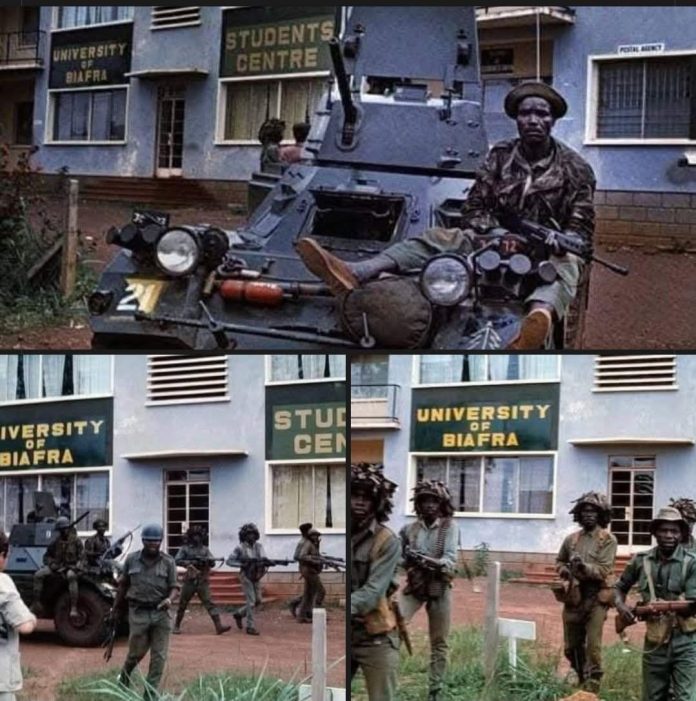
SOLUDO: A PASSIONATE DEMOCRAT, PEOPLE-ORIENTED LEADER AND A PROGRESSIVE CHANGE CRUSADER

0
The Anambra State Executive Governor, Prof. Charles Chukwuma Soludo CFR

Anambra State Governor, Prof. Charles Chukwuma Soludo CFR, within the last 3 years of his life-transforming leadership in Anambra, has shown how passionate he is about the needs of the people.

I now understand that during the campaigns in 2021, while other parties’ governorship candidates were busy begging for votes, Soludo was doing more. Soludo seemed to be going on a tour of all Anambra communities, taking into consideration their most important needs respectively.

Of course, on the day of his inauguration, he worked for 8 hours and resumed work at Okpoko the next day and did not stop there. Okpoko was cleaned, and given potable clean water, streetlights, a beautifully tarred road network, and a general hospital. As I pen this down, Okpoko is no longer referred to as one of the worst urban slums east of the Niger. Okpoko is now renamed New Haven!

Many communities, towns, and villages in Anambra that had been abandoned and forgotten in darkness have seen the light under Soludo within his 3 years in office. Towns like Ezeagu, Umuomaku, Enugu Umuonyia, Ikenga, Aguleri Otu communities—namely Enugu Otu, Mkpunando, and Eziagulu Otu—Nzam, Ugbene, Ugbenu, Awba Ofemmili, Ezinator, Ndiukwuenu, and Awa are some of the communities that had not seen even a square foot of tarred road since their foundation but were connected to Anambra’s major cities by the Solution administration.

During the campaign in 2021, everywhere we went, the pupils and the students cheered Governor Soludo with great expectation that being an academic, he was likely the messiah to transform Anambra’s educational sector. He did not disappoint their great hope as he declared free education from nursery to secondary level in the state barely one year into his administration. He followed this up with the employment of 8,115 teachers into Anambra’s primary and secondary schools to enhance the quality of education in the state and to end the era of schools without teachers.

It may also interest you that in the health sector, Soludo has surpassed expectations in just 3 years of his administration with the construction of 5 new standard general hospitals, rehabilitation of existing general hospitals, revamping of health centres within the 326 wards in the state, and the employment of over a thousand doctors, nurses, and other health professionals. I nearly forgot that in Anambra, Soludo declared free antenatal care and free delivery for all pregnant mothers in the state.

Soludo, like the holder of a magic wand, has constructed over 750 km of roads across the state, with over 500 km completed under his 3 years of transformational leadership in Anambra.

It may also interest you that Mr Governor, because of his passion to see the people succeed, instructed that Okada riders and petty traders in the state are exempted from any form of taxation.

One charisma that stands Governor Soludo out as one of the most interactive leaders of recent times is his ability to engage his people, orchestrate a conversation, and get the true feelings of the people towards the government. Soludo visits market premises to ask the right questions and get direct grassroots responses, and he normally goes back home to ponder, all night, working tenaciously with his team to provide befitting results.

Soludo continues to engage Ndi Anambra both at home and in the diaspora, on a one-on-one basis, and with this, many projects reach even communities that have nobody to speak for them. Soludo picks calls from traders, wheelbarrow pushers, akara sellers, and residents, and hears directly from them what is going on in their respective communities. I overheard a trending voice note from a community PG from, I think, Orumba South. He was telling his people on their WhatsApp platform that Soludo hears directly from the village people what is happening in every village in Anambra, so he (the PG) is not ready to shield anyone and lose his job or tamper with his good reputation.

As I stated before, Soludo is an interactive leader par excellence! During the period he was inspecting the possible link for the Agulu–Nnewi–Ozubulu dual carriageway presently under construction, Soludo engaged a particular secondary school student helping her parents with sales at Nnewi Market.

She thanked him for remembering that road, then complained that the road to her school was impassable. He asked for the location of the road and when he was told, he immediately instructed the works commissioner to visit, measure, possibly design, and present the road to the state EXCO for approval. I was standing by, wowed, and was like, this girl just attracted a road project to her school, the community, and local government—just like that!

The endorsement Soludo is getting towards his second tenure election is mind-blowing—it has gotten the opposition elements in the state jittery—but it is not new! About 50 support groups self-sponsored, campaigned for and supported Soludo’s election in 2021. As we speak, it has risen to about 70 support groups with about 120,000 members drumming support for his reelection.

During the 2021 election campaign, Soludo visited Lagos, Abuja, and other parts of the country telling them the vision he had and what he was prepared to do in Anambra. During that time, many diaspora support groups sent in money, organized meetings, and campaigned, soliciting support for Soludo.

I smile with fulfilment as the Governor goes back to the people again with massive scorecards of landmark projects as his achievement with the mandate he was given. The conversation is worthy and convincing. Ndi Anambra has seen the transformation that Soludo brought under his 3 years of leadership. Soludo is unarguably the only governor in Nigeria who has done massively with less and resisted the urge to borrow.

It is not just that Soludo is bringing life-transforming solutions to Anambra’s problems without borrowing, he is presently paying backlogs of debt owed by his predecessors to ensure Anambra is debt-free as a state!

I have read a write-up which said, “Anyone contesting against Soludo deserves his head to be checked.” Others asked, “Those contesting against Soludo, what are they promising to do that Soludo has not done yet?” I am here asking, like Soludo did in 2017, “If not broken, why are you trying to mend it?”

By Machi Pius Igwe

Disclaimer: 

The opinions and views expressed in this write-up are entirely those of the Writer(s). They do not reflect the opinions and views of the Publisher (Nze Ikay Media) or any of its employees. The designations employed in this publication and the presentation of materials herein do not imply the expression of any opinion whatsoever of the Publisher (Nze Ikay Media) or its employees concerning the legal status of any country, its authority, area or territory or concerning the delimitation of its frontiers. Equally, the sketches, images, pictures and videos are gotten from the public domain.
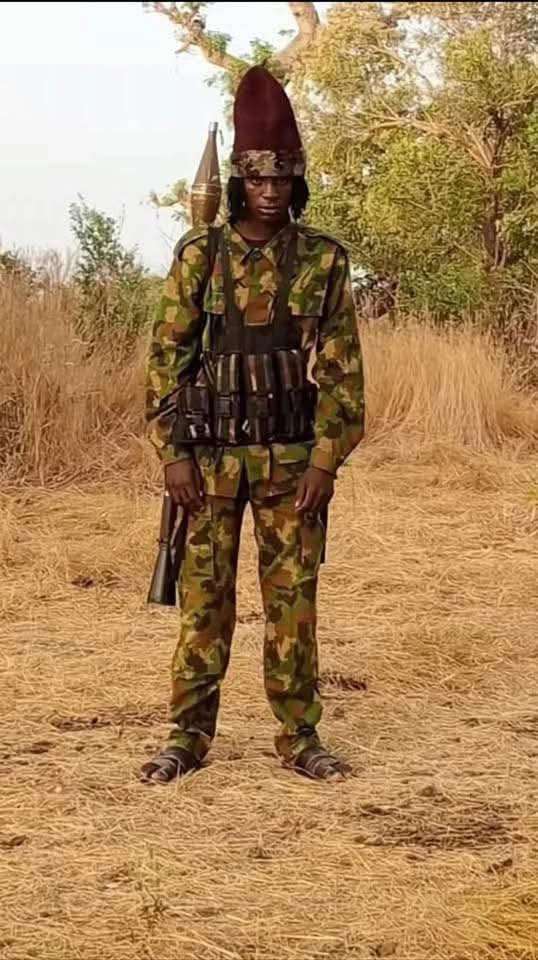
A Celebration of Opulence and Influence: Obi Cubana’s 50th Birthday Extravaganza at Transcorp Abuja

1
Obi Cubana’s 50th Birthday

Last weekend, the prestigious Transcorp Hilton in Abuja was transformed into a spectacle of grandeur as Obinna Iyiegbu, popularly known as Obi Cubana, celebrated his 50th birthday in a manner befitting his larger-than-life persona. The event was nothing short of a carnival—a dazzling convergence of Nigeria’s elite, business moguls, entertainment icons, and high-net-worth individuals, all gathered to honour a man whose name has become synonymous with success, influence, and philanthropy.

A Gathering of Titans

The guest list read like a who’s who of Nigerian society—industrialists, conglomerate owners, political figures, and A-list celebrities adorned the venue, each adding to the electrifying atmosphere. The crème de la crème of Nigeria’s business and social circles were in attendance, a testament to Obi Cubana’s far-reaching connections and the respect he commands across industries. From billionaire entrepreneurs to Nollywood stars and music legends, the event was a masterclass in high-profile networking, where deals were subtly brokered, alliances strengthened, and the spirit of camaraderie was palpable.

Lavish Displays of Affluence and Generosity

True to his reputation, Obi Cubana’s birthday displayed unbridled opulence. The air was thick with excitement as mind-blowing gifts were presented—stacks of cash, luxury cars, rare bottles of champagne, and bespoke jewellery exchanged hands in a breathtaking show of generosity. One particularly jaw-dropping moment was when a guest gifted the celebrant a staggering 100 million Naira in cash, a gesture that sent social media into a frenzy.

Yet, beyond the flamboyance, the occasion underscored a deeper principle: the power of strategic relationships. Obi Cubana’s rise to wealth wasn’t just about money—it was about the right connections, the right alliances, and the ability to foster mutually beneficial relationships. As the Bible says, “The gift of a man maketh way for him” (Proverbs 18:16). This event was a living testament to that truth.

A Lesson in Mindset and Opportunity

While many onlookers marvelled at (and some criticized) the extravagance, the real takeaway was the psychology of success on full display. Those who understand the dynamics of wealth saw more than just a party—they saw a master networker reaping the rewards of years of building bridges, empowering others, and positioning himself at the centre of influence.

Unfortunately, as with any high-profile celebration, some naysayers dismissed the event as a gathering of “cultists” or questioned the morality of such displays in a nation with economic struggles. Yet, as history has shown, those who despise prosperity rarely attain it. Wealth is not just about money; it’s about mindset. If you criticize the rich instead of learning from them, you subconsciously reject the very opportunities that could elevate you.

A Legacy of Impact

At 50, Obi Cubana has already cemented his legacy—not just as a flamboyant businessman, but as a philanthropist and job creator. His journey from humble beginnings to becoming a household name is a story of resilience, vision, and the relentless pursuit of excellence. Many who started with him decades ago have not reached his heights, not because of luck, but because of strategy, relationships, and an unwavering belief in abundance.

Final Reflections

Obi Cubana’s birthday was more than a celebration—it was a statement. A statement that success is intentional, that relationships are currency, and that those who embrace prosperity with an open mind will always find doors opening for them.

To the critics, the lesson is simple: Stop hating what you should be studying. To the aspiring, the message is clear: Build networks, add value, and position yourself where opportunities flow.

As the night ended and the echoes of laughter and clinking glasses faded, one thing remained undeniable—Obi Cubana didn’t just throw a party; he gave the world a masterclass in the art of wealth, influence, and living unapologetically large.

Happy 50th, Obi Cubana! May the next decade bring even greater heights.

NzeIkayMedia ✍️

Disclaimer: 

The designations employed in this publication and the presentation of materials herein do not imply the expression of any opinion whatsoever of the Publisher (Nze Ikay Media) or its employees concerning the legal status of any country, its authority, area or territory or concerning the delimitation of its frontiers. Equally, the sketches, images, pictures and videos are gotten from the public domain.
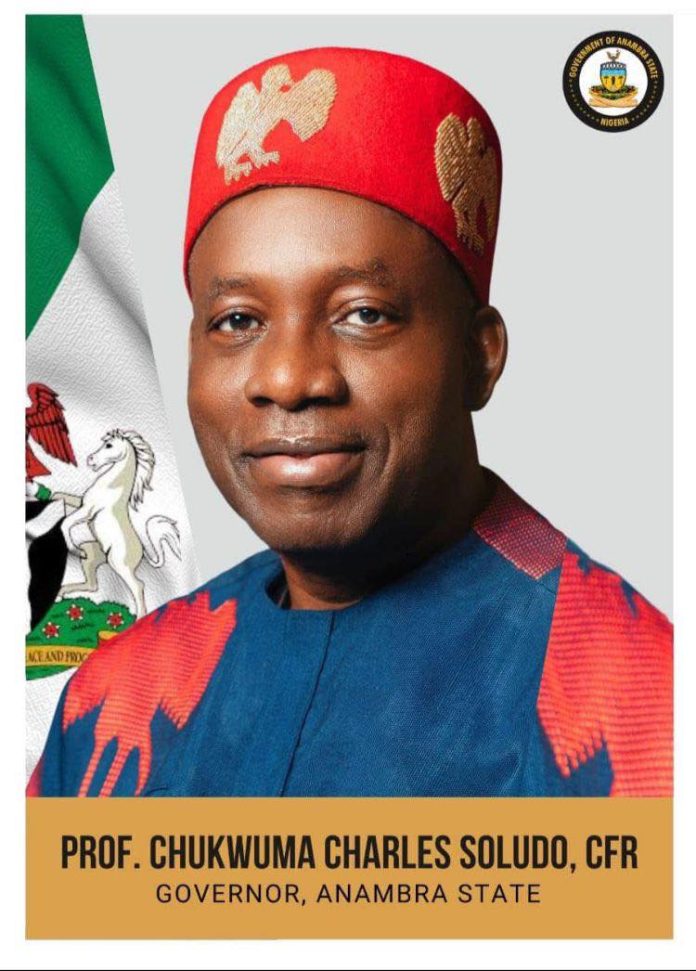
U.S. Court Decision on FBI and DEA Investigation Records Concerning Bola Tinubu

0
President Bola Ahmed Tinubu

A U.S. District Court has mandated the disclosure of confidential investigative documents about Nigerian President Bola Tinubu, concluding that there was insufficient justification for their secrecy. On Tuesday, Judge Beryl Howell ruled that the FBI and Drug Enforcement Administration (DEA) are required to release records from a federal investigation conducted in the 1990s into a heroin trafficking ring in Chicago, rejecting the agencies’ rationale as “neither logical nor plausible” for withholding the information.

This case arose from Freedom of Information Act (FOIA) requests submitted in 2023 by American journalist Aaron Greenspan, who sought information regarding Tinubu and three associates allegedly implicated in money laundering and drug-related offences. Greenspan contacted six agencies—FBI, DEA, IRS, State Department, CIA, and the Executive Office for U.S. Attorneys—but initially received “Glomar responses,” indicating that the agencies neither confirmed nor denied the existence of any records.

Subsequently, Greenspan initiated a lawsuit contesting these responses, arguing that they violated transparency laws. While the CIA’s refusal was upheld due to a lack of prior disclosure, Judge Howell determined that the FBI and DEA had improperly invoked exemptions. The court noted that Tinubu’s connection to the 1990s investigation had already been acknowledged, including his forfeiture of $460,000 associated with drug proceeds, which had been referenced during Nigeria’s electoral disputes in 2023.

Key Aspects of the Case:

Forfeiture Background: In 1993, U.S. authorities seized funds belonging to Tinubu, alleging his involvement in heroin trafficking. Although he faced no criminal charges, this forfeiture matter resurfaced during the election petitions in Nigeria, ultimately leading to its dismissal by the courts.

Connections to Drug Trafficking: Legal documents reveal that the DEA and FBI were probing Tinubu’s associations with Abiodun Agbele, who was apprehended in 1993 for heroin distribution. An affidavit from the IRS detailed Agbele’s links to Tinubu’s associate, Mueez Akande, and included accusations of money laundering.

Judicial Considerations: Judge Howell emphasized that the public’s right to know superseded privacy concerns, indicating that the agencies failed to adequately justify the need for confidentiality following earlier revelations about the investigations.

The ruling centres on the documentation about Tinubu and Agbele, with agencies mandated to provide updates on their findings by May 2. Tinubu, who intervened in 2023 and cited his right to privacy, maintains his innocence regarding wrongdoing.

This pivotal ruling underscores the ongoing tension between governmental transparency and individual privacy rights, prompting critical discussions about international accountability and the implications of historical inquiries.

NzeIkayMedia ✍🏽

Disclaimer: 

The designations employed in this publication and the presentation of materials herein do not imply the expression of any opinion whatsoever of the Publisher (Nze Ikay Media) or its employees concerning the legal status of any country, its authority, area or territory or concerning the delimitation of its frontiers. Equally, the sketches, images, pictures and videos are gotten from the public domain.
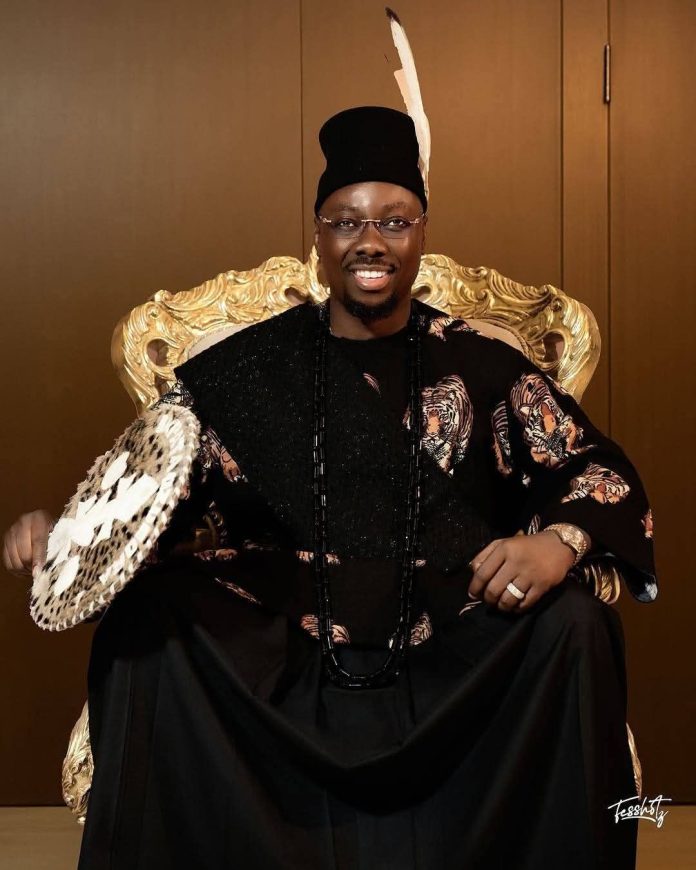
The World Undisputed Light Heavyweight Champion – Dmitry Bivol

0
The World Undisputed Light Heavyweight Champion - Dmitry Bivol

Dmitry Bivol’s personal life took a devastating turn in 2023 when his marriage to Ekaterina, his partner of 16 years, ended in a highly publicized and contentious divorce. The couple had met on a flight in 2007, long before Bivol’s rise to boxing stardom, and married in 2013. They shared two sons, Miron and Nikon, and for years appeared to be a tight-knit family. However, their separation in 2023, just a year after Bivol’s career-defining victory over Canelo Alvarez in May 2022, brought to light deep emotional struggles that had been brewing beneath the surface.

Ekaterina revealed in an interview with Russian outlet Postsen that she had been grappling with loneliness for much of their marriage, particularly in the last year when she and Bivol were apart for 10 months due to his boxing commitments. She sought therapy months before the breakup, feeling that “everything was bad,” and credited the sessions with saving her emotionally. “I’m not sad without Dima. What should I get used to? I have always been alone for at least six months… I feel sad at times, but I thought it would be worse. Turns out I’m much stronger than I thought,” she said, reflecting a mix of resilience and sorrow. She described their 16 years together as “very difficult, but also successful,” expressing gratitude for their shared past but also hinting at underlying issues that led to their split, though she initially cited no specific reason for the divorce, calling it “nonsense.”

The situation escalated in 2024 as Ekaterina began publicly airing grievances on social media, accusing Bivol of emotional and physical abuse during their marriage. She posted Instagram stories alleging that Bivol and her mother had subjected her to psychological and physical harm, claiming her father prevented her from reporting the abuse to the police. In one post, she wrote, “And then you sat there and told my dad that I hit myself,” highlighting the severity of her accusations. She also claimed Bivol had changed after his 2022 win over Canelo Alvarez, alleging that fame and fortune turned him into a “devil” who wielded “power” and “money” irresponsibly. These allegations, however, remain unproven in a court of law, and Bivol has not publicly responded to them.

The emotional toll on Bivol became even more evident as Ekaterina’s attacks intensified ahead of his October 2024 fight against Artur Beterbiev for the undisputed light heavyweight title. Ekaterina openly supported Beterbiev, even leaking details about Bivol’s injuries—such as a stress fracture in his back, operated hands, sore knees, and a swollen left ear—in an attempt to give Beterbiev an edge. She wrote, “I want to tell you everything I know… the main thing is that he is a coward! We need your victory, Arthur.” When Bivol lost to Beterbiev by majority decision, suffering his first professional defeat, Ekaterina celebrated on a live stream, declaring, “Karma caught up with you… I dedicated 16 years. Damn, you screwed us over.” Her reaction went viral, with many fans on Reddit and other platforms expressing sympathy for Bivol, noting the pain of having his ex-wife publicly revel in his defeat while their children were caught in the crossfire.

The fallout from the divorce also included financial disputes. Ekaterina accused Bivol of being stingy with child support, claiming he paid only $1,100 per month for their two sons while allegedly hiding wealth in overseas accounts. Reddit discussions on r/Boxing speculated that Ekaterina might be using child support funds for her own lavish lifestyle, as her Instagram showed frequent international travel, but the consensus was that her actions were creating a toxic environment for their children. One user commented, “The kids are going to grow up and realize that the father isn’t as bad as the mother made him out to be and grow resentful of the mother.”

For Bivol, a private man who has always shied away from media attention, this public unravelling of his family life was a profound emotional blow. The divorce and accusations not only tarnished his personal reputation but also added immense pressure as he prepared for the biggest fight of his career. Despite the allegations, Bivol remained silent, focusing on his training, but the emotional weight of the situation was palpable. His loss to Beterbiev, followed by Ekaterina’s celebration, marked one of the lowest points in his life, blending personal heartbreak with professional defeat.

Ultimately, however, class act Dmitry Bivol had the last laugh with his ex-wife and in all ways in life. Today, Dmitry Bivol is the undisputed light-heavyweight champion of the world.

Disclaimer: 

The opinions and views expressed in this write-up are entirely those of the Writer(s). They do not reflect the opinions and views of the Publisher (Nze Ikay Media) or any of its employees. The designations employed in this publication and the presentation of materials herein do not imply the expression of any opinion whatsoever of the Publisher (Nze Ikay Media) or its employees concerning the legal status of any country, its authority, area or territory or concerning the delimitation of its frontiers. Equally, the sketches, images, pictures and videos are gotten from the public domain.
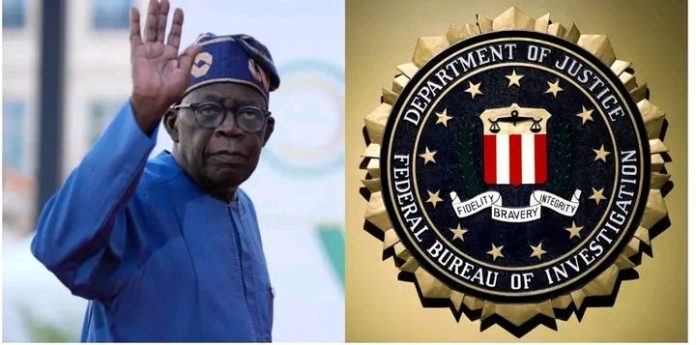
Eulogy for Chairman Christian Chukwu, MFR: A Titan of Nigerian Football

0
Chairman Christian Chukwu, MFR: A Titan of Nigerian Football

Today, the nation mourns the passing of a legend, a colossus of Nigerian football, and a unifying force whose legacy transcends sport. Chairman Christian Chukwu, MFR – captain, coach, icon, and a symbol of Nigeria’s golden era of football—has left us, but his indelible mark on the beautiful game and the hearts of millions will endure eternally.

Born into a nation on the cusp of greatness, Chukwu rose to prominence as the bedrock of Enugu Rangers International Football Club, a team that became a metaphor for resilience, unity, and hope in post-civil war Nigeria. His leadership on the pitch earned him the affectionate moniker “Chairman,” a title that mirrored his authority, composure, and dignified presence both as a player and a man.

In 1980, Chairman Chukwu etched his name into history as the captain of the Green Eagles, leading Nigeria to its first-ever Africa Cup of Nations (AFCON) triumph. That iconic victory in Lagos, under the rattle-shaking enthusiasm of President Shehu Shagari and the deafening cheers of a united nation, remains a watershed moment. As the defender marshalled his squad—comprising heroes like Emmanuel Okala, MON, Shegun Odegbami, MON, etc. ethnic divisions dissolved. There were no Igbos, Yorubas, or Hausas; only Nigerians bound by pride and euphoria. Chukwu’s leadership epitomized the power of sports to heal, inspire, and unify.

Beyond his playing days, he transitioned seamlessly into coaching, steering the national team with the same tactical brilliance and integrity that defined his career. His life was a testament to excellence, humility, and service—a rare blend that earned him the Member of the Order of the Federal Republic (MFR) and the eternal admiration of peers and protégés alike.

To those who knew him intimately, like his bosom friend and teammate Emmanuel Okala, Chukwu was more than a legend; he was family—a loyal confidant, a brother in arms, and a beacon of wisdom. His laughter, camaraderie, and unwavering spirit illuminated every room, every locker room, and every heart he touched.

Today, as we bid farewell to “Onyim” (The Quiet One), we celebrate a life lived in service to passion, nation, and humanity. Chairman Chukwu’s legacy is not merely in trophies or titles but in the joy he gifted a nation, the bridges he built across divides, and the generations he inspired to dream.

To his beloved family, friends, and all who mourn: may you find solace in the knowledge that his life was a masterpiece of impact. As the curtains close on this earthly chapter, let us remember his words, his triumphs, and the unity he championed.

Chairman, you came, you saw, and you conquered. Your name is eternally woven into the fabric of Nigerian greatness. Rest in perfect peace, dear legend.

La nke ọma. Ihe Oma ga-adịrị gị. Christian Chukwu (1948–2024) Forever our Captain. Forever our Chairman! My Condolences to the Chukwu family, Enugu Rangers, and the Nigerian football community. May his memory remain a blessing to all of us!

NzeIkayMedia ✍🏽

Disclaimer: 

The designations employed in this publication and the presentation of materials herein do not imply the expression of any opinion whatsoever of the Publisher (Nze Ikay Media) or its employees concerning the legal status of any country, its authority, area or territory or concerning the delimitation of its frontiers. Equally, the sketches, images, pictures and videos are gotten from the public domain.
NNAMDI KANU’S RELEASE IS THE GREATEST CHALLENGE FACING NDIGBO TODAY 

5
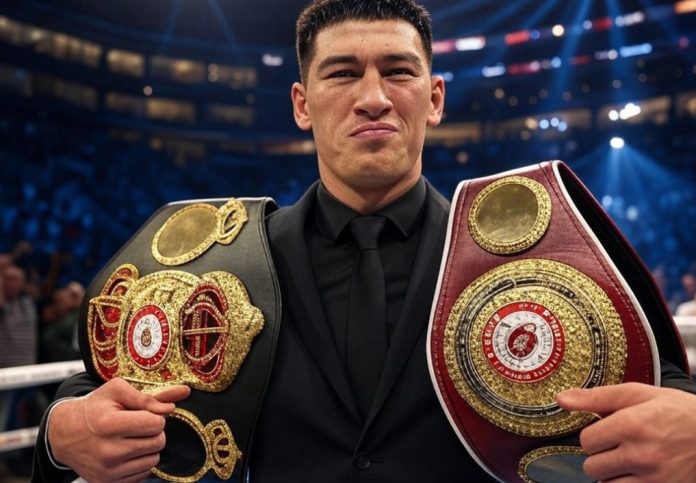
The leader of the Indigenous People of Biafra (IPOB), Mazi Nnamdi Kanu in one of his court appearances at FCT, Abuja, challenging his illegal rendition to Nigeria by the Buhari Administration.

As one author put it: 

“It is the Islamic agenda being pursued by the North and Fulani herdsmen terrorism, and not the agitation for Biafra, that put the death nail on Nigeria.”

Accept or deny it, the release of Mazi Nnamdi Kanu, the detained leader of the Indigenous People of Biafra, IPOB, is the greatest challenge facing Ndigbo today in the entity called Nigeria. As long as MNK is still being held by the Nigerian State in the ‘dungeon’ of Nigeria’s secret police, the DSS, or whatever, the entire Igbo nation and people are in detention! As long as Nnamdi Kanu is still being detained by the Nigerian State in the DSS dungeon because he refuses to compromise and give up his agitation for the self-determination and self-defence of his people of Eastern Nigeria, no Igbo person should be proud to parade himself or herself as ‘somebody’ of any significance or importance in Nigeria today! 

The fact is that the present Nigerian government and the corrupt politicians are using the continued illegal detention of Mazi Nnamdi Kanu, as a metaphor for the continued humiliation, persecution and strangulation of Ndigbo as a people and ethnic-nationality in Nigeria today. Therefore, let nobody from Igboland and the rest of the Eastern region delude him/herself. To think that because of his or her political position or office in Nigeria, he or she is not sharing in that collective humiliation and shame of Igbo people brought about by this continued detention of MNK by the present federal government of Nigeria and their collaborators from the Southeast and cronies. The irony of history is that the oppressor uses some individuals from among the oppressed people to continue to keep the oppressed in humiliating conditions and servitude. Without the collaboration of the few Igbo politicians, the self-serving Southeast governors, lawmakers, prominent religious, traditional and cultural organizations rulers, business tycoons, and elites who are serving as spin-offs and enablers of the oppression of Ndigbo in Nigeria today, the oppressors would have never succeeded in Igboland the way they have succeeded presently. And this is the problem! 

This is why we shall continue to emphasize, that the release of MNK will not depend on the Nigerian Court ruling. As the last Federal Appeal Court ruling in Abuja that discharged him on October 13, 2022, has shown. Because after that Federal Appeal Court Abuja ruling of October 13, 2022, what did the powers that be do? Did they release him? Of course, no. Since then, the same Nigerian government whose Federal Appeal Court’s ruling discharged Nnamdi Kanu and ordered that he be released had since then refused to obey its own court order, and has up till today been going front-and-back, refusing to release the IPOB leader. 

Therefore, the freedom and release of MNK, will not depend on the rulings of the Nigerian courts. As I wrote elsewhere, ‘it is not the Court of the same Nigerian Government that went to a foreign country, Kenya, abducted Nnamdi Kanu, extraordinarily rendition him, and forcefully brought him back to Nigeria, and has since June 2021, kept him in the torture cell of Nigeria’s secret police, DSS in Abuja, in solitary confinement, incommunicado, that is going to free him?’ Rather, Nnamdi Kanu is going to be freed, just as Biafra he is fighting for its self-determination and independence, is going to be a free sovereign nation-state on its own rights, only through the determined collective and conceited, concrete efforts of the Biafran people themselves, Nnamdi Kanu’s kinsmen and women, Ndigbo in particular, to be precise. That is, as a people, and as a Nation in its own right, standing solidly, firmly and determined, behind Nnamdi Kanu and his struggle. And behind whoever has genuinely taken it upon him/herself to stand in the gap in Biafra struggle, especially, now that the IPOB leader is languishing in the dungeon of the enemy. (And most recently, his most vocal supporter, a frontline Biafra agitator, Mazi Simon Ekpa is also been detained by Finland local authorities at the instigation of the Nigerian government, for the same reasons Nnamdi Kanu is been detained in Nigeria). 

Simon Ekpa is detained today in Finland at the instigation of the Nigerian government, simply because of his agitation for Biafra and for standing up for Nnamdi Kanu. If Simon Ekpa had not stood up to fill the gap for Biafra’s agitation and demand for the release of Nnamdi Kanu, immediately Nnamdi Kanu was extraordinarily rendition and detained by the Nigerian government, he would have been a free man in Finland today. Therefore, Simon Ekpa is where he is today, detained by the Finland authorities at the behest of the Nigerian government, simply because he was doing exactly the same thing Nnamdi Kanu did. He was agitating for Biafra and demanding the immediate and unconditional release of Nnamdi Kanu by the Nigerian government. This is the offence of Simon Ekpa. The same offence for which Nnamdi Kanu is detained by the Nigerian government. The agitation for Biafra Self-Determination and Independence. 

In other words, the freedom of Nnamdi Kanu will not come from the Nigeria Court’s ruling. Rather, it will depend largely on what is happening on the ground in Igboland. That is, on the intensity and “aggressiveness” of the civil disobedience protests (e.g., the Monday Weekly Sit-At-Home Civil-Disobedience Protest in the Southeast), on the ground in Igboland, ignited for that purpose by Kanu’s Igbo and Biafran people, for his immediate and unconditional release. Nnamdi Kanu’s release will come about through the collective efforts and coordinated ACTIONS of MNK’s own kinsmen and women, Ndigbo, and other Biafrans, and conscientious individuals, who really love him, and who sincerely and truly, want him released, seek freedom and self-determination of Ndigbo and Biafrans in general. 

Only such collective, selfless efforts, steadfastness, sincerity, consistency, and unity of purpose of Ndigbo as a people are going to ‘Free and Release’ Nnamdi Kanu from the dungeon of the Nigerian Government. And only such can lead to the eventual coming of Biafra in our lifetime. And this is what Nnamdi Kanu, for those who really know him, stood for and has put his life on the line, for the freedom, justice, and welfare of his people as well as for that of the other trapped and endangered indigenous ethnic groups and marginalized people in Nigeria! Unity of purpose, selfless efforts, sincerity, honesty, steadfastness, consistency and collective determination of Ndigbo in particular, in the pursuit of the same goal of freedom for the attainment of their own self-rule as an independent sovereign nation-state of Biafra – the same goal for which Nnamdi Kanu is languishing today in the dungeon of the enemy, is what will force the powers that be, to release him forthwith. It is also what will make them begin to initiate a true and sincere, constructive process of dialogue for the coming of Biafra, and to begin to accord the Igbo man or woman, the respect due to them as a people, in Nigeria and beyond! 

It is fruitless for Igbo politicians and other members of the ruling class and elites in Igboland and Diasporas, to continue to think that it is by fighting to be relevant in Nigeria, seeking for the so-called elected political posts, or them pushing for more political appointments, or for an Igbo man or woman to be made President, or to become Vice-President of Nigeria, President of the Senate, or Speaker of the House of Representatives, federal minister, etc., is what Ndigbo needs today in Nigeria! Neither is it what they as a people need to be relevant and reclaim their self-esteem, wounded humanity and dignity. It is also not by the Igbo Politicians themselves, embarrassing themselves continuously, dancing naked in the marketplace in Nigeria’s political scene, fighting or agitating shamelessly, each time, during and after every general election in Nigeria, asking for Ndigbo to be accepted by other Nigerians of other ethnic groups, or to be integrated into the so-called mainstream of Nigerian society and Nigeria’s governmental structure, etc., is what Ndigbo and other Easterners want today, in this 21st century as a people. 

To think in that way is indeed very unfortunate. It is like those individuals from Igboland who parade themselves today in Nigeria, as Igbo leaders and politicians, while in actual fact, they are political jobbers, embarrassment, and enablers of the subjugation of their own people by the oppressor. Those who still think that is through fighting for political posts or appointments in government offices of the Nigerian state, that Ndigbo as a people will advance and become something in the world, are deluding themselves. Such individuals do not know what really is at stake, or rather, they don’t want to tell themselves the naked truth. Because, all that means, is that Ndigbo has not learned any lessons from their past history and experience as a people in Nigeria. They have not learned anything from all that they have passed through and are still passing through as a people and as individuals, all these while in the Nigerian State. And this is the problem. 

The Way-Out 

What Ndigbo needs now is ‘ACTION’, concrete, collective action, to be put on the ground in Igboland and in Diasporas, towards their emancipation as a people. That is, towards their attainment of self-defence and self-rule away from the Nigerian State! It is a collective and aggressive, well-coordinated ACTION towards these two noble goals that will propel the gatekeepers of the Nigerian State, to obey their own Court Orders and RELEASE MNK unconditionally with immediate effect. The Collective Action of Ndigbo and the entire Biafran People, who truly, love Nnamdi Kanu and want him released with immediate effect, is what is needed now. 

The release of Nnamdi Kanu will signal the freedom of his people and the advent of their collective aspiration as a people. In other words, if you continue to depend on what the Nigerian Court is doing or telling you, they are not going to Release MNK shortly. So, the earlier the Ndigbo and other Easterners, Biafran people, and all lovers of MNK and freedom of Biafra, begin to intensify the pressure, and re-activate more stringent measures of ‘Civil Disobedience’ against the Nigerian State; put more pressure on all those self-serving, corrupt Southeast governors and other members of the ruling class from Igboland, all of them that participated in betraying and in the selling of MNK to the enemy, the better for us all. 

Otherwise, those people holding MNK are not dreaming of letting him go tomorrow! That is unless something extraordinary happens. Just as they used an ‘Extraordinary’ means of EXTRAORDINARY RENDITION & KIDNAPPING in a foreign land, to forcefully, bring him back to Nigeria! Unless, something extraordinary that checks the existing faulty foundation of the Nigerian State, and its fraudulent and shambolic political system or structure, is ignited and challenged, those people holding MNK are not in any way thinking of releasing him soon! The Nigerian government has refused time without number, to obey the previous ‘Judgements and Rulings’ of its own competent Courts, which discharged MNK, how do you think that even if the same Courts deliver a judgment today that orders for the RELEASE of MNK, a second time, third, fourth, or even fifth times, etc., that the same Nigerian Government holding the IPOB leader in solitary confinement, is going to obey it and release him? Impossibile est. 

It is needless to hope that the court of the same Nigerian Government that kidnapped, extraordinarily rendition him, and has continued to keep him in detention illegally for over four years (since June 2021 to date), a second time after their first incarceration of the IPOB leader (for two years, between 2015 and 2017), will easily agree to release him today without serious pressures coming from MNK’s Igbo and Biafran people? The freedom of MNK is in the hands of his people of Southeastern Nigeria. After, he was betrayed and handed over to the hands of the enemy by the self-serving, corrupt Southeast governors, some elites and other corrupt members of the ruling class from the same region, in June 2021, don’t think that these his tormentors in a hurry to let him go home to his family and people! 

Know you, therefore, that those who are behind his ordeal, all those who contributed in one way or the other in betraying him and in handing him over to the Jihadist-driven federal government of Nigeria, the same people are responsible for his continued incarceration in the DSS dungeon. They are not in a hurry to see him released. Period! 

Again! Mind you: What we have in Nigeria today and call the ‘Federal Government of Nigeria’, if truth be told, is a ‘Jihadist-driven’ government, terrorizing its own supposedly citizens, using both state and non-state actors, military and police operatives and the terrorist herdsmen and other Islamists terror groups operating from Northern Nigeria Sharia States and the Sahel region. This ugly phenomenon started to manifest itself openly and arrogantly in May 2015, when former President Muhammadu Buhari (a former military dictator), came to power under the APC mantra. The present Tinubu-Shettima Muslim-Muslim ticket Presidency that succeeded the Buhari regime today, is a continuation of the same old policy of the government of former President Buhari. That is why those in the corridors of power in Nigeria, could go to the extent of travelling to another country, in East Africa, Kenya, to abduct MNK, whose only offence is because he was agitating, peacefully, with Biafra flags and solidarity songs, asking that Referendum for Self-Determination for the independence of the sovereign state of Biafra, be granted to his people in Eastern Nigeria! 

Self-determination just like Self-defense and Referendum for that purpose, are all protected by both the International and Municipal Laws, including, the United Nations’ Conventions and African Union’s Charter on Human and Peoples’ Rights! Therefore, Nnamdi Kanu has not committed any crime known to law by agitating for Biafra. Why then should the Nigerian government go to the extent of kidnapping and extraordinary rendition of someone who is running away to save his life from such a Government? Why is the Nigerian government going after Nnamdi Kanu and not after the Miyetti Allah, sponsors of the dreaded marauding Fulani killer-herdsmen terrorists, bandits and kidnappers? Why is the Nigerian government still keeping Nnamdi Kanu in the DSS dungeon even when the Federal Appeal Court has ordered that he be released? And the same Nigerian Federal government is everyday releasing from prisons and detention centres, members of the dreaded Boko Haram, ISIS-ISWAP and other Islamist terrorist organizations operating from Northern Nigeria? The same Nigerian government that is keeping Nnamdi Kanu in detention for agitating for Biafra, is busy every day, re-integrating into the Nigerian military, police, DSS, and other security agencies, known terrorists, the so-called “repentant” Boko Haram insurgents, and allied Jihadists, terrorist organizations operating from the Northern Nigeria Sharia States? 

Conclusion 

All these tell you that the continued incarceration of Nnamdi Kanu by the Nigerian government (and by extension, of Simon Ekpa by the Finland local authorities at the behest of the Nigerian government), has nothing to do with the so-called ‘treason felony’ or ‘terrorism’ charges, or anything of the sort brought against him by the Nigerian government. Rather, it is simply, the same chronic Igbo hate and resentment in Nigeria – the ‘Igbo-phobia’, that the British implanted in the minds of most Nigerians of other ethnic nationalities against Ndigbo and against anything Igbo, that is at play here. It is a political tool meant to serve a particular purpose. 

That particular purpose is the quest for power, for the domination of others by the most favoured ethno-religious group/s, the Fulani-dominated Northern Nigeria Muslim Caliphate Oligarchs, and their collaborators, corrupt members of the ruling class recruited for the same purpose, from the other parts of the country, especially, their Muslim-cousins from the Southwest geopolitical zone. All of them collaborated with their unhappy desire, to work against anything that would make an Igbo or Ndigbo rise or become relevant in Nigeria again. 

Chinua Achebe in his epic book, “The Trouble with Nigeria” (1983), spoke of the ‘toxic effect of this Igbo-hate on the Nigerian political climate. The renowned author and doyen of African Literature said that in his own estimation, “Igbo hate and resentment, is one of the major reasons for Nigeria’s continued backwardness and underdevelopment.” In other words, by now, every relatively conscious Igbo person should have known that his future, the future of his family and people is not in Nigeria but in a liberated, and free Igboland. This is the naked truth, the majority of Ndigbo are yet to tell themselves. 

By Fr. Francis Anekwe Oborji, a Roman Catholic Priest, and Professor Ordinarius of contextual theology at the Pontifical Urbaniana University, Rome.

Disclaimer: 

The opinions and views expressed in this write-up are entirely those of the Writer(s). They do not reflect the opinions and views of the Publisher (Nze Ikay Media) or any of its employees. The designations employed in this publication and the presentation of materials herein do not imply the expression of any opinion whatsoever of the Publisher (Nze Ikay Media) or its employees concerning the legal status of any country, its authority, area or territory or concerning the delimitation of its frontiers. Equally, the sketches, images, pictures and videos are gotten from the public domain.
Senator (Prince) Ned Nwoko’s Response on the Senate vs. Senator Natasha Akpoti-Uduaghan Issue.

0
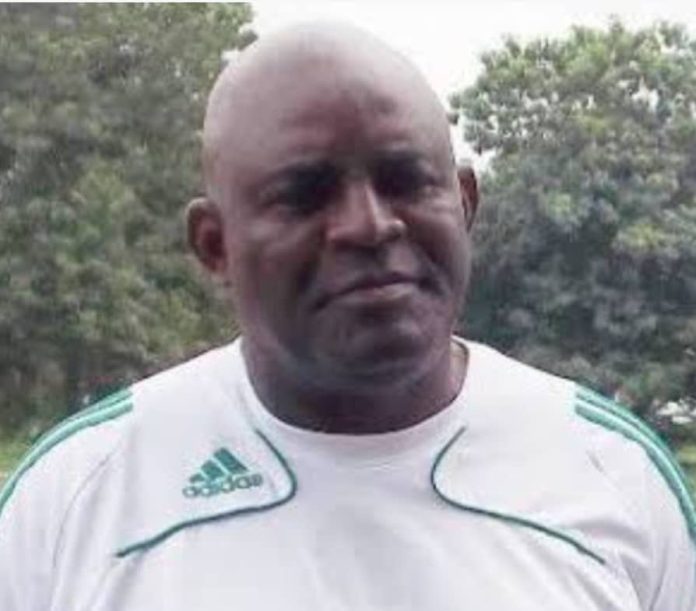
Senator (Prince) Ned Nwoko

Defending the Senate’s Integrity Against Emotional Manipulation and Misrepresentation

Distinguished Nigerians,

We must separate facts from sensationalism and resist the growing trend of exploiting gender sentiments to mask disorderly conduct within the Senate. The legislative chamber is not a battleground for personal grievances or emotional outbursts but a place of order, debate, and democratic principles. The recent outcry over the suspension of Senator Natasha Akpoti-Uduaghan has been twisted into a false narrative of victimization and suppression. Let it be clear: what was before the Senate was not her petition—something she has confirmed—but her conduct on the Senate floor, which violated the decorum expected of lawmakers.

“Seat Reallocation Is a Standard Senate Practice”

The issue started with a simple matter—seat reallocation. This is a normal and longstanding practice in the Senate. I have personally been moved three times. Here’s how it works: Whenever a senator leaves for any reason—whether due to death, defection, or other circumstances—there is an adjustment in the seating arrangement. This happens across both party lines, and it is not targeted at any individual. The idea is to ensure that seats are properly arranged based on seniority, party balance, and Senate rules. For instance, a ranking senator sits in the front row. If that senator leaves, a new member cannot just take that seat. Instead, everyone shifts accordingly. It is a process where multiple senators move to achieve the right balance. Everybody moves. Not just one person. The movement is done in a way that maintains the structure of the Senate. A fresher does not just sit where a senior senator is. The arrangement is reshuffled in a way that ensures order and respects seniority. This is a routine adjustment that happens all the time. It is not a new practice. It is not targeted at any one person. It is simply how the Senate works.

“Senator Natasha Refused to Move and Caused a Disruption”

On that day, Senator Natasha was asked to move to a new seat. Instead of complying, she refused. That, in itself, was already an issue because every other senator understands that seating changes happen regularly. But what followed was even more concerning. She became uncontrollable, raising her voice, and shouting, “I am not scared of you!” We all saw the video. That display was completely uncalled for. At that moment, it was no longer about a seat—it was about discipline, order, and respect for the institution. If every senator decided to resist a simple procedural adjustment in that manner, the Senate would be ungovernable.

“The Senate Followed Due Process”
After that incident, the Senate Committee on Ethics invited her for a disciplinary hearing. That is the proper procedure. The committee heard from those who were present that day, and all agreed that she had acted in an unruly manner. The report that was submitted was clear—her conduct on the floor was unacceptable, and she should be suspended. I personally reached out to her during this process. I sent her messages because, as a lawyer, I know that before any judgment is passed, a person must be allowed to state their case. I asked her: “Are you prepared to apologize so that I can speak on your behalf? Ask that you be allowed to apologize.” She responded that she did no wrong. That didn’t stop me. I told her directly: You are wrong. I watched the video. I saw what happened. The report before us was not about any sexual harassment claim—it was strictly about her disorderly conduct.

Misogyny Is Not the Issue—Disorderly Conduct Is;

Some voices are trying to frame this as an attack on women in politics. That is a manipulation of the truth. Nigeria has many strong female leaders who have made their mark through discipline, strategic engagement, and respect for institutional processes. The Senate is not and has never been against women. However, no lawmaker—man or woman—is above the rules of the chamber. The issue here is not gender; it is the expectation that all Senators must conduct themselves with decorum and respect for the institution they serve. The rules of engagement apply equally to all members, and when a Senator repeatedly flouts those rules, there must be consequences.

“The Allegations of Sexual Harassment Were Never Before the Senate”

One thing that must be made clear is that the Senate did not deliberate on any sexual harassment allegations. That matter is before the courts and the courts will decide. It is highly unlikely that she will win such a case because the alleged incident supposedly happened over a year ago. She had multiple opportunities to report it to the Senate, the police, or any authority, yet she did not. Even after this alleged incident, she travelled multiple times with the Senate President for international events, well-documented online. She was in the same spaces as him, attended meetings with him, and was often with her husband during these trips. To now come forward and narrow these allegations to a particular day, a particular time—when her husband was within range, when other people were present when the Senate President’s wife was in the family house—raises serious questions. It is highly unlikely that such discussions would take place in such a setting.

The Senate Must Uphold Discipline and Order

The Senate is not a chaotic town hall where emotions dictate decisions. There are clear procedures for addressing grievances, presenting petitions, and debating national issues. Senator Natasha was not sanctioned for submitting a petition—she was sanctioned for her behaviour on the Senate floor. If we allow sentiments to override discipline, the Senate will become ungovernable. This is not about suppressing opposition or silencing voices; it is about maintaining the dignity of the institution and ensuring that every member adheres to the same standards of conduct.

“Exploiting Feminine Sentiments for Political Gain”

It is disingenuous to claim that this is a case of gender-based suppression when the facts point to a different reality. The real danger is allowing the rules to be bent simply because a particular lawmaker chooses to play the victim card when confronted with the consequences of their actions. Leadership comes with responsibility. Every Senator, regardless of gender, must conduct themselves in a manner that upholds the integrity of the Red Chamber. If we start excusing unruly behaviour because of gender, then we are setting a dangerous precedent where rules become optional based on emotional appeal.

“The Role of Her Husband in This Escalation”
I was also deeply disappointed by the reaction of her husband. I had expected him to find a way to de-escalate the matter, to prevent it from becoming a full-blown crisis. When he sent me his statement and reaction, I told him exactly how I felt. If my wife were in such a situation, I would do everything possible to resolve the issue privately, to manage it in a way that does not cause further division. It is even more surprising because her husband has been friends with the Senate President long before he married Natasha. This could have been settled without this level of unnecessary public drama.

Conclusion: The Senate Must Stand Firm

The Senate must not bow to emotional blackmail or social media outrage fueled by half-truths. Nigeria’s democracy thrives when its institutions are strong, disciplined, and governed by rules—not when they are manipulated to serve personal or partisan interests. We must ensure that the principles of accountability, order, and respect remain the guiding forces of our legislative process. This is not about silencing anyone; it is about ensuring that the Senate remains a place of reasoned debate, not theatrical disruptions.

Senator (Prince) Ned Munir Nwoko, Senator, Delta North

Disclaimer: 

The opinions and views expressed in this write-up are entirely those of the Writer(s). They do not reflect the opinions and views of the Publisher (Nze Ikay Media) or any of its employees. The designations employed in this publication and the presentation of materials herein do not imply the expression of any opinion whatsoever of the Publisher (Nze Ikay Media) or its employees concerning the legal status of any country, its authority, area or territory or concerning the delimitation of its frontiers. Equally, the sketches, images, pictures and videos are gotten from the public domain.
AN OPEN LETTER TO HIS EXCELLENCY, SENATOR BOLA AHMED TINUBU, PRESIDENT, FEDERAL REPUBLIC OF NIGERIA

3
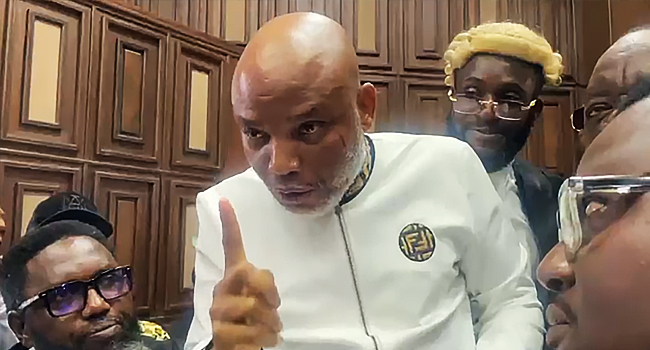
A Collage Picture ofAlhaji Attahiru Dalhatu Bafarawa, a prominent Nigerian politician and former Governor of Sokoto State (1999–2007) and President Bola Ahmed Tinubu of Nigeria

YOUR EXCELLENCY,

I bring you fraternal greetings in the name of Almighty Allah.

Let me begin by congratulating you on the journey so far. Even though it has been a bumpy ride, it is gratifying to note that you are still working hard to steer the ship of the Nigerian state aright. It is against this background that I have decided to share my thoughts about your administration with you. I have chosen the medium of an open letter because that is about the only way I can reach you.

Mr President, I am offering you my words of advice because I believe that you are a democrat. You will recall that you and I have, in the past, journeyed along together in the quest for sustainable democracy in Nigeria. In 1999, you won the election as the governor of Lagos State under the platform of the Alliance for Democracy (AD). You got a second-term mandate under the same party in 2003. In the same vein, I was elected governor of Sokoto State in 1999 under the platform of the All Peoples Party (APP). I was re-elected in 2003 under the same party with a slight name modification, the All Nigeria Peoples Party (ANPP).

In 2007, you moved over to Action Congress (AC) to continue your political journey while I formed the Democratic Peoples Party (DPP), on whose platform I contested election to the office of president in 2007. In 2011, the AC and DPP entered into a coalition arrangement that gave birth to the Action Congress of Nigeria (ACN). From there, we, in 2014, put together an alliance of various political parties that brought about the All Progressives Congress (APC). The idea behind the APC was to have a strong opposition party that would be able to dislodge the then-ruling Peoples Democratic Party (PDP). In all of this, the then-ruling party gave us a free hand to operate. There was no attempt by the government or the Independent National Electoral Commission to stop the formation of new political parties. Today, you are a beneficiary of that collective fight by opposition politicians for an enduring democratic order.

Beyond our past political associations, I feel compelled to draw your attention to the present state of our politics today because politics runs in my blood. I started politics at the age of 22. Today, I am 70 years of age. You will agree with me that I have paid my dues in terms of my contribution to the survival of democracy in Nigeria. Even though I have since announced my retirement from any elective or appointive political office, I will continue to play an active role in politics for as long as circumstances permit. I therefore feel that sense of compulsion to intervene when things are going wrong. I will continue to play this statesmanly role for as long as I am strong enough to do so.

Before I set out to write you this open letter, I took proper note of the fact that you inherited an insecure Nigeria from your predecessor, Muhammadu Buhari. The economy he handed over to you was battered. Most indices of good governance were sorely lacking under the dispensation you took over from. I therefore do not expect that you will turn things around for good overnight. But you will recall, Mr President, that you promised to improve the living conditions of Nigerians. You also promised to secure the lives and property of the people. You have a historical responsibility to keep to these all-important electoral promises.

Regrettably, the situation is still looking bleak nearly two years since you assumed the reins of governance. The blight of insecurity which you promised to curtail is getting out of hand. The economic outlook is frightening. Inflation is galloping out of control. Hunger is ravaging the land. There are cries of anguish all over the country. This slide, Mr President, must be urgently arrested without further delay.

As Nigerians wait for you to rise to the occasion, particularly in the areas of security and economic improvement, I feel duty-bound to remind you of how you climbed to the Presidency. Your ascension to the foremost political position in the country was made possible because the opposition was allowed to thrive. Those who were there before you gave opposition politics a chance. You are, as a matter of fact, a product of opposition politics. You will therefore be making a grave mistake if you allow yourself to be carried away by the temporary power at your disposal by not giving the opposition a breathing space. I urge you, Mr President, to allow opposition politics to be. Do not throw away the ladder with which you climbed to the top. Anybody who is advising you to muzzle the opposition wants to deceive you into tarnishing your hard-earned reputation as a Democrat. Killing the opposition will be harmful both to your democratic records and to the overall political growth of the country. In a country where there is no opposition, democracy dies. Do not allow democracy to die because it is the pillar upon which good governance, peace and progress stand.

I therefore call on you, Mr President, to shun the temptation of enthroning a one-party order in Nigeria. Nigeria can ill afford a one-party arrangement. It is a recipe for anarchy. Rather, the sustenance of a democratic order is the easiest route to move a country forward. It is what will enable us to build a country that will be beneficial not only to the present generation of Nigerians but also to generations yet unborn.

Remember, if those who came before you killed the opposition, there would have been no vehicle for you to get to your present political destination. Rather than a scheme to decimate the opposition, it will be better for you to borrow a leaf from the United States, which has institutionalized two strong political parties around which the wheel of democracy revolves. The greatest legacy you can leave as president is to continue to allow the wheel of democracy to roll. I do hope that this earnest appeal will make sense to you.

Signed:

Alhaji Attahiru Dalhatu Bafarawa (Garkuwan Sokoto)
Former Governor of Sokoto State.

Disclaimer: 

The opinions and views expressed in this write-up are entirely those of the Writer(s). They do not reflect the opinions and views of the Publisher (Nze Ikay Media) or any of its employees. The designations employed in this publication and the presentation of materials herein do not imply the expression of any opinion whatsoever of the Publisher (Nze Ikay Media) or its employees concerning the legal status of any country, its authority, area or territory or concerning the delimitation of its frontiers. Equally, the sketches, images, pictures and videos are gotten from the public domain.
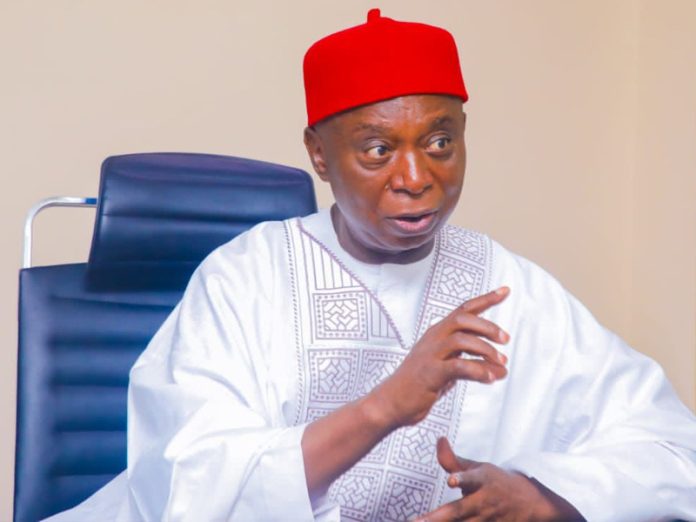
The Soviet Role in Liberating Poland During World War II

0

As the world will soon commemorate the 80th anniversary of the end of World War II (WWII), it is crucial to reflect on the global conflict that raged from 1939 to 1945. This war involved most of the world’s nations, divided into two opposing alliances: the Allies and the Axis. It was marked by devastating battles, widespread destruction, and the Holocaust—the systematic genocide in which six million Jews were murdered by Nazi Germany. Among the Allied powers, the Soviet Union played a critical role in defeating Nazi Germany, especially on the Eastern Front, the largest and bloodiest theatre of the war.

While the events of WWII are widely documented in history books, films, and other media, the scale of the Soviet Union’s sacrifices and contributions is often overlooked or misrepresented. Statements attributed to former British Prime Minister Winston Churchill (here attached) highlight the crucial role played by the Soviets in preventing Hitler from annihilating the Polish people and in liberating Poland from Nazi occupation.

The Soviet Union endured unparalleled losses during the war, with an estimated 20 million military personnel and civilians killed—the highest casualty count of any nation involved. Despite these immense sacrifices, the Soviet people demonstrated resilience and determination in their fight against Nazi Germany. Known in Russia as the Great Patriotic War, this struggle culminated in the defeat of Nazi Germany on May 9, 1945, marking the end of the conflict in Europe.

A key aspect of the Soviet contribution was the liberation of Poland. Soviet forces played a pivotal role in expelling Nazi occupiers and securing freedom for the Polish people. Through a series of strategic military campaigns, the Red Army advanced westward, ultimately freeing Poland from Nazi control.

Despite the Soviet Union’s undeniable contributions to the defeat of Hitler and the liberation of Europe, some historical narratives downplay or disregard their role. This revisionist approach does a disservice to the memory of those who fought and died for freedom and justice. It is essential to recognize and honour the sacrifices of all who participated in the struggle against tyranny during WWII, especially the Soviets (Russia).

The Soviet involvement in WWII began with the signing of the Molotov-Ribbentrop Pact in 1939, a non-aggression agreement between Nazi Germany and the Soviet Union. This pact included a secret protocol that divided Poland and other Eastern European territories into spheres of influence. However, the fragile alliance shattered in June 1941 when Hitler launched Operation Barbarossa—a massive invasion of the Soviet Union. This marked the beginning of the Great Patriotic War for the Soviets and their formal alignment with the Allies.

The Eastern Front became the most brutal and extensive theatre of the war, with the Soviet Union bearing the brunt of the Nazi war machine. Battles such as Stalingrad (1942-1943) and Kursk (1943) were turning points where Soviet forces not only halted the German advance but also began pushing them back toward Germany.

The liberation of Poland was a significant milestone in the Soviet westward offensive. In 1944, the Red Army launched the Lublin-Brest Offensive, liberating eastern Poland and establishing the pro-Soviet Polish Committee of National Liberation. That same year, the Polish Home Army led the Warsaw Uprising in an attempt to reclaim the capital before the Soviets arrived. However, the uprising was brutally suppressed by the Germans, and the Soviet advance paused outside the city, leading to accusations that the Soviets deliberately allowed the rebellion to fail to weaken the Polish resistance.

By early 1945, the Red Army had expelled the Nazis from Poland and continued advancing toward Germany. This offensive culminated in the Battle of Berlin, leading to Nazi Germany’s unconditional surrender and the end of the war in Europe. The Soviet Union’s contribution to the Allied victory was monumental, with their relentless efforts on the Eastern Front proving decisive.

However, the post-war era introduced new complexities. The Soviet Union imposed communist governments across Eastern Europe, including Poland, leading to decades of Cold War tensions. This legacy has left many Poles with a complex and ambivalent view of Soviet actions during and after the war, reflected in their historical narratives and foreign policies.

In all, the Soviet Union played a decisive role in liberating Poland and defeating Nazi Germany during WWII. The immense sacrifices made by the Soviet people were critical in ending the war in Europe. Yet, the subsequent imposition of Soviet-controlled regimes in Eastern Europe complicates their legacy in the region. As the world reflects on the 80th anniversary of the end of WWII and the defeat of Nazi Germany, it is vital to acknowledge both the courage and the costs associated with the Soviet role in securing freedom from Nazi oppression.

NzeIkayMedia ✍️

Disclaimer: 

The designations employed in this publication and the presentation of materials herein do not imply the expression of any opinion whatsoever of the Publisher (Nze Ikay Media) or its employees concerning the legal status of any country, its authority, area or territory or concerning the delimitation of its frontiers. Equally, the sketches, images, pictures and videos are gotten from the public domain.
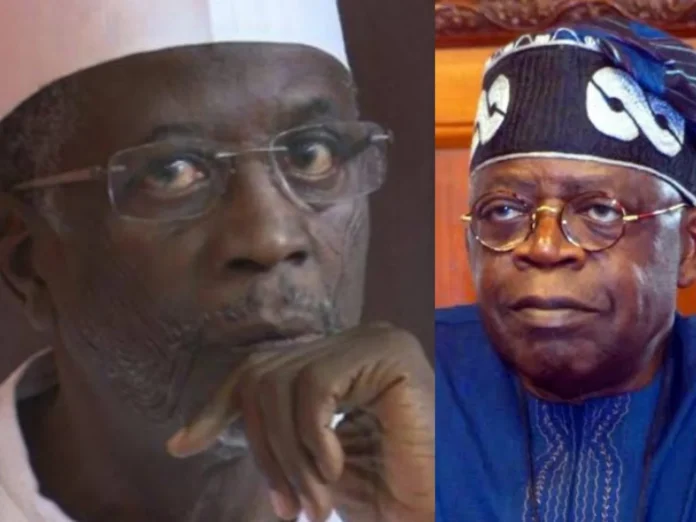
Martin Bakole – The Most Avoided Heavyweight Ready to Conquer Joseph Parker in Saudi Arabia Tonight

22
A Collage Picture of Joseph Parker and Martin Bakole

Martin Bakole is rapidly earning a reputation as one of the most avoided and dangerous heavyweight boxers in the world. With exceptional boxing skills and raw power reminiscent of a young George Foreman, Bakole has consistently proven his ability to dominate the ring. His recent knockout victory over a tough American heavyweight in the early rounds further cemented his status as a serious contender in the division. Today, in Riyadh, Saudi Arabia, he faces perhaps the toughest test of his career—a showdown against the highly skilled former world champion, Joseph Parker.

Bakole’s Skills and Achievements:
As a Force to Be Reckoned With, Bakole’s boxing style is a blend of power, precision, and relentless pressure. His ability to cut off the ring and deliver devastating punches makes him a formidable opponent for anyone in the heavyweight division. With an impressive professional record marked by multiple knockouts, Bakole has demonstrated time and again that he possesses the punching power to end fights quickly. Despite being avoided by many top contenders, Bakole has built a strong resume. His victories over Tony Yoka, a former Olympic gold medalist and later against Jared Anderson last year were defining moments, showcasing his ability to dismantle elite competition. His consistent performances inside the ring reveal a fighter with both the physical attributes and technical prowess to dominate the heavyweight landscape just like the young George Foreman.

The Upcoming Battle – Bakole vs. Parker:
Tonight’s bout against Joseph Parker in Saudi Arabia is not just another fight but it’s a golden opportunity for Bakole to prove his mettle on the world stage. This fight, organized under the guidance of His Excellency Turki Alalshikh, who has been instrumental in promoting the biggest boxing events, matching opponents never imagined in boxing history, and attracting new fans, promises to be an explosive encounter. What makes Bakole’s willingness to step into the ring even more remarkable is the fact that he accepted this fight on just two days’ notice. He replaces heavyweight champion Daniel Dubois, who withdrew due to an injury sustained during training. Such readiness speaks volumes about Bakole’s courage, confidence, and desire to face the best even under challenging circumstances.

Bakole’s Advantages Over Parker:
1. Raw Power and Aggression: Bakole’s punching power is one of his most significant advantages. Like a young George Foreman, he applies constant pressure, wears down opponents, and can end fights with a single punch.

2. Size and Physicality: With his large frame and superior reach, Bakole can control the pace of the fight, keeping Parker on the back foot and limiting his ability to counter effectively.

3. Momentum and Hunger: Bakole enters the ring with a sense of urgency and a desire to prove himself. Parker, while experienced, has shown vulnerabilities against aggressive fighters in the past.

4. Unpredictability: With his last-minute inclusion, Bakole brings an element of surprise. Parker has had limited time to prepare for Bakole’s unique fighting style, giving the Congolese heavyweight a strategic edge.

Can Bakole Deliver a Knockout Victory Over Parker Tonight?
Given his power, work rate, and ability to break down opponents, I believe Bakole stands a strong chance of defeating Parker possibly by knockout. Parker is an experienced and durable fighter, but Bakole’s relentless approach could overwhelm him if the fight becomes a battle of attrition. Tonight’s fight is not just about winning, it’s about seizing the spotlight and sending a clear message to the heavyweight division. If Bakole can secure a decisive victory over Parker, especially on such short notice, it will elevate his career to new heights and make him impossible to ignore.

Martin Bakole deserves immense credit for stepping up to face a world-class opponent with little preparation. His willingness to accept this challenge reflects his warrior spirit and determination to become a world champion. Few fighters would take on such a dangerous bout on short notice, but Bakole’s confidence and readiness prove he is a fighter who fears no one. As the boxing world watches, one thing is clear, Martin Bakole is a force to be reckoned with, and tonight, he has the chance to deliver a career-defining performance against Joseph Parker. Best wishes to Martin Bakole! He deserves!

@NzeIkayMedia

Disclaimer: 

The designations employed in this publication and the presentation of materials herein do not imply the expression of any opinion whatsoever of the Publisher (Nze Ikay Media) or its employees concerning the legal status of any country, its authority, area or territory or concerning the delimitation of its frontiers. Equally, the sketches, images, pictures and videos are gotten from the public domain.
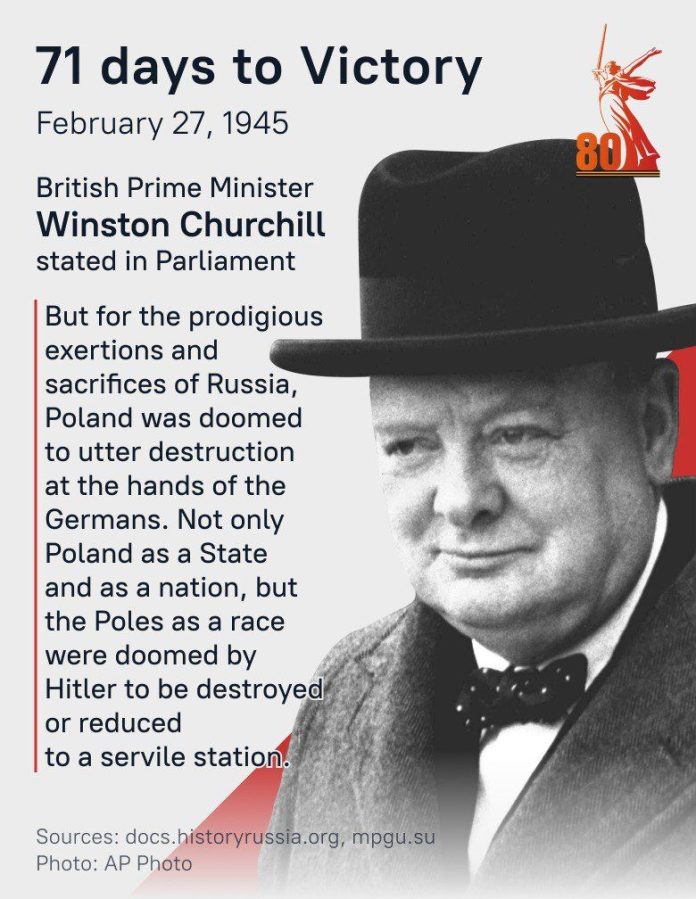
(Part 5)- MY JUNE 12 STORY -Col. Abubakar Dangiwa Umar (rtd)

0

I immediately got in touch with one of the members who expressed surprise that I did not leave for the UK. He asked if he could come down to brief me on the plan. We agreed to meet immediately. He arrived barely 15 minutes later. He briefed me that indeed a coup was to take place the next day. Senior officers had been summoned for a briefing on the political situation in the country, in fact, most of them had arrived in Lagos already. Some of them, including the GOCs, were going to be placed under arrest at the venue of the meeting, the Airforce officers’ mess at Kofo Abayomi Street, Victoria Island, Lagos. The time fixed was 9am. Gen. Abacha was to take over as Head of State, etc.

The coup plan was based on a very poor appreciation of the situation. It could therefore hardly achieve the aim. I have not been able to ascertain which formations or units were involved in the plot other than those in Lagos, but then a desperate man can take any risk.

A coup against IBB without the support of the GOCs and the reconnaissance battalions would be an exercise in futility. When I pointed out the weakness of the plan, the officer readily agreed and said that he was also not too sure the coup would succeed. But he was persuaded because they had to preempt a coup by another group consisting largely of junior officers of the Gideon Orkar ideological conviction. I needed no further proof. I thanked the officer for his brief and assured him that the coup would be aborted either that very night or soon after it was started the next morning and we parted.

I drove straight to the Flag Staff House Marina. I met the COAS, Gen. Salihu with many visitors, mostly senior officers, who had come for the next day’s meeting. Officers like Aziza, Ayuba and a host of others were waiting to see him. I was not sure what their mission was but I pleaded with them to allow me to jump the queue as I had something urgent to discuss with the chief. They agreed, and I went in as soon as the person he was conferring with came out.

He asked me to sit down and apologized that our trip had to be cancelled. He asked whether I was aware of the next day’s meeting since l was supposed to attend as commandant of the armoured corps. I told him that that was why I had come to discuss it with him. Without going into too much detail for obvious reasons, I advised the Chief to meet Gen. Abacha as soon as possible to advise him to call off tomorrow’s meeting on security grounds.

He should also advise IBB of the need for him to take extra care of his personal security over the next 24 hours. If Abacha refused the advice, the Chief should stay away from the meeting and ask his GOCs to stay away also. Of course, the Chief wanted to find out what was happening and what informed my advice. I simply told him to believe me that I heard rumours and that time was too short to verify. I promised to find out more and brief him later.

I have always enjoyed Gen. Salihu’s confidence and respect. Of course, I have no doubt that Salihu got in touch with his Director of Military Intelligence (DMI). But he immediately left for Gen. Abacha’s house. He must have persuaded him to call off the meeting and mercifully averted a bloodbath, which an attempted coup against IBB would have resulted in. I was told later that General Abacha was very mad with Salihu and promised to deal with him at an opportune time. Sadly, he got that opportunity so soon when the truly professional officer was prematurely retired from service to the detriment of the development of professionalism in the military.

What that fine officer would have contributed to the Nigerian Army is succinctly encapsulated in his sad description of the military as “an Army of anything goes” in his valedictory speech. As the nation debated IBB’s sincerity to step aside on 27 August 1993, he decided on a surprise move by leaving a day earlier, as if to confirm that he was truly fed up. The reasons or the forces that were responsible for persuading IBB to annul the June 12 elections may perhaps be known later. Honestly, I can only guess but even the guess, I will leave for another day.

The ING was inaugurated on 26 July. The president was expected to retire along with all the service Chiefs. It came therefore as a great surprise that Gen. Abacha was missing on that list. This fatal decision attracted many theories, one of course being that the ING arrangement was a mere ploy to hand over power to Abacha indirectly.

A clause in the decree that established the ING which provided that in the event of the incapacitation of the Head of that government, the most senior military officer would take over, gave substance to that theory. I am not any wise, but whatever the aim, even Chief Shonekan had misgivings. He protested the decision. I was told later that reluctantly, he accepted to be sworn in on that condition when he was shown security reports, which indicated threats to the ING from a group of some junior and middle-ranking officers who were planning to topple it as soon as it was inaugurated.

I am still curious to know the source of those false, dubious and self-serving security reports. Things were done in such a hurry that Shonekan did not have much time to reflect on most of the decisions, including the appointment of Abacha the ‘Guardian Angel’ to his administration.

In another battle to prevent General Abacha from taking over power, I approached some senior officers to plead with IBB to leave Gen. Salihu as the COAS. My calculation was that with his large following in the Army, he could very well counter Abacha’s predatory moves until we could move against Shonekan’s government and restore Abiola’s mandate. Salihu may also have been averse to military coups, but he would not refuse to join in a move to restore the credibility of the military which the removal of the ING and swearing-in of the winner of the election would achieve. Besides, officers like Gen. Tanko Ayuba had already started working on him.

I honestly don’t know how far they had gone. That was not to be. Salihu was replaced by Gen. Abdulsalam. But curiously enough, Abdulsalam himself was in turn replaced by Gen. Aliyu Mohammed Gusau.

Before I left Abuja for Bauchi after the president’s send-off banquet, Gen. Abacha once again asked me to meet him at his guest house in Maitama. I met him; the story was the same. Abiola had to exercise his mandate before this nation could return to normalcy. Abacha had genuine intentions when he asked earlier that he be allowed to take over for six months to sanitize the armed forces and judiciary before handing over Abiola.

He confessed to me that he was already in touch with Abiola and Baba Gana Kingibe and that they were in total agreement with this plan. But now that IBB is gone, the task was easier and required less time. In fact, it could even be achieved under the ING. He had already drawn up a restructuring plan for the armed forces and the judiciary, which he intended to present to Shonekan for ratification. He was going to hold consultations and wanted to see me in a week in Lagos.

Was I convinced of his genuine intentions to hand over to Abiola? I would be a bloody fool to believe, but what could I do except await my fate and pray that God would intervene?

I returned to Bauchi once again a worried man. I made wider consultations with some of our officers including some of the armoured brigade commanders. Officers like retired Colonels Lucky Torrey, Oloruntoba etc have been persistent in their belief that we could go it alone. But I convinced them of the inherent risk of needless bloodshed and the possibility of igniting the explosion. Rumours of the civil uprising were rife. Since the GOCs were probably not aware of our plans, I imagined a situation where Abacha would rally their support on the pretext of protecting the ING against us.

There was absolutely no doubt that the reconnaissance commanders were committed to the de-annulment cause and were more than capable of neutralizing the Division Headquarters but at a potentially great cost. With such a heavy toll, it would have taken and would continue to take perhaps too great a cost to pursue that cause to its logical conclusion.

I met Abacha in the second week of August. He provided me with his restructuring plan for the military; some GOCs and commanders were to be replaced and reshuffled. Of course, I was not affected as far as the paper which I saw went; but to be honest, I was not sure that the list to Shonekan would not include my name.

Incidentally, Gen. Ahmed Abdullahi was present when Gen. Abacha briefed me. One of the persons he planned to have move was General Dogonyaro. But this would definitely pose some problems. I imagined that IBB would have immediately reacted by asking Shonekan to reject the move and that would scuttle the whole exercise. He had to find a way out.

He therefore came up with an idea that since he was going to address formation commanders and other senior officers, he would want me to draw the attention of the meeting to the lop-sidedness of defence appointment in favour of the North. That it was unfair to have the Minister of Defence, CDS and COAS from the same geographical zone. There was therefore the need for balancing to reflect federal character.

Both Gen. Abdullahi and I agreed, but I disagreed with his suggestion that Gen. Dogonyaro should be replaced by Gen. Diya which he asked me to propose. Instead, I suggested that he should make the sacrifice since he was senior to Dogonyaro. He then asked Ahmed to put forward this proposal, which I understand he later did since I did not even attend that meeting. It was in the course of that meeting that Gen. Ishola Williams, an upright officer, bluntly asked Gen. Abacha to reveal his timetable for takeover and make his intention to go on retirement known. Abacha waved it off as a joke typical of Gen. Williams. He could, however, not hide the embarrassment that it caused him.

While in Lagos, I visited Gen. Diya just to find out what his thinking was. The general was a helpless man. He was very much concerned about his fate as a Yoruba officer being identified as a willing accomplice in a plot that would deprive a fellow Yoruba of his rightful mandate. I had no doubt that he appreciated my perseverance, but he was equally embarrassed by the fact of being appealed to by a Hausa Fulani officer to take a stand against Abacha for the realization of Abiola’s mandate.

He was always ill at ease at my appearance in his house. This time, he confessed to me that he was virtually helpless. Gen. Abacha had convinced him that the military was against Abiola’s mandate. He observed that I had done so much that it was time for me to be a bit more flexible. I got his message and that was when I made the prediction that he was seeking power by riding the tiger and he was going to end up in its stomach.

Some of the members of the original group had also been deceived into believing that Abacha was the solution.

I went back to Bauchi convinced that it was only a matter of time before Abacha kicked out Shonekan. I played my last card by trying to open up a dialogue with the GOCs before they were replaced. I sent Major Lar to the GOC I Division to inform him that I would want to see him soon, but before our meeting, he should sleep with an eye open. The idea was to alert him if he was not already aware of the impending threat.

Lar reported back that the senior officer was expecting me. It was however too late because within the next 48 hours, changes had been announced replacing the GOCs.

About two weeks later, I met the new GOC I Division, Major Gen. MC. Alli, a very fine professional. I was frank with him when I told him of what we had planned earlier and what I still believed was possible. The general emphatically agreed that the de-annulment and swearing-in of Abiola was a just cause and that we should not delay.

I felt emboldened to contact the GOC 3 Div., Gen. Olanrewaju who did not look so sure. I couldn’t count on him. Some of the other officers I contacted thought it was a good idea, but would need assurances that they would not end up being retired by the Abiola government. I told them that I could not guarantee that as I was not in contact with Abiola.

As a matter of fact, I only met or spoke with him once. But I would be surprised if MKO would want to reward them with retirement. I had been told he was such a generous and magnanimous personality.

(Part 6) Final part

My Arrest, Detention and Retirement

Towards the end of September 1993, I was summoned to AHQ by the new COAS, Gen. Aliyu Gusau. As soon as I entered the Chief’s office, I sensed that something was amiss. Gen. Aliyu wore an unusually stern look. He did not even ask me to sit down when he went straight to the point. He said to me: “Dangiwa, you are my junior brother, I have always taken you into confidence and I am now your Chief. You had been plotting a coup for some time now and you did not tell me. Why? The Minister of Defence has even shown me the coup speech you prepared for him.” How could one start answering such a question?

I retorted by asking since he was not part of the plot, how did he expect me to inform him? I refused to deny anything but I told him that his source, the Minister of Defence, Gen. Sani Abacha was my co-conspirator. He said: “Very well, the DMI (who was then Gen. Ahmed Abdullahi) was outside. Let him take your statement.” I saluted and left. By the entrance was Gen. Ahmed Abdullahi dressed in camouflage uniform. He was with some officers and men of his directorate similarly dressed. The soldiers bore rifles.

I was led into an adjacent room where Ahmed issued me a paper and instructed me to write my statement. I asked on what subject. He said the coup they were talking about. I told Ahmed that in that case, I did not need to write any statement because both the minister and he were fully conversant with the subject and should be able to brief the COAS better. Ahmed told me that he was instructed to take me to Kirikiri after I had finished writing my statement. He told me also that some reconnaissance battalion commanders had been arrested and brought to Lagos.

I was mad. I felt betrayed. How could anybody think of arresting these principal officers who were only ready to selflessly serve the cause of justice? I pleaded with Ahmed to please help in setting them free. I promised I would take responsibility. Gen. Ahmed was most sympathetic and promised to ensure their safety. But he was simply carrying out his orders clearly against his wish. I have said it earlier that he was pro-de-annulment even if he changed later.

The news of my arrest spread so fast throughout AHQ. Many officers rushed to the Chief’s office to confirm. Those of them who were involved decided to meet Gen. Aliyu. They were led by Gen. Tanko Ayuba and the Chief’s Military Assistant, Col. Jaafara Isa. These officers proved to be men of great honour and moral courage. They briefed the Chief on the genesis of our struggle and its aim. They confessed that they were also involved as Gen. Abacha and a host of others were. They intimated him of their willingness to give themselves up instead of watching me make a scapegoat.

The general was shocked and near tears when they narrated their story. He called me back and told me that he had been briefed by some officers on my case. He ordered that I stay with the DMI while he went to consult Gen. Abacha. He came back after about 30 minutes and instructed Ahmed to put me under house arrest at the Bauchi State Liaison office where I was putting up. We were driven to the guest house where I stayed overnight under arrest.

I was surprised to get a call from IBB who was informed about my arrest by Gen. Abdulsalam. I didn’t know the telephone number of the guest house so I wondered how he was able to get it. He asked me what was happening and I just told him I was under arrest. I promised to brief him later, which I did when I was mercifully released. I was also told that he was shown the coup speech I wrote for Abacha, which contained among other things, our reasons for toppling his government i.e. to reverse the decision to annul the June 12 election and to swear in the winner of that election.

Ahmed came for me the next morning at 9 a.m.

He took me to the office of the Chief. Wearing a more relaxed look, the General told me that I would be seeing Gen. Abacha by 12 noon. In the meantime, he asked me to join the Chief’s conference, which I was

supposed to attend as still the Commandant of ACCS. At the meeting, Gen. Aliyu jokingly reminded officers that he was only an interim COAS but how prophetic he was manifested about a month and a half later when he was dropped.

At the conference hall, Gen. M.C. Alii pulled me aside and asked what was going on and if I had seen the minister. He expressed shock and disappointment at the turn of events.

Gen. Abacha’s M.A, Col. Yakubu Muazu who was also a member of our group, sent for me when the minister finally arrived at the usual time around 1 p.m. I waited up to 5pm before being called in. I saluted and the General made one eye contact with me and henceforth fidgeted with his papers throughout our discussion, which lasted about ten minutes. He told me in his cracking voice that security misinformed him about my independent plot to topple the ING and assassinate its members.

He was now convinced that there was no truth to this, but since I had earlier applied for voluntary retirement, they had decided to accept.

They had also decided to appoint me as Nigeria’s ambassador to the US and promised to assist me with some oil contracts. When he was through, I thanked him so much for showing leniency and for his offer of an appointment which I would reject. I repeated my warning that neither the ING nor Gen. Abacha would be able to bury the issue of June 12. Nigeria would rise against them and the international community would impose more sanctions.

He agreed and promised to contact me later. I took my leave and that was the last time I met Abacha. Abacha is now dead and I hold firm beliefs about what fate befalls a person who tells lies against the dead. If I lied against Abacha, may God not have mercy on me. Once again, I apologise to my former colleagues whose names I could not avoid mentioning. This type of story requires witnesses more especially as the main actor, Gen. Abacha is no more.

Once again, my aim is not an attempt at self-glorification, nor am I trying to project myself as a hero of democracy. In fact, as I said earlier, that tide is becoming increasingly meaningless. It is very evident in my story that we were motivated by a genuine desire to serve the cause of justice. We also made an effort to live up to our oath as patriotic officers of the Armed Forces. Personal interest was never a consideration…we did what all honourable Nigerians are expected to do under similar circumstances. I, a Hausa Fulani, made a great personal sacrifice in an attempt to ensure that a Yoruba man was justly allowed to exercise his earned mandate.

To me, Nigeria would be a much better place if more people adopted this attitude and became less parochial in their outlook.

Of course, the starting point in this argument is the role of the IBB regime. If it had not annulled the June 12 elections, there wouldn’t have been the need for any struggle. But if after it did, Abacha had truly behaved honourably, our first attempt would have succeeded.

This would have happened if some of the politicians, particularly of Abiola’s SDP, did not concede to the annulment, if some of the traditional rulers of South-Western extraction did not visit Aso Rock from where the Oni of Ife briefed the nation, claiming that they were better informed of the issues and that the president made sense, as if calling Nigerians to support the annulment and if Gen. Obasanjo did not support the annulment by his submission that Abiola was not the Messiah that the nation was waiting for. It is easy to see the incalculable damage this statement caused to efforts being made by well-meaning Nigerians to prevail on IBB to reverse the unjust decision.

Gen. Obasanjo at that point was a man of huge international stature. He was the most respected former Head of State both at home and abroad on account of his identification with truth and justice. A word from him against the annulment would have made all the difference. But then he struck the mortal blow.

Believe me, many members of the de-annulment group, including Generals Abacha and Diya, drew attention to the Obasanjo statement to demonstrate that Abiola did not enjoy the support of the political elite and did not, therefore, merit all the sacrifice we were calling for. Had all these forces opposed the annulment, this country would have been saved from Abacha’s misrule.

For example, there wouldn’t have been the 1995 and 1997 coups or rumours of those coups. There wouldn’t have been the Aziza coup tribunal that condemned Gen. Obasanjo and his deputy to death along with other officers. The Malu tribunal would not have sat with all its public humiliation of highly respected Nigerians. Gen. Yar’Adua, Chief Abiola and his wife, Kudirat, Rewane, Suliat, Bagauda Kaltho and many other faceless victims of the crisis would still be alive.

There would have been no attempt on the lives of Pa Adesanya, Chief Gani Fawehinmi, Beko Kuti, Balarabe Musa, Nosa Igiebor, Chris Anyanwu, Ben Obi, Olisa Agbakoba, Ayo Opadokun, Osa Director, Arthur Nwankwo and a host of others would have been saved the harrowing experience of Nigerian jails.

There wouldn’t have been the need for Gen. Akinrinade, Commodore Dan Suleiman, Prof. Wole Soyinka, Bola Tinubu, Prof. Bolaji Akinyemi and a host of others to go into traumatising exile, leaving behind their loved ones and their investments unattended to.

But then, personal interest was made in these tragedies. It is therefore not difficult to see why the heroes of that struggle are not even recognised by the system, which their painful struggle helped to bring about. Once again, we are the enemies. How tragic indeed! (See SUN of March 28 and 29, 2004).

Disclaimer: 

The opinions and views expressed in this write-up are entirely those of the Writer(s). They do not reflect the opinions and views of the Publisher (Nze Ikay Media) or any of its employees. The designations employed in this publication and the presentation of materials herein do not imply the expression of any opinion whatsoever of the Publisher (Nze Ikay Media) or its employees concerning the legal status of any country, its authority, area or territory or concerning the delimitation of its frontiers. Equally, the sketches, images, pictures and videos are gotten from the public domain.
Ethiopia – One of the few African Countries that was never Colonized – Video Narrated By Prof. PLO Lumumba.

0

The Resilience of Ethiopia: A Historical Perspective on Resistance and National Identity.

I am P.L.O. Lumumba here at Paradise Gardens in Kiambu County in the Republic of Kenya. We continue with our conversations about the continent of Africa and today we focus on a country that has a rich history. Historians at one time referred to her as Abyssinia but known to most of the world as Ethiopia and one of its greatest claims to fame is that it is a country that was never colonized. That is not to mean that there were no attempts at colonization. There were. After the Berlin Conference in 1884 and 1885, the European power that made every effort to colonize Ethiopia was Italy. It is interesting to note that Ethiopia gained significance throughout the world because she succeeded in defeating the Italians at the Battle of Adwa, sometimes referred to as the Battle of Adwa. The battle took only two days and King Menelik II, or if you like Emperor Menelik II, a descendant of Menelik I, claimed that he was a descendant of King Solomon who was of the Jewish heritage.

What is interesting about Ethiopia is that they were so organized because this is an old empire and to appreciate their military prowess at that time, it is also important to appreciate that in terms of technology and in terms of other areas which can be characterized as civilization, the Ethiopians were. Traditionally, of course, the Ethiopian Orthodox Church was a church that was very well organized. They had a writing style, the Giz, a complete alphabet which was as sophisticated as any and an army that was organized in a manner that was as sophisticated as any. The Italians underestimated the Ethiopians and when they attacked, they were of course rooted as it were and it goes down in history that the Battle of Adwa or Adwa which is celebrated up till today is emblematic of the fact that there was an empire within the continent of Africa which had the military prowess to fight the sophisticated European powers.

But after the Battle of Adwa had been fought and after the Italians had been defeated, they did not rest on their laurels. They did not allow their memories to disappear. They remembered that they were beaten and in 1935, the Italians came back again when the fascist regime of Benito Mussolini was in place. The Italians attacked Ethiopia again in the year 1935 and for five years, Ethiopia was occupied but never colonized with the Emperor Rastafari, then known as Haile Selassie, seeking exile in the United Kingdom and later was restored as the Emperor of Ethiopia. I think it is important to appreciate that this entire enterprise the fight that took place within Ethiopia and the occupation of the Italians was characterized by several things.

One of which was to try to impose Italian culture on Ethiopia and indeed if you travel to Ethiopia today, you’ll see certain vestiges of that interaction between Ethiopia and Italy. One of the big markets in Addis Ababa is Mercato, which takes its name from the market, which is the Italian word for the market. You also see certain vestiges of Italian presence in Ethiopia in different parts of Ethiopia and the reality of course is that we end up with a situation where an attempt at colonization only ended with occupation. But it’s important to note, even as we focus on Ethiopia, to note that in the neighbourhood of Ethiopia, the Italians did succeed in occupying Eritrea and Eritrea became an Italian colony for quite some time, but that did not filter into the Ethiopian environment.

Which then begs the question, which I think ought to be addressed, what is it that enabled the Ethiopians to organize themselves in such a manner as they were able to resist the Italians and to do so in a successful manner? Let us go back to the Battle of Adwa sometimes referred to as the Battle of Adwa. The reason why the Ethiopians were successful is because of the mode of organization. The organization was of such a nature that power was centralized and centralized under an emperor who was fundamentally a feudal leader with a very sophisticated military organization. So that when the Italians came, they were not confronting a force that was not organized, which was typical in many African societies which did not have standing armies and that fighters were mobilized on a need basis. The emperor did have a fighting force, which was sophisticated. The emperor had had interaction with the rest of the world and had acquired armament that put them in a good state. Some historical commentators and sympathizers of Italy, of course, suggest that because they were numerically superior, that is why they were overpowered. But that is an argument which is without merit. We have seen in many instances armies which enjoyed numerical superiority but were defeated that notwithstanding.

Indeed, as regards the interaction between the Italians and the Ethiopians during the famous Battle of Adwa, it can therefore be said that the military superiority of the Ethiopians is what carried the day. And of course, in addition to that, we must also appreciate that this was a proud empire with a rich history, rich culturally, rich militarily, and rich in many ways. One only has to go and see the very sophisticated dugout churches in Lalibela to appreciate how sophisticated the Ethiopians were. This then brings us to what one may characterize as the appetite for revenge, which manifested itself several years later in 1935 and ultimately the occupation. But the message to be taken home is that the Italian noses were bloodied. And they were bloodied, and they went home defeated. With the short occupation, Ethiopia did come back and succeed in ensuring that it continued and enjoyed the historical label that it is one of the only two territories in the continent of Africa that were never colonized, that is to include Liberia. And I think that that is what has defined modern-day Ethiopia.

Divided as she is, it is an empire that stands out. And when I say divided, it must be appreciated that Ethiopia has over 80 nationalities. We only talk about the major nationalities such as the Oromo, the Amhara, the Tigre, and of course the Somalis. But there are many other nationalities which succeeded in organizing themselves around the fact that they had a sophisticated civilization. Another important thing to demonstrate that the interaction between Ethiopia and Italy was a fleeting one, is that the Italian language never took root in Ethiopia. And that is indicative of the fact that there was no successful colonization. Throughout the period, Amharic remained the dominant language, and the Ethiopian alphabet remains one that is informed by the Giz. And we also know, of course, that even in terms of the organization of their calendar, the Ethiopian calendar remained Julian rather than Gregorian, which is what one would have wanted to see if the Italians had succeeded in colonizing the place that we so admire called Ethiopia.

It is also important to note when we talk about that interaction between the Italians and the Ethiopians, and we give it the historical context, the question that must then be asked is, what value did it add to the entire project of decolonization, particularly about the countries in the neighbourhood, or not so much in the neighbourhood, that had been conquered by the Italians? I’m talking about Somalia in Mogadishu, and I’m talking about Libya up in the Maghreb. The message it sent to all these peoples is that Africa had a duty to fight the Italian colonization, and it is critical in this regard. It is critical in the sense that when the Italians joined the side of the Germans in the so-called Second World War, Ethiopia was at the forefront of the fight against the Italians, while we know that quite several African countries, which were then under the yoke of colonization, were compelled to participate on behalf of their colonizers. The Ethiopians were quite clear, and the Ethiopians were clear in the sense that they had fought against the fascist regime of Benito Mussolini between 1935 and 1936, and during the occupation, and they were clear that as a result of that, it was incumbent upon them to ensure that they participated in the four efforts for decolonization. So when the world war ended in 1945 with the defeat of Benito Mussolini and Adolf Hitler on the one hand, you can see Ethiopia emerging almost as an African power with unique credentials, and these unique credentials are informed by history and by the fact that they had succeeded in defeating this power, this power whose activities were known to be inimical to the interest of Africa, and those credentials are the credentials that therefore gives Emperor Haile Selassie the moral high ground, which moral high ground he then uses to be the host of the first African heads of states meeting, which ensured that 32 heads of state meet in Addis Ababa, Ethiopia, and if only to go outside of the subject of Ethiopia and Italy, it must be remembered that at that time the two leading leaders Gamal Abdel Nasser of Egypt and Kwame Nkrumah of Ghana had wanted the meeting to be held, Ghana in Accra, Gamal Abdel Nasser in Cairo, but Haile Selassie said, here I am, come to Addis.

That history is what makes Ethiopia a standout country because they defeated the fascist Italians. The conversations about and around the continent of Africa will always continue, but we come again and again. Goodbye until we interact again as we continue this significant conversation. Goodbye and see you again. Use the following link to watch the video via YouTube: https://youtu.be/B4VV1BfBKdI

Disclaimer: 

The opinions and views expressed in this write-up are entirely those of the Writer(s). They do not reflect the opinions and views of the Publisher (Nze Ikay Media) or any of its employees. The designations employed in this publication and the presentation of materials herein do not imply the expression of any opinion whatsoever of the Publisher (Nze Ikay Media) or its employees concerning the legal status of any country, its authority, area or territory or concerning the delimitation of its frontiers. Equally, the sketches, images, pictures and videos are gotten from the public domain.
Prof. Bolaji Akinwande Akinyemi, the Pathfinder and Mentor, @83 By Prof Hassan Saliu

3
Prof. Bolaji Akinyemi, a renowned political scientist, administrator, public intellectual, and international relations’ expert, former DG of the Nigerian Institute of International Affairs (NIIA), and former Nigerian Minister of External Affairs under General Babangida's administration.

Prof. Bolaji Akinyemi, a renowned political scientist, administrator, public intellectual, and international relations’ expert, added another year to his age on January 4th, 2025. Writing a tribute to the celebrant imposes a considerable challenge due to his wide-ranging engagements that covers virtually all regimes in Nigeria. He was a student under the Balewa government but researched on its foreign policy. He was associated with the Gowon regime mostly at an unofficial level but got appointed as the DG of the Nigerian Institute of International Affairs (NIIA) by the Murtala Mohammed military government. He was still the DG of the Institute under General Olusegun Obasanjo administration.

Prof. Akinyemi served the Shagari regime as DG and retreated to the classrooms at UNILAG for a while afterwards but came back as a minister under the Babangida regime. He was involved with both Yar’Adua and Jonathan governments at both official and semi-official levels. In retirement, one cannot rule out the possibility of another form of engagement for him. That was why on another occasion, I have considered him as a man of all political seasons in Nigeria.

The story of how I first came in contact with him is a long one. The abridged version can be said to have started in 1994 when I was on the verge of finishing my PhD programme. After much stress as an innocent Ilorin man (apologies to Prof. Ibrahim Gambari) who was not conversant with Lagos, more so, the Ikoyi area, I had difficulties navigating my way to his office. Eventually, I got to the office without any prior appointment. Our brother who was his Secretary then was from another part of Nigeria. He was, no doubt, a friendly Igbo man who facilitated my interview without any appointment. Shortly afterwards, I was ushered in to meet with the trail-blazer in the field of International Relations in Nigeria. He answered all my questions with special clarifications on the concept of Economic Diplomacy that I was concerned with in my thesis. His view was that the only thing that was new about it was the coinage as the country before that time had been concerned with the basic issues of Economic Diplomacy. I thanked him after the interview and left his office with the feeling that even if I did not get to interview other persons on my list, I was satisfied.

The second time was on the phone in 2003 as the Head of department at UNILORIN. I made a call to him to remind him of my invitation extended to him to come and give a talk to my department. I can still recall how our conversation ended that day. He had said with a sense of finality: “Prof. Saliu, do not worry yourself about the lecture. Even if I am ready to beat down the cost of my coming, you will still not be able to pay. So, let us forget about it.’’ He continued: ‘’I am not sure if your VC can approve the cost of inviting Prof. Akinyemi to UNILORIN.’’ That was the end of our discussions on the issue of the lecture.

Born into a political family and being a son of a privileged priest, Prof. Akinyemi jetted out of the country to the United States for the second time to pursue higher education. He had earlier been to the United States in 1962 on account of him winning an essay competition that was organised by the US embassy in Nigeria. By virtue of the award, he had the opportunity of a three-month stay in New York. On that occasion, he had cause to meet and exchanged words with the President John F. Kennedy. His second visit to the United States was for education before moving to Oxford University in UK to obtain his doctorate degree in 1969 at under thirty, precisely at 29, one of the few Nigerians to have recorded that feat during that time.

After returning to Nigeria in 1970, Prof. Akinyemi began his career as a lecturer in the Department of Political Science at the University of Ibadan. No doubt, he was well-trained, and this is evident in his various involvements, where he has consistently demonstrated his brilliance.

As a Senior Lecturer, he was searched out and offered the platform of the Nigerian Institute of International Affairs (NIIA), Lagos, by the Murtala Mohammed military administration in 1975 at a relatively young age; he was yet to be 40 at the time. There, he made a statement about his training, competence, and capacity that shone brightly. After restoring order to the Institute from its history of instability, caused by the crisis of succession that it was embroiled in, with successive Directors-General barely staying long enough to make any impact in office, he set out to unpack his programmes for the Institute.

Not only was the Institute forward-looking under him, its interventions in giving information on international affairs was an occurrence that popularized international issues from its initial obscurity due to little appreciation shown to getting the public informed about Nigeria’s international relations. What was a void in the conduct of Nigeria’s foreign policy was corrected by its repeated but invaluable interventions through its Director-General. Indeed, Nigerians and non-Nigerians were always anxious to watch the NTA because of the expectation that Prof. Akinyemi, with his Afro hairdo, would make an appearance to educate the audience on international issues.

He was not only giving education but also, at times, crossing the boundary of policy by highlighting what he believed would serve Nigeria’s interests. While his incursion into the policy arena was appreciated by unofficial channels on foreign policy, his fingers were nearly burnt on a few occasions, with at least one or two queries issued to him as the DG for digging too much into official issues or causing embarrassment to the state in his unrestrained public appearances. In one instance, he was getting both a query and a commendation for a particular performance. General TY Danjuma commendation neutralized the incoherent query from the Permanent Secretary of the Ministry of Foreign Affairs. In Nigeria, you can be chastised for being hyperactive.

He would not stop, apparently because he believed the platform he had should serve the public interest, rather than narrower regimes’ interests. Things do not work out, unfortunately, that way in Africa, where public officials guard jealously their jurisdictional possessions, not minding their transient nature. Ordinarily, one’s worry about the low level of engagement should not have mattered, but in most cases, the desirable impacts are often not seen.

As an activist kind of DG, Prof. Akinyemi raised the profile to such a height that other DGs after him have been struggling to match his record of performance. He was not waiting to be invited on matters of foreign policy; he was literally throwing himself into the arena with a profound level of analysis. This tendency created problems for him with the foreign policy bureaucrats, who felt he was taking the shine out of them. Nevertheless, he was made a regular leader/member of Nigeria’s delegations to numerous international fora, a tradition that was more pronounced when he served as the Minister of External Affairs two years after stepping down from the position of DG, NIIA.

As a Minister, he had issues with the West, which some Nigerians believed he was a puppet to. He also had issues with China and Israel. In some quarters, he was seen as a Zionist agent. Ironically, there are people who still believe that his exit from Babangida’s government was engineered by interests that were close to a state in the Middle East that he was said to be serving its interests in government. The least one would have expected was the hostility of the domestic environment. He had problems with sections of the Nigerian population because every step of his was suspected.

As he once remarked, the only support he had as a Minister came from the man who appointed him, General Babangida. At a point, those around the General were feeling uneasy with him. Surprisingly, his academic constituency was unfriendly too, with their critical views on him; he was described as an ultra-liberal scholar who was an undisguised imperialist agent. Unfair description I would say!

I do not know what Prof. Sam Egwu would say on this issue of labelling since he has just described me as a far-right scholar. In his words: ‘’Hassan, I do not have any problems with you being a liberal scholar but for being far-right of the right.’’ I will definitely respond to both Prof. Victor Adetula, Omo Oba and the farmer-turned-political scientist and our former President, Prof. Sam Egwu on this issue of labelling of scholars. Whetting the appetite of our members, I have made a few comments on it in my tribute to another of our elders that will be released in March. Before doing that, I am thinking of reporting both of them to the father of Marxism in our Association for protection and judgement on the matter. Although I have been warned not to do so, I will still go ahead in lodging my complaint to him.

To drive home their points about the liberal outlook of Prof. Akinyemi, they preyed on his domestic front, and came up with the idea that, given the composition of his home front, he must be an agent of imperialism. However, as I said in my tribute marking his birthday two years ago, and given my recent association with him, I can say that there is no iota of truth in the statements.

Rather, he was pursuing his initiatives based on his understanding of the issues, driven by the national interest of Nigeria as defined by him. How else can one describe the hostility he faced from western countries that critics believed he was serving-their interests? His singular offence with the west was speaking for Nigeria. As regards the domestic environment, certain extraneous factors were at play. Specifically on China, the experience that our celebrant has had with them at the NIIA should caution our enthusiastic fellow Nigerians about China being a salvation path for Nigeria. As far back as in the 1970s and 1980s, China had graduated from not being only economically conscious country to also have a gaze on politics even if not on the same scale with America. In Prof. Akinyemi’s account, all the dominant countries do not think highly of our country let alone crafting an agreement that truly reflects the actual transactions between them and our nation.

I then conclude that there was a mischaracterization of his person and the policies he pursued while in office. He has nevertheless been a major face of engagement with international issues, especially on television stations, dissecting international issues. He is a delight to watch and listen to because of the rich historical accounts that he gives to back up his analyses. For the records, some of the policy initiatives he introduced as a minister outlived him in office. For instance, the concept of Technical Aid Corps (TAC) is still being sustained as Nigerians are still being sent to other countries in the Pacific, Africa and others to help in manpower development of these countries. Although the Concert of Medium Powers, another of his pet projects, was rested after his exit from government, it is being reincarnated in another form, BRICS, with the same essential considerations propelling the new structure. Prof. Bola Akinterinwa, another former DG of NIIA, on account of the rising profile of BRICS, has referred to him as a Prophet but I would rather refer to him as a far-sighted Minister in view of the negative connotations that surround the concept of prophethood in our nation.

I crave the indulgence of my readers to pass some comments on some of the issues that involved our eminent Professor of International Relations who has popularized the discipline through his public engagements. He is, no doubt, a realist scholar just as Prof. W.O Alii has once described me too in my base in Ilorin. But he is also an idealist who leans more on the essential stuff of idealism in passing his messages. Two of these instances will suffice on this occasion. He once, perhaps informed by frustration, canvassed for the deployment of black bomb to get the apartheid South Africa to be more sensible in allowing for a multi-racial society in that country. At another occasion, he propounded the thesis of Prior-Consultation in rebuking Libya in 1986 over the attack of USA on the country.

From this end, I think it is idealistic to think that the African bomb (juju) can withstand the lethal power of modern weapons with their highly destructive capabilities. Specifically, it was not necessary to talk about prior-consultation, if the power was really there on the part of Nigeria as an African liberator to do the needful on the issue of Libya. In any event, that country would have consulted with Nigeria if it had been convinced that the preachment of the realist school (elements of manifest power) were to be there in the first instance.

To my mind therefore, that policy stance that was instigated by pressure coming from Libya was in a way a low point in Nigeria’s foreign policy. It would have been better to let it pass without a word from Nigeria. I would be greatly surprised if Libya had expected our nation with its cozy relationship with America at that point in time to do anything for her. In my view, the doctrine was heavily influenced by a dose of morality that the realists in their classical offering have frowned at given Nigeria’s claim of being a big brother in Africa. The popular view that time, however, was that there was no way Nigeria could have done anything to the contrary given the huge expectation placed on the USA for her successful implementation of the Structural Adjustment Programme (SAP). Somehow, it took the country more than forty days to be able to speak on the issue of the attack on Libya.

Notwithstanding, at his age, he is the most sought-after Professor of his generation in dissecting global affairs in public space. Perhaps his state of mental alertness has equally made him an attractive choice to be invited to serve the Nigerian State. He was the co-chairman of the President Goodluck Jonathan confab. Earlier, he was a member of the Uwais Committee on electoral reforms constituted by the President Musa Yar’Adua Government. No one should think that the Professor is only content with being in the classroom and semi-official assignments.

He is one of our members who have embraced practical politics. He was for once a politician, taking after his father, who even attempted to be the President of Nigeria. He emerged from his native Osun State during the transition programme of the Babangida administration but could not advance further because of the monetized political environment and the intrigues that characterize politics in Nigeria.

He later gave his support to Chief Mashood Abiola, who went on to win the primaries of the Social Democratic Party (SDP) at the Jos convention in 1992. The annulment of the June 12 1993 presidential election, which culminated in General Sani Abacha coming to power, opened another chapter in the life of Prof. Akinyemi. His commitment to the process of re-validating the presidential election results, which was stopped abruptly, turned all the agitators for June 12 into marked men and women vilified by the Nigerian State notably under the General Abacha government.

Consequently, Prof. Akinyemi became a nomad of sorts, escaping from Abacha’s killing field. For some years, he was busy condemning the regime from one Western capital to another, tightening the noose around the neck of Abacha’s regime, which fetched it some sanctions in aid of the June 12 1993 presidential election results. He only returned to Nigeria after NADECO’s assignment, following the death of General Abacha in 1998.

Since returning to the country, he has devoted himself to intervening in the public space, offering suggestions on how things can get better in Nigeria. He occasionally places his services at the disposal of the State, giving expertise opinion to it. In his free time, he grants interviews and resorts to writing articles while also being available for public speaking assignments.

In 2010, both Profs. Alli and Imobigbe coordinated and edited a book in his honour when he turned 70 years. I was an invited chapter contributor to the book. I wrote on the Politics of Diplomatic Appointment in Nigeria. I still do not know why Prof. Akinyemi made the payment for my token to me directly and much earlier than most of other authors. I may still need to find out the reason from him. However, my guess is that perhaps he did that in appreciation for the efforts involved in making the chapter-contribution in good time.

As a foundation member of the Nigerian Political Science Association (NPSA), who had played a major role in promoting discussions around the formation of a body for Nigerian Political Scientists, Prof. Akinyemi has not abandoned the Association. He is a member of the Elders Committee of the NPSA. He is very passionate about the Association and wishes that our voice is louder in Nigeria’s policy environment. He kick-started our platform programme in 2021 when he spoke on Federalism and Foreign Policy, a lecture that was illuminating and impactful to our members. Prof. Akinyemi was the chair of the session we had on Nigeria’s foreign policy in April, 2024. Unknown to many of our members, he was instrumental to our migration to e-registration for our members when in 2021 he asked me a question on how many were we in the NPSA. Honestly, I could not give any figure as there was nothing for me rely on in answering his question. That ultimately, coupled with other operational challenges, made me to propose the mode of e-registration to the EXCO that birthed the policy. He was awarded a fellow of the Association in 2019 at the Calabar conference of the NPSA.

While appreciating the role he played in bringing about the NPSA, I have heard it from multiple sources that he was equally a strong force behind the formation of the Nigeria Society for International Affairs, (NSIA). Indeed, he was at the Ibadan conference of the Society in 2012. It held two more conferences afterwards in 2014 and 2016 before proceeding to the intensive care, living on a life support.

My path and his have also crossed on the platform of the Academy of International Affairs which he has founded. It all started when he gave me a call and invited me to be a member of the Academy. I considered it an honour to share the same platform with our highly respected Professor. I did not bother to ask questions about the details and its mode of operation before becoming a member of the Academy. Under him, the Academy has been trying its best to make impact in the unusual policy environment prevailing in the country. Prof. Akinyemi is so passionate about the Academy. By his estimation, we should by now be approaching the moon in our impact level as a foremost think-tank on international affairs in Nigeria with a mandate covering Africa and indeed, the world.

It is necessary on this occasion to say that some persons believe that our Professor is intolerant of dissenting voices. This is an erroneous belief on which I shall now cite two of my personal experiences with him to correct the notion. First, I disagreed with the justifications that he once gave for inviting a former Minister of Foreign Affairs in Nigeria to be a member of the Academy on the group platform for the simple reason that the era of the affected minister though long was ineffectual without any worthwhile impact. I reacted somehow angrily to the nomination but I later deleted it. I then called Prof. Akinyemi up on phone to register my disapproval of the nominee. Surprisingly, he said he had read my post on the matter before I deleted it. Our discussion then ensued. I cannot say I succeeded in convincing him bust at the end of the day I could say that I had succeeded in reducing the premium he attached to the issue as he was less vociferous in his subsequent campaigns on the matter.

I, however, succeeded with him one hundred per cent over another issue. A post was made on the group platform that would naturally have attracted the disapproval by our President. Upon seeing it, I gave Prof. Akinyemi a call. I appealed to him to ignore the contents of the post as no one can be sure of one hundred per cent compliance with rules on any group platform. He said he had not seen it but that he would take my advice because as he said on that occasion: “Prof. Saliu, I know that you are not a flippant person. You speak on issues when you have something to say. I will pretend not to have seen it.’’ He did just that! The point I am making is that Prof. Akinyemi can at times be rigid on the course of his beliefs but he is also a good debater who listens and can give up his preferred line of argument in the face of unassailable facts.

This occasion of the 83rd birthday of Prof Akinyemi, affords one the opportunity to pray for a long life and good health for us to continue to enjoy the intellectual menu that he has been serving us with. He enjoys analysing political issues perhaps as a son of a teacher, Priest and politician who once served as a member of the House of Representatives under the First Republic in Nigeria. Prof. Akinyemi has taken after him in his pursuit of progressive politics epitomized by his father who was a staunch member of the Action Group, AG.

Prof. Akinyemi is happily married to a Nigerian woman from another continent and the marriage is blessed with lovely children and grandchildren. As this eminent member of our Association marks another birthday, the NPSA rejoices with him and his family. The prayer of the EXCO is that he lives long in happiness and health to continue to serve our nation in the capacity that befits him.

Happy birthday, Sir. Many happy returns!

The author, Prof Hassan Saliu, the incumbent President of the NPSA is of the Dept of Political Science, UNILORIN

Disclaimer: 

The opinions and views expressed in this write-up are entirely those of the Writer(s). They do not reflect the opinions and views of the Publisher (Nze Ikay Media) or any of its employees. The designations employed in this publication and the presentation of materials herein do not imply the expression of any opinion whatsoever of the Publisher (Nze Ikay Media) or its employees concerning the legal status of any country, its authority, area or territory or concerning the delimitation of its frontiers. Equally, the sketches, images, pictures and videos are gotten from the public domain.
AS TRUMP BATTLES THE ILLUMINATI – By Ali Abubakar Sadiq

2
The 47Th. POTUS, President Donald J. Trump

No single individual in the last two and a half century dares take on the Illuminati as Trump is currently doing and unknown to many, he is doing a great service to humanity. Though many could not see it, simply because they don’t know what the Illuminati represents and what they are trying to achieve. If you really think Trump is a fool, you are absolutely being fooled. Let me give an overview.

The original Illuminati was founded in 1776 by Adam Weishaupt, a German philosopher and Atheist, with the sole aim of working towards a common goal of achieving world domination or control. It is the idea of creating a group of powerful individuals and organizations working together to create a one-world government that would control all aspects of life. The secret society plans on using the promotion of reason, science and progress to create their new world order, the “Norvus Ordo Seclorum” an order that writes God out of the picture and deifies Lucifer. The author of “Morals and Dogma” Mr Albert Pike, a leading Masonic writer, wrote to the Masons 23rd Supreme Councils of the world on July 14, 1889, saying “The true and pure philosophic religion is the belief in Lucifer, the equal of Adonay (God)”. He went on to say in the book “Lucifer, the Light-bearer!” that Lucifer is symbolized by the Sun which illuminates the earth, thus Lucifer’s worship under his disciples, those that illuminate others with knowledge, hence – The Illuminati.

Long before the creation of the Illuminati by Weishaupt, there exist Freemasons in Europe and the Night Templars, two of the great secret organizations with similar ambitions to the Illuminati for world domination. The iron grip of the Roman Catholic Church and persecution of new ideas during the Middle Ages, especially in science, helped tremendously in the rise of such organizations. We remember the famous Galileo story and his clash with papal authority after the publication of his book “Dialogue on the two-world system” and his subsequent life imprisonment. We should also not forget the martyrdom of the likes of Giordano Bruno who was burnt at the stake for expressing his scientific views which appeared to the Church as blasphemous and against the Bible. The Grandmaster of the Night Templars, Jacques De Molay, also suffered the same fate as Bruno as he was burned at the stake in 1308. The superstitious day of Friday the 13th owes its mystery to that fateful day, Friday the 13th of October, 1307, when King Philip IV of France ordered the extermination of the night templars.

Those events in medieval Europe triggered the evolution of those secret organizations to be working in the underground towards the destruction of the Church, Monarchy and capitalistic monopoly. With the discovery of America by Columbus, intellectual refugees from Europe flooded into America in the hope of finding a land where they could spread their ideas and live in freedom. Hence, the Masons (architectural intellectuals) started forming lodges across America beginning with the first one in Philadelphia in 1730, long before the declaration of American independence. Two of America’s most iconic founding fathers, George Washington and Benjamin Franklin, belonged to the Freemasons. Thirteen out of the 39 signatories of the American Constitution were freemasons and 14 out of the 45 American Presidents were freemasons.

Initially, freemasons were men of God and they were committed to freedom, democracy and equality. But as the organization evolved, those on top of the pyramid of freemasonry, those that achieved the 33rd degree, had a hidden agenda that many below the 32nd degree were not aware of. The chief aim was visibly hidden in plain view on the dollar note, the Latin words “Norvus Ordo Seclorum” which translates as “The New World Order”. Lucifer, the god of the New World Order, the New Age, some of the Communists and some of the Masons, wants to bring the world a one-world religion, based upon a belief in man, and the unbridled power of man’s mind and reason under the guiding hand of Lucifer. A view openly expressed in Noah Yuval Hariri’s recent book “Homo Deus” (meaning Man is God) and hinting they are also on the quest to defeat Death itself through scientific knowledge.

The New World Order will include changes in: The family: whereby homosexual marriages will be legalized (achieved under the Obama administration); parents will not be allowed to raise their children (the state will) all women will be employed by the state and not allowed to be “housewives”; divorce will become exceedingly easy and monogynous marriage will be slowly phased out; (over 90% achieved today)

The second target is the workplace: The government will become the owner of all of the factors of production through crony multi-nationals (Google, Amazon, Apple, TikTok, YouTube etc; the private ownership of property will be curved;

The last and the biggest threat to this new world order is religion: Therefore, religion will be outlawed and believers will be either eliminated or imprisoned; there will be a new religion: the worship of man and his mind (also articulated in Yuval Noah Harari’s book “Homo Deus” Man is God), many will believe in the new religion, as we can see how Christianity has almost been decimated in Europe and the steep rise of atheism everywhere, even here in Nigeria.

The new world order, under the leadership of Satanists, created various affiliates that would help them fight on different fronts to usher the new world order, ranging from the LGBTQ Movement (the fastest-growing movement the world has ever seen) to The Secular Humanists (advocating Man is God), The Communist (under the influence of Karl Marx as we saw the rise of the communist block to obliterate religion in its entirety in society) The Fascist (Hitler, a known anarchist and satanist who declared just before he unleashed the horrors of the 2nd World War “National socialism will use its own revolution for the establishing of a new world order”). There is also the New Age movement (Fighting established religions), the Evolutionary Biology movement under Neo-Darwinists (Advocating the substitution of God with Nature), and in Academia where citadels of learning are being slowly turned into cathedrals of atheism. In fact, Science in General is gravitating towards Atheistic overtones. And in the background of all these, are the 33rd-degree masters enmeshed in magic rituals and satanism (Worship of Lucifer).

At the upper echelons of those secret organizations, Lucifer (The fallen angel, Satan or the Devil) is the one true God whom they worship. They flip the roles of God and the Devil, whereby God is considered evil while the Devil is good. In their philosophy, they believed God existed but not for the good of mankind, they say he is evil because he prevented man from eating the apple, which the devil told him was the tree of knowledge as scriptures narrated. Thus, while God is preventing man from knowledge, the Devil wants man to know. So, to acquire knowledge and control the world, Satan is the ultimate for them.

Few men were ever accepted in the 33rd degree to witness the rituals of worshipping Lucifer, but some of the few that did and rejected it came out and exposed the secret. Captain William Morgan, a Mason who exposed the secrets of the Masonic Lodge in 1826 in his book entitled FREEMASONRY EXPOSED, paid with his life for trying to warn Americans. Before Morgan, John Quincy Adam, the sixth President of the United States, was quoted to have said “I do conscientiously and sincerely believe that the Order of Freemasonry, if not the greatest, is one of the greatest moral and political evils under which the Union (meaning America then) is now labouring”. He isn’t the only one as Millard Fillmore, the thirteenth President of the United States, made this statement: “The Masonic fraternity tramples upon our rights, defeats the administration of justice, and bids defiance to every government which it cannot control.” Another who spoke out against the Masons was Ulysses S. Grant, the eighteenth President, who said this: “All secret oath-bound political parties are dangerous to any nation, no matter how pure or how patriotic the motives and principles which first bring them together.”

Despite those warnings, largely due to the sheer brilliance, knowledge and strategies of the Illuminati, their agenda is strengthened in America and exported around the world under the guise of democracy, freedom, and humanitarian work (USAID, DFID etc). They created one of the wealthiest Empires the world has ever seen, America became the most influential political force with unprecedented military might (having the largest military hardware and over 700 military bases across the world), all made possible by the leadership of the Illuminati. The most dangerous thing now is achieving AI Technology, which would certainly be the greatest weapon the Illuminati had brought forth for final and total domination of the world.

The only hope for the world against the rising tide of satanism is the two great religions of Islam and Christianity, but unfortunately (at their present states) they are not equal to the task. Christianity has been reduced to mere idolatry while Islam is reduced to ritualism (and fundamentalism). But all hope is not lost, if only those two religions would go back to the drawing board and reform internally and remember how they had been the seed that sow the foundations of modernity through knowledge and justice. Unless those qualities are resurrected, the fight against satanism could never be won.

We can see the hand of God in bringing Trump into power, even though he cannot defeat the Illuminati single-handedly, at least he is rolling back their progress and giving the faithful a chance to regroup and re-strategize against the ungodly agenda of Atheism and Satan worship in the perpetual war between good and evil.

Disclaimer: 

The opinions and views expressed in this write-up are entirely those of the Writer(s). They do not reflect the opinions and views of the Publisher (Nze Ikay Media) or any of its employees. The designations employed in this publication and the presentation of materials herein do not imply the expression of any opinion whatsoever of the Publisher (Nze Ikay Media) or its employees concerning the legal status of any country, its authority, area or territory or concerning the delimitation of its frontiers. Equally, the sketches, images, pictures and videos are gotten from the public domain.
President Putin’s Meeting on Developing Unmanned Aircraft Systems 

1
President Putin
President Putin

In a meeting held in Togliatti on January 28th, 2025, on the development of unmanned aircraft systems, the Russian President, Vladimir Putin charged the participants to submit proposals on the development of unmanned aviation sector by 2030. He instructed that Russia must emerge as one of the global technological leaders in the field of unmanned aircraft systems. To achieve this, we must establish a robust industry, infrastructure, and a comprehensive maintenance system for UAS on our domestic technological and production platform – both domestically and internationally. This sphere is destined to become one of the cornerstones of Russia’s technological progress.”

Below is the Russian President’s address to the participants. 

Good afternoon, colleagues, 

Today, I propose that we discuss a series of measures aimed at advancing the domestic civil industry of unmanned aircraft systems. 

One thing I would like to note straight away. In this undoubtedly promising sphere, we must not merely strive for self-sufficiency in supplying our domestic industry and economy as a whole with various types of drones, their components, and parts manufactured within our country. All this must, of course, be accomplished. However, our objective is far more ambitious: by 2030, Russia must emerge as one of the global technological leaders in the field of unmanned aircraft systems. 

To achieve this, we must establish a robust industry, infrastructure, and a comprehensive maintenance system for UAS on our domestic technological and production platform – both domestically and internationally. This sphere is destined to become one of the cornerstones of Russia’s technological progress.

To address these challenges, we possess the necessary resources and, crucially, the immense potential of our scientists, designers, engineers, workers, and technology entrepreneurs. As I observed today from a thorough presentation, there is both the determination and the fervour to deliver on these goals. I wish to thank everyone involved in this work for their dedicated approach and express gratitude to all those contributing their labour and talent to the development of Russia’s unmanned aviation. I also commend you for the impressive results achieved thus far – they speak for themselves. 

Serial production of competitive products has been launched across multiple sectors within a short time. In total, I emphasize that in 2024, compared to 2023, the production of civilian drones alone has surged by over 2.5 times. 

As I said, the goal we have set for ourselves is comprehensive and system-wide; it is literally a national-scale goal. That is why it was decided to consolidate our resources within the framework of the relevant national project, in light of the huge importance of this industry for our citizens, businesses, the national economy and, needless to say, for ensuring our national security. We had a detailed discussion on the implementation of this crucial document during a meeting at the Rudnevo Industrial Park in Moscow in 2023. 

Within that national project, over 400 Russian companies have become residents at research and production centres. They are working to create facilities for research into and the manufacturing of drones, as well as the ground-based infrastructure for testing them. In other words, we are creating the necessary conditions for promising initiatives and start-ups to progress to the stage of large-scale production as soon as possible. 

Overall, we intend to set up 48 such centres within this decade. There are already 15 such centres, but I think we can do better. These centres are operating in Moscow and St Petersburg, in the Novgorod, Ryazan, Sakhalin and Tomsk regions, in the Perm Territory, the republics of Udmurtia and Tatarstan, as well as here in the Samara Region. 

I would like to say that we intend to expand the centre in Togliatti, where we are meeting, and to use it as the basis for a civil aviation research, educational and production cluster, so that the city becomes a development flagship in this advanced industry, not only in Russia but in the world as a whole. This will create additional conditions for growth in the region and for the self-fulfillment of our talented and goal-oriented young people. It is a vital human and social dimension of all our national projects aimed at ensuring our technological leadership. We will certainly dedicate a great deal of attention to this. 

As we just discussed, and I am also addressing regional leadership, everything we talked about today needs to be implemented. If we want to ensure that the effort to develop these solutions and operations here in Togliatti, in the Samara Region, is ahead of the curve, it is essential to involve the people in the discussion. They will be the ones living in this environment, which means that we cannot carry out these plans without their contribution and participation. In addition, people must also be able to see the prospects and benefits they can derive from expanding these activities. 

Friends, we have just had a detailed and frank conversation with business leaders here at this research and production centre while touring a special exhibition. I would like to thank them for providing me with insights into this topic.

Our colleagues were quite open about the fact that despite our generally positive results in several fundamental aspects of the UAV national project, including regulations and the legal framework, progress has been too slow, while certain programmes had to be paused due to steep funding cuts. Let me remind you that we raised these issues at the meeting of the Council for Strategic Development and National Projects in December 2024. 

It is obvious that we are facing a challenging and extremely competitive international environment. We need to substantially boost efforts to develop Russia’s UAV if we want Russia to emerge as one of the world’s leaders in this technology by 2030. The corresponding decisions must be taken as quickly as possible, which includes guaranteeing adequate funding for all key undertakings. 

We have just gone over a detailed list of the corresponding sectors. 

First, we must open our skies, to use the industry lingo, to civilian UAVs as quickly as possible. I know that we have the heads of law enforcement and security agencies taking part in this meeting via videoconference. This is a complex matter, and it is especially sensitive today. However, we do need to move forward. Something must be done. All the current and objective challenges notwithstanding, and regardless of any increased security requirements, this is a matter of principle if we view developing this sector as a major priority, and an imperative for testing new products and launching them into serial production. 

First, in this connection. 

A proposal has been just made during our discussions to establish a new class of airspace in the Russian Federation to simplify the use of unmanned aerial vehicles. We discussed this with you, and that was the essence of the proposals. The Federal Air Transport Agency (Rosaviatsiya) supports this measure, as far as I know. I am asking the Government to approve the necessary regulatory and legal framework by June 1 of this year and assign specific flight altitudes, or flight levels, as experts refer to them, for drones. We have just talked about this; transitioning from one flight level to another is the most critical aspect. Everything must be worked out properly. Mr Savelyev will present his remarks and, I hope, he will also say a few words on this subject.

Moreover, both access to these flight levels for certain types of drones and the technical operation requirements for UAVs should be simplified as far as possible. Let me note that several countries have already taken these steps, which have facilitated their qualitative breakthrough in developing unmanned aerial systems. 

Second, I believe that drone flights must be permitted in regions where this is justified in terms of safety and where the necessary conditions exist. I am asking the Government to prepare specific decisions in this regard by April 30.

Let me note that certain regions of the Russian Federation already have practical experience in controlling unmanned aviation flights. Sakhalin, among others, tested domestic technological solutions last year. This has been discussed in detail under the Archipelago project and education programme. This know-how should be extended to other Russian regions.

In this connection, I think it is expedient to assess on a year-by-year basis which Russian regions create the best conditions for the development and use of unmanned systems. I am asking the National Technological Initiative to draw up and implement the respective ratings. This is an important area of activity, and colleagues in the regions should treat it as such. 

Third, I have said that our efforts to open up airspace to civilian drones must proceed in compliance with strict security requirements through the application of novel technological solutions rather than across-the-board bans and stifling bureaucratic regulations. Such solutions are possible. It is also important to step up the implementation of existing national solutions, which will ensure reliable control of airspace. I am referring to drone intrusion detection and tracking systems and their identification in real time. We have been talking about this just now. I hope that speakers at our meeting will comment on our requirements regarding this. 

Overall, we must implement fundamentally new management and flight coordination mechanisms for all types of aerial vehicles, from small drones to long-range aircraft and spacecraft. I fully agree with what has been said here. This is definitely the future. It is a difficult task, but we can do it if we take a proactive approach and address it in a goal-oriented manner. The idea is to create a so-called seamless architecture of air and outer space, where all objects are interconnected and interact safely and effectively. 

We recently talked about this during a meeting with Mr Borisov, head of the Roscosmos State Corporation. By and large, he shares this view, so we do not expect any difficulties here. We simply need to come to an agreement on this.

This certainly calls for creating ground-based infrastructure and satellite groups, which is extremely important. By June 1, 2025, we must prepare a detailed and phased plan for doing this. I hope that our colleagues in the Government and Roscosmos will settle all their interagency differences and will coordinate the necessary parameters of such groups. I repeat that this must be done without any delay. 

Here is what I consider to be of crucial significance. We need a fundamentally new legal framework for creating, testing and using various types of drones and advanced flight and navigation control instruments. We should develop it gradually and with the use of experimental legal regimes. As I have said, their mechanisms and capabilities must be expanded, including here in the Samara Region, where we are holding our meeting. 

Certainly, when building a new regulatory framework for unmanned aviation, it is important to maintain a balance between the industry’s interests and the country’s security and defense capability. To reiterate, we must actively seek solutions and press forward, regardless of the obstacles we encounter. Failure to do so will inevitably result in stagnation and an exacerbation of existing challenges.

I have already issued instructions to expand the use of photo and video materials collected by UAVs across various sectors of the economy. The timely integration of digital geospatial data into commercial markets is paramount. This requires a review of oversight measures, including the implementation of innovative technological solutions. However, progress in this area appears to be minimal, if any. I would appreciate your insights on this matter today. 

There is one more essential issue. Progress in the unmanned aviation industry cannot happen without highly qualified staff whose competence and knowledge must correspond to the goals of technological leadership. It is according to this logic that we should adjust the professional training system, modify the existing educational programmes and create new ones. All decisions here must be made immediately as well. 

Today, I would like to hear about unmanned aviation training and how it will be organized by colleges and universities starting with the new academic year. Of course, what I have seen here so far deserves high praise. I certainly want to thank you for setting a good example of handling this matter.

As I have consistently emphasized, we should build a close connection among all national projects focused on technological leadership. I would add that this imperative for coordination extends to both civilian and specialized domains. This integrated approach can help maximize outcomes across all sectors, bolstering our economic, industrial, and scientific potential, and ultimately enhancing our national defense and security. 

As for the UAV sector, we are already experiencing the need for advanced and forward-looking solutions in microelectronics, power accumulation and storage, new materials and AI, of course. This is especially true considering that in the future the autonomous capabilities we develop for Russian drones will be instrumental in ensuring their competitiveness. The same applies to this sector’s economic standing and its architecture in general. We do have certain solutions and know-how in these domains, and have even some achievements under our belt, as I have been told today, which is great, of course. 

Let me reiterate that having our own sovereign solutions for the main UAV components is one of our primary tasks. I ask the Government to make all the necessary decisions in this regard, including setting deadlines and allocating the required funds for launching powerful, large-capacity accumulators into serial production. This is another major task as part of our efforts to develop this sector.

Moving on, we had a detailed conversation at our previous meeting at Rudnevo Industrial and Technology Park regarding long-term state and private orders serving as a major impetus for shaping the UAV sector. So far, there have only been sporadic measures to this effect, even if some of them have made a difference. 

That said, we need to adopt an integral and comprehensive approach when making these orders, especially when talking about public procurement. I ask the Government to assess the current and future needs of federal agencies, regions, companies, and entire sectors of our economy to understand how many drones they need, as well as what kind of drones and what specifications they must have, and their ability to perform special and civilian tasks, including in new emerging sectors. We need to anticipate our future needs in this sector and take various scenarios into account. 

Let me reiterate that we must follow a system-wide approach when updating our long-term orders and ensure that efforts to carry them out are coordinated while ensuring that we meet the following imperative: not only major corporations, but also small and medium-sized technology companies manufacturing UAVs and their components must be able to take part in procurement tenders and deliver their products to consumers. There is no place for monopolies in this sector. 

Promoting exports must serve as another powerful impetus for developing our domestic UAV sector. I ask the Government to act in a more assertive and competent manner when backing Russian technology companies as they seek to gain a foothold in the global markets. 

In this regard, we must rely on the opportunities offered by our bilateral ties with friendly countries, as well as contacts within integration and international groups and associations. This includes, among other things, creating networking platforms within BRICS for launching joint, comprehensive, technologically advanced projects. 

As part of this task, I ask the Ministry of Industry and Trade, the Moscow Government – Mr Sobyanin has been proactive on this front – as well as the participants in the National Technology Initiative to hold an international forum on unmanned systems in 2025. I suggest that we invite researchers, developers and business leaders from other countries to have a detailed conversation on ways we can work together in these promising emerging sectors. 

To deliver on our plans to generate positive momentum in expanding unmanned air services, we must pay close attention to enhancing efficiencies in terms of coordinating and managing this sector at both the federal and regional levels. I ask the Government to adopt a firm and resolute approach to monitoring performance under the national project to develop unmanned aviation systems and the development of this new sector in all its aspects in general. 

This work must be carried out on a permanent basis, virtually in real time, in order to address any challenges that may arise along the way in a timely manner. They must be resolved as quickly as possible, in close coordination with ministries, agencies, state companies, private businesses, and the regions. 

Most importantly, I ask the Government to submit proposals on streamlining the development management framework for the unmanned aviation sector, making it agile and responsive. I would like to emphasize once again that these decisions must be taken as quickly as possible. 

Disclaimer: 

The opinions and views expressed in this write-up are entirely those of the Writer(s). They do not reflect the opinions and views of the Publisher (Nze Ikay Media) or any of its employees. The designations employed in this publication and the presentation of materials herein do not imply the expression of any opinion whatsoever of the Publisher (Nze Ikay Media) or its employees concerning the legal status of any country, its authority, area or territory or concerning the delimitation of its frontiers. Equally, the sketches, images, pictures and videos are gotten from the public domain.
Insecurity: How Asaba became home to South-East indigenes – By Chioma Gabriel, Editor, Special Features, Vanguard Newspapers – By Chioma Gabriel

0
The City Of Asaba, Capital of Delta State of Nigeria.

Following the persistent insecurity that has taken its toll on the Southeast region, affecting businesses, individuals, and school children, many indigenes from communities and towns in the region are now terrified and are relocating to other nearby states where they feel safer. Besides violent agitators, cultists, and kidnappers, the violent activities of youths if not checked, would be worse than the activities of gunmen who kidnap, rob, and sometimes on extreme assassination missions, kill and behead their victims. Many have taken their destinies into their own hands and decided to relocate to safer places to avoid sad stories. While Anambra and Imo States seem the worst hit, other states in the region are also affected in various degrees. 

According to investigations, micro businesses in Nigeria’s Southeastern states lost an average of N4.618 trillion ($10.495 billion) in one year to the sit-at-home order that the Indigenous People of Biafra, IPOB, imposed on the region. The enforcement of the sit-at-home order every Monday was an approach IPOB adopted to protest the Federal Government’s continued detention of its leader, Nnamdi Kanu. The total estimated revenues of micro-businesses in the five South-Eastern states were summed up and multiplied by 52 weeks to arrive at N4.618 trillion. The investigation relied on figures from the National Bureau of Statistics, NBS, Nigeria’s data agency, and the Small and Medium Enterprise Development Agency of Nigeria, SMEDAN, 2021 survey reports. The survey classified Nigerian businesses into four categories: nano, micro, small, and medium enterprises. It concentrated on nano and micro businesses, which made up 96.9 per cent (38.413 million) of the 39.654 million MSMEs in Nigeria. Most of those interviewed are in the informal (untaxed and unregulated) sector. 

According to the SMEDAN/NBS report, there were 1.297 million micro/nano enterprises in Anambra State and 764,844 in Abia State. Enugu State was estimated to have 1.154 million micro/nano enterprises, while Ebonyi had 561,287 businesses in the category. Also, Imo State had 1.231 million micro/nano businesses. From the computations, the South-East lost an estimated N75.704 billion every Monday on nano and micro businesses. This was disaggregated as follows: Anambra, N38.140 billion, Enugu N9.334 billion, Imo N13.739 billion, Ebonyi N4.079 billion, and Abia N10.412 billion. The loss sum did not, however, represent the entire economic cost of the sit-at-home order, as the report focused only on the price paid by the smallest businesses for sitting at home, while their counterparts in other regions were busy. While other regions of the country observe their normal commercial and economic activities every week unhindered, the same cannot be said of the South-East. The sit-at-home has led to the closure of banks, markets, schools, and offices on a weekly basis. Several roads are often deserted as residents observe the exercise in fear. Efforts by governors of the region to put an end to the menace have yet to yield results. 

According to Governor Chukwuma Soludo of Anambra State, “everyday there is a sit-at-home, the poor masses lose an estimated N19.6 billion in Anambra alone. Due to the protracted breakdown of law and order, businesses are relocating outside Igboland, with growing unemployment, and traders who used to come to shop in Onitsha, Nnewi, Aba, etc, are going elsewhere. Who is losing? “By forcing our children, the future of Igboland, to stay at home instead of being in school, while even the critically sick people (including pregnant women) cannot go to the hospital, we harm our future. 

Shortly after assuming office, Governor Peter Mbah of Enugu State had directed Enugu State civil servants, market leaders, traders, and the like to open on Mondays, calling for collaborative efforts to end insecurity in the Southeast geopolitical zone. He said Enugu State would not become the premier destination for investments, residence, and tourism if the people continued to dissipate energy on faceless marauders and urged the people of the state not to be deceived by those using the name of IPOB leader, Mazi Nnamdi Kanu, as a cover for their criminalities. 

But despite all these efforts to nip the menace in the bud, the “enforcers” of the sit-at-home have continued to threaten residents. The gunmen also forced the residents to comply with the sit-at-home order on other days. Severally, many communities of the South-East practically become ghost towns as gunmen suspected to be loyal to Finland-based Simon Ekpa carried out attacks on marketplaces and other places in the region. While the Southeast governments battle to stem the raging violence in the region, individuals are taking their destinies into their own hands. 

Asaba and nearby towns to the rescue! 

Eloka Obi recently relocated his building materials business and his family from Awka to Asaba to resettle. According to Eloka, nobody crosses the Niger Bridge on a Monday. People who travel on Mondays usually cross the Niger Bridge a day before to Asaba from where they made their trips or wait till Tuesday. Those entering the South-East cross the bridge on Sundays and other days but not on a Monday. Criminals officially use Mondays to operate publicly in the South-East. “Gradually, people are beginning to understand that it makes more sense living in Delta, Rivers, Cross River, and Akwa Ibom than living in the South-East. If you are living in Onitsha or Awka, your best bet is Asaba and if you are living in Imo or Abia, your best bet is Rivers or Cross River. We are taking our destinies into our own hands. Those who are staying in the South-East region have also devised other means of survival. 

“People don’t reveal their movements to others. People don’t move in exotic cars and those who do especially those who came home during Christmas moved with plainclothes security officials. People dress down. They avoid public places and paying visits or letting people visit them anyhow. Everybody is coded and movements are coded. People are discreet in their movements and when you see somebody during the daytime, chances are, they will relocate to sleep elsewhere by night. Some sleep-in hotels and never the same hotel all the time. They code how they move and that is what insecurity has done to the region,” Eloka revealed. 

“In Asaba which is my new home, a lot of people have relocated and have even into neighbouring towns near Asaba. There are many people from South-East states now living in Asaba and the number increases every day. People try to minimize having to cross the Niger Bridge into Onitsha. Land is now expensive in Asaba and it’s funny when people from the South-East zone say they are travelling home but end up in their new family houses in Asaba from where they connect to kith and kin in the South-East. When you hear people like Senator Ned Nwoko advocating for Anioma State as the sixth South-East state, just know he is making sense. Many Igbo have left their homes in the South-East and built homes in other places nearby. 

“There is insecurity everywhere, even in Asaba here. How far can you run from home? The only thing is that gunmen attacks are not here. There is no sit-at-home. My business opens every day as I want it. When I was in Onitsha, my customers sometimes had problems coming into Onitsha on Mondays. I usually meet them halfway by bringing goods to keep at Asaba so they won’t have the problem of Monday’s sit-at-home. When I found out it favours them that way, I opened a branch of the business at Asaba while keeping the main branch at Onitsha. 

But I relocated my wife and children because I’m not comfortable with my children missing school every Monday. Asaba is also Igbo but it’s part of Delta State and the South-South. This thing we are saying is not a joke. Some relocated up to Benin City and Lagos because business is what we are known for. If you recall, Cubana Chief Priest relocated a business from Imo to Lagos due to insecurity. If you go to any community in Nigeria or even the whole of Africa and you don’t see an Igbo businessman, just run for your life. 

Also commenting on the issue, Mrs Ego Eriya, a landlord in Asaba said the city is the new Abuja. “People are coming into Asaba in droves from across the Niger. I don’t know if it’s due to insecurity, but they are relocating their businesses and families. There are movements from across the Niger into Asaba and so many projects going on.” 

Living in South-East had been horrifying—Chekwas Okorie 

Reacting to the development, Chief Chekwas Okorie, the founder of All Progressives Grand Alliance, APGA, said that living in the southeast has been a hell of an experience. According to him, “Living in the South-East States had been horrifying and discomforting for several years. 

The security of the South-East geo-political zone began to deteriorate when the Buhari administration proceeded unwittingly to abduct Mazi Nnamdi Kanu, the leader of the Indigenous People of Biafra, IPOB, from Kenya to Nigeria for trial. His extraordinary rendition from Kenya was widely condemned worldwide. His ardent followers mounted intensive protests in Nigeria and the diaspora. The South-East came under siege by Nigeria’s security forces. This unfortunate development was seized by both state and non-state actors to make the Southeast a living hell for millions of innocent citizens. 

“But the situation has largely abated. Now, Anambra State is unarguably the most unsafe state in the South-East. Millions of Igbo people who surged back to their communities to celebrate the Yuletide with their families and communities can attest to improved security in other areas. Unfortunately, the same cannot be said about Anambra State. Those who are relocating their families to Asaba in Delta State and across the Niger every day to ply their trade in Onitsha and environ are mostly from Anambra State. There is hardly any week that passes without dastardly attacks and fatalities perpetrated by state and non-state actors in Anambra State. There is nowhere in Igbo land where traditional/Christian marriages as well as burial ceremonies are done outside except in Anambra State. This is abominable and scandalous. I recommend that the government of Anambra State may have to take a cue from its neighboring Enugu State, where Governor Peter Mbah has a grip on the security situation in Enugu State. I live in Enugu State, and I can attest to the efficacy of his governance model. 

“Nowhere in Nigeria is completely safe. But taking a dispassionate view of the security situation in the South-East, I maintain that insecurity in other states in the geopolitical zone has abated considerably. It is the constitutional mandate for the government at all levels to guarantee the welfare and security of their citizens. Narrowing down to the 2024/2025 Christmas/New Year season, Anambra State was the most notorious for incessant kidnappings, assassinations, and bloody cult clashes. The records are available. 

“Many communities in Igbo land have devised different methods of securing themselves. In most cases, community-based vigilante groups are recruited and equipped to provide security. A few wealthy men and women hire official security personnel from their state command at a premium. This is usually a big business for authorizing officers. It is so bad that most police stations do not have personnel to carry out their statutory duties because they have been rented or hired out to those with big pockets to purchase their services.” 

Govt is not helping matters—Anene 

Chief Augustine Anene, who has built a magnificent hotel in Asaba, the capital of Delta State said he spent three years moving from one table to another in the state’s Ministry of Lands when he tried to invest in the hospitality business in Onitsha only to be disappointed in the long run. “I bought six plots of land at the 33 area of Onitsha to build the best hotel in the commercial city. I spent millions of naira to be able to get a Certificate of Occupancy, C of O, and for three years, I was tossed about by civil servants who kept making one demand after another. “Out of frustration, my partners suggested that I should look elsewhere if I was serious about investing in the hotel business. That was how I made inquiries in Delta State and within six months, I acquired land in a strategic area of the city where I built the hotel that has over 100 people in direct employment. “Many businessmen in the state have such experiences and they were forced out of the state. I want to let you know that about half of the business outfits in Asaba are owned by the people of Anambra State who could not cope with not only the insecurity but the harsh government policies. 

Also speaking on the issue, Chief Clifford Olisa said “The problem of insecurity is another reason many people are running away from Anambra State. A situation whereby people are forced to stay at home every Monday is destructive. I also transferred my business to Benin City, Edo State”. Olisa said although his business has not been doing well in Edo State, it is more secure to remain there. 

Home is haven—Goddy Uwazurike 

Also reacting to the development, Chief Goddy Uwazurike said that home is home. “The insecurity in the east is incredibly hard but the real indigenes will not abandon their homes. Kidnappings and killings are the order of the day, but the people have learnt to live with the situation. Building or acquiring property in Asaba is not new. South-East investors have been in the business of property development in Asaba for economic reasons.” 

New trend of violence, another reason for relocating out S-East —Landlords Association 

For the landlords’ association from Oba, life in the South-East is gradually becoming brutish, crude, and nasty, due not only to the violent activities of hoodlums who rob, kidnap, and kill their victims but also another form of violence and intimidation introduced by youths who have turned themselves to terror gangs that survive through all manner of extortion activities from land developers. “Southeast residents used to boast of the peaceful nature of the zone, which was once the pride of Nigeria, due to the industrious people it is made up of, and its peaceful nature, unlike other zones that are characterized by one violent agitation or the other that threatens peace. 

“The people of Southeast are now terrified and are relocating to other nearby states they feel are safe not only because of insecurity caused by hoodlums but another kind of insecurity perpetrated by terror youth gangs, who survive through extortion, intimidation, and harassment of landlords and land developers who are now forced to relocate Asaba and its environs to build family houses. “The new trend of violence introduced by youths in Anambra State, particularly in some communities near Onitsha the commercial city and Awka the capital city of Anambra State, is forcing residents of such communities to relocate out of the state to places like Asaba and nearby communities to it. 

“The violent activities of youths on land matters are ongoing in some communities close to Onitsha the commercial city of Anambra State and residents in these communities are afraid and complaining bitterly that if not checked, it will be worse than the activities of gunmen who kidnap, rob and sometimes on extreme assassination missions, kill and behead their victims.” The landlords said further, “We are members of different estates in Oba, but came together as United City Residents Landlords Association, Oba, because of the maltreatment we are receiving from the community youths who claim to be Compensatory Plot Committee. 

People were shocked I drove alone to a dreaded community—Notable Igbo politician 

During an interactive session with some journalists, a former governor and a presidential candidate in the last general election recalled how he drove to a community in Igboland and people were shouting, asking why he would expose himself to danger. “Other prominent people who attended the same event told me I took a huge risk driving to that community when many of them were dressed down and came in Keke and Okada. Things have gone really bad. People cannot drive big cars or wear good clothes to certain places because of fear of bad people but I went and returned safely. People should not run away from home.” 

There’s nothing wrong in people relocating to Delta for safety —Abia monarch 

The paramount traditional ruler of Abiriba ancient kingdom of Abia State, HRM Eze Kalu Kalu Ogbu iv (Enachoken Abiriba), said there was nothing wrong with people from Southeast relocating to Asaba, Delta State to build houses and live due to the lingering insecurity in the zone, arguing that Delta is still part of Igbo land. Ogbu who, however, described the situation as very sad, noted that any measure taken to preserve life should be considered paramount. The monarch said the situation had brought to the fore, the compelling need for everyone to be seriously involved in the efforts to secure Southeast. 

He also noted with concern, the noncommittal attitude of some Southeast residents in the efforts to improve the security of the zone, arguing that security is a collective matter, and should not be left in the hands of the Government alone. The monarch said:” It’s a very sad situation but looking at it from a holistic perspective, if your house is burning and you can’t quench the fire what else do you do? You relocate to where you find safety. After all, Delta is still part of Igbo land. It’s just demarcated by the River Niger. “Do you want somebody to remain where he is not safe? No! He must move. Since Delta is still within Igbo land, I don’t see anything wrong with that. It then behooves us to unite and improve the security in the East. “Are we doing enough to address the issues causing the relocation from Southeast? Security is not just for the Governors, all of us should be involved.” 

Similarly, the National President of Igbo Women Assembly, IWA, Lolo Nneka Chimezie, did not see anything wrong in people from the Southeast building homes in Delta, affirming that “Delta is still part and parcel of Igbo land.” She attributed the development to the proximity of Asaba to Onitsha, a major business hub in the region, adding that the practice of Ndigbo building houses in Delta has long been on before the advent of insecurity in Southeast. According to her, “Asaba has become a strategic city because of its closeness to Onitsha and gateway to the West, hence businessmen and investors see it as a strategic place for investment.” She noted that the East is a land of many opportunities which only needs government attention and improvement in the security situation to boost the people’s confidence. 

The IWA President lamented that multiple security checkpoints on Southeast roads have become extortion points and are crippling businesses in the region. “The heavy presence of security personnel on our roads is killing businesses and slowing down movements. They are intimidating and scaring our youths out of the region.” 

Anambra working on insecurity—Govt 

However, the Anambra State government has said that the problem of insecurity would soon be a thing of the past when it launched a new security outfit, ‘Udo Ga Achi’ this January. The state commissioner for information, Dr. Law Mefor said no stone will be left unturned when the comprehensive approach to confront security concerns in the state comes into operation. According to the Information Commissioner, forest guards will be trained and incorporated into the Udo Ga- Achi security operations to enable them to collaborate with local vigilantes to comb the forests and rescue them from criminals. 

“To address the security concerns in the Southeast and particularly Anambra, Governor Soludo’s administration is set to launch “Operation Udo Ga-Achi” (Operation Peace Shall Reign) this January. “This comprehensive security initiative will integrate advanced surveillance technology, deploy branded vehicles for stop-and-search activities, and train forest guards to work with vigilantes and local authorities. “Operation Udo Ga-Achi is designed to restore peace and stability in the Southeast, and Governor Soludo is committed to ensuring its success. 

“The key components of Operation Udo Ga-Achi include Advanced Surveillance Technology that will utilize advanced surveillance technology, including drones and CCTV cameras, to monitor and track criminal activities, branded vehicles that will be deployed for stop-and-search activities, to ensure that criminals are apprehended and brought to justice and forest guards will be trained to work with vigilantes and local authorities, ensuring that criminal activities are prevented and responded to effectively.” 

Asaba is developing fast—Real estate developer 

According to Osa, an Asaba-based real estate developer, “Asaba is benefitting from its proximity to Onitsha, and this is driven by factors such as comparatively better availability and cost of land, insecurity, property saturation and its attendant high cost in Onitsha metropolitan area, governance issues and provision of infrastructure. 

Chioma Gabriel is the Editor, Special Features, Vanguard Newspapers

Disclaimer: 

The opinions and views expressed in this write-up are entirely those of the Writer(s). They do not reflect the opinions and views of the Publisher (Nze Ikay Media) or any of its employees. The designations employed in this publication and the presentation of materials herein do not imply the expression of any opinion whatsoever of the Publisher (Nze Ikay Media) or its employees concerning the legal status of any country, its authority, area or territory or concerning the delimitation of its frontiers. Equally, the sketches, images, pictures and videos are gotten from the public domain.
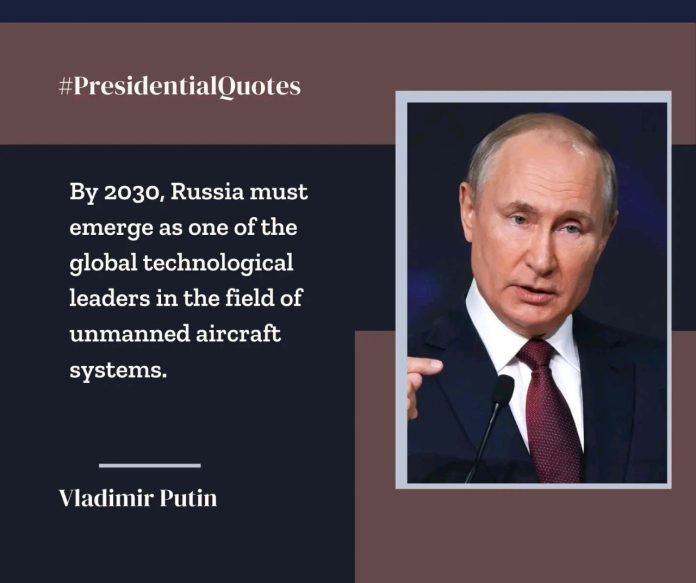
GOVERNOR BALA MOHAMMED Vs NYESOM WIKE: LET THE TRUTH BE TOLD – By Rt. Hon. Yakubu Dogara CFR

2
Starting from left, is a Collage picture of former River's Governor, Nyesom Wike, Governor Bala Mohammed of Bauchi State and former Speaker of the Federal House of Representative, Hon. Yakubu Dogara

Budha once said, “Like the sun and the moon, the truth will always rise”.

Governor Bala Mohammed’s recent outbursts against His Excellency Nyeson Wike the Honourable Minister of the Federal Capital Territory though not entirely surprising have only served to expand the vistas of ingratitude and treachery based on what I know. As I witness this gross injustice, the questions I ask myself, are: is my comfort more important than saying the truth and is my fear of conflict worth allowing harm to go unchallenged? I have learned enough over the years to know beyond reasonable doubt that in the face of situations like this, if I choose to prioritize my comfort, I will fail the victim and fail myself. This is because injustice itself is a festering wound, it only grows worse when brushed aside.

As someone who knows so much because I was the provocateur of the events between the two that I will speak to, I consider my silence not just cowardice but complicity. Therefore, I am not afraid to stand alone or risk conflict. I should not be misunderstood to be defending Wike but simply stating the raw truth that I know and I really don’t give a damn if the truth makes Wike look good. I have learnt to say the truth as I enjoy my freedom from being a slave to human opinion.

For starters, need I remind Governor Bala Mohammed that in the 2018 PDP Gubernatorial primaries when we were not too sure he would win because, his then major opponent, Senator Abdul Ningi was the one who constituted the State party structure and had a bosom friend as Party chairman, it was Wike we turned to for help. I had called Wike to plead with him to help us in Bauchi without necessarily disclosing to him that it was Bala Mohammed that we wanted to be delivered. His response to me, was that are you sure you are in control of the process 100 percent? I said, I wasn’t too sure and he said to me leave it to me, I will help you sort it out.

To do it, Wike first of all made his bosom friend and close ally, Chief Dan Osi Orbih the Chairman of the Panel for the Primaries and said I should discuss whatever I wanted with Chief Dan. We got talking and on the eve of the Primaries, Chief Dan was in Benin City and we needed to get him to Bauchi for the assignment, it was to Wike that I turned to again and his response to me was my brother, I have told you not to bother about this. Tell Chief Dan to come to meet me in Port Harcourt. I did just that and amazingly Wike provided the private jet that flew Chief Dan to Bauchi and out of Bauchi for the assignment. I can say without fear of any contradiction that Wike bore all expenses for the exercise. It’s therefore shocking that this so-called transactional character called Wike did not place any condition whatsoever for his support.

That is just the beginning of the story, I hate to tell but I must. After the emergence of Bala Mohammed as the party flag bearer and having promised to sponsor all the party candidates if he gets the ticket, we were rudely awoken to the reality that Bala Mohammed had no money for his own campaigns let alone for other candidates of the party. Initially, I thought it was some kind of a funny joke but as time went on, I realized to my utter bewilderment that it was true. It turned out Bala Mohammed had lied to us about his financial capacity. So we had a meeting at my then residence at Wuse 2 Abuja to help raise money and we thought since Bala Mohammed was a time Minister for nearly 6 years he must have built enough goodwill we could harness if we organised a fundraiser for him. A committee was put in place and we spent N20 million to organize the fundraiser at the then Lady Kwai Hall, Sheraton Hotels, Abuja.

Before then, I had asked Bala Mohammed to give me a list of some of the people he had helped while he held sway as Minister for FCT. He obliged me with the list and after calling just four people on the list that I know so well, what they said to me jolted me and I reserve that for some other day. But suffice to say that I knew the fundraiser would be a flop so I was already thinking of alternatives. As predicted, we had the fundraiser and to cut the long story short, all we raised from the fundraiser was a paltry N48 million and If you deduct the N20 million invested in organising it, that leaves you with a net of N28m. I have the records and our stakeholders are there to bear witness to this.

When it was obvious the masquerade would soon turn into a human being, I told our then-two serving Senators who are alive and can testify that the only option we had was to go to a friend and brother, then Governor Wike for assistance. We got tickets and flew to Port Harcourt with Bala Mohammed without informing Wike that we were coming with him. On arrival, we were ushered into the Government house and asked to take our seats and wait for the Governor who was still upstairs to join us shortly. As soon as Wike walked down the stairs to join us and saw Bala Mohammed his visage changed and I noticed he was cold to me for the very first time. He asked us to join him at the dining room for breakfast but excused me while those on my delegation waited. What happened next was nerve-racking and humbling, I must say!

He was like, Speaker why did you bring Bala to my house without even caring to find out what our mission was. I said to him, I thought he was your friend since both of you served in the same cabinet under President Jonathan. He said to me let me tell you what you don’t know. When we were ministers, Bala Mohammed allocated plots of land to all Ministers except me. He also recalled how he humiliated him when he went to see him in his office as a colleague Minister just to get approval to increase the number of floors on a building he had in Abuja, not to beg for the plot which he refused to allocate to him. He said Bala Mohammed kept him in his waiting room for hours and later sneaked out of the office. That from that day he made up his mind never to have anything to do with him again. He added, I wish, you had told me it’s Bala you were rooting for but whatever you want I will assist you guys because I don’t say no to a brother but I assure you, you will regret your decision if Bala Mohammed becomes Governor. The rest is history.

He said to me let’s join them at the dining so that I can confront him with these issues for you to know that I am not making things up. We joined them at the dining and Wike confronted Bala with these issues in the open and in our very presence. Bala admitted and pleaded for forgiveness assuring that he is now a changed man. The two Senators with me that day can confirm this to anyone who wants to establish the veracity of these narratives.

To cut a long story short, we spent the night at the Government house and the next morning Wike called and directed that his cash assistance be handed over to me to pass to Bala. I said, your Excellency, I should call him so that he can collect the assistance himself lest he thinks you are still angry with him. I sent for Bala and when he came Wike’s aide handed over the package to him and he collected it while almost kissing the ground. Wike therefore gave us the lifeline we needed to kick-start Bala’s campaigns. If Bala has forgotten how much we left with that day, I will remind him. Wike didn’t stop there, he gave us a private jet to ferry us back to Abuja. And I must add that was not the only time Wike helped Bala with resources and logistics. What is baffling is that the so-called transactional Wike did not demand anything in return nor place any condition for all that he did. Believe me, this is not the end of the story but let’s leave it here.

With all these, my question to Bala is what happens to the golden adage that you don’t attempt to break the calabash from which you once sucked honey? For Bala, power is a poison and anyone who questions how he wields it, for that reason, is an eternal heretic that must be crushed at all cost.

Every sane person knows that true freedom doesn’t insist on expressing itself to the harm of others especially those that stood by you in your time of desperate need. For it is not in vain that they say, “A friend in need is a friend indeed”. Unfortunately, for those of us who know Bala too well, there is no room for debate about whether he is a rogue or mere scoundrel, as much as there is no debate about his moral bankruptcy, rooted in a contempt for truth. His mental pathology reveals a man who harbours grand delusions to the extent that he would not recognize the truth, whether about his private or political life if confronted by it in an identity parade. As someone false to his friends and neighbours, he can’t be true to the public. Between Wike and Bala, Bala should be told in unequivocal terms that it is better to be hated for what you are than to be loved for what you are not. Bala is not near anything that he is projecting to the public.

When Wike was his benefactor, he said he knew Wike had done better than him and referred to him as, “ someone courageous, focused and determined, a person qualified and competent to help salvage Nigeria”. His words, not mine. Now that Wike cuts off the benefits, he is a dead wood, a former friend and a “transactional politician”. As a known wimp, he believes that Wike is now on the robs and he is punching so hard so that he can appropriate the glory from whatever pyrrhic victory that may ensue. Is it not ludicrous for someone who is mostly disliked for no reason other than he is shady, to call someone transactional? Time will not permit me to list those Bala has betrayed which includes his known godfather and our father, Baba Waziri, Alhaji Bello Kirfi, Elder statesman and former minister under President Shehu Shagari in the second republic.

Bala represents everything but decency which I said before that I doubted he will ever have. Those who thought I was too harsh including an ally of Wike who pleaded with me not to talk about Bala again are increasingly noticing this. I am sure they are now convinced that we cannot continue to run a therapy session for a troubled pyromaniac nay reptilian brat like this who consistently seeks to elevate himself by putting others down and who inhales rather than thinking before he talks. After all, it was Saint John Chrysostom who said, “We must not mind insulting men if by respecting them we offend God”.

NzeIkayMedia ✍️

Disclaimer: 

The opinions and views expressed in this write-up are entirely those of the Writer(s). They do not reflect the opinions and views of the Publisher (Nze Ikay Media) or any of its employees. The designations employed in this publication and the presentation of materials herein do not imply the expression of any opinion whatsoever of the Publisher (Nze Ikay Media) or its employees concerning the legal status of any country, its authority, area or territory or concerning the delimitation of its frontiers. Equally, the sketches, images, pictures and videos are gotten from the public domain.
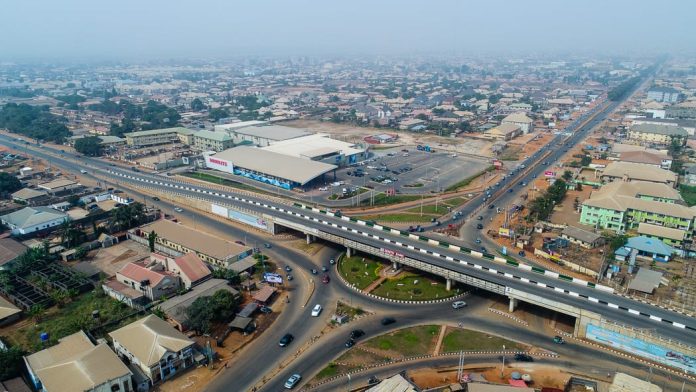
Soludo’s Agunechemba & Burkina Faso’s Electric Vehicle Revolution

0
Burkina Leader,Captain Ibrahim Traore

Kudos to Governor Soludo! Anambra Must be Safe!

Christmas and New Year hold a special place in the hearts of Christians in Nigeria, especially those in the country’s southeastern part. These holidays are moments of celebration and merriment and carry deep spiritual significance for the majority Christian population in this region. However, amidst the joy and festivity that usually accompany the Yuletide season, the South East of Nigeria has been marred by a disturbing trend of criminal activities, most notably in the form of robberies, kidnappings, and extortion demands that have instilled a sense of fear and insecurity among the populace.

The state of Anambra, known for its vibrancy and economic prosperity, has unfortunately become a hotspot for criminal activities, particularly kidnapping incidents that have been on the rise. The escalating nature of these crimes has led many residents to stay away from their homes during the festive period, seeking refuge in safer cities such as Lagos or neighbouring states like Asaba in Delta State. This exodus not only hampers the joy and unity of families during Christmas and New Year celebrations but also poses a severe threat to the social fabric and economic stability of the region.

In response to the dire security situation, the Governor of Anambra State, Prof. Charles Chukwuma Soludo, has taken proactive steps to tackle the menace of criminal elements in the state. Recognizing the urgency and gravity of the situation, Governor Soludo, in collaboration with the state assembly, initiated the establishment of a vigilante group named “Agunechemba.” Comprised of local residents who are intimately familiar with the terrain and dynamics of the region, this vigilante force has been tasked with identifying and apprehending the perpetrators of these heinous crimes, wherever they may be hiding.

The swift and resolute actions of the “Agunechemba” vigilante group have yielded remarkable results within a short period. Numerous arrests have been made, and many of the criminals responsible for terrorizing the communities have been brought to justice. The palpable impact of these efforts is not only a testament to the commitment and dedication of the state government but also a ray of hope for the residents of Anambra State who have long lived under the shadow of fear and uncertainty.

It is commendable to see the government of Anambra State, under the leadership of Governor Soludo, taking bold and decisive measures to restore peace and security to the region. Their unwavering commitment to the well-being of the people and their determination to rid the state of kidnappings deserve praise and support from all quarters. As we look towards a future where the residents of Anambra can once again celebrate Christmas and New Year without the dark cloud of violence hanging over their heads, we extend our best wishes and encouragement to Governor Soludo and his team in their noble endeavour to create a safer and more prosperous Anambra State.

Burkina Faso’s Itawa – A Groundbreaking leap into the Electric Vehicle Revolution.

Having said that, please join me in duffing your hats, because a groundbreaking development is unfolding in Burkina Faso! In an unexpected twist that has sent shockwaves around the globe, President Ibrahim Traore has unveiled Itawa, the country’s very own electric car brand. This initiative marks a significant leap for Burkina Faso as it steps into the electric vehicle (EV) market, showcasing innovation and ambition.

Imagine this: an electric car designed and manufactured in Burkina Faso that boasts an impressive range of 330 kilometres on a single charge. This isn’t just a dream—it’s now a reality thanks to Itawa. The debut models, named Native and Sahel, are not only testaments to modern engineering but also represent a pivotal moment in Burkina Faso’s industrial history.

The Sahel model comes equipped with cutting-edge features such as GPS navigation, Bluetooth connectivity, and advanced safety measures like ABS braking and traction control—all while being fully charged in just 30 minutes at rapid charging stations. But perhaps most exciting is Itawa’s commitment to solar energy; these vehicles can be powered by the abundant sunshine that graces Burkina Faso.

The opening of Itawa’s first showroom at Wagamawal was nothing short of revolutionary for the automotive industry. For too long, African nations have been viewed primarily as consumers rather than producers of high-tech solutions. Now, with this bold move into EV manufacturing, Burkina Faso is rewriting that narrative.

This venture promises not only to transform the economy but also to create jobs and foster innovation across various sectors. The burgeoning vehicle industry is already generating hundreds of jobs—from engineers to factory workers—benefiting countless families through stable income opportunities.

Moreover, by reducing its dependency on imported fuel through electric vehicles (EVs), Burkina Faso stands poised to save millions annually—funds that could be redirected towards critical areas like healthcare and education. Imagine charging your vehicle affordably at home or utilizing solar-powered stations instead of traditional gas stations; this sustainable shift could revolutionize daily life for many citizens.

Starting at just $7,500 per vehicle, Itawa’s cars are set to make waves beyond national borders. With support from regional alliances like the Alliance of Sahel States, there’s potential for these eco-friendly vehicles to strengthen ties within neighbouring countries while promoting green technology throughout Mali and Niger.

As massive solar farms begin powering homes and industries—and even charging stations—the vision for a greener future becomes increasingly tangible for Burkina Faso. Paved highways paired with dedicated EV infrastructure signal an ambitious transformation toward self-reliance and economic growth driven by innovation.

Burkina Faso’s journey into electric mobility isn’t merely about keeping pace with global trends; it’s about leading them from within Africa itself. While other nations explore different avenues—like Kenya’s thriving electric motorcycles or South Africa’s hybrid models—Burkina Faso is carving out its unique path through homegrown solutions tailored specifically for its people.

With Atoa leading this charge toward sustainable transport options designed by locals for locals—and demonstrating how limited resources can inspire boundless creativity—the country serves as an inspiring model for others looking towards clean energy solutions amidst climate change challenges.

In conclusion: As we witness this remarkable evolution in transportation technology unfold before our eyes in Burkina Faso—a nation once overlooked—it raises important questions about what other countries can learn from their success story in embracing bold innovations without boundaries.

Kindly use the following YouTube link to watch my videocast on the topic today: https://youtube.com/live/ZD2ZoXUv02U

NzeIkayMedia �

Disclaimer: 

The designations employed in this publication and the presentation of materials herein do not imply the expression of any opinion whatsoever of the Publisher (Nze Ikay Media) or its employees concerning the legal status of any country, its authority, area or territory or concerning the delimitation of its frontiers. Equally, the sketches, images, pictures and videos are taken from the public domain.
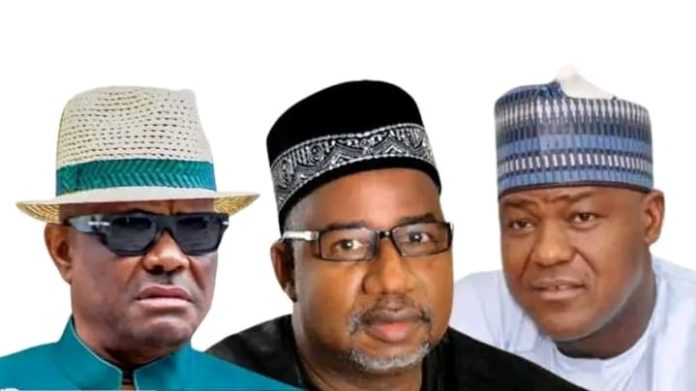
Remembering Dr Myles Munroe

7
Late Preacher, and Founder of Bahama Faith Ministries, Dr Myles Munroe and his wife Dr. Ruth Munroe

Late Preacher, Dr. Myles Munroe, who founded the Bahamas Faith Ministries International in the 180s was one preacher who outraged many with his views on women and gays. He was a pastor, best-selling author and motivational speaker who wielded a huge influence on millions of evangelical Christians across the globe he said the following about homosexuals and I quote;

“All you my homosexual friends, I love you guys, and girls, lesbians. But you are simply dishonest. If you want to have that kind of sex, just say so. But don’t try to convince us to sanctify it, sanction it, and give it dignity. Just say that’s what you want to do, that’s all. If you want to use an exit as an entrance, just tell me the honest truth. Don’t try to get me to dignify it, sanctify it, glorify it, and then make it legal. This is crazy. You’re suppressing the truth. The truth is this, it is an exit. Period! Nature created your ass for that, say this is an exit. It’s a garbage disposal. This gets rid of waste. Biology, simple, 101. Biology 101. It’s a law. The law of my rectum is excretion. It’s a law. No legislation can transform that into something else. So you see a fellow walking around with his wrist broken, just say, tell him, legally, you are a brother. By law, you are a brother. The way and manner you walk, don’t cancel that law at all. Your earrings don’t touch that law. Your relationship doesn’t change that law. It’s a law. So at least be honest with God. Simply tell God, I will violate your law. Okay? Thank you very much”. 

Unquote: 

It will be recalled that Dr. Myles Munroe died in a plane crash, along with his wife Ruth and some members of his Bahama Faith Ministries. In a tribute paid to him by the then Bahamian Prime Minister, Perry Christie, “It is utterly impossible to measure the magnitude of Dr Munroe’s loss to the Bahamas and to the world. He was indisputably one of the most globally recognisable religious figures our nation has ever produced. His fame as an ambassador for the Christian ministry preceded him wherever in the world he travelled.” 

Severe weather was thought to be a factor in the crash. Heavy rain was buffeting the region when the Lear 36 Executive Jet exploded on impact with a crane at the Grand Bahama Ship Yard and plunged into a junkyard below as it was approaching Freeport. A commercial flight on the same route had turned back around the same time because it was unable to land.

Munroe was born in 1954 into an impoverished family of 11 in the suburb of Bain Town in Nassau, where one schoolteacher labelled him as stupid. He became an evangelical Christian in his teens after studying at Oral Roberts University, the Christian liberal arts school in Tulsa, Oklahoma, where he graduated in Fine Arts, Education and Theology in 1978, going on to gain a Master’s in administration from the University of Tulsa. He founded the Bahamas Faith Ministries International in the early 1980s; the charismatic pastor quickly became an influential religious leader among evangelical Christians, giving sermons around the world. He was also a motivational speaker and the author of numerous books, including the 2008 bestseller God’s Big Idea: Reclaiming God’s Original Purpose for Your Life.

Munroe and his entourage were travelling to Grand Bahama to attend the 2014 Global Leadership Forum that he organised. He had planned to have dinner in Freeport about 90 minutes after his plane’s scheduled arrival with the US’s former United Nations Ambassador Andrew Young. Munroe’s wife, Ruth, was also on the plane, along with his daughter and his second-in-command at Bahamas Faith Ministries, Richard Pinder, as well as the group’s youth ministers, Lavard and Rudel Parks, and their young son Johannan. His career was not without controversy: in March this year, he was criticised by his country’s Foreign Minister, Fred Mitchell, for comments about the LGBT community in the Bahamas. Munroe had said that Mitchell’s support of LGBT people in the Bahamas didn’t “represent the majority of the convictions of the Bahamian people.” Mitchell replied, “Once again Dr Myles Munroe has returned to a theme he does not understand and obviously which he has no knowledge.” Mitchell said Munroe’s “absolute stupidity and wilful deceit is parading around in the pulpit disguised as theology.” 

In September Munroe again stirred controversy at home, following a gay pride event. In a statement entitled “Homosexuality – Phobia or Principle”, people, he said, have “hijacked” and “raped” the civil rights movement with their fight for LGBT rights. Backed up by quotations from the Bible, he also proffered alarming views on womanhood. “The male was created by God to create what he wants,” he said. “The woman you are looking for, brother, does not exist. She is in your head. Your job is to take the raw material you married and cultivate her into the woman in your head. So if you have been married for 20 years and you still don’t like the product you get, that is your fault.” 

Munroe was especially influential in Africa, arguing that African nations are underdeveloped due to the poor quality of their leaders. “Leadership determines everything in life,” he said. “Nothing happens without leadership. Whether you are talking about an organisation, church or nation, everything depends on leadership for success. Leaders determine the quality and attitude of their followers. If your country is not effective, it is the fault of its leaders, not its people.” A regular traveller to Latin America, as well as Africa, Munroe, was also chief executive and chairman of the International Third World Leaders Association. “The greatest tragedy in life is not death,” he wrote, “but a life without a purpose.” He believed that “Death can never kill an idea. Ideas are more powerful than death. Ideas outlive men and can never be destroyed.”

Dr Myles Munroe was married to Dr Ruth Munroe. He was born in Grand Bahama on the 20th. of April 1954 and died in Grand Bahama on the 9th. of November 2014 with his wife. They had two children; Charisa, the first child and only daughter, and Myles “Chairo” Munroe Jr. their only son.

NzeIkaymedia

Disclaimer: 

The designations employed in this publication and the presentation of materials herein do not imply the expression of any opinion whatsoever of the Publisher (Nze Ikay Media) or its employees concerning the legal status of any country, its authority, area or territory or concerning the delimitation of its frontiers. Equally, the sketches, images, pictures and videos are taken from the public domain.
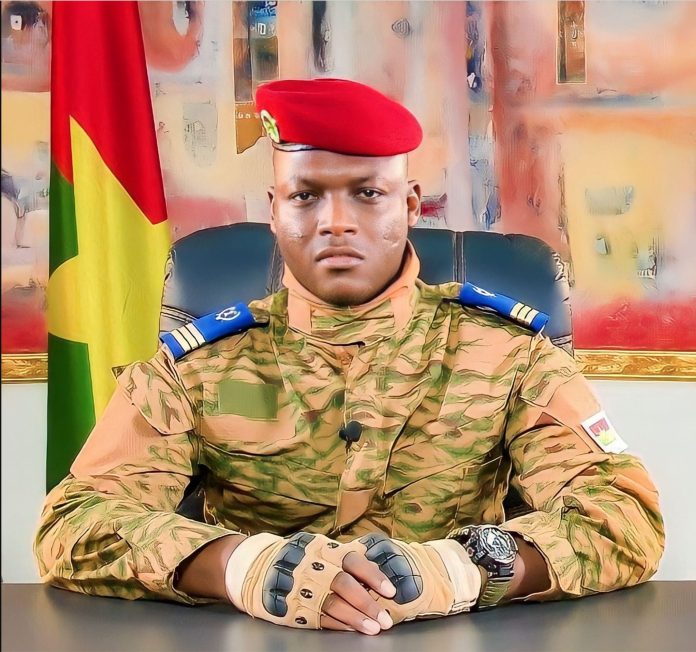
Uncovering The Causes Behind a Record-Breaking Migration Wave from the United Kingdom! 

3
An Aerial View Of the United Kingdom

Did you know that in 2024, over 400,000 people left the UK, a record-breaking number that has left experts stunned? That’s the size of a major city packing up and disappearing in just one year. But here’s the real question. What’s driving so many people to give up everything and leave? Is it the crippling cost of living, the soaring energy bills, or maybe the endless political chaos? The UK, once considered a land of opportunity, seems to be losing its charm, and fast. Families, professionals, and even young graduates are fleeing for a chance at something better abroad. But what exactly are they running from? And more importantly, what are they running to? Could it be the promise of higher salaries, better healthcare, or simply a life where they’re not constantly stressed about making ends meet? The reasons behind this mass exodus are shocking, and some might even leave you questioning your own future in the UK. Would you stay in a country where you feel stuck, or would you chase a better life somewhere else? In this video, we’ll uncover 10 surprising reasons why people are leaving the UK in droves. Some of these might make you angry, and others might make you think, but one thing’s for sure, please stay till the end, because the final reason might just blow your mind. So buckle up. This isn’t just about numbers. It’s about the harsh realities of living in a country that’s forcing its own people to say goodbye. 

Number one, economic struggles. The UK is facing one of its worst economic crises in decades, and everyday people are paying the price. With inflation hitting record highs, the cost of living has become unbearable for many. Essentials like groceries, rent and energy bills are eating up more and more of household budgets, leaving families struggling to make ends meet. A shocking study from late 2023 revealed that nearly 60% of UK residents now feel financially insecure. An alarming statistic for a developed nation. But it’s not just individuals who are suffering. Businesses are feeling the pinch too. With increasing operational costs and higher wages demanded by workers to match inflation, many small and medium enterprises are shutting their doors. And with fewer jobs and opportunities, people are looking overseas for better economic stability. Take housing, for example. In major cities like London and Manchester, housing prices are so high that owning a home has become a distant dream for most. The average house price in London is over £500,000, far out of reach for first-time buyers. Meanwhile, countries like Portugal and Spain offer more affordable housing and a lower cost of living, making them attractive options for those seeking financial relief. For many, it’s not just about surviving, but about thriving. And with the UK’s economic situation showing no immediate signs of improvement, it’s no wonder people are looking for greener pastures. The allure of a more stable and affordable life abroad is proving too strong to resist, and it’s one of the biggest reasons for the current exodus. Would you stay in a country where financial stability feels like an impossible dream? That’s the question thousands of Britons are asking themselves every day. 

Number two, high taxes. The UK has earned a reputation for its crippling tax burden, and it’s driving people to look for relief elsewhere. With taxes on income, property, fuel and even goods, the average Briton feels squeezed from every angle. The personal income tax rate can go as high as 45% for higher earners, while value-added tax, VAT, adds 20% to nearly every purchase. For many, it feels like they’re working harder and keeping less of their earnings. And it doesn’t end there. Businesses are also bearing the brunt of hefty corporate taxes. Since Brexit, many firms have struggled with increased costs due to trade barriers, and high taxation has only made it harder to stay afloat. Countries like Ireland and Switzerland, which offer significantly lower corporate tax rates, are luring both businesses and professionals seeking financial relief. What’s most frustrating for many UK taxpayers is the perception that they’re not getting value for their money. Despite paying these high taxes, public services such as healthcare, transportation and education are increasingly under strain. Where does all that money go is a question often asked, but rarely answered satisfactorily. By comparison, expats in countries like Dubai pay zero income tax, while nations such as Portugal offer special tax breaks for foreign residents. The appeal of keeping more of what you earn is undeniable, especially when combined with other lifestyle benefits these countries offer. Ultimately, people are making the decision to leave because they’re tired of feeling punished for their hard work. High taxes with little return is a recipe for discontent, and for thousands of Britons, the solution is simple. Relocate to a country where they can finally enjoy the rewards of their labour. 

Number Three: The National Health Service, NHS, once a source of pride for the UK, is now a major reason people are leaving the country. For decades, the NHS has provided free healthcare to millions, but in recent years it has become a symbol of long waits, staff shortages and declining quality. Imagine this, you wake up with a serious health concern and call to book an appointment. You’re told the next available slot is weeks, if not months, away. This isn’t just an inconvenience, it’s a crisis. A 2023 report revealed that over 7 million people in the UK were waiting for routine treatments. For life-threatening conditions, this delay can mean the difference between life and death. It’s not just patients who are frustrated. NHS staff, including doctors and nurses, are leaving in droves due to burnout, low wages and a lack of resources. This creates a vicious cycle. Fewer staff means longer waits and poorer care, which leads to even more dissatisfaction. Meanwhile, countries like Germany, France and Australia offer faster, more efficient healthcare systems. Private healthcare abroad is also more affordable in many cases, making it a no-brainer for those seeking better treatment options. For many Britons, it’s heartbreaking to leave a country they love, but when their health is at stake, the decision becomes clear. Would you stay in a system that risks your well-being or seek care elsewhere? The NHS, once a national treasure, is now one of the driving forces behind the UK’s emigration crisis. 

Number four is political instability. The UK’s political landscape has been anything but stable in recent years, and the chaos is driving people away. From the fallout of Brexit to endless leadership changes, it feels like the country is in a constant state of uncertainty. And for many, this instability isn’t just frustrating, it’s life-changing. Brexit, once hailed as a way to reclaim control, has created numerous problems. Trade barriers with the EU have hit businesses hard, leading to higher costs and fewer opportunities. Jobs that relied on European partnerships have vanished, and the benefits promised by Brexit remain largely unrealized. But political turmoil doesn’t end there. Since 2016, the UK has seen multiple Prime Ministers come and go, each bringing their own policies and controversies. For citizens, this revolving door of leadership creates a sense of insecurity. Who’s really in charge? And more importantly, can they fix the country’s problems? Compare this with countries like Canada or New Zealand, known for their stable political climates. It’s no wonder Britons are looking abroad for a sense of certainty and security. Political stability plays a huge role in people’s quality of life, and many feel the UK simply doesn’t offer that anymore. For families and professionals alike, the stakes are too high to wait for things to improve. They’re choosing countries where they can plan for the future without worrying about sudden political upheavals. Would you risk your future on a country that can’t seem to get its act together? That’s the question so many are asking and answering with a plane ticket out of the UK. 

Number five, is work-life balance. In the UK, work often feels like an endless grind. Long hours, stressful environments, and little time for rest are leaving people burned out and unfulfilled. In fact, a recent survey revealed that Britons work some of the longest hours in Europe, but they’re not necessarily more productive. So, where’s the balance? Unlike countries that prioritise quality of life, the UK has a culture of overwork. Many employees feel pressured to stay late, answer emails after hours, and sacrifice their personal time to meet expectations. Over time, this takes a toll on mental health, relationships, and overall happiness. Other countries, however, are leading the way in offering a better balance. In Sweden, for example, the average work week is shorter and flexible working arrangements are common. In the Netherlands, part-time work is widely accepted, allowing people to focus on family or personal pursuits. These aren’t just perks, they’re standards. Even within the UK, remote work during the pandemic showed how life could be different. Many enjoyed more time at home and less commuting stress. But now, as offices push for a full return, people feel trapped again. For professionals, the choice is becoming clear. Why stay in a country that demands so much but gives so little in return? By moving abroad, they can reclaim their time, reduce stress, and focus on what really matters. This is Amazon’s new money-making app. Would you keep sacrificing your life for work, or choose a place where life takes priority? For many Britons, the decision to leave is about more than a paycheck. It’s about living a life that’s truly worth living. We put a lot of time and effort into bringing you content that informs and inspires. So if you found this video valuable, please hit that subscribe button. It’s just one click, but it means the world to us. And don’t forget to share your thoughts in the comments. What would make you stay or leave the UK? We’d love to hear your perspective. 

Number six, lack of opportunities. For many Britons, the UK no longer feels like the land of opportunity it once was. Stagnant career growth, limited prospects, and shrinking industries are forcing people to look abroad for a brighter future. One of the biggest challenges is the lack of diversity in thriving industries. Outside of tech hubs like London, many parts of the UK rely heavily on traditional sectors such as manufacturing and retail, which have faced massive declines in recent years. The pandemic accelerated these changes, leaving towns and smaller cities struggling to recover. For young professionals, the reality is bleak. A 2023 report showed that over 40% of graduates believe they’ll need to move abroad to find meaningful work in their fields. It’s not just about career choices, it’s also about wages. Even as the cost of living continues to rise, salary growth in the UK has remained stagnant. In many cases, the pay simply doesn’t match the effort, and this is particularly disheartening for skilled workers who know they can earn significantly more in countries like the United States, Canada, or Australia. Take the tech industry, for example. While the UK has a growing sector, the pay and benefits often pale in comparison to Silicon Valley or Berlin. Similarly, healthcare workers are flocking to places like New Zealand, where they’re paid fairly and treated with respect. The frustration extends beyond salaries. Many employees feel trapped by a system that offers little room for innovation or advancement. By contrast, other countries actively recruit talent, offering enticing packages and fast-tracked residency programmes. For those seeking professional growth, the choice is clear. Why stay in a country where you feel stuck when the world offers so much more? This lack of opportunity is driving skilled workers, students, and even entire families to leave the UK in search of a better, more fulfilling life abroad. Would you stay if your potential felt wasted? That’s the dilemma facing so many Britons today. 

Number seven, climate concerns. The UK’s changing climate and environmental issues are becoming major factors pushing people to leave the country. While climate change is a global challenge, many Britons feel that the UK is increasingly becoming an uncomfortable place to live due to extreme weather, pollution, and a lack of green spaces, especially in urban areas. Over the past few years, the UK has experienced record-breaking heatwaves, heavy flooding, and unpredictable storms. Summer temperatures are becoming unbearable, with 2023 seeing highs above 40 degrees Celsius, leaving homes and public spaces ill-equipped to handle the heat. Winters, on the other hand, are marked by severe storms that cause power outages and property damage. For many, these extremes disrupt daily life, making the UK less appealing as a place to settle. Urban areas present their own challenges. Cities like London, Manchester, and Birmingham are plagued by air pollution, which has been linked to serious health issues like asthma and heart disease. A lack of green spaces and overdevelopment has left many residents feeling trapped in a concrete jungle, with few places to relax or reconnect with nature. Meanwhile, other countries are making strides in offering more sustainable and environmentally friendly lifestyles. Scandinavia, for instance, is renowned for its clean air, abundant green spaces, and commitment to renewable energy. Countries like New Zealand and Canada boast breathtaking natural landscapes and a strong focus on environmental preservation, offering a quality of life that’s hard to ignore. For many Britons, the choice to leave isn’t just about finding better weather, it’s about escaping a system that feels unprepared for the growing challenges of climate change. Why stay in a place where the environment adds to your stress when other countries seem to have it figured out? The UK’s climate struggles are more than just an inconvenience. They’re becoming a reason to pack up and leave for good. 

Number eight, education system issues. Education is one of the most important investments a family can make. But for many Britons, the UK’s education system is falling short of expectations. From overcrowded classrooms to limited opportunities for advanced learning, parents are increasingly worried about their children’s futures, and many are choosing to leave the country in search of better options. One of the biggest challenges facing the UK education system is the underfunding of schools. Teachers are overworked and underpaid, leading to a shortage of qualified staff. As a result, class sizes have ballooned, making it harder for children to receive the individual attention they need. In some areas, resources are so stretched that basic supplies like textbooks and learning materials are in short supply. The pressure on students is another concern. Standardised testing dominates the education system, leaving little room for creativity or holistic development. Parents worry that their children are being trained to pass exams rather than gain real-world skills. In contrast, countries like Finland and Canada offer progressive education systems that emphasise critical thinking, problem-solving and student well-being over test scores. Higher education also poses a problem. University tuition fees in the UK are among the highest in the world, saddling students with massive debt before they even enter the workforce. For families, the idea of relocating to countries with affordable or even free higher education such as Germany or the Netherlands is incredibly appealing. The frustration isn’t just about cost or quality. It’s about opportunity. Parents want their children to have the best start in life, and if the UK can’t provide that, they’re willing to look elsewhere. Would you gamble your child’s future on an overstretched system, or move to a country where education truly matters? For many, the answer is clear. Making education issues another powerful reason for the UK’s rising emigration trend. 

Number nine, social divides and inequality. The UK has long been seen as a nation of opportunity, but in recent years, the growing social divides and inequality have shattered that image for many. From widening wealth gaps to deepening cultural tensions, the fabric of society feels increasingly fractured, pushing people to seek a better life elsewhere. One of the starkest divides is economic inequality. While the wealthy continue to thrive, many middle and lower-income households are struggling to keep up with the rising cost of living. A 2023 report revealed that the top 10% of earners in the UK hold nearly 50% of the country’s wealth, while millions rely on food banks to survive. This level of disparity makes it hard for people to envision a brighter future for themselves or their families. 

Social mobility is another pressing issue. For many, the opportunities to climb the ladder of success feel increasingly out of reach. Educational inequities, regional disparities, and the concentration of jobs in London and the South East leave large parts of the country behind. In contrast, countries like Canada and the Nordic nations are celebrated for fostering equality and providing accessible opportunities for all. 

Cultural tensions also play a role. The political climate in the UK has heightened divisions among communities with issues like immigration, Brexit, and identity politics fueling discord. For some, the prospect of raising children in an environment marked by division and hostility is too much to bear. Meanwhile, other nations are seen as more inclusive and equitable. Countries like New Zealand, with its emphasis on community and diversity, or Germany, which offers robust social welfare systems, are drawing Britons who crave a sense of unity and fairness. Ultimately, the growing divides in the UK are leaving many to question their place in society. Why stay in a country that feels increasingly divided when others offer hope and harmony? This question is driving thousands to seek a fresh start abroad, 

Better opportunities abroad. For many Britons, the decision to leave the UK isn’t just about escaping challenges, it’s about seizing better opportunities abroad. Countries around the world are offering not just jobs, but a chance to build a life that feels fulfilling, rewarding, and free from the constraints of many experiences in the UK. One of the biggest draws is higher salaries and improved working conditions. In the tech industry, for example, professionals can earn significantly more in cities like Berlin, Toronto, or Silicon Valley, while enjoying perks like flexible schedules and better benefits. Similarly, healthcare workers, dentists, and tradespeople are finding that their skills are in high demand overseas, often with better pay and greater respect for their professions. Education is another factor. 

Many families relocate to countries where higher education is either free or far more affordable. Germany, for instance, has become a hotspot for students seeking world-class universities without the crippling debt that comes with UK tuition fees. But it’s not just about financial gain, it’s also about lifestyle. Countries like Australia and Canada offer a quality of life that’s hard to match. Cleaner environments, shorter commutes, and family-friendly policies make these destinations incredibly appealing. Even retirees are joining the exodus, lured by the promise of better healthcare and lower living costs in places like Portugal or Spain. Governments in these countries are actively encouraging migration. Many offer fast-tracked visa programs, tax incentives, and relocation packages to attract skilled workers and investors. 

For Britons frustrated by bureaucracy and limited prospects at home, the choice becomes clear. Why stay in a place where opportunities feel out of reach when the world is waiting with open arms? This sense of possibility is driving thousands to pack their bags and take a leap toward a brighter, more rewarding future abroad. Leaving one’s home country is never easy to do. For many Britons, the UK has been the place where they’ve built their lives, made memories, and shared a sense of belonging. But as challenges like economic struggles, social divides, and limited opportunities grow, it’s becoming harder to ignore the pull of a better life abroad. It’s important to remember that these issues are not the fault of the people, they’re systemic problems that have developed over time. Families aren’t leaving because they want to abandon their roots. They’re leaving because they feel they have no other choice. A better future for themselves and their children often requires making tough sacrifices. And for many, that means saying goodbye to the UK. 

However, this trend should also serve as a wake-up call for change. A country’s strength lies in its ability to provide for its people, to give them hope, security and opportunity. If the UK can address these pressing issues, there’s a chance to reverse this exodus. After all, most people don’t want to leave, they want to feel proud of staying. Until then, the question remains, what will it take to turn the tide and make the UK a place people choose to stay? The rising number of Britons leaving the UK is a clear signal that significant change is needed. While the challenges are daunting, solutions do exist. And implementing them could transform the UK into a place where people not only stay but thrive. 

First, tackle the cost-of-living crisis. The government must take steps to make essentials like housing and energy more affordable. Policies that encourage the construction of affordable homes, cap energy prices and support struggling families could provide immediate relief. 

Second, reform the tax system. Reducing income and corporate taxes while ensuring fairness would make life easier for individuals and businesses alike. Incentives for innovation and entrepreneurship could also revitalise stagnant industries and create more jobs. 

Third, invest in healthcare and education. Adequate funding for the NHS and schools is critical to improving the quality of services. Hiring and retaining skilled professionals, reducing waiting times and providing better facilities can restore faith in these essential systems. 

Fourth, promote work-life balance and mental health. Encouraging flexible working arrangements and ensuring fair wages can help reduce burnout and improve overall well-being. Countries like Sweden and the Netherlands have shown that prioritising quality of life can lead to happier, more productive citizens. 

Finally, the UK must foster unity and inclusivity. Bridging social divides and addressing inequality through community programmes and equitable policies can rebuild trust in society. These changes won’t happen overnight. But with bold action and collective effort, the UK can reclaim its status as a place of opportunity and pride. By addressing these challenges head-on, the country can not only retain its people but inspire those who have left to return. It’s time to make staying in the UK a choice, not a compromise.

NzeIkayMedia ✍🏽

Disclaimer

The designations employed in this publication and the presentation of materials herein do not imply the expression of any opinion whatsoever of the Publisher (Nze Ikay Media) or its employees concerning the legal status of any country, its authority, area or territory or concerning the delimitation of its frontiers. Equally, the sketches, images, pictures and videos are obtained from the public domain.
President Donald J. Trump – A New Era of American Greatness – A Vision for the Future. 

0
The 45th president of United States of America, Donald J. Trump is sworn in again as the 47th US President in the US Capitol Rotunda in Washington, DC, on January 20, 2025.

As we embark on a transformative journey, the focus is clear: to restore America’s pride, prosperity, and freedom. The time has come to end the unjust weaponization of our government and ensure that our nation emerges greater, stronger, and more exceptional than ever before. With optimism in my heart, I believe we are at the dawn of an exhilarating new chapter in our national success story.

However, it is essential to acknowledge the challenges that lie ahead. Our government currently faces a crisis of trust; years of corruption have left many pillars of society in disrepair. We find ourselves grappling with crises both at home and abroad while failing to protect law-abiding citizens from dangerous criminals who threaten our safety.

Our priorities must shift towards defending American borders while ensuring basic services are delivered during emergencies—something that has been glaringly absent as communities suffer from natural disasters without adequate support. Additionally, we need a public health system that effectively responds during crises rather than one mired in inefficiency despite vast expenditures.

Education must also be reformed so that it fosters pride rather than shame among our youth about their country. This administration will work tirelessly to reverse these betrayals and restore faith in democracy by putting power back into the hands of the people.

The recent election serves as a mandate for change—a signal that America’s decline is over. We will reclaim liberties and fulfil our nation’s glorious destiny by restoring integrity within government operations. My tenure has faced unprecedented challenges; however, I stand resolute against defeat.

With each day under this administration filled with patriotism and purpose, we will strive for dignity and strength across all demographics—regardless of race or creed—ushering in what I hope will be remembered as Liberation Day on January 20th, 2025.

We have witnessed remarkable unity across various segments of society supporting this agenda—from young voters to diverse communities—and today marks an opportunity for collaboration toward realizing Martin Luther King Jr.’s dream together.

In pursuit of excellence through every action taken by my administration moving forward:

1. National Emergency Declaration: A declaration addressing illegal immigration will halt unlawful entries immediately. 

2. Energy Independence: By declaring a national energy emergency alongside revoking restrictive policies like the Green New Deal, America can reclaim its status as a manufacturing powerhouse. 

3. Economic Reform: Establishing tariffs on foreign nations instead enriches American families while creating jobs domestically. 

4. Government Efficiency: A new Department dedicated solely to improving governmental functions aims at restoring competence within federal operations. 

5. Free Speech Restoration: Ending censorship ensures political opponents cannot be persecuted unfairly again under state power. 

6. Military Reinforcement & Peacekeeping Legacy: Our armed forces’ focus shifts back toward defeating enemies while avoiding unnecessary conflicts—a legacy rooted deeply within peace-making efforts rather than warfare alone.

As we look ahead with ambition—the lifeblood coursing through America’s veins—we recognize what makes us unique explorers who built this great nation against all odds! Together let us honor those who sacrificed everything so future generations may thrive freely!

From coast to coast—from bustling cities like New York City down south into Miami—we stand united ready for greatness once more! The impossible becomes possible when Americans rally together fueled by shared dreams!

Let us embrace compassion alongside courage leading us towards respectability internationally once again—transforming not just lives but entire landscapes along way! 

Today marks not only another chapter written into history but also signifies beginning anew—a golden age unfolding right before us where hope reignites passion igniting progress forward!

Together onward toward victory—for every child dreaming big dreams—I pledge unwavering commitment to fighting tirelessly until they achieve them!

God bless America! 

NzeIkayMedia