Home Blog Page 2

Phantom Barrage: Russia’s Radar Mirage Overwhelms Ukraine’s and NATO Defences.

0
Phantom Barrage: Russia's Radar Mirage Overwhelms Ukraine's and NATO Defences.

I have always maintained that the sleeping Lion must be allowed to lie. But my warnings have fallen on deaf ears. Now that Zelenskyy and his NATO masters’ intrigues have crossed the red line and outraged Russia, the need for Russia to open a bit of the plasma television for them to see has arisen. I hope that Zelenskyy will stop now.

Please, read on:

Phantom Barrage: Russia’s Radar Mirage Overwhelms Ukraine’s and NATO Defences.

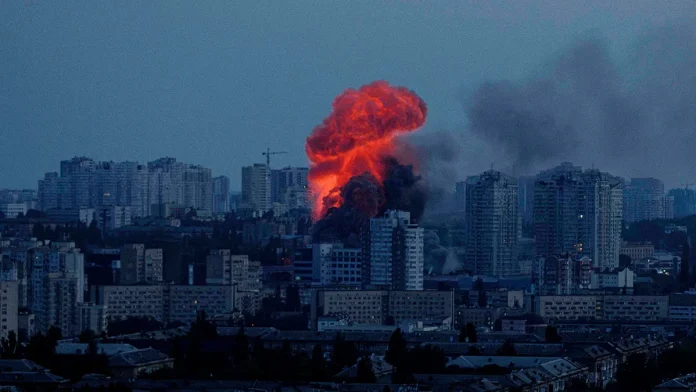
This week, the skies over Ukraine witnessed a chilling feat of digital prestidigitation. Russia executed a masterclass in next-generation Maskirovka, its time-honoured doctrine of military deception, conjuring a phantom barrage of 27 Iskander-M ballistic missiles – a threat meticulously crafted from pure illusion. The devastating reality? Zero actual missiles were launched. This was not brute force, but a surgical strike on perception itself, targeting the very nerves of Ukraine’s defence network: its sensors, its intelligence, and its commanders’ decision-making loop.

The Art of the Mirage: Russia wove this deception like a master illusionist, employing layered technological trickery:

Radar Spoofing:

Likely transmitting sophisticated false signals, Russia meticulously mimicked the Radar Cross Section (RCS), flight trajectory, and blistering speed of genuine Iskander-M launches. To Ukrainian early-warning radars straining into the electronic darkness, these spectral signatures were indistinguishable from the real, deadly article – a perfect digital doppelgänger projected onto their screens.

Infrared Charade:

Complementing the radar ruse, pyrotechnic flares or dummy rockets likely bloomed with the precise thermal signature of actual missile launches. This infrared masquerade sold the illusion to heat-seeking sensors, adding visceral “proof” to the phantom radar tracks.

Hybrid Ghost Makers:

Employing drones or ground-based transmitters as electronic puppeteers, Russia potentially simulated complex ballistic profiles. This hybrid assault flooded Ukraine’s air defence picture with a cascade of credible, yet utterly intangible, ghost targets, turning their situational awareness into a hall of mirrors.

The Calculated Deception: Why Paint the Sky with Phantoms? This spectral offensive served multiple, chillingly precise objectives:

1. Overwhelm the Sentinels:

By flooding radar screens with false alarms, Russia sought to drown operators in a tsunami of digital noise, inducing fatigue, confusion, and potentially fatal hesitation when real threats emerged.

2. Mask the True Blade:

This electronic smokescreen provided the perfect cover for Russia’s actual strikes – likely coordinated salvos of cheaper drones or cruise missiles – allowing them to slip through the distracted or overloaded defences like wolves in an electronic fog.

3. Probe and Paralyse:

The phantom barrage acted as a sophisticated probe, meticulously testing and mapping Ukraine’s response protocols, reaction times, and radar capabilities. Each false alarm potentially degraded confidence and sowed seeds of doubt, softening the defences for future, very real, blows.

The Strategic Resonance: A Game Redefined

This event transcends a mere tactical feint; it marks a stark evolution in electronic warfare. Russia has proven its ability to weaponise perception on a grand scale, turning the electromagnetic spectrum itself into a primary battlefield. It’s a stark demonstration that modern conflict is not solely waged with explosives, but with bits, bytes, and calculated deceit.

The Broader Canvas:

In the grand, high-stakes chess match unfolding across Ukraine, Russia moves its pieces with unsettling finesse. Their strategy embodies the paradoxical adage: “The more intently you gaze, the less you truly perceive.” Ukraine serves as the proving ground where Russia unveils mere glimpses of its strategic depth, akin to a single, blinding pixel igniting on a vast, shrouded plasma screen. It is a tantalising, terrifying display beckoning observers to decipher the intricate, obscured patterns woven within this geopolitical tapestry. Russia masterfully manipulates the perception of its capabilities, a siren song challenging adversaries to unravel secrets hidden beneath layers of electronic obfuscation. Each deceptive manoeuvre resonates with a cold, calculated elegance, commanding the stage and forcing the watching world – adversaries and allies alike – to confront the unsettling mysteries pulsing within the digital heart of modern warfare. This phantom barrage is not an end, but a harbinger; a proven tactic now set to become a standard weapon in Russia’s electronic arsenal.

NzeIkayMedia ✍️

Disclaimer: 

The designations employed in this publication and the presentation of materials herein do not imply the expression of any opinion whatsoever of the Publisher (Nze Ikay Media) or its employees concerning the legal status of any country, its authority, area, or territory or concerning the delimitation of its frontiers. Equally, the sketches, images, pictures, and videos are obtained from the public domain.


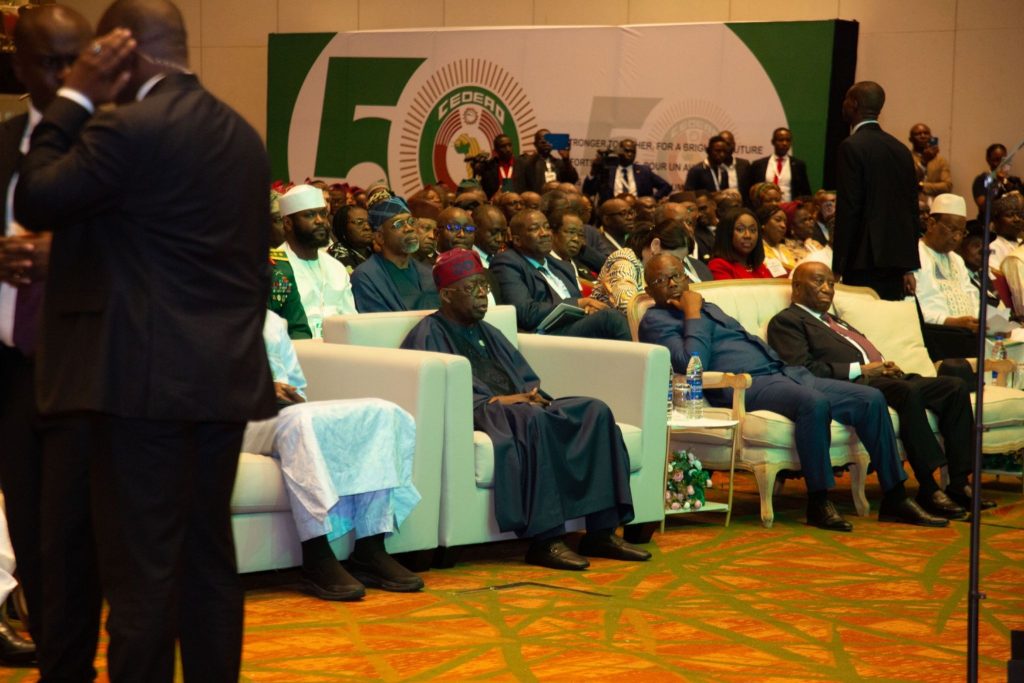
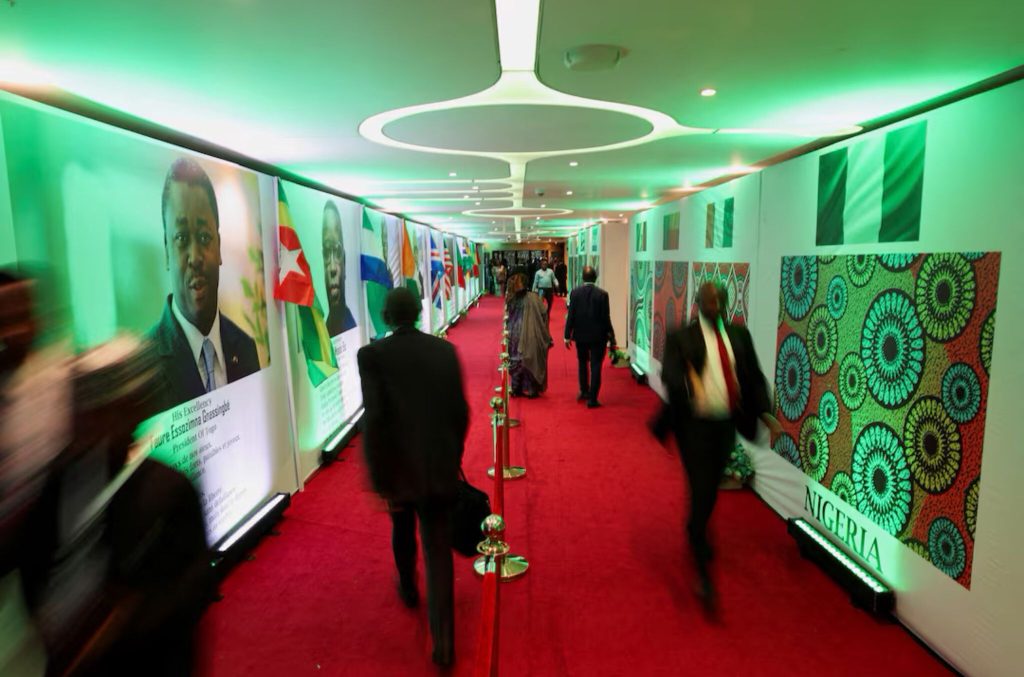
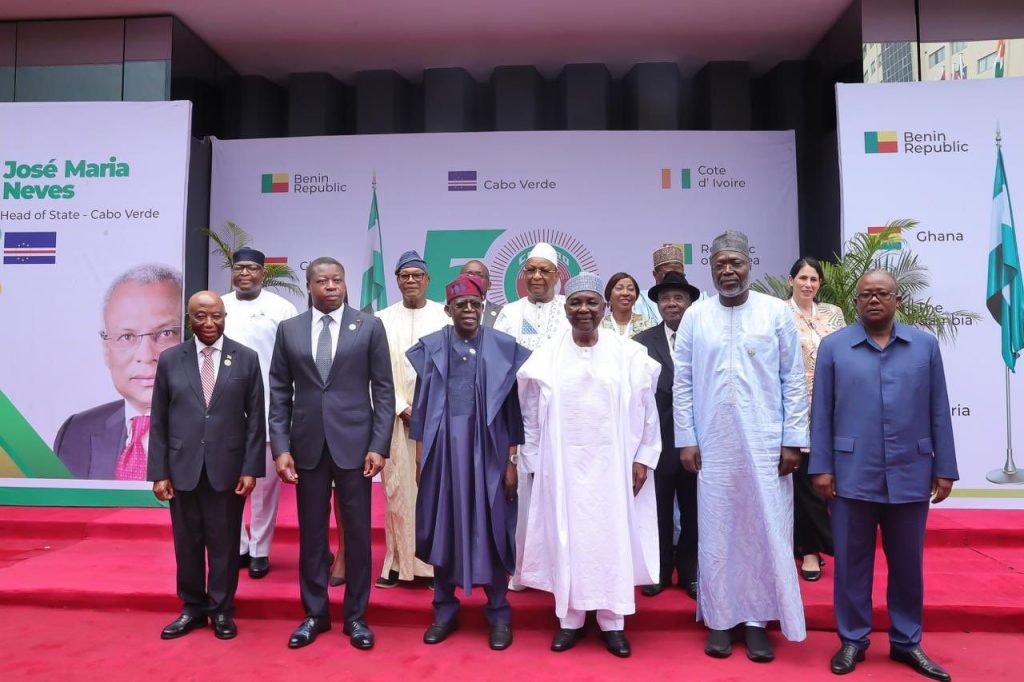
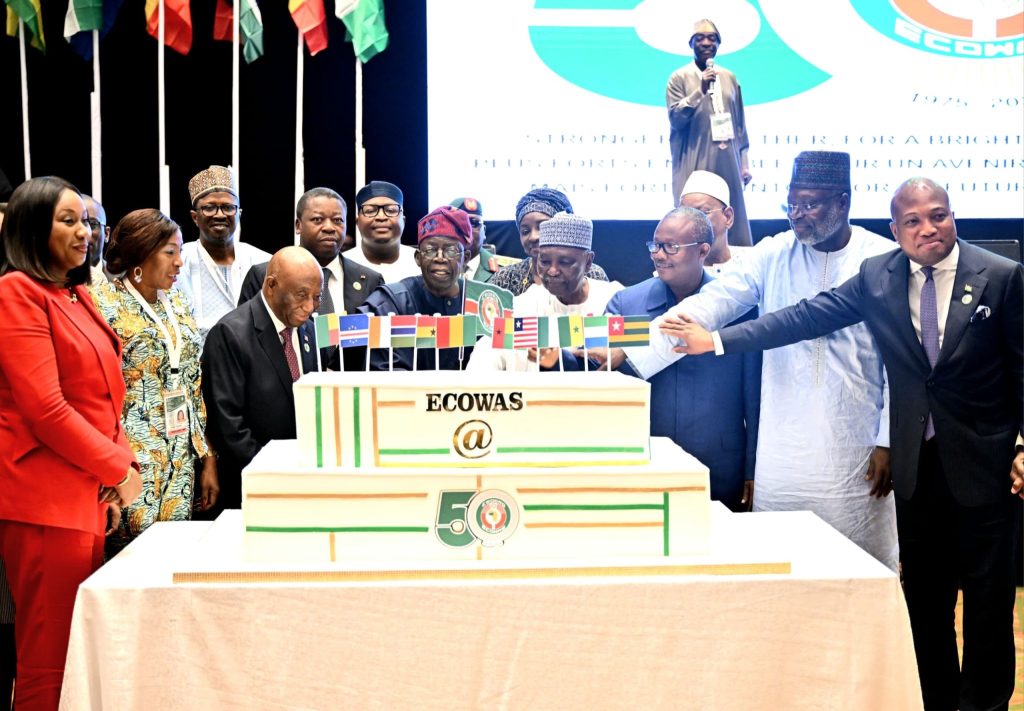
Fractured Foundations, Unfulfilled Promise: ECOWAS at Fifty, Navigating Treacherous Waters

33
ECOWAS at Fifty, Navigating Treacherous Waters

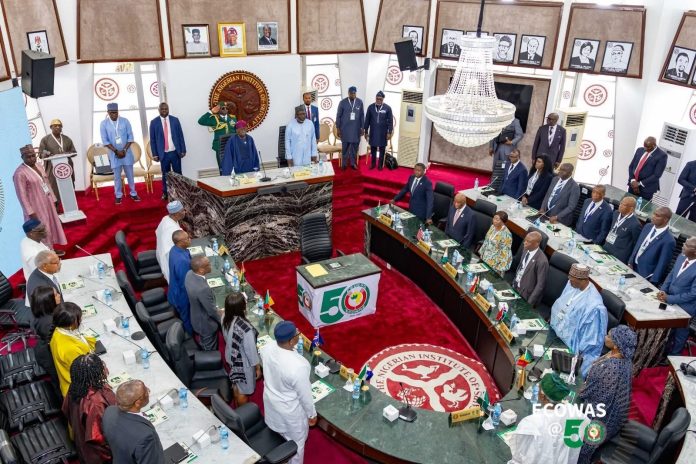
The vision, etched onto the parchment of hope on May 28, 1975, was bold: a West Africa woven together not by colonial borders, but by threads of shared prosperity, collective security, and democratic kinship. The Economic Community of West African States (ECOWAS) emerged as a beacon – an experiment in African unity designed to lift its fifteen founding nations, including giants like Nigeria and the nascent Sahel states of Burkina Faso, Mali, and Niger, from the shadows of fragmentation. Its architects dreamt of a region where goods flowed freely under a common market, citizens traversed borders without hindrance, and peace was safeguarded by a brotherhood of nations pledged against the scourge of conflict. Human rights and democratic governance were to be the bedrock.

For decades, ECOWAS was not without its triumphs. It became a regional lighthouse in stormy seas of conflict. Its military arm, ECOMOG, intervened decisively in the bloody civil wars of Liberia and Sierra Leone in the 90s, demonstrating a nascent but potent capacity for self-policing the neighbourhood. The landmark Protocol on Free Movement, though imperfectly implemented, offered a tangible taste of integration, allowing citizens to glimpse a future beyond the gilded cage of the nation-state. It fostered vital economic corridors, harmonised trade policies, and stood as a crucial mediator in countless political disputes, a diplomatic weaver attempting to mend the region’s frayed edges.

Yet, as the fiftieth-anniversary dawns, the celebratory fanfare is muted by the stark clang of retreating footsteps. The very pillars of its foundation – Burkina Faso, Mali, Niger – have crumbled away, withdrawing in protest against ECOWAS sanctions imposed following military coups. Their departure is a searing indictment, a metaphorical earthquake shaking the Community’s core. They accuse ECOWAS of irrelevance, of being a gilded cage that no longer serves their interests, choosing instead the nascent Alliance of Sahel States (AES), a confederation forged in defiance, turning its back on Western allies to seek the embrace of Moscow. This exodus is not merely political; it’s a hemorrhage of strategic territory, leaving gaping wounds in the region’s security fabric precisely where the jihadist cancer, metastasizing from Nigeria deep into the Sahel, bites hardest.

ECOWAS Commission President Omar Alieu Touray rightly names the monstrous hydra it faces: the triple-headed beast of terrorism, climate change’s creeping devastation, and the poisonous vine of unconstitutional power grabs, all entwined with the stubborn roots of poverty and inequality. Beverly Ochieng’s stark warning resonates like a tolling bell: “If you don’t have security… you cannot guarantee a robust economy.” The jihadist surge exploits governance vacuums and ecological despair, turning vast swathes of the Sahel into ungovernable spaces where ECOWAS’s writ evaporates.

However, ECOWAS’s wounds are partly self-inflicted. Its Achilles’ heel has been a corrosive inconsistency. While swift to condemn the blunt trauma of military coups, it often remained a silent spectator, or worse, a passive accomplice, as elected leaders meticulously dismantled democracy’s scaffolding. The recent constitutional alchemy in Togo, transmuting Faure Gnassingbé into a President of the Council of Ministers with no sunset clause – a move aptly dubbed a “constitutional coup” – exemplifies this deafening silence. This hypocrisy bred disillusionment, making the footfalls of juntas sound, perversely, like liberation to citizens weary of democratic decay masquerading as legitimacy. ECOWAS, intended as democracy’s guardian, sometimes became its unwitting gravedigger through inaction.

The future, therefore, hangs precariously in the balance, buffeted by the gales of an IT-driven world demanding transparency and agility that the bloc struggles to muster. Can this fifty-year-old vessel navigate the treacherous currents of resurgent great power rivalry (embodied by Russia’s Sahel inroads), climate displacement, digital disinformation, and the existential threat of violent extremism? Its survival hinges on brutal honesty and radical reinvention:

  1. Security Crucible: Reconciling with the AES or developing a viable strategy to contain the Sahel crisis without them is non-negotiable. Terrorism cannot be quarantined by political borders.
  2. Democratic Renewal: ECOWAS must shed its selective outrage. Credible, consistent mechanisms to prevent all forms of democratic backsliding – coups and constitutional coups – are essential to regain moral authority and citizen trust.
  3. Relevance Redefined: It must demonstrably improve lives. Accelerating economic integration, tackling youth unemployment through digital economies, and building resilience against climate shocks are tangible proofs of value the AES cannot easily replicate.
  4. Agility in the Digital Age: Leveraging technology for efficient governance, secure cross-border trade, and countering extremist propaganda is vital. Bureaucratic inertia is a luxury it can no longer afford.

ECOWAS stands at a precipice. The departure of the Sahel trio is not just an exit; it’s a shattered mirror reflecting decades of unmet promises and strategic drift. The path forward demands more than President Touray’s stated desire for continued cooperation; it demands profound introspection, courageous reform, and a relentless focus on delivering security and prosperity to the citizens who remain within its fold, and perhaps, one day, to those who have left. The next fifty years, if they are to exist, must be built not on the fading laurels of the past, but on a foundation of renewed purpose, unwavering principle, and tangible results. The beacon flickers; the challenge is to rekindle its light before the gathering storm engulfs it entirely.

NzeIkayMedia ✍️

Disclaimer: 

The designations employed in this publication and the presentation of materials herein do not imply the expression of any opinion whatsoever of the Publisher (Nze Ikay Media) or its employees concerning the legal status of any country, its authority, area, or territory or concerning the delimitation of its frontiers. Equally, the sketches, images, pictures, and videos are obtained from the public domain.
Nigeria remains a relentless scene of corruption.

0
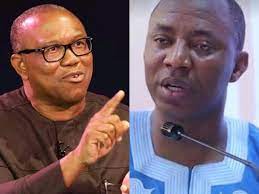
The Leader of the Obidents Movement Worldwide and the 2023 Labour Party of Nigeria Presidential Candidate

I have consistently maintained that for this country to make progress, Nigeria must cease to function as a crime scene and be repositioned for genuine development.

This entrenched corruption – persistent and deeply rooted – must be nipped in the bud if there is to be any meaningful turnaround.

How else can we explain the distressing revelations by BudgIT, which uncovered a staggering ₦7 trillion in questionable projects inserted into the 2025 national budget? I am convinced that this figure represents only a fraction of the actual amount misappropriated. These findings are deeply troubling and confirm my long-held position that we have turned our country into a crime scene. We must urgently and aggressively combat corruption, misappropriation, and fiscal recklessness in order to manage our resources effectively and efficiently and invest in critical areas of development: health, education, and lifting our people out of poverty.

The ₦7 trillion uncovered as fraudulently inserted into the 2025 budget is even greater than the combined allocations to the Ministry of Health, Ministry of Education, Ministry of Humanitarian Affairs and Poverty Alleviation, and the Ministry of Agriculture – ministries that are fundamental to national development.

To be precise:
•The Ministry of Education was allocated ₦3.52 trillion,
•The Ministry of Health received ₦2.48 trillion,
•The Ministry of Humanitarian Affairs and Poverty Alleviation was allocated ₦260 billion, and
•The Ministry of Agriculture and Food Security received ₦636.08 billion.

Combined, these four ministries were allocated ₦6.896 trillion—an already inflated amount—yet still less than the ₦7 trillion dubiously inserted into the budget.

That ₦7 trillion figure is even more than the ₦6.1 trillion allocated to national security—at a time when Nigeria is among the most terrorised nations in the world.

This brazen impunity by our leaders is precisely why the country cannot invest adequately in education—hence the existence of nearly 20 million out-of-school children. It is the same corruption that has crippled primary healthcare, resulting in alarming levels of malnourished children. We face widespread hunger, yet our leaders neglect agricultural investment due to persistent mismanagement and lack of accountability. The same disregard affects our capacity to fund national security effectively, or to support Micro, Small, and Medium Enterprises (MSMEs), which are vital to national growth.

These glaring acts of corruption reinforce my position: Nigeria has been reduced to a crime scene.

We must confront this corruption, misappropriation, and fiscal recklessness with unwavering resolve. Our national resources must be transparently managed and strategically invested in key sectors—health, education, and poverty alleviation—to secure a better future for our people. We must turn this nation around.

A new Nigeria is POssible.

– PO

Disclaimer: 

The opinions and views expressed in this write-up are entirely those of the Writer(s). They do not reflect the opinions and views of the Publisher (Nze Ikay Media) or any of its employees. The designations employed in this publication and the presentation of materials herein do not imply the expression of any opinion whatsoever of the Publisher (Nze Ikay Media) or its employees concerning the legal status of any country, its authority, area, or territory or concerning the delimitation of its frontiers. Equally, the sketches, images, pictures, and videos are obtained from the public domain.
The Last Strings of the Oja – A Eulogy for Maestro, Gentleman Mike Ejeagha, Guardian of Igbo Song

0
The legendary Folk Music Maestro, Gentleman Mike Ejeagha, Guardian of the Igbo Folk Song, "Gwogwogwongwo"

Gentleman Mike Ejeagha: The Forest Falls Silent, But the Echo of Gwogwogwongwo Endures

The great iroko has shed its final leaves. The intricate melody woven for ninety-five seasons has reached its resonant cadence. Today, with hearts heavy yet spirits lifted by the sheer magnitude of his legacy, we bid “Ije Oma” – safe journey – to a true titan of Nigerian culture, the legendary Maestro Gentleman Mike Ejeagha. More than a musician, producer, or folk star, he was a living archive, a cultural lighthouse, and the masterful creator whose voice and strings became the very soul of Igbo tradition, echoing far beyond the South East.

Maestro Ejeagha didn’t merely sing songs; he plucked the very strings of history and heritage. His music was a sacred stream, flowing from the deep wells of Ndigbo wisdom, carrying the currents of our proverbs, the rhythms of our toil and triumph, the laughter of our folktales, and the solemnity of our rites. In his hands, the guitar transformed into an orator of the ancients, translating the complex tapestry of Igbo life – its values, its humour, its resilience, its profound connection to community and land- into melodies that resonated in the humblest hut and the grandest hall. He was our griot, our “Onye Nkuzi”, teaching generations not through lectures, but through the irresistible pull of rhythm and rhyme.

And who could forget the vibrant call of “Gwogwogwongwo!”? This wasn’t just a popular tune; it was a cultural earthquake, a sonic signature that became synonymous with celebration, identity, and pure, unadulterated joy. Its creation showcased Ejeagha’s genius – an alchemist blending the bedrock of folk tradition with the spark of contemporary appeal. “Gwogwogwongwo” became more than just his song; it became our collective heartbeat, a unifying anthem that pulsed through gatherings, reminding us of our shared roots and spirit. As a producer, he nurtured this sound, ensuring its clarity and power reached every eager ear, becoming a master architect of auditory heritage.

His passing leaves a silence that is profoundly palpable. It is the silence of the forest after the oldest tree has fallen, a space suddenly vast and echoing. Who now will so deftly weave the intricate threads of our proverbs into lyrical gold? Who will strum the guitar with that same knowing touch, making the ancestors whisper approval through the chords? Who will be the custodian of those stories, the preserver of those melodies that taught us who we are? We will miss the warmth of his presence, the twinkle in his eye as he launched into a familiar refrain, the unwavering dedication to his craft that spanned nearly a century.

Yet, while the masterful hands are still, the music is far from silenced. Gentleman Mike Ejeagha’s legacy is not etched in fragile parchment but in the indelible grooves of collective memory and the very air we breathe. Every time “Gwogwogwongwo” ignites a dancefloor, every time an Igbo proverb is recalled through his lyrics, every time a young musician finds inspiration in his authentic expression, the Maestro speaks. His voice has become the wind rustling through the bamboo, the steady rhythm of the mortar and pestle, the joyful cry rising from the village square – forever woven into the soundscape of Ndigbo.

So, we do not say goodbye, beloved Maestro, we say “Daalụ Nke Ukwuu” – thank you immensely. Thank you for guarding our stories, for celebrating our spirit, for gifting us anthems that define us. You have laid down your guitar, but the echo of your gwogwogwongwo reverberates through the hills and valleys of Igboland and across Nigeria and the Global audience, a timeless testament to a life exquisitely lived in service of song and culture. Rest now, mighty Iroko. Find your place amongst the ancestors whose tales you sang so beautifully. Your music remains our compass, our comfort, and our everlasting pride.

Ije Oma, Onye Egwu! Ije Oma, Odezuruigbo! (Safe journey, Man of Music! Safe journey, one who has fulfilled his purpose for Igboland!)

You will be dearly missed!

NzeIkayMedia 

Disclaimer: 

The designations employed in this publication and the presentation of materials herein do not imply the expression of any opinion whatsoever of the Publisher (Nze Ikay Media) or its employees concerning the legal status of any country, its authority, area, or territory or concerning the delimitation of its frontiers. Equally, the sketches, images, pictures, and videos are obtained from the public domain.
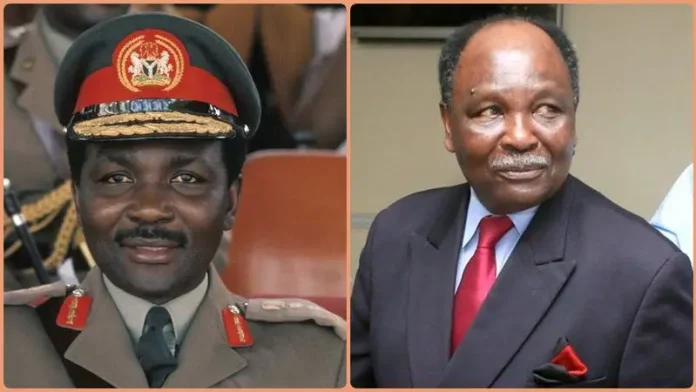
LEST WE FORGET – WHAT NDIGBO DID FOR AWOLOWO AT HIS DARKEST POLITICAL PERIOD. THOSE WHO, OUT OF SHEER HATRED, REWRITE HISTORY SHOULD DO WELL TO REMEMBER:

0
Chief Obafemi Awolowo

When Chief Samuel Ladoke Akintola and Sir Ahmadu Bello, the Sardauna of Sokoto, conspired to politically annihilate Chief Obafemi Awolowo, it was Dr. Michael Iheonukara Okpara, Premier of Eastern Nigeria, who boldly stood on the side of justice and principle.

As Nobel Laureate Prof. Wole Soyinka records in his memoir, “You Must Set Forth at Dawn”, Dr. Okpara did not just sympathize – he acted. He provided financial and political support to Awolowo’s camp, reabsorbed Prof. Sam Aluko and other loyalists dismissed from the University of Ife into the University of Nigeria, Nsukka, and sent Mazi Ukonu and the Eastern Nigeria Broadcasting Service to broadcast the authentic results of the Western Region election from Awolowo’s Ibadan residence, directly challenging the state-sponsored electoral fraud.

In an extraordinary gesture of solidarity, Okpara appointed Mrs. Hannah Awolowo, the wife of the imprisoned leader, as Honorary Minister in the Eastern Nigerian Government, equipping her with a Mercedes-Benz, a chauffeur, and full ministerial privileges. This was not just symbolic – it was an open declaration of interregional support and respect.

Equally important was the role of Dr. Nnamdi Azikiwe (Zik), then President of Nigeria. When Northern leaders sought to transfer Awolowo to a remote prison in the North—where his safety would be uncertain – Zik exercised his presidential authority to ensure that Awolowo was instead sent to prison in Eastern Nigeria, where he was treated with dignity and humanity, against the wishes of the Sardauna and Prime Minister Tafawa Balewa.

This interethnic solidarity was not accidental. It formed part of the broader United Progressive Grand Alliance (UPGA) — a coalition of progressive forces led by the NCNC and the Action Group, which resisted Northern domination and championed democratic ideals.

During this alliance, Dr. Okpara courageously entered Ibadan, despite being declared persona non grata by Akintola, to campaign for the Awolowo faction. His reception by the people was so electrifying and defiant of Northern hegemony that he was affectionately nicknamed “M.I. Power” by the Western Press.

These actions by Eastern leaders — Dr. Okpara, Dr. Azikiwe, and others – represent one of the noblest chapters in Nigerian political history: a moment when ethnicity bowed to justice, and regional differences were set aside in pursuit of a united democratic front.

These truths must be remembered, not distorted or forgotten. Let no one, out of ignorance or bigotry, erase the fact that it was the East – it was the Igbos – who stood with Awolowo when others sought to silence him.

Let us teach correct and verifiable history as it happened, not as some would like it rewritten.

By Otunba Rick Oladele
Adanma Okpara

Disclaimer: 

The opinions and views expressed in this write-up are entirely those of the Writer(s). They do not reflect the opinions and views of the Publisher (Nze Ikay Media) or any of its employees. The designations employed in this publication and the presentation of materials herein do not imply the expression of any opinion whatsoever of the Publisher (Nze Ikay Media) or its employees concerning the legal status of any country, its authority, area, or territory or concerning the delimitation of its frontiers. Equally, the sketches, images, pictures, and videos are obtained from the public domain.
The Racialised Architecture of Trump’s Authoritarianism: How White Grievance Became Global Policy!

0
President Donald Trump and President Cyril Ramaphosa of South Africa at the Oval office

I. The DNA of a Demagogue: From Birtherism to Boers

Trump’s authoritarianism didn’t begin with Ukraine or Ramaphosa; it was born in 2011 when he weaponized Barack Obama’s birth certificate. That racist dog whistle became the foundation of his political brand: the myth of stolen patrimony. By 2018, this evolved into defending apartheid nostalgia under the guise of “white farmer genocide”, a lie laundered through far-right YouTube channels and Breitbart.

The throughline? Authoritarian leaders need enemies, and Trump’s genius was racializing them:

– Domestic: Mexicans as “rapists,” Muslims as “infestation”
– Global: Haitians as “AIDS carriers,” Africans as “shithole” dwellers, white South Africans as “persecuted”

This wasn’t incidental; it was strategic. Studies show authoritarian consolidation thrives on ethnic polarisation (see Levitsky & Ziblatt’s How Democracies Die). Trump turned the Oval Office into a broadcast booth for white grievances.

II. The Apartheid Amnesia Playbook

His Ramaphosa performance exposed the hypocrisy:

1. Selective Outrage: Amplifying fringe claims about 50 white farmer deaths/year (unverified) while ignoring:
– 20,000+ annual murders (mostly Black South Africans)
– Orania’s de facto whites-only apartheid revival
– Legacy of 3.5 million forced removals under apartheid

2. Historical Gaslighting: Demanding Black South Africans “get over” apartheid while supporting:
– Confederate monument preservation in the U.S.
– “Heritage not hate” rhetoric

3. The Fox News Feedback Loop:
– Tucker Carlson’s 2018 segment on “South Africa’s white genocide” (debunked by Amnesty) became Trump’s talking point
– A 2019 U.N. report found no evidence of targeted white killings, ignored by the administration

This was authoritarianism’s racist feedback loop: fabricate crisis, amplify through media, legitimize through policy.

III. Media as Accomplice: The Megaphone Effect

Trump’s spectacle depended on complicit media architectures:
– Mainstream: CNN’s wall-to-wall coverage of Ramaphosa’s “performance” gave oxygen to lies.
– Alternative Right: Gateway Pundit’s AI-generated “farmer graves” imagery entered the Oval Office discourse
– Algorithmic Amplification: Facebook’s engagement algorithms prioritized incendiary white victimhood content

Result: A 2021 Oxford study showed Trump-era racial disinformation spread 6x faster than factual content.

IV. The Global Authoritarian Network

Trump didn’t act alone; he plugged into a global white power pipeline:
1. European Far-Right: France’s Le Pen, and Hungary’s Orbán echoed his South African rhetoric
2. Domestic Enablers:
– Stephen Miller (architect of the Muslim ban) drafted the “white farmer crisis” memos
– Fox’s Laura Ingraham hosted Afrikaner separatists to validate claims

3. Financial Flows:
– Orania’s investors linked to U.S. white nationalist donors (Southern Poverty Law Centre findings)
– Kleinfontein’s founders received dark money via Delaware LLCs (OpenSecrets tracing)

This was authoritarian globalization, and white identity politics as a transnational project.

V. The Counterattack: Why Ramaphosa’s Silence Betrayed the Global South

The South African president’s restraint, while tactically sound, had moral costs:
1. Missed Opportunities:
– Failed to cite South Africa’s Truth Commission data showing apartheid killed 21,000 Black activists
– Didn’t contrast Trump’s farmer claims with actual land reform delays benefiting white elites

2. The BRICS Paradox:
– While Ramaphosa avoided confrontation, China and Russia weaponized the incident in African media as “proof” of U.S. racism
– A 2023 Afrobarometer survey showed 68% of South Africans felt he “sold out” by not confronting Trump

3. The Mandela Precedent:
– In 1990, Mandela told George H.W. Bush: “Our freedom is incomplete without Palestinian freedom”, a rebuke of U.S. policy
– Ramaphosa’s muted response normalized authoritarian bullying

VI. The Road Ahead: Decolonising Authoritarianism

To combat Trump’s legacy, the Global South must:
1. Build Narrative Infrastructure:
– Al Jazeera-style platforms to debunk racial disinformation in real-time
2. Legal Warfare:
– Sue Fox News/OAN under foreign interference laws for peddling “white genocide” myths
3. Economic Counterweights:
– Accelerate BRICS currency mechanisms to reduce vulnerability to U.S. sanctions

Trump’s racial authoritarianism was a virus, mutating from Jim Crow to Johannesburg, with Fox News as its vector and the Oval Office as its petri dish. The world’s immune response starts when leaders like Ramaphosa stop being silent carriers.

NzeIkayMedia ✍️

Disclaimer: 

The designations employed in this publication and the presentation of materials herein do not imply the expression of any opinion whatsoever of the Publisher (Nze Ikay Media) or its employees concerning the legal status of any country, its authority, area, or territory or concerning the delimitation of its frontiers. Equally, the sketches, images, pictures, and videos are obtained from the public domain.
Dr M.I. Okpara And The Economic Blitz Of Eastern Nigeria

0
The Former Premier of Eastern Region, Chief, Dr. Michel Iheonuka Okpala whose visions and legacies enhanced unparalleled development in Eastern Nigeria.

No one conversant with the history of Nigeria in the I950s and 1960’s will miss the overwhelming impact of Dr M.I. Okpara on the nation. After all by 1964 he was fully in charge of the fastest growing and industrialising economy in the world- the Eastern Nigerian economy. Nothing illustrates the warped sense of history and the complete abandonment of the values of merit and excellence in our national affairs as this wilful omission. The period of Okpara’s stewardship of Eastern Nigeria is truly the golden age of Nigerian development.

As I pointed out in a public lecture in 1995, by 1964- five years after Okpara’s ascendancy to the premiership- Eastern Nigeria as recorded by a research group in Michigan State University in the US, Eastern Nigeria was the fastest growing and industrialising economy in the world – ahead of Malaysia, Korea, Taiwan and Singapore.

How did this happen?

It was the culmination of Okpara’s unique vision in which agriculture and industrial development were the twin pillars on which he built the Eastern Nigerian economy. In agriculture his plans had a two-fold thrust- the development of the farm settlements as the anchor for food crop (such as rice) and poultry development, as well as the establishment of estates of oil palm, cocoa, cashew etc which were processed for export. Alongside the agricultural projects, were numerous industrial projects scattered over the length and breadth of Eastern Nigeria.

In one frenetic burst of energy, a wave of maniacal and frenzied activity was on-going all over Eastern Nigeria. As the book reminds us “ by January 25, 1963, the Michelin Factory at Port Harcourt was opened. The tyre factory was a USD 3,000,000 undertaking. On March 22, the headquarters building of the Universal Insurance Company was opened in Enugu. On May 10 the Nigeria Gas factory was commissioned at Emene near Enugu. On May 16, the Aluminium Factory at Port Harcourt was opened. On August 24, the Glass factory became operative in Port Harcourt. On October 18, the Asbestos Cement Factory was opened in Emene. On November 9, the foundation of the Central Bank was laid in Port Harcourt. On November 30, the Golden Guinea Breweries was commissioned at Umuahia, for the production of larger beer and allied products. On December 13 Hotel Presidential was opened at a whopping cost of BPS £2,000,000.

The burning fire for industrialisation led to the establishment of the modern ceramic industry in Umuahia, textile mills at Aba and Onitsha and a shoe factory in Owerri. There was a catalogue of numerous small industries that were also established simultaneously with the major ones during this period. It was during this period that the first phase of the farm settlements scheme were established – Ulonna in Umuahia province, Ohaji in Owerri Province- Igbariam in Onitsha province, Boki in Ogoja province, Uzo Uwanni in Enugu province, Abak in Annang province. Each was to accommodate over 5,000 farmers and what was remarkable was the scrupulous effort for even spread of the settlements throughout the length and breadth of the region.

All these activities had been elaborated in his vision for the development of the region after the general elections of 1961. As he stated…”the period immediately following the elections was a period for building the economic consciousness of the people”

It is this consciousness and burning desire to raise the standard of living of our people, the unflinching determination to assault poverty from all fronts, that has been distilled into the 1962-68 development plan. Inviting the people as citizens of a democratic region to examine, approve, criticise or condemn any portion of the plan (the plan is the peoples plan) it provides for the development of the small village, it touches on the requirements of the largest city; it caters for the need of the smallest peasant industry and prescribes the means for the mounting of the biggest industries…”

What was remarkable in his vision was the appreciation of the role of the private sector. As he observed to achieve rapid economic growth and raise the standard of living of the people, it was necessary that “the private citizens, the ordinary men and women everywhere must participate by taking a fair and equitable share in our development and industrial projects…”

He elaborates on this vision when he states
“…..In encouraging and participating in the industries established in the Region, our government was doing so on behalf of the citizens of the Region. It was, as it were, holding its shares on trust for the people. As and when the industries have overcome their teething problems and the risk of failures minimized, government proposes to divest itself of most of its shares and the money realized used in pioneering into new industrial projects…” Thus, the visionary did not only recognise the role of the government as the steward on behalf of the people but more importantly acknowledged the government’s fiduciary responsibility.

It was an incredible display of courage in the midst of rampaging risk factors and the energy to pursue longterm goals on behalf of the people. It was a remarkable demonstration of transparency and accountability. It was a vision that was forty years ahead of its time. These latter values were illustrated by his commitment to participatory democracy as shown in the fact that he inaugurated an annual series of leaders of thought conferences (a total of five in 1960, 1962, 1963 and 1965).

A remarkable aspect of his industrialisation plan was the collaboration and cooperation with foreign investors to undertake the large industries such as Michelin Tyre factory in Port Harcourt and the Nkalagu Cement factory in present day Ebonyi state. Indeed in Okpara’s long term vision as he told me in a conversation in his home in Nkwoegwu in 1983 was that Port Hacourt through Aba and Umuahia going on to Enugu would have developed into a globally significant industrial megapolis and conurbation.

This drove his passion for the development of the University of Nigeria for which he has not, in my view, been given adequate credit. He provided the money through his prudent management of the resources of the region. If the politics of those times had been better managed, Eastern Nigeria would have been ahead of South Korea, Taiwan and Singapore for we were indeed ahead of these success stories of the second half of the 20th century. What was most remarkable was his spirit characterised by his disarming humility and rock-solid determination to confront all the odds frontally. These were exemplified by his return to medical school after the war!

We cannot end this without recognising the unique strategies he adopted for the management of the government and the instruments he adopted for his far reaching economic programmes. For the latter, the Eastern Nigeria Development Corporation was the engine room for the pursuit of his economic development plans. His management of men and resources was imaginative, innovative and revolutionary. The most remarkable attribute is that after his stint as Premier of Eastern Nigeria he returned to live in his father’s modest bungalow even as some members of his cabinet had vast estates in their hometown and elsewhere. That speaks volumes of his integrity.

He had arrow heads who coordinated the activities of the government in addition to the informal agencies of democratic participation. He ceded the day to day running of the party to his old friend Dr L C Mbanugo, the civil service to Sam Oti, the intelligentsia to Professor Kalu Ezera and the economic domain to Odumegwu Ojukwu Snr. These were his kitchen cabinet at it were and beyond the formal structures of the party and the bureaucracy. Thus, he could exercise an inspiring overview to the business of governance through the formal structures of governance, even as he recognised the validity of the informal networks that are the eyes and could invigorate governance.

In the final analysis his success ultimately rested on his understanding of his people and the operative environment that had shaped him and his people. He certainly deserves intense study if we are ever going to appreciate where the rain started to beat us given our present circumstances. The book is an honest effort but is riddled with avoidable typographical and other errors but it is a treasure trove of information on the Okpara years and a wistful reminder of what Nigeria could have been. Nevertheless, the vision must survive and endure.

By Professor Anya O Anya, PhD (Cambridge) D.Sc (Hon) FAS, OFR, NNOM
Abuja 26 February 2014

Disclaimer: 

The opinions and views expressed in this write-up are entirely those of the Writer(s). They do not reflect the opinions and views of the Publisher (Nze Ikay Media) or any of its employees. The designations employed in this publication and the presentation of materials herein do not imply the expression of any opinion whatsoever of the Publisher (Nze Ikay Media) or its employees concerning the legal status of any country, its authority, area, or territory or concerning the delimitation of its frontiers. Equally, the sketches, images, pictures, and videos are obtained from the public domain.
The Pulpit of Deceit – Exposing the Exploitative Mischief of Fake Pastors

0
A Traditional Church Building

In the sacred halls of worship, where faith should be a refuge for the weary and a beacon of divine truth, a sinister shadow often lurks—wolves in shepherd’s clothing, masquerading as men and women of God while preying on the vulnerable. The pulpit, meant to be a place of spiritual nourishment, has tragically become a theater of manipulation, where unscrupulous so-called pastors exploit their followers emotionally, financially, and even sexually—all under the guise of divine mandate. A case in hand is the one described in the attached short video clip in which a so-called woman of God resident in the United Kingdom snatched the husband of one of her congregants who came to her for counseling as the couple were having marital issues. She claimed that she was instructed by God to take over the woman’s husband and father of her kids.

Now Let’s Analyse The Many Faces of Pulpit Exploitation and Possible Ways To Avert The Menace.

1.⁠ ⁠Spiritual Manipulation and False Prophecies

One of the most insidious tools in the arsenal of fraudulent pastors is the claim of divine revelation. With the chilling declaration, “God told me…”, they exert control over their followers, bending them to their will. Whether it’s convincing a distressed woman to leave her husband, coercing congregants into “seed offerings” for miraculous breakthroughs, or declaring that disobedience to the pastor is rebellion against God, these charlatans weaponize faith to serve their selfish ends.

In the case mentioned—where a pastor hijacked a troubled woman’s husband under the pretense of divine instruction—the abuse of spiritual authority is glaring. Such acts not only destroy families but also erode public trust in genuine religious leadership.

2.⁠ ⁠Financial Exploitation Through Deceptive Giving

The prosperity gospel, though not inherently corrupt, has been twisted into a predatory scheme by some fake pastors. They demand exorbitant “sacrificial seeds,” promising hundredfold returns that never materialize. Testimonies are staged, and psychological pressure is applied—followers are told their financial struggles are due to insufficient faith or inadequate giving.

In Africa and other developing regions, where poverty and desperation run deep, this exploitation is particularly devastating. Widows are coerced into surrendering their meager pensions and sometimes lands and properties, students are pressured to donate school fees, and the sick are manipulated into paying for “healing prayers.” The pastor lives in opulence while the congregation languishes in lack—a direct contradiction of Christ’s teachings on servant leadership.

3.⁠ ⁠Sexual Exploitation Under the Guise of Anointing

Another grotesque dimension of pastoral fraud is sexual manipulation. Some rogue pastors demand “holy baths,” private “deliverance sessions,” or even claim that sleeping with them will transfer spiritual blessings. Vulnerable women, seeking solace or miracles, are often victims of such abuse, too afraid to speak out due to fear of spiritual repercussions or societal shame.

4.⁠ ⁠Fake Miracles and Staged Healings

To maintain their grip on followers, most fraudulent pastors stage elaborate miracles—fake healings, manufactured prophecies, and contrived exorcisms. Cameras are strategically angled, actors are planted in crowds, and desperate believers are exploited for spectacle. The Bible warns of “false prophets who perform great signs and wonders to deceive, if possible, even the elect” (Matthew 24:24). Yet, many fall prey, their hopes crushed when the promised miracles evaporate.

The Way Forward – Curbing the Menace of Fake Pastors

1.⁠ ⁠Government Regulation and Legal Consequences

In many Western nations, such as England (as referenced in the original example), there are laws against fraud, emotional manipulation, and coercion. These must be enforced even within religious circles. Africa and other developing nations need stricter regulations:

•⁠ ⁠Mandatory registration and financial transparency for religious organizations.

•⁠ ⁠Criminal prosecution for pastors who engage in fraud, sexual abuse, or psychological manipulation.

•⁠ ⁠Public awareness campaigns to educate citizens on the tricks of fraudulent clerics.

2.⁠ ⁠Church Accountability Structures

Genuine religious bodies must establish internal oversight committees to investigate misconduct. Denominational leadership should disown and expose fake pastors rather than protect them for the sake of unity or reputation.

3.⁠ ⁠Media and Whistleblower Protection

Investigative journalism has a crucial role in exposing religious scams. Media outlets should fearlessly report exploitative pastors while protecting whistleblowers from retaliation. Social media can also help victims share their stories, reducing the stigma attached to speaking out.

4.⁠ ⁠Empowering the Congregation with Biblical Literacy

Many fall victim because they lack sound doctrinal knowledge. Teaching believers to “test every spirit” (1 John 4:1) and recognize false teachings can immunize them against manipulation.

Reclaiming the Sanctity of Faith

The pulpit was never meant to be a throne for tyrants or a marketplace for swindlers. True men and women of God serve in humility, not domination; in truth, and not deception. Society must rise—governments, religious bodies, and individuals alike—to dismantle these systems of exploitation. Only then can faith be restored to its rightful place: a sanctuary of hope, not a den of thieves. Enough is enough!

NzeIkayMedia ✍️

Disclaimer: 

The designations employed in this publication and the presentation of materials herein do not imply the expression of any opinion whatsoever of the Publisher (Nze Ikay Media) or its employees concerning the legal status of any country, its authority, area or territory or concerning the delimitation of its frontiers. Equally, the sketches, images, pictures and videos are gotten from the public domain.

2027: Clouds of Change Loom Over Nigeria’s Political Horizon as Unity and Accountability Take Center Stage – Ishaya Inuwa Durkwa Warns as ’27 Clouds of Change Loom Over Nigeria

0
Executive Director, The International Organization for Peace Building and Social Justice (PSJ)

As Nigeria’s political landscape braces for the 2027 general elections, a compelling appeal for alignment, responsibility, and unity has emerged from Ishaya Inuwa Durkwa, who warns of gathering “political clouds” signaling a transformative shift. In his thought-provoking piece, 2027 and the Gathering Clouds: An Appeal for Alignment and Responsibility, Durkwa likens Nigeria’s evolving political dynamics to meteorological patterns, where clouds may herald nourishing rain or a destructive storm. With defections to the ruling All Progressives Congress (APC), whispers of opposition alliances, and intense behind-the-scenes maneuverings, the stage is set for a pivotal contest likely dominated by three figures: President Bola Ahmed Tinubu, former Vice President Atiku Abubakar, and former Anambra Governor Peter Obi. The choices made by these leaders and the Nigerian people will determine whether 2027 births a new dawn or deepens the nation’s challenges

As reported by Durkwa, the choices made by these leaders and the Nigerian people will determine whether 2027 births a new dawn or deepens the nation’s challenges, including hunger, insecurity, and economic distress. Durkwa observes that Nigeria’s political atmosphere is tilting toward a de facto one-party system, reinforced by recent endorsements of a second term for President Tinubu by both the president himself and Senate President Godswill Akpabio during an APC summit. “In a nation still battling with hunger, insecurity, and joblessness, one is forced to ask—on what basis?” Durkwa questions, highlighting the gap between political rhetoric and governance realities.

In a nation still battling with hunger, insecurity, and joblessness, one is forced to ask—on what basis?

Tinubu, wielding the full machinery of state and incumbency, faces scrutiny over unfulfilled campaign promises, such as stable electricity. “If I don’t deliver on providing stable electricity, don’t vote for me again,” Tinubu once declared, yet, as Durkwa notes, electricity remains erratic, insecurity persists, inflation torments citizens, and the naira’s value has plummeted. Corruption thrives unchecked, and poverty grips millions, while defections to the APC appear driven by a quest for power rather than confidence in governance.

If I don’t deliver on providing stable electricity, don’t vote for me again

Peter Obi, whose 2023 campaign galvanized millions through the Obidient movement, represents a generational cry for change rooted in his impressive governance record in Anambra. According to Durkwa, the movement, seeded by reformers in 2018, captured the dreams of Nigeria’s youth, but post-election apathy has bruised many supporters who distrust the electoral system.

“Peter Obi, by himself, cannot dislodge a ruling power that commands federal might and institutional loyalty,” Durkwa asserts, emphasizing that Obi’s ideals must be paired with strategic alliances to challenge the incumbent. Atiku Abubakar, a consistent figure in Nigeria’s political evolution, is viewed by some as emblematic of the past, yet his 2019 alignment with Obi proved formidable. Durkwa poses a critical question: “What if, for the sake of Nigeria’s hungry, poor, and unemployed, they aligned again?”

Peter Obi, by himself, cannot dislodge a ruling power that commands federal might and institutional loyalty

The stakes for 2027 are high, and Durkwa warns that a divided opposition would hand victory to Tinubu. “If the opposition runs divided, they hand 2027 to the incumbent on a gold platter. History will not forgive them,” he writes, stressing that hunger, bloodshed, and poverty transcend zoning debates. While zoning remains a noble concept, Durkwa argues it must be institutionalized for the future, as today’s crisis demands unity. A fragmented opposition, he suggests, could signal either tacit approval of Tinubu’s performance or prioritizing personal ambition over national healing, potentially raising suspicions of covert alignments.

Atiku Abubakar alongside Aminu Tambuwal, Peter Obi, and others in Abuja

Beyond elite politics, Durkwa highlights a more ominous cloud: the silent anger of Nigeria’s masses. Divided by religion, tribe, and class, the people may find unity in shared suffering. “Beware of the silent anger of the people… When that day comes, no security barricade or media spin will stop them,” he cautions, questioning whether 2027 will mark this turning point. With over 63% of Nigeria’s 230 million population living in multidimensional poverty, a 33% unemployment rate projected for 2025, and a 25% food price surge in 2024 due to high transportation costs, public frustration is palpable. Insecurity in northern states like Borno and climate risks like flooding further exacerbate economic woes.

Beware of the silent anger of the people… When that day comes, no security barricade or media spin will stop them

Durkwa’s appeal is threefold. To the ruling class, he urges justice, empathy, and governance that uproots hunger, letting performance be their campaign. To the opposition, he calls for alignment, possibly a joint ticket, to provide a unified direction rather than confusion. To the people, he advocates ending apathy and embracing hope, emphasizing that Nigeria’s healing lies in their vote. “Let no one be deceived—the clouds are gathering. Let us not wait for the storm to break before we take shelter in wisdom,” he concludes, framing 2027 as a defining moment for Nigeria’s future. Economic context adds urgency to Durkwa’s message. The African Development Bank’s 2025 African Economic Outlook projects Nigeria’s inflation at 24.7% in 2025, down from 33.2% in 2024, and 17.3% in 2026, driven by reforms, monetary tightening, and agricultural gains.

Let no one be deceived—the clouds are gathering. Let us not wait for the storm to break before we take shelter in wisdom

Yet, challenges like a 42% naira depreciation in 2024, governance inefficiencies with budget execution rates below 50% in some states, and structural constraints—like oil production at 1.56 million barrels per day against an OPEC quota of 1.8 million—persist. These economic pressures, coupled with political tensions, underscore the need for responsible leadership. As Nigeria approaches 2027, Durkwa’s call for alignment and accountability resonates deeply. The clouds gathering over the political horizon could herald transformation or turmoil, depending on the actions of leaders and citizens. With the nation at a crossroads, the appeal for a united opposition, empathetic governance, and an engaged populace offers a roadmap to navigate the storm and secure a brighter future for Nigeria.

By Ishaya Inuwa Durkwa

Disclaimer: 

The opinions and views expressed in this write-up are entirely those of the Writer(s). They do not reflect the opinions and views of the Publisher (Nze Ikay Media) or any of its employees. The designations employed in this publication and the presentation of materials herein do not imply the expression of any opinion whatsoever of the Publisher (Nze Ikay Media) or its employees concerning the legal status of any country, its authority, area, or territory or concerning the delimitation of its frontiers. Equally, the sketches, images, pictures, and videos are obtained from the public domain.
An Open Letter to His Excellency, Atiku Abubakar, the Wazirin Adamawa.

11
Former Vice President and 2023 Presidential Candidate of the PDP, Alhaji Atiku Abubakar, flanked on his right by Ex-Governor of Anambra State and 2023 Presidential Candidate of the Labour Party, Mr Peter Obi, and on his left by Ex-Governor of Kaduna State, Mallan El-Ruffai

May I plead your indulgence sir, to write and advise you on the present political realities in Nigeria. Considering the way you operate, I am sure that your stockpile of intellectual surrogates is limitless, hence you may not have time to read and heed to the advice of a political lightweight like me.

Sir, I supported you in 2011 before the PDP presidential primary election of that electoral cycle. I did that based on the principle of equity and fair play. However, you lost the ticket to incumbent President Jonathan. The President strode to victory in the general election. A very big political lesson was obvious from Jonathan’s victory: the North cannot win a presidential election against a Southern incumbent that has the support of the entire South.

Before the 2015 presidential election, you pulled out of the PDP to join the APC. That was your second political goal of the 4th Republic. Your first goal was your battle against Obasanjo, a confirmed “Walking Illegality” of extreme pedigree. You contested the APC ticket and lost to Buhari at Teslim Balogun Stadium. Buhari went on to win the general election and another obvious political lesson was learned: a Northern challenge against a Southern incumbent can only succeed with the backing of at least one political zone from the South. I hope I’m making sense to you, Sir.

Then we arrived quickly at the 2019 presidential election. You were well prepared for the challenge. In fact, the entire Southern wing of the PDP conceded the ticket to Northern Nigeria. If you recall, sir, you assembled us at POLA (Political Academy), a political think tank established by Sen. Gbenga Daniel, located in Shagamu, Ogun State. You arrived with Mr. Peter Gregory Obi and declared your intention to run for the 2019 presidential election. We all supported you and backed you all the way to the congress venue in Port Harcourt. Tambuwal, solidly backed by then Gov. Nyesom Wike mounted an unprecedented challenge and was at the verge of defeating you until that early morning intervention led by Gen. Mohammed Gasau, who flew into Port Harcourt that primary election morning. Eventually, you lost the general election.

Your Excellency, the story of 2023 is still very fresh in our collective memory. Your refusal to allow the South to secure the PDP ticket is the bane of the political opposition in Nigeria today. A divided opposition made it easy for the Emilokan Enterprise to snatch and run with the votes.

Sir, while I acknowledge your individual right to contest the 2027 presidential election, my admonition to you is: that statesmanship entails giving up on your individual interest in pursuit of the public good. You have an opportunity to support a trusted, serious, and capacity-imbued candidate in the person of Peter Obi to defeat the Emilokan Enterprise. I expect you, sir, to write your name in gold by heeding my advice and retire in glory from politics after Peter Obi’s victory in 2027.

Sir, there’s no Northern presidential candidate that is capable of defeating the Emilokan Enterprise, including you. If Peter Obi is not on the ballot, Tinubu will sweep the entire Southern Nigeria. He will win at least 4 States in the North Central and record significant votes up North. That will be enough to deliver Aso Rock to him.

However, with you and Northern support, Peter Obi will win the 11 States of South East and South South, mount a good challenge in parts of South West, win at least 3 States in the North Central, and mount a good challenge in the core North. This will deliver victory to Peter Obi and deliver Nigerians from the grip of the Emilokan Enterprise.

Your Excellency, time beckons on you to leave a lasting legacy to generations unborn.

Yours truly,

Sir. Kelechi Jeff Eme, The Cicero of Mbaitoli.

Disclaimer: 

The opinions and views expressed in this write-up are entirely those of the Writer(s). They do not reflect the opinions and views of the Publisher (Nze Ikay Media) or any of its employees. The designations employed in this publication and the presentation of materials herein do not imply the expression of any opinion whatsoever of the Publisher (Nze Ikay Media) or its employees concerning the legal status of any country, its authority, area, or territory or concerning the delimitation of its frontiers. Equally, the sketches, images, pictures, and videos are obtained from the public domain.
Gog, Magog, Tibel, and Rush. The stage is being set!

0
Gog, Magog, and the Rise of the Antichrist: How End-Time Prophecy May Unfold After Russia & Ukrainian Armed Conflict

A Prophetic Warning in Modern Headlines Through Biblical Prophecy!

The statement, “Gog, Magog, Tibel, and Rush. The stage is being set” made in response to President Trump’s warning to Russia after its deadly attacks on Kiev a few days in response to Kiev’s earlier attack, carries profound Biblical and eschatological weight. It draws from Ezekiel 38–39 and Revelation 20:7–10, where Gog and Magog are prophesied as central figures in an apocalyptic war preceding Christ’s return. But who are these entities, and could Russia – Ukrainian armed conflict signal the unfolding of ancient prophecies?

1. Biblical Foundations: Gog, Magog, and the End-Time Alliance

A. Ezekiel’s Prophecy (Ezekiel 38–39)
Ezekiel describes a massive coalition of nations, led by Gog of Magog, that launches a surprise attack on Israel in the “latter years.” The alliance includes:
– Meshech & Tubal (Tibel?) – Historically linked to regions in modern Turkey and southern Russia.
– Rosh (Rush?) – Some scholars associate this with Russia (based on linguistic and historical arguments).
– Persia (Iran) – Already a key ally of Russia today.
– Ethiopia & Libya (North Africa) – Potential references to African nations aligning with this axis.

This invasion is supernaturally destroyed by God, demonstrating His power before the world.

B. Revelation’s Gog and Magog (Revelation 20:7–10)
In John’s vision, Gog and Magog reappear after Christ’s 1,000-year reign, symbolizing the final rebellion before eternal judgment. This suggests two possible fulfillments:
1. A pre-Millennial war (Ezekiel 38–39) before Christ’s return.
2. A post-Millennial rebellion (Revelation 20) at the end of His earthly reign.

2. Modern Interpretations: Is Russia the Biblical “Rosh”?

The Case for Russia as Rosh
– Linguistic Argument: Some scholars (e.g., Dr. Arnold Fruchtenbaum) argue that “Rosh” (Hebrew for “chief”) could phonetically resemble “Russia.”
– Geographical Argument: Ancient Scythians (associated with Magog) inhabited southern Russia and Central Asia.
– Political Argument: Russia’s military alliances with Iran, Turkey, and North African nations eerily mirror Ezekiel’s coalition.

The Case Against Russia as Rosh
– No Direct Biblical Proof: “Rosh” simply means “chief” in Hebrew, not necessarily a place.
– Alternative Theories: Some argue Magog refers to Central Asian tribes (e.g., Kazakhstan, Mongolia) rather than modern Russia.

While Russia fits the profile we must remain cautious—prophecy requires precise fulfillment, not just resemblance.

3. The Prophetic Timeline: When Will Gog-Magog Happen?

Bible scholars debate when this war occurs. Three primary views exist:

A. Pre-Tribulation View (Before the Rapture)
– Ezekiel 38–39 happens before the 7-year Tribulation.
– Russia and allies attack Israel but are miraculously destroyed by God (Ezekiel 38:22–23).
– This paves the way for the Antichrist’s rise (Daniel 9:27).

Implications Today:
– If correct, Russia’s aggression could be a precursor to the full invasion.
– A supernatural defeat might lead to a false peace deal.

B. Mid-Tribulation View (During the Tribulation)
– Gog-Magog aligns with Revelation’s “Kings of the East” (Revelation 16:12) or Armageddon.
– Russia may initially ally with the Antichrist, then betray him (Daniel 11:40–45).

Implications Today:
– If Russia weakens in Ukraine, it might later join a global power bloc.

C. Post-Tribulation View (After Christ’s Return)
– Revelation 20:7–10 places Gog-Magog after Christ’s Millennial Reign.
– Current events are **symbolic parallels, not direct fulfillment.

Implications Today:
– Geopolitical tensions foreshadow but do not yet fulfill prophecy.

4. Ukraine’s Role: Is This the Beginning?

– Ezekiel’s prophecy centers on Israel, not Ukraine. Unless Russia directly attacks Israel, this may not be the fulfillment.
– However, Russia’s war weakens NATO, distracts the West, and emboldens Iran, potentially setting the stage for a future Middle East conflict.

Key Indicators to Watch:
– Does Russia form a military pact with Iran, Turkey, and North Africa?
– Does Israel face a sudden invasion from the north?

5. The Coming of the Lord: True Signs of the End Times

While wars (Matthew 24:6–7) are a sign, Jesus emphasized:
1. Global Evangelism (Matthew 24:14) – The Gospel spreading worldwide.
2. Rise of Deception (Matthew 24:4–5) – AI, false messiahs, deepfakes.
3. Rebirth of Israel (Ezekiel 37, Matthew 24:32–34) – Israel’s 1948 restoration.
4. Moral Collapse (2 Timothy 3:1–5) – Lawlessness, societal breakdown.

Russia’s war is a piece of the puzzle, but not the sole trigger.

Should We Expect Christ’s Return Soon?

Yes, if…
– Russia turns its focus toward Israel.
– The Antichrist’s global system emerges (Revelation 13).
– The Third Temple is rebuilt (a key Tribulation sign).

No, if…
– This remains a regional conflict without impacting Israel.
– The Antichrist has not yet been revealed (2 Thessalonians 2:3).

What Should We Do?
– “Watch and pray” (Mark 13:33) – Stay spiritually alert.
– Spread the Gospel – Focus on salvation, not just prophecy.

The stage may indeed be setting, but our task remains clear: Be ready, for no one knows the day nor the hour (Matthew 25:13). Now, lets look at a deeper analysis of how the Antichrist’s rise could follow these events.

Gog, Magog, and the Rise of the Antichrist: How End-Time Prophecy May Unfold After Russia & Ukrainian Armed Conflict

Connecting the Dots Between Gog-Magog and the Antichrist
The potential fulfillment of Ezekiel’s Gog-Magog prophecy through Russia’s actions raises a critical question: What comes next in Biblical prophecy? Scripture suggests that after this cataclysmic event, a deceptive global leader, the Antichrist, will emerge to establish a short-lived world order before Christ’s return. Let’s examine how current events could set the stage for this final act.

I. The Aftermath of Gog-Magog: Creating a Power Vacuum

Ezekiel 38-39 describes God’s supernatural destruction of the invading coalition:
– Divine Intervention: God destroys the armies with earthquakes, hailstones, and fire (Ezekiel 38:19-22)
– Global Shock: “The nations shall know that I am the Lord” (Ezekiel 38:23)
– Weapons Burn for Seven Years (Ezekiel 39:9-10)

Implications for the Antichrist’s Rise:
1. Crisis Creates Opportunity: The devastation leaves nations desperate for stability
2. Disarmament: The seven-year weapons burning may enable the Antichrist’s peace plan
3. Religious Shift: The supernatural event could be twisted into a false narrative of “alien salvation”

II. The Antichrist’s Emergence: Fulfilling Daniel’s Prophecy

The Gog-Magog war may directly facilitate the Antichrist’s rise through:
– The Confirmed Covenant (Daniel 9:27):
– A seven-year treaty with Israel (potentially involving Temple rebuilding)
– May emerge from the chaos post-Gog-Magog

– Characteristics of the Antichrist:
– Master of deception (2 Thessalonians 2:9-10)
– Initially appears as peacemaker (Revelation 6:2)
– Gains control through economic systems (Revelation 13:16-17)

III. Current Trends Aligning With Prophecy

Several modern developments could enable this scenario:
1. Digital Infrastructure: CBDCs and social credit systems mirror the “mark of the beast”
2. Global Governance: UN Agenda 2030 and WEF “Great Reset” narratives
3. AI and Surveillance: Enabling total control predicted in Revelation 13
4. Religious Syncretism: Growing push for one-world religion

IV. The Sequence of End-Time Events

A potential prophetic timeline:
1. Gog-Magog War (Ezekiel 38-39)
2. Rapture of the Church (1 Thessalonians 4:16-17)
3. Antichrist’s Peace Treaty (Daniel 9:27)
4. Temple Rebuilt (2 Thessalonians 2:4)
5. Great Tribulation (Matthew 24:21)
6. Second Coming (Revelation 19:11-16)

V. Watching With Discernment

While we cannot know exact timing, the convergence of:
– Russian aggression
– Globalist power grabs
– Technological control systems
– Middle East tensions

…suggests we may be witnessing the “birth pangs” (Matthew 24:8) of the end times. Rather than fear, this should motivate us to:
– Strengthen our faith (Hebrews 10:25)
– Share the Gospel urgently (Matthew 28:19-20)
– Live with eternal perspective (Colossians 3:2)

“He who testifies to these things says, ‘Surely I am coming quickly.’ Amen. Even so, come, Lord Jesus!” (Revelation 22:20)

NzeIkayMedia ✍️

Disclaimer: 

The designations employed in this publication and the presentation of materials herein do not imply the expression of any opinion whatsoever of the Publisher (Nze Ikay Media) or its employees concerning the legal status of any country, its authority, area or territory or concerning the delimitation of its frontiers. Equally, the sketches, images, pictures and videos are gotten from the public domain.

WHO’s Crossroads: A Nigerian Healer, A Pandemic of Distrust, and the Ghost of Global Health’s Broken Promises

11
Dr. Ihekweazu, the epidemiologist-poet who once danced between outbreaks of Lassa fever and vaccine diplomacy in Nigeria, now ascends to the helm of WHO’s largest division

The Shakeup: A Storm in Geneva’s Ivory Tower

When the World Health Organisation (WHO) announced its seismic leadership overhaul last week, retaining only four senior officials, including Nigeria’s Dr. Chikwe Ihekweazu, it was more than bureaucratic reshuffling. It was a tacit admission: the ship of global health is adrift in a tempest of its own making. Dr. Ihekweazu, the epidemiologist-poet who once danced between outbreaks of Lassa fever and vaccine diplomacy in Nigeria, now ascends to the helm of WHO’s largest division: Health Emergencies. His promotion is both a battlefield promotion and a metaphor, a son of Africa tasked with salvaging an institution that has, for decades, treated the continent as a Petri dish for paternalism.

But to understand why this moment matters, we must first autopsy how WHO, conceived as humanity’s shield against disease, became a lightning rod for distrust, accused of morphing from healer to harvester in the shadows of power.

A Noble Genesis, A Faustian Detour

Born in 1948 from the ashes of World War II, WHO’s founding creed was Biblical in its ambition: “The attainment by all peoples of the highest possible level of health.” For decades, it was the secular Vatican of public health, eradicating smallpox, taming polio, and drafting the playbook for pandemic response. But like Icarus flying too close to geopolitical suns, the WHO’s wings began melting in the 21st century.

The 2009 H1N1 “pandemic” marked a turning point. WHO declared a Phase 6 emergency, triggering vaccine contracts worth billions, only for the outbreak to fizzle into a seasonal flu. Critics accused it of crying wolf, with European parliamentarians alleging pharmaceutical industry collusion. The term “pharmocracy” entered the lexicon: governance by pill-makers.

Then came Ebola in 2014. WHO’s delayed response, described by its own review committee as a “systemic failure”, allowed the virus to ravage West Africa, exposing the agency’s paralysis between donor whims and ground truths. But it was COVID-19 that shattered the facade. Under Director-General Tedros Adhanom Ghebreyesus, WHO oscillated between praising China’s “transparency” and pleading for viral samples Beijing withheld. Dr. Anthony Fauci, America’s pandemic face, became both hero and villain, a symbol of expert authority to some, of overreach to others. Conspiracy theorists, smelling blood, recast WHO as a “global killer,” alleging lockdowns were less about health than control.

The Fauci Factor: Science or Scientism?

To blame Fauci alone is to miss the forest for the spike protein. The National Institutes of Health (NIH) director’s decades-long influence on global health, via funding ties to the Wuhan Institute of Virology and advocacy for gain-of-function research, became grist for the mill of distrust. When WHO parroted China’s early dismissal of lab-leak theories, critics saw not science but submission. The agency’s credibility, already haemorrhaging from opioid crises handled with kid gloves and sugary drink lobbies watered down, now flatlined in the court of public opinion.

This is the rubble Dr. Ihekweazu inherits. His department, the Health Emergencies Programme, controls 80% of WHO’s $7 billion budget, a war chest often spent fighting political fires as much as viral ones.

Dr. Ihekweazu: A Bridge Between Worlds

Here lies the irony: the man now charged with rehabilitating WHO’s emergency arm cut his teeth in Nigeria’s trenches. As founder of the Nigeria Centre for Disease Control (NCDC), Dr. Ihekweazu battled outbreaks with duct-tape budgets and grassroots ingenuity. When Lassa fever struck, he didn’t just deploy labs; he enlisted village chiefs as epidemiologists. When COVID hit, he rejected lockdown dogmas, insisting: “You can’t ask a man who earns $2 a day to stay home.”

His approach embodies what WHO has long lacked: contextual intelligence. While Geneva debated viral taxonomy, Dr. Ihekweazu mapped how diseases travel, not just through bodies, but through markets, mistrust, and colonial memory. His rise signals a quiet coup: the Global South demanding a seat at the table it has always stocked with data and bodies.

The Hypocrisy Matrix: How WHO Lost Its Way

WHO’s derailment stems from three original sins:

1. The Donor Trap: 80% of its budget is earmarked by donors (read: Western governments and Gates Foundation), turning it into a contractor rather than a commander.

2. The Technocrat’s Hubris: Prioritising metrics (vaccination counts, case tallies) over ecosystems (poverty, inequality), the very “social determinants of health” it claims to champion.

3. Allegiance to Political Winds: From downplaying Taiwan’s COVID success to appease China, to soft-pedalling U.S. opioid makers, the WHO too often kneels where it should needle.

The result? A 2021 Lancet Commission verdict: “WHO is underpowered, underfunded, and over-politicised.”

A Path to Redemption: From Geneva to the Grassroots

For WHO to resurge, Dr. Ihekweazu must channel his Lagos days into Geneva’s marble halls:

– Decolonise Data: Partner with local healers, not just Harvard epidemiologists.

– Financial Detox: Demand UN member states fund the WHO through mandatory contributions, not charity.

– Transparency Tribunal: Publicise every meeting with pharma execs; ban directors from post-tenure industry roles.

– Vaccine Justice: Make mRNA tech open-source, Africa’s 1.3 billion people deserve hubs, not handouts.

Finally: The Germ of Hope

The WHO shakeup is more than personnel chess; it’s a referendum on whether global health can rediscover its soul. Dr. Ihekweazu, straddling Nigeria’s chaos and Geneva’s order, embodies the tension between reform and replication. As plagues old (cholera) and new (Disease X) loom, humanity needs a WHO that heals, not hedges. The alternative? A world where health is a luxury for the wired, and the rest pray to survive the cure. WHO stands at a clinic crossroads: Will it remain a pharmacy for the powerful, or become the people’s hospital? The prescription starts with Dr. Ihekweazu’s scalpel, cutting out the rot, stitch by stitch.

NzeIkayMedia ✍️

Disclaimer: 

The designations employed in this publication and the presentation of materials herein do not imply the expression of any opinion whatsoever of the Publisher (Nze Ikay Media) or its employees concerning the legal status of any country, its authority, area or territory or concerning the delimitation of its frontiers. Equally, the sketches, images, pictures and videos are gotten from the public domain.

An Open Letter to President Bola Ahmed Tinubu – By Stephanie Shakaa

2
President Bola Ahmed Tinubu of Nigeria

Mr. President, please, read this, it isn’t from your enemy, not from your opposition. Mr. President, this is not just a letter. It’s a cry of the people. A nation on the brink needs leadership, not silence. Is Nigeria still worth fighting for?”

Sir, this isn’t from your opposition. It’s not from a political enemy. It’s from a citizen,tired, exhausted, but still hopeful. Still daring to believe that Nigeria can breathe again. Mr. President, this is not war. We are not your enemies. We are your responsibility. And right now, this nation is gasping for air under the weight of your policies.

Mr. President, we are not writing this to disrespect you. We are writing because we are slowly disappearing. We are not even angry anymore. Anger takes energy. And we’re too exhausted for that now. We are simply tired. Tired of adapting. Tired of surviving. Tired of clenching our teeth and pretending things are fine. Tired of being told to tighten belts that no longer exist. Tired of selling properties to pay school fees.Tired of eating once and calling it intermittent fasting. Tired of telling our children “next week” when we don’t even know if we’ll make it to next week. Our salaries die on the way to the market. A bag of rice now costs more than some people’s monthly income. A loaf of bread is a luxury item. We have become accountants of misery counting every naira like a funeral dirge. We are tired of juggling bills and prayers. We are tired of watching the rich get richer and the poor get forgotten. Of hearing politicians speak English while we speak hunger. Of prayers that now feel like unanswered phone calls to heaven.

Mr. President, this letter is not wrapped in protocol. It is not dressed in agbada or softened by political correctness. It is raw, like the streets. It is tired, like the people. It is urgent, like a mother’s scream in the night when her child is hungry and ill.It is a lamentation.A mirror.A record of what it feels like to be a Nigerian in this moment. We are not writing to attack you.We are writing because silence is starting to look like consent.And we do not consent to this version of Nigeria. You came to us with the chant of “Renewed Hope.” But sir, hope cannot survive on slogans. Hope is not a billboard or a retweet. Hope must feed. Hope must heal. Hope must carry us to the market and bring us back with something in our bags, not just dust and despair.

Mr. President, have you seen us lately? We are the ones calculating our budgets all night because the expenses don’t fit the salary. We are the ones walking to work under the sun because transport is now a luxury. We are the ones skipping meals, not because we’re fasting, but because we simply cannot afford to eat. The minimum wage is a national joke. The Naira is on life support. And every day, the headlines are a slap to the face of a suffering people another convoy, another celebration, another empty promise. Sir, this is not governance. This is survival of the political class at the expense of the governed. You promised change. We want to believe you. But belief is bleeding. We are not asking for miracles we are asking for leadership with eyes open and ears to the ground. We are asking for policies that make sense, not just to economists in glass offices, but to market women in Onitsha and civil servants in Yola. We are asking that you see us not just as votes, not just as statistics in your inauguration speech but as humans, Nigerians, exhausted but still believing.

Mr. President, the streets are watching. The youth are no longer naive. The silent ones are beginning to speak. And when a people begin to cry in unison, even history listens. Let this not be another tragic chapter. Let it be the page where something changed for real. Not with fanfare. But with food in the pot. Light in the socket. Justice in the courts. And truth at the podium. Do not let power blind you. Do not let politics bury your purpose. And above all, do not let the cries of Nigerians become mere background noise in the villa. You came with the promise of “Renewed Hope.” That was your campaign anthem. But sir, what we received instead is renewed hardship, renewed hunger, renewed hopelessness. Yes, subsidy was removed. Yes, the naira was floated. But what floated for you drowned the rest of us.

You say “be patient.” But patience requires the belief that something better is coming. What is coming, Mr. President? What’s coming for the widow in Aba who can’t afford her blood pressure medication? What’s coming for the teacher who hasn’t been paid in months? What’s coming for the Uber driver who now sleeps in his car because he can’t afford both fuel and rent? Have you been to the market lately? Have you asked what ¦ 10,000 can buy? Do you know what it’s like to negotiate with a bus driver when your entire transport fare is sitting in your palm? Have you ever stood in front of your children, empty-handed, and lied that you already ate? This is not about opposition politics. It is about daily pain. Pain that doesn’t make it to the news. Pain that doesn’t trend on social media. Pain that we wear like skin. We are not asking for miracles. We are asking for common sense. For intentional leadership. For policies that consider the man on the street, not just the men in suits. You govern a country of over 200 million people, but it often feels like your government is for 200 elites and their inner circle. We’re not here to insult you. We’re here to beg or visibility. To remind you that leadership is not about convoy length or photo ops. It’s about who eats. Who lives. Who breathes.

Because sir, Nigeria is not breathing. Hospitals are overwhelmed. Schools are underfunded. Security is inconsistent. Inflation is unchecked. And everywhere you turn, there’s a quiet desperation in the eyes of the people. We have become a nation of survival experts. Of resilient ghosts. Of dreamers turned skeptics. Of prayer warriors who now wonder if heaven has blocked Nigeria’s number. We say “e go better,” but deep down, many are starting to believe it won’t. That belief is dangerous. It kills nations long before bullets do.

Mr. President, we are not enemies. We are citizens. We are the ones who wave flags at independence parades and sing the anthem with cracked voices. We are the ones who keep this country afloat teachers, nurses, farmers, traders, students, civil servants. We are the ones you swore to serve. Serve us! Hear us! See us! We are the heartbeat of the country. And right now, that heart is skipping beats. This country is bleeding. From Kaduna to Enugu, from Zamfara to Bayelsa. And while citizens ration food, the headlines speak of billions approved, new appointments, luxury vehicles, and government retreats. We’re not even asking for luxury. We’re asking for dignity. We are asking that people don’t have to choose between feeding their children and paying rent.

That a young Nigerian doesn’t have to gamble his life in the desert or on the Mediterranean Sea to believe in a future. That a mother doesn’t have to watch her child die from a treatable illness because the public hospital has no doctors, no drugs, and no light. Do you hear us, sir? The students. The artisans. The civil servants. The market women. The nurses. The job seekers. The forgotten. The silent majority that is now simply trying to exist. Please don’t say we should keep hope alive if you’re going to keep killing the conditions that sustain it. History has its pen out. The world is watching. Nigerians are watching too,not with excitement anymore, but with a tired gaze and heavy hearts. This letter is not political. It is personal. Because we all know someone who’s had to beg for school fees. Someone who’s left the country. Someone who’s been kidnapped. Someone who’s died because the system failed. We know them. We love them. We are them.

Mr. President, this isn’t just about your legacy. This is about the people you govern. And we are saying with one voice: Let Nigeria breathe again! Let the children dream again! Let the markets live again! Let salaries mean something again. Because salaries die on the way to the market. Hope, that fragile thread keeping us together, is thinning fast. Do you know what it feels like to check the price of food before saying yes to your child’s request? To buy fuel in 2-litre jerrycans like contraband? To go to work and still beg to survive? This is not a call for pity. It is a call for perspective. You have the power to change the direction of this country. The question is do you have the will? We are not asking for the impossible. We are asking for policies rooted in reality. For roads that are drivable. For power that doesn’t disappear every hour. For minimum wage that can buy minimum dignity. For hospitals that don’t look like waiting rooms for death. We are asking that when the people cry, their government doesn’t turn up the music.

Let dignity return! Govern with empathy. Act with urgency. Lead like you truly understand that power is borrowed. That time is limited. That pain ignored eventually erupts. This is not a threat. It’s a truth. We are still Nigerian. Still hopeful. But we are no longer blind. And if you truly meant “Renewed Hope,” then now is the time to prove it. Not tomorrow. Not after another summit. Not after another crisis. Now! Because people are not just losing faith. They are losing everything. This open letter is the most painful thing I’ve written about Nigeria. Mr. President, please read it. Even if your aides won’t let you feel us this is us.”

Sincerely, a Citizen with a Voice. And a Breaking Heart. We are tired, Because this tiredness is not just emotional,it is national Mr.President. This is not the kind of tiredness that sleep can fix. We are tired in our minds. Our spirits. Our wallets. Our bodies. Our dreams. Please let this tiredness matter.

Yours sincerely, Stephanie Sewuese Shaakaa, Daughter. Mother. Citizen. Voice from the valley. Email: shaakaastephanie@yahoo.com

Disclaimer: 

The opinions and views expressed in this write-up are entirely those of the Writer(s). They do not reflect the opinions and views of the Publisher (Nze Ikay Media) or any of its employees. The designations employed in this publication and the presentation of materials herein do not imply the expression of any opinion whatsoever of the Publisher (Nze Ikay Media) or its employees concerning the legal status of any country, its authority, area or territory or concerning the delimitation of its frontiers. Equally, the sketches, images, pictures and videos are gotten from the public domain.

How I Paid ₦10,000 to Walk Through Airport With Cocaine — Convicted Smuggler Exposes Bribery, Missing Evidence, and Arrest Ordeal in Kyari Trial

0
Suspended Deputy Commissioner of Police, Abba Kyari.

In a dramatic testimony before the Federal High Court in Abuja on Thursday, convicted drug trafficker Emeka Ezenwanne revealed startling details of a cocaine smuggling operation, exposing bribery at Nigerian airports, international drug exchanges, and alleged evidence tampering involving operatives linked to suspended Deputy Commissioner of Police Abba Kyari.

Ezenwanne, currently serving a two-year sentence at the Suleja Correctional Centre, appeared as the fifth prosecution witness in the high-profile trial of Kyari and four other police officers. His testimony laid bare glaring vulnerabilities in Nigeria’s security system and raised troubling questions about the handling of a major narcotics case.

The Cocaine Handover in Addis Ababa
Ezenwanne recounted his journey to Ethiopia, where the illicit exchange took place. “On January 15, 2022, I flew to Addis Ababa via Ethiopian Airlines,” he told the court. “At the airport lounge, two men who had just arrived from Brazil handed me ten sachets of cocaine. One of them even took my photograph after the exchange.”

The ₦10,000 Bribe That Bypassed Security
Upon returning to Nigeria through Enugu International Airport on January 19, Ezenwanne disclosed how immigration officials facilitated his passage, for a fee. “They told me to pay for a ‘smooth search.’ I gave them ₦10,000, and they let me walk through without any checks,” he testified.

The Shocking Arrest
Moments after reuniting with his associate, Chibunna Patrick Umeibe, outside the airport, their operation unravelled. “As soon as I approached him, a Toyota Sienna pulled up. Armed men rushed out, and forced me into the vehicle,” Ezenwanne recalled. “I screamed, ‘Jesus! Is this how it ends?”

Missing Drugs and Tampered Evidence
The suspects were taken to a remote police station, where their bags were searched before being transferred to the now-disbanded Intelligence Response Team (IRT) office in Abuja. However, Ezenwanne noticed discrepancies. “When we saw our bags again on January 25, the contents were different. I originally had ten sachets, but only eight remained. My associate also noticed missing items,” he revealed.

Even more alarming, some of the recovered sachets later tested negative for cocaine when handed over to the National Drug Law Enforcement Agency (NDLEA).

No Direct Link to Kyari
Under cross-examination by Dr Onyechi Ikpeazu (SAN), Kyari’s lead defence counsel, Ezenwanne admitted: “I never saw or spoke to the first defendant (Kyari) at any point.” However, he maintained that he and Umeibe were detained despite offering to surrender the drugs upon arrest.

Ezenwanne’s explosive testimony could mark a pivotal moment in Nigeria’s fight against drug trafficking, exposing not only international smuggling routes but also deep-seated corruption within security agencies. His account raises critical questions about how the drug exhibits allegedly disappeared while in police custody.

As the trial continues, the nation watches closely, awaiting the collision of truth, justice, and systemic corruption in what may become one of Nigeria’s most sensational police scandals.

NzeIkayMedia ✍️

Disclaimer: 

The designations employed in this publication and the presentation of materials herein do not imply the expression of any opinion whatsoever of the Publisher (Nze Ikay Media) or its employees concerning the legal status of any country, its authority, area, or territory or concerning the delimitation of its frontiers. Equally, the sketches, images, pictures, and videos are obtained from the public domain.
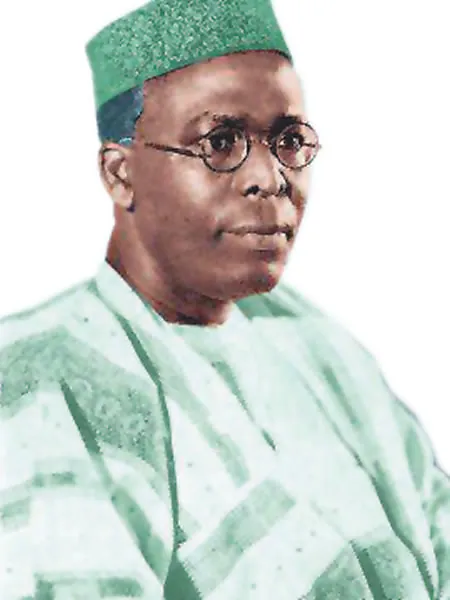
The Withering Baobab – A Requiem for Stolen Springs

0
The Nonagenarian President of Camerron, Paul Biya

The Iron Fist and the Hollow Crown

Paul Biya, that gnarled baobab, once cast a shadow vast and cruel,
His roots, deep in the soil of Cameroon, fed on forty winters of silenced dissent.
An iron fist, now rusted to dust, still clutches a sceptre of hollowed gold,
His mind, a fractured mirror, reflects only phantoms of forgotten yesteryears.

What monarch is this, whose throne is a gurney, whose sceptre a trembling cane?
A relic swaddled in ermine and delusion, propped up by puppeteers in Parisian silk,
France, the spectral hand behind the curtain, stitching his sinews to their colonial loom
A marionette king is dancing to a dirge, and only the empire still hums.

The Dementia of Power

Behold the tragedy: a man who cannot recall his breakfast, yet claims recall of a nation’s destiny.
His tongue, a wilted leaf, stumbles over syllables of statecraft;
His ears and seashells were drained of ocean, and he could not hear the roar of rivers begging for flood.
And still he rules,
A lighthouse stripped of light, guiding ships toward cliffs he no longer sees.

The Farce of Forever

Ninety-three orbits around the sun, yet he lingers,
A cassava root left too long in the earth, brittle, bitter, choking the soil.
The palace halls echo with the clatter of courtiers polishing his myth,
While outside, the youth, unshackled, furious, pound the gates with spring’s demand:
“How long will winter squat in the house of our dawn?”

Elegy for the Living Ghost

O Biya! Your epitaph writes itself in the cracks of your grip:
A reign that outlived its ruler, a nation gasping under the weight of your ghost.
You, who once named yourself “The Lion,” now a moth-eaten pelt in a museum of tyranny,
Guarded not by pride, but by vultures in suits, picking clean the bones of your legacy.

The Seed Beneath the Snow

But hark, beneath this permafrost of kleptocracy, a seed stirs.
Cameroon’s soil, though starved, still dreams in green.
The puppeteers’ strings will fray; the baobab’s fall will carve space for saplings.
For even the longest night must yield to the insolent persistence of dawn.

A Question Posed to the Wind

What is this man still doing here as President?
Ask not the senescent king, ask the fireflies mapping the forest’s rebellion.
Ask the rivers gnawing at dams. Ask the drumbeats in Douala’s dusk.
They’ll whisper the answer France fears:
“Winter’s host always overstays, but spring remembers its way home.”

NzeIkayMedia ✍️

Disclaimer: 

The designations employed in this publication and the presentation of materials herein do not imply the expression of any opinion whatsoever of the Publisher (Nze Ikay Media) or its employees concerning the legal status of any country, its authority, area, or territory or concerning the delimitation of its frontiers. Equally, the sketches, images, pictures, and videos are obtained from the public domain.
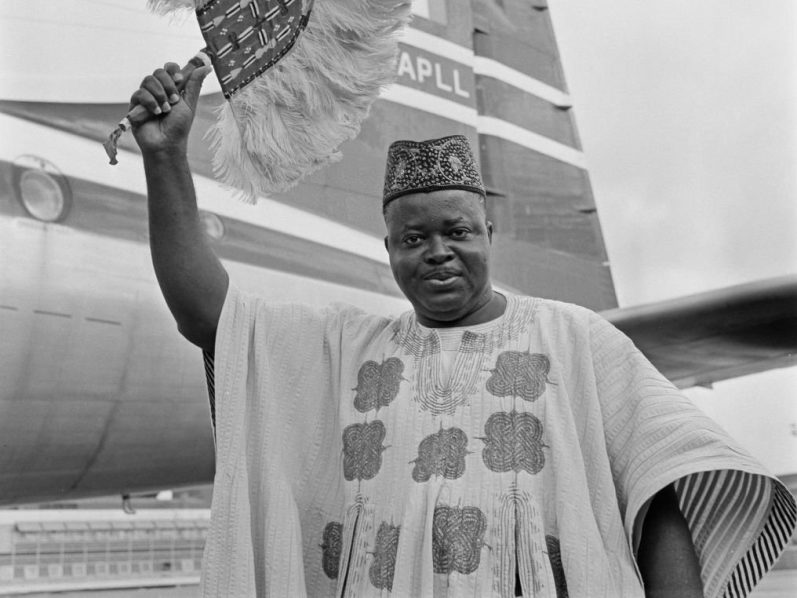
IT IS TIME TO DENATIONALIZE THE OWNERSHIP AND MANAGEMENT OF OIL AND GAS IN NIGERIA, IF SOLID MINERALS ARE NOT NATIONALIZED 

0
President Bola Ahmed Tinubu of Nigeria and His Vice President Shettimma

After more than fifty years of the nationalisation of the ownership and management of liquid minerals, particularly oil, and gas, it is time to change the policy and revert to the principle of derivation to stop the mismanagement, lack of accountability, lack of transparency, massive exploitation and embezzlement of the oil wealth. Nationalisation of mineral resources has been an abject failure since oil and gas are nationalised while solid minerals are not subjected to the same stringent standard of nationalisation in violation of the decrees, acts, and laws that Nigerian authorities have passed. 

It should be recalled that during the First Republic (1960 -1966), the principle of derivation was the principal means of owning, controlling, and managing mineral resources in the country. This meant that each region had the constitutional authority to explore and manage its resources and share a percentage of the revenue generated with the national government. As a result, the regions were able to utilise the wealth generated from their natural resources for the infrastructural and economic development of their regions. 

Perhaps, as an instrument of war to deprive Biafran authorities from gaining financially from the oil wealth as well to secure the oil wealth for the prosecution of the Nigerian civil war, the military regime of Gen. Yakubu Gowon initiated a policy change and nationalized the ownership and management of mineral resources, particularly oil and gas in the country. Gen. Olusegun Obasanjo and subsequent military regimes and civilian administrations followed suit with the policy of nationalisation. As a result, various regimes passed the following decrees and or acts: (1) The Oil in Navigable Waters Act of 1968; (2) The Petroleum Act of 1969; (3) The Oil Pipelines Act of 1969; (4) The Associated Gas Reinjection Act of 1969; (5)The Offshore Oil Revenue Decree of 1971; (6) The Petroleum Production and Distribution Act of 1975; (7) The establishment of the Nigerian National Petroleum Corporation on April 1, 1977 to control, regulate and manage petroleum and gas production in Nigeria; (8) The Exclusive Economic Zone Act of 1978; and (9) The Land Use Act of 1978. 

Most of these decrees were passed during the military regimes of Gen. Yakubu Gowon and Gen. Olusegun Obasanjo. The inhabitants of the Niger Delta/South-South and some sections of the Southeast zones lost ownership, control, and management of oil and gas in their zones as the Federal Government assumed total ownership, control, and management of the two major resources. The inhabitants of the oil region tolerated the change as far as the intention was to ensure the effective and efficient management of the resources as well as support the development and modernization of the infrastructure and the economy across the board without discrimination or favoritism. 

Perhaps, to ensure even-handedness and equity, the military under the caretaker regime of Lt. Gen. Abdulsalami Abubakar enacted the 1999 Constitution, which nationalised all minerals in the country. The constitution vested the ownership and control of Nigeria’s mineral resources in the Federal Government. Additionally, the Nigerian Minerals and Mining Act of 2007 was enacted to replace the Minerals and Mining Act #34 of 1999. It vested the ownership and control of solid minerals in the Federal Government. With this act, Nigeria completely nationalised the ownership and control of all minerals in the country. One of the conditions of this act is that “No person shall search for or exploit mineral resources in Nigeria or divert or exploit or impound water for mining except as provided in this act” (https://www.lawnigeria.com/LFN/N/Nigerian-Minerals-and-Mining-Act.php). 

Based on the principle of nationalisation, all minerals in the country are supposed to be owned, controlled, and managed exclusively by the Federal Government of Nigeria with no exception. However, the operationalisation or functionalization of total national ownership by the Federal Government has been problematic, resulting in massive exploitation, marginalization, deprivation, and discrimination against the nationalities in the oil region. Why? 

Because, while petroleum and gas are nationalised to the extent of rendering the rightful owners of the resources helpless and poor, solid minerals are not. As a result, individuals and cooperatives have been allowed by the Federal Government to mine solid minerals for decades without the authorities taking any decisive action to stop them. Evidently, individuals are allowed to mine solid minerals and earn income to take care of their families and enrich themselves in Adamawa, Bauchi, Benue, Bornu, Jigawa, Kaduna, Katsina, Kebbi, Kogi, Kwara, Nssarawa, Niger, Oyo, Osun, Plateau, Sokoto, Taraba, Yobe, and Zamfara states (Isenyo, 2016, April 7) while the citizens in Abia, Akwa Ibom, Bayelsa, Cross River, Delta, Edo, Imo, Ondo, and Rivers State cannot explore and refine oil to earn income to take care of their families and enrich themselves. 

As part of the double standard in nationalising mineral ownership in Nigeria, not until March 2024 did the Federal Government announce a plan to inaugurate mining marshals to combat the illegal mining of solid minerals in Nigeria (Idoko, 2024, March 2). On the other hand, the Federal Government deployed the Nigerian military in 2002 to secure the oil region for oil exploration. Thus, the Niger Delta/South-South is under military occupation while the solid minerals regions are not under military occupation. Even in 2025, the mining marshal’s plan has not been activated for private mining of solid minerals. 

Likewise, the wealth generated through oil and gas exploration from the Niger Delta/South-South has been primarily responsible for the infrastructural enhancement of Lagos, the development of Abuja from the ground up, the construction of major roads and railway lines in other parts of the country, the financial pipeline for maintaining and sustaining the national government, 36 states, and the Federal Capital Territory of Abuja for about five decades now. 

While Nigerians are told that all minerals belong to the Federal Government, most oil blocks are privatised and owned by highly connected individuals from the non-oil-producing regions, while the owners of the oil wealth are left to scramble to pick the crumbs (Eguzozie, 2021, August 2). This is why tension is always high in the oil region as the ethnic groups compete for the crumbs left behind by the looters who feast insatiably on the oil wealth. Even the Nigerian masses do not benefit from the oil wealth, contrary to the expectation that nationalisation would result in effective management of the oil wealth to the benefit of the entire country. 

In addition, most of the private wealth accumulated by individuals in Nigeria is generated from the oil and gas resources from the Niger Delta/South-South. They do so through the ownership of oil blocks, contracts, oil blending refineries, fuel imports, and the domination of the Nigerian National Petroleum Corporation Limited (NNPCL), and oil and gas companies. The sad part of the oil and gas business in Nigeria is that most of these privileged Nigerians who have commandeered the oil industry are from the non-oil-producing regions, while most Nigerians from the oil-producing region wallow in extreme poverty, neglect, and dehumanisation. 

Nigerians are told that oil and gas are national resources, yet a substantial part of the Nigerian National Petroleum Corporation Limited (NNPCL) has been privatised to the advantage of the few and the disadvantage of most Nigerians. The NNPCL, controlled by an invisible cabal, seems more powerful than the Federal Government to the extent that it does what it wants without accountability and transparency in its operations. 

While the Niger Delta/South-South lays the golden egg that maintains and sustains Nigeria, the region is utterly neglected in national infrastructural development and modernization projects. Hence, the East-West Road, the major transportation artery in the oil region, has been neglected by the Federal Government for decades. As a result, it is a death trap for the citizens of the oil region, especially during the rainy season when some sections of the road become impassable. While the oil region is neglected in infrastructural development, Nigeria spends the oil wealth massively on the infrastructural development of other regions and expects the citizens in the oil region to keep quiet, suffer, and smile in silence. 

All the major government agencies responsible for controlling, regulating, and managing oil and gas resources in Nigeria are dominated by Nigerians from the non-oil-producing regions. Most of the high-level positions in these agencies and corporations are held by Nigerians from the non-oil-producing regions. As a result, only a few individuals from the oil region gain employment in the oil industry, even though the industry is located in their region. 

All the major oil companies have their headquarters outside the oil region. This means that they pay taxes for their operations elsewhere and not to the oil-producing states. Thus, the Niger Delta/South-South is treated like a colony of Nigeria and not as part of Nigeria. Nigeria’s ruling elites exploit the resources of the region for the accumulation of their private wealth, the infrastructural development and modernization of their regions, and creating businesses in their regions to generate wealth while utterly neglecting the oil region. 

Since 1957 when commercially viable oil exploration began in Oloibiri in Bayelsa State and continuing up to the present day, Nigeria has never embarked on any measurable environmental cleaning operation of the massive oil pollution and gas flaring that have devastated the Niger Delta/South-South zone. Pollution has destroyed farmlands and fishing waters, thereby devastating the traditional economic activities of the people of the oil region. 

Additionally, the massive environmental pollution has led to the emergence of devastating medical conditions that afflict people with incurable diseases. The Federal Government seems unconcerned about the special health care needs of the inhabitants of the oil region as they bear the brunt of toxic chemicals generated by oil and gas operations. Due to gross negligence and corruption, even the Ogoni clean-up that the United Nations Environmental Program (UNEP) recommended is done haphazardly and disinterestedly. The only thing national decision-makers seem to care about is increasing the quantity of oil production to increase the wealth generated to offset foreign debts incurred through reckless borrowing and spending. 

The Federal Government militarily occupies the Niger Niger/South-South like a colonial power by stationing the Joint Task Force Operation Restore Hope (JTF) to prevent individuals from engaging in the refining of oil while the Federal Government is not interested in creating a JTF to prevent individuals from illegal mining of solid minerals. 

Indeed, the reckless exploitation of oil and gas in the oil region is an existential threat to the survival of the people of the Niger Delta/South-South. Therefore, the Federal Government should take the following steps to remedy the situation: 

1. Nationalise solid minerals the way oil and gas are nationalised. 

2. Establish the Nigerian National Solid Minerals Corporation (NNSMC) to carry out effective ownership, control, and management of solid minerals in the way oil and gas are owned, controlled, and managed through the Nigerian National Petroleum Corporation Limited (NNPCL). 

3. The Board of Directors of the NNSMCL must come from the six zones of the country. 

4. Establish a military Joint Task Force (JTF) to stop illegal mining of solid minerals the way illegal refiners are prevented from doing so in the Niger Delta/South-South. 

5. Revenue generated from the mining of solid minerals must go directly into the Federation Account. 

6. The funds must be shared in the way the oil wealth is shared through the Federation Account to the Federal Government, states, local governments, and the Federal Capital Territory. 

7. The Federal Government must set up a proactive pollution-cleaning program to clean the oil region. 

If these steps are not taken to nationalise solid minerals, then Nigeria must denationalise petroleum and gas. This means that the citizens of the oil region should be able to explore and refine petroleum the way Nigerians mine gold and other solid minerals. In other words, failure to operationalize the nationalization of solid minerals should result in automatic denationalization of oil and gas in the Niger Delta//South-South. This further means that if the Federal Government continues to look the other way and allows individuals and cooperatives to mine solid minerals, then the indigenes of the oil region should be allowed to explore and refine petroleum and gas. 

Indeed, Nigeria must stop the double standard in controlling, regulating, and managing mineral resources in the country. The double standard creates the impression that the oil region is a colony because the inhabitants of the region are not power-wielding groups in Nigeria and, hence deserve to be exploited and deprived of their natural rights to make use of resources in their territory while solid minerals are mostly found in the regions of the power-wielding groups, hence, the citizens of those regions can mine and create individual and family wealth from solid minerals exploration. 

NzeIkayMedia ✍️

Disclaimer: 

The designations employed in this publication and the presentation of materials herein do not imply the expression of any opinion whatsoever of the Publisher (Nze Ikay Media) or its employees concerning the legal status of any country, its authority, area, or territory or concerning the delimitation of its frontiers. Equally, the sketches, images, pictures, and videos are obtained from the public domain.
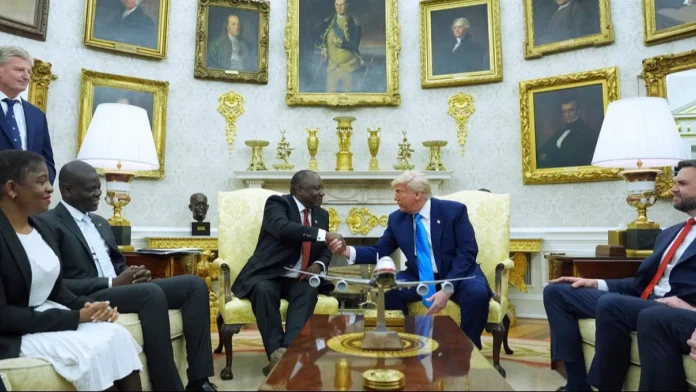
Why Isn’t Belgium’s King Leopold II As Reviled As Hitler Or Stalin?

0
Belgium’s King Leopold II

Though it’s difficult, it’s also crucial to view data about how many people Stalin killed with great empathy. Whether he killed six million or 60 million, each life meant something. They were not statistics, they were human beings murdered at the hands of a Soviet dictator. Belgium may not be the first European country that most people think of when they hear the words “blood-soaked colonial tyranny.” Historically, the little country has always been more famous for beer than epic crimes against humanity. But there was a time, at the peak of European imperialism in Africa, when Belgium’s King Leopold II ran a personal empire so vast and cruel, it rivaled and even exceeded the crimes of even the worst 20th-century dictators.

This empire was known as the Congo Free State, and Leopold II stood as its undisputed slave master. For almost 30 years, rather than being a regular colony of a European government, the way South Africa or the Spanish Sahara was, Congo was administered as the private property of one man for his enrichment. This world’s largest plantation was 76 times the size of Belgium, possessed rich mineral and agricultural resources, and had lost perhaps half of its population by the time the first census counted only 10 million people living there in 1924.

This is the horrifying story of King Leopold II and the Congo Free State.

King Leopold II Assumes The Throne And Sets His Sights On Africa. Nothing about Leopold II’s youth suggested a future mass murderer. Born the heir to Belgium’s throne in 1835, he spent his days doing all of the things a European prince would be expected to do before ascending to the throne of a minor state: learning to ride and shoot, taking part in state ceremonies, getting appointed to the army, marrying an Austrian princess, and so on. Leopold II took the throne in 1865, and he ruled with the kind of soft-touch Belgians expected from their king in the wake of the multiple revolutions and reforms that had democratized the country over the preceding few decades. Indeed, the young King Leopold really only ever put pressure on the senate in his (constant) attempts to get Belgium involved in building an overseas empire like all the bigger countries had. 

This became an obsession for Leopold II. He was convinced, like most statesmen of his time, that a nation’s greatness was directly proportional to the amount of lucre it could suck out of equatorial colonies, and he wanted Belgium to have as much as possible before other countries came along and tried to take it. First, in 1866, he tried to get the Philippines from Queen Isabella II of Spain. However, his negotiations collapsed when Isabella was overthrown in 1868. That’s when he started talking about Africa.

The Atrocities In The Belgian Congo Begin:

In 1878, Henry Stanley was presumed to have met Dr. Livingstone deep inside the Congo rainforest. The international press made both men out to be heroes – bold explorers in the heart of darkest Africa. What went unsaid in the breathless newspaper accounts of the two men’s famous expeditions is what they were doing in the Congo in the first place. A few years before the two expeditions met up, Leopold II had formed the International African Society to organize and finance exploration of the continent. Officially, this was a prelude to a kind of international philanthropic enterprise, in which the “benevolent” king would shower natives with the blessings of Christianity, starched shirts, and steam engines. 

Stanley and Livingstone’s expeditions composed a major part of opening up the rainforest to the king’s agents. This ruse that King Leopold II was working overtime to get Africans into heaven worked far longer than it should have, and the king’s claim to the ironically named “Congo Free State” was formally recognized at the Congress of Berlin in 1885. To be fair, it is possible that Leopold II, a fairly observant Belgian Catholic, really did want to introduce his new chattel to Jesus. But he did this in the most literal, and ruthless, way possible: by killing a huge number of them and making life generally unbearable for the rest as they labored to dig up gold, hunted to kill elephants for ivory, and hacked down their native forest to clear land for rubber plantations all over the country. 

The Belgian government lent Leopold II the necessary seed capital for this “humanitarian” project, and after he paid that debt off, literally 100 percent of the profits went straight to him. This was not a Belgian colony; it belonged to one man, and he seemed determined to squeeze every drop out of his fiefdom while he still could.

King Leopold II’s Vicious Rule Over The Congo Free State

Generally speaking, colonists needed to employ some form of violence to acquire and maintain control of the colonized, and the more exploitative the arrangements on the ground, the more violent the colony’s rulers had to be to get what they wanted. During the 25 years that the Congo Free State existed, it set a new standard for cruelty that horrified even the other imperial powers of Europe. The conquest started with Leopold bolstering his relatively weak position by making alliances with local powers. Chief among these was the Arab slave trader Tippu Tip. Tip’s group had a considerable presence on the ground and sent regular shipments of slaves and ivory down to the Zanzibar coast. This made Tip a rival to Leopold II, and the Belgian king’s pretense of ending slavery in Africa made any negotiation awkward. Nevertheless, Leopold II eventually appointed Tip as a provincial governor in exchange for his noninterference in the king’s colonization of the western regions. 

Tip used his position to ramp up his slave trading and ivory hunting, and the generally anti-slavery European public brought pressure on Leopold II to break it off. The king eventually did this in the most destructive way possible: he raised a proxy army of Congolese mercenaries to fight against Tip’s forces all over the densely populated areas near the Great Rift Valley. After a couple of years and an impossible-to-estimate death toll, they expelled Tip and his fellow Arab slavers. The imperial double-cross left Leopold II in complete control. With the field cleared of rivals, King Leopold II reorganized his mercenaries into a ruthless group of occupiers called the Force Publique and set them to enforce his will across the colony. 

Every district had quotas for producing ivory, gold, diamonds, rubber, and anything else the land had to give up. Leopold II handpicked governors, each of whom he gave dictatorial powers over their realms. Each official was paid entirely by the commission and thus had great incentive to pillage the soil to the maximum of his ability. Governors press-ganged huge numbers of native Congolese into agricultural labour; they forced an unknown number underground, where they worked to death in the mines. These governors, vis-à-vis the labour of their slave workers, looted Congo’s natural resources with industrial efficiency. 

They slaughtered ivory-bearing elephants in massive hunts that saw hundreds or thousands of local beaters driving game past a raised platform occupied by European hunters armed with half a dozen rifles each. Hunters used this method, known as a battue, extensively in the Victorian Period, and it was scalable such that it could empty a whole ecosystem of its large animals.

Under the reign of Leopold II, the Congo’s unique wildlife was fair game for sport killed by almost any hunter who could book passage and pay for a hunting license. Elsewhere, violence took place on rubber plantations. These establishments take a lot of work to maintain, and rubber trees can’t grow on a commercial scale in an old-growth rainforest. Clear-cutting that forest is a big job that delays the crop and cuts into profits. To save time and money, the king’s agents routinely depopulated villages, where most of the clearance work had already been done, to make room for the King’s cash crop. By the late 1890s, with economic rubber production shifting to India and Indonesia, the destroyed villages were simply abandoned, with their few surviving inhabitants left to fend for themselves or make their way to another village deeper in the forest.

The greed of the Congo’s overlords knew no boundaries, and the lengths to which they went to gratify it were likewise extreme. Just as Christopher Columbus had done in Hispaniola 400 years earlier, Leopold II imposed quotas on every man in his realm for the production of raw materials. Men who failed to meet their ivory and gold quota even once would face mutilation, with hands and feet being the most popular sites for amputation. If the man could not be caught, or if he needed both hands to work, Forces Publique men would cut the hands off of his wife or children.

The Outside World Takes Notice Of The Horrors In The Congo

The king’s appalling system began to take its toll on a scale unheard of since the Mongol rampage across Asia. Nobody knows how many people lived in the Congo Free State in 1885, but the area, which was three times the size of Texas, may have had up to 20 million people before colonisation. At the time of the 1924 census, that figure had fallen to 10 million. Central Africa is so remote, and the terrain is so difficult to travel across, that no other European colonies reported a major refugee influx. Perhaps 10 million people who disappeared in the colony during this time were most likely dead. No single cause took them all. Instead, the World War I-level mass death was mostly the result of starvation, disease, overwork, infections caused by mutilation, and outright executions of the slow, the rebellious, and the families of fugitives. 

Eventually, tales of the nightmare unfolding in the Free State reached the outside world. People railed against the practices in the United States, Britain, and the Netherlands, all of which coincidentally owned large rubber-producing colonies of their own and were thus in competition with Leopold II for profits. 

By 1908, Leopold II had no choice but to cede his land to the Belgian government. The government introduced some cosmetic reforms right away – it became technically illegal to randomly kill Congolese civilians, for example, and administrators went from a quota-and-commission system to one in which they received pay only when their terms ended, and then only if their work was judged “satisfactory.” The government also changed the colony’s name to the Belgian Congo. And that’s about it. Whippings and mutilations continued for years in the Congo, with every penny in profits siphoned out until independence in 1971. 

The Lasting Legacy Of Leopold II’s Brutality

Just as many adults have a hard time overcoming a bad childhood, the Democratic Republic of Congo is still coping with trauma directly inflicted by the rule of King Leopold II. The corrupt commissions and bonus system Belgium put in place for colonial administrators stayed after the Europeans left, and Congo hasn’t had an honest government yet. The Great African War swept over the Congo during the 1990s, killing perhaps 6 million people in the biggest bloodletting since World War II. This struggle saw the Kinshasa government overthrown in 1997, with an equally bloodthirsty dictatorship put in its place. Foreign countries still own virtually all of Congo’s natural resources, and they guard their extraction rights with UN peacekeepers and hired paramilitaries. Virtually everybody in the country lives in desperate poverty, despite living in what is (per square mile) the most resource-rich country on Earth.

The life of a modern citizen of the DRC sounds like what you’d expect for a society that’s just survived a nuclear war. Relative to Americans, Congolese people:

  • Are 12 times more likely to die in infancy.
  • Have a life expectancy of 23 years shorter.
  • Make 99.24% less money.
  • Spend 99.83% less on health care.
  • Are 83.33% more likely to be HIV-positive.

Leopold II, king of the Belgians and for a time the world’s largest landowner, died peacefully on the 44th anniversary of his coronation in December 1909. He is remembered for his large bequests to the nation and the graceful buildings he commissioned with his own money.

NzeIkayMedia ✍️

Disclaimer: 

The designations employed in this publication and the presentation of materials herein do not imply the expression of any opinion whatsoever of the Publisher (Nze Ikay Media) or its employees concerning the legal status of any country, its authority, area, or territory or concerning the delimitation of its frontiers. Equally, the sketches, images, pictures, and videos are obtained from the public domain.

Bloodlines and Battle Lines: How Davido’s Defiance Exposes Nigeria’s Manufactured Ethnic Fractures

1
Davido gave him the best answer by not only rejecting and shutting him up outright but by telling him that and I quote “lol I AM IGBO by blood” what an answer!

The Incident: A Tweet, A Tremor, A Mirror

When @Yakbel hurled his venomous tweet at Davido, a man whose veins carry both Yoruba and Igbo heritage, he did not merely type words. He struck a match in a forest soaked in generational gasoline. The message, dripping with a disease known as “Igbophobia,” was not just an attack on a people but a grotesque unveiling of Nigeria’s festering wound: the politicisation of identity. Davido’s response, “lol I AM IGBO by blood,” was more than a clapback—it was a seismic refusal to be trapped in the binary cages of the tribe. In four words, he exposed the absurdity of reducing human worth to ancestral coordinates.

Yet here we are. A nation where ethnicity has been weaponised like machetes in a war of attrition, where the young, born into a digital age of infinite connection, mimic the prejudices of their forebears with hashtag ferocity. How did we arrive here?

The Anatomy of Division: A Virus Older Than the Nation

Ethnic hatred in Nigeria is not organic; it is engineered. Like termites hollowing a mighty Iroko, political elites have spent decades gnawing at our unity to feast on the rot. The Buhari era institutionalised this divide, governing not with policy but with parochialism, rewarding loyalty not to the flag but to the feudal fiefdom. Tinubu’s administration, far from dousing the flames, now fans them with the bellows of entitlement, governance as a family heirloom, citizenship as a caste system.

But this is not merely about politicians. It is about a system that thrives on fractured solidarity. When a Yoruba youth spews hate against an Igbo neighbour, he is not speaking his truth; he is regurgitating a script written by kleptocrats in Aso Rock. The Igbo trader, distrusting his Hausa customer, is performing a play directed by men in Agbadas, laughing over stolen billions. Ethnic tension is the smokescreen; looting is the spectacle.

Davido: The Unlikely Metaphor

Enter David Adedeji Adeleke, “Davido” or “001” as he is fondly called by his fans, a man whose very existence defies the tribal arithmetic. Son of a Yoruba patriarch, grandson of an Igbo matriarch, a global superstar with a Lagos hustle and an Atlanta swagger. When @Yakbel tried to paint him into a tribal corner, Davido laughed. Not the laughter of dismissal, but of revelation: “I AM IGBO by blood.” At that moment, he became a living metaphor for Nigeria’s stifled potential, a nation that could be symphonic in its diversity but chooses instead to be cacophonic in its discord.

His defiance mirrors a quiet revolution brewing among Nigeria’s youth. For every @Yakbel, there are thousands silently rejecting the poison. They dance to Burna Boy’s Afrobeat fusion, wear Ankara designs blending Shokoto patterns with Onitsha motifs, and fall in love across the Niger and Benue. Yet, the loudest voices, the trolls, the bigots, the politically indoctrinated, still dominate the narrative, mistaking noise for numbers.

The Youth Paradox: Digital Natives, Analogue Prejudices

It is nauseating, yes, that millennials and Gen Z, raised on TikTok and VPNs, still cling to 20th-century tribalisms. But let us dissect this paradox. When a 22-year-old tweets hate, ask: Who owns the media he consumes? Who profits from his rage? Who designed the educational system that taught him history as a chronicle of ethnic conquests, not collective triumphs?

The answer is a cabal of political dinosaurs fossilising their power by keeping the young divided. A generation that should be united against failed elders, 40% unemployment, dead grids, and deadlier cops, is instead squabbling over whose ancestors drank from which river. It is a distraction from governance.

The Way Forward: Rewriting the Code

Davido’s clapback is a microcosm of the cure. When identity becomes fluid, not a cage but a mosaic, the architects of division lose their blueprints. Imagine a Nigeria where your surname isn’t a risk assessment, where merit outmuscles federal character, where a “Yoruba boy” frolicking with Igbos isn’t headline-worthy but mundane.

This demands more than hashtag solidarity. It requires:

1. A Systemic Rebirth: Dismantle the quota system. Replace “federal character” with “federal competence”.

2. Education as Liberation: Teach history as a shared struggle, not tribal glories. Let children learn that the Ekumeku resisted colonialism alongside the Sokoto Caliphate.

3. Art as Armour: Amplify voices like Davido, Burna Boy, and Chimamanda, cultural bridges drowning out the drumbeats of division.

4. Political Annihilation: Vote not for the tribe but for the vision. Starve ethnic warlords of power.

Finally, The Blood That Binds

Nigeria’s ethnic divide is not a curse; it is a construct. A lie sold to keep us begging for crumbs while thieves banquet. Davido, by declaring his Igbo blood, did not just silence a troll; he spotlighted the fraud. We are all, in some way, genetic cocktails of this land’s chaos and beauty.

The fight isn’t Igbo vs. Yoruba vs. Hausa vs Fulani, etc. It is the oppressed vs. the oppressor. The 99% vs. the 1% who’ve turned the tribe into a trademark. Let us reclaim our plurality as power. Let our battle cry be Davido’s chuckle, a laugh so defiant it shakes the foundations of every divide.

When will we learn? Perhaps when we realise: that the only tribe that matters is the tribe of the hungry, the cheated, the resilient. The tribe is called Nigerians. Nigeria is a pot of pepper soup, a million flavours in one broth. No one asks if the pepper is Yoruba or the fish is Igbo. We simply devour it, fire and all.

NzeIkayMedia ✍️

Disclaimer: 

The designations employed in this publication and the presentation of materials herein do not imply the expression of any opinion whatsoever of the Publisher (Nze Ikay Media) or its employees concerning the legal status of any country, its authority, area or territory or concerning the delimitation of its frontiers. Equally, the sketches, images, pictures and videos are gotten from the public domain.

Luxury, Scandal, and Subpoenas: Abuja Socialite Aisha Achimugu Under EFCC Siege in $150M Fraud Storm

0
Abuja Socialite Aisha Achimugu

Nigerian socialite Aisha Achimugu, once celebrated for her opulent week-long birthday bash on Grenada’s exclusive Calivigny Island at $132,000 per night, now finds herself at the center of a sprawling financial scandal. The Economic and Financial Crimes Commission (EFCC) has launched a high-stakes probe into the businesswoman, alleging her involvement in a $150 million fraud web linked to illicit petroleum deals and a collapsed Ponzi scheme.

The Allegations: Offshore Deals and Phantom Investments
According to EFCC court filings, Achimugu allegedly funneled $25.3 million of “unexplained origin” through bureau de change operators to acquire two offshore petroleum blocks (PPL 3007 and PPL 302-DO) in 2024, while bribing officials at the Nigerian Upstream Petroleum Regulatory Commission (NUPRC). The regulator denies misconduct, though the blocks remain inactive.

A second thread of the investigation ties her to MBA Trading and Capital Investment, a Ponzi scheme that defrauded investors of N200 billion ($125 million). Prosecutors claim Achimugu’s companies, Felak Concept Group and Oceangate Engineering Oil and Gas, received N4 billion from MBA Trading in 2020. The EFCC has traced 136 bank accounts across 10 lenders linked to her, alongside a March 2024 raid on her Abuja mansion that uncovered N30 million in cash, $50,000, and boxes of gold, silver, and diamonds valued at over N1 billion.

Lavish Lifestyle Meets Legal Firestorm
Achimugu’s flamboyant persona first drew public ire in January 2024 when she hosted a celebrity-studded birthday extravaganza, flaunting Hermès bags worth $80,000 and orchestrating private jet transfers for guests. Three weeks later, the EFCC summoned her. After a single interrogation, she departed Nigeria, ignoring a February 2025 follow-up. By March, the agency declared her wanted, though extraditing her from abroad—where she’s believed to be—poses challenges for Nigeria’s oft-criticized judicial system.

Defiance and Defense
Widowed in 2020 after her husband, Suleiman, became Nigeria’s first COVID-19 fatality, Achimugu denies all charges. Her legal team dismisses the EFCC’s claims as a “fishing expedition,” insisting her wealth stems from “legitimate commerce.” In April 2025, she filed a lawsuit to halt her arrest and reclaim seized assets, with a hearing slated for May.

A Test for Nigeria’s Anti-Graft Crusade
The case underscores the uphill battle faced by EFCC Chairman Ola Olukoyede, who seeks to rejuvenate the agency’s reputation amid Nigeria’s endemic corruption. For thousands defrauded by MBA Trading and a public weary of elite impunity, the probe represents a pivotal moment—will it culminate in accountability or dissolve into judicial gridlock?

As Achimugu vows to “clear her name,” the world watches: a tale of glittering excess now shadowed by the grim specter of justice.

NzeIkayMedia ✍️

Disclaimer: 

The designations employed in this publication and the presentation of materials herein do not imply the expression of any opinion whatsoever of the Publisher (Nze Ikay Media) or its employees concerning the legal status of any country, its authority, area or territory or concerning the delimitation of its frontiers. Equally, the sketches, images, pictures and videos are gotten from the public domain.

Justice Njideka Nwosu-Iheme: The Jurist Who Delivered Landmark Justice in Osinachi’s Tragic Saga

0
Justice Njideka Nwosu-Iheme of the Federal High Court FCT, Abuja

In a historic ruling that reverberated across Nigeria, Justice Njideka Nwosu-Iheme of the Federal High Court in Abuja sentenced Peter Nwachukwu, husband of the late gospel icon Osinachi Nwachukwu, to death by hanging on April 29, 2025. The verdict marked the culmination of a three-year legal battle, finding Nwachukwu guilty of culpable homicide in the tragic death of his wife, whose passing in April 2022 had sparked nationwide outrage and renewed calls to address domestic violence.

A Legacy of Legal Excellence
Born into a family steeped in Nigeria’s judicial and political landscape, Justice Nwosu-Iheme is the daughter of Dr. Peter Odili, former Governor of Rivers State, and Justice Mary Odili, a retired Supreme Court luminary. Raised in Rivers State, she pursued a legal career that saw her called to the bar after studies at the Nigerian Law School. Though she guards her personal life closely—a stark contrast to her media-visible mother—her professional trajectory reflects a commitment to upholding justice.

Ascending the Bench
Sworn in as a Federal Capital Territory High Court judge in November 2021 by then-Chief Justice Ibrahim Tanko Muhammad, Nwosu-Iheme swiftly distinguished herself through meticulous adjudication. Her marriage to Uzoma Nwosu-Iheme, son of appellate court Justice Chioma Nwosu-Iheme, further intertwines her with Nigeria’s judicial dynasties—a fact that drew scrutiny during her appointment. Critics alleged nepotism, citing her elite familial ties, but the National Judicial Council upheld her selection, affirming her qualifications.

A Defining Verdict
The Osinachi case became a litmus test for Nigeria’s judiciary. Osinachi’s death, initially shrouded in silence, unraveled allegations of prolonged abuse, galvanizing public demand for accountability. Justice Nwosu-Iheme’s rigorous examination of evidence and unflinching verdict earned both acclaim and controversy, solidifying her reputation as a jurist unswayed by external pressures.

Quiet Authority in a Public Sphere
Despite her prominence, Nwosu-Iheme remains an enigma—a figure who shuns the spotlight yet commands respect in courtrooms. Her reserved demeanor contrasts with her mother’s public profile, yet her rulings speak volumes. As she steps into the legacy of her retired mother, her career underscores a blend of inherited excellence and individual resolve.

The Osinachi ruling, now etched in Nigeria’s legal history, stands as a testament to Justice Nwosu-Iheme’s fortitude. In a nation where high-profile cases often test judicial integrity, her verdict not only delivered closure to a grieving public but reaffirmed the judiciary’s role as a pillar of societal justice.

NzeIkayMedia ✍️

Disclaimer: 

The designations employed in this publication and the presentation of materials herein do not imply the expression of any opinion whatsoever of the Publisher (Nze Ikay Media) or its employees concerning the legal status of any country, its authority, area or territory or concerning the delimitation of its frontiers. Equally, the sketches, images, pictures and videos are gotten from the public domain.

West in the Shadows: The Alleged Franco-British Blueprint for Nigeria’s 2027 Political Upheaval

0
French/British Government Plan For Nigeria In 2027 Exposed

A seismic geopolitical maneuver is reportedly unfolding in Nigeria, with French and British interests allegedly conspiring to destabilize President Bola Tinubu’s government and install a Fulani-led administration by 2027. This clandestine strategy, purportedly designed to reclaim waning European influence in West Africa, hinges on leveraging regional unrest, jihadist networks, and Tinubu’s eroded trust with Western powers.

Tinubu’s Fall from Grace
Once hailed as a key ally, Tinubu’s refusal to spearhead a French-backed military intervention in Niger—despite initial pledges—reportedly cost him Western favor. His subsequent diplomatic overtures to France and Britain, including an unproductive visit to Paris and London, allegedly confirmed his exclusion from their revised agenda. Sources claim European powers now view Tinubu as a liability, pivoting instead to orchestrate his ouster through orchestrated chaos.

The Fulani Gambit
Central to the alleged plot is the exploitation of Fulani militant networks. According to intelligence leaks, French and British operatives have allegedly greenlit a campaign to escalate insecurity via jihadist factions and herdsmen-linked violence. The goal? Render Tinubu’s government untenable, mirroring the public disillusionment that toppled former President Goodluck Jonathan in 2015. Recent kidnappings and attacks, once dismissed as random, are now framed as calculated steps to destabilize Nigeria ahead of the 2027 polls.

ECOWAS as a Pawn
Should a Fulani-aligned leader ascend, plans allegedly include weaponizing ECOWAS to wage war against Niger, Mali, Burkina Faso, and Chad—nations that expelled French forces post-Russian intervention. France, desperate to regain access to Sahelian resources, and Britain, wary of losing its Nigerian stronghold, reportedly see a pliant Fulani presidency as their conduit.

A Region on the Brink
The fallout could extend beyond Nigeria’s borders. Analysts warn that a European-backed Fulani takeover might ignite not only domestic strife but also cross-border conflicts, destabilizing West Africa further. France’s hunger for resource control and Britain’s fear of replicating France’s Sahelian decline are cited as twin motivators.

Tinubu’s Dilemma and a Proposed Escape Route
With trust fractured, Tinubu faces mounting pressure to recalibrate. Some insiders urge reconciliation with Nigeria’s Southeast, including the release of detained separatist leader Mazi Nnamdi Kanu, to counterbalance Fulani-Western alliances. Yet, skepticism abounds: can regional appeasement offset a shadow war backed by foreign intelligence?

Whispers in the Halls of Power
While these claims circulate among Nigeria’s elite, they remain unverified—a tapestry of conjecture and unnamed sources. Top officials reportedly acknowledge the rumors but lack actionable proof. For ordinary citizens, the narrative underscores a chilling reality: Nigeria’s sovereignty may again be collateral in a global power play.

As 2027 looms, the nation watches, waits, and wonders: will external machinations dictate its fate, or can Tinubu outmaneuver the storm? One truth is clear—the stakes for West Africa have never been higher.

NzeIkayMedia ✍️

Disclaimer: 

The designations employed in this publication and the presentation of materials herein do not imply the expression of any opinion whatsoever of the Publisher (Nze Ikay Media) or its employees concerning the legal status of any country, its authority, area or territory or concerning the delimitation of its frontiers. Equally, the sketches, images, pictures and videos are gotten from the public domain.

TINUBU’S GRAND CHESSBOARD – THE RUTHLESS CALCULATIONS FOR 2027

0
TINUBU’S GRAND CHESSBOARD - THE RUTHLESS CALCULATIONS FOR 2027

The Tinubu-Wike alliance is not a political partnership; it is an unholy merger of ambition and ruthless pragmatism. Together, they have reduced Nigerian politics to a zero-sum, winner-takes-all game – a dangerous, short-sighted strategy that threatens democracy, economic stability, and national cohesion.

But while Wike plays the game for relevance, Tinubu is operating at an entirely different level. His moves are not reactionary; they are premeditated and calculated. Unlike his political allies and opponents, Tinubu does not play for survival – he plays for absolute control.

What is his endgame? How does he intend to manipulate 2027? What will be the consequences for Nigeria?

This is not just a battle for power; it is a battle for the soul of Nigeria. And if history has taught us anything, it is that unchecked ambition often leads to self-destruction.

The Tinubu Strategy – A Blueprint for Domination

Tinubu’s tactics are not about governance; they are about control. His strategic blueprint is built on economic subjugation, institutional capture, and political infiltration:

1. Crashing the Economy for Absolute Control.

By deliberately devaluing the Naira, removing subsidies recklessly, and imposing unbearable taxes, Tinubu has made every Nigerian dependent on his system for survival.

State governors, federal legislators, and private sector elites must now align with him or risk financial ruin.

2. Installing Loyalists Across Every Arm of Government.

a. Judiciary? Under his grip.
b. National Assembly? Reduced to a rubber stamp.
c. Security agencies? Headed by his allies.

3. Orchestrating the Systematic Demolition of Opposition Parties

a. PDP? Destroyed from within through Wike and other defectors.
b. Labour Party? Kept under constant pressure, while Peter Obi faces relentless sabotage.
c. NNPP? Confined to Kano, without a national structure.

4. Mastering Electoral Manipulation

a. The Edo election was a test run – a shameless demonstration of rigging that no serious president should associate with.
b. The 2027 election will not be a fair contest – it will be a battle of who controls the electoral umpire, the judiciary, and the security apparatus.

5. Weaponizing the Rivers State Crisis

a. By keeping Rivers in a permanent state of turmoil, Tinubu ensures that the state remains ripe for manipulation in 2027.
b. Wike may think he is playing a masterstroke, but he is just another pawn in Tinubu’s game.

Clearly, Tinubu is not a political pawn. But his biggest miscalculation may lie in his overconfidence – in believing that Nigeria is incapable of resisting him.

2027 – The Unfolding Battle for Nigeria’s Future

The 2027 election is already being shaped by political realignments, economic realities, and regional power shifts. But Tinubu is not as invincible as he thinks.

1. The Northern Revolt – A Silent Uprising

Tinubu’s economic destruction has alienated the Northern masses, who now see him as the architect of their suffering and poverty.

• The North was patient with Buhari’s failures, believing he was their own. But they do not see Tinubu as their own.
• El-Rufai’s SDP strategy is a potential time bomb. The former Kaduna governor is a political genius with a history of organizing power blocs.
• Kashim Shettima’s recent frustrations signal a deeper Northern discontent that could translate into a full-blown rebellion against Tinubu in 2027.

The APC brand is beyond redemption in the North, while PDP is a lifeless corpse. But if El-Rufai orchestrates a new broad based and serious coalition, Tinubu will face a formidable opponent from the very region that propelled him into power.

2. The Igbo Factor – A Political Wildcard

The Southeast is not playing Tinubu’s game. Unlike in the past, where politicians like Orji Uzor Kalu and Rochas Okorocha could be used as political middlemen, the dynamics have changed:

• Soludo and Umahi are isolated figures, incapable of influencing Igbo voters.
• Governor Alex Otti is focusing on governance, not national politics – which, by the way, is the most responsible politics deserving for the Southeast circumstance in the current Nigerian reality.
• The Igbo masses remain overwhelmingly loyal to Nnamdi Kanu and Peter Obi.

Even if by another acrobatics the Southeast is deprived the next president in 2027, it will play a crucial role in deciding who wins. And Tinubu is not their choice.

3. The South-South – The Ultimate Battleground

If there is any region Tinubu must win, it is the South-South. And that is why Rivers State is at war.

• Wike believes he owns the South-South, but his grip is slipping.
• Tinubu needs Rivers to remain unstable, so he can manipulate the electoral process.
• The people of the South-South are beginning to see through the political deception, realizing that Wike is merely a pawn for a larger power grab.

The question is; Will the South-South resist, or will it be bought over once again?

The Real Enemy – The Nigerian People’s Apathy

For all of Tinubu’s calculations, his greatest weapon is not Wike, the judiciary, or the economy – it is the people’s own indifference.

• If Nigerians remain passive, Tinubu will win.
• If Nigerians wait until 2027, the election will be rigged beyond reversal.
• If Nigerians expect the judiciary to save their democracy, they will be disappointed.

The only way to stop the creeping autocracy is for Nigerians to act now:

• Demand electoral reforms immediately, not after the rigging has taken place.
• Resist suppression of free speech and opposition voices – a silenced people can never change their government.
• Engage in active political participation – not just through voting, but through sustained civic action.

This is not just about Tinubu – it is about the survival of Nigerian democracy.

A Dangerous Game with Uncertain Outcomes

Tinubu is not a fool – he is a grandmaster of political strategy. But his ultimate goal remains unknown. Whatever it is, it is bound to be insidious.

Yet, his greatest mistake may be his deceptive, nepotistic, exclusivist, and arrogant strategy.

• He is alienating the North.
• He is underestimating the Igbo factor.
• He is gambling with the South-South.
• He is pushing Nigerians to a breaking point.

This is why ordinary Nigerians must demand accountability now. They cannot afford to wait until 2027, when the game will already be rigged beyond reversal.

If Nigerians fail to resist now, Tinubu’s political experiment will succeed – and democracy, as we know it, will be gone.

NzeIkayMedia ✍️

Disclaimer: 

The designations employed in this publication and the presentation of materials herein do not imply the expression of any opinion whatsoever of the Publisher (Nze Ikay Media) or its employees concerning the legal status of any country, its authority, area or territory or concerning the delimitation of its frontiers. Equally, the sketches, images, pictures and videos are gotten from the public domain.

Genevieve Nnaji – The Self-Made Icon Who Proves Education Is Beyond Certificates

0
Genevieve Nnaji - The Self-Made Icon Who Proves Education Is Beyond Certificates
A Star Beyond Academia

In a world obsessed with degrees and titles, Genevieve Nnaji stands as a living testament to the fact that true education transcends the walls of a classroom. Though her formal schooling ended at the secondary level, her intellect, eloquence, and business acumen dwarf that of many who parade university certificates. Two years ago, when she openly disclosed that she never attended a university, it sent a powerful message: Success is not handed to you by a certificate—it is built through curiosity, discipline, and relentless self-improvement.

Early Life: The Making of a Legend

Born on May 3, 1979, in Mbaise, Imo State, Genevieve Nnaji began her acting career at just eight years old in the then-booming Nigerian television soap opera “Ripples”. By her teenage years, she had already become a household name, transitioning seamlessly into Nollywood in the late 1990s. Unlike many of her peers who pursued higher education, Genevieve chose a different path—the school of life, experience, and self-education.

The Rise of Nollywood’s Queen

Genevieve didn’t just act; she redefined Nollywood. With over 200 films to her credit, she became the face of the industry, earning the nickname “The Julia Roberts of Africa.” Her performances in classics like “Sharon Stone,” “Blood Sisters,” and “Road to Yesterday” showcased a depth of talent that made her a continental sensation.

But her genius wasn’t limited to acting. In 2015, she launched her fashion line, “St. Genevieve,” catering to Africa’s elite. Then, in 2018, she made history with “Lionheart,” Nigeria’s first-ever Netflix Original film and the country’s first submission for the Oscars in the Best International Feature Film category. Though controversially disqualified for having too much English dialogue, the film cemented her legacy as a visionary filmmaker.

The Millionaire Mindset: Wealth Beyond Acting

Today, Genevieve Nnaji is not just the richest actress in Nigeria—she is a multi-millionaire in dollars, with investments spanning real estate, fashion, and film production. Her net worth, estimated at $10 million, places her in a league of her own. More impressive than her wealth, however, is her intellectual wealth—her ability to engage deeply on global issues, arts, and business, proving that reading, not just schooling, shapes the mind.

Why Many Graduates Can’t Match Her Wisdom

In an era where many so-called graduates can’t string together a coherent argument, Genevieve speaks with the precision of a seasoned orator. Her interviews reveal a woman who reads voraciously, thinks critically, and articulates flawlessly. This raises a critical question: How many certified graduates today can hold an intelligent conversation outside their field?

A generation that doesn’t read is doomed to repeat its mistakes—especially in leadership. Nigeria’s cycle of bad governance is partly fueled by a populace that prioritizes paper qualifications over knowledge. Genevieve’s life is a lesson: Formal education is valuable, but self-education is POWER.

The Legacy of a Self-Taught Phenomenon

Genevieve Nnaji’s journey is a masterclass in reinvention, resilience, and relentless self-development. She didn’t need a university to teach her how to think—she taught herself. In a country where many chase certificates without acquiring knowledge, her story is a wake-up call.

True education isn’t about where you studied—it’s about how much you’ve learned. And in that regard, Genevieve Nnaji is one of the most educated minds of our time.

NzeIkayMedia ✍️

Disclaimer: 

The designations employed in this publication and the presentation of materials herein do not imply the expression of any opinion whatsoever of the Publisher (Nze Ikay Media) or its employees concerning the legal status of any country, its authority, area or territory or concerning the delimitation of its frontiers. Equally, the sketches, images, pictures and videos are gotten from the public domain.

Omoyele Sowore’s Descent into Tinubu’s Propaganda Machine – A Desperate Smear Campaign Against Peter Obi

17
Labour Party presidential Candidate, Mr Peter Obi and the Omoyele Sowore
On the left is the 2023 Labour Party presidential Candidate, Mr Peter Obi and the Omoyele Sowore

The political landscape in Nigeria has always been a battleground of ideologies, integrity, and, unfortunately, malicious propaganda. In recent times, one figure who has shockingly transitioned from a self-styled “revolutionary” to what now appears to be a willing attack dog for the establishment is Omoyele Sowore. Once a vocal critic of bad governance, Sowore has now taken on the role of a relentless smear merchant against Mr. Peter Obi, the former Anambra State governor and 2023 Labour Party presidential candidate.

The Tinubu Factor – Why Sowore Has Turned Against Peter Obi

It is no secret that President Bola Tinubu views Peter Obi as the most potent opposition figure ahead of the 2027 elections. Obi’s rising influence, grounded in his frugality, accountability, and mass appeal among Nigerian youths, poses a significant threat to Tinubu’s political survival. Recognizing this, the Tinubu administration has resorted to proxy warfare, recruiting once-independent voices like Sowore to launch ceaseless, baseless attacks against Obi.

Sowore’s sudden obsession with Obi—a man he once ignored—reeks of a coordinated agenda. His recent fabrications, including the laughable claim that Obi travels with 10 Toyota SUVs, are not just petty lies but deliberate attempts to tarnish Obi’s hard-earned reputation as a modest and prudent leader.

From “Third Force” to Tinubu’s Attack Dog – Sowore’s Political Betrayal

In 2022, Sowore fancied himself as the face of Nigeria’s “third force,” oblivious to the fact that Peter Obi was building a genuine grassroots movement, the “Obidients” that would eclipse his own ambitions. This rejection, coupled with his dwindling political relevance, has left Sowore bitter and vulnerable. Now, instead of holding the government accountable, he has chosen the path of mercenary journalism, peddling falsehoods to please his new paymasters.

Peter Obi’s Unshakeable Legacy vs. Sowore’s Hypocrisy

Those familiar with Peter Obi’s record know that as governor, he rejected extravagant convoys, using just five Peugeot 406 cars —a stark contrast to the obscene wastage of today’s leaders. Even as a private citizen, Obi maintains a frugal lifestyle, yet Sowore—who once claimed to fight corruption—now spends his energy spreading lies instead of asking the following pertinent questions:
– Why does Tinubu’s convoy guzzle billions in taxpayer funds?
– Why do state governors loot their treasuries to buy armored SUVs while hospitals crumble?
– Why has Sowore abandoned his revolutionary stance to become a megaphone for the establishment?

Nigerians Must See Through the Smear Campaign

Sowore’s descent into a hired propagandist is a tragic betrayal of the principles he once claimed to uphold. His attacks on Obi are not driven by facts but by political vendetta and financial incentives. Nigerians must see through this charade and recognize that Peter Obi remains the most credible alternative to the current failed leadership.

The real question is: If Sowore is truly a man of the people, why is he no longer attacking those in power but instead targeting the man who represents their greatest fear—Peter Obi? The answer is clear: He is no longer a fighter; he is now a tool in the hands of desperate politicians.

Nigerians must resist these distractions and focus on demanding accountability from those in power, not falling for the diversionary tactics of compromised voices like Sowore.

NzeIkayMedia ✍️

Disclaimer: 

The designations employed in this publication and the presentation of materials herein do not imply the expression of any opinion whatsoever of the Publisher (Nze Ikay Media) or its employees concerning the legal status of any country, its authority, area or territory or concerning the delimitation of its frontiers. Equally, the sketches, images, pictures and videos are gotten from the public domain.

The Blood We Spill Today Haunts Us Tomorrow – Gowon’s Tears and Nigeria’s Unending Cycle of Violence

0
A Collage photo of Rtd. General Jack Yakubu Gowon when he was head of State and now.

A Night of Terror in Plateau – Echoes of a Bloodstained Past

The quiet village of Zike Kimakpa in Plateau State’s Bassa Local Government Area was shattered in the dead of night on Sunday as armed assailants descended upon its helpless residents. By dawn, at least 45 lives had been extinguished, dozens lay grievously wounded, and over 30 homes were reduced to smoldering ruins. The attack, meticulously coordinated, bore the hallmarks of a well-planned massacre—swift, brutal, and merciless.

Eyewitnesses recounted scenes of sheer horror: gunfire piercing the darkness, panicked screams, and flames engulfing houses as families fled for their lives. “They came in shooting, and everywhere was chaos,” a traumatized survivor told Leadership newspaper. The Irigwe Development Association (IDA), through its Secretary General Danjuma Dickson Auta, confirmed the staggering death toll, warning that the numbers could rise as search teams combed through the wreckage.

For the people of Plateau, this was not an isolated tragedy but another chapter in a relentless cycle of violence—one that has claimed countless lives over decades. But for one man, retired General Yakubu Gowon, the former Nigerian head of state, this massacre struck painfully close to home. Reports say he was moved to tears upon hearing of the bloodshed in his own community.

The Irony of History – Gowon’s Tears and the Ghosts of 1966

While the human heart cannot help but ache for the bereaved, there is a bitter irony in Gowon’s grief—one that dredges up Nigeria’s darkest history. Between 1966 and 1970, as Nigeria’s leader, Gowon presided over a genocidal campaign against the Igbo people, a slaughter that claimed over three million lives in what history remembers as the Biafran War. Back then, Gowon stood shoulder-to-shoulder with a Fulani-dominated northern hegemony, unleashing unspeakable horrors upon the Igbo nation under the guise of war.

Today, the same Fulani militias—now metastasized into a hydra-headed monster of banditry and terrorism—have turned their swords on Gowon’s own kin. The wheel of vengeance, it seems, has come full circle.

What is most galling is that, 55 years later, Gowon has never mustered the courage to apologize for the atrocities committed under his command. Not a word of remorse. Not a gesture of reconciliation. Even as recently as two months ago, former military ruler Ibrahim Babangida, in the quiet of his book launch, admitted a long-suppressed truth: the 1966 coup, which triggered the anti-Igbo pogroms, was not an Igbo coup. Yet, Gowon—who was married to an Igbo woman, no less—remains silent, his conscience seemingly untroubled by the mountains of corpses left in his wake.

Nigeria’s Unending War Against Ndigbo: From 1966 to 2023

The tragedy of Nigeria is that the ghosts of 1966 still walk among us. The Igbo people, despite being integral to Nigeria’s fabric, remain treated as a conquered people—systematically excluded from power, marginalized in governance, and denied even the most basic acknowledgment of their suffering.

The 2023 presidential election was the latest insult in this long history of injustice. Peter Obi, an Igbo man, won that election by every credible measure. Yet, in a brazen act of electoral robbery, the powers that be conspired to overturn the people’s will. The judiciary, complicit in this grand theft, rubber-stamped a fraudulent result, handing power to Bola Tinubu—a decision that has since plunged Nigeria deeper into economic ruin and governmental paralysis.

Why? Because Obi is Igbo. And in Nigeria’s twisted political calculus, an Igbo man must never be allowed to lead, no matter how capable.

The Blood Cries Out – A Land Cursed by Unatoned Sins

No land can endure such rivers of blood without consequence. Nigeria is a nation built on unhealed wounds, on mass graves left unmourned, on injustices left unaddressed. The blood of the Biafran dead still cries out from the soil, and until Nigeria confronts its past with honesty and atonement, peace will remain a fleeting illusion.

Gowon’s tears today are a grim reminder: the evil that men do does not die with them. It lingers, festers, and returns—sometimes in ways they never imagined. The same forces he once enabled have now turned on his people. History, it seems, has a cruel sense of justice.

NzeIkayMedia ✍️

Disclaimer: 

The designations employed in this publication and the presentation of materials herein do not imply the expression of any opinion whatsoever of the Publisher (Nze Ikay Media) or its employees concerning the legal status of any country, its authority, area or territory or concerning the delimitation of its frontiers. Equally, the sketches, images, pictures and videos are gotten from the public domain.