Home Blog Page 10

The Senate Anti-Restructuring Vote, Biafra Agitation and The Rest of Us By Charles Ogbu

0
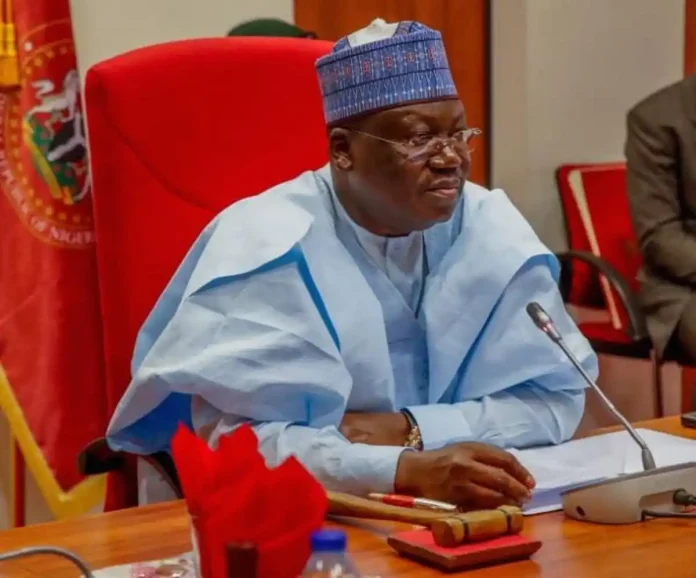
The Nigerian Senate President Dr. Ahmad Lawan of the Rulling APC Party at the Hallowed Chambers in Abuja

This is certainly not the best time for Nigeria. And most certainly not for the advocates of #OneNigeria as Tuesday’s “No Devolution Of Power” vote on the floor of the Senate appears to have finally given a very serious form of institutional credence to the assertion by the Nnamdi Kanu led the Biafran movement that the Nigeria state is unsalvageable. But beyond the rhetorics and verbal gymnastics, there are some wildly held opinions that the Senate vote has simply elevated to the status of fact. Here are some of them:

1: It is not the Senate as an institution that doesn’t want a restructured Nigeria. It is the North as a region. Sadly, long years of military rule championed by mostly northern military officers have succeeded in skewing the political equation of Nigeria in favour of the North. As it stands now, the North is in a default position to hold the rest of the country to ransom and that is exactly what is happening. She gets whatever she wants no matter how scandalous such a want might seem and she ensures that what the other region wants doesn’t see the light of day no matter how fair and just such a want might be. Even with the combination of the numerical strength of Southern lawmakers, the North still has the veto power. North East Development Commission bill was passed into law almost before it was even presented on the floor of the parliament. But, a bill to “gift” Lagos state with special status was killed. A bill to set up a development committee for the southeast was equally shut down. Before the adulterated version of PIB was allowed to pass 2nd reading, northern lawmakers made sure that Kano and Kaduna were included as beneficiaries of the Host Community fund even when those two northern states do not produce even one litre of oil.

2:No form of re-organization of the political and economic structure of the Nigerian state a.k.a restructuring can be effected through the existing constitutional structure. The status quo is terribly skewed in favour of the only region (North) currently benefiting from it. The Yorubas want true federalism. The south-south want to be in charge of their resources. Igbo elders want a well-restructured Nigeria where every region will be able to harness its full potential and develop at its own pace. Igbo youths, under Nnamdi Kanu, are agitating for a total separation from Nigeria because they believe the North which holds the numerical advantage in every facet of state institution here would never allow for restructuring. 

Under close examination, the aspirations of the aforementioned peoples/groups are not mutually exclusive but the bitter truth is that no amount of sophistry and beautiful poetry robed in flawless grammar will give us restructuring. It was the height of naivety in the first place to assume that our Northern neighbours will willingly relinquish the undue advantage their military heads of state gifted them with, without a fight. The North will never allow for a restructured Nigeria UNLESS she is confronted with an alternative such as a determined quest for a referendum by the other component units. It is at this point that we must all admit that the leader of the Indigenous People Of Biafra, Nnamdi Kanu, has been right all along. The action of the Northern Senate caucus has further legitimised the Biafra struggle. Above all, it has buried the argument that the Biafra strong man, Kanu, should use institutionalized politics to push his quest for a referendum. 

Contrary to a very popular Igbo saying, what the young man, Nnamdi Kanu, saw while lying down, the elders have failed to see even while comfortably perched on top of the iroko tree. Our biggest mistake was antagonizing the IPOB leader rather than seizing the momentous occasion his Biafra agitation gifted us with to demand in practical terms, an end to the grave injustices and institutionalized daylight roguery in the Nigerian system. How can it be that an “Emeka” from Akpugo-Nkanu in Enugu state must score not less than 120 to get admitted into federal govt unity college while an “Ibrahim” from Daura in Katsina state only needs to score 10 to be admitted into the same unity college……in the same country? And Paradoxically funny enough, this same Ibrahim will most likely end up as the president of Nigeria even if he decides not to finish his secondary school education while the more intellectually endowed Emeka has less than a 1% chance of even getting a job at the end of his academic sojourn??

Why should a state like Kano have the right to operate a parallel system of govt with a Sharia court (judiciary), Sharia police known as the Hisbah working under the office of the governor (Executive) plus another very powerful body known as the Sharia commission (legislature) in the same country where Ekiti state governor, Ayo Fayose, was almost crucified for setting up a security outfit to confront the marauding Fulani herdsmen? Institutionalized injustices such as these should be unacceptable even by the lowest moral standard of natural justice. The enemies of Nigeria are not those pushing for her balkanization due to entrenched injustices in the system. The real enemies are the beneficiaries of the unjust system who have sworn to allow neither restructuring nor a referendum for us to determine our future. We must always remember this fact.

The fact that the advocates of restructuring are yet to hit the street in protest over the Senate action is a grave indictment of their seriousness and collective resolve as a group. One thing is certain, the maintainability of the status quo IS NOT an option. Eventually, something must give. The position of not just the Igbos but every Southerner today DOES NOT call for political correctness. By making a comprehensive restructuring of the system impossible, the North is only making the complete balkanization of the country inevitable.

Disclaimer: 

The opinions and views expressed in this write-up are entirely that of the Writer(s). They do not reflect the opinions and views of the Publisher (Nze Ikay’s Blog) or any of its employees. The designations employed in this publication and the presentation of materials herein do not imply the expression of any opinion whatsoever of the Publisher (Nze Ikay’s Blog) or its employees concerning the legal status of any country, its authority, area or territory or concerning the delimitation of its frontiers. Equally, the sketches, images, pictures and videos are obtained from the public domain


FOISTING A MUSLIM-MUSLIM PRESIDENCY ON THIS COUNTRY MAY SPELL THE END OF NIGERIA AS A SECULAR NATION, AND THE KILLINGS CONTINUE By Dr O. Chima Okereke 

4
Clergymen carry white coffins containing the bodies of priests allegedly killed by Fulani herdsmen, for burial at Ayati-Ikpayongo in Gwer East district of Benue State, north-central Nigeria on May 22, 2018.

Foisting or imposing a Muslim-Muslim Presidency on Nigeria may lead to the end of religious secularity in the country. The words “Foisting” and “Imposing” have been chosen advisedly because information, in the public domain, on the recently concluded Presidential election suggests that such a presidency cannot be said, without a shadow of a doubt, to be the will of the majority of Nigerians. 

The case on the election is in the court. Therefore, in spite of the conflicting views, claims and counterclaims, this write-up will not dwell on who won or lost the election. What is crystal clear, however, is that as a nation, we have been unable to conduct a free and fair election. When the result of an election has to be decided most times in the courts, it means that we are not yet able to determine the will of our people through the ballot box. 

Consider a scenario in which after an election, the votes are counted in such a transparent manner that the representative of every party endorses the result. The contestants themselves stand together as the results are announced. They not only accept them as correct but also shake hands with the winner. Such a scene is repeated at all votes collation points across the nation. The result of such an election is welcome as demonstrating the will of the electorate. This transparency is such that when the results of votes, in about seventy-five percent of the total collation centres, are announced, some candidates concede victory to the winning contestant even before all the votes are counted. This is because they know that the will of the electorate has been accurately determined. 

With all the best will in the world, what INEC presents to our country, practically after every national presidential election, is a far cry from this described scenario which produces a true manifestation of the people’s will. Again, with all due respect to the niceties of the court, their judgement cannot be equated to a representation of the people’s will. No, it is the ballot box and not the judge’s gavel that should be used to determine the will of the people. The least INEC should do for this country is to produce a transparent result endorsed by every contesting party at each votes collation point. This is what this nation requires. This is what happens in most developed countries. This INEC has so far failed to deliver. 

Dubious Situation in which people are disenfranchised, and the Killings Continue 

Going on to impose a Muslim-Muslim Presidency in this dubious situation is a disservice to this country especially as people who voted against it have been effectively disenfranchised by INEC. We are realistically no longer practising democracy but the imposition of a government by a Judge’s fiat. Sadly, this country has continued to witness most undreamt-of killings of Nigerians, especially Christians, in cold blood. In the past five years, Boko Haram and Fulani herdsmen have been decimating the lives of thousands of Nigerians and getting away with their dastardly wicked and evil atrocities. These killings have continued as briefly presented with excerpts in the next paragraphs. 

ISWAP Kills Pastor, Herdsmen Slaughter 134 Christians in Nigeria 

Terrorists of ISWAP (Islamic State West Africa Province) reportedly killed a pastor, Rev. Yakubu Shuaibu, of the Church of the Brethren in Nigeria (EYN). He was killed in his house in Madlau, Biu County, Borno state on April 4th 2023. They also attacked predominantly Christian villages of Njimtilo, Pulka and Ajiri Mafa at the same time the pastor was slain. “During the attacks, they destroyed houses of Christians and looted their homes of food items,” Joseph a resident in the area reportedly narrated. 

Herdsmen killed 134 Christians in Benue state in the first week of April. This was from April 2nd to 10th, as confirmed by the Benue State Governor Samuel Ortom in a press statement. These killings are in addition to alleged killings in the 23 local government areas of the state, 18 of them have been ravaged by herdsmen attacks, and most Christians in these council areas displaced. The herdsmen also attacked the local government areas of Makurdi, Guma, Otukpo, Apa, Logo, and Kwande County, as reported by Dominic Anza, the President of the Universal Reformed Christian Church (NKST). 

Fulani herdsmen attacked a church service in Akenawe village, Logo County, on April 2, killed a Christian and took four others captive at gunpoint, said community leader Hemen Terkimbi. “Christians were in the church worshipping during a night vigil service when herdsmen attacked them,” Terkimbi said. “A Christian worshipper was killed, five other Christians were injured, and four Christian worshippers including the resident pastor, the Rev. Gwadue Kwaghtyo, were captured and taken to an unknown place.” 

Another community leader, Eche Akpoko, said that in four months, herdsmen killed more than 89 Christians in 31 area villages, including Ope-Ikobi, Ochi-Ikobi, Ijaha-Ikobi, Imana-Ikobi, Oleoke-Ikobi, Ebugodo-Edikwu, Ankpali- Edikwu, Olegijamu-Edikwu, Olekele-Edikwu, Ukpogo-Edikwu, Edikwu-Icho, Edikwu-Oladoga, Okwiji-Edikwu and Ojecho- Edikwu. 

References: ISWAP Kills Pastor, Herdsmen Slaughter 134 Christians in Nigeria – Morningstar News. Terrorists Collect Another N3 Million Ransom, Fail To Release 85 Abducted Zamfara Residents, April 29, 2023. The terrorists who kidnapped 85 people in Wanzamai village in the Tsafe Local Government Area of Zamfara State have failed to release their abductees despite collecting an additional N3 million ransom. Abubakar Na’allah, a resident of the locality, said the terrorists sent a message requesting an additional N3 million for the abductees’ final release. The 85 people were kidnapped by the terrorists about four weeks ago in the community. 

Bleak and Uncertain Future 

The Morning Star News reports that some Christian leaders in Nigeria have said that they believe that herdsmen from millions of Muslims from the Sahel conduct attacks on Christian communities in Nigeria’s Middle Belt. Their objectives are to take over by force Christians’ landed properties and impose Islam as desertification has made it difficult for them to sustain their herds in their normal location. 

This appears to be the overarching explanation for the unbridled killings of Christians. It is reported that Nigeria led the world in Christians killed for their faith in 2022, with 5,014, according to Open Doors’ 2023 World Watch List (WWL) report. It also led the world in Christians abducted (4,726), sexually assaulted or harassed, forcibly married or physically or mentally abused, and it had the most homes and businesses attacked for faith-based reasons. The report stated that: “Militants from the Fulani herdsmen, Boko Haram, Islamic State West Africa Province (ISWAP) and others conduct raids on Christian communities, killing, maiming, raping and kidnapping for ransom or sexual slavery.” 

References: ISWAP Kills Pastor, Herdsmen Slaughter 134 Christians in Nigeria – Morningstar News 

Comments 

These killings of Nigerians are continuing with the present government failing woefully to stop them. If they claim to have succeeded, why are the killings continuing? How many of the terrorists are imprisoned or arrested and awaiting trial? 

With a Muslim-Muslim government being imminent, the future remains bleak for the following reasons: 

  • The killings may continue because the killers are still around. The Muslim herdsmen have been free to run riot in the country without being restrained or arrested. With their continuing movement from the Sahel, the whole of the country is at their mercy. 
  • Kidnappings and other forms of lawlessness continue as exemplified in the case of Zamfara residents. 
  • Islamisation of the country may not be a surprising development in a Muslim-Muslim government, this could be implemented through the imposition of Sharia on the whole country.

Conclusion 

With the looming imposition of a Muslim-Muslim presidency, the country could be forced to lose irredeemably the vision of our founding fathers, which is: “a nation where no one is oppressed.” 

Sadly, oppression appears to be comparatively a soft touch in a nation where people are killed in cold blood because they are Christians and the government fails woefully in its fundamental responsibility of protecting the lives of all Nigerians. 

In the same vein, it could be inimical to the welfare of this nation to go on with this dubious installation of a regime that portends the continuing killings of innocent Nigerians, and the Islamisation of the country. Therefore, everyone who partakes in their installation or acquiesces to it will remain answerable for the results. “Righteousness exalts a nation, but sin condemns (and is a reproach to) any people” NIV Proverbs 14: 34. Efforts need to be made to save the nation from the curse that awaits us if attempts are made to eliminate Christianity in our country. Lastly, the ongoing killings of Christians and other innocent Nigerians are recipes for imminent and inevitable national disaster. Every effort should be made to stop them. 

Disclaimer: 

The opinions and views expressed in this write-up are entirely that of the Writer(s). They do not reflect the opinions and views of the Publisher (Nze Ikay’s Blog) or any of its employees. The designations employed in this publication and the presentation of materials herein do not imply the expression of any opinion whatsoever of the Publisher (Nze Ikay’s Blog) or its employees concerning the legal status of any country, its authority, area or territory or concerning the delimitation of its frontiers. Equally, the sketches, images, pictures and videos are obtained from the public domain
THAT BOY CALLS YOU FATHER, DO NOT BEAR A HAND IN HIS DEATH-A RESPONSE TO THE UPSURGE OF SEXUAL ABUSES IN OUR PLACES OF WORSHIP By Rev. Fr. Ambrose Ofodile

0
The Late Legendary Novelist and Writer Chinua Achebe and his most renowned book - Things Fall Apart

“That boy calls you ‘father’, do not have a hand in his death.” Let us pay attention. (Being a presentation at a Google meeting on 15-05-2023)

The story of Ikemefuna in Chinua Achebe’s Things Fall Apart is arguably the most arresting subplot in the entire novel. Ikemefuna was a teenage male from Mbaino who, along with a virgin girl from the town, was given as a slave to the neighbouring town, Umuofia, as compensation for the murder of the wife of Ogbuefi Udo, an Umuofia man, by the people of Mbaino. On arriving at Umuofia, he was placed in the household of Okonkwo, the main character in Achebe’s novel, there to await the decision of the gods on what would be done with him by the community. He stayed with the household for three years, sleeping in the hut of the man’s first wife, together with the woman’s other children.

Within the period that he was in Okonkwo’s compound, the industrious and hardworking Ikemefuna exercised an influence over Nwoye, Okonkwo’s first son, which pleased Okonkwo to no small measure although he kept his feelings on the matter quite hidden. Nwoye became, in his father’s eyes, more “masculine” in his attitude, shunning the infantile tales and cloying caresses of his mother, and preferring instead to visit, with Ikemefuna, his father’s “obi”, there to listen to Okonkwo recount stories of war and bloodshed, and other manly deeds. Ikemefuna became a light in Okonkwo’s household, and his amiable personality endeared him to all and sundry.

However, with time, the Oracle of the Hills and Caves decreed that it was time for Ikemefuna to be killed. Okonkwo was distraught at hearing the gods’ command, but he brushed his sadness aside and insisted on participating in the boy’s execution. Ogbuefi Ezeudu, one of the greatest men of the land, sensing the close attachment between Okonkwo and Ikemefuna, advised the man that “that boy calls you ‘father’, do not have a hand in his death”. Okonkwo refused to heed the wise counsel of the older man. It did not occur to him that, by having lived in his household for so long, Ikemefuna had become, to some degree, a member of his family, and to take part in his killing would be tantamount to shedding the blood of his own offspring. He was afraid to be considered a weakling like his father, Unoka, had been, and this fear, mingled with his colossal pride, led him to strike the death blow himself, with his cutlass, at the place of the boy’s execution.

Okonkwo’s disregard of Ogbuefi Ezeudu’s prophetic counsel was not without consequences. Ikemefuna’s death haunted Okonkwo for days, disturbing his dreams, and it caused Nwoye to withdraw from his father and retreat all the more into himself. However, far more than the above, the tragedy of the boy’s demise ushered a series of misfortunes into Okonkwo’s household, culminating in the suicide of Okonkwo many chapters later, a death far less honourable than the man himself would have desired, which meant that he had to be disposed of like a dog, rather than being buried with full honours by his kinsmen because of his accomplishments in life.

“That boy calls you ‘Father’, do not have a hand in his death.” In light of an increase in cases of sexual immorality in our places of worship, it is important for our priests, pastors, faith/church leaders, catechists, and other individuals charged with different responsibilities across religious circles, all of who enjoy the trust and confidence of the people of God, to revisit the foregoing advice of Ogbuefi Ezeudu, as well as the tragic story of Ikemefuna on the whole.

Our places of worship are meant to be places of refuge, trust and sincere worship of God. They ought to be where the people of God gather to be safe and be fed by the ministers and leaders whom God has appointed to guide his holy people towards righteousness. They are not meant for such things as immoral activities and so forth. The truth of the matter, however, is that, as long as there is a community of the faithful, the reality of sin cannot be relegated to the background. Temptations and sins are inevitable in human life.

That said, it does not mean that we should fold our arms and allow the incidence of sexual immorality in our places of worship to continue to rise unabated. Such things as fornication, adultery, rape, lesbianism, homosexuality, sexual abuse of minors, and other forms of immorality should have no place in the church. It becomes even worse when those acts are perpetrated by people who have been placed by the Lord in leadership positions at the church, using as victims those who have been placed in their care. It is akin to the case of a dog eating the bone tied around its neck for safekeeping.

There is a reason why our Lord Jesus Himself expressly stated, in the Holy Gospel, that it is better to have a millstone tied around one’s neck and be flung into the sea than to lead any of the little ones to sin. Apart from the scandal that such acts create in the society at large, they betray our identity as the people of God and as “Christanoi” (“imitators of Christ”). Not only that, many have lost their faith and trust in God because of the things they have gone through, at the hands of ministers and leaders, in various places of worship. We should not allow such things to continue. We should live up to our title: the holy people of God.

In Achebe’s Things Fall Apart, there is a moving scene where Ikemefuna is about to be executed. On being struck by the machete blow of one of his assailants, he runs to Okonkwo for protection, crying aloud, “My father, they have killed me”, expecting to be shielded by his putative dad. But Okonkwo, rather than come to his assistance, is overcome by the fear of being labelled a weakling and, instead, draws his own machete and strikes the fatal blow…. It is a scene that tugs at the very strings of the heart.

If we could picture the heart-broken and disappointed look on Ikemefuna’s face as he was falling to the ground, to his death, we would better understand the disappointment that church faithful feel when they undergo sexual assault/abuse at the hands of trusted and revered ministers and leaders. Many of the faithful run – like Ikemefuna to Okonkwo – to the ministers and leaders for protection and for grooming in the things of God. It would be the worst abomination for the latter, like Okonkwo, to strike them down instead of offering them succour.

“That boy calls you ‘father’, do not have a hand in his death.” Let us pay attention. (Being a presentation at a Google meeting on 15-05-2023)

Disclaimer: 

The opinions and views expressed in this write-up are entirely that of the Writer(s). They do not reflect the opinions and views of the Publisher (Nze Ikay’s Blog) or any of its employees. The designations employed in this publication and the presentation of materials herein do not imply the expression of any opinion whatsoever of the Publisher (Nze Ikay’s Blog) or its employees concerning the legal status of any country, its authority, area or territory or concerning the delimitation of its frontiers. Equally, the sketches, images, pictures and videos are obtained from the public domain

SAINT OBI WAS A VICTIM OF BAD MARRIAGE-THE MARRIAGE AND DEATH of SAINT OBI By Zik Zulu Okafor

0
Late Nollywood Actor Saint Obi and his family

His social life was blunted. Perhaps by his reticent disposition.His persona, two dimensional. To a distant public, he was upscale and cool. His manly bearing spoke loud. His onscreen image ironically amplified some idiosyncrasies; heroics, romantic adventures and traits that did not gel with the mortal privacy that eerily define his quiet and lonely life. Saint Obi, real name, Obinna Nwafor, was shy, almost bordering on timidity and insecurity. He cherished the pleasantly tranquil interactions among a few friends. He would vanish at any outburst that could upset the poise of such small meetings. As he repeatedly told me, he just wanted to live a cool, quiet and fulfilled life. But, has he lived this cool and fulfilled life he envisioned? I have my doubts.

I tell Saint’s story here with painful tears in my eyes; because he was a star, a superstar whose life turned out a gleam of irony. Yet, it was this stardom that fetched him his much-professed financially strong and powerful wife. And their wedding, that solemn ritual of love would drastically alter the cause of his life and tragically yank him off the creative community that threw him up for the wife to capture and indeed conquer. Their marriage was at best a dramatization of love. It was quick. He barely told us that he found a wife. Then, the marriage happened. It was something of a mystique, only those involved understood the histrionics that played out. None of us who were his closest pals, who walked with him through the crucible to the crest of his career in Nollywood, none of us was invited. The distance between us and the guy I admirably called Saint of the Storm had begun. This gulf would widen with each year. We saw him perhaps once a year after this marriage. And life actually seemed to have given him a fair shake of the dice. He dressed well, drove big cars and even his skin, in literal lingo, spelt wellness. 

The Saint would be blessed with three beautiful children. But not on one occasion were his friends in Nollywood invited for a christening or birthday. We were told that his wife was in the topmost hierarchy in the telecom giant, MTN. But even if their celebrations were designed to be a rendezvous of the elites of the technocracies that his wife chiefly belonged to, you expected that Saint would reach out to a few of his fellow creatives, for even if they would herald his small beginnings, there could be no tinge of shame to it because we all have our journeys and our stories. And even at that, the actor or cineaste in Nollywood is by no means poor. But more tragic is the fact that his marriage did not only take away Obinna from his friends, but it also took him away from Nollywood. Saint stopped acting and absconded from his career and perhaps his calling. It would seem prognostic now. Yes, because I recall leaving my house in Lagos Mainland for his massive office in Lekki, Victoria Island, Lagos. It was about six years ago. There, I demanded to know why my friend abandoned our industry. He told me with his usual shy expressions that he wanted to focus on some other businesses and also to work behind the camera. 

Because his visage was unconvincing to me, I told him in stark terms, that whatever his new vision and pursuits, he must not abandon the trade that made him who he was. It took another three years for Saint to return to his homies. But when he did, some of the deeply disappointed ones sniggered behind him. This was because the simmering rumours of cracks in his marriage had hit home. And though secretive in his ways, he knew it was time to open up. And he did.” I do not know why my wife’s siblings see me as a gold digger. They confront me, harass and fight me in my own matrimony. And my wife did nothing to stop them. I work hard, I earn my money. I have never depended on my wife”, he lamented, eyes blurred with tears. You could tell he was in deep pain. By the next visit, the Saint returned with a deep cut from a knife on his left eye. His wife’s brothers, he said, scaled the wall fence of their house to attack him. They were captured by hidden closed-circuit television, CCTV, installed for surveillance and security, he revealed. He reported them at the police station and subsequently acquired a gun to defend himself. This effectively marked the beginning of the end of his marriage and perhaps Saint Obi’s long walk to a sad end. He moved out of his marital home to a new house to begin the reconstruction of his destiny, alone without his wife and worse still without his three beautiful children. 

Meanwhile, his wife went to the police to defend her siblings using her financial power to manipulate the cause of justice, Saint stated unequivocally. The wife also sued for divorce, not in Lagos, but in Ogun state. As Saint put it, “It was to make the journey difficult for me. But I will not bend neither will I break. I will fight with my last blood to take custody of my children. They love me and they know it will be hard for me to live without them. The divorce is not an issue. My marriage has long been over”, he said with a mix of courage and a quaky heart that betrayed his distress. About mid-last year, however, Obinna took ill. But he told no one. He simply became scarce. He was in and out of the hospital, we would later learn. He sold two of his three big SUVs to take proper care of his health and to acquire six Camry cars he’d use for Uber. But his vanishing health continued unabated. He seemed to have a premonition of his own passing as he wept repeatedly about not seeing his children. 

He emaciated. Life took a grim picture. When I saw him by chance in January 2023, the dude called Saint looked 15 years older than his age. His macho cut had shrunk. His fat wallet was gone. What was left was only his fat will. His eyes seemed lost in their socket. This would be the last time I would see him. Saint snuck out of Lagos to hang in with his sister in Jos. He told no one. But a month ago, in April precisely, the once delightful actor who brought joy to many a home broke his icy silence. He called our mutual friend in the US to give him a devastating message. He was on a deathbed, he said and wanted our friend to pray for him.” It’s not looking good, pray, pray for me “, he appealed passionately. 

His next call came on May 1, 2023. This time to his mentor, the man who made him a star with his productions, Zeb Ejiro, OON. He told him with a wavering voice that he had had three surgeries but was still in hospital in Jos. He averred again that his situation was not looking good, that he is also in deep pain, distressed that he could not see his children. But still, he begged him not to tell anyone about his ailment. Such was the life of this creative hermit, a lonely trouper. I was the first to hear the news of his death late on Sunday, May 7. Having confirmed it, I called Zeb Ejiro. “I have very bad news my brother, Zeb”, I began. “What is it, what is it,”, he asked anxiously. “A big star has fallen in Nollywood “. Zeb broke down in tears. I hadn’t said who it was. But sobbing helplessly now, he said, “Don’t tell me it is Saint Obi”. Sadly, he was right. May his soul find peace.

By Zik Zulu Okafor

Meanwhile, Saint Obi’s Family Debunks Allegations Against His Wife, Says It’s ‘Malicious’. The family of the late prominent Nollywood actor, Obinna Nwafor, also known as Saint Obi, has responded to rumours surrounding the actor’s demise. In a statement written on behalf of the family, the actor’s two older sisters debunked the ‘malicious’ statement allegedly written by filmmaker Zik Zulu Okafor, following their brother’s death. The family also added that the funeral services would be made public in due course, asking that their privacy be respected as it was a sad moment for them.

The press statement was titled, “RE: DEMISE OF SAINT OBI (MR. OBINNA NWAFOR).” It read, “Our attention has been drawn to the publication by one Mr Zik Zulu Okafor concerning the death of our son, Mr Obinna Nwafor, popularly known as Saint Obi, and the accompanying negative commentary in social and other media portraying his widow in an unfair and most defamatory manner. “This is in no way, shape or form an accurate portrayal of the Lynda that we know and relate with. “The Nwafor family also views the said article by Mr Okafor as sad and most unfortunate. It was neither written in consultation with any member of the family nor authored with our consent or authority. We totally disassociate ourselves from it.

“The views and allegations contained therein are entirely the opinion of the writer. They are false, malicious and insensitive to the wife, children and entire family he left behind. “This is a mourning period for the family, and while we appreciate the condolences of friends, fans, and well-wishers, we ask that the family’s privacy be respected at this time. “The funeral rites will be communicated to the public in due course. May the soul of our dearly beloved brother, son, father and husband, rest in perfect peace. Amen.”

The statement was signed by Ugoeze Edith Chinyere Obichuku and Freda Nwachukwu, for the family.

Disclaimer: 

The opinions and views expressed in this write-up are entirely that of the Writer(s). They do not reflect the opinions and views of the Publisher (Nze Ikay’s Blog) or any of its employees. The designations employed in this publication and the presentation of materials herein do not imply the expression of any opinion whatsoever of the Publisher (Nze Ikay’s Blog) or its employees concerning the legal status of any country, its authority, area or territory or concerning the delimitation of its frontiers. Equally, the sketches, images, pictures and videos are obtained from the public domain

WE ARE JUST SICK INDIGENOUS PEOPLE BLAMING EVERYTHING BUT OURSELVES. 

1
Ethnic Nigerians
Ethnic Nigerians

I just saw a short documentary on CNN about the Emirate of Dubai (an Islamic State) and her many disruptive and record-breaking technological/innovative strides, and my heart sank into despair. Dubai is NOT a country. It is just one out of seven emirates that make up the UAE. An Islamic country which declared independence from Great Britain in 1971. Yet, Dubai is the fastest-growing Science and ICT hub in the world. Yes, you read that correctly; in the world! As I watched the documentary and marvelled at the unbelievable leaps in education, innovation and infrastructure achieved within 50 years, I began to compare the emirate with our own Emirate of Sokoto and the Emirate of Kano back home.

Folks, the difference is a universe apart. Did you know that the Emirate of Dubai has singlehandedly launched 2 satellites into Space? Did you know that the last launched spacecraft had the innovative signature of a Dubai teenage girl on it? A teenager who dreams to be the first astronaut on Mars. Did you know that by 2020 the Dubai Emirate launched its first Mars Exploration Spacecraft? Did you know that the Dubai Emirate currently has the largest number of FOREIGN RESEARCH SCIENTISTS AND ICT EXPERTS IN THE WORLD? This is a deeply culturally Islamic State prioritizing Science, Technology and Futurism. What then is different about their own practice of Islam and the ones we have here at home? 

What is different about their practice of Islam which encourages a teenage girl to aspire to Mars while emirates at home marry off underaged girls? What is different about their practice of Islam which prioritizes innovations and science, while even Churches back at home only prioritize buildings and tithing? Guys, religion is not Nigeria’s albatross. Anyone who argues otherwise is thinking fallaciously. Nigeria is messed up because we have our own issues. Our orientation, our mindset, our value system, our sociocultural ethics, and our ways are deeply ANTIPROGRESSIVE! 

I just saw men in Arabic gowns and women in Arabic purdah (the moderate ones) having a dialogue about championing the next frontiers in science and innovations. Any so-called Christian who defends the kind of Christianity we practice in this country is part of the problem. For now, the Emirate of Dubai is the leader of the Arab World. A well-deserved title. Truth is sacred. Selah. Permit me to borrow what Professor Isa Hussaini of the Faculty of Pharmacy, University of Maiduguri wrote as follows:  

The blame for what Nigeria has become falls on you and me. Not Buhari, not Jonathan, not Obasanjo and definitely not Abacha. OUR WICKEDNESS STINKS TO THE HEAVENS AS WE GO ABOUT OUR DAILY LIVES, PULLING DOWN EVERYONE AND EVERYTHING TO BECOME RICH. We import substandard products, fake drugs and expired baby food unfit for human consumption and we have the nerve to complain about leadership? We even steal from widows, orphans, weaklings and refugees. We take their food and sell it for profit. No conscience. Nothing is sacred. No one is spared. 

WE BUILD SUBSTANDARD ROADS, SCHOOLS, HOUSES, AND HOSPITALS, ALL FOR PROFIT AT THE EXPENSE OF HUMAN LIFE; AN INVALUABLE ITEM WHICH ALL OUR PROFIT AND CONTRACT SUM CANNOT BUY. One would think this behaviour is reserved for urchins but it would surprise you that this is the character of many decent-looking people who appear to be normal but are not any better than Boko Haram members. They are church members, Muslims, husbands, wives and sadly youths.

WE PERVERT JUSTICE AND PRETEND WE DO NOT KNOW RIGHT FROM WRONG JUST TO SERVE OUR SELFISH INTERESTS. Slave traders pale in comparison to what we do to ourselves. WE ARE WICKEDNESS PERSONIFIED. So much hatred flows in our blood and we transfer it to our children. It’s evident in what we say and do. We have fasting and prayer sessions all year long, night vigils and deliverance when the actual problem is us. WE SIMPLY CANNOT LEARN TO LOVE OTHERS. IT IS ME, ME, ME. THAT IS ALL THAT EVER MATTERS. IT IS SICKENING.    

Anyone who cannot love has no business in Politics,  Government Parastatals/Agencies and in Nigeria. Until we understand this, we will continue on this path of destruction. I can Change! You can Change! They can Change! And We can Change by Sharing and Spreading this message… Change starts with Me…

Disclaimer: 

The designations employed in this publication and the presentation of materials herein do not imply the expression of any opinion whatsoever of the Publisher (Nze Ikay’s Blog) or its employees concerning the legal status of any country, its authority, area or territory or concerning the delimitation of its frontiers. Equally, the sketches, images, pictures and videos are gotten from the public domain.

WE DIED WITH HIM

0
Mary speaks with the Resurrected Christ

Jesus died twice on the cross. I knew this for many years, but I had no scriptural evidence of it. One day I discovered Isaiah 53:9, the answer to my long search. “And they made his grave with the wicked, and with a rich man in his deaths.” The word “death” is plural in the Hebrew.

Many of you who have Bibles with marginal renderings will notice it. That is, Jesus died two deaths on the cross: He died spiritually before He died physically. In John 10:18 He said that no one could take His life from Him. He could not be killed; He could not die. Why? Because His body was not mortal.

Jesus had a body like Adam’s before he sinned. It was a perfect, human body, not Mortal, nor Immortal.  It was a body that could not die until sin had taken possession of His spirit. In other words, Jesus had to die spiritually before He could die physically.

If Jesus’ body had been like yours and mine, then He was not Deity, He was not a Substitute, and He did not die for our sins; He merely died as a martyr.  But, if He had a body like the first man Adam’s body, that was not Mortal, not subject to death, (that would mean subject to Satan) then He was Deity.

In our last chapter, we saw a man nailed to the cross with Christ.  In this, we see the human race died with the Crucified One.  Paul says, “If we died with Christ, we believe we shall also live with Him.” Romans 6:8 and 2 Timothy 2:11.  In these scriptures we notice we died with Christ when He died.

He was our Substitute.  We were one with Him on the cross.  We were one with Him in His death.  He died under our judgment, in our stead.  He died because He was made sin. If we accept Him, there can be no judgment for us.

Isaiah 53:10-12 “Yet it pleased Jehovah to bruise him; he hath made him sick: when thou shalt make his soul an offering for sin, he shall see his seed, he shall prolong his days, and the pleasure of Jehovah shall prosper in his hand. He shall see of the travail of his soul, and shall be satisfied: by the knowledge of himself shall my righteous servant justify many; and he shall bear their iniquities. 

Therefore will I divide him a portion with the great, and he shall divide the spoil with the strong; because he poured out his soul unto death, and was numbered with the transgressors: yet he bares the sin of many, and made intercession for the transgressors.” That sounds just like the Pauline Revelation, doesn’t it?

The Pauline Revelation is an unveiling of what happened from the time that Jesus was made sin on the cross until He sat down at the right hand of God. Nowhere else can we find that knowledge? This is Substitution.  This is absolute Identification.  This is a part of the great Substitutionary truth in prophecy.

He poured out His life into death. Through that death, we were made alive. It was our sin that slew Him. It is His Righteousness that gives us life.  He drank the cup of death, that we might drink the cup of life. In that mighty ministry, before He arose from the dead, He destroyed death’s lordship.

When death slew Him, it slew itself.  He conquered sin when He allowed it to overcome Him.  He conquered Satan when He let Satan gain mastery over Him.  He conquered disease when He let the disease take possession of Him.  He became one with Satan in spiritual death, to make us one with God in spiritual life.

“Him who knew no sin he made to be sin on our behalf; that we might become the righteousness of God in Him.” (2 Corinthians 5:21).  He became one with us in weakness, in sin, in disease, and in spiritual death, that He might make us one with Himself in Righteousness, in perfect health, and fellowship with the Father.

He became death’s prisoner in order to set us free.  In the mind of justice, we died to sin and its dominion when we died with Christ. “He that hath died is justified from sin.” (Romans 8:7). He is free from the lordship of spiritual death.  There was in God’s mind at the Crucifixion, a perfect oneness of Christ with us, and in the Resurrection and New Birth, a perfect oneness of us in Christ.

Just as Jesus conquered death by submitting to it,  we in the New Creation conquer Satan by submitting to the Lordship of Jesus.  We and our diseases were laid on Him and became a part of Him when He was made sin with our sin. We are healed by becoming partakers of His divine nature.

Disease and sickness do not belong to the New Creation.  It is an abnormal thing in the mind of the Father for a child of God to be sick. We died with Him. We died to the dominion of sin.  We died to the dominion of disease.  We died to the dominion of circumstances and habits.

1 Peter 2:24 becomes a reality. “Who his own self bare our sins in His body upon the tree, that we, having died unto sins, might live  unto righteousness; by whose stripes ye were healed.” This is Identification, our utter oneness with Him in sin and judgment on the cross. 

“That we, having died unto sins.” His death and our death are identical.  This is not His physical death. This is spiritual. He died twice there. He partook in our spiritual death. We were utterly one with Him in that judgment.

“That we might live unto Righteousness.” Or, that we might partake of His Righteousness as He partook of our sins, that we might be Righteous as He became sin with our sins. Then the next marvellous statement: “By whose stripes ye were healed.” He not only had our sinful nature, but He had our diseases.

He took over our diseases; He put them away when He put sin away. “By His stripes, we are healed.” This is thrilling. As He put our sins and diseases away by becoming sins and diseases for us, so we partake of His Righteousness and healing when we accept His work for us.

Christ has died once and for all as our Sin Substitute.  He, in judgment, met the demands of Justice for us.  He took them with Him when He went to the place of Substitution, the place of judgment, the place of suffering.  I am convinced that the Father sees us in Christ as perfect, as the finished work of Christ is perfect.  He saw that our union with Satan was a perfect union.

We were one with the devil.  He laid our spiritual death on Christ.  Ephesians 2:10 “For we are His workmanship, created in Christ Jesus.”  That work was wrought by the great master workman, Christ before He arose from the dead.  The Father sees us now in all our beauty and perfection in Christ. This beauty is all His own. He made us to please His own heart.

We died to sin once and for all in Christ. We died to Satan’s dominion. We died to the old habits that held us in bondage. We do not need to die again. The theory of our dying daily with Christ comes from the old version, “I am crucified,” which is an incorrect translation.

The passage in 1 Corinthians 15:31 is speaking of Paul’s living in the presence of physical death, the expectation of being thrown to the lions in the arena. We died once with Christ. Now we live with Him, we reign with Him. His perfect Redemption is ours. His perfect Righteousness is ours. All He is and did is ours. All we are is His. The Father made us one with Himself in Christ.

WE WERE BURIED WITH HIM

We have seen how He became sin with our sin, how He became our Substitute, bearing our diseases.  We have seen Him under the absolute dominion and power of the adversary on the cross.

We saw Him leave the cross, bearing our diseases and sins away as He was conveyed to our place of confinement. We can see Satan’s gratification. We can see that great celebration in Hell when Satan brought Jesus, a captive, into the prison house, Read Acts 2:24, 27, 31-32.

You remember how the Philistines rejoiced over Samson, and with what joy they put out his eyes and bound him in helplessness. What a gala day it must have been in Hell when He who had raised Lazarus from the dead, had destroyed the power of death and disease, had ruled the winds and the waves, had fed the hungry, cast out demons, and defeated Satan in open combat, was conquered and made one with the devil. He was made sick. They could see in Him all the diseases of the ages.

What an hour it must have been.  When the disciples took His body from the cross, embalmed it, and laid it in Joseph’s tomb, how little they appreciated what He was going through, and what His sufferings were.

How little the world appreciated where Jesus was and what He was doing.  They laid His body in the tomb, and the Roman Government sealed it and set guards to keep watch to see that the body of Jesus was not stolen.  They had heard Him cry, “My God, my God, why hast thou forsaken me?”

God had forsaken Him whom they loved.  They had lost all hope. They had thought that it

was He who was going to redeem Israel.  For three days and three nights, the Lamb of God

was our Substitute in Hell.  He was there for us.  He had our pains and our diseases, our sins, and iniquities.

 He was there waiting until the claims of justice were fully met.  Such an hour had never been and never can be again. There had to be an adequate meeting of the penalty for the transgressions of the human race, and He met them. He became one with Satan when He became sin, as we now become one with Him when we are Recreated.

The Yorubas are becoming an insecure, frightened and second rate nation by Kola Odetola

1
The Yoruba people of Nigeria

No woman likes a clingy, insecure man. But that is what we , yorubas , are becoming, a frightened, insecure and second rate nation. So fearful that we cant even accept one of our own because his mother is ibo despite the fact that the Yoruba race is Patrilineal. There was a time when the word swagger was synonymous with the yoruba, Reflecting self assurance and confidence of the race. We exuded  self belief. The Ibos secretly admired us. They adopted our clothes and music. They flocked to our churches…. The big Pentecost  non-Orthodox  Churches , which were mostly founded by Yoruba Pastors… Redeem ,Living Faith, Mountain of Fire & Miracles , Aladura, Apostolic Church , Cherubim and Seraphim, Four Square Gospel Church , etc, all founded and headed by Yorubas!

We accommodated strangers because we were so sure of ourselves, of our standing in the world, our stature, our swagger that we knew our guests  were not a threat. Now all that has drained away. We are now like the insecure man who marries a pretty woman and is secretly consumed by self doubt,  fearing he is not good enough for her. He therefore tracks her every movement, obsessively going  through her phone, hates her male colleagues because he is petrified she will leave him for soneone better. Is this how low we have fallen that we now fear those we once used to regard as culturally inferior to us? We once said the ibos could not dance, could not dress, lacked poise and polish, were not as read as us. Now, we work ourselves into a frenzy about them taking  over a Yoruba  city ( Lagos) hundreds of miles from the nearest  hamlet in the south east. One of the greatest ever yoruba leaders Adekunle Fajuyi  ,allegedly , once gave his life rather than live with the dishonour of handing over his Ibo guest ( Ironsi) to those who wanted to murder him.

We now compete with each other to denounce our ibo guests whose only crime is trading and living in our midst, ideologically handing them bound and foot to the caliphate who hate and distrust us as much as they hate and distrust them. We look for wild statements of a few ibos to justify our fear of all of them  and in doing so  , demonstrating  not our courage, but our fear, our insecurity, our deep rooted inferiority compkex towards  a tribe who have outmatched us and outpaced us in almost all spheres of life … business acumen , education, tenacity , can do attitude , and many more. A tribe who rose from the ruins of a war in which they lost 10% of their population but refused to break or, to be broken  and made to beg  or ,to  wallow in self pity, to  feel sorry for themselves, did not fear those who beseiged their land, but went forth and conquered  their land through commerce those who had conquered their land with bombs. They bought our property  in Yoruba land while we frittered the proceeds on women and easy living.

Then , having wasted our inheritance , blame those with greater foresight and discipline of taking over land  which we freely sold to them. They take care of their relatives, training them in the family trade while we turn ours to house helps and drivers. They pool their resources together while ours is used to tear our families apart. They build businesses, while we chase every lowly special adviser job , looking for government  jobs and contracts. They have learnt to thrive when marginalised  , that is, even  when deliberately excluded from government largesse , they still have a lower level of poverty than we and their killers of the 1960s. It shows in sports. In the 1980’s the national football team was split down the middle between ibos and yorubas , with hardly any Northerner in the team , with the yorubas dominating the more glamorous and creative roles in the national  football team. For every Okala, there was an Odegbami, every Chukwu a  Muda Lawal, every Stanley Okonkwo a Fekix Owolabi. But since the 90s and 2000s, the roll of honour in our national game has been claimed by rhe ibos. Who have the yorubas produced to match the profile and performances of Jay Jay Okocha, Emmanuel Amuneke, Kanu Nwankwo, Mikel Obi, Vincent Onyeama.

When ability, fortitude, resilience, drive and determination is needed we see the ibos. But when patronage, easy living and dissolute lifestyles are on show  enter the yorubas and other groups in Nigeria. We cant even plan coups properly. The most incompetent coup ever planned in Nigerian  military history was the one plotted by yoruba officers in beer parlours over pepper soup and big stout against Abacha leading to its most senior officer grovelling (late General Oladipo Diya) before the dictator pleading for his miserable  life. The coup before that planned by ibo and delta officers – the Gideon Orkar ( a Tiv Officer) putsch in 1990 saw the prime movers defiant to the bitter end, facing death with honour. How did we end up here? Twenty five(25 ) years of flirting with power at the centre, of living off and chasing unearned income, of prostrating before the caliphate has turned us to feudal retainers. Men who have lost their manhood. We are cowed into silence when state sponsored gangs rampage across our lands raping our women, burning our farms, slaughtering our youth. The few who find the courage to fight back we disown, we call them ruffians( Sunday Igboho) . When our Youths protest against injustice as they did during the EndSARS ,  we attribute it fittingly to an ibo plot. 

At the same time , we failed to see the qualities needed to organise  and execute a protest  so well executed it captured the international air waves and imagination of the world for days  and required courage, initiative and drive. Qualities we are now so enfeebled, so morally vacous  and lacking , we happily agree  courage and sagacity belong to the ibos and not us.A fish rots from the head. Our legacy was built by giants like Fajuyi, Awolowo and to a lesser extent Abiola. Men who gave their freedom and their lives rather than surrender their principles. But what have we now? Bola Tinubu who, with his dubious background would never have been employed by any of us , if he had come to us for employment with such  a history and background and who keeps quiet when millions of ibos are put at risk in his city by vicious tribal bigotry and  ethnic baiting because of his lust for power. Bola Tinubu who buried his head when his own people were being gunned down in churches in their own land  at Owo by gun men under the protection of his fulani bosses. In the halycon days of the founder of the modern Yoruba race , the closest Bola Ahmed Tinubu would have got to power would have been organising security at UPN party conferences. 

Today he is the acknowledged leader of the  Yoruba race. How low have we fallen that we are proud and openly accept Bola Tinubu , with his background, as our leader. Would Tinubu have laced AWO’s shoes? We have these last few weeks of eternal shame  revealed our weakness, our insecurity, the spiritual barrenness that now lies like a void at the centre of our world. We fear a yoruba man because he has an ibo mother? Are Yoruba now matrilineal? Thats how supine, how fearful  we have become. We forget the Yoruba killed in their hundreds last year by state protected fulani gunmen because we are desperate to be awarded office by those who defile  our women and pillage our land. Principle counts for nothing. We are up for sale and not for very much. This is how far we have fallen. We have won an election but lost our soul, we are in office but not in power. 

We are now Pound Land (that is, Cheap) land, okrika wake version of the fulani elite who inspite of their monopoly of power at the centre  feared the commercial acumen and success of the Ibo for 5 decades , so much they turned on them whenever they felt threatened by their own inadequacies as we have done the last few weeks. We are now a pale imitation of the Fulani, a frightened, insecure, tremulous and second rate nation clinging like leeches to power we seek at any cost because we have nothing else to offer. The Ibos have not held power for 60 years and thrived. We have just won it for the 3rd time in the same period and still like the fulani  fear them. This is how low a once great people have fallen.

Disclaimer: 

The opinions and views expressed in this write-up are entirely that of the Writer(s). They do not reflect the opinions and views of the Publisher (Nze Ikay’s Blog) or any of its employees. The designations employed in this publication and the presentation of materials herein do not imply the expression of any opinion whatsoever of the Publisher (Nze Ikay’s Blog) or its employees concerning the legal status of any country, its authority, area or territory or concerning the delimitation of its frontiers. Equally, the sketches, images, pictures and videos are obtained from the public domain
Yoruba vs Igbo – The Battle for Lagos – By Simon Kolawole

0
Yoruba vs Igbo - The Battle for Lagos 

During lunch with a Fulani friend some weeks ago, he sounded so relieved that power was shifting to the south with the election of Asiwaju Bola Ahmed Tinubu as the next president. “It is now the turn of Yoruba people to be profiled and stigmatised. The captions would soon change to ‘Yoruba terrorists’ and ‘Yoruba jihadists’, at least on Twitter,” he said, with a wry smile. He said that in the last eight years, Fulanis have seen hell with the ethnic profiling of northerners “because of President Muhammadu Buhari” and that criminals of northern origin are routinely described as “Fulani herders” even if they are neither Fulani nor herders. “The bigots even called us cows,” he lamented.

It is somewhat depressing that instead of discussing the GDP, we are always having to quench the ethnic and religious fire in Nigeria. A war of words has already broken out between Yorubas and Igbos in Lagos over the 2023 elections. To be sure, the tension is always there, just that it is, in the main, latent. At regular intervals, things erupt — predominantly because of politics — but eventually simmer, waiting for the next season. While I am the least surprised at the frequent outbreaks of yelling between the two largest ethnic groups in southern Nigeria, I must now confess I am no longer enjoying the drama. I am genuinely worried about the consequences of these hate-filled exchanges.

The presidential battle in Lagos state is one of those things we should love about democracy. Tinubu, the godfather of Lagos politics and candidate of the All Progressives Congress (APC), lost at home to Mr Peter Obi, candidate of the Labour Party. It was unheard of. To the neutral, though, an Igbo trouncing a Yoruba in Lagos is music to the ears, with the hope that such against-the-odds results would become commonplace across Nigeria in the spirit of national integration. Of course, it was not just Igbos that voted for Obi — a vast number of Yorubas, young and old, and other non-Igbos also backed him. But the ethnic subtext was not lost in the celebration and remonstration that followed.

Many of my Igbo friends have been complaining since 2019 that there is an active campaign of voter suppression in parts of Lagos state dominated by Igbos. This is very sad and sickening. If we want to practise democracy, we must be democrats. That means allowing people to make their choice without let or hindrance. That is why we say an election is “free” and “fair”. There is “freedom” of choice and there is “fairness” in the process. These two characteristics make an election “transparent” and “credible”. Voter suppression is not just reprehensible and unacceptable, it is criminal. Perpetrators should be fished out, prosecuted and punished — lest it becomes a norm.

On the other side, Yorubas often accuse Igbos of stoking ethnic fire only to turn around and play the victim. They accuse Igbos of “hubris” and “lack of respect” for their hosts. The accusation that Igbos claim Lagos is “no man’s land” is always in the fray. A Yoruba man, who said his sons voted for Obi, commented thus on Facebook: “As soon as the result was announced, the gloating and the boasting began. You need to see the virulence of it on Twitter. It was no longer about the intended shift or making a point against the establishment. It suddenly became an ethnic thing, a victory for the power and influence of Ndigbo in Lagos.” This obviously riled Yorubas, judging by the readers’ comments.

While I am inclined to believe that this resentment subsequently impacted the governorship poll, the truth is that election times have historically soured Yoruba-Igbo relations. There is always a larger rivalry between Igbo and Yoruba at the national level since 1960: every time one group gets a major slot, the other has to settle for less. And politics could be a zero-sum game: my gain is your loss. I can understand this, and I can live with it. But the Lagos leg of the rivalry is becoming too poisonous. Hurtful and hateful words are being said. There is no way bitterness and resentment will not creep in. We are sowing, or have sown, a dangerous seed and the harvest time does not promise to be pretty.

Still, anyone who is familiar with the history of Lagos knows that there is really nothing new about what is happening today. The battle over Lagos is as old as Lagos itself. At various times, the struggle was between the indigenous people and slave returnees, or between Lagos indigenes and Yorubas from other cities. It was in the 1920s and 1930s when Igbos started settling in Lagos and growing in numbers that the battle graduated from intra-ethnic to inter-ethnic contestations. In fact, in the late 1940s, a sustained media exchange between Yoruba and Igbo intellectuals almost ended in a bloodbath, with the protagonists and antagonists stockpiling machetes to take things further.

Basically, Yorubas and Yorubanised Creoles dominated the politics of Lagos until Dr Nnamdi Azikiwe emerged on the scene in 1937 with a massive intellectual reputation, having received a PhD in the US and served as the pioneer editor of a vibrant nationalist newspaper in Ghana. He immediately set up the West African Pilot, which was considered a counterweight to Daily Service, a pro-Yoruba newspaper affiliated to the troubled Nigerian Youth Movement (NYM). While Service was accused of relegating Igbo achievers to the background in its reportage, Pilot was accused of promoting Igbos and downplaying the feats of Yorubas. As you can see, the media is always at the centre of things.

A turning point was the legislative by-election of 1941. In the primary election, Zik backed Chief Samuel Akisanya, an Ijebu Yoruba and founding member of the Lagos Youth Movement (renamed NYM in 1938). Chief Obafemi Awolowo, though himself Ijebu, supported Ernest Ikoli, an Ijaw and the first Nigerian editor of Daily Times. NYM leaders picked Ikoli. Akisanya later ran as an independent but lost to Ikoli. He left NYM along with Zik, who had earlier accused the party of discriminating against Ijebus and Igbos. Zik co-founded the National Council of Nigeria and the Cameroons (NCNC) with Mr Herbert Macaulay in 1944. When Macaulay died at 81 in 1946, Zik became the NCNC leader.

Awo had left for the UK in 1944 to study law. By the time he returned, the NCNC had become the dominant party in Lagos as well as in the Yoruba-dominated Western Region, even though Zik was biologically from the Eastern Region. Zik also led the Ibo Federal Union (forerunners of Ohanaeze Ndi’gbo), founded in 1944 by the Lagos Ibo Union. And as an apparent counterforce, Awo, though schooling in the UK, co-founded the Egbe Omo Oduduwa with other Yoruba leaders in 1945. He returned after his studies. There was no let-up in the Yoruba-Igbo rivalry, but it was healthy and always about who had more education and accomplishments — “My Mercedes is bigger than yours”.

Awo and Zik never really saw face to face. Their paths crossed again in the 1951 Western House of Assembly election. Zik aspired to be premier but some of NCNC’s Yoruba allies dramatically cross-carpeted and teamed up with Awo’s Action Group (AG), an offshoot of Egbe Omo Oduduwa. With NCNC short on numbers, Awo became Premier. Many refer to this event as the beginning of ethnic politics in Nigeria, although there is evidence that politics was played mostly along ethnic and regional lines before then. Left hanging after the cross-carpeting, Zik relocated to the Igbo-dominated Eastern assembly and, in time, became Premier by unseating Prof Eyo Ita, an Ibibio.

Clearly, Yorubas moved against Zik for ethnic reasons. They said they were too accommodating, asking why an easterner should lead them when a northerner was leading the north and an easterner was premier of the east. Some said Igbos had an agenda of domination. They referred to Zik’s article in the West African Pilot of July 8, 1949 where he wrote that it “would appear that the God of Africa has created the Igbo nation to lead the children of Africa from the bondage of ages…” Chief Charles Onyeama, an Igbo lawyer, had also reportedly said in 1945 that “Igbo domination of Nigeria is only a matter of time”. Even if they meant no harm, Yorubas did not take it lightly.

The Civil War of 1967 to 1970 only worsened Yoruba-Igbo relations. Igbos accused Awo, who was then federal commissioner of finance, of promoting hunger as a weapon of warfare that led to the death of millions of Biafrans, including children. They also said the post-war indigenisation programme was designed to marginalise Igbos as they were still recovering from the war and could not participate in the economically significant policy. This sense of historical injustice — attributed to Awo and, by extension, Yorubas — surfaces from time to time. Essentially, therefore, the rivalry of today is a continuation of what started in the colonial era and has survived for nearly 100 years.

My first experience of the Yoruba-Igbo “love” story in the modern era was in 1987 when Awo died. While Dim Chukwuemeka Ojukwu, who led the Biafra secession, eulogised him as “the best president Nigeria never had”, Prof Chinua Achebe, literary legend and an ambassador of Biafra during the war, said Awo was just a “tribalist” and never a “nationalist”. Media hostilities broke out immediately. In 2012, Achebe also released his last book, ‘There Was a Country’, and the wounds from previous Yoruba-Igbo battles were reopened. There is also the argument over who deserved the Nobel Prize for Literature more between him and Prof Wole Soyinka, who got it in 1986.

The Lagos leg of the Yoruba-Igbo political hostilities appeared to have been re-awakened in 2003 when the late Mr Funso Williams, who had an Igbo daughter-in-law, ran for governorship on the platform of the Peoples Democratic Party (PDP). He got overwhelming support from the Igbo-dominated areas, and PDP went on winning these areas from then till 2019. The areas only shifted to LP in 2023. After Tinubu lost to Obi last month, Mr Gbadebo Rhodes-Vivour, the LP governorship candidate, whose mother and wife are both Igbos, continued to play up his Igbo name, Chinedu, and the proxy war resumed aggressively. He previously used the name while running for senate in 2019.

This is quite an irony. I would say over the decades, Yoruba-Igbo relations have improved tremendously on many fronts. Be it in inter-ethnic marriages, or the creative industry as represented by Afrobeats and Nollywood, they appeared to have worked out how to get along without tears. Even on the economic front, Yorubas and Igbos own companies together. Igbos control large markets and businesses in Lagos and Yorubas patronise them. Igbos are big-time property owners. These are the things I love to showcase and celebrate about my country. Sadly, politics must divide us, as if we do not have enough trouble in our hands already. We are now playing with fire on another level.

The saving grace is that so far, there are no dead bodies. Praise the Lord. But we must not take anything for granted. A little spark can eradicate a forest, especially in this social media age where hate is amplified by the lunatic fringe. If we don’t end the madness, the madness may end us. This is not the time to point fingers — this is the time to de-escalate the tension. Blame-sharing will not solve any problem. This is the time for statesmen, leaders and intellectuals to help bring the antagonists back to their senses. The combatants must take a deep breath and let reason and peace prevail. If we go on like this and things degenerate to bloodshed, there will be no winners in the end.

AND FOUR OTHER THINGS…

FURTHER READING

In my main article on the battle for Lagos, I delved into some historical accounts of the Yoruba-Igbo rivalry. Space constraints meant I had to be very brief and that may not do justice to the ramifications of the various developments. For a deeper and richer historical excursion, however, I would recommend a 2004 scholarly article, ‘The City, Hegemony and Ethno-Spatial Politics: The Press and the Struggle for Lagos in Colonial Nigeria, Nationalism and Ethnic Politics’, written by Prof Wale Adebanwi, currently Presidential Penn Compact Professor of Africana Studies at the University of Pennsylvania. I would also recommend ‘Nigerian Political Parties’ written by Richard L. Sklar. Essential.

WAY FORWARD

Mr Peter Obi and Alhaji Atiku Abubakar have both filed petitions before the presidential election tribunal to challenge the outcome of the February 25 poll. They both previously rejected the results. Both are claiming to have won the election and both are asking that they be declared president-elect. This is the beauty of democracy: due process. I am happy that they employed legitimate means to stake their claims. Post-election litigation is part of the process. Post-election violence is not. No matter how painful the outcome of an election is, there is always room for redress. Many elections have been upturned by the courts. We should continue to trust the process. Democracy.

DATTI TRICK

Dr Datti Baba-Ahmed, the vice-presidential candidate of the Labour Party (LP), has gone on TV to plead with the Chief Justice of Nigeria (CJN) not to swear in Asiwaju Bola Ahmed Tinubu on May 29 “because he did not meet the constitutional requirements”. I waited in vain to hear his name who should be sworn in instead. Or is he suggesting President Muhammadu Buhari should carry on? For whatever it’s worth, his party is at the presidential election tribunal and the normal thing is to wait for the court to do its job. Otherwise, why go to the tribunal? I am worried because the LP support base may not understand the process and this strange plea can further mislead them. Mischief.

IN TUNE

Mr Tony Onyemaechi Elumelu, chairman of Heirs Holdings Ltd, Transcorp Plc and founder of the Tony Elumelu Foundation (TEF), marked his 60th birthday on Wednesday with a symposium featuring 60 entrepreneurs who have benefited from his philanthropy. According to an in-house report, about 1.5 million Africans have been trained or funded by TEF since 2015 and their businesses have reported combined turnovers of about $2.3 billion during the same period. One thing I have come to admire about Elumelu is his passion for building leaders. You can live for 1000 years if you like, but it is the value that you have added that we will remember in the end. He has added real value. Blessings!

Disclaimer: 

The opinions and views expressed in this write-up are entirely that of the Writer(s). They do not reflect the opinions and views of the Publisher (Nze Ikay’s Blog) or any of its employees. The designations employed in this publication and the presentation of materials herein do not imply the expression of any opinion whatsoever of the Publisher (Nze Ikay’s Blog) or its employees concerning the legal status of any country, its authority, area or territory or concerning the delimitation of its frontiers. Equally, the sketches, images, pictures and videos are obtained from the public domain
FOREIGN POLICY – THE WAR OF RUSSIA, THE DESTRUCTION OF UKRAINE AND THE PEACE OF CHINA: WHY THIS WILL NOT LEAD TO WORLD WAR III AND WHERE IS NIGERIA IN ALL THIS? – BY DR. OREFO NNAMDI ONOCHIE

1
Dr. Orefo Nnamdi Onochie, Convener:Chairman, NACOPPIN Nigeria 2023

Thirteen months after Vladimir Putin, President of Russia, ordered Russian troops and tanks into Ukraine, his ally, President of China, friend and most covert supporter, Xi Jinping, flew to Moscow to visit him. Why did Xi take so long a time to visit his friend? He waited so that time would have proved to Putin that his gambit of invading Ukraine was fruitless. By the date March 20, 2023, when he arrived in Moscow, Putin was literally begging for anyone to propose a formula of Peace, to end his war of Destruction of Ukraine: the higher his plea for intervention and redemption from the war, the more he bombed eastern Ukraine. Both Xi and Putin knew that no one would take them seriously, not even the Iranians, who found themselves siding with Russia, and China, as though atheism had never been an ideological antithesis in Moscow or Beijing. The equivocation of South Africa, and the sympathy of Syria and North Korea, will not bring peculiar comfort to the Russian President; paradoxically the main objective of the war he started in Ukraine on February 22, 2022, has become malleable, and looking un-achievable, every passing day. Those are the fortunes of war, and the longer it lingers, the greater the uncertainties of victory, especially with foes such as the Ukrainians. Had victory been swift for Putin, the agenda of Xi’s State visit would have been celebration parades, in both the cities of Russia, and the ruins of the totally destroyed towns and rural hamlets of Ukraine. Nearly 70% of the bombardment acts in this atrocious war have been intended to inflict psychological and physical pain on the civilian populace. The consequences and effects of the war, seem to pale or becloud the actual objective of the war. The wider and longer the spread of atrocities, the more hideous the end goal is. What is the goal Putin started the war with, and is it still the same goal that he intends to achieve now? Can those goal(s) be achieved still? 

UKRAINE HAS DUG IN AND FOUGHT BACK AGAINST A BAD BULLY 

Based on the two earlier attacks Putin directed at Ukraine, in the 2014 occupation of Crimea, and the onslaught against Kyiv in 2022, the surreptitious nature of the campaigns left little counter-attack space for the forces of the small Ukrainian Army of less than 246,000 active personnel in 2021, who were outsmarted by Russia’s massive military strength of 1,154,000 active soldiers, ranked the 5th strongest army in the world. Increasingly, and gradually, the Ukrainian forces out of sheer patriotism for their country, and the bold clear support of the West, led by the US, EU, UK, and other NATO allies, fought a series of gallant battles, for a full year, and through the dread of the unknown western European winter. The harrowing missile, air, artillery, and drones attacks and bombardments by Putin’s Army and soldiers, openly now led by the mostly illegal contracted mercenary forces of the Wagner Group, (owned/Commanded by Yevgeny Prigozhin), were slowed down by the cold winter. 

Putin made two critical rallies in the 2nd to the 3rd Quarter of 2022. First, he mobilized all the Reserve forces of Russia, aiming to recruit nearly 3 million additional active soldiers, and caused a major emigration stampede of eligible men out of the country: being early signs symbolizing the unpopularity of the war, as the emigres expressed dissatisfaction with the political goals of the war, (even Wagner began recruitment of fighting soldiers from Russian prisons – 42 depots across Russia, of vulnerable jailed persons, including foreigners). The second rally by Vladimir Putin was the sustained deliberate destruction of strategic and critical physical infrastructures of Ukraine, roads, bridges, ports, factories, electricity plants-grids, hospitals etc so massive that thoughts of his threat of use of tactical nuclear weapons, tended to cause global concern. In spite of continued high-end arming, support and refitting of the Ukrainian forces by the West, the Wagner group, attacked more cities in eastern Ukraine, such as central Bakhmut, and Avdiivka, claiming to be in control of 70% of Bakhmut. The Wagner group has warned the Russian Defence Minister, Sergei Shoigu, that the Ukrainian forces will launch a major attack, end of March to early April 2023, to cut off Wagner special military operations forces, from linking with Russian forces, in the Eastern frontlines of the war: comments and criticisms from Wagner aimed at and against the Defence Minister, has imputed blame and ineptitude, in case of Ukrainian successes, to orchestrate the competition for the attention of Putin. In the current massive military operations, several cities have been under attack by Russian/Wagner forces, and 81 missiles were fired in a single day, by both Russia and Ukraine, in the cities of Lviv, Dnipro, Kherson, and Zhytomyr. Russia has claimed Kinzhal hypersonic missiles were launched in these attacks. The Zaporizhhia nuclear power plant has been cut off from Ukraine’s power grid for several hours-days, during this warfare, prompting the nuclear energy operator Euratom, to warn that this is 6th instance of these military attacks (since Russia captured the plant last year), the IAEA, the nuclear watchdog Head, Rafael Grossi, issued the statement, lamenting, “How can this be allowed to happen…One day our luck will run out”. Threats of nuclear fission accidents and safety have been a major concern because the plant has been in this explosive war zone.

CHINA AND THE PEACE TALKS PROPOSALS

Preparatory to the instant visit of Chinese President Xi Jinping, the Chinese Foreign Ministry began a series of efforts seeking to place China at the centre of resolving Russia’s seemingly failing war in Ukraine. Against the backdrop of tensions between China, the US, the UK, Australia and Taiwan, China seemed to pick concerns about the uncertain situation of Russia, and its ill-motivated, unpredicted invasion of Ukraine; tensions of the militarization of Southeast Asia ( which includes North Korea, the South China Sea, Japan, the Philippines ); the close relationship sought by Xi and Putin, opposing the bi-polar world system being engineered by the US using the structures of NATO, and the crippling sanctions released as punitive deterrent policies, to stop Putin, and even in a sense Xi, as well, from seeking to create a different new global order, based on a new friendship that will include India, Iran and if possible Brazil and South Africa. In addition, there is the tension and pressure now created by the issuance of a criminal arrest warrant by The Hague-based International Criminal Court ( ICC), accusing Putin of committing crimes against humanity in Ukraine. 

Certainly, Russia, as well as China, do not recognize the prosecution authority of the ICC, but the fact of the criminal indictment of Putin, is merely symbolic; nonetheless, it is an attempt to elicit more noble policies, behaviours and conduct from world leaders: but of note are lesser world leaders who had been indicted by the ICC, and after they left office were prosecuted and convicted of crimes against humanity and were jailed. Some are still in jail. Putin, as the current leader of Russia, may escape being categorized within this genre, depending on how far China’s Xi will stand to protect and defend him, yet there must be lessons to be learned from Putin’s current indictment. 

Tensions in the South China Sea, and on the Straits of Taiwan, play a major role in how China responds to the stances of Russia in Ukraine. Much as Xi Jingpin has not acted in as much as the reckless manner of Putin, in Ukraine, the pronouncements of the new Chinese Foreign Minister, Qin Gang, warning the US that persisting on its current approaches to China, and her relations and friendships with other aligning States to China, (Russia, North Korea, Iran, Belarus), will bring China and USA closer to war. Unless China is prepared to go to war over Taiwan, or The excesses of the government of North Korea, the chances of war between both countries, (USA & China), and their NATO, or other allies, is very low. Playing brinkmanship of this ilk can sometimes be exasperating and confusing. But in the context of modern warfare, the modalities, capacities and end result of such a war are near impossible to imagine or be fathomed by the belligerent parties. It is in that light that the balance of power (and mutually assured destruction), and other relationships in the South China Sea, Southeast Asia, and Pacific Asia basin, need to be kept at their current even keel. Neither NATO, the new USAUUK (USA-Australia-UK) alliance, China, Taiwan, or Russian or North Korea issues, should be dealt with, with full recourse to UN, IAEA participation and guidance. That way the high speed of political and economic expediency can be moderated and be overtaken by plausible multilateral diplomacy.

CRIPPLING SANCTIONS AGAINST RUSSIA BY THE WEST

The wave of political, economic and consular sanctions by the US and its Western allies against Russia, since its invasion of Ukraine, have been crippling, and have ranged from the freezing of enormous amounts of money, stocks and investments by rich Russian oligarchs, to visa denials and cancellations for 278 individuals and parliamentarians who enabled the referendum to annex four regions of Ukrainian territories: 14 persons involved in Russia’s Defence industries were also sanctioned. The US has stated that any foreign organizations that support the invasion of Ukraine or which support Russian military operations in Ukraine would be targeted with sanctions. To ensure that Russia’s access to money is drastically reduced, the US has blocked Russian banks to have the capacity to make payments with funds domiciled in US banks, and to stop global financial messages through SWIFT, adding to delays in processing Russian oil and gas payments. The European Union, EU, on its part announced sweeping sanctions against Russia, including a ban on all imports from Russia, and a ban on the export of hi-tech materials.

With respect to gas and oil, the US, EU, the UK, Canada and other G7 countries, have stopped buying oil, gas and coal from Russia, and directed additional sanctions against any parties found to be flouting these sanctions against the Russian energy sector. Mainly it is China, India and Iran that are the major defaulters. But the sanctions have affected payments, receivables and incomes, including the export levels of Russia in this domain. In addition, insurers from the West have been warned against insuring oil-gas exports from Russia, whose price cap is above the price benchmark of the West, again aimed at suffocating both volumes of exports, and the overall incomes earned by Russia. Starvation of funds by the US and the NATO Allies, effectively will reduce the capacity of Russia, to wage war in Ukraine, and force strains in Russia’s economy that will force Russian civilians to demand an end to atrocities against the Ukrainian people. 

In response to the question, is the policy of economic sanctions against Russia working? Clearly, her capacity to continue the war cannot be stopped summarily, but Russia has had its economy, the easy lien of civil life and international image significantly affected and the country has suffered and is still suffering major diplomatic isolation. Clearly, the monetary and material wealth of Putin and several of his Ministers, friends, cronies, oligarchs, their yachts, investments, gold, and other precious metals, domiciled in banks, cities and industries in North America and Europe have been frozen by governments of NATO, and the G7, in order to force her invasion of Ukraine to be stopped. There are still several issues to be addressed, in the context of the peace proposal/resolution of the war, now proposed by China, which will be contained in the conclusion of this statement.

NEW OBJECTIVE OF THE WAR IN UKRAINE

Much as Ukraine has been constrained to plot and pursue objectives to defend itself, territorial and national integrity included, her objectives for defeating the invading Russian Army, are constantly evolving and organic. The Governments that have supported Ukraine do also have clear goals and objectives for the war. These were quickly stated as the war began, but in truth, these objectives are never sacrosanct and do change as the fortunes of war become real. It is the leaders of these governments, in alliance, who manage these goals to suit their deepest desires and direction, they wish to drive and order the world. From the onset of Russia’s invasion in February 2022, the West, inclusive of NATO,  G7 and the OECD countries set out to support Ukraine, to defeat the invader. As the destruction of Ukraine has progressively worsened, these countries have planned early reconstruction and rebuilding of Ukraine and have vacillated between taxing Russia to pay full and adequate reparations to Ukraine, which will serve as a deterrent, especially in the future, to other autocratic regimes. 

There has been a discreet effort to differentiate between punishing Russia, as a people, or Putin, as a reckless brutal leader, that must be stopped. The tragedy of the war has been such that acting too rigidly against Russia, will push the country (Russia), to seek closer and further cooperation with China, and not secure the objective of making the highest consequence of the invasion be a reinforcement of democracy and the inclusive global government. Rather, higher punishments, will be driving such autocracies closer, to an order that will cause more problems for the nations of the world. The early efforts at seeking funds for the reconstruction of Ukraine, at the Lugano Conference, which did not include the Global South, such as India, South Africa and the Gulf States, yet included Albania and Moldova, who had little to contribute by way of funds, was an error. The technical and financial capacity to join in the reconstruction of Ukraine at victory will show if the effort is to further reintegrate the world or to further divide it. Surely considerations such as these may have contributed to the reluctance of these global South countries in distancing themselves in early support of the two UN Resolutions, sponsored by the West, that garnered early support for Ukraine against Russia. What is the current military goal of the war, is it regime change, the defeat of The aggressor, or the re-ordering of the global order, to include wider democratization and the redaction of autocracies? What will be the position of China in all these, and the new place of Russia in the comity of nations, taking into cognizance her scientific, technological, military and vast natural resources and territory? Would simply changing the Putin regime be sufficient as a repercussion for the wrong and reckless policies Putin himself has pursued in Ukraine? All these variables may still change. The new deployment of tactical nuclear weapons by Russia, on the borders with Belarus, based on an Agreement with their President, Alexander Grigoryevich Lukanhesko, which they have discussed for the past year, is another unnecessary reckless policy. Though, the weapons can be used on battlefields, they will not be used to wipe off cities: so, is Putin already planning another war, when he is yet to conclude the current one? Is his new objective to further scare the West or the world? Where will the final goal of Putin’s Government of 2022-2023 rest? Higher responsibilities, surely very delicate ones still fall on the shoulders of Xi Jinping.

NIGERIA: FOREIGN POLICY, LEGITIMACY OF NEW 2023 PRESIDENT AND THE WAR IN UKRAINE 

In my last review of the War of Russia against Ukraine,   as a 2023 PDP-PRP Presidential Aspirant, my summation was that Nigeria played a passive role, not being very closely involved, and cleverly mindful of Soviet assistance to her (Nigeria), during the Biafra war (though today’s Russia is constitutionally different from the Soviet Union of 1967-1970); the Nigerian foreign policy establishment, were mixed in the early approach to the Russian escapade in Ukraine, and the vehemence of Western stance. The Foreign Ministry European desk in Abuja, staffed by young diplomats, was stiff-nicked in opposing the brazen invasion by Russia. Yet the leadership of the Directorate were not disposed to either vehemence or indiscretions of both sides of the European war. The wars raging currently in Africa, in the Sahel (Mali, Tchad, Niger, Sudan, Ethiopia, Tigray, Somalia), in the Congo, the long-standing climatic devastations in Southern Africa, or diaspora Negroid world (Malawi, Mozambique and Haiti); and the displacements of refugees across the continent, even in Nigeria, has not received the level of attention and empathy the Europeans and Americans have showered on the Ukrainians, very warmly welcomed to all their countries, with easy entry visas, in North America and Europe, compared to the hostility of the same governments to the thousands escaping our continent, or Central America, and dying in the capsized boats in the Mediterranean Sea, the Sahara desert, or the hard Seas of the Caribbean. The wars and conflicts inflicted on our peoples, due to the instigations and encouragement of corrupt autocratic governments, have largely dissipated Africa. These have not concerned or elicited the most humane dispositions from the West, yet their expectations of Nigeria were unalloyed support and condemnation of Russia when that war started. As the war progressed destructively against Ukraine, with the wide coverage of the Western press, the attitudes in Nigeria’s diplomatic sector changed. Opinions at the Institute of International Affairs, Lagos, and on several university campuses, have also coagulated into a more diverse disposition against Russia. Indeed, the longer any belligerent conflict lasts, the more diverse will opinions on its necessity and justification devolve. The capacity to participate in reconstruction programs in Ukraine for Nigerian businesses is expectedly nil. Concrete sentiments of humanitarianism, and honest concerns about a wider World War III, between the West, China leading those countries opposed to Western “hegemony”, and the weaker South global nations, whose support at the UN and possibly on war fronts may be expected; Nigeria, the Government or the populace, need only be concerned simply about the diverse economic, inflationary and financial impact of the Russian war in Ukraine. Apart from these specific and other rather mundane considerations, the position of Nigeria on the conflict will remain passive. Any new war in Europe cannot be of major or central importance to our people in this part of the globe. Hypocrisy is still the game of the West, regarding issues of corrupt governance in our country, and hopefully our disinterestedness in these direct problems will inspire greater sensitivity to our own issues. 

In the aftermath of the divisive 2023 General elections of Nigeria, especially the search for legitimacy and acceptance of the Presidential outcome, the ethnic profiling and suppression of Igbos in Lagos, and other rigging-violence issues leading to and during the Governorship election: Negatives, denials of announced results, refusal of major foreign governments to congratulate and recognize the Presidential and some Governorship results, weaken and elicit more dislocations, as the main consequences and repercussions of the current Nigerian situation. Until Nigeria approaches a more sane, Constitutional, Legal, and legitimately clearer national standing, on who is our legitimate leaders: the diplomatic circle will provide stability and resilience in the pursuit of emergent matters that will require responses by the Nigerian Government. The Administration of President Muhammadu Buhari, (Aso Rock, and several Governorship Lodges), still in contention, will remain more lame-duck as May 29, 2023 approaches; coupled with the near-permanent go-slow – act – slow long-standing trait of the Federal government, that is nearly close to retiring to Daura, Katsina State. Herein lies the inevitable necessity for transparency in the governance processes of all or any government. Issues pertaining to the integrity of the 2023 General election in Nigeria, affect the perception of the Nigerian policy positions vis a vis all issues with respect to global affairs. The global, regional and domestic capacity and size of the Nigerian polity, measured against other governments in the continent, reserves for the country, a place in that comity of nations, where Nigeria’s voice must be one that counts immensely. It is in that light that the current high controversies surrounding the legitimacy, domestic and external, and acceptability of the President-elect, exactly one month after the Presidential election is in a very bad light for the country. This situation will persist for another 6-8 months, and hopefully, there will be a more clear resolution. The longer it persists, the worse it is for the political system and the Nigerian populace. 

CONCLUSION

The huge support to Ukraine and supply of varied weapons of defence by the West, against her invasion by Russia, is already giving the impression that Russia readily wants a resolution of peace to the war, that China will guarantee, to reduce defeat and disgrace for Vladimir Putin. The goals of the war are being extended to now include Russia returning all annexed Ukrainian territories, including Crimea. It is very unlikely that Ukraine will accept less. China aims to delay the end of the war, to protect Putin, the territories Putin wishes to still retain and keep under his control. These aims will be consolidated by Russia or be solely accepted by Ukraine unless the West abandons Ukraine, which is very unlikely. NATO and the OECD are already receiving more members in Europe: China and Russia, have very limited capacity to gain such new friends, due to the recklessness of the Putin mode of governance, especially of external policies. As the war further progresses, the extent of its duration will become more clear. China should be more incisive in prodding Putin to end the war and begin the rebuilding of Ukraine. Adolf Hitler’s quest to annex the neighbours of Germany led to World War II. Is there any approximate possibility that Vladimir Putin’s ambitions to enlarge Russia will lead to World War III? It looks very unlikely.

Signed: Dr. Orefo Nnamdi Onochie, Convener/Chairman, NACOPPIN Nigeria 2023, 

Disclaimer: 

The opinions and views expressed in this write-up are entirely that of the Writer(s). They do not reflect the opinions and views of the Publisher (Nze Ikay’s Blog) or any of its employees. The designations employed in this publication and the presentation of materials herein do not imply the expression of any opinion whatsoever of the Publisher (Nze Ikay’s Blog) or its employees concerning the legal status of any country, its authority, area or territory or concerning the delimitation of its frontiers. Equally, the sketches, images, pictures and videos are obtained from the public domain

LIMITS OF INDIVIDUAL FREEDOMS IN A CONSTITUTIONAL DEMOCRACY IN LIGHT OF DATTI BABA-AHMED’S “END DEMOCRACY” ASSEVERATIONS By Sylvester Udemezue

0
LP'S PRESIDENTIAL CANDIDATE, MR PETER OBI AND VICE PRESIDENTIAL CANDIDATE, DATTI BABA-AHMED

There was this report: “Swearing in Tinubu’ll end democracy in Nigeria Baba-Ahmed, LP VP candidate warns” (23 March 2023; sunnewsonline) wherein the Vice Presidential Candidate of the Labour Party in the 2023 presidential election in Nigeria, Yusuf Datti Baba-Ahmed was reported as having warned thus: “Nigeria’s democracy was under threat unless steps were taken to address the flaws that saw the Independent National Electoral Commission (INEC) declaring All Progressives Congress (APC) candidate, Bola Tinubu, as winner. He opined Nigeria has no president-elect given the irregularities and breach of the Electoral Act and Constitution of Nigeria in declaring Tinubu winner. He warned that democracy could “end” on May 29, 2023, if Tinubu, who he claimed had not met the constitutional provisions to be declared winner of the February 25 poll, is inaugurated”. Yusuf Baba-Ahmed’s own words, according to the report: _”As it is in Nigeria, there is no president-elect. An unconstitutional government must never be sworn in because that will be the end of democracy. This democracy will end on May 29 the way we are going….It is unfortunate, tragic that all promises that were made were dashed”. He predicated his argument on the premise that it was reckless, “unlawful and unconstitutional” for INEC to have declared Tinubu the winner of the 25 February 2023 election in Nigeria.

Now, varied interpretations and insinuations have trailed the declaration by Datti Baba-Ahmed. While some say it’s a call to anarchy, seditious being an incitement of some sort, some others have argued that what he’s saying is that if you swear in a leader elected through a process that subverted rule of law and democratic norms, you’ve “ended” democracy, which perhaps is merely another way of saying that such a government cannot be described as a democratic government. The declaration by an Italian writer and scholar, Pope Pius XI (1857 – 1939), that “justice requires that to lawfully constituted Authority, there must be given that respect and obedience which is its due…” raises some further questions as to the place of the expression “lawfully constituted authority”. Is it not possible that what the latter group is arguing is that Mr Datti Baba-Ahmed perhaps believed that any process that failed to comply with the clear provisions of the extant laws of the land, cannot validly or truly be described as a “democratic process”; thus it might amount to “ending democracy” to swear in a candidate who emerged through such an “unlawful and unconstitutional” process, especially at a time when the process is still being challenged in court. Viewed from this angle, this group argues that it’s very wrong for anyone to describe Datti Baba-Ahmed’s statement as inciting or amounting to any support for an interim government which by the way he has no power or capacity, in any manner, to install or even plot. However, in my opinion, only Datti Baba-Ahmed can tell the exact motive behind his declaration, although the intention of a speaker is more often than not, deciphered from the actual words spoken or written.

This said, let me now go straight to the three-thronged aim/purpose of the current commentary, namely:

(1). Offering my own opinion on the legal merits of the suggestion by Datti Baba-Ahmed on the planned swearing-in of Bola Tinubu;

(2) Analysing the legal limits of Datti Baba-Ahmed’s right to make the statement in the manner he has done, under a constitutional democratic setting such as Nigeria purports to be; and

(3) Examining Datti Baba-Ahmed’s comment and the context, to determine whether the same could reasonably or objectively be said to amount to “sedition”, as some have alleged.

(1). LEGAL MERITS OF DATTI BABA-AHMED’S  OPINION:

The position of the law as I see it is that, if the lawsuits pending before the Presidential Election Tribunal over the 25 February 2023 presidential election, are not resolved one way or another before 29 May 2023, Asiwaju Bola Ahmed Tinubu should be sworn in on 29 May 2023, pending resolution of the lawsuits, Tinubu having been declared the winner of the election. My reasons:

(A). Nature abhors a vacuum. If Asiwaju Tinubu is not sworn in on 29 May 2023, there might be a vacuum/void in governance in Nigeria because Mr President Buhari ought to vacate the office on 29 May 2023. A country should never, at any time, be left without a leader. However, some have argued that, although section 135(2), CFRN 1999 provides that “Subject to the provisions of [section 135(1)]”, the current president *”shall vacate his office at the expiration of a period of four years commencing from the date when he took the oath of allegiance and oath of office” [the 4-year terminates on 29 May 2023], yet the president could lawfully be made to hold office until the next president is sworn as allowed by section 135(1)(a) of the Constitution which provides that “… a person shall hold the office of the president until when his successor in the office takes the oath of that office”. This is especially so, considering that section 135(2) would ordinarily give way to section 135(1)(a) in any case of conflict between the two because section 135(2) is stated to apply “subject to” section 135(1) meaning that section 135(1) is superior to section 135(2) of the Constitution. While I agree that by virtue of section 135(3), the National Assembly may by resolution extend for a period not exceeding “six months”, the tenure of office of the president, the thorny problem (with the argument for an extension to enable resolution of pending election lawsuits) is: under what circumstances may it be lawful to make the current president to hold office beyond 4(four) years”? Luckily, section 135(3) lists out such circumstances that may justify an extension of the president’s 4-year tenure but unfortunately does not include nor envisage the current scenario (when the election process that produced the President-elect is being challenged in court). According to section 135(3), the National Assembly may invoke this power to extend the current president’s 4-year tenure only _”If the Federation is at war in which the territory of Nigeria is physically involved and the President considers that it is not practicable to hold elections”.*  The Constitution interpretation Rule of Exclusio unius est exclusio alterius is derived from a Latin term literally meaning “the expression of one thing is the exclusion of the other”. This is a common law principle for construing legislation which holds that a syntactical presumption may be made that an express reference to one matter excludes other matters not expressly or impliedly mentioned. I submit that this principle applies here. 

Besides, the lawmakers must be held to have said what they meant and to mean what they have said as seen in the plain words of section 135(3) of the constitution. The only way to lawfully stop such swearing in the pending resolution of pending election petitions is by amendment of the 1999 Constitution and the Electoral Act 2022. Unfortunately, such an amendment even if carried out this time, would not apply to  Tinubu’s scenario in view of the concept of non-retroactivity of legislation. Thus, it’s reasonable to conclude on this point, that while the National Assembly is entitled to extend Mr President’s tenure of office beyond 4 years, where an election has already been held and a winner declared by the INEC, the National Assembly is NOT entitled to invoke the provisions of section 135(3) of the Constitution to stop the inauguration of the declared winner of the election; it’s immaterial that the election is being challenged in court. This means that the current president must vacate the office on 29 May 2023, and the President-elect must be sworn in on 29 May 2023, pending resolution of pending lawsuits, unless any one of the following  happens:

(I) the President-elect (God forbid) dies before 29 May 2023 in which case the Vice President-elect must be sworn in his place on 29 May 2023 in line with section 136(1) of the Constitution;

Or

(II) both the President-elect and the Vice President-elect die or are unable to for any reason whatsoever assume office before the inauguration of the National Assembly, in which case the INEC must conduct a fresh election in line with section 136(2) of the Constitution.

As it stands today, since (a) an election has been held, a “winner” declared by INEC, and since nothing has happened to warrant the invocation of any of the circumstances listed in section 136 of the Constitution, it’s consequently submitted that the declared winner must be sworn in on 29 May 2023, unless and until an election tribunal or court gives a contrary directive.

(B) The Candidates of the Labour Party (LP), People’s Democratic Party (PDP), among others, and their respective political parties, have already instituted lawsuits at the relevant Election Tribunal (in line with section 130 of the Electoral Act, 2022) to challenge INEC-declaration of Asiwaju Tinubu as the President-elect of the Federal Republic of Nigeria. The mere fact that these opposition/aggrieved parties have filed lawsuits challenging the INEC declaration is a sufficient admission or acknowledgement by the Claimants/Plaintiffs (technically called Petitioners) that Asiwaju Tinubu has already been declared the winner and is accordingly the President-elect, who alone is entitled to be sworn in on 29 May 2023, to avoid a vacuum in governance pending resolution of the pending lawsuits. The Claimants are therefore under an obligation, having submitted their grievances for judicial adjudication or determination, to maintain and respect the status quo pending the determination of the cases in court (the tribunal). This does not mean that the Claimants have accepted the declared winner as the next president, nor that the Claimants have accepted the process that produced him, but that in the eyes of the law, whether the declaration and return made by the INEC were lawful or unlawful, the declared winner (Asiwaju Tinubu) is and remains the President-elect, and unless the Court says otherwise, ought to and must be sworn in on 29 May 2023 pending resolution of the disputes in court. I have earlier submitted thus:

“I think section 138 of the Electoral Act provides a reasonable guide under the circumstances. If as is provided by section 138, a candidate whose election has been declared VOID by the tribunal, could still stay in office pending resolution of the appeal arising from the tribunal decision, there appear to be no good reasons to support any view that a person whose election is being challenged at the Tribunal on grounds that the election was unlawful or that his declaration was unlawful, should not be sworn in pending resolution of pending lawsuits”. [see: “The Arise Tv Interview And Likely Holes In Agbakoba (SAN)’S Suggestions On Upshots Of Nigeria’s Presidential Election 2023”; By Sylvester Udemezue; 06 April 2023; ThenigeriaLawyer].

(2). Legal Limits Of Datti Baba-Ahmed’s Freedom To Make The Statement Credited To Him Under A Constitutional Democratic Setting:

While I disagree with Yusuf Datti Baba-Ahmed’s opinion (it’s a mere opinion) that Tinubu should not be sworn in until the determination of the cases in court, I refuse to agree that his said statement, even if considered harsh, hard or extreme, has violated any law in Nigeria or that it is outside his rights as guaranteed in section 39 of the 1999 Constitution. It’s also my opinion that the statement does not constitute any form of incitement or threat to peace and order in Nigeria. I see the statement as nothing more than Mr Yusuf Datti Baba-Ahmed’s opinion in a manner he thought necessary within the limits of his rights as guaranteed by the constitution. Thus, whether we agree with him or not, we must respect his constitutional right to freedom of speech and expression. We must learn to respect people’s right to hold their individual opinions, however good, erratic or even unfavourable we may consider such. We have a duty under our laws and our democracy, to give people the liberty to know, to utter, and to argue freely according to their conscience. This liberty ranks above all liberties; it is slavery to stop people from voicing out their thoughts and grievances in a manner permitted by law. In his work, “Silence Dogood”/“The Busy-Body”/“Early Writings”, Benjamin Franklin warned that “Whoever would overthrow the liberty of a nation must begin by subduing the freeness of speech.” According to George Washington, “If the freedom of speech is taken away, then dumb and silent we may be led, like sheep to the slaughter”.

With these in mind, those in authority and everyone else should learn to respect the right of others to freely offer their opinion even if we think they’re talking utter nonsense. Perhaps, this is the reason Oscar Wilde would say, “I may not agree with you, but I will defend to the death your right to make an ass of yourself.” The English physicist, Professor Edward Cox, even took it to the extreme, just to illustrate why is freedom of speech is an important part of every democratic setting. Hear him:

“The problem with today’s world is that everyone believes they have the right to express their opinion AND have others listen to it. The correct statement of individual rights is that everyone has the right to an opinion, but crucially, that opinion can be roundly ignored and even made fun of, particularly if it is demonstrably nonsense!”.

Section 39 (1) of the Constitution of the Federal Republic of Nigeria, 1999, as amended provides that ”every person shall be entitled to freedom of expression, including the freedom to hold opinions and to receive and impart ideas and information without interference.” As ‘Voltaire’ was stated to have declared, ”I May Disapprove of What [One] Says, But I Will Defend to the Death, [One’s] Right to Say It”. For example, you can’t after perpetrating acts that run contrary to established constitutional democratic tenets, then turn around to blame or castigate people who are merely genuinely and lawfully raising issues/concerns about the undemocratic nature of your actions. Ralph Waldo Emerson said: “What you speak so loudly I cannot hear what you say” (See: Lloyd Paul Stryker, The Art of Advocacy [Cornerstone Library, 1954], 147). This is the best statement to describe what happens in Nigeria’s electoral process; the corruption and impunity appear to have grown so deep and intolerable that many no longer care to listen to the obviously hypocritical preachment on “let’s let go in the interest of unity and peace”, which usually comes after each round of abuse and desecration of the electoral process. And, this, more than anything else, is the reason we have found ourselves at crossroads now, with all people making all kinds of comments to express their frustrations and disenchantment with the system. I suggest we view Yusuf Datti Baba-Ahmed’s comments in this light, and allow him to be; you can’t beat a man and expect him to not cry. I think he feels injured and is only expressing his feelings. We must learn to give others the freedom to be themselves, and learn also to appreciate the differences between other people’s ways and ours, so that we would be wiser and greater. To suppress free speech is, more often than not, tantamount to committing a double wrong: it violates the rights of the hearer as well as those of the speaker.

With due respect, it is cruel, nasty, delinquent, irrational, and malicious, on account only of the said declaration, to accuse Datti Baba-Ahmed of inciting or plotting an interim government; more so considering that Datti’s argument could even be easily be situated (even if wrongly) within section 135(1)(a) of the constitution to mean that the present president could be made to remain in office until resolution of the pending presidential election petitions ( I have offered my opinion, herein-above).  Assuming but not conceding that Datti called for an interim government, how is such a call criminal? 

In my opinion, it’s within anyone’s right to make a call for an interim government provided that one does not take any illegal steps or make Illegal plans to install an interim government. All the government needs to do is to ignore the call or advice. For example, a call for an interim government in Nigeria was made in 2022 when Chief Afe Babalola, SAN, OFR, advocated an interim government in place of the 2023 elections. Afe Babalola Calls For Interim Government In Place Of 2023 Elections (Channels TV). At a media briefing held at the Afe Babalola University in Ado Ekiti, the Ekiti State capital on Monday, 19 April 2022, Chief Babalola raised fears that using the current Constitution to conduct another election in Nigeria would only reproduce the faulty leadership and system being experienced in the country. He argued that in a bid to prevent Nigeria from slipping into such a situation, the legal icon stressed that a new constitution has become an urgent need. His words, in part: “As soon as the President, the present government completes its term, do not hold a new election. Rather let us have an interim government for a short period to discuss a new Constitution. This will consist of all retired presidents, vice Presidents, governors, and some selected people. The naira, which was N199 to $1 in 2015, is now over N570 to a dollar. The external debt which was $10.7 billion in 2015 is now over $38 billion. The government is borrowing more, and spending more. Moneybags now control the lever of powers, if we allow the present Constitution beyond 2023, what we will be getting is recycling leadership who will continue the old ways”.

The Federal Government had, and rightfully in my opinion, ignored Afe Babalola’s call, and proceeded to organize and hold a presidential election on 25 February 2023. However, the poor post-ballot management of that election and INEC’s blatant exorbitance of the rule of law in respect thereof, are viewed by many as leaving much to be desired, leading to the current conundrums, discontent and brouhaha. Truth be told, INEC breached all promises, subverted all laws and truncated the entire Electoral Process when on 25 February 2022, it shut down the iReV which took away the integrity of the 25 February 2023 electoral process by creating room for allegations of result manipulation and perpetration of other forms of electoral fraud. Someone has thus argued that with their dance-naked-on-street outing on 25 February 2023, INEC, its chairman and his cohorts have shown that power doesn’t corrupt people, it is people that corrupt power? This is because the corruption of the rule of law is much worse than any other form of corruption and crime; in all countries of the world which operate under the rule of law, it is for politics to be adapted to the laws of the land and not for the laws to be adopted to politics. So, it’s not surprising that people are seen expressing their anger, including but not limited to the calls (although I don’t agree with this one) that the declared winner shouldn’t be sworn in until the disputes are resolved in court. [See: “NIGERIA’S PRESIDENTIAL ELECTION 2023 AND LEGAL CONSEQUENCES OF AN UGLY SUBVERSION OF BEAUTIFUL LAWS [Part 2]” by Sylvester Udemezue NewsDeskNg; 12 March 2023]. How such natural expression of opinions and frustrations could now reasonably be treated or described as an incitement or a call for or a plot to install, an interim government, is difficult for a reasonable or discerning bystander to understand. From my own research and observations, I respectfully do not believe there’s any credible evidence of incitement to violence or lawlessness or plans anywhere by anyone to install an Interim Government in Nigeria. First, there are no provisions in the Nigerian Constitution for an interim government. Second, no emergency or necessity has happened to justify any such. 

Third, the Federal Government (the only organ that has power and the capacity to install an interim government, if it so wishes) has, happily, made its position clear against it. According to the federal government, “The Transition process is on course and all efforts are being made to ensure that it is smooth and on May 29th, there would be a peaceful formal transfer of power to the new President.“’_ [See: “Presidential Transition Committee Set For Smooth Handover Of Power”; [Voice of Nigeria]; and “President Buhari Ready To Hand Over On May 29 – SGF, Boss Mustapha” [Thenigerianvoice] wherein the federal government is reported to have assured that Buhari would hand over on 29 May 2023 to the INEC-declared winner of the 25 February 2023 Elections.

Well, as I’ve said earlier today, this reminds me of the propaganda concept/tool known as GASLIGHTING an aspect of which happens when people begin to pretend you’re the bad person so that they don’t feel guilty about it or so that they escape being held accountable, for the shitty things they have done to you; when people try to paint you bad only because you’re expressing how you feel so that they don’t have to take responsibility for their ugly behaviour. The entire hullabaloo about “incitement” or a plot to install an “interim government” could thus be reasonably described as unfounded, an unnecessary play-to-the-gallery or grandstanding deliberately stirred up to achieve any or all of the following:

(a) create an opportunity to vilify anyone else who chooses to complain or speak out loud against a process they believe to be “illegal”;

(b) take people’s attention away from the real issues arising from the unprecedented desecration of the rule of law and subversion of the electoral process on 25 February 2023, by an umpire entrusted with the power, enough resources (over N300 billion Naira), and the responsibility, obligation of delivering to Nigeria and Nigerians transparently credible, free and fair elections in 2023, but which after promising Nigerians heaven on earth about its resolve to obey the law and ensure transparency and integrity during the elections, turned around, in connivance with a class, to subvert the entire Electoral Process to the annoyance of many well-meaning Nigerians, members of the international community and other monitors, observers and disinterested bystanders [See: INEC Knew That Direct Electronic “Transmission Of Results From The Polling Unit On Election Day (Not Thereafter) Is Legally Mandatory To Protect The Integrity Of The Electoral Process”; By Sylvester Udemezue; 09 April 2023; TheNigeriaLawyer]; and or

(3) as a scheme to try to turn into “offenders”, people who are supposed to be, and indeed are, victims in the brazen desecration and unashamed exorbitance of Nigeria’s electoral process on 25 February 2023.

This is easily understood, because as they say, “attack is the best form of defence”. By the time you have succeeded in turning the victims/aggrieved into the victimizers/aggressors, and thus making them start scampering for safety, you’d thereby have succeeded in silencing all open expression of dissent and disenchantment, shutting down freedom of speech, and cowing majority of people into accepting to let go, so that we may, as usual, continue in sin that grace may abound. This sort of strategy easily succeeds in a society like ours. And think I know why: “Many…are naive, believe everything they are told and accept everything they are given. Only very few people, the discerning ones, ask questions. The rest is comfortable with just anything… But this is what people get in return when their emotions supersede their power of rational reasoning. It is for this reason that, on 8 December 1822, in his letter to James Smith, Thomas Jefferson declared: “Man, once surrendering his reason, has no remaining guard against absurdities, the most monstrous, and like a ship without a rudder, in the spots of every wind. With such person, gullibility which they call faith takes the helm from the hand of reason, and the mind becomes a wreck” [See: “A Nation`s Journey To True Greatness: What Nigerians Must Copy In the Americans (A Democracy Day reflective memo to Nigerians)” By Sylvester C. Udemezue (29 May 2017; Thenigerianvoice).

(3). Examining Datti Baba-Ahmed’s comment in context, to determine whether the same amounts to “sedition”, as some have alleged:

(A). Meaning of Sedition Under Nigerian Criminal Law: Sedition often includes written or spoken words or actions inciting discontent towards, or insurrection against an established authority. According to Study.com, sedition is legally defined as ”the criminal act of revolting against an established authority, usually in the form of treason or defamation of a government”. Oxford English Dictionary: sedition means “the use of words or actions that are intended to encourage people to oppose a government”. Cornell University’s Legal Information Institute: Sedition is a language intended to incite insurrection against the governing authority. Sections 50-52 of the Criminal Code and sections 416- 422 of the Penal Code provide for the offence of sedition in Nigeria. Penalty for sedition under the law constitutes; a sentence to a term of imprisonment, fine and forfeiture of seditious publication. In a paper titled, “Sedition under Nigerian Criminal Code: 

Effects on the Right to Freedom of Expression” published in the Library Research Journal, Oraegbunan et al wrote:_”Right to freedom of expression is protected and enjoyed in civilized and democratic societies. Yet, the reality is that this right is by no means absolute anywhere in the world as it is riddled with a number of restrictions and derogations. One such derogation is provided by the law creating the offence of sedition… Sedition is created as an offence in the Criminal Code in order to preserve public order and safety of the state. Even as all crimes are in one way or another other offence against the state, sedition, just like treason and treachery, is specifically targeted against the state. Yet by its very nature, sedition is probably one offence which most seriously impinges on the liberty of the citizen to freely express himself. However, a vexed issue is how to strike a balance between an individual’s freedom of expression on the one hand, and the criminality of sedition in view of the security of the state on the other hand. The court in D.P.P v. Obi clearly painted a scenario to illustrate the limit beyond which free speech must not extend: ‘. . . a person has a right to discuss any grievance or criticize, canvass and censure the actions of Government and its public policy. He may do this with a view to effecting a change in the party in power or to call attention to the weakness of a Government, so long as he keeps within the limits of fair criticism.’… The offence of sedition is created in Nigeria pursuant to sections 50 and 51 of the Criminal Code. Section 51 provides thus: 

(1). Any person who –(a) does or attempts to do, or makes any preparation to do, or conspires with any person to do, any act with a seditious intention or (b). utters any seditious words (c).prints, publishes, sells, offers for sale, distributes or reproduces any seditious publication (d).imports any seditious publication unless he has no reason to believe that it is seditious. (e). Shall be guilty of an offence and liable on conviction for a first offence to imprisonment for two years or to a fine of N200 or to both such imprisonment and fine and for a subsequent offence to imprisonment for three years and any seditious publication shall

be forfeited. 

(2). Any person who without lawful excuse has in his possession any seditious publication shall be guilty of an offence and liable on conviction, for a first offence to imprisonment

for one year or for a subsequent offence to imprisonment for two years and such publication shall be forfeited”._(see: “https://www.google.com/url?sa=t&source=web&rct=j&url=https://journals.unizik.edu.ng/index.php/lrj/article/download/52/52…).

(2).  Meaning of Insurrection: Insurrection means “a violent uprising against an authority or government” (Oxford) or “an organized and usually violent act of revolt or rebellion against an established government or governing authority of a nation-state or other political entity by a group of its citizens or subjects; also, any act of engaging in such a revolt” (Britannica). Insurrection is usually used to describe an armed uprising, revolt or revolution against the state, in the form of a mutiny or rebellion. I think the Cambridge English Dictionary brings out more clearly, the meaning of Insurrection: “an organized attempt by a group of people to defeat their government and take control of their country, usually by violence:”

In light of the above, the question could be asked: Is Datti Baba-Ahmed’s asseverative burst seditious? To determine this, these further question is necessary: DId Datti Baba-Ahmed in his outburst incite any insurrection against any government in Nigeria or otherwise counsel, urge or instigate any citizen or group to levy war or to engage in any armed uprising, revolt or revolution against the state?

MY OPINION:

With due respect, and judging by the exact words (as reproduced above) uttered by Datti Baba-Ahmed during the said ChannelsTV interview, it is my opinion that any argument/allegation linking that particular outburst (of Datti Baba-Ahmed) to the criminal offence of SEDITION is groundless, malevolent, impulsive, thoughtless and reckless. Such an irresponsible accusation against an innocent Nigerian is condemnable, and ought to be condemned, for being capable of overheating, or calculated to overheat the polity, but as I have pointed out, I think it’s just mere GASLIGHTING aimed to divert people’s attention from the real discussions, especially those expressing discontent and disenchantment about the ugly exorbitance of the rule of law and brazen subversion of the electoral process on 25 February 2023.

Respectfully submitted, Sylvester Udemezue (Udems), Tel: 08109024556, Email: mrudems@yahoo.com

Disclaimer: 

The opinions and views expressed in this write-up are entirely that of the Writer(s). They do not reflect the opinions and views of the Publisher (Nze Ikay’s Blog) or any of its employees. The designations employed in this publication and the presentation of materials herein do not imply the expression of any opinion whatsoever of the Publisher (Nze Ikay’s Blog) or its employees concerning the legal status of any country, its authority, area or territory or concerning the delimitation of its frontiers. Equally, the sketches, images, pictures and videos are obtained from the public domain
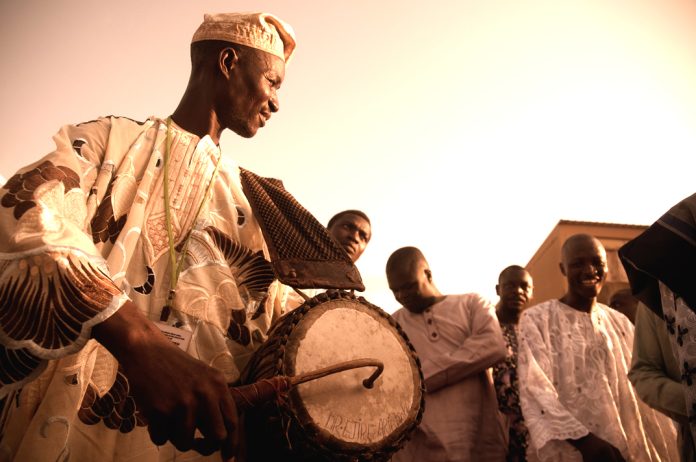
CHIEF COLLINS OBIH: REMEMBERING THE FOREMOST NIGERIAN BANKER BEHIND THE RECOVERY AND TRANSFORMATION OF IGBO ECONOMY AFTER THE CIVIL WAR By Joachim Olumba (KSJI)

0
CHIEF COLLINS OBIH - THE FOREMOST NIGERIAN BANKER BEHIND THE RECOVERY AND TRANSFORMATION OF IGBO ECONOMY AFTER THE CIVIL WAR

It is no longer news that the rest of Nigeria fought a devastating and debilitating civil war against Ndi-Igbo and the rest of Eastern Nigerians, the territory otherwise called Biafra then. It’s well known that the fratricidal Nigeria-Biafra war which lasted for almost three years between 1967 and 1970, reduced the entire region of Eastern Nigeria to mere rubble. 

Besides the colossal damage wrecked on public and private infrastructure and property, the civil war assumed such a catastrophic dimension unknown in our nation’s history, especially in social, economic, financial and educational spheres. 

The Federal Government and its armed forces fought the Biafra people and forces from diverse fronts and means. Apart from the use of hard military wares and weapons, there was the deployment of social, economic and financial policies and instruments to annihilate the Biafra people. Some of the extremely harsh and callous war-time policies of the Federal Government of Nigeria against the Biafra people were the full economic and food blockade of their territory; the crass drastic reduction of the entire savings of every Igbo person and Biafran to a paltry sum of twenty pounds (£20) each. What this meant was that no Biafran or Igbo person had access to more than a meagre £20 irrespective of the volume of their monetary savings or accumulations. This way, they lost their wealth and were reduced to mere paupers. 

There were other cruel policies adopted by the Nigerian side to further sentence Igbo people to agonizing penury, to subject them to severe financial straits and excruciating hardships. These included the forcible confiscation of their estates, which were described as abandoned properties; the promulgation of the Nigerian Enterprises Promotion Decree (more popularly called the Indigenization Decree), which offered Nigerians the impetus to acquire ownership interests in multi-national corporations operating in the country at that time. Easterners, especially Igbo people were invariably excluded from participation in the acquisition of the shares of those big corporations, as they had earlier been stripped of their financial savings and wealth through the obnoxious policy of handing out only a paltry £20 to each of them. 

These odious policies of the Federal Government of Nigeria against a people emerging from the jungle of a most catastrophic civil war were deliberately hatched to impoverish the dynamic, enterprising, industrious and hitherto highly prosperous Igbo people. The idea was to maximally utilize those wicked policies to perpetually cripple and consign them to the abyss of gruelling destitution. 

Fortunately, God Almighty had positioned someone in the mould of the Biblical Moses to come to the rescue of Ndi-Igbo, whose businesses and economy had been battered and shattered beyond imagination. That man, who had become a phenomenal figure in Nigeria’s banking industry was no other than the late Chief Collins Kenneth Nnadi Obih. To this eminent Nigerian banker was the recovery and transformation of the economy of Igbo land and the businesses of Igbo people associated with the civil war. 

How did Chief Collins Obih achieve this unprecedented feat? Before, during and after the civil war, he was General Manager and Chief Executive Officer of the African Continental Bank (ACB) owned by the then Eastern Region government. After the civil war in 1970, he used his extensive contacts to attract the Federal Government to become a major investor in the indigenous bank. 

After that, he initiated a liberal lending policy known as the Third Party Guarantee (TPG). By this innovative policy, the ACB approved and availed credit facilities not exceeding Ten Thousand Pounds (£10,000:00) to customers of the bank who had viable business proposals without having to subject them to the provision of the conventional or mandatory collateral security. All that was required of them was to get another customer of the bank to stand for them as surety. This was very simple in placing scarce but highly needed capital at the disposal of hitherto hopeless and helpless entrepreneurs to rebuild their collapsed businesses. 

Literally speaking, this policy worked great wonders. Soon, ACB became the most popular bank in Nigeria amongst business people. Every one of them was directly heading to the bank to enjoy this tremendously uncommon credit liberalization policy. Businesses across Igbo land bounced back. The Eastern economy was booming once again. It did not take long for the debilitating effects of the civil war to vanish from the streets of Eastern Nigeria, particularly in Igbo land. 

However, the liberal loan policy of the ACB under Collins Obih was not restricted to Igbo businessmen and women alone. Nigerian businesses with ownership cutting across the country enjoyed the peculiar credit package styled “TPG”. The patronage was so widespread that most notable business moguls and entrepreneurs in the 70s and 80s, owed their feats and successes to the unique credit policy introduced by Chief Collins Obih in the ACB. 

The unprecedented level of impact of this great Nigerian banker eventually culminated in the people dubbing him “Ozo-Igbo-Ndu” (meaning Saviour of Igbo people). 

Ozo-Igbo-Ndu, also popularly known as Ochiagha-Dikenafai was not just the man known for his transformation of the war-battered economy of Eastern Nigeria. He’s regarded as the Father of Nigerian Banking, having attained extraordinary heights and made unparalleled contributions to the industry in particular and Nigeria’s business sector in general. 

Chief Collins Obih had capped his distinguished career with six fellowships. More importantly, he was the first Nigerian, nay West African to be accorded the prestigious fellowship honour of the Institute of Bankers (later renamed Nigerian Institute of Bankers, and presently Chartered Institute of Bankers of Nigeria). Most significantly, he was the first indigenous President of the respected Institute between 1964 and 1966. He was also decorated as the first Nigerian Fellow of the Institute of Bankers of London. He was a Fellow of the American Bankers Association; Fellow of the British Institute of Management; Fellow of the Association of International Accountants and Fellow of the Chartered Institute of Secretaries and Administrators. 

In the business world, he impacted more fundamentally by occupying strategic positions in some commercial outfits, both in the ones quoted on the stock exchange and otherwise. He was at various times on the Boards of Universal Insurance Company Limited, Premier Brokers Limited, Biscuit Manufacturing Company (BISCO) of Nigeria Ltd, and METCOME Nig. Ltd, Kema Transport Service Limited, Kema Investment Group Limited, Transglobe Investment and Finance Co. Ltd and Sunlife Investment Ltd. Others include Crushed Rock Industries (Nig) Ltd, Hallmark Assurance Company Ltd, Transhill Ltd, Hic Oil Co. (Nigeria) Ltd, Ideal Flour Mill Limited and Ideal-Eagle Agro-Allied Limited. 

In the political arena, he left no less giant strides being one of the founding fathers of the dominant political party of the Second Republic, the National Party of Nigeria (NPN). A National Vice Chairman of the party, he was appointed Presidential Liaison Officer (PLO) to the then President Shehu Shagari. In 1983, he flew the flag of the NPN in the gubernatorial polls in the then Imo State. He lost the contest to the then incumbent Governor Sam Mbakwe. Chief Obih believed that he won the election and challenged the verdict before the election tribunal. The military coup of December 31, 1983, aborted his effort to get a reversal of the declaration of Governor Sam Mbakwe as the winner of the governorship election by the electoral umpire. 

Today, exactly thirty-three years ago (on Wednesday, May 9, 1990), Chief Collins Obih, who had left profound imprints in the sands of time went to bed and could not wake up. The foremost Nigerian financial guru and liberal banker par excellence, business tycoon, technocrat, political bigwig, philanthropist and humanitarian extraordinary,  joined his ancestors in his sleep. 

 I join his family and the numerous people he touched in their lives in the most outstanding and profound ways in remembering him today as always and ask God to continue to show him mercy for his frailties and shortcomings.

Joachim Olumba (KSJI) is a retired Comptroller of the Immigration Service and the author of a yet-to-be-published Authoritative and Authorised Biography of Chief Collins Obih

Disclaimer: 

The opinions and views expressed in this write-up are entirely that of the Writer(s). They do not reflect the opinions and views of the Publisher (Nze Ikay’s Blog) or any of its employees. The designations employed in this publication and the presentation of materials herein do not imply the expression of any opinion whatsoever of the Publisher (Nze Ikay’s Blog) or its employees concerning the legal status of any country, its authority, area or territory or concerning the delimitation of its frontiers. Equally, the sketches, images, pictures and videos are obtained from the public domain

FESTUS KEYAMO IS A ROGUE: I HAVE AN IDEA HOW HE MADE THE MONEY HE NOW BRAGS ABOUT By Emeka Ugwuonye, Esquire

0
Hon. Festus Egwarewa Keyamo Esq. (SAN) Minister of State, for Labour and Employment

I could not contain my laughter when I read about the social media controversy over Festus Keyamo’s house in America. For several reasons, it was a relief to me to find out that Keyamo is now a property owner in America, which makes him amenable to the jurisdiction of the United States courts. Timeline is important the understanding how Keyamo made the money he used in purchasing a house in America. The story is full of ironies. In his feeble defence to the allegations of corruption as to how he was able to purchase a house overseas while serving as a minister, Keyamo was reported to have said as follows:

“In 2021, I again wrote to the relevant agencies (by letters dated January 22, 2021), informing them of the movement of those funds out of the country to purchase a property as a better investment decision, instead of the funds lying idly in the account whilst I am in public office,”. He was further reported to have said that the building was about the cheapest of his several properties. He claimed that his flourishing and manned law chambers and his real estate investments are still far more financially profitable than serving Nigeria. He said also that “serving our country is a labour of love.” 

I found those claims from Keyamo to be untrue, deceptive and totally misleading. If in 2021, Keyamo writes his last of a series of correspondence seeking to transfer money that had been lying idle in his account, it is logical to believe he earned the money in 2019 and 2020. He wouldn’t really worry that the money was lying idle if he just earned it. The interval between his first correspondence and the final one in 2021 may have been more than one year. Hence, my assumption is that it was in 2019 that Keyamo came upon the money he needed to offload or launder through the purchase of a property in the United States in 2021. Before I go further, let me state a logical assumption. If the money Keyamo used to purchase the property in the United States was a proceeding of the unlawful transaction, then his purchase of property in America can properly be classified as money laundering. I shall now identify the particular transaction in 2019 from which Keyamo got 230,000 USD. 

I was remanded in Kuje prison in February of 2019 in one of those cases the police filed to keep me from starting the End-SARS protest ahead of when it finally occurred. I was placed in a special cell along with an inmate called GO. They called him that because he was the leader of the Christian inmates and in charge of the prison chapel. He was placed in a special cell as do high profile inmates such as politicians and rich people. Because the prison officials treated me like an important inmate, I was placed in the same special cell with this GO. Our cell was next to the cell of Governor Joshua Dariye, another high-profile inmate. 

PLEASE NOTE: I was only remanded in prison awaiting trial. I have never been convicted of any offence in my entire life anywhere in the world, including Nigeria where every effort has been made to convict me. But I have been charged more than ten times by Nigerian authorities. So far, I have won all the cases. And in each case, I was charged because I criticized law enforcement. It is important to make that clarification. One night, around 19th of February, 2019, a new inmate was brought to the cell I occupied with the GEO. The inmate was a man from Pakistan. His name was Muhammad Khalid Khan.

Of course, bringing him to our cell meant that he was viewed as a high-profile inmate or someone with money to pay the officials. As Khan entered the cell and the after the warders left and locked us inside, I and GO introduced ourselves to him and began to interview him. It is a standard practice that when you enter a cell, the inmates in that cell would interview. You and give you the rules of that particular cell and the rules of the custody as well as the rules of the prison. The depth of questioning during the interview depends on the comparative strength and personality of the resident inmates and incoming inmates. I wasn’t interviewed when I entered the cell. My fight with the police was already well known and the inmates and warders knew of me before I got to the prison. 

In the case of Khan, he was told I was a lawyer and he expected I would grill him. The moment I saw him, I knew this was a tough guy in the criminal world which most Nigerians could not imagine. He was quiet and unassuming. Yet, from experience, I knew this was a big fish. I wasn’t really authorized to interview him. But did so out of curiosity. A Pakistani in Nigerian prison is not a frequent occurrence. My initial impression was involved in terrorism financing. So, I grilled Khan in the presence of GO. He told me he was arrested at the airport upon landing in Nigeria. He wasn’t sure about the particular law enforcement agency that arrested him. I knew I could figure it out if he could tell me the offence he was charged with. I knew he must have been charged with an offence because he wouldn’t be remanded in prison without a remand warrant issued by a court. Also, the name of the court (Federal High Court) gave me the idea that this was a drug-related offence or terrorism. He also indicated to me that they were trying to extradite him to America. That gave me the impression that he must be wanted by America either for drug-related offences or terrorism-related financing. But Khan did not really know much about the details of the processes playing around him.

I tried to know why he was in Nigeria. But he was evasive. I tried to know his exact contacts with America. He told me he had never been to America. I had to draw certain conclusions from that. The only way America would want to extradite a foreigner who has not been to America is if his actions affected victims in America in a serious way. 

Normally in an extradition case, the offence is actually packaged by the foreign government. All there is for Nigeria are some straightforward diplomatic and administrative protocols whereby the Nigerian Ministry of Justice takes the suspect to the Federal court and presents the documentation that was formulated by the American Department of Justice. The suspect may not know the details of the offences., except what he could read from the document served on him shortly before he appears before a court. Even the Nigerian government will not know the details of the offences. All they will see in Nigeria is that the United States Government wants this individual extradited based on vaguely described offences. In a standard criminal case in Nigeria, the prosecutor would draft the charges and file them along with proof of evidence and serve the same on the suspect. So, in a standard criminal trial, the defendant must know the details of the offences he was charged with. But Khan arrived in Kuje without knowing the details of the offences against him. From experience, I knew that he was facing extradition. 

Immediately Khan realized that I was a lawyer both in Nigeria and the United States and that I had deep knowledge of extradition proceedings, he was so happy. He began to seek my help immediately. He wanted me to guide him. I told him flatly that he was facing an uphill task. This was because he was not a citizen of Nigeria. All those constitutional defences a Nigerian citizen could typically invoke to prevent extradition would not be available for a non-Nigerian citizen who finds himself fighting extradition in Nigerian courts. Khan pressured me to link up with lawyers outside the prison to challenge his extradition. I told him there was really no hope for him in that respect. I advised him that his best option was to pursue diplomatic option since I could see that he was highly connected to the Government of Pakistan. That was actually true because right from the moment he got into the cell, he was able to communicate directly with the Pakistani Ambassador and even the Ministry of Foreign Affairs in Pakistan. 

It was much later that I realized that Khan controlled an international drug trafficking and money laundering network responsible for trafficking narcotics to the US, Australia, Africa and Europe.  His money-laundering network was widespread throughout the US, Australia, Canada, Africa, Europe and Asia. And the American government wanted him badly. Khan was really impressed with my knowledge of things concerning his type of case. He was impressed when he realized I was able to decipher information he did not want to divulge to me. For instance, I knew he was going to be taken to the Southern District of New York. I also could tell that he would be convicted if taken there. I just explained to him the conviction rate of the US District Attorney for the Southern District of New York. I also explained to him that when the DOJ and the State Department go that far to get a suspect, it is because they believe he is a highly valued suspect and they must have excellent evidence against him.

Due to the fact that Khan trusted my judgment and analysis, he kept pressing me to find a lawyer for him in Nigeria who would take his case. Even though I managed to convince him that on points of law and available precedent, he would not win in court on merit, he wanted me to find a way to bribe the court. He made it clear to me that he would pay up to 5 million dollars in bribes if I could arrange for people that would set him free in exchange for that money. I was reluctant to even consider his request. While I was able to discuss the law with him, I was totally clueless when it came to arranging officials that would be able to take money from him and set him free. 

Khan promised to give me 100,000 USD upfront if I could help him with that, and 200,000 USD when he would get back to Pakistan. I didn’t want to consider this. Besides, it could be dangerous messing with a man like Khan with an international network of bad guys. So, I politely declined. However, GO thought otherwise. He thought that the money Khan was offering for help was too much to ignore. When I went to court the following day, GO was alone with Khan. GO, convinced Khan, that he would find him a lawyer, well connected with the government that would help him. The lawyer GO found for K was Festus Keyamo. When I came back from court, I noticed that Khan was avoiding me. He and GO did not want to tell me that they had reached out to Keyamo and that Keyamo had agreed to help Khan. 

The next day, Keyamo visited the prison in his Landcruiser. I knew that Keyamo came to Kuje, but I did not immediately realize who he came to see. All I knew was that Khan was taken out to meet a visitor and that GO went with him. It was later that night that I realized that Keyamo had promised Khan that he would use his connections in the Buhari Government to stop his extradition. I was told that Keyamo charged Khan 280,0000 USD for that. Khan was willing to pay anything. I tried to convince Khan that Keyamo was only trying to dupe him. I felt that with the level of interest, the United States Government had in Khan, even the President of Nigeria would not be able to stop the extradition. So, I knew that Keyamo was lying to Khan. He just wanted to take the man’s money. Unfortunately, as I tried to stop Khan from trusting Keyamo, Khan began to see me as someone opposed to his only solution. Also, GO felt that I was about to spoil the opportunity for him to get money. I learnt that GO was to get 50,000 USD for his role in arranging for Keyamo. I later heard that Keyamo gave 50,000 USD to a relative of GO out of the 280,000 USD Khan paid him. 

NOTE: The prison environment is an unusual place where things are whispered in hushes. Verification of information cannot be 100%. My reader must take that into consideration in drawing his conclusions.

I felt mad when I heard that Khan had actually paid Keyamo. I became more and more critical of the entire deal. GO and Khan conspired with the officer-in-charge of the prison to place me in solitary confinement for two weeks where I would not have contact with Khan or any other inmate. They believe I might ruin the whole deal. Of course, Khan settled the officer-in-charge in this whole deal. Even before Khan arrived in our cell, the officer-in-charge was already in his pocket. You won’t know what 10,000 USD cash can do to a Nigerian civil servant if you put it in his pocket until you see how the Officer-in-Charge was fawning toward Khan. 

For four weeks, I found myself in the segregation unit of Kuje prison. It was called a segregation cell because it was designed to isolate an inmate and keep him away from the prison population. Khan was now being escorted by specially designated inmates and warders for the purpose of ensuring that his path would not cross mine during the 60-minute-a-day period that I was allowed to come out of my cell. But don’t forget that every warder is so easy to compromise. So, segregation or no segregation, I knew what was going on. I discover it within a relatively short time anyway. So, I knew that Khan continued with the Keyamo charade. 

Keeping me in segregation was becoming a problem because I was popular with the junior warders. They routinely flouted the orders given to them to be strict with me. I wasn’t as segregated or as isolated as the officer in charge had expected. His staff undermined his goal in that respect. Because I was not as isolated as he expected, I had the capacity to reveal to the United States Government that Nigerian prison officials were cooperating with Khan to frustrate his extradition. This was true really because the officer-in-charge and GO gave Khan a phone and sim card with which he was communicating with Keyamo and his people in Pakistan. I knew that if I sent to the District Attorney in New York the WhatsApp number K was using in Kuje, the FBI would be able to track his WhatsApp chats and that it would cause tremendous panic. And I could so easily do that because inmates had easy access to phones in prison. So, the officer-in-charge was really worried about me, especially as he knew that his staff were sympathetic to me. Indeed, they were hostile to their boss, really. One day, the officer-in-charge came to the segregation unit very angry. He was shouting at me. He said: “Barrister Emeka, you are a dangerous man. No other inmate has been able to set my staff against me as you have done. But I will show you that I run this prison”. Honestly, I didn’t see that coming because I was not doing anything in particular to antagonize the warders against their Officer-in-Charge. The warders were acting on their own understanding of events around them.

Two weeks after Keyamo was said to have taken money from Khan, the court granted the government application and ordered that Khan be extradited to the US. It dawned on Khan that I might have been right about Keyamo. But even after the court had ordered the extradition of Khan, a few days before he was to be taken to America, Keyamo still told Khan to bring another 100,000 USD which he claimed was demanded by the Attorney-General in order to stop the extradition. I understood that Khan also gave that additional 100,000 USD to Keyamo. I was released from segregation when the pressure became too much on the Officer-in-Charge. When released from solitary confinement, I was placed in another cell in another custody and forbidden from meeting or speaking with Khan. Initially, Khan agreed to stay away from me. But as Keyamo’s promises did not materialize and things were going in the opposite direction, Khan became desperate to speak with me. He sent inmates to reach out to me to seek my advice. 

Less than a week after I came out of solitary confinement, I saw the prison official going to remove Khan from his cell. I understood that move, that mood. All of a sudden, officers were laughing and smiling and turned stern-faced. Agents of the US Government had come to the prison accompanied by NDLEA officers to take Khan. As Khan was leaving the prison, he saw me and he began to scream so I would hear him: “I need my money back. I need my money back. Keyamo took my money but failed to deliver”. He spoke with Keyamo that morning and Keyamo assured him that everything was alright. I felt pity for him. I knew what was awaiting him outside the prison gate. I knew that in less than 24 hours, he would be in New York before a judge that would remand him. I estimated that in addition to the N380,000 USD that Khan probably paid to Keyamo, he must have paid an additional 130,000 USD to other officials and intermediaries. 

Khan is now serving his long prison term in the US. I intend to visit him in the US prison to get the full story and to tell him that Keyamo now has a house in America. He can arrange to get his money back. Why should I or you believe what I was told about Keyamo in the case of Khan? I had to compare what I heard in the case of Khan with what I had known about Keyamo and his law practice, which he now brags about. The following events made it easy for me to believe what I heard about Keyamo in Khan’s case:

1) In 2011, there was a fee dispute between my law firm in America and the Nigerian Embassy in America. Then the Embassy was headed by Ambassador Ade Adefuye. My firm was in the process of exposing the fact that Ambassador Ade Adefuye connived with several government officials in President Jonathan’s administration to misappropriate 27 million dollars, being the proceeds of the sale of Nigerian Government properties in the United States. To stop me, Ambassador Adefuye sent a message to Mrs Farida Waziri, the then Chairperson of the EFCC. On a routine visit to Nigeria in February 2011, the EFCC used the DSS to abduct me at the Lagos Airport. Apparently, they had watched-listed my name at the request of Mrs Farida Waziri and EFCC. 

2) I was detained by the EFCC and asked to make a deal that I would keep silent over the matter. I refused. Farida Waziri decided to detain me at their Abuja office, just to please Ambassador Adefuye and allow him and his team time to clean up. I was detained for more than a month before they filed any charge against me. Mrs Farida Waziri engaged the services of Festus Keyamo to prosecute me. According to Keyamo, Mrs Waziri said to him: “This man (Emeka Ugwuonye) is a troublemaker, you are the type of person to fight him for me”. Keyamo filed a charge against me at the FCT High Court, accusing me of misappropriating 1. 5 million dollars of the Nigerian Embassy money in Washington DC. No problem! As a lawyer, I was happy to have the opportunity to defend myself in court. But Keyamo did not allow me to defend myself. 

3) The day I was granted bail on that charge, Keyamo filed another charge against me at the Federal High Court, accusing me of failure to declare my assets. Keyamo could have amended the charge he filed against me at the FCT High Court to add this new charge. But he wanted to file a separate one-count charge in a different court so that I would have to go through bail application and remand all over. That was a way of denying me the benefit of bail granted by the FCT High Court. At the Federal High Court, Keyamo failed to appear on court on many dates, thereby delaying my arraignment and bail application. Finally, after three months of abusive detention, Justice Bello got very upset and asked the EFCC team led by Keyamo why such abusive practice. Justice Bello granted me bail and insisted it must be perfected that day. I was finally released on May 12, having been detained since February 14. 

4) Festus Keyamo even forged a court order suggesting that I was detained pursuant to a detention order. Yes, Keyamo forged a court order ( I still have the order for posterity). After three months of detaining me unlawfully in Nigeria, I returned to the United States, but this time I had two cases to answer in Nigeria. Many people in the US told me not to return to Nigeria. They said it is an evil land that should be avoided since I was able to return to the United States. But I had to return to Nigeria because I needed to defend those cases. I could not be pushed out of Nigeria by Keyamo and Waziri.

5) Of course, I did not keep quiet. I continued to criticize Farida Waziri for corruption and abuse of powers by the EFCC. In July of 2011, Keyamo filed an application asking the courts to revoke my bail because I was critical of Farida Waziri and EFCC. The courts refused to revoke my bail. When I returned to attend a court hearing in November of 2011, Keyamo and Mrs Farida Waziri conspired to charge me again with an entirely different offence. They claimed that I refused to pay one Nigerian client of my firm who was represented by my firm in New York. They arrested me at the Abuja High Court where I had come to attend a court hearing and took me to Lagos. My luggage and everything were still in my hotel. They took me straight from court to the airport and flew me to Lagos. When I got to Lagos, I was detained and charged with refusing to pay the Nigerian client. All these are false allegations. But once a charge has been filed in court, it takes time before you will be able to show that the charges were false. I was detained at Lagos for another two months waiting for a bail hearing and Keyamo did everything to drag and delay my bail hearing. I was granted bail by Justice Christopher Balogun. I returned to the US on December 24, 2011. 

6) I now had three EFCC charges lying against me in three different Nigerian courts in two different cities. I had the opportunity of staying away from Nigeria. But I did not want Farida Waziri and Keyamo to force me out of Nigeria. So I kept coming to Nigeria to attend court dates. I knew I would defeat Keyamo in court eventually. It would cost money and more, but I would defeat him. So, I refused to stay back in the US.

7) While in EFCC detention in Lagos in December of 2011, I met Senator Festus Ola. He served one tenure as Senator for Ekiti State. Senator Ola was brought to the EFCC cell and accused of fraud. Senator Ola’s case was interesting. He was wrongly arrested by the EFCC and he filed fundamental rights enforcement action against the EFCC and won a judgment of 50 million naira. Senator Ola wrote to the EFCC demanding to be paid his judgment amount. According to Senator Ola, Keyamo got wind of the fact that Senator Ola was trying to recover his 50 million judgment. Keyamo contacted Ola and offered to recover the money for Ola if Ola was willing to give him (Keyamo) 33% of the 50 million. Senator Ola turned down Keyamo’s offer. The next day, someone called Ola and told him to come to the office of EFCC to collect his 50 million. Ola went as he was invited, only for him to be arrested and taken to Lagos. When Ola met me at the EFCC cell, he told me about his case and right from there we became friends and he requested me to be his lawyer against the EFCC. From Ola’s case, I had a good idea of how Keyamo operated.

8) By the way, according to sources available to me then, I was told that the friendship between Keyamo and Farida Waziri started before she became the head of the EFCC. They all called her Aunty. When Waziri became the head of EFCC, Keyamo went to her to solicit favours for old times. She rewarded Keyamo by giving him EFCC cases.

9) When I came back to Nigeria in February of 2012 to attend trial before Justice Balongun, the judge considered the preliminary objection I had filed. In my application, I requested the court to dismiss the case against me because the events alleged against me occurred in the United States. There was no way the Nigeria court would try an event that occurred in the United States and which was not a crime in the United States. Justice Balogun agreed with me and was clear in his judgment. He even rebuked Keyamo for filing such a frivolous case against me. So, one case was down. I was confident that the same thing would happen to the case they filed against me in Abuja over the alleged 1.5 million cases.

10) Both Keyamo and Farida Waziri were aware that they had no case against me because everything they claimed I did wrong occurred in the United States. To ensure that they had something to hold me in Nigeria, they created an offence that could be said to have been committed in Nigeria. While in EFCC detention, they asked me to fill out an asset declaration form. I told them that I did not have all the information there and then. They said: “Okay, Barrister, no problem. Just write it down here that you did not have the information”. I wrote it down. They used that to make a case of failure to declare assets against me. Their case was that when I was asked to declare assets, I refused.

11) Because the FCT High Court Judge initially trying the case of 1.5 million dollars against me knew that the case was a pure vendetta, he adjourned it indefinitely. For two years the case did not come up. Keyamo wrote a petition to the Chief Judge accusing the judge of wrongdoing. The case was transferred to another Judge, Justice Chizoba Oji. By now, we were in 2015. The first thing I did before Justice Oji was to file a preliminary objection following a similar application as what I made successfully in Lagos. The issues were the same. To block my application, Keyamo claimed that the 1.5 million incident occurred partly in Abuja and he cited the newly enacted Administration of Criminal Justice Act to say that the court could not decide on a preliminary objection until the end of the case. (This is a provision mischievously placed in Nigerian law to enable the state to use abusive prosecution to punish opponents). 

12) With the objections of Keyamo and the lies he told the court; the court could not rule on my objection until after the end of the prosecution’s case. I continued to face two major criminal trials. I represented myself till toward the end when I finally was able to bring in a very brilliant and able Jeff Njikonye, SAN to dispose of the two matters. I was facing the 1.5 million charge at the FCT High Court and I was facing the failure to declare assets charge at the Federal High Court. These are useless cases that Keyamo pursued against me just to punish me. He held me back with these cases for ten years, while collecting money from the Nigerian government for prosecuting these cases. 

13) On the 1.5 million cases, Keyamo desperately tried to call witnesses to testify against me. He called Hassan Yusuf, a former official of the Embassy who was familiar with the transaction. But Yusuf could not lie for him. In fact, Yusuf refused to testify against me because he knew I did nothing wrong. Keyamo tried to bring in Mr Felix Pwol, another former official of the Embassy, but Pwol refused to testify because he knew I did nothing wrong. Keyamo went and brought the poor Professor George Obiozor. He blackmailed the old man into coming to testify for him. But Obiozor’s testimony was favourable to me in the end. 

14) On February 24, 2021, the judge of the Federal High Court discharged and acquitted me of the charge, holding that I did not do anything wrong and that the manner in which they tried to get me to declare my assets was manipulative and abusive. They were desperate to set me up. Also, on July 2, the judge of the FCT High Court dismissed the charges against me concerning the 1.5 million dollars. In other words, in July 2021, the court finally decided on the application I filed in 2012 and repeated in 2015. The court delayed that application for 9 years because Keyamo lied to the courts about the basic facts of the case. The court, in its judgment, observed that the only connection Keyamo was able to show between Nigeria and the alleged offence was that I visited Nigeria and they found me at the Lagos airport. Further, the court wondered: “But if the link with Nigeria was that you found him at the Lagos Airport, why did you bring him to Abuja Court? Is there no court in Lagos?”

I went to this length to show you who Kayemo is, and how he probably made money in 2019, which he probably used to buy a house in America in 2021. Also, I noticed that Keyamo was bragging about his great law practice. I wanted to show you the truth about his law practice and the kind of things he does and on the basis of which he claims to be a great lawyer. If that is it, it then means that being crooked and dishonest is what it takes to be a great lawyer in Nigeria. In fact, in his application to become a SAN, Keyamo must have cited his cases against me as proof that he is a good lawyer. And they made him a SAN for that. Nigerians have a lot to feel ashamed of for having a country like this. Keyamo is a cheap crook, and he knows it. I can reveal more about him if given the opportunity.

For Keyamo to claim to be a successful and honest lawyer is a great irony. The only good thing is that he can now be sued in America so easily. God is bringing him closer to justice. The US is not a jungle where he has thrived. All his life, he would hide behind a powerful institution to commit atrocities. He hid behind Farida Waziri and the EFCC. Now, he can hide behind the President-Elect to commit more atrocities. But Nigerians are not as stupid as he thinks. They are watching him.

ARREST OF KHAN IN NIGERIA:

The U.S. Consulate General in Lagos said that Khan was arrested at the request of the U.S. Justice Department in Nigeria pursuant to a federal arrest warrant issued in New York. “The U.S. Department of Justice heavily depended and relied on the support and professionalism of Nigerian law enforcement in coordinating the successful arrest and extradition of Khan,’’ it said in a statement. It added that Khan, who was extradited on April 28 this year, was being charged with attempted narcotics importation, conspiracy to import a controlled substance into the U.S., and international money laundering.

Disclaimer: 

The opinions and views expressed in this write-up are entirely that of the Writer(s). They do not reflect the opinions and views of the Publisher (Nze Ikay’s Blog) or any of its employees. The designations employed in this publication and the presentation of materials herein do not imply the expression of any opinion whatsoever of the Publisher (Nze Ikay’s Blog) or its employees concerning the legal status of any country, its authority, area or territory or concerning the delimitation of its frontiers. Equally, the sketches, images, pictures and videos are obtained from the public domain
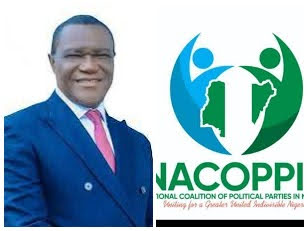
‘WHAT IF CHRISTIANS WERE SUICIDE BOMBERS IN OUR CITIES?’ – AN ARAB FEMALE JOURNALIST ASKED.

0
Journalist Nadine Al-Budair claims Islam must shed its intolerant image, disavow those who practice terrorism, and apologize to the rest of the world for the death brought by radical jihadists.

A female Arab journalist who lives in Qatar has penned a bold article that asks Muslims in the Middle East how they would respond if Christian suicide bombers struck their public markets, collapsed their tall buildings, or tried to force Muslims to convert to Christianity. Liberal Saudi journalist Nadine Al-Budair writes in Kuwait’s Al-Rai newspaper that Arab countries have refused to address the problem of terrorism and have yet to create a climate that matches the liberal, humanitarian climate of the West. She asked Muslims to consider what their world would be like if Christians the world over had responded to Muslims the way terrorists have spread radical Islam.

“Imagine a Western youth coming here and carrying out a suicide mission in one of our public squares in the name of the Cross. Imagine that two skyscrapers had collapsed in some Arab capital and that an extremist Christian group, donning millennium-old garb, had emerged to take responsibility for the event, while stressing its determination to revive Christian teachings or some Christian rulings, according to its understanding, to live like in the time [of Jesus] and his disciples, and to implement certain edicts of Christian scholars,” Al-Budair writes in a translation of the editorial provided by the Middle East Media Research Institute (MEMRI).

Al-Budair asks her readers to imagine Christian priests calling Muslims infidels over loudspeakers and chanting that God has demanded their deaths. She also writes they should also consider what would happen if Arab countries had provided Westerners with entry visas, benefits, and modern healthcare only to have them turn on their hosts to kill them in the name of religion – likely a reference to the San Bernardino attacks carried out in December 2015. “These images are far from the mind of the Arab or Muslim terrorist because he is certain, or used to be certain, that the West is humanitarian and that the Western citizen would refuse to respond [in this manner] to the barbaric crimes [of the Muslim terrorists],” Al-Budair writes. “Despite the terrorist acts of Al-Qaeda and ISIS, we [Muslims] have been on [Western] soil for years without any fear or worry. Millions of Muslim tourists, immigrants, students, and job seekers [travel to the West] with the doors open [to them], and the streets safe [for them].”

She writes, however, that tolerance for Muslims is fading in the West because Muslims refuse to confront the problem of Islamic extremism. As evidence, she points to the presidential campaign of New York billionaire Donald Trump, who in a “scary declaration,” she writes, “demanded to bar Muslims from entering the U.S.” Al-Budair wrote that Muslims do not have the right to condemn statements like those made by Trump without addressing the failures of Arab educational systems which teach jihad and hatred of the West in madrassas (Islamic schools) around the world. Al-Budair claims Muslim nations should apologize to the rest of the world.

A year ago, Jordan’s Queen Rania voiced much of what she said about education in the Middle East in addressing the United Arab Emirates UAE Government Summit in Dubai. Al-Budair isn’t confident, however, that anyone will heed her call for tolerance. “After all these farces, some Arab analyst comes out touting a pathetic message, and reciting the same words in his friend’s ear that he has repeated millions of times: ‘Those [Muslims who commit terrorism] do not represent Islam, but only themselves.’ “This is all we [know how to do] – absolve [ourselves] of guilt,” she wrote. Al-Budair, who describes herself, as a feminist, last year encouraged Muslim women to flee their “benighted countries” for the safety, security, and opportunity of the West.

Liberal Saudi journalist Nadine Al-Budair writes in Kuwait’s Al-Rai newspaper

Disclaimer: 

The opinions and views expressed in this write-up are entirely that of the Writer(s). They do not reflect the opinions and views of the Publisher (Nze Ikay’s Blog) or any of its employees. The designations employed in this publication and the presentation of materials herein do not imply the expression of any opinion whatsoever of the Publisher (Nze Ikay’s Blog) or its employees concerning the legal status of any country, its authority, area or territory or concerning the delimitation of its frontiers. Equally, the sketches, images, pictures and videos are obtained from the public domain
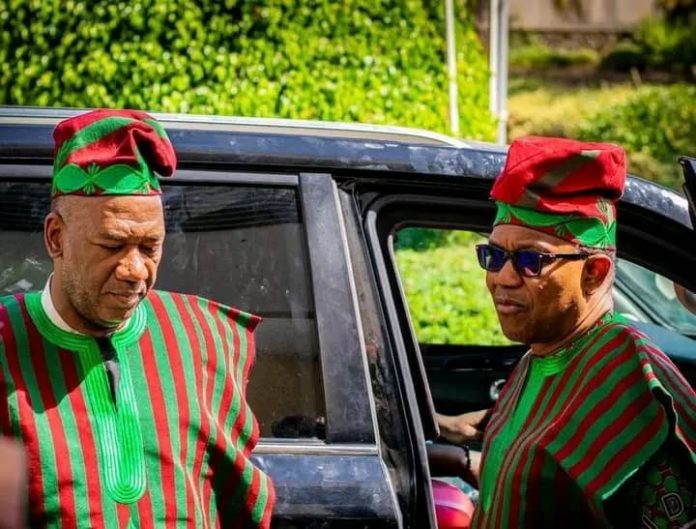
REMEMBERING YURI GAGARIN: The first spaceman who came in from the cold!

0
YURI GAGARIN: The first spaceman who came in from the cold!

Russian Cosmonaut Yuri Gagarin became the first human in space on April 12, 1961, in a Cold War-era humiliation for the US. Gagarin’s pioneering, the single-orbit flight made him a hero in the Soviet Union and an international celebrity. Six decades later, Russia is marking the launch with ceremonies in Saint Petersburg and other cities. Yuri Gagarin belied the West’s austere impression of the Soviet Union – a charming, easygoing Russian with a ready smile. The first man in space became a powerful propaganda tool.

It was the smile that clinched it. The first cadre of Soviet space explorers gathered together numbered 20. Among them were Gherman Titov, still the youngest person to fly in space (aged 26), and Alexei Leonov, the first person to venture out of the safety of a capsule to conduct a spacewalk. But these pioneers still followed in the footsteps of another. The cosmonaut who would become the first man in orbit needed to be a calm and confident pilot, someone able to function on a mission no person had ever encountered without going to pieces. But there was more to this selection process than pure technical skill.

Yuri Gagarin’s smile, it’s been said, could melt the stoniest heart, and not even those at the highest echelons of Soviet power were immune. When Sergei Korolev – the USSR’s chief rocket designer – first met the cadre of pioneering cosmonauts, he spent most of that first meeting chatting to the charismatic Gagarin. Korolev would later call him his “little eagle”.

Gagarin’s historic mission in Vostok 1 on 12 April 1961 lasted one hour and 48 minutes – far less than the average multiplex movie. The 5ft 2in (155cm) fighter pilot and former foundry worker – his short stature perfect for the cramped interior of the Vostok capsule, it turned out – blasted into space from the Baikonur Cosmodrome (now in Kazakhstan) with a delightfully informal quip into his earpiece: “Let’s roll!” Less than two hours later, his re-entry capsule landed on the ground near the city of Engels in Western Russia, with Gagarin himself landing by parachute minutes later. 

A farmer and her granddaughter, who had seen the round capsule fall heavily to Earth, were greeted by the sight of a strange, silver-suited figure. “I told them, don’t be afraid, I am a Soviet like you, who has descended from space and I must find a telephone to call Moscow!” Gagarin later wrote in his logbook. In a few short weeks, the cosmonaut’s face would become one of the most recognisable in the world. Yuri Gagarin had become the first human to conquer space. The politburo had another mission for him – to conquer the world. The Soviet Union’s leadership knew that should the maiden mission be successful, the first human in space would become a face recognised around the world. The first cosmonaut would become a weapon of soft power. 

The Soviets kept quiet about Gagarin’s mission until he had returned safely to Earth – and then broadcast the news far and wide via the state news agency Tass. The reports sent shockwaves around the world, not least in the US, which had been trying to beat the Russians to the first manned flight. “About 4am, telephones began buzzing up and down the east coast of the United States as reporters demanded responses from Nasa officials to the Tass dispatch,” Nasa wrote in a report on Gagarin’s mission. “John A ‘Shorty’ Powers half-consciously replied to his first inquisitor, ‘We’re all asleep down here. “One widely celebrated US newspaper headline later that day reads: “Soviets put a man in space: Spokesman says the US asleep.” At this stage, Gagarin was just a name, a previously unknown Soviet air force pilot now being trumpeted as the first space explorer. On 14 April, two days after he returns to Earth, the USSR unveils the cosmonaut to the world at a giant gathering in Moscow’s Red Square after a 12-mile (10km) parade through the city. Millions of Soviet citizens attend.

“It put the senior politicians here in the UK in a very awkward position. On the one hand, they did want to acknowledge the huge achievement for the Soviet Union, but on the other hand, they didn’t want to upset the allies across the Atlantic. At that time the American space programme was struggling to catch up. In the end, there was a compromise, the invitation for Gagarin to visit the UK didn’t come from the British government, it came from various places – including the mayor of Newcastle.” An exhibition promoting the Soviet Union, which started the day before Gagarin arrived, was another convenient peg on which to hang his visit.

“[Soviet leader] Nikita Khrushchev said before: ‘It’s not going to be stage-managed, this is going to be spontaneous’,” says Tom Ellis, a professor of Cold War history at the London School of Economics. “And the gathering is spontaneous, there’s this amazing footage of labourers and students all dancing together.” It’s thought the celebrations to mark Gagarin’s return are the biggest since the end of the war in Europe, 16 years before. Gagarin’s charisma and easy smile are quickly evident. There are invitations for the first cosmonaut to visit from across the globe. “There are crowds wherever he goes to meet him, even in the UK, which is very firmly in the US camp,” says Ellis. “It’s very difficult for us now to understand the interest. People just wanted to get a glimpse of him.”

Gagarin’s humble roots are a godsend for the Soviet propaganda industry. Born to peasant farmers in a small village near the western Russian city of Smolensk, Gagarin’s village was invaded by the Germans when he was only seven years old; his family are evicted from their home and have to spend the next 21 months living in a mud hut. Yuri sabotages German equipment and is lucky to survive the war, though he spends several months in a hospital. He’s a gifted student – especially in engineering and maths – but is no bookish wallflower – he’s equally good at sports, and works in a foundry while studying. Later, after graduating as a military pilot, he flies MiG fighter jets in the far north of Russia, near the Finnish border. Out of hundreds of applicants, he is one of the first 20 chosen as the USSR’s first batch of cosmonauts. 

Gagarin’s visit to the UK, three months after his historic flight, is initially a cautious affair. The US-aligned United Kingdom steps carefully around the politics, refusing to make it a state visit, even though Gagarin is accompanied by an official delegation. The UK authorities are perhaps taken aback by the excitement. A foundry workers’ union – in honour of Gagarin’s former occupation – invite the cosmonaut to Manchester, and Gagarin accepts, extending his stay. “There’s quite a famous moment when he’s appearing in Manchester, and he stays in an open-top car even though it’s raining, because, he says, ‘The people have come to see me.” 

Gagarin’s world tour comes at a delicate time in East-West relations. It is only a few months before the building of the Berlin Wall. His flight takes place only a few days before the abortive US-backed Bay of Pigs invasion of Cuba; the Cuba Missile Crisis a year later will bring the world closer to a nuclear confrontation than ever before. Amid such tension, Gagarin’s visit is a rare moment of celebration, and possibly a way of building detente. “One of the other people who was working with him said, ‘That person who asks for an autograph and gets a moment with him, will come back and show all their friends and family, and start reading more about the space programme,'” says Ellis.

“When he came here to England, he was seen as a superhero,” says Gurbir Singh, a space journalist who has written a book about Gagarin’s visit to the UK. “He had experienced something no one else had experienced. Apart from the speed and altitude records he achieved… he’d also experienced a realm – space, micro-gravity, weightlessness – something no one had ever experienced, and for a few months, no one else would experience.”

In 1957, the launch of Sputnik 1 had sent a spasm of panic around Western nations, who saw it as proof of the USSR’s ballistic missile arsenal. But Sputnik never survived its historic mission, Gurbir says, burning up in the atmosphere some three months later. “Gagarin was a person, a human being, a very delightful character… he came across as a very warm and engaging individual. And that smile! Everybody I spoke to remembered that.” 

In the UK, Gagarin’s popularity took the establishment by surprise. “He certainly met the prime minister MacMillan and the Queen at Buckingham Palace, and neither of those two things were on the cards at the time he arranged to come. It was very confusing for the British government, to on the one hand recognise technological achievement. And it was a huge technological achievement – and the bravery of this individual… it was a very high-risk adventure.” Gagarin, it emerged later, was lucky to survive the mission – not because of problems in space, but because his re-entry module had failed to disengage properly from the orbital module. The cables failed to cut correctly and the two craft spun violently until the wires gave way. Only after that was Gagarin able to eject from the module and make it safely back down to Earth. “So when he did come over, everybody in the West acknowledged that this was a huge achievement for the Soviet Union.” 

“It put the senior politicians here in the UK in a very awkward position. On the one hand, they did want to acknowledge the huge achievement for the Soviet Union, but on the other hand, they didn’t want to upset the allies across the Atlantic. At that time the American space programme was struggling to catch up. In the end, there was a compromise, the invitation for Gagarin to visit the UK didn’t come from the British government, it came from various places – including the mayor of Newcastle.” An exhibition promoting the Soviet Union, which started the day before Gagarin arrived, was another convenient peg on which to hang his visit. Though by this time Gagarin had already visited Prague in then-Czechoslovakia and the Finnish capital Helsinki, Singh says the London visit was the pinnacle because “it was the heart of the capitalist West”.

The ever-smiling Gagarin was, Ellis says, “a much more appealing face for communism. Gagarin is a really charismatic figure. He embodies the Soviet Union and the journey it’s going through. He’s had a childhood interrupted by the war… he’s come from a collective farm to the stars in just 27 years. It’s kind of what the Soviet Union has done, too.” When his parents attend his parade in Red Square, they are told to dress simply – further strengthening the “carpenter to cosmonaut” ideal the Soviet top brass wishes to present.

This glorification of Gagarin’s humble roots goes deeper than a simple East-vs-West battle of wills, says Ellis. The early 1960s is a period of enormous global change, with many former colonies finally gaining their independence. Ellis says the exploits of Gagarin – and wider Soviet accomplishments – are a “model of development” for many new nations. “The Soviets are essentially saying to them, ‘Look, we’ve been through the same things that you have, we were technologically backward, and we’ve managed to forge ahead and get to space in a short amount of time.'” The garrulous, ever-smiling Gagarin was the easygoing public face of something more imposing – a giant technical/industrial base able to design and build a rocket to send a human into space. 

Gagarin’s tour included a stop off at the United Nations in New York (technically he did not set foot on US soil because he was taken from the airport to the UN by helicopter) but also visited some newly independent nations, like India, Sri Lanka and Afghanistan. Unlike most of his contemporary cosmonauts – such as Alexei Leonov, who passed away in 2019 aged 85 – Gagarin is frozen in time. The statues and paintings, like the young cosmonaut himself, never age. After his world tour, Gagarin became deputy director of the new Cosmonaut Training Centre. Sudden fame and the pressure of his diplomatic duties put a strain on his marriage; there were rumours of a drink problem and infidelities, including one where Gagarin leapt out of a window after being caught by his wife in bed with another woman.

Gagarin then focused on getting fit enough for a return to space. The first cosmonaut was a reserve pilot for the first Soyuz mission in April 1967; this mission ended in tragedy, killing Gagarin’s friend Vladimir Komarov. Soviet authorities banned him from space travel, though Gagarin still insisted on logging enough flight hours on jet aircraft to remain a credible instructor. It was on one of these flights, in March 1968, that Gagarin died. In an incident still mired in conspiracy and controversy, Gagarin’s MiG-15 trainer crashed in woodland just outside Moscow. he was only 34. 

“When he died, it all started to go wrong for the Soviet Union,” says Ellis. “Korolev dies. You have the Americans surging ahead with the Saturn 5 rocket [which eventually takes them to the Moon]. They know they’re in trouble. “Gagarin’s status survives the Soviet space programme being eclipsed by the Americans. “He’s enshrined as a hero,” says Ellis. “When Neil Armstrong visits the Soviet Union, he is mobbed by crowds who are really pleased to see him. Nasa thought that it’s maybe because Armstrong looks a little like Gagarin.”

By Stephen Dowling

Disclaimer: 

The opinions and views expressed in this write-up are entirely that of the Writer(s). They do not reflect the opinions and views of the Publisher (Nze Ikay’s Blog) or any of its employees. The designations employed in this publication and the presentation of materials herein do not imply the expression of any opinion whatsoever of the Publisher (Nze Ikay’s Blog) or its employees concerning the legal status of any country, its authority, area or territory or concerning the delimitation of its frontiers. Equally, the sketches, images, pictures and videos are obtained from the public domain
NIGERIA – RECONCILIATION POSTPONED?

0
Matthew Hassan Kukah, Catholic Bishop of Sokoto Catholic Diocese, Nigeria

Being the Easter Message Delivered by Matthew Hassan Kukah, Catholic Bishop of Sokoto Catholic Diocese, Nigeria During Easter Mass 2023

1: Easter and our Inconclusive Dreams:

The resurrection of Jesus Christ is everything for the Christian faith. Without it, every pillar and the foundation of the Christian faith collapses. It is the single most shocking and dramatic event in human history. Over two thousand years later, the thought of it still seems irrational, absurd, fraudulent, nonsensical, unreasonable, grotesque and even scandalous. St. Paul eloquently said that the idea of the resurrection was foolishness to the Greeks and a stumbling block to the Jews (1 Cor. 1:23). Accepting the resurrection has consequences because we have to then accept that true, there is no other name by which there is salvation (Acts 4: 12). St. Paul repeats: If there is no resurrection, then Christ has not been raised, if Christ has not been raised, then our faith is in vain and you are still in your sins (1 Cor. 15:14). 

Preceding the resurrection are the three days, from Good Friday to Sunday (known as the Easter Triduum), marked by fear, anxiety, uncertainty, disquiet and wariness. The passion of Jesus Christ is the story of our lives with its ebbs and flows. It is a story of sin and redemption.  His triumph assures us that even when it seems that God is asleep and does not care, God wakes and subdues the turbulent seas (Mk. 4:38). For this reason, there is sure hope of victory for all people who strive to follow Christ and His Way. I am the resurrection and the life. Anyone who believes in me, though he die, shall live (Jn. 11:35). This is the power of the resurrection that mocks the powers of this world. Resurrection, not death, has the final word of History!

2: Our 2023 elections and our Future: 

The much-awaited elections, so full of promise have come and gone, well, not yet, some might say. They generated so much enthusiasm and excitement among our citizens who believed they would be a defining moment for our country. The buildup was marked by so much expectation about a transition to a new order in Nigeria. The outgoing President had given his word that his legacy would hang ensuring that we have successful elections. The Electoral Umpire, basking in self- confidence, assured Nigerians that these would be the most transparent and seamless elections in our history. We took the assurances in good faith. 

Literally half of the population had registered for the elections and were armed with their voters’ cards. On election day, the national mood had a sense of an Easter metaphor to it. First, like the journey to Jerusalem, joyous citizens filed out to their designated polling units. Our citizens, fired by patriotism, braved the harsh weather (rain or heat), hunger, thirst,  depending on their locations across the country. As the day wore on, we had news of the usual glitches about election materials arriving late, a song that sounded familiar.

Much later in the day, there were reports that the scenes were getting ugly with evidence of a return to our old ways now known as voter suppression: ballot box snatching, intimidation, physical violence against ordinary citizens, with reported incidents of injuries and outright killings. Amidst all of this was the utter chaos around the uploading and transfer of the results. INEC’s garment of legitimacy and credibility was now caught up in a barbed wire of conspiracy theories. As the day drew to a close, a cloud of doubt spread across the country as the excitement and high expectations vaporized.

3: The Hate that hate produced: 

Nigerians now look back with utter shock as they survey the debris and litter of mangled bodies, destroyed ballot boxes, stolen or torn ballot papers. Yesterday’s dreams turned into a nightmare. With dawn came ethnic and religious profiling, new productions of hate speeches, threats, and gaslighting. The social media gradually became the conveyor belt for the diffusion and distribution of hate. The questions are more than the answers: What happened? Where did this hate come from? Has it been living within us? How did we not see it coming? Were we just blind or did we get carried away by the promises of INEC? Were we convinced that we had crossed the threshold of ethnic and religious bigotry? Did we think that the political class had changed its ways? Were we really in a Democracy? Where and why did all go wrong? Can we learn from this? Can we gather the debris and like a game of puzzle start put things back? How can we climb out of this valley of dry bones? Are there lessons that the cross and resurrection of Jesus can teach us? I say Yes. 

I recall the 1959 Documentary, The Hate that Hate Produced, which was made at the height of the gospel of hatred that the Nation of Islam deployed as a means of mobilising for the redemption of the black man in America. The Nation grew out of a selected narrative and juxtaposition narratives of the black experience deliberately calculated to generate and re-enforce a sense of victimhood and anger at oppression by whites. The idea then was to justify violence against the white person who was presented as the devil. The proponents of this message were later consumed by the same hatred which gradually infiltrated their own ranks. The question that followed was, who is to blame for the hate that hate produced? Hatred has no redeeming values. The current state of hate does not define us and we need to slow it down. We must listen to one another and seek reconciliation. In the end, only true Christian love can redeem us. 

4: Is Hatred our Political Inheritance?

Every election brings more frustration and anger and the victims all turn on themselves. The circles have gone on and on. Little wonder, fewer and fewer citizens want to risk their lives for what promises them only blood, tears, injury and death. While citizens seek outlets to express their grievances, they often find that the doors of opportunity to express their dreams are blocked. Misuse of power by the political class creates the conditions for violence. Citizens struggle to use their votes to choose those they can trust but the violent insist on taking power by the means they know best. It is therefore a mistake to think that violence occurs because Nigerians do not love themselves due to differences of ethnicity or religion. No, violence occurs because the politicians do not love and respect us. We need more respect. Our politics is therefore a clash between right and wrong, justice and injustice, love and pain. Violence is often the last gasp of victims who can’t breathe.

5: Waiting Outside the Tomb:

Nigerians are so collectively frustrated that it is almost impossible to convince them that they can find justice. Everywhere you turn today, Nigerians look forlorn, disconsolate, lugubrious, and despondent. Our swagger is gone. We look like men and women returning from a funeral, murmuring discontentment in hushed tones. It is therefore not surprising that even the victors are blowing a muted trumpet.

Unpleasant as this may sound, this blood that they have shed could be seen as blood of the birth of a new Nigeria. It can become the blood of our new birth, our redemption. However, we cannot accept that violence and bloodshed are the normal route to power. Because like the blood of Abel, the blood of those who have been murdered continues to cry out to heaven seeking for justice ( Gen. 4:10). Though we are tempted with the drudgery of fatigue and despondency, unlike the apostles in the garden of Gethsemane, we should be ready to wait in patience for one hour or more (Mt. 26:40). Our dream is merely in suspense, a punctuation mark in the book of our unfinished greatness. Let us see this as a detour, a diversion. We still have our roadmap in our hands. It is time to return to the highway so as to choose a road less travelled, a road of hard work, sacrifice, dedication,  and hope. The ugliness of yesterday must not define us. We must finish this journey together. We shall neither relent, slow down nor give up. The resurrection is a promise that despite the seeming hopelessness, God’s plans cannot be frustrated. Those who position themselves at night with stones to guard the entrance of the tomb will find themselves confounded at dawn by an empty tomb. A new Nigeria will emerge from the tombs of our seeming helplessness.

6: The crucifixion: A scapegoat or a lamb of sacrifice?

In resolving our problems, the easy part is to seek out the scapegoats. We have done so by exploiting our differences and turning them into weapons of war. Stereotypes are cheap commodities for blackmail especially in states weakened by a corrupt political class. Those beating the empty drums of hate are leading their followers to places where the streets have no names. They have lynched and murdered their imaginary enemies. The evil men on the streets are not the disease afflicting our nation. They are merely symptoms. The real diseases are those of us, men and women, sitting on the thrones of influence and power, those who adopt silence as a tactical weapon of choice, those who look the other way and who use silence as an excuse to sit on the fence of deceit. Like Pilate, they rise on the throne, wash their hands and return to the shadows, afraid to speak justice, and turn a blind eye to the truth (Mt. 27: 24). Those of us who take this position have the blood of the victims on our hands and are complicit.

Sadly, our current crisis should be only a paragraph in the book of our nation’s trials, trauma and search for healing. Each of us should be courageous to take a stand. During the trial of Jesus, Peter exhibited two contrasting personalities in one. First, facing the army of those who had come to arrest Jesus, armed with dangerous weapons, he fearlessly pulled out his sword and cut off the ear of a very influential member of the crowd, Malcus, High Priest’s slave (Jn. 18:10). In doing this, Peter showed that he was ready to die to stop injustice. However, down the line, as Jesus is brought to trial, the same Peter, weighed down by fear, decided to follow Jesus from a distance (Mt. 26: 58). Following Jesus from a distance exposed Peter’s cowardice and leads him to deny Jesus three times. When we are distant from God, we are exposed to danger and fear. Injustice feeds on the wine of fear and suspends truth. If we are close to God, we have no fear because, perfect love drives out fear (Jn. 4:18).

7: We are angry: We want justice: 

Yes, we are all angry and we all want Justice. Yes, we have the right to be angry and we should be angry. But, angry about what, angry with whom and justice for whom? St. Thomas Aquinas, known as the angelic doctor of the Church, said: “He who is not angry when there is a just cause for anger is immoral because anger looks to the good of justice. If you can live with injustice without anger, you are immoral as well as unjust.” You cannot develop empathy for a victim unless faith enables you to love him/her as a child of God. If we allow injustice in our society while claiming to be believers, then as St. Paul said, we are empty gongs (1 Cor. 13:1). 

Anger is a legitimate emotion and it possesses some curative and even redemptive uses. When motivated by a higher ideal, a higher sense of honour, it transforms into righteous indignation and we are compelled to hold up a sign that says, No, Enough is enough. Anger against injustice and misuse of power is a just cause. That is why Jesus whipped the traders out of the temple (Mt.21:12). The challenge is how we process it, how we focus on its roots. We have to ensure that anger does not hold us prisoners. In all, our journey is long and winding, exhausting but promising, sorrowful but expectant.

Whatever may be the nature of the imagined human solution to the problems of violence in our society, the human heart must undergo spiritual circumcision (Rom. 2:28, Gal.5:6, Phil. 3:3). Rather than focus on the scapegoat or the lamb of sacrifice, all of us need to pause and ask if we were participants or guilty bystanders in the violence among us. Pope Francis has asked us in his Easter message to “go into our own wounds, to look at the tree of our humiliation, the cross of Jesus, to ensure that our hopes are not sealed in a drawer. In this way, our long-awaited peace can come”. Peace making is not a specialised subject. It is a gift of God that is within each of us. It is about how we treat one another. This is why the urgent task before us is to restore the dignity of the Nigerian nation and her citizens. Nigerians have for too long been beaten by the rain and the sun of injustice. There can be no peace when those who live in glass houses, have mastered the art of throwing stones to those they have kept in the rain and under the scorching sun. Until Lazarus and the rich man, Dives, can sit around the same table, there can be no just peace or justice (Lk. 16:19-31). Peace is not the absence of war. It is the fruit of justice.

8: An Appeal to Nigerians:

8.1: To our President Muhammadu Buhari, GCFR

As you prepare to return to Daura or Kaduna, I do not know if you feel fulfilled or that you met the tall dreams and goals you set for yourself such as: ending banditry, defeating corruption, bringing back our girls, belonging to everybody and belonging to nobody, selling off our presidential fleet and travelling with us etc.

You may have followed my engagement with you through these Messages over the years. You publicly referred to me during one of our visits as your number one public critic with a huge smile. I commend you for the fact that you have known that none of this was done out of malice but that we want the best for our country. May God guide you in retirement while we all embark on the challenge of reclaiming the country we knew before you came.

8.2: To the incoming President:

I am hopeful that you will appreciate that the most urgent task facing our nation is not infrastructure or the usual cheap talk about dividends of Democracy. These are important but first, keep us alive because only the living can enjoy infrastructure. For now, the most urgent mission is to start a psychological journey of making Nigerians feel whole again, of creating a large tent of opportunity and hope for us all, of expanding the frontiers of our collective freedom, of cutting off the chains of ethnicity and religious bigotry, of helping us recover from the feeling of collective rape by those who imported the men of darkness that destroyed our country, of recovering our country and placing us on the path to our greatness, of exorcising the ghost of nepotism and religious bigotry.  

8.3: To the Honourable Justices of the Bench: 

You face difficult challenges ahead and you are mortals. The future of our country hangs on your deliberations. I will not judge you. I can only pray that God gives you grace. It will be up to you to decide how you use that gift which no amount of influence or power can buy.

Nigerians are saddened that your sacred temples have been invaded by the political class leaving the toxic fumes that now threaten your reputation as the last hope for all citizens. It is sad that your hard earned reputation is undergoing very severe stress and pressure from those who want justice on their own terms. Nigerians are looking up to you to reclaim their trust in you as the interpreters of the spirit of our laws. The future of our country is in your hands. You have only your consciences and your God to answer to when you listen to the claims and counter claims of Nigerian lawyers you and have to decide the future of our country. We pray that God gives you the wisdom to see what is right and the strength of character and conscience to stand by the truth. You have no obligation to please any one. Our future depends on how you arrive at your much awaited judgement. 

8.4: To the Youth of Nigeria:

I salute your energy and courage. You fought a good fight across party lines. Your engagement and involvement substantially changed the contours of our politics. Things will never be the same again. However, the youth do not belong to any single party, no matter the temptation. You must look at the mistakes of the past and avoid them. Note that your actions today will shape tomorrow. Learn the rules of good sportsmanship, know rules, know your roles, know when to fight, what to fight for and know when to walk away so you can embrace other fights. In all, most of you did well, but some of your colleagues lost their lives in the hands of members of your own groups. Keep the dreams, but know the contours of the long road ahead. 

9: And finally, looking ahead: A Prayer for Nigeria: 

Oh God, our creator, we thank you for the gift of our dear country. We have not lived up to the vision that you have for us – a vision of justice, peace, unity, and prosperity for all our children. Yet, we thank you for your mercy upon us.  Father, please guide our transition to a new dawn. Banish evil and insecurity from our land. Give us the spirit of forgiveness and heal us from our infirmities, that blindness which makes us forget that we are brothers and sisters, children of One Father. In your mercy grant eternal rest to those who have died and give us the strength to start again. May the power of our Risen Christ be upon us and our dear country. Amen. A happy Easter, Nigerians.

Disclaimer: 

The opinions and views expressed in this write-up are entirely that of the Writer(s). They do not reflect the opinions and views of the Publisher (Nze Ikay’s Blog) or any of its employees. The designations employed in this publication and the presentation of materials herein do not imply the expression of any opinion whatsoever of the Publisher (Nze Ikay’s Blog) or its employees concerning the legal status of any country, its authority, area or territory or concerning the delimitation of its frontiers. Equally, the sketches, images, pictures and videos are obtained from the public domain

PETER OBI: AS TOUGH AS NAILS By Mr Iloegbunam

1
The Presidential Candidate of the Labour Party of Nigeria

Peter Obi’s voice and gentle mien belie the steel in him. Sitting inside his Apapa, Lagos, office, one day, just the two of us, and holding a lighthearted conversation, Peter Obi suddenly said that he would forever be grateful to Onyechi Ikpeazu. Why did he say that? I didn’t put the question to him. All the time the suit to claim his stolen electoral mandate was in the courts, there was no day we met without discussing it, at least tangentially. Sometimes we had a full house. At other times, half a full house. On certain occasions, just the two of us. In every shape or setting we had, the case came up for exhaustive or salutary examination. Not once did he talk of Dr Ikpeazu being worthy of perpetual gratitude. So why did he raise it now? I looked at him intently, saying nothing.

He resumed: “When we were going to challenge INEC’s declaration of Dr Ngige as the winner of the governorship election, our plan was to file the case in the name of APGA,” he said. “But Onyechi refused and said I must file the case in my own name. I didn’t immediately see his point because, apart from not being a lawyer, I assumed that since I contested the election on APGA’s platform, the party must file the case. Onyechi refused and said no. ‘If APGA filed the case, they might run out of steam during the proceedings and throw in the towel, even if you hold a contrary opinion. File the case in your name; you contested the election. Only you can legitimately dictate whether or not to go the whole hog.’”

I saw his point. The previous night, word had come in that the APGA national chairman had been in Awka, where he was received with fanfare at a press conference, after which the Governor conducted him around Anambra State to inspect the road projects his government was undertaking. At the tour’s end, the APGA chairman addressed the press, saying that APGA, as a political party, no longer had any interest in the further prosecution of the case against INEC and Dr Ngige. That meant one thing: had APGA filed the case, the chairman’s repudiation of continuing it would have closed the matter, without the stolen mandate recovered. That was one of the reasons why Peter Obi held Dr Onyechi Ikpeazu (SAN) in awe.

I tell this story as a foundation for addressing charges in uninformed quarters that portray Peter Obi as a paperweight and bereft of resilience. A lot of those who were vociferous in the resolve to challenge INEC’s declaration of Ngige as the winner of the governorship election turned coats as the case progressed. Their problem may have been fatigue. Or capitulation to the weariness of protracted litigation. Or financial inducement. Or an after-the-event realisation that the kernel of life-and-death struggles was seedless. I do not know. Nor do I care to speculate. The point is that Peter Obi sallied forth, refusing to cave in under the pressures of the respondents’ contrived delays in the judicial proceedings, the obvious high cost of the litigation itself and the multitude of betrayals strewn like thorns along the path to justice. It took three years, but victory came in the ultimate. That cannot underscore the character of someone without conviction, somebody not imbued with a resilient spirit.

People say that Peter Obi is soft-spoken. That is correct. But it is not contrived. That was a card nature dealt him. The fact that he does not believe in blustering or what Nigerians call gra- gra in common parlance, persuaded some to see the man as a weakling, a man bereft of resolve. But time and again, he proved them wrong. He was only eight months into the governorship when his first major challenge came. Impeachment! I feared its contingency from the day he took the Oath of Office because most of the State House of Assembly members were of the Peoples Democratic Party (PDP). So, in one of the reception parties organised for the Obi administration, (he was not present), I pulled aside Dr. Ben Obidigbo, a House member I had known from my London days, and before he entered politics, and pointedly asked him if he thought the House could attempt to impeach Obi. “That would depend on the kind of signals that come from Abuja,” he replied.

I didn’t know what signals came from Abuja and those that were transmitted from inside Anambra State. But at 5:30 am one Sunday, my phone rang as I was readying for mass at St. Joseph, the Worker Catholic Church, which was a minute’s walk from Parktonian Hotel where I was staying at the time. The caller was Peter Obi. “Come to the Lodge,” he said the moment I picked up the call, cutting off. In Awka, the Government House was where the Governor had his office. Government Lodge in Amawbia was his official residence. I got to the Lodge in less than 20 minutes and was surprised at the large number of officials milling around the frontage of the main mansion. Inside the main sitting room, there were even more officials stooped over Mrs Ebele Okonkwo, one of our secretaries, who at the time lived inside the Lodge estate. Mr. Peter Afuba, the Attorney General, was dictating a letter to Mrs Okonkwo. Many voices were adding words and phrases. I saw Reverend Sister Martina Obi, the Governor’s sister, sitting calmly at the far end. Perhaps she had used the night inside the Lodge, meaning to join the Sunday Mass there.

Not immediately seeing Peter, I raised my voice with a question: “What’s going on here?” That was when those standing next to the secretary noticed that I was among them. “They have started impeachment proceedings,” a voice answered. I was stunned. I decided to see the governor immediately. Walking away from the sitting room to head to the private area of the Lodge, I nearly bumped into Peter as he was returning to the sitting room. “Can you believe that I cannot get the Chief Judge on the phone?” That question was the first thing he said on seeing me. The State Chief Judge was Mr Justice Chuka Jideofor Okoli, who had sworn in Peter Obi as Governor. It turned out that the attempt to contact him by phone had started the previous night when word got to the Governor that the House had readied itself to move against him. It struck me then that I would have received my own summons to report at the Lodge much earlier if my phone hadn’t been switched off.

When I left Parktonian for the Lodge that morning, the idea was that I would settle for evening mass. Most of us were still at the Lodge that Sunday until nightfall, making frantic calls to many places including Abuja, undertaking personal visits to the home of prominent people, and scheming to thwart a move we were convinced was unwarranted. Early the next day, the impeachment news had spread like wildfire, even though it hadn’t been reported in the orthodox media. (Social media wasn’t in vogue then.) I was surprised at around noon when I stepped out of the walled inner enclosure where the Governor’s office was located, to go have a word with Dame Virgy Etiaba, the Deputy Governor, only to find the outside lined with people protesting the impeachment move.

For the next three weeks, I had a hard time of it, with Chief Press Secretary Mike Udah, receiving group after group of demonstrators on solidarity visits, addressing them and promising them that everything would be all right. The visit of one group left many weeping profusely. Someone had brought in kids from some orphanages and others who were physically challenged, including the crippled, the blind and the victims of cerebral palsy. To see and hear those children singing that their Governor should not be impeached was quite moving. But it was none of the business of the House members, who had ditched their chambers and relocated to Asaba, in Delta State. Most of them seemed to have changed phone numbers.

As Channels Television showed a few weeks later, the House reconvened in Awka under heavy security cover and the Speaker, Honourable Mike Balonwu, moved the motion. In one sentence he said, “Those in favour of the impeachment say Aye and those against say Nay.” But even before his colleagues had a chance to affirm their convictions, he brought his gavel down on his desk with a thud: “The Ayes have it.” Peter Obi stood impeached.

Peter left office, parked out of the Government Lodge, and moved to Agulu, his hometown, which was only 25 minutes away. Dame Virgy Etiaba was sworn in as the Governor. I retained my position as Chief of Staff. Most of the functionaries remained in place and Governor Etiaba ran the State until the courts overturned Peter’s impeachment.

Those were momentous days. On February 8, 2007, I got summoned to report to the Governor’s office. With pen and paper in hand, as I was wont to do, I hurried to see Governor Etiaba. I had known her since before the civil war when we lived in Kano, and I attended the Ibo Union Primary School. Their compound, the home of the Ejimbes, which was symptomatic of the upper middle class, sat next to one of the goalposts of the pitch on which we played football at school. If thirsty, we entered the Ejimbe compound and drank to our fill. They had pipe-borne water right inside it. For “ordinary level” people like us, my siblings and I routinely went to the famous Ibo Road to fetch water from pumps at street corners. 

Sometimes one of our errant balls would fly into the compound and we would race in to retrieve it. I often saw her in those days, an adolescent, but not once did we exchange more than greetings. When she became Deputy Governor, I told her how we used to come to drink water in their compound and how, at other times, I accompanied my mother as she attended meetings hosted by Mrs Ejimbe. While the women deliberated, I and any other kids I found around the school’s pitch played soccer with the kind of ball we called “olumpik.” She remembered those days but could not recollect my face, which was not surprising for we used to invade the place in battalions.

Today, however, the mission was starkly different. When I entered the Governor’s office, there were about seven others inside it, all of them seated, some clutching files, none of them of the Government House personnel. I greeted them. Mrs Etiaba, a fair-minded but no-nonsense woman, went straight to the point. “Mr Iloegbunam,” she began. Unlike Peter Obi who addressed me as Oga Chuks or Uncle Chuks, the Dame settled for Mr. Iloegbunam. Standing there, I listened attentively. She said those in her office were members of the panel she had set up to investigate the matter of unlawful encroachment on government property in Onitsha. Of course, I knew the story. Near one of the markets, Onitsha is all markets, anyway, some traders were found digging up the outsides of the market. Asked by metropolitan officials what was going on, they lied that it all had to do with drainages. But, within a week, brand new buildings had been erected there, ready to be used as stalls and shops. The panel, having investigated the matter, concluded that the structures were illegally erected. They would impede the free movement of people and goods. The builders deserved to be prosecuted.

Governor Etiaba was indignant about the impunity. “Mr Iloegbunam,” she said. “Get adequate security and have the structures pulled down tomorrow.”

A Governor’s word was law. I contacted Mr Haruna John, the Anambra State Police Commissioner, on the score. A fine gentleman, I had a great rapport with him. Unfortunately, he died in a helicopter crash in Jos on March 14, 2012. He had, at that time, risen to the position of Deputy Inspector General of Police (Operations). We agreed that the demolition exercise would take place in the afternoon. The next morning, I sat in the office doing routine work and looking at the watch. When, before noon, I looked out of my window, I saw a limousine as long as those often seen in Nollywood movies parked just in front of the Governor’s office. I couldn’t believe it. I wondered who permitted the affront. Visitors’ cars were normally parked outside. Even if important visitors were driven right up to the entrance of the Governor’s office, their chauffeurs invariably drove the cars outside until it was time to return and pick their employers. Governor Etiaba was not in the office; she was out on a scheduled inspection of road projects. So, who had come in? I asked Mr Ayo, the Civil Defence man attached to my office, to go find out. Standing in my front he told me it was Dim Chukwuemeka Odumegwu-Ojukwu that came in the car. I thought he wouldn’t come unannounced and that he would invariably be told when the governor would be in the office.

I rose to go meet Ojukwu who was well known to me. Midway I saw a protocol officer who said Governor Obi’s impeachment had been overturned and that they were arranging the Executive Chambers for a handover of power back to him. Inside the Executive Chambers, the place was full of officials moving things about. Presently Mrs. Etiaba arrived, dressed in a tracksuit, the kind of attire we often used for road inspections. She went into her office. Maybe a phone call had alerted her to the developments. Before long, a speech had been prepared in which the memorable phrase “Right now I take the back seat again” was included. The Executive Chambers was full and people, some of whom had hurried in from outside Awka, spilt into the corridors and adjoining rooms.

Peter Obi was back in office as Governor, thanks to his proverbial “nine lives” and his indomitable spirit. While he survived, Justice Chuka Okoli was compulsorily retired on the recommendation of the National Judicial Council over the alleged questionable roles he played in the impeachment process. But more hurdles waited along the way. A few months after the impeachment saga, Peter Obi was again forced from office. This was in May 2007, following the swearing-in into the office of Mr Andy Uba as Governor of Anambra State. Peter Obi again went to court, arguing that he was sworn into office for a four-year tenure which hadn’t expired, and which fact meant that the INEC election that pronounced Mr. Uba Governor was invalid. The courts upheld his case and he returned to office again – until his second term of office expired on March 17, 2014.

It was not only in matters of the judiciary that Peter Obi proved his resilience. When his administration started, one of the things that bothered him to no end was the low receipts by the State Board of Internal Revenue. People devised ways of evading tax payments. Others paid far less than their incomes should guarantee. But what vexed him the most was the NARTO or National Association of Road Transport Owners. This body had all the motor parks in the Onitsha metropolis under its firm control, collecting revenue on a steady basis without ever paying a dime into the state coffers.

Governor Obi thought the situation was untenable. Upon contacting the NARTO officials, he got told that there was no point fishing in troubled waters. They had absolutely no intention of relinquishing their hold on the parks. The Governor invited them to a meeting in his office. They obliged, their head who was called Ezeweruka or something, and two others. It was a strange meeting because there was hardly a discussion, just a monologue by the Ezeweruka guy. There were just the six of us in the Governor’s office, a small affair since we were still using the Deputy Governor’s office while the Governor’s office which was destroyed during the attempted abduction of Governor Ngige was being reconstructed. The NARTO leader looked the Governor in the eye and began, using his index finger to stab the air in all directions, emphasising their position:

“Mr. Governor,” he said in Igbo. “I must give it to you straight. No beating about the bush. You see Onitsha? E get as e be. (Onitsha is a peculiar place.) It may not be messed with. There have been governors before you. And there will be governors after you. So, my advice to you is this: steer clear of Onitsha. If there is a legacy you want to leave, focus on it squarely and depart when your time is up. You may want to build a hospital somewhere. It may be your wish to give some local government a new secondary school. Or a clinic! Whatever it pleases you to do for Ndi Anambra, go ahead and do it. But leave Onitsha well alone.”

I know Governors who would have been incensed by this kind of insolence, who would have risen and plastered the impertinent fellow’s face with hot slaps, without any repercussions whatsoever. But Peter Obi smiled. There was nothing else to say. He thanked the visitors for showing up. We all rose. The Governor walked the visitors the few steps to the door and bade them farewell. He was wearing a smile but, knowing him, it was obvious that his bile had been stoked. Outside, the Governor’s security detail, including even his aide-de-camp, started hailing Ezeweruka, calling him Pawa ka pawa – the Power that surpasses power. They obviously knew him. Beaming, the super-powerful man dipped a hand into the pocket of his traditional jumper and out came a wad of mint-fresh bank notes, which he proceeded to spray on his cheerers.

Well-meaning people rallied to the government’s side. One of them was Mr Sylvester Odife, Jr. Following the footsteps of his father, Mr Sylvester Odife, Snr, who had founded the Anambra State Amalgamated Traders Association (ASMATA) in 1956, he had been the Chairman of the Onitsha Main Market Association. He had known Peter Obi who was three years his junior at the CKC. And he was all for giving to Caesar his due and to God, His due as well. These guys were of immense assistance.

In two weeks, Ezeweruka realised where the real power resided. With an abundant detachment of Army troops and police officers, Anambra retrieved all of its parks from the parasites that had, for decades, captured and harvested resources therefrom. The Pawa ka pawa himself fled Anambra State and became an internal exile in Enugu State. It took close to six months before the fear of many things allowed him to step on Anambra soil again. And, when he returned, he left Onitsha Parks well alone. E get as Onitsha be!

The point of these stories is that Peter Obi’s voice and gentle mien belie the steel in him. He meets an Igwe (traditional ruler) and bows to greet him, intoning Igweeeee! He meets a prelate and bows to salute them, kissing his ring. Once he thinks a man is older than him, he never forgets to add “Sir” in addressing the person. On the first day I met him, he addressed me alternately as Uncle Chuks and Oga Chuks. Throughout the five years I was in his government and even up till next tomorrow, he still so addresses me. I thought it was incongruous for a Governor to be addressing his appointee as Oga but he didn’t want to know, so I put the matter on the back burner. But everything has an explanation, some of which may not be easily or comprehensively identified.

In the case of Peter Obi, placing a finger on the factors that encapsulate him calls into play the Igbo saying that, To find the hand that stabbed another to death, the smith that moulded the knife must be identified. The true Peter Obi is straight out of his background. His parents were Mr Josephat and Mrs Agnes Obi from Agulu in the Anaocha Local Government Area of Anambra State. In Hebrew, Josephat means, Yahweh will Add Another Son. Yahweh gave the couple seven sons. In fact, the couple scored just one short of a soccer team in procreation, all of them born in Onitsha where the Obis resided. In seniority, this is the order in which their children were born: (1) Dominic. (2) Bibiana (Mrs. Adani, deceased). (3) Iraneus (deceased). (4) Martina (Reverend Sister). (5) Damian. (6) Peter. (7) Fabian (Reverend Father). (8) Francis (US-based medical doctor). (9) Agnes – who was named after the mother, but is better known as Mama Chioma (Mrs. Okoye), and Ndibe (the boss of Next International).

Before the civil war, the family lived at Nwosu Lane in Odoakpu, Onitsha. At the cessation of hostilities, they moved to No 98 Modebe Avenue where the family owned a supermarket. The house was a two-storey building. The ground floor had the NADO Supermarket. The first floor housed a restaurant. The top floor was the living quarters of the family where each of the children lived in a separate room.

Peter attended the Sancta Maria Primary School right inside the grounds of what is now the Holy Trinity Basilica. Damian was at the adjoining Holy Trinity Primary School. Each school day they walked some 15 minutes to school, Damian in his white shirt and brown shorts uniform, Peter also in a white shirt but red shorts. After school, they mostly didn’t go home together. Damian played good football and will stay back with other soccer addicts to enjoy themselves. Peter wasn’t keen on the ball game. His main interest, even in that early stage of his life, was business, aspects of which will be discussed shortly.

Because both parents were traders, or businesspeople, as today’s fad dictates that people in their profession should be described, all the Obi children are also traders, including those that have taken the holy orders. This is because they were of a home where life revolved around the church, the school, and the shop. Apart from Martina, Fabian and Francis, all others are into business; none ever bothered to seek paid employment anywhere. But trading is ingrained in them all, including the nun, the priest, and the doctor, whether or not they advertise that trait.

Just as people describe Enugu as a Civil Service town, Onitsha is the Traders’ town. Another name for Onitsha is Market. Apart from the Main Market, which is the biggest market in West Africa, every Onitsha street is a market in its own right. The entire landscape is dotted with shops and stalls. In fact, almost every compound has a shop or a marketer with wares on a table facing the street. No one grew up in such an environment without knowing the ropes of entrepreneurship. Most of the kids brought up in Onitsha in those days were all traders first before anything else, even if they later turned out to train as forensic psychologists or became consultant anaesthetists. The business texture of Onitsha is mainly thanks to the lordly River Niger and the entrepreneurial Igbo spirit.

Peter’s propensity for buying and selling manifested when he was at Christ the King College, Onitsha. When he collected his school fees, which he did on the first day of a new term, he didn’t pay it straight to the school but first used it as capital for trading, making gains before meeting his monetary obligation to the school. By the time he got to Form Three, he was already into inter-regional trade. He will often take a bus that took him across the Niger Bridge into Asaba from where he travelled another 82 kilometres to Agbor. At Agbor, there was a farm where he purchased eggs by the crates and at bargain prices. Back in Onitsha, the eggs were delivered to a lady who ran an eatery close to the CKC. Every morning, students and workers lined up and bought sandwiches or yam or plantain or potatoes and fried eggs. By mid-month when most were already broke, they bought their meals and their takeaways on credit. Peter had a large notebook in which every customer’s debt was recorded. Once the month ended, no debtor feigned surprise at seeing Peter in front of his door early in the morning to get paid what he was owed.

Before living secondary school, he had started travelling to the United Kingdom to buy wares, which he sold to students and through outlets in the markets. On one occasion, he went to London and returned with a TV set he installed in his room at Modebe Street. Friends visited him soon after, and as they watched a programme on the box, one of them professed love for the set. Peter immediately offered it for sale, defeated its power supply and yanked off the mains’ wire. He put the TV back in the carton in which it had arrived. The friend left with the television, and Peter pocketed his money, his profit. Within the month, he had done another trip to London and come home with many of the TV sets, one for his room, the others for sale. At that time, a Lagos-London-Lagos flight ticket cost no more than N150. The Naira enjoyed parity with the Pound Sterling.

When Peter gained admission into the University of Nigeria, Nsukka, eyebrows were raised in quarters that didn’t fully understand. They thought it was a joke. They believed his rightful destination was the Main Market or a supermarket of his own. They were wrong because they knew not the high degree of importance that Ndigbo attach to education. It will surprise people to discover that a lot of the “rustic” Igbo traders seen all over the place rendering English with heavy accents are, in fact, university graduates. Peter stayed at Nsukka for four years to earn a degree in Philosophy. But he was more at home travelling overseas and importing goods that he sold. That was how it came about that as an undergraduate, he owned a Peugeot 504 while many a student worried about where their next school fees would come from. The 504 then sold at less than N5,000. After his freshman year, Peter no longer saw the point in sharing dormitory spaces with fellow students inside the Zik’s Flats, Awolowo Hall, and Azikiwe Hall etc., on the campus. He went into provincial Nsukka and rented himself a flat.

There is another trait of the Igbo trader that Peter readily imbibed early in life. The typical Igbo trader believes in the saying, “The snail passes through thorns by the use of a sweet tongue.” If a customer came to your shop and severely underpriced your product, you would not get offended if you were Igbo. You would dobale for them. After the genuflection, you would ask if they wouldn’t use a soft drink seeing that the weather was rather hot. It may, in fact, be chilly. You would ask about their wives and children even though a careful look already told you that the customer’s youthfulness suggested that he was unmarried. All these things you would do because you wanted the customer to part with his money and leave with the ware you were anxious to sell. That is all that the “Sirs” boil down to. I will give a good example of this attribute while discussing some of Governor Obi’s achievements.

Peter Obi carried his reverence for people into other areas. After I took a single honours degree in English from the University of Ife (now the Obafemi Awolowo University, Ile-Ife), I came out convinced that I had “finished” the language. I had been taught by the titans – people like Professor Gerald Moore, Professor Bisi Afolayan, the semanticist, and Professor Biodun Jeyifo, the Marxist literary critic. There were others, of course. But when I became a foundation staff at The Guardian in Lagos, past masters in language use taught me that all I had was a B. A. for Begin Again. People like Chinweizu, Dr Stanley Macebuh, Professor Onwuchekwa Jemie, Professor Femi Osofisan and Eddie Iroh, the accomplished novelist and TV film producer, who at the time was not even a graduate taught me to place my feet on the ground. There was a big difference between what was learnt in the university and what struck the right chords in the minds of newspaper readers. I started paying special attention to what in linguistics is known as Register.

When I became a political appointee, my language teacher became Peter Obi, of all people. Let me give a little background. While we were outside government, most of what I wrote for Peter passed. All through the years, we argued his mandate in court, I wrote at least 95 percent of his official political communication. While I served in his government, I also wrote at least 95 percent of his speeches and his official letters. That is why when people who won’t recognise Peter even if he bumped into them write nonsense about him, I spend a good deal of time lamenting the pettiness of humankind.

To continue with the narrative. Since I was Chief of Staff and there was a competent Press Secretary, and a competent speechwriter inherited from Dr. Ngige, I thought I had written the last for Mr. Obi. One morning I introduced the matter of Leo Nnoli to the Governor, mentioning that he had been a speechwriter to both Governors Chinwoke Mbadinuju and Chris Ngige. I had in my hand samples of speeches he had written for the ex-Governors. Mr Obi was not in the least interested. Not that he doubted Nnoli’s competence. But he argued that I had been with him for many years and, if he as much as winked, I would know what to put down on paper. He asked why I wanted him to take on a new speechwriter who would spend valuable time trying to master his predilections. That ended the matter. The speechwriter was redeployed. A couple of years later, Dr Nnoli transferred his services to the Nnamdi Azikiwe University, where he became a lecturer in History. He had an assistant, Ifeanyi Njelita, who had earned a degree in English from Unizik. Mr Njelita requested that I post him to the Protocol Department. I obliged. He excelled there and rose in rank until his retirement in 2021.

I was back to taking tutorials on how to write. But a preliminary problem arose. Governor Obi was going to travel to the United Kingdom. He asked me to draft a letter informing President Obasanjo of the trip. I couldn’t understand.

“Sir, you don’t need to inform him that you are travelling.” “Is there anywhere the Constitution so says?” Since the Constitution said nothing of the sort, I did a draft as instructed. Once he sighted the draft, the Governor quarrelled with my opening sentence, which ran something like this: “Your Excellency, this is to inform you that I will be travelling…”

“That’s not how to address the President. Put ‘humbly’ there! Say, ‘This is to humbly inform you that…’” General Obasanjo is still alive and well and will confirm that he received letters regularly from Governor Obi that were replete with verbs like Please, Appeal, and Plead. The President got told each time my Governor travelled. He got appealed to every time there was something Mr Obi thought he should attend to.

It is the same politeness that Peter Obi is exhibiting in the run-up to the 2023 presidential ballot. It is not affectation; it has been his style from the time of “Imo river”! He has not abused any presidential candidate or anybody else for that matter. And he will not. When Asiwaju Bola Ahmed Tinubu went to campaign for Governor Adegboyega Oyetola of Osun State who was seeking reelection, he told his listeners that, “Some people call themselves Labour. They will be in labour to the death.”

A few days later, Peter Obi arrived in Osogbo, the Osun State capital, to address the supporters of the Labour Party gubernatorial candidate, Mr Lasun Yusuff. He found it necessary to respond to Tinubu’s death wish to Labour partisans. He said: “I listened to our chairman when he said that somebody said ‘they can labour till death’. When they show you hatred, Labour Party will show them love. There is dignity in labour.” He spoke without recrimination. He addressed Labour supporters with maturity. He acted like a lodestar for the movement of national politics.

Even when Atiku Abubakar emerged as the PDP presidential candidate, Mr Obi didn’t behave as though a mortal enemy had sprung up to contend with him in the presidential ballot. He sent Atiku a congratulatory message from which a vital lesson in moderation could be learned. He tweeted: “On behalf of my family, I sincerely congratulate my leader and dear elder brother, H. E. @atiku, on his emergence as the 2023 presidential flag bearer of the @OfficialPDPNig. I pray that Almighty God who sees your goodness will continue to bless you now and always. – PO.” That was on May 29, 2022.

Even when Tinubu exhibited an unwarranted sense of entitlement by publicly declaring in Abeokuta, the Ogun State capital, that it was his turn to be the President of Nigeria – the controversial Emi lo kan – Peter Obi responded to a TV interviewer’s question in the following vein: it is not the turn of anyone to become the President of Nigeria. Rather, it is the turn of Nigerians to reclaim their country from vast misrule and misery. It was because he desired to focus on the real issues that he appealed to his followers to leave him with the task of responding to any presidential candidate that referred to him or his viewpoints.

But Obi’s traducers will not let up. Recently it trended on social media what their plan against Peter Obi was – to sell the lie that he was a liar, to sell the lie that he achieved nothing in Anambra State, to sell the lie that he was an IPOB leader, to sell every lie against an innocent man, both sellable and unsellable – all in the name of partisan politics. But the evil schemes have invariably come to grief. Oftentimes, the exposition of their lies lies embedded within the sentences of the traducers’ utterances.

Excerpts from The Promise of a New Era, a book on Peter Obi by Mr Iloegbunam

Disclaimer: 

The opinions and views expressed in this write-up are entirely that of the Writer(s). They do not reflect the opinions and views of the Publisher (Nze Ikay’s Blog) or any of its employees. The designations employed in this publication and the presentation of materials herein do not imply the expression of any opinion whatsoever of the Publisher (Nze Ikay’s Blog) or its employees concerning the legal status of any country, its authority, area or territory or concerning the delimitation of its frontiers. Equally, the sketches, images, pictures and videos are obtained from the public domain

The Great Eagles of 1980 – 38 years after – By Segun Odegbami

0
The Great Green Eagles of 1980

The ‘Chief Justice’ of Nigerian football, distinguished legal luminary and Member of the Order of the Niger (MON), Chief Adokie Amiesimaka was the one who called me up and reminded me it was 38 years to the day on March 22 that a group of young Nigerian footballers won the African Cup of Nations for their country for the first time and created history.

He told me he was celebrating the team in his own way, and was calling up all those he could reach to extend his handshake and a token gift in appreciation and demonstration of how well the Lord has blessed him. He was graciously extending his ‘token’ support to my school in Wasimi. Within an hour of his call he kept his promise and gave the school what I can only publicly reveal with his consent. It was a sobering moment indeed. It unleashed memories that raced through my mind. It is by the Grace of God that we are alive in this wilderness of daily, known and unknown dangers that lurk in every corner of our country and our lives.

Adokie came up with an idea for us to establish a Foundation to cater to the needs and challenges of the less privileged amongst us and amongst the generations of the footballers after. The foundation will provide ‘fishing’ skills rather than fish itself for those in need. Of course, I am game. So, do not be surprised if in the next few weeks, or months, we launch out on such a project to make a difference applying the gifts and opportunities that God has blessed us with to bless others.

Permit me to recall the members of that 1980 team in my own humble celebration.

(1.)  Best Ogedegbe. Late and resting with the Lord. Brave, and almost ‘arrogant’ in the uncommon level of his confidence in goal. He was almost as good a field player as he was a goalkeeper.

(2.)  Emmanuel Okala. ‘Man Mountain’. Tall, agile, and imposing. His best training was ensuring that the Eagles’ best strikers never scored him in training. He is alive but, like all of us, facing the consequences of the stresses and strains we put on our bodies as players.

(3.) David Adiele. Alive. Now lives in Houston, Texas. Enigmatic. Streetwise. Still doing his ‘thing’, hustling in the US and doing very well.

(4.) Johnny Orlando. Alive. Shuttling between Ghana, where he came from, and the USA where he settled in after the Nation’s Cup. No one can explain how he got into the Nigerian national team and played as well as he did.

(5.)  Sylvanus Okpala – Alive.  ‘Quick Silver’. One of the younger players in the team – strong headed, versatile, all-round player, very hard, very confident on the ball, and a great shot. He rose through the ranks from the junior national team where he was captain. One of the early Nigerian professional players to Europe. Played in Portugal.

(6.)  Okey Isima – Passed on.  Another early export to the professional ranks in Portugal. He was that good. Don’t quite understand how and why he was converted from his attacking midfield role to a left full back even though he was right footed.

(7.)  Mudashiru Babatunde Lawal – too young to have passed on even before the dust of 1980 had settled. He was so good he was the first African player to go to the African Cup of Nations five times; Nigeria’s first official football Ambassador; First Nigerian athlete to be awarded two national honours; One of the best all-round midfield players to don the national colours of Nigeria.

(8.)  Alloysius Atuegbu – Passed on. ‘Block Buster.’ Endless running and tireless worker in the centre of the midfield, with the additional gifts of a great shot and short passing skills.

(9.)  Henry Nwosu – Alive and surviving in the turbulent and uncertain world of Nigerian coaching. The youngest in the team at the time, with such prodigious skills he could have played for any team in the world. ‘The youngest Millionaire’. Played professional football briefly in Africa during the twilight years of his career. Midfield general in the true sense.

(10.) Ifeanyi Onyedika – Alive. One of the younger players. A great centre-forward with silky skills and sharp reflexes in the crowded box of opposing goals. A quick thinker.  I still do not understand why he did not last for a lot longer in the national team.

(11.) Adokie Amiesimaka – Alive. ‘Chief Justice.’ The fleet-footed master of the dribble. Right footed player that mastered playing from the left wing, a system that is now sweeping global football. Graceful and elegant on the ball. Added intellectual depth to his football, always thinking, always creating as he dances and meanders through defenses with such consummate ease. Great crosser of the ball.

(12.) Tunde Bamidele – Passed on. A cool and calculative player in the heart of Nigeria’s defense. His effectiveness was made less apparent because he shared the same space with the great ‘Chairman’ Chukwu. He was the hard-tackling destroyer and hatchet man whilst Chukwu cleared the mess of his tackles.

(13.) Kadiri Ikhana – Alive. A very versatile, effective hardworking player. Not one ounce of flamboyance in his game. Did the dirty work of keeping dangerous players quiet.  ‘Kawawa’, very wise, with a sharp mind. He became one of the most respected and most successful coaches in domestic football in Nigeria.

(14.) Godwin Odiye – Alive. Living a quiet life in the US with an unfortunate ‘scar’ on a great footballing career that was truncated with his move to the US at a young age. Hard, stylish, very fast and dependable defender. He is doing well developing young football talents… for America.

(15.) Shefiu Mohammed – Alive. He is struggling to survive in the hard and harsh environment of Taraba State in Nigeria, away from the glare of stardom and celebrity. Great running and tackling defensive midfield player. A pest to opposing attackers. Not finding life after football easy at all.

(16) Martin Eyo – Passed on. An academic and football player. At any other time but when he appeared on the football scene he would have been better known. Against the array of regular first team attackers in the national team, he became a fringe player. But he was effective whenever he was called upon to add some pep. Fast, strong, good with both feet and had a unique dribbling style.

(17) Frank Nwachi – Alive – Did not play any match during the Championship. One of the players with a degree in the national team. Left for the US shortly after the Nations Cup, and has shuttled between the two countries ever since.

(18.) Charles Bassey – Alive and doing well in Calabar where he was discovered in the great Rovers team of the late 1970s and to where he returned and has remained ever since. Very good player with one of the best shots at goal in the team, but remained on the fringes because of the sea of other exceptional talent.

(19) Moses Effiong – Alive and kicking in Calabar. Third Goalkeeper in the team. Very quiet on and off the field. He was such a gentleman the football fraternity hardly ever remembers him. He stood little chance with Best and Okala in the same team with him, but a great goalkeeper nevertheless.

(20) Felix Owolabi – Alive. ‘Owoblow’. What does one say about this great player who plays like a one-man army? It does not matter where he played on the field, he covered more ground than most others, attacking, defending, marking, shooting, and was felt everywhere on the field. He was like a tornado, unstoppable.

(21) Christian Chukwu –  Alive. ‘Chairman’. The great Chairman was true legend. Majestic and dominating in the defense. A true libero and leader on the field. His actions spoke more than words. Very calculative, immaculate passing skills over long distances, a great shot from incredible distances and a man who led by physical example. He was a born captain, respected and loved by all.  He coached and managed different national teams at different times. Slowed down now by arthritis – the ailment of retired footballers.

(22) Segun Odegbami –‘Mathematical’. He was just one of the boys in a great squad that made history. He played his part.

Please put us all– the living and the dead – in your thoughts and prayers.

Disclaimer: 

The opinions and views expressed in this write-up are entirely that of the Writer(s). They do not reflect the opinions and views of the Publisher (Nze Ikay’s Blog) or any of its employees. The designations employed in this publication and the presentation of materials herein do not imply the expression of any opinion whatsoever of the Publisher (Nze Ikay’s Blog) or its employees concerning the legal status of any country, its authority, area or territory or concerning the delimitation of its frontiers. Equally, the sketches, images, pictures and videos are obtained from the public domain
Tinubu rejects govt of national unity, says only competent people will work with him – By Kalu Idika.

0
Bola Ahmed Tinubu, the INEC President Elect of Nigeria

Mr Bola Tinubu, the president-elect has ruled out the possibility of forming a Government of National Unity, saying “my aim is higher than that”. The former Lagos governor said this in a statement he personally issued on Thursday. Tinubu, who described himself as the servant of a larger purpose, said his team and himself have been daily engaged in discussions and meetings refining solutions so that his administration could begin actively working toward the common good the first day he assumes office.

He said: As your incoming president, I accept the task before me. There has been talk of a government of national unity. My aim is higher than that. I seek a government of national competence. In selecting my government, I shall not be weighed down by considerations extraneous to ability and performance. The day for political gamesmanship is long gone.“I shall assemble competent men and women and young people from across Nigeria to build a safer, more prosperous, and just Nigeria. There shall be young people. Women shall be prominent. Whether your faith leads you to pray in a church or mosque will not determine your place in government. Character and competence will.

“To secure our nation and to make it prosperous must be our top priorities. We cannot sacrifice these goals to political expediencies. The whims of politics must take a backseat to the imperatives of governance. “We have bridges and roads to build not just for commerce and travel but to connect people of different faiths, parties, and different outlooks in harmonious dialogue and common purpose. “We have families to feed not just to eliminate hunger but to nurture enlightenment, civic responsibility, and compassion. “We have jobs to create not merely to put people to work but to afford all a better standard of living by which families and communities are improved and democracy deepened.

“We have water to replenish not just to quench physical thirst but to ignite a thirst for creative and better solutions to society’s challenges. We have a nation to protect such that we eliminate danger and even the fear of danger. May all of our people be able to live their lives in the light of peace and the glow of broadening prosperity,” Tinubu stated. Tinubu said an important step toward restoring economic normalcy has been taken by the Supreme Court’s judgement on the naira redesign policy, noting that the order has restored both the rule of law and economic decency. “But this is not the end of the story. It is merely the beginning of a more comprehensive solution to our economic challenges.

“Our Renewed Hope Action Plan outlines goals for greater economic growth in our cities and rural communities. We are committed to an economy of double-digit GDP growth, greater food security, and one with a strengthened manufacturing base as well as an active digital economy where young people will have ample space to fulfill their dreams and aspiration,” he added. He urged Nigerians to embrace and work with his government, reaching out to those who did not support him in the election.

“Those who voted for me, I ask that you continue to believe in our policies and plans for the country. I also ask that you reach out to your brothers and sisters who did not vote as you did. Extend to them the hand of friendship, reconciliation, and togetherness. “To those of you who did not vote for me, I ask you to believe in Nigeria and in the capacity of your fellow citizens, even those who voted differently than you. The better Nigeria I seek is not just for me and my supporters. It is equally yours.

“I do not ask you to abandon your political preferences. That would be undemocratic. I do beseech you to answer the call of patriotic duty as the loyal opposition. “Remain loyal to the cause of a greater, more tolerant, and just Nigeria. I too shall keep faith with this objective. “If we all play our proper roles, we shall begin the task of rebuilding our national home together, day by day, brick by brick notwithstanding our political differences.”

Disclaimer: 

The opinions and views expressed in this write-up are entirely that of the Writer(s). They do not reflect the opinions and views of the Publisher (Nze Ikay’s Blog) or any of its employees. The designations employed in this publication and the presentation of materials herein do not imply the expression of any opinion whatsoever of the Publisher (Nze Ikay’s Blog) or its employees concerning the legal status of any country, its authority, area or territory or concerning the delimitation of its frontiers. Equally, the sketches, images, pictures and videos are obtained from the public domain
WHY IS THE DESERT A PLACE FOR SPIRITUAL ENCOUNTERS? – By Bishop Ike Eweama

0
Beautiful pink spring background with flowers and sun rays

The other day someone asked me, Bishop, why is the desert a place for a spiritual encounter? This question gave me some food for thought. I responded by saying, Well you know the Israelites spent 40 years walking through the desert before they arrived at the Promised Land, a land of milk and honey. This journey was one of purification for them and preparation to enter and take possession of the land provisioned by God through the promise He made to their ancestors.

Again, after his Baptism from John and before starting his public ministry, Jesus spent 40 days in the desert in prayer and fasting. Why did Jesus go to the desert? He spent 40 days in communication with God through prayer. He fasted from food and relied totally on God for his survival and well-being. He also wandered through the desert and experienced the hardships of being hungry, thirsty, hot, cold, dirty, tired, etc. Did he really need to do this?

At the end of the 40 days, Jesus was tempted by the devil offering him power, prosperity and position. Jesus did not give in to these temptations; on the contrary, he carried out his mission to the end. His strong relationship with God the Father forged in the desert, became his life’s foundation.

We know the desert is a very arid place where hardly anything grows. The lack of water and the high temperatures during the day make it very hard to live in the desert. Occasionally, one might find a place of rest, an oasis where there would be water and some vegetation growing. Camels are often used for transport in the desert as their bodies have evolved to allow them to withstand high temperatures and long periods of time without any external source of water. It is because of its harsh conditions and vast land mass that makes the desert an ideal place for certain people like thieves, terrorists, or even good people who exclude themselves from society like hermits, or people who live as nomads and wanderers. In the Old Testament, David hid in the desert to save his life from King Saul who wanted to kill him. John the Baptist lived and preached in the desert and brought many people to confess their sins and make a commitment to change their lives after a baptism of repentance in the Jordan River. Jesus also chose the desert to prepare himself for his upcoming ministry which would ultimately take him to the Cross and Resurrection.

The desert was the birthplace of the people of God of the first covenant. The Hebrew people who escaped from Egypt as scattered tribes arrived in the Promised Land as one nation under God. It was in the desert that they become a people of God by covenant. In the course of their history when their love and faithfulness to God grew cold, the prophets would suggest their return to the desert to rediscover their identity, their vocation and their mission as a way of reawakening their faith and strengthening their covenant relationship with God.

Life can sometimes become like a desert where problems seem to bury us in a sandstorm and force us to ask, where we will turn to, to find a place of rest. This is a pertinent question. In my faith journey like the Psalmist, I know that “The Lord is my shepherd, I shall not want. He makes me lie down in green pastures; he leads me beside still waters; he restores my soul. He leads me on the right path for his name’s sake. Even though I walk through the darkest valley, I fear no evil; for you are with me; your rod and your staff -they comfort me.” (Psalm 23:1-4). But this affirmation does not provide the answer to the question. The answer comes I think when we are able to create a desert space in our overcrowded lives where we can be alone daily with God, a time to distance ourselves from the many noises and voices that bombard our lives every day, a time to hear God’s word, a time to rediscover who we are before God like Moses, David, John and Jesus. I know many Christian traditions hold this time of lent as a time to fasting from food but an intimate encounter with God in the desert space will reecho what prophet Isaiah explains to us when he insists that fasting without changing our behavior is not pleasing to God. Change in behaviour comes with the right relationship, “This, rather, is the fasting that I wish: releasing those bound unjustly, untying the thongs of the yoke; setting free the oppressed, breaking every yoke; sharing your bread with the hungry, sheltering the oppressed and the homeless; clothing the naked when you see them, and not turning your back on your own” (Isaiah 58:6-7). The time in the desert space is a time to affirm the words of St Augustine: “You have made us for yourself, O Lord and our hearts are restless until they find their rest in you.” This is why the desert is a place for spiritual encounters. It is the university where God teaches His people and brings them into the right relationship with Him. In this season of Lent, God wants you in this desert space in order to purify you and bring you into a right relationship with him so you can enjoy the presence, the power and the provisions that such intimacy with him brings or are you still comfortable to continue in your old ways? The choice is yours.

Disclaimer: 

The opinions and views expressed in this write-up are entirely that of the Writer(s). They do not reflect the opinions and views of the Publisher (Nze Ikay’s Blog) or any of its employees. The designations employed in this publication and the presentation of materials herein do not imply the expression of any opinion whatsoever of the Publisher (Nze Ikay’s Blog) or its employees concerning the legal status of any country, its authority, area or territory or concerning the delimitation of its frontiers. Equally, the sketches, images, pictures and videos are obtained from the public domain
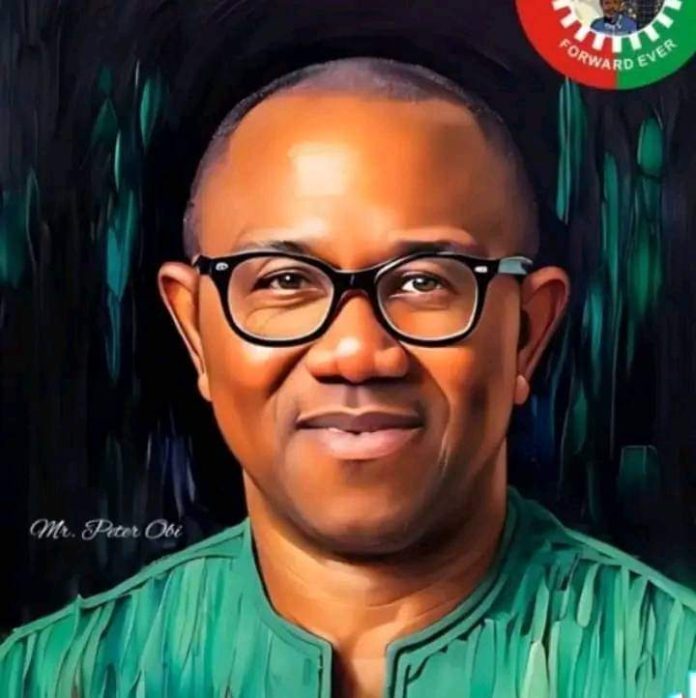
Chimamanda Adichie Write Open Letter to President Joe Biden Over Nigeria’s Presidential Election 2023 and Blasts the Government of United Kingdom – By Ngozi Chimamanda Adichie, Odeluwa 1 Abba

0
The Noble Igbo Novelist Chief Chimamanda Ngozi Adichie, Odeluwa 1 Abba

Dear president Biden,

Something remarkable happened on the morning of February 25, the day of the Nigerian Presidential election. Many Nigerians went out to vote holding in their hearts a new sense of trust. Cautious trust, but still trust. Since the end of military rule in 1999, Nigerians have had little confidence in elections. To vote in a presidential election was to brace yourself for the inevitable aftermath: fraud.

Elections would be rigged because elections were always rigged; the question was how badly. Sometimes voting felt like an inconsequential gesture as predetermined “winners” were announced.

A law passed last year, the 2022 Electoral Act, changed everything. It gave legal backing to the electronic accreditation of voters and the electronic transmission of results, in a process determined by the Independent National Electoral Commission (INEC). The chair of the commission, Professor Mahmood Yakubu, assured Nigerians that votes would be counted in the presence of voters and recorded in a result sheet, and that a photo of the signed sheet would immediately be uploaded to a secure server. When rumors circulated about the commission not keeping its word, Yakubu firmly rebutted them. In a speech at Chatham House in London (a favorite influence-burnishing haunt of Nigerian politicians), he reiterated that the public would be able to view “polling-unit results as soon as they are finalized on election day.”

Nigerians applauded him. If results were uploaded right after voting was concluded, then the ruling party, the All Progressives Congress (APC), which has been in power since 2015, would have no opportunity for manipulation. Technology would redeem Nigerian democracy. Results would no longer feature more votes than voters. Nigerians would no longer have their leaders chosen for them. Elections would, finally, capture the true voice of the people. And so trust and hope were born.

By the evening of February 25, 2023, that trust had dissipated. Election workers had arrived hours late, or without basic election materials. There were reports of violence, of a shooting at a polling unit, and of political operatives stealing or destroying ballot boxes. Some law-enforcement officers seemed to have colluded in voter intimidation; in Lagos, a policeman stood idly by as an APC spokesperson threatened members of a particular ethnic group who he believed would vote for the opposition.

Most egregious of all, the electoral commission reneged on its assurance to Nigerians. The presidential results were not uploaded in real time. Voters, understandably suspicious, reacted; videos from polling stations show voters shouting that results be uploaded right away. Many took cellphone photos of the result sheets. Curiously, many polling units were able to upload the results of the House and Senate elections, but not the presidential election. A relative who voted in Lagos told me, “We refused to leave the polling unit until the INEC staff uploaded the presidential result. The poor guy kept trying and kept getting an ‘error’ message. There was no network problem. I had internet on my phone. My bank app was working. The Senate and House results were easily uploaded. So why couldn’t the presidential results be uploaded on the same system?” Some electoral workers in polling units claimed that they could not upload results because they didn’t have a password, an excuse that voters understood to be subterfuge. By the end of the day, it had become obvious that something was terribly amiss.

No one was surprised when, by the morning of the 26th, social media became flooded with evidence of irregularities. Result sheets were now slowly being uploaded on the INEC portal, and could be viewed by the public. Voters compared their cellphone photos with the uploaded photos and saw alterations: numbers crossed out and rewritten; some originally written in black ink had been rewritten in blue, some blunderingly whited-out with Tipp-Ex. The election had been not only rigged, but done in such a shoddy, shabby manner that it insulted the intelligence of Nigerians.

Nigerian democracy had long been a two-party structure—power alternating between the APC and the Peoples Democratic Party—until this year, when the Labour Party, led by Peter Obi, became a third force. Obi was different; he seemed honest and accessible, and his vision of anti-corruption and self-sufficiency gave rise to a movement of supporters who called themselves “Obi-dients.” Unusually large, enthusiastic crowds turned up for his rallies. The APC considered him an upstart who could not win, because his small party lacked traditional structures. It is ironic that many images of altered result sheets showed votes overwhelmingly being transferred from the Labour Party to the APC.

As vote counting began at INEC, representatives of different political parties—except for the APC—protested. The results being counted, they said, did not reflect what they had documented at the polling units. There were too many discrepancies.

“There is no point progressing in error, Mr. Chairman. We are racing to nowhere,” one party spokesperson said to Yakubu. “Let us get it right before we proceed with the collation.” But the INEC chair, opaque-faced and lordly, refused. The counting continued swiftly until, at 4:10 a.m. on March 1, the ruling party’s candidate, Bola Tinubu, was announced as president-elect.

A subterranean silence reigned across the country. Few people celebrated. Many Nigerians were in shock. “Why,” my young cousin asked me, “did INEC not do what it said it would do?”

It seemed truly perplexing that, in the context of a closely contested election in a low-trust society, the electoral commission would ignore so many glaring red flags in its rush to announce a winner. (It had the power to pause vote counting, to investigate irregularities—as it would do in the governorship elections two weeks later.)

Rage is brewing, especially among young people. The discontent, the despair, the tension in the air have not been this palpable in years.

How surprising then to see the U.S. State Department congratulate Tinubu on March 1. “We understand that many Nigerians and some of the parties have expressed frustration about the manner in which the process was conducted and the shortcomings of technical elements that were used for the first time in a presidential election cycle,” the spokesperson said. And yet the process was described as a “competitive election” that “represents a new period for Nigerian politics and democracy.”

American intelligence surely cannot be so inept. A little homework and they would know what is manifestly obvious to me and so many others: The process was imperiled not by technical shortcomings but by deliberate manipulation.

An editorial in The Washington Post echoed the State Department in intent if not in affect. In an oddly infantilizing tone, as though intended to mollify the simpleminded, we are told that “officials have asserted that technical glitches, not sabotage, were the issue,” that “much good” came from the Nigerian elections, which are worth celebrating because, among other things, “no one has blocked highways, as happened in Brazil after Jair Bolsonaro lost his reelection bid.” We are also told that “it is encouraging, first, that the losing candidates are pursuing their claims through the courts,” though any casual observer of Nigerian politics would know that courts are the usual recourse after any election.

The editorial has the imaginative poverty so characteristic of international coverage of African issues—no reading of the country’s mood, no nuance or texture. But its intellectual laziness, unusual in such a rigorous newspaper, is astonishing. Since when does a respected paper unequivocally ascribe to benign malfunction something that may very well be malignant—just because government officials say so? There is a kind of cordial condescension in both the State Department’s and The Washington Post’s responses to the election. That the bar for what is acceptable has been so lowered can only be read as contempt.

I hope, President Biden, that you do not personally share this cordial condescension. You have spoken of the importance of a “global community for democracy,” and the need to stand up for “justice and the rule of law.” A global community for democracy cannot thrive in the face of apathy from its most powerful member. Why would the United States, which prioritizes the rule of law, endorse a president-elect who has emerged from an unlawful process?

Compromised is a ubiquitous word in Nigeria’s political landscape—it is used to mean “bribed” but also “corrupted,” more generally. “They have been compromised,” Nigerians will say, to explain so much that is wrong, from infrastructure failures to unpaid pensions. Many believe that the INEC chair has been “compromised,” but there is no evidence of the astronomical U.S.-dollar amounts he is rumored to have received from the president-elect. The extremely wealthy Tinubu is himself known to be an enthusiastic participant in the art of “compromising”; some Nigerians call him a “drug baron” because, in 1993, he forfeited to the United States government $460,000 of his income that a Chicago court determined to be proceeds from heroin trafficking. Tinubu has strongly denied all charges of Corruption.

I hope it will not surprise you, President Biden, if I argue that the American response to the Nigerian election also bears the faint taint of that word, compromised, because it is so removed from the actual situation in Nigeria as to be disingenuous. Has the United States once again decided that what matters in Africa is not democracy but stability? (Perhaps you could tell British Prime Minister Rishi Sunak, who quickly congratulated Tinubu, that an illegitimate government in a country full of frustrated young people does not portend stability.) Or is it about that ever-effulgent nemesis China, as so much of U.S. foreign policy now invariably seems to be? The battle for influence in Africa will not be won by supporting the same undemocratic processes for which China is criticized.

This Nigerian election was supposed to be different, and the U.S. response cannot—must not—be business as usual. The Nigerian youth, long politically quiescent, have awoken. About 70 percent of Nigerians are under 30 and many voted for the first time in this election. Nigerian politicians exhibit a stupefying ability to tell barefaced lies, so to participate in political life has long required a suspension of conscience. But young people have had enough. They want transparency and truth; they want basic necessities, minimal corruption, competent political leaders, and an environment that can foster their generation’s potential.

This election is also about the continent. Nigeria is a symbolic crucible of Africa’s future, and a transparent election will rouse millions of other young Africans who are watching, and who long, too, for the substance and not the hollow form of democracy. If people have confidence in the democratic process, it engenders hope, and nothing is more essential to the human spirit than hope.

Today, election results are still being uploaded on the INEC server. Bizarrely, many contradict the results announced by INEC . The opposition parties are challenging the election in court. But there is reason to worry about whether they will get a fair ruling. INEC has not fully complied with court orders to release election materials. The credibility of the Nigerian Supreme Court has been strained by its recent judgments in political cases, or so-called judicial coronations, such as one in which the court declared the winner of the election for governor of Imo State a candidate who had come in fourth place.

Lawlessness has consequences. Every day Nigerians are coming out into the streets to protest the election. APC, uneasy about its soiled “victory,” is sounding shrill and desperate, as though still in campaign mode. It has accused the opposition party of treason, an unintelligent smear easily disproved but disquieting nonetheless, because false accusations are often used to justify malicious state actions.

I supported Peter Obi, the Labour Party candidate, and hoped he would win, as polls predicted, but I was prepared to accept any result, because we had been assured that technology would guard the sanctity of votes. The smoldering disillusionment felt by many Nigerians is not so much because their candidate did not win as because the election they had dared to trust was, in the end, so unacceptably and unforgivably flawed.

Congratulating its outcome, President Biden, tarnishes America’s self-proclaimed commitment to democracy. Please do not give the sheen of legitimacy to an illegitimate process. The United States should be what it says it is.

Sincerely, Chimamanda Adichie

Disclaimer: 

The opinions and views expressed in this write-up are entirely that of the Writer(s). They do not reflect the opinions and views of the Publisher (Nze Ikay’s Blog) or any of its employees. The designations employed in this publication and the presentation of materials herein do not imply the expression of any opinion whatsoever of the Publisher (Nze Ikay’s Blog) or its employees concerning the legal status of any country, its authority, area or territory or concerning the delimitation of its frontiers. Equally, the sketches, images, pictures and videos are obtained from the public domain
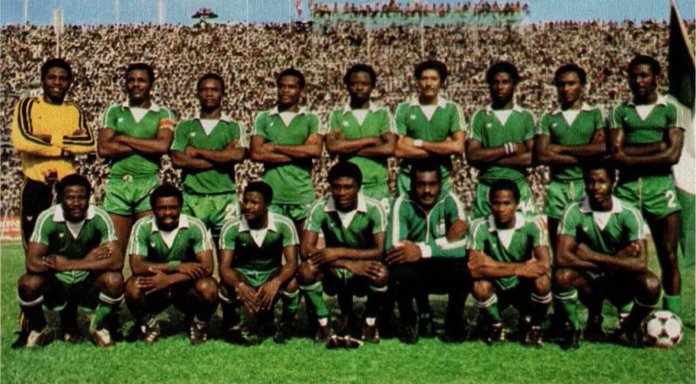
In Nigeria, governmental insensitivity is legendary, even though it became worse during the several years of military interregna By Prof Au. N. Nnonyelu

0
Prof Au. N. Nnonyelu, Director, Emeka Anyaoku Institute for International Studies and Diplomacy, Nnamdi Azikiwe University, Awka

It does not matter which government is in power, Party A or Party B, as the de-ideologisation of politics over the years has continued unabated. The government’s indifference or insensitivity to the education sector is not likely to change, what is more likely is its deepening, consolidation and intensification. As long as the children of the political elite are in schools elsewhere, and Europe, America, and some places around UAE continue as their destination rendezvous, except when global pandemics like the current Corona Virus Disease, otherwise called COVID-19 forcibly quick march them back to their roots of origin seen by these parasitic elites as places of plunder, so long shall the interest of those in Government remain tokenistic. Successive occupants of the throne of State Power have always acted with different machinations, intrigues, schemes, or more appropriately scams as ASUU has rightly labelled one of such with a sheepish connotation – IPPIS. 

The history of the Academic Staff Union of Universities (ASUU) has been one of struggle, unending contestations with a coalition of successive ruling class regimes. Nothing, I repeat, nothing in the Nigerian University System at least since the late nineteen seventies has been achieved without a major struggle. In one of my interventions in a Paper titled “ASUU Strikes: Curse or Blessing?” I argued persuasively that strikes amidst its misperception by the gullible public have rather been a redemptive utility purpose vehicle for the transformation of Nigerian University Education, without which, the nunc dimitis would have been sung for the burial of university education if not education generally in the country.

I remember with nostalgia our first year in the University of Nigeria, Nsukka in 1980/81 where we were treated to what arguably could be one of the best anywhere in Africa, had lectures in environments that conduce for learning, our meals in Margaret Ekpo Refectory, particularly were of international standard. Students before us had loftier stories to tell, as in their final years, they had different job offers from reputable establishments and conglomerates in the country. Not to forget the revolutionary fervour and radicalism of students’ union leaders led by right progressive ideals, which culminated in the Ali Must Go students revolt in 1978 and accompanying police brutality under the regime of Gen. Obasanjo, as he then was.

It is not as if one is indulging in the exuberant romanticisation of the seventies and early eighties, but the truth is that the situation then was a lot better than where we are currently, even though far from the ideal. The situation went however from bad to worse, and this deterioration was rapid as International Financial Institutions led by the International Monetary Fund (IMF) and World Bank came up with their deceptive liberal policies which conspired to hold down the entire country. These informed the formation or evolution of ASUU as a Union of Intellectuals with a broader mandate to protect and advance the welfare, and livelihood of its members, while also keeping an eye on what is happening not only in the educational sector but other areas likely to impact on the life chances of Nigerians.

Some of us who chose to teach at the University as a career in the late eighties had to face different frustrating experiences. From a paltry 520 naira a month to about 6240 Naira per annum as salary for Assistant Lecturers in those days, to general contempt, even derision by your students, wondering what on earth made you leave the more lucrative Parastatals, for a life in the University, to classrooms that had exploded with large class size, empty laboratories, demotivated and dissatisfied workforce. It became so bad that lecturers had to struggle for even teaching aids, leading to the government coming up with Direct Teaching and Laboratory Cost (DTLC) after a strike. From an increase in salary, far from adequate though, to all the benefits, privileges, more appropriately RIGHTS like Staff Training, under the cover of TETFUND Scholarships, to the many gigantic buildings in public universities in Nigeria, all of which came from TETFUND (itself a product of ASUU struggle) or Needs Assessment Projects, or the tens of billions known as revitalization funds (almost one trillion Naira still outstanding), the earned academic allowance, all direct outcomes of laborious and exerting sacrifice and struggles by members of ASUU, to the seeming autonomy where lecturers are now represented in the Governing Councils of Universities, no longer the era of military Sole Administrators, all are products of union struggle. We have indeed come a long way with scars and wounds from the struggle, but our heads unbowed.

The truth is, all successive governments in Nigeria have shown a predilection to ignore the Universities, or at best enter into Collective Agreements which often are observed in the breach. There is no scintilla of seriousness on the part of the government to respect these agreements. They break the agreements with impunity and executive rascality. Many of the strikes embarked upon by ASUU have been to get the government to respect these MoAs, as in the current dispute. The decision to declare an indefinite strike was therefore right, reasonable and the only option in the light of the notoriety of governmental intransigence. It is going to be a long-drawn battle, and like I say always, union struggles are not for sprinters, or weak or faint-hearted, but long-distance runners, courageous and strong. The Government is likely not going to react in a hurry to our demands as they are currently embroiled in battling COVID–19.

That means this is going to be another protracted dispute. We need to gird our loins. I do hope the Executive Committee is doing something with coping strategies. We have been owed six, or seven months in the past, at one time under the despotic Abacha regime, all lecturers of Nigerian Universities received sack letters. We held our ground and insisted on our demands. This current strike is further emboldened and given added impetus by the manner in which the central government applied for a whooping loan of 22 billion dollars without factoring in the ugly and pathetic situation of public universities in Nigeria. Let us all rally behind our leaders, both local and national. Let’s remain united and focused. This battle is just beginning. United we stand, divided we go grovelling, begging and sorrowing. Until Government does the needful and engages our leaders in sincere discussions and negotiations to reach and come to terms with our demands, we remain at home, in the trenches. Please, my colleagues, remember to stay safe and accept the assurances of my very warm regards.

Prof Au. N. Nnonyelu teaches Sociology at Nnamdi Azikiwe University, Awka and is the National President of Nigerian Anthropological and Sociological Practitioners’ Association (NASA).

Disclaimer: 

The opinions and views expressed in this write-up are entirely that of the Writer(s). They do not reflect the opinions and views of the Publisher (Nze Ikay’s Blog) or any of its employees. The designations employed in this publication and the presentation of materials herein do not imply the expression of any opinion whatsoever of the Publisher (Nze Ikay’s Blog) or its employees concerning the legal status of any country, its authority, area or territory or concerning the delimitation of its frontiers. Equally, the sketches, images, pictures and videos are obtained from the public domain

PRESS RELEASE BY THE LABOUR PARTY PRESIDENTIAL CAMPAIGN COUNCIL – APRIL 4, 2023, By Dr Tanko Yunusa, Chief Spokesperson, Obi-Datti Campaign Council

0
Dr Tanko Yunusa, Chief Spokesperson, Obi-Datti Campaign Council

Disturbing Emerging Developments in Nigeria!

1. We continue to thank all Nigerians especially the youths and Obidients as they have remained focused on the core mission of a New Nigeria That Is Possible, even after the presidential elections of 25th February 2023. 

2. Before, throughout and after the campaigns, it is on record that Mr Peter Obi maintained his commitment and focus on an issues-based campaign, about a New Nigeria That is Possible, a shift of emphasis from consumption to production, a New Nigeria characterized by inclusion, justice, equity, fairness and prosperity. He repeatedly stated that no one should vote for him based on Tribe or Religion, but rather on the assessment of Character, Competence, Capacity, Credibility and Compassion, you can trust to create a New Nigeria!

3. Most unfortunately, in the past few weeks, Mr Peter Obi, the Labour Party presidential candidate in the February 25th, 2023 presidential election has been contacted by associates, elder statesmen, family and friends with concerns for his personal safety. These concerns have increased intensely in the last few days as immense pressure, has been mounted directly on Mr Obi to leave the country, no doubt from sources allied to the All-Progressive Congress (APC) and its agents in the security services. Mr Obi has repeatedly and categorically been told that he has a choice to leave the country or face the prospect of being arrested on false charges of inciting insurrection in the country.

4. It is difficult to fathom and indeed unfortunate and regrettable that state institutions have become part of a well-calculated, deliberate and orchestrated campaign of calumny by the APC to discredit and delegitimize Mr Peter Obi and compel him to abandon his right to seek redress in court following the outcome of the last election which was adjudged both locally and internationally to have failed to meet any standard of credibility or fairness.

5. As part of the grand design, they are circulating a fake doctored audio call. At no time throughout the campaign and now did Mr Peter Obi ever say, think or even imply that the 2023 election is or was a religious war. It is very sad and wicked the attempts to manipulate Nigerians. Our legal team have been instructed to take appropriate legal actions against Peoples Gazette and others.

6. Despite the public denunciation of the fake audio call, its contents have been translated into other Nigerian languages and circulated in most parts of Northern Nigeria with some of our Muslim clerics deceived and instigated to use the contents for their sermons at various Mosques during the usual Friday prayers. This is a dangerous development at a time when the APC led-government and the APC party which have been awarded undeserved and unfair victory should be more concerned in addressing the ethnic and religious frictions unfortunately created by the outcome of the elections.

7. Yet unsatisfied but determined to cause more problems, Mr Lai Mohammed, who fancies himself as modern-day Gobbeal is on a tour of some selected countries to present an alternative story about the 2023 discredited election, and from his first statement in Washington has assumed the role of the courts by stating that Mr Obi has no pathway to victory. This is a direct intimidation of the courts and a waste of taxpayers’ money (Nigeria’s money).

8. There are many more campaigns of calumny against Mr Peter Obi planned for the near future both before and during the court process. However, we want to make it clear to the APC party, APC led-government and its agents that Mr Peter Obi a widely travelled man has no intention to leave the country at this time irrespective of the pressure on him and his family. He is determined as he had stated in his first and only press conference after the election to challenge the outcome of the election and the process has begun. It is his fundamental right!

9. While we call on all concerned Nigerians and the International Community to caution APC and the APC Led-government to stop their nasty attacks, Mr Peter Obi’s focus and commitment to lawfully and peacefully retrieve our mandate to secure and unite our Nation, take Nigeria from consumption to production, pull millions of Nigerians out of multidimensional poverty, especially in the North and jumpstart prosperity through agricultural, industrial and technological revolution remains unchanged.

10. He has continued to impress upon his supporters the essence of the legal process and will not now or in the future encourage any violence against the state. He has absolutely no reason for this nor desperate especially as throughout the campaign, he called for a new Nigeria defined by opportunities for all, an end to poverty and criminality in government, especially corruption and an end to tribal and religious division and bigotry.

11. It is for this reason that we appeal to revered religious leaders especially in the North not to be part of the grand design of the state apparatus to further increase the religious and ethnic divide in the country. Irrespective of the outcome of the court process, we have the obligation to strive for the peace and co-existence of all Nigerians. We call on President Buhari to rein in his desperate officials at all levels as their actions or inactions could lead to unnecessary crises in the country.

12. Elections are over, and we are in court to retrieve our stolen mandate. Let me reiterate that we are doing so through all lawful and peaceful options in line with our legal system and constitution, and I continue to implore all Nigerians to remain peaceful and law-abiding.

13. Those fixated on heating up the polity, creating divisions, tensions and hatred within and outside Nigeria should remember that Nigeria is our only country. Our focus should be on addressing the litany of challenges facing us such as deliberate non-adherence to the election process, the parlous state of our economy, unsustainable debt burden, lamentable unemployment and inflation, insecurity and multi-dimensional poverty. A New Nigeria is Indeed Possible and God will help us.

Signed: Dr Tanko Yunusa, Chief Spokesperson, Obi-Datti Campaign Council

Disclaimer: 

The opinions and views expressed in this write-up are entirely that of the Writer(s). They do not reflect the opinions and views of the Publisher (Nze Ikay’s Blog) or any of its employees. The designations employed in this publication and the presentation of materials herein do not imply the expression of any opinion whatsoever of the Publisher (Nze Ikay’s Blog) or its employees concerning the legal status of any country, its authority, area or territory or concerning the delimitation of its frontiers. Equally, the sketches, images, pictures and videos are obtained from the public domain
TIME TO BREAK DEADLY CONSPIRACY AGAINST AJAOKUTA STEEL COMPANY – By Natasha Hadiza Akpoti

0
The Ajaokuta Steel Complex, Ajaokuta, Kogi State, Nigeria

I have been advised to use pseudo-names in publishing this piece, but that’s not my nature. I am one who bolds up to situations and thus, I shall bear my name and the consequences this report might stir.

From the 14th of August 2015, the day I had an interactive and empowerment session with the blacksmiths of #Ebiraland; the pains in their voices daunted me.  A people, whose ancestors carved a niche in ironworks way back in the 7th century suffered for want of materials to support their trade while a steel giant lay raped in their backyard by a series of unfortunate events and conspiracies.

In October, I took online to issue a petition pleading with #President #Buhari to revive ASCL; and with your support, we were able to get hundreds of signatures. Since that day, I left no stone unturned to discover the happenings so as to better understand the best path forward. I have taken time to make this report as brief and as simple as possible and urge you all to take time and read.

1958 to 1979

1958 – the colonial administration conducted a feasibility study on iron ore deposits in Nigeria.

1967 – the #United #Nations #Industrial #Development #Organisation survey identified Nigeria as a    potential steel market which led to the signing of a bilateral agreement between the Soviet Union and Nigeria.

1971 – the Nigerian Steel Development Authority was established by Decree No.9 to bring to reality a steel plant.

1979 – during the administration of Alhaji Shehu Shagari, TyazhPromExport (TPE) a #Russian leading engineering company commenced construction works on #Ajaokuta #Steel Company Limited.

1979 to 1994

In less than 12 years, TPE transformed a wide expanse of land to contain a giant size network of machinery meant to process the exploration of steel for #Nigeria. Indeed, billions were spent and it’s evident in the state-of-the-art townships, roads, bridges, power plants, airstrip, port, and rail that were put up in Itakpe and Ajaokuta in #Kogi state.

In 1990, as the project approached completion, TPE on monthly bases for 4 years wrote to the #Federal #Government reminders on the need to commence works on the necessary infrastructure needed to successfully operate ASCL and Nigerian Iron Ore Mining Company (NIOMCO). They are access roads to the mines and rail system from ASCL to Onne sea port in Port Harcourt. TPE also suggested the possibility of dredging the river Niger which could offer a better and more convenient route for importing raw materials. This infrastructure TPE argued would benefit the public especially the Northern part of Nigeria where finished steel-manufactured products such as cars, parts, construction materials etc could be shipped to other states and nations once the state is fully functional as an industrial hub. The government never responded.

THE INTERNATIONAL CONSPIRACIES

A lot of people talk about the international conspiracies surrounding ASCL but very few know what actually they were or are. Here;

In 1992, when the project was near completion and while the Russians (TPE) called on the government to work on needed infrastructure; powerful countries namely #France, #America, #Germany, Britain etc including the organizations like the World Bank and International Monetary Fund (IMF) started reaching out to Nigerian government to terminate the project with the Russians. The Ohinoyi of Ebira land HRM Ado Ibrahim witnessed firsthand a plot by the IMF during a conference in NewYork where a team of Nigerian officials and foreign agents connived that ASCL should be completely dismantled and forgotten.  To them, Nigeria did not need to have a steel plant. Nigeria could as well buy steel from them if needed for its development.

The Nigerian government listened to the negative solutions without ever considering the true intentions of the so-called experts from these powerful foreign countries. Russia through stood its ground alone against France, America and co and kept on reminding Nigeria of the need to ignore the adverse opinions. Russia told Nigeria that this conspiracy was cooked by the West to stop Nigeria from achieving economic strength strong enough to uplift not only itself but the whole of Africa.  To them, Nigeria and Africa needed to be kept as a market for all junk goods from the West. This is in line with the colonial economic model brought in by the British and so, to have Nigeria turn around its economy and that of weaker nations hitherto being exploited by the superpowers, and by implication, impact negatively on the extent of influence of the richer countries sent shivers at the smart future awaiting Nigeria.

Nigeria’s government was too busy focusing on ushering the 3rd Republic, June 12 saga and all. No attention was given to the Russians. TPE was no longer being paid. In 1994 TPE left Nigeria.

SERIES OF UNFORTUNATE EVENTS

The Dept Buy Back – Nigeria’s contract with TPE was to construct ASCL for five billion German Deutschmarks (DM) and such that the Nigerian steel authority gave TPE promissory notes guaranteeing payment to the company. When the Nigerian government suspended payment and TPE left, TPE sold off these instruments to recover some of the debt owed to the company.

In October 1995, a series of secret debt buy-back transactions took place whereby the debt instruments were sold at inflated prices to Liberian companies purportedly owned by the Abachas –  Parnar Shipping Corporation and Mecosta Securities. This involved the withdrawal in 1996 of $2.5 bn of public funds to settle debts owed to Russia for the construction of the Ajaokuta steel plant, which in reality had been discounted to only $500m. Obasanjo in 1999 settled debt through OMPADEC.

SOLGAS – the first Concessionaire

In 2003, Nigeria under president Obasanjo realized the need to complete Ajaokuta and so, SolGas, an American company which specialized in petroleum was given concession. For a year and a half, Solgas zero progress raised questions as to their technical capacity to operate ASCL. Even though they claimed Senator Liyel Imoke and Gbenga Obasanjo brought in Global Steel Holdings Limited/ ISPAT to short-change it from performing. To this end, Nigeria terminated contracts with Solgas. There were no minutes recorded to document deliberations engaging or terminating with Solgas.

GLOBAL STEEL HOLDINGS LIMITED (INDIAN)  – the second Concessionaire

An Indian company first operating under the name ISPAT then changed its name to Global Infrastructure Holding Limited and now #Global Steel Holdings (GSH) were helped into Nigeria by Sen. Liyle Imoke and Gbenga #Obasanjo under President Obasanjo’s tenure in August 2004. The agreement was such that the company would own 60 percent of the shares of the steel mill. The Federal Government would keep 30 percent while 10 percent of shares would be sold to the public. This company GSHL owned by Mr. Primod Mittal is not affiliated with ArcelorMittal, which is the world’s renowned steel giant. #ArcelorMittal is owned by #Lakshmi #Mittal and a cousin to Mr Primod Mittal.

This concession which saw the taking over of ASCL and Itakpe is termed one of the biggest scams. The plant was hugely undervalued for $300m and GSH was to pay nothing to the government but inject its funds to revive the plant with a number of conditions some of which were:

– 1. That the Federal Government should give GSHL two oil blocks.

– 2. That GSHL be allowed to be lifting crude oil from Nigeria.

– 3. That the Sapele Power Plant be given to GSHL to operate.

–  4. Concession of Delta and Warri Ports to GSHL to operate.

– 10. The supply of Natural Gas to GSHL at a “competitive and reasonable tariff”. (GSHL came up with this condition after it failed to sign a Gas Supply Agreement with the Nigeria Liquefied Natural Gas Company. GSHL offered to pay N5.00 per cubic meter of Gas as against the market price of N30.00). It also inserted in its conditions that “Gas price should be kept reasonable and consistent.

After all these conditions, ASCL still deteriorated as equipment of ASCL was moved to Delta steel (which GSHL took over in 2005) while some were to other privately owned Indian-owned steel factories in Nigeria in the name of “borrowing”.

The federal government under President Yaradua realized the huge mistake Nigeria once again made and sought to terminate the contract with GSHL. The then Director General of the BPE, Ms Bolanle Onagoruwa stressed that the approval of the concession of Ajaokuta by president Obasanjo was in violation of the BPE Act.

At Senator Ahmed Lawan led Adhoc Committee, Minister of Mines and Steel Development, Architect Mohammed Musa Sada also revealed that the federal government under Obasanjo single-handedly sold ASCL to GSHL and that GSHL ruined the Ajaokuta complex by stripping it of all valuable equipment and machinery. It led to the cancellation of the entire process by the federal government.

This act didn’t go too well with GSHL and they dragged Nigeria to the International Chamber of Commerce (ICC) in London, UK and demanded Nigeria pay them $1B for termination.

In 2013, after 6 years of heated negotiations at the ICC, Jonathan’s administration successfully took back ASCL. GSHL also lost their $1B demand.

2013 TILL DATE – INDIANS  HOLD AJAOKUTA TO RANSOM

One would have assumed the drama over in 2013 but alas, the Federal Governments hands are tied on progressing with ASCL. GSHL shrewdly crafted an arbitration clause in the contract between the government and GSHL which prohibits Nigeria from dealing with anybody until all matters with GSHL are resolved. In other words, the Indians do not want the Nigerian government to proceed on completing Ajaokuta until an unreasonably selfish condition is met – they want the Nigerian government to give Itakpe Iron Ore company to them free for 25 years.

At the moment of this report, there is a modified contract containing such ridiculous terms before the minister of solid minerals in favour of the Indians.  GSHL wants to tap Iron Ore from Itakpe and move to Delta Steel which was in June 2015 taken over by Premium Steel, a company set up just months before the purchase of Delta Steel. Premium Steel is owned by another powerful Indian conglomerate headed by the #Vasuwani brothers (owners of the controversial Stallion group).

The truth is that Itakpe was set up as a captive mine to ASCL. The original plan holds that iron Ore would be moved from #Itakpe to ASCL which will in turn distribute to other smaller rolling mills, Delta Steel inclusive.

If GSHL succeeds in its bid to take charge of Itakpe, ASCL will become a sad history as there will be no Ore to feed from. That means Kogi state will have no steel plant of its own ever again. So no matter the amount of pacifying information the government publishes for the public on the urgency and good intentions they have towards ASCL, nothing shall be done until the arbitration is terminated.

Patriotic Nigerians must call on the Nigerian Government to immediately terminate every agreement in whatever form with GSHL. Nigeria is too big a nation to be held captive by an Indian company. TPE, a whole Russian government-owned company that built the complex did not cause this much pain to Nigeria… why would a private Indian Company that has never operated any steel plant in its own country India do such a thing to us? A more worrisome question to answer is – Who are the heavyweight Nigerians behind GSHL selling us this cheap? I don’t believe Mr. Primod Mittal would have the courage to stand alone and dare this much pandemonium; so who are the greedy Nigerians toiling with the present and future of Kogi state and Nigerians? No matter what, Nigerians must remember that the masses are always the majority and the power to determine our future truly lies in our hands. Our silence and ignorance have only cost us this much.

RUSSIAN TyazhPromExport (TPE) IS BACK WITH HOPE FOR NIGERIA

The Sole Administrator of ASCL Engr. Onobere has repeatedly said that since the Russians left in 1994, no progress has been realized on the project. The following questions kept hovering in my mind :

– the moment Nigeria realized its mistake in not completing ASCL and was ready to commence completion, why were the Russians not called back to resume work? Why did we settle for SolGas and GSHL in the first and second instances?

– From the quality of work evident in Ajaokuta, is there any doubt on the expertise of TPE that questioned their invitation?

– Could it be that TPE wasn’t invited because the Russians are too straightforward and don’t engage in “smart business”?

My research led me to uncover a lot of conspiracies on how TPE is no longer interested in doing business with Nigeria and some even said TPE no longer exists. My curiosity took the better part of me and I decided to look them up on the internet and initiate contacts.

I sent an e-mail to TPE in mid-November and another in early December 2015, but none were replied to.

It is said that desperate times require desperate measures and that when you truly want to do something, you shall find a way; so I contacted a dear friend of mine who lives in Russia and who happens to be the acting Chairman of Russia’s Arbitration Court on International Economic Matters – Mr Tunde Adewon. As God would have it he is also a Nigerian; born to a father from Ondo State and a Russian mother. His father late Engr. Moses Adewon was one of the senior engineers who worked to build the Itakpe Iron Ore complex.

Mr. Adewon on behalf of Builders Hub visited TPE in Moscow, Russia in the 2nd week of December 2015. After the first brief meeting, TPE, as precautionary measures ran a security check on me. Then Mr. Adewon was called for a detailed meeting and this was noted;

– TPE expressed deep sadness at the manner in which ASCL was handled.

– TPE said their heart was poured into the project in other to give Nigeria, the greatest country in Africa, the biggest steel Complex in Africa.

– That never, in all of their works across the world, not even in India, did they build a steel city as big as the Ajaokuta complex.

– That it was sad Nigeria did not heed their warnings about the international conspiracies and Nigeria turned their back to them instead of seeing the bright future they dreamt for us. That we, by our own hands allowed our economy to be trampled amidst negative interests by other powerful countries.

– That over the past years, they had tried reaching out to the Nigerian government to allow them to come back and complete the project. Nigeria did not respond positively.

– That they would want nothing more than to work to revive Ajaokuta and help Nigeria create jobs for its people and take itself out of poverty. Nigeria, they said must wake up from its slumber and be greater than ever before for itself and for Africa.

During a skype meeting, TPE was advised to write a letter of intent to the Minister of Solid Minerals. I also made it clear that neither I nor Mr. Adewon were interested in any monetary reward. We were only good citizens of Nigeria trying to use our best arsenals to contribute our quota in helping our country. They appreciated our honesty.

On the 25th of December 2015 (Christmas day), TPE wrote and sent the letter (which I have attached to this post) to the Minister of Solid Minerals Dr Kayode Fayemi. TPE is expecting to be invited over to discuss a path forward which would first entail a technical evaluation of ASCL to ascertain the damage and recommend modernization and upgrade plans for completion. TPE said they are very ready to come to Nigeria even at a week’s notice.

On Monday the 18th of January, I paid a courtesy visit to the Minister himself; Dr. #Fayemi acknowledged reading the letter from TPE and mentioned the Ministry would look into it. I pleaded with him on the need to expedite actions regarding ASCL and reminded him of the TPE’s intentions should be considered a priority.

4 weeks after the letter was sent to the Ministry and no response from the Minister’s office, I visited the Department of Steel within the Ministry. To my shock, no one had seen or heard of the letter of intent. Question – what happened to the TPE’s letter after the Minister read it. Is it not supposed to be sent to the Steel and Legal departments for action?

Do you also know that till today, no committee has been set up to investigate ASCL?

KIND WORDS FOR HON. MINISTER DR. KAYODE FAYEMI

My dear Minister, sorry if I sound a bit hard. I don’t like it myself but like I told you in your office, I tour rural communities and interact every day with the unemployed; the pains in their eyes are unbearable and that’s what I pour out right here… the pains of Nigerians and the huge expectations from your kind self and Mr. President.  You visited Ajaokuta on the 14th of December 2015 and promised urgent action first by composing a think tank whose report would be submitted to the President; that’s 40 days ago!!!

The Russians worked even on Christmas day to get the letter to you. When are you going to respond and extend an invitation to at least hear out their plans for ASCL and Nigeria? When would you constitute the fact-finding committee? How long a time would the committee have to prepare its report? When would the President digest the report? When would decisions be made? Please note that Nigerians expect your efficient office to act quickly as we are fast drowning.

Mr. Minister, I am aware you were misinformed that the Russians are not interested in the construction works in ASCL, that’s not true sir. Please do not be trapped by misinterpretations. For that sake, I have decided to post TPE’s letter out to Nigerians to read. Also, my team met with the senior management of TPE in Russia today the 26th of January and they once again expressed their readiness to work with Nigeria on Ajaokuta and other projects if need be.

Sir, do you know that TPE Russia constructed 3 of India’s largest steel plants namely – Bhilai, Bakaro and Visakhapatnam? Do you know that Bhilai is an eleven-time winner of the best-integrated steel plant in India? They say the blast furnace technology in Ajaokuta is old, no sir. Do you know that India recently contracted TPE Russia to reconstruct and modernize Rourkela (originally built by Germans) and Durgapur steel plants? It shall interest you to know that TPE is installing the largest blast furnace in India as part of the Rourkela upgrade.

Sir, please join us as we ask ourselves why India, with all its steel expertise, keeps calling on TPE Russia? It’s because they are good and honest and that is what Nigeria needs now. GSHL was not invited by their government to work on their plants? Better still – has GSHL ever done any steel works in India? Was Nigeria supposed to be a guinea pig? Little wonder they can’t let go of Nigeria and are holding Ajaokuta hostage.  Sir, please see that the arbitration with GSHL is terminated as soon as possible. In the meantime, TPE is at this moment writing a comprehensive letter of intent to the president, your office shall be promptly copied sir. Thank you.

Today the 26th of January, I printed copies of the letter and again took a set to the Minister’s office and a set to the Director of Steel Engr. Also, Abdullahi promised to follow up with the Minister.

Dearest Nigerians and Kogites, it is said that you can’t make the same mistake twice, the second time you make it; it’s no longer a mistake but a choice I don’t know what a third mistake is called. We have watched our God-given economic destiny being tossed twice by a few; we cannot sit back and watch it happen the third time around. It will be a big shame unto us.

Anger will do no good. We shall forgive everyone for every negligent decision made in the past. Sadly we have found ourselves in the most despicable of times; we should be courageous enough to seek to take the best path forward. Let us think deeply quickly and ask ourselves – what do we have to lose or gain if the Russians come back to rescue Ajaokuta?

Now that God has ushered us a new government in Kogi state, let us demand our Governor and National Assembly members to make ASCL their watchword. Let our dear royal fathers HRM the Attah of Igala, the Ohinoyi Ebira land, the Obaro of Kabba and others keep interceding on behalf of ASCL. Let every Kogite realise that there is no better time than now to unite and seek that justice is done to ASCL. Let every state in Nigeria join forces to call on the Federal Government to revive Ajaokuta because that single project coupled with Nigeria’s intellectualism can usher us into unprecedented greatness. We are too poor, our youths are jobless, our future is bleak, and we cannot continue to suffer this much. The time to speak up and act is now!!!

Note: This report took weeks of constant research with me meeting with the Minister of Solid Minerals Dr Fayemi, Director of Steel. Also Abdullahi, Sole Administrator, Engr Onobere, TPE Russia and so many others. No part of this excerpt expressly stated, though all true, was made by any of the above-mentioned.

May Nigeria Succeed…

Truly yours, Natasha Hadiza Akpoti.

Disclaimer: 

The opinions and views expressed in this write-up are entirely that of the Writer(s). They do not reflect the opinions and views of the Publisher (Nze Ikay’s Blog) or any of its employees. The designations employed in this publication and the presentation of materials herein do not imply the expression of any opinion whatsoever of the Publisher (Nze Ikay’s Blog) or its employees concerning the legal status of any country, its authority, area or territory or concerning the delimitation of its frontiers. Equally, the sketches, images, pictures and videos are obtained from the public domain
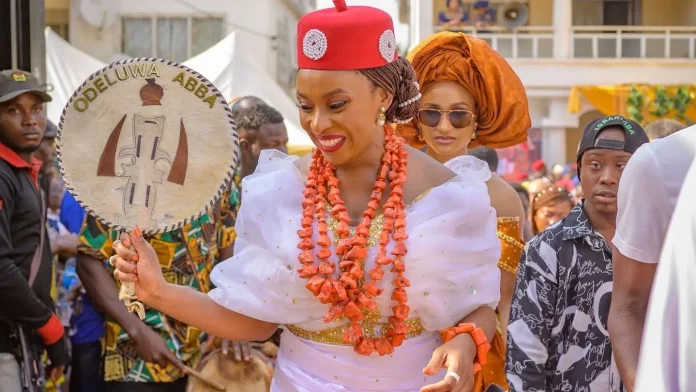
Rhapsody of Realities, Wednesday, March 29th. 2023, By Pastor Chris Oyakhilome PhD DSc DD

0

DEAL WITH IT ON YOUR KNEES

And he was withdrawn from them about a stone’s cast, and kneeled down, and prayed (Luke 22:41).

Our opening verse reminds of what the Apostle Paul said in Ephesians 3:14-15: “I bow my knees before the Father of whom the whole family in heaven and earth is named.” Learn to bow your knees in prayer. Sometimes people go through tough times and severe persecutions. The way to deal with such situations is on your knees in prayer.

In Luke 18:1-8, the Lord Jesus emphasized the importance of persistence in prayer. This is because being the righteousness of God in Christ Jesus, you can change anything through prayer. When Satan stirs persecution against us, take it to the Lord in prayer.

Never allow any crisis or situation take your attention such that you begin to mull it over, feeling helpless. One minute with the Holy Ghost will make a far much greater impact than five hours of melancholy and sad cogitations. So, pray in, and with, the spirit. “Is any among you afflicted? Let him pray…” (James 5:13). Ephesians 6:18 says, “Praying always with all prayer and supplication in the Spirit….”

It doesn’t matter the persecution or how unsavoury the economy of your nation is; keep praying about it. Ecclesiastes 11:3 says, “If the clouds be full of rain, they empty themselves upon the earth: and if the tree fall toward the south, or toward the north, in the place where the tree falleth, there it shall be.”

Keep watering the clouds with prayer; soon enough, the condensation will take place and there’ll be a deluge: the answers will come pouring down.

Confession

The Lord reigns and rules in the affairs of men. The Lord is strong and mighty, the God of all flesh, and there’s nothing too difficult for Him. He’s the God of possibilities, and He’s given me the power of attorney to use the Name of Jesus to effect the changes I desire. Therefore, I live an ever-winning life, with dominion over Satan and his cohorts, spreading the Gospel of Christ in my world and beyond, in Jesus’ Name. Amen.

Further Study:

Luke 18:1
“And he spake a parable unto them [to this end], that men ought always to pray, and not to faint;”

1 Thessalonians 5:17
“Pray without ceasing.”

James 5:16 AMPC
“Confess to one another therefore your faults (your slips, your false steps, your offenses, your sins) and pray [also] for one another, that you may be healed and restored [to a spiritual tone of mind and heart]. The earnest (heartfelt, continued) prayer of a righteous man makes tremendous power available [dynamic in its working].”

1-Year Bible Reading Plan:
Luke 8:1-21;
Joshua 3-4

2-Year Bible Reading Plan:
Matthew 26:36-46;
Exodus 38

Extract From Rhapsody Of Realities Daily Devotional

Good Morning Beloved.
Have A Great Day!

Pray-A-Thon 2023 – Wed Mar 29 @PastorChrisLive

In this Wednesday’s Rhapsody, we’re admonished to learn to bow our knees in persistent prayer, to change any situation. Study and share the message with others. Visit http://rhapsodyofrealities.org.

Psalms 22:27-28 says, ‘All the ends of the world shall remember and turn unto the LORD: and all the kindreds of the nations shall worship before thee. For the kingdom is the LORD’s: and he is the governor among the nations’.

At our times of prayer today, we’ll pray fervidly in tongues of the Spirit, also interceding for the nations with the prophetic Word in the Scriptures above.

Unending Praise is underway, and from the rising of the sun, to the going down of the same, the Lord’s Name shall be praised. Visit http://pastorchrislive.org or www.lmam360.com, to schedule a praise session for 30min today and everyday.

Remember to attend the Midweek Service today in Church onsite or online.
God bless you.

#KeepSayingIt Wednesday, 29th March 2023, https://loveworldlyrics.com/unrivalled-authority-by-chookar-and-loveworld-singers-2/

I have been made more than a conqueror in this life. I live in the victory that Christ provisioned for me; therefore, I am not afraid of sickness, for I reign in life through Christ Jesus. My spirit is full of the joy of the Lord at all times. With this joy, I draw from the wells of salvation. My progress is unstoppable because I cannot be limited by sickness, disease, or the negativities of the ordinary life. I am a partaker of God’s glory, dominion, greatness, excellence, victories, power, and grace. This divine connection produce wellness for my body and keeps it alive and in perfect condition.

The Spirit of the Lord is upon me and in me, causing life to spring forth from within me. Everywhere I go bubbles with life and joy because I’m a God-carrying vessel. I carry eternal life and when I lay hands on the sick, they recover.  Divine health is my nature; therefore, I am not subject to the elements of this world and my body cannot be dominated or put under by headaches, fevers, diabetes, or any manner of sickness. I am seated together with Christ, far above all principality and power. The elements of this world and the decay that is in it have no place or power in my body. I exercise dominion over my body through the Word and I exercise dominion over sickness and death. I dwell in Zion, the city of the living God, where sickness is alien and illegal. I do not fall sick because I’m a partaker of God’s divine nature. The life in me is indestructible! I am never feeble because I have the strength of God working in me.

Thank You, heavenly Father, for you have satisfied me with all the beautiful things of life. I am bursting forth in health always and everyone around me is a partaker of the blessings of God upon my life, in Jesus name. Amen.

Nigeria, ECOWAS and the Morocco question – By Dr. Reuben Abati

0
President Muhammadu Buhari of Nigeria and King Muḥammad VI, original name Muḥammad ibn al-Ḥasan in a warm handshake during the later's State visit to Nigeria

I was in Morocco recently, about 20 years after I last visited Timbuktu, Marrakech, Casablanca, Rabat and Laayoune. I was quite impressed to see how Morocco with its colour-coded cities remains very much an organized, efficient and a comparatively competitive country. The trip this time began from the Lagos airport aboard the Royal Air Maroc, which now plies the Lagos-Casablanca route. Twenty years earlier, I had to go first to Paris, France, change from one airport to the other, before boarding another flight to Morocco. 

This crisis of transportation, having to go to Europe before accessing African countries, poses a major threat to trade, co-operation and integration among African countries. This time around, Lagos to Casablanca took no more than 4 hours. The flight was full; the passengers were mostly Nigerians. I would later discover that these passengers were not necessarily going to Morocco to attend the Crans Montana conference on Africa and South-South Co-operation taking place in Dhakla, they were transit passengers going to New York or Europe. Casablanca to New York is about 6 hours, and the cost of travel either to the US or Europe through Morocco is much cheaper. The Bilateral Air Services Agreement (BASA) between Nigeria and Morocco has brought both countries closer, with many Nigerian businessmen taking advantage of the opportunity to trade with Morocco. Many Nigerian students are also now going to school in Moroccan universities and technical colleges.

As I took in these details, and reflected on the vast possibilities of closer Nigeria-Morocco relations, what struck me as I left Casablanca for Rabat, was not even the beauty of the roads and the skyline, or the meaty, physically majestic cattle that grazed on the fields along the highway, not disturbing motorists or crossing the road, or causing any violence, unlike Nigerian cattle and their herders, but the fact that it is this same Morocco, with its near-First-World standards, that has been struggling since early 2017 to be admitted as a member of the Economic Community of West African States (ECOWAS). Nigerian trade unions, business investors and some former diplomats have been in the forefront of the objection to Morocco’s membership of ECOWAS. The reasons they offer are largely sentimental, not fact-based, not informed, all made worse by what seems to be a continuing lack of rigour in the management of Nigeria’s foreign policy process.

In January 2017, Morocco returned to the African Union (AU) after 33 years of absence. Under King Mohammed VI of Morocco, there has been in the last seven years or so, a concerted diplomatic effort to assert Morocco’s Africanism and to reach out to other African countries outside North Africa. Morocco’s issue with Algeria, the crisis in Libya, and the conflict of objectives and goals among the members of the African Maghreb Union (UMA) perhaps makes this re-strategizing of Morocco’s foreign policy pragmatic and inevitable. Having returned to the AU, Morocco took the additional step of seeking the membership of ECOWAS. In June 2017, at the 51st meeting of ECOWAS Heads of State and Government held in Monrovia, Liberia, ECOWAS agreed in principle to Morocco’s application for membership.

The ECOWAS Commission then put a team together to prepare an Impact Report on Morocco’s proposed membership to be considered at the 52nd meeting of the ECOWAS Heads of State and Government scheduled for November 2017 in Abuja, Nigeria. As it turned out, ECOWAS could not consider the 70-page Report as scheduled, due to its busy agenda, as was claimed, but a committee of five comprising the Heads of State of Togo, Cote D’Ivoire, Ghana, Guinea and Nigeria was empaneled to study the Report and advise the ECOWAS Heads of State and Governments accordingly. 

The Extraordinary session planned for the first quarter of 2018 at which a decision is to be communicated in this regard, has not yet taken place, but Morocco’s proposed membership has already generated much interest across the sub-region. In Nigeria, for example, the Joint Committees on Foreign Affairs and Co-operation for Africa on November 15, 2017, organized a one-day public hearing titled “Public Hearing on the Review of Nigeria’s Membership of ECOWAS in view of Morocco’s bid to be admitted into the Regional Body.” Some of the arguments advanced at that event and which may have influenced Nigeria’s lack of clarity so far on the Morocco question are at best ridiculous.

It was argued for example that if Morocco joins ECOWAS, Nigeria will disintegrate. How? Nigeria is a member of the D-8 and the Organisation of Islamic Countries (OIC); it has not disintegrated on account of that. No member-country of ECOWAS is in a position to disintegrate another country for whatever reason under the Constitutive protocols. It was also said, and this really exposes the hypocrisy involved, that Nigeria should block Morocco because it is one of the most corrupt countries in the world. This is not true. Morocco’s corruption perception index has consistently improved while Nigeria’s CPI continues to worsen. Nigeria has no moral right to condemn any other country on the ground of corruption, and if this were a criterion for international relations, many countries including Nigeria would have been expelled from the United Nations long ago. It was further argued at that forum and in the Nigerian media that “any attempt to allow the North African country to join ECOWAS will subvert Nigeria’s economic prosperity.”

The evidence given in this regard is that Morocco is an associate of the EU under the European Neighborhood Policy (ENP). And: Nigeria having refused to sign the ECOWAS-Economic Partnership Agreement (EPA) with the European Union could become a dumping ground for cheaper goods from Europe through Morocco, thus crippling investments across the sub-region. Our response is that in the long run, ECOWAS member-states in general, would have to strengthen their capacity to compete and be productive, rather than hide under protectionist policies. One other ridiculous excuse that has been given is that ECOWAS owes its existence and survival to Nigeria and that Nigeria should not allow any new country to reduce its control over ECOWAS. It is precisely this kind of undiplomatic talk that continues to make other countries in ECOWAS suspicious of Nigeria’s motives and unappreciative of the country’s contributions to the regional body. Other non-sequitur arguments raised by Nigerians include the Western Sahara issue or that Morocco is a monarchy, rather, a parliamentary constitutional monarchy.

What is required is a dispassionate study of Morocco’s application, even of similar applications from Tunisia, which is seeking an observer status in ECOWAS and Mauritania, which left in 2000 but now wants to return. Technically, those opposed to Morocco’s membership have advanced two noteworthy arguments so far but even then, both can be interrogated. The first is the argument about contiguity. They insist that Morocco is not contiguous with any West African country and may not meet the geographical criterion as defined in the Council of Ministers Resolution/Res 464 (XXVI) of the OAU, 1976, which divides Africa into 5 geo-political regions namely Northern, Western, Central, Eastern and Southern Africa. In this regard, Morocco is classified as a North African country along with Algeria, Egypt, Libya, and Tunisia. Further, Article 1 of the revised ECOWAS Treaty of July 24, 1993, defines members of ECOWAS as countries within the geographical region known as West Africa. So, how about Mauritania?

However, it is clearly within the powers of the ECOWAS Heads of State and Governments to determine that geography cannot debar an interested African country from joining ECOWAS. Economic and political considerations should override geography that is merely nomenclatural, particularly if the applicant-countries are within Africa. Opening up ECOWAS beyond geographical boundaries would be more in keeping with the long-term goal of the AU, which is the creation of an African Economic Community (AEC) that promotes the integration and cooperation of the various regional blocs in the continent. Incidentally, this is the growing global trend. For example, Egypt, Tunisia and Libya are members of the Common Market of Eastern and Southern African States (COMESA). Algeria has also submitted its accession applications to this economic body. Integration is not uncommon. The Community of Saharan States (CEN-SAD) cuts across ECOWAS, ECCAS, COMESA and UMA countries. The D-8 is an economic association of development countries in Africa, Asia, the Middle East and South America. To push the counter-argument a bit further, if geography were the sole issue, ECOWAS by now should have long admitted contiguous countries like Sao Tome and Principe, Equitorial Guinea, Chad and Cameroon which have also expressed interest in ECOWAS membership.

The other major argument on the Morocco question is whether or not the country would commit to the principles of the revised ECOWAS Treaty. ECOWAS can afford to insist on its principles and objectives. It is, after all, one of the most successful regional groupings in Africa. In pursuit of its Africanism agenda, and perhaps to demonstrate its interest and commitment, Morocco has consistently identified with ECOWAS principles. Even without yet being a member, Morocco has since established strong ties with Mali, Senegal, and Mauritania, which are exempted from entry visas to Morocco. The country is also strongly involved with Cote d’Ivoire, Guinea, Guinea Bissau, and Mali where it provides support for agriculture and healthcare systems. The objection to Morocco by certain Nigerians should in fact be investigated closely. It is on record that Morocco and Nigeria are involved in a gas pipeline project, the Morocco-Nigeria gas pipeline; there is also a BASA agreement, which unfortunately, Nigeria currently lacks the will to utilize.

Both countries are also partners in a phosphate project in Kaduna. Some states in Nigeria have also signed co-operation agreements with Morocco, notably Bauchi state which is partnering with the OCP-Group of Morocco in agriculture and fertilizer production. OCP is the largest exporter of phosphate in the world. While some Nigerians are busy arguing whether Morocco is good for ECOWAS or not, the truth is that many Nigerians are already benefitting from Moroccan partnerships. There are 3,000 documented Nigerians currently living in Morocco – 195 of them are in prison. There is even a gallery of African Arts in Morocco featuring many Nigerian art works. There are also Nigerian students quietly enjoying scholarships in Moroccan colleges. At the level of person-to-person diplomacy, there are Nigerians doing business in Morocco, making huge profits. Take sardine, that variety of fish Nigerians enjoy, and import from Europe. Morocco has one of the largest troves of sardines in the world along its Continental shelf on the Atlantic all the way to the island of Sardinia in Italy from which the fish takes its name. It is cheaper to bring in fish from Morocco than to import from Europe! Morocco is the world’s leading producer of Sardines.

I have given these details just in case the vocal anti-Morocco lobbyists in Nigeria are doing so for their own selfish purposes. My suspicion really, is that there is a growing body of anti-trade lobbyists, and greedy rent-collectors, who want Nigeria isolated from the rest of the world and who are actively doing whatever they can to seize and exercise an undeserved monopoly over Africa’s largest market. Right now, 40 European and African organizations are opposing the Nigeria-Morocco gas pipeline project, actively encouraged of course by Nigerian economic dream-blockers.

Membership of ECOWAS comes with both costs and benefits for Morocco. It is the second largest investing country in Africa after South Africa, with a GDP of about $100 billion, and according to Quantum Global Research Report 2018, “the most attractive economy for investments in Africa.” ECOWAS membership will grant it access to a market of about 320 million consumers, but it would also result in an influx of ECOWAS immigrant population. Morocco would be obliged to respect the free movement of such persons and of goods within the region, adopt the ECOWAS passport and join the Common External Tariff (TEC). Here is the trade-off: Morocco’s direct investment in ECOWAS has doubled between 2011 and 2017, from MAD 295 million to over 2 billion. This can only grow higher.

When it comes to the vote on the Morocco question, Nigeria should prioritize its own interests and not the selfish and emotional preference of a few. Foreign policy requires greater rigour and creativity than we have seen lately in Abuja. It is a blunder for example, I repeat, that President Muhammadu Buhari stayed away from the Extra-ordinary session of the AU in Kigali on the African Continental Free Trade Area Treaty, the same treaty that had been approved and endorsed by the Federal Executive Council (FEC), just because some unionists screamed that they were not consulted. Did Nigeria not participate in the negotiations of the treaty? An ad-hoc, knee-jerk management of foreign policy will only make us look more ridiculous in the eyes of the world.

Disclaimer: 

The opinions and views expressed in this write-up are entirely that of the Writer(s). They do not reflect the opinions and views of the Publisher (Nze Ikay’s Blog) or any of its employees. The designations employed in this publication and the presentation of materials herein do not imply the expression of any opinion whatsoever of the Publisher (Nze Ikay’s Blog) or its employees concerning the legal status of any country, its authority, area or territory or concerning the delimitation of its frontiers. Equally, the sketches, images, pictures and videos are obtained from the public domain