


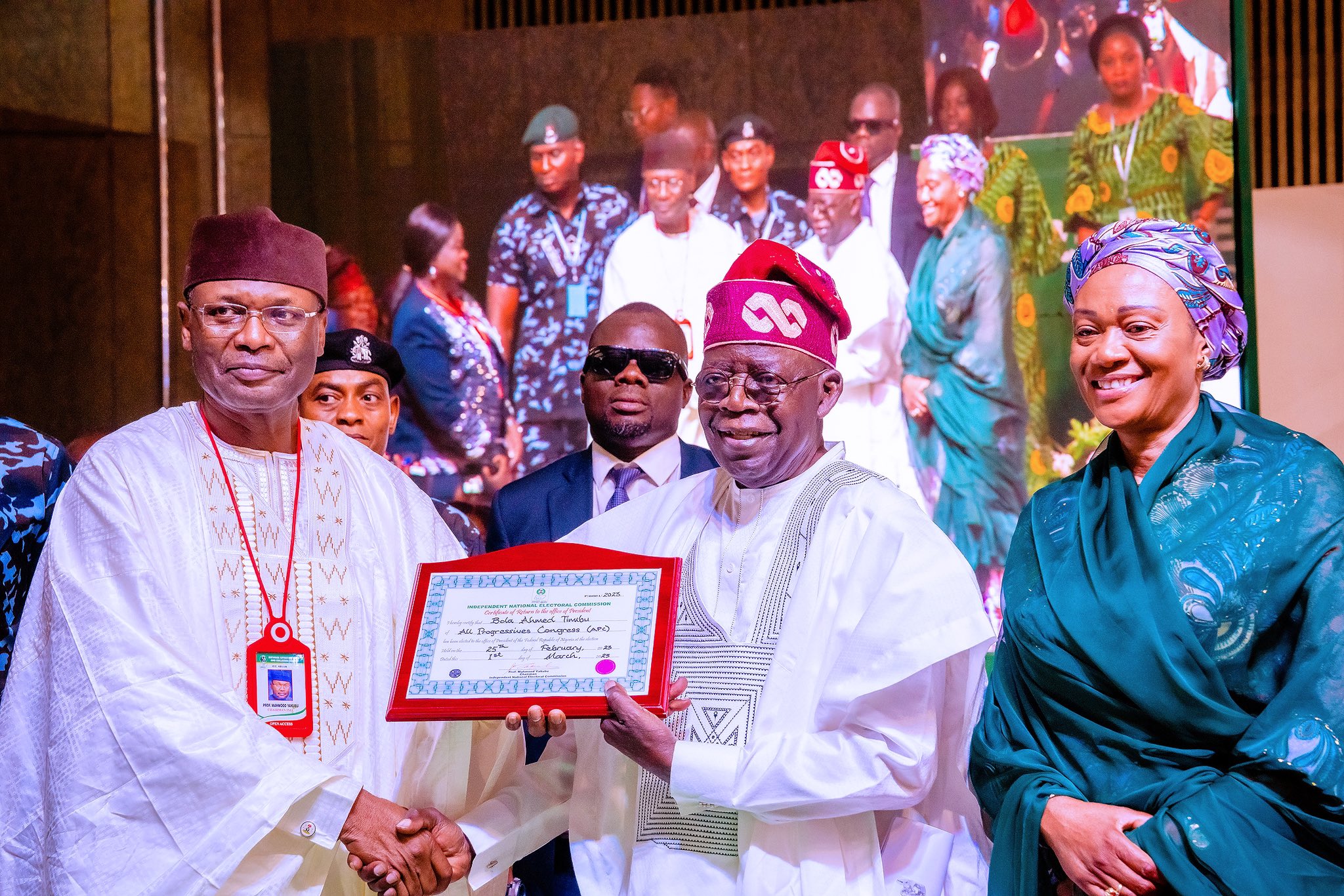
The Peoples Democratic Party, PDP, the principal opposition party, should have had the simplest time winning the Nigerian presidential election in 2023. Muhammadu Buhari’s unprecedentedly bad and divisive leadership served as a powerful campaign against the All Progressives Congress, APC. To effortlessly retake control of the centre, the PDP only needed to present a unified front and a singleness of purpose. Yet, since Uche Secondus’s tenure as national chairman, PDP has lacked direction and influence and has swayed like a ship without a rudder.
Secondus’ successor, Dr. Iyorchia Ayu, turned out to be an even worse disaster. Ayu’s incompetent handling of internal party strife and crises contributed to the party’s loss in the presidential election. Under Ayu’s watch, the party quickly became divided and lacked cohesiveness as factions within its tanks plotted for the party’s presidential ticket rather than win the presidential election.
PDP continued as though division would go against the universal precept that “divided we fall.” As expected, the party split into three groups, each of which included some of the party’s core supporters and leaders. The G5 governors, led by Nyesom Wike, a former governor of Rivers state and now minister of the Federal Capital Territory, produced the second wave fissure after Mr Peter Obi left the PDP in protest, taking with him the South East and possibly up to half of the Middle Belt and even beyond.
Wike and his associates correctly demanded that Ayu resign from office, as it was a requirement Ayu had set for himself if a Northerner emerged as the PDP flagbearer, but he chose to break the agreement instead. Resigning from the job would have been the honourable thing for him to do to give his party a chance. Citing the party’s constitution, which stated that the deputy national chairman from the north would still serve as interim chairman, Ayu remained in place despite his clinging to the position of national chairman tearing the party to pieces.
This pathetic justification offered by Ayu is now irrelevant because he was removed from office by a court shortly after the presidential election, after leading the PDP to an avoidable defeat. To restore the Wike G5 governors, the party’s NEC could have chosen an acting National Chairman from the South and ratified it later. Bamanga Tukur from the North replaced Dr. Okwesilieze Nwodo as PDP national chairman in somewhat similar circumstances.
Three groups within the PDP fought against each other during the presidential race, causing the party to stumble and fall. The party even disregarded its constitution to choose Atiku Abubakar as its presidential candidate. Going by Peter Obi’s unexpected performance in the polls and his displacement of the PDP in numerous traditional states that the party had previously taken for granted, the PDP suffered the greatest loss due to its outright unwillingness to zone its presidential ticket to the South.
The ace political strategist Tinubu took advantage of the PDP’s problems, helped in keeping the party split, and profited politically.
Furthermore, Nigeria’s presidential election laws have shown to be woefully insufficient, leaving a great deal of discretion to the judgement of courts and INEC. Giving the courts the final say in determining election winners is the first big roadblock to justice and free and fair elections. This is a serious inconsistency and ridiculousness in the election laws. Courts shouldn’t have more authority than what is necessary to qualify candidates. Votes and votes alone should determine the outcome of an election, not the opinions of judges or technicalities.
Since votes are numbers, they cannot be interpreted subjectively. If there are disagreements about votes, the courts ought to mandate a recount and nothing more to ascertain who won the most valid ballots. However, the Supreme Court and the Presidential Election Petition Court (PEPC) did not act in this manner. Nigerians were denied the opportunity to learn who the true winner of the presidential election was, as both courts focused solely on procedural matters, leaving out substantive justice.
Another legal loophole revealed by the courts’ safe play is that all candidates, from councillors to the president, are sworn in before the outcome of their cases. A sworn-in president or governor is nearly impossible to remove from office. He will use all reasonable steps, both legal and illegal, to maintain his position. Perhaps no other nation in the world has sworn in a candidate whose viability as a winner is still up for determination than Nigeria.
Another significant issue with the law is the Presumption of Regularity enjoyed by the INEC, in addition to the state’s power and resources at the behest of the person already sworn in to exploit and abuse to remain there. The petitioners have the burden of providing proof because the tribunals assume that INEC has carried out its duties by the law. For instance, INEC is not compelled by law to provide the tribunal with evidence supporting its pronouncement of victory.
Being a party to the lawsuit on the side of the winner, INEC tries everything in its power to thwart the petitioners and establish its position. Especially in the presidential election, which has up to 176,606 polling units, it usually takes petitioners a long time to even receive the documents, in particular, Form EC8A (results issued at the polling units by INEC). This leaves the petitioners with little time to conduct a thorough examination and file winnable cases within the little time allowed by the Electoral Act.
If you want to prove anything in front of the tribunal, Form EC8A is essential. It’s also possible that this is how you tie judges’ hands if they tend to side with the sworn-in candidates. Because they are underpaid, many judges now view election lawsuits as a way to increase their income. When Justice Musa Dattijo Muhammad who just retired from the Supreme Court, disclosed that a Supreme Court judge earns only roughly N700,000, the country was shocked. It is easy to imagine how they would pay for their children’s education, most of whom are studying abroad and maintain a quality of living appropriate for their ranks.
One thing said by a judge of the Presidential Petition Court (PEPC) resonated with me: “We work as the laws are, not as the laws ought to be.” There is a great deal of discretion and capriciousness in Nigeria’s election laws. Laws must be precise, and it is precisely this precision that restrains bad and cunning judges who prioritise technicalities above substantive justice.
With its discretionary powers, INEC chooses whether or not to upload polling unit results. This cannot be the correct route to a fair election. Strictly and mandatorily adhering to this express provision of the electoral act as stated in section 64 subsection 4 of the Electoral Act could have been just enough: “A collation officer or returning officer at an election shall collate and announce the result of an election, subject to his or her verification and confirmation that the – (a) number of accredited voters stated on the collated result are correct and consistent with the number of accredited voters recorded and transmitted directly from polling units under section 47 (2) of this Act; and (b) the votes stated on the collated result are correct and consistent with the votes or results recorded and transmitted directly from polling units under section 60 (4) of this Act”. This section simply makes uploading election results from the polling units a condition precedent to collation and declaration of results. Simply make this provision mandatory.
Furthermore, there are no restrictions on what the tribunal defines as INEC’s “Substantial compliance to the electoral act.” This represents an additional glaring legal loophole. Currently, there are no clear legal stipulations of the actions that INEC needs to conduct to fulfil the “Substantial compliance” standards. It is what each tribunal says it is.
Nigeria cannot claim to practice democracy without holding free and fair elections. What continues to exist is an elite power-sharing plot, which prevents the people from choosing their leaders or representatives. Therefore, Nigeria is not a democracy and is, at most, merely a civil rule.
Going forward, the opposition must band together and spearhead a reform that will result in a new electoral act that eliminates INEC’s discretionary powers, guarantees that election litigations conclude before swearing in, sets thresholds for “Substantial compliance,” compel INEC to account to Tribunal how it arrived at declared results, most importantly, mandates the transmission of results as a prerequisite to the declaration of results at all levels.
Otherwise, as politicians hone their act and lubricate their election-rigging apparatuses, the worst election is yet to come from 2027 and beyond.
Dr Law Mefor, an Abuja-based forensic and social psychologist, is a fellow of The Abuja School of Social and Political Thoughts; drlawmefor@gmail.com; Twitter: @Drlawsonmefor.
Disclaimer:
The opinions and views expressed in this write-up are entirely those of the Writer(s). They do not reflect the opinions and views of the Publisher (Nze Ikay’s Blog) or any of its employees. The designations employed in this publication and the presentation of materials herein do not imply the expression of any opinion whatsoever of the Publisher (Nze Ikay’s Blog) or its employees concerning the legal status of any country, its authority, area or territory or concerning the delimitation of its frontiers. Equally, the sketches, images, pictures and videos are gotten from the public domain.


My brother suggested I may like this blog. He used to be entirely right.
This publish actually made my day. You can not imagine simply how much time I had spent for this information! Thank you!
May I simply say what a comfort to discover someone that really knows what they are talking about on the internet. You actually realize how to bring an issue to light and make it important. More people must look at this and understand this side of the story. I cant believe you are not more popular since you surely have the gift.