

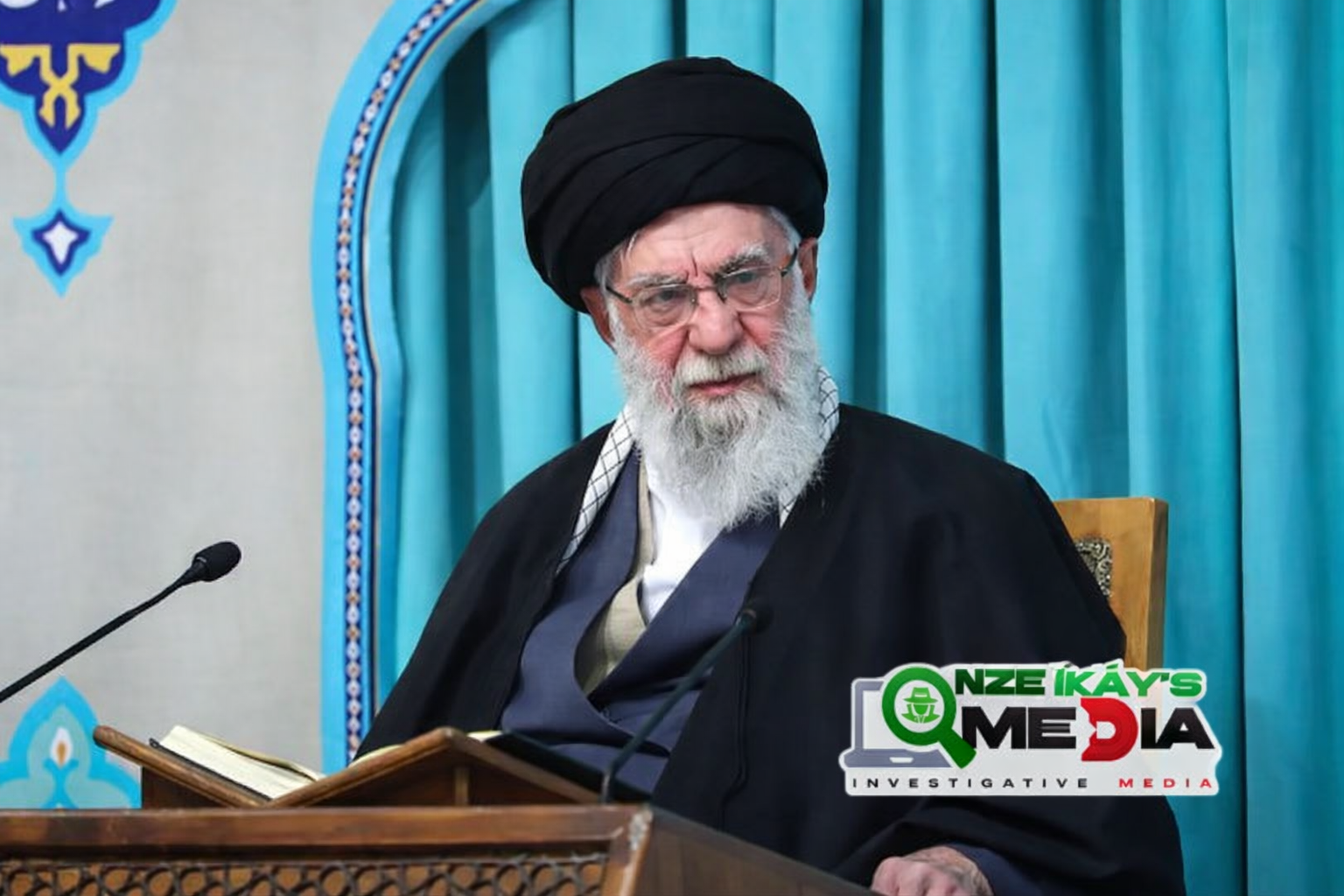
In the dimly lit halls of power, where faith intertwines with authority and history bends to the whims of a few, few figures have loomed as large as Ayatollah Sayyid Ali Hosseini Khamenei. “The mountain remains unmoved by the fury of the storm,” as a Persian poet once said, and for nearly forty years, Khamenei embodied that mountain. With his death confirmed following the US-Israeli strikes on February 28, 2026, Iran now finds itself at a crossroads more delicate than any since the chaotic days of 1979.
Born in 1939 in the northeastern city of Mashhad, Ali was the son of a religious scholar, seemingly destined for a life of quiet contemplation. He began his religious education at just four years old, and by thirteen, he was already diving into the revolutionary ideas of clerics like Navab Safavid, who advocated for political violence against the Shah’s regime. The seminaries of Najaf and Qom played a significant role in shaping his thoughts, but it was his meeting with Ayatollah Ruhollah Khomeini in 1958 that truly set his path. Khomeini’s philosophy of velayat-e faqih, or the guardianship of the jurist, became Khamenei’s guiding star. This belief held that a just Islamic society couldn’t rely solely on human laws but needed to draw its legitimacy from God, with a single scholar wielding the authority once held by prophets and infallible Imams. Khamenei paid a heavy price for this conviction; the Shah’s secret police, SAVAK, arrested and tortured him in 1971. Yet, he emerged unbroken, his revolutionary spirit forged like steel in the fire.
The 1979 Islamic Revolution brought Khomeini to power, and Khamenei rose alongside him. He played a key role in organising the Revolutionary Guard, served on the Revolutionary Council, and took on the role of deputy defence minister. Then, in June 1981, a bomb planted by the Mujahedin-e-Khalq exploded near him at a mosque in Tehran. The attack left his right arm permanently paralysed, but throughout his life, he showed an incredible ability to withstand blows that would have knocked others down. As the saying goes, “That which does not kill him makes him stronger.” Just two months later, after the same group took out President Mohammad-Ali Rajai, Khamenei was elected to take his place.
When Khomeini passed away in June 1989, Iran found itself in a succession crisis. The chosen successor, Grand Ayatollah Hossein-Ali Montazeri, had lost favour, and other senior clerics didn’t quite measure up. In this uncertain time, Khamenei stepped in, even though he didn’t fit the traditional mould. The constitution called for a “source of emulation,” a grand ayatollah, but Khamenei only held the title of Hojjat al-Islam. He reportedly said, “My nomination should make us all cry tears of blood. I am just a minor seminarian with many faults and shortcomings.” However, at Khomeini’s urging, the Assembly of Experts changed the constitution to require only “Islamic scholarship.” Just like that, Khamenei was elevated to the rank of ayatollah. The once-quiet seminarian from Mashhad had now become the second most powerful figure in the Islamic Republic.
The Architect of Regional Influence Over the next 36 years, Khamenei would gather power that even Khomeini never had. The constitutional changes of 1989 granted him the authority to set general policies, appoint and dismiss members of the Council of Guardians, and call for referendums. But his real strength came from the relationships he built, especially with the Revolutionary Guard, whose loyalty he earned by visiting the front lines during the gruelling Iran-Iraq War. When American forces toppled Saddam Hussein in 2003, Khamenei seized a chance that his predecessor could only have dreamed of. With Iran’s longtime enemy out of the way, Tehran’s influence surged into Iraq. And when the Arab Spring hit in 2010, he threw his support behind Syria’s Bashar al-Assad, expanding Iran’s reach through what he referred to as the “Axis of Resistance.” Detect AI-generated content and transform it into something that feels more human with our AI Content Detector. Just paste your text, and you’ll get accurate, relatable results in no time!
Here’s the text to analyse: – a network that stretches from Hezbollah in Lebanon to the Houthis in Yemen, from Iraq’s Shiite militias to Hamas in Gaza. “An emboldened and expansionist Iran seems to be the only winner,” concluded a U.S. Army history of the 2003 Iraq invasion. It was Khamenei’s strategic masterpiece.
The Iron Grip at Home
Despite his successes abroad, Khamenei’s reign at home was a constant battle. He often supported conservative presidents but found himself at odds with them regularly. When reformist Mohammad Khatami aimed for a thaw in relations with the West, Khamenei’s allies thwarted his efforts. Later, when Mahmoud Ahmadinejad sought to expand his own authority, the Supreme Leader put him in his place. The 2009 Green Movement represented the most significant challenge yet. Millions flooded the streets, insisting that Ahmadinejad’s reelection was fraudulent. Khamenei stood by the results and ordered a brutal crackdown that resulted in dozens of deaths and thousands of arrests. “The policies adopted by our enemy,” he proclaimed, “are designed to sow division and unrest.” The death of Mahsa Amini in police custody in 2022 sparked another wave of outrage. Nationwide protests under the banner “Woman, Life, Freedom” called for the regime’s downfall. Once more, Khamenei responded with force. But the most violent suppression occurred in his final months. When the rial crashed in December 2025, protests erupted in Tehran’s traditional bazaar, where seasoned, devout traders—the revolution’s longtime supporters—gathered. The unrest spread rapidly. Security forces killed thousands, with activists documenting over 7,000 fatalities. Khamenei demanded that “domestic criminals” face swift justice, accusing “seditionists” of committing acts of “pure savagery.” “They say they will come and kill us,” protesters shouted. “Let them try to take on this crowd!”
The Survivor Khamenei faced numerous assassination attempts throughout his life, including the 1981 bombing and countless plots from foreign intelligence agencies. He managed to survive them all. But no leader can last forever. The final act kicked off after October 7, 2023, when Israel began systematically targeting Iranian officials, taking out Hamas’s Ismail Haniyeh in Tehran and Hezbollah’s Hassan Nasrallah in Beirut. By June 2025, Israel and the U.S. launched a direct strike on Iran, significantly crippling its nuclear program and military strength. Then, just before more nuclear negotiations were set to begin, came the strike that sealed his fate. Protesters had mockingly dubbed him “Rat Ali” in his last months, a jab at his reported retreat to an underground bunker during the 2025 war. Yet, in the end, he didn’t escape. He exited the Islamic Republic in the manner he always claimed he would, horizontally.
The Scales of Legacy
How does history measure a figure like him? On one side of the scale, he established the “Axis of Resistance,” propelling Iran to a position of regional power. He navigated the nuclear program through a minefield of sanctions and sabotage, surviving both internal revolutions and external wars. To hardliners, he was the steadfast protector of Khomeini’s vision, the one who kept the flame alive while the West tried to snuff it out. On the flip side, he leaves behind an economy ravaged by sanctions, mismanagement, and corruption. In his final days, the populace openly called for his demise. He departs a regime so weakened that when the U.S. and Israel struck, its military chaos was laid bare for all to witness. “Most Iranians won’t remember him as a strong leader,” observers point out. “He won’t be revered. Instead, his legacy will be the deep vulnerability his regime inflicted on the Islamic Republic across the board.” When Khomeini passed away in 1989, millions flocked to his funeral, desperately pulling at his coffin for sacred keepsakes. For Khamenei, such sorrow seems unlikely. The mountain has crumbled, but the storm it endured may turn out to be kinder than the peace that follows.
After the Fall
Iran now steps into uncharted waters. The constitution outlines a succession plan via the Assembly of Experts, but Khamenei personally selected most of its members. His son Mojtaba, a 56-year-old cleric who’s been sanctioned by the U.S. for his ties to the Quds Force, is seen as a potential successor. However, the Revolutionary Guard has become Iran’s most formidable institution; its commanders might openly seize power, which could lead to violent conflict. “They’ll probably try to replace Ali Khamenei with someone else to keep the system intact,” noted one Iranian refugee. “Khamenei might have been the head of the snake, but this system is unique; even if one head is cut off, another quickly takes its place.” Still, a headless snake could thrash unpredictably. Protests are ongoing, even with an internet blackout in place. The economy is in shambles. Regional proxies, weakened by Israeli and U.S. strikes, can no longer project power like they used to. Some people dream of a democratic future; Crown Prince Reza Pahlavi, the exiled son of the last Shah, has stepped up as a symbol for the opposition. “A free Iran will be the greatest peace and economic dividend the world has ever seen,” says Iranian-American entrepreneur Shervin Pishevar. But that future feels far away, uncertain, and clouded by the dust of a fallen mountain.
The Final Reckoning
“Khamenei once said of Trump, ‘The body of this man will turn to ashes and become the food of the worms and ants, while the Islamic Republic continues to stand.'” The irony is harsh. Trump outlived him. The Islamic Republic remains, but for how long, and in what shape? The Persian poet Saadi wrote: “The end of the candle is to be extinguished, but its light remains in the eyes of those who witnessed its burning.” For millions of Iranians, Khamenei’s light didn’t bring warmth; it brought searing heat. For his supporters, it lit the way for resistance. History will argue over which vision will prevail. At this pivotal moment in leadership, one thing is clear: History will debate which vision proves true. The man who held Iran in a tight grip for thirty-six years, shaping the Middle East more than any other leader of his time, who faced assassination attempts, revolutions, and wars, that man is no longer with us. Now, Iran, weary and wounded, must navigate its future without him. The mountain has crumbled. The storm rages on.
The passing of Ayatollah Khamenei signifies a crucial turning point for Iran, as the country reflects on the legacy of his authoritarian rule and the uncertainty that lies ahead. With the weight of its influence now lifted, Iran finds itself at a crossroads, confronting both internal unrest and external challenges, as it strives to redefine its identity and path in an ever-evolving geopolitical landscape.
@Nze Ikay’s Media
Disclaimer:
The sketches, images, pictures and videos are obtained from the public domain.